


 Français
 Español
 العربية
 한국어
한국어A beverage HS code is the six-digit Harmonized System number that customs authorities use to identify what a drink actually is, and for most beverages the decision comes down to one question: does the product belong in Chapter 20 as a juice, or in Chapter 22 as a beverage? The answer is driven by composition and process, not by how the product is marketed.
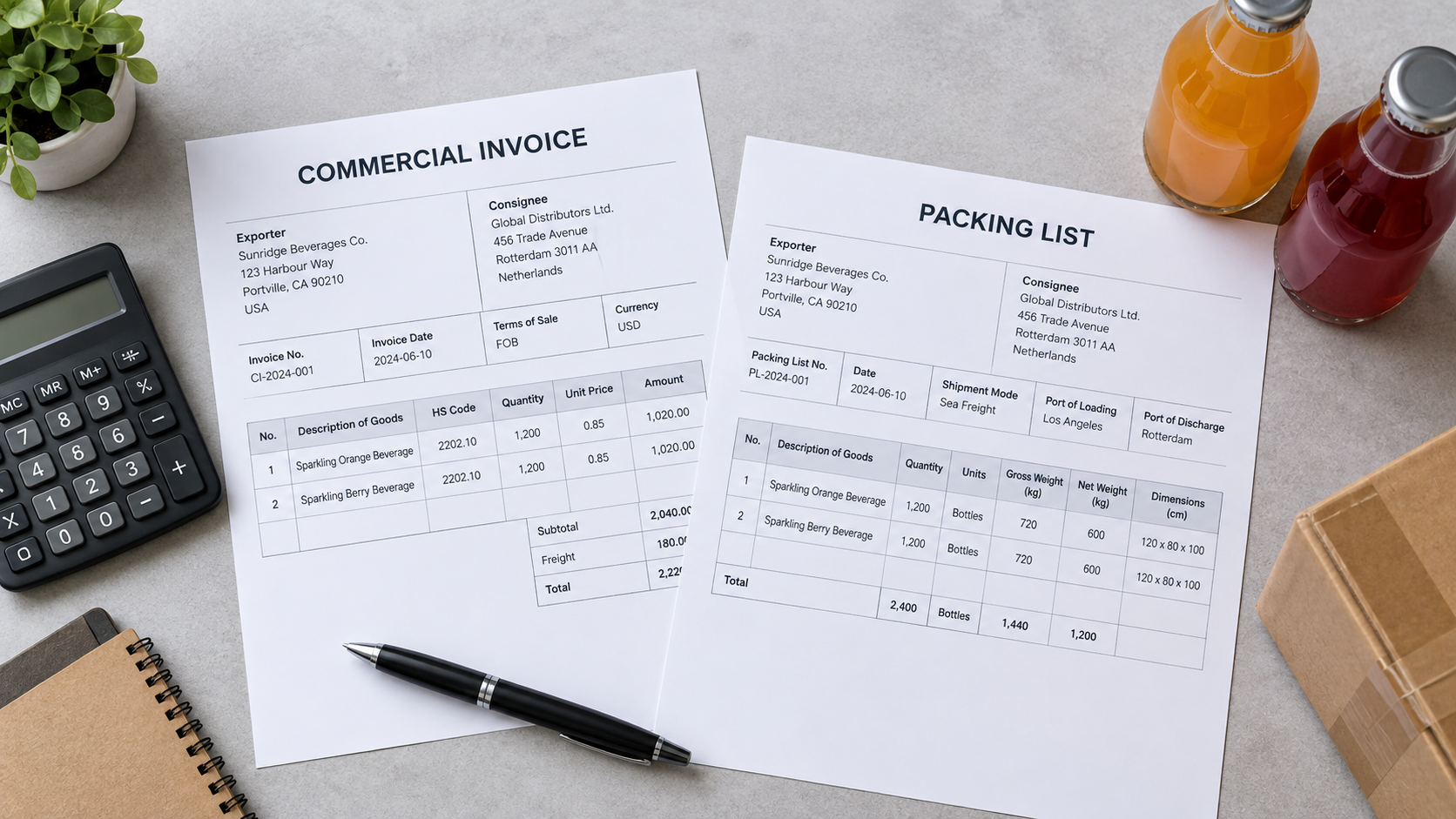
Getting that decision right matters because the code travels with the shipment through every document in the file. This guide explains the classification logic itself. It does not quote duty rates, which are set nationally and covered on the per-market import duty pages.
Which HS chapter does a drink belong to?
Most drinks fall into one of two chapters. Chapter 20 covers preparations of vegetables and fruit, and within it heading 2009 covers unfermented fruit and vegetable juices. Chapter 22 covers beverages, and within it heading 2202 covers waters with added sugar or flavouring and other non-alcoholic beverages. A product is classified by what it is, not by its brand positioning.
The first six digits are harmonised internationally, so the chapter, heading and subheading you determine in Vietnam will be the same digits a buyer uses in Germany or Korea. Digits beyond the sixth are national, which is why an importer may quote a longer code than the one on your invoice. That difference is normal and is not a classification disagreement.
What does heading 2009 cover?
Heading 2009 covers fruit and vegetable juices that are unfermented and contain no added spirit, whether or not they contain added sugar or other sweetening matter. The subheadings separate juices by fruit, with dedicated positions for orange, grapefruit, pineapple, tomato, grape and apple, and residual positions for other single juices and for mixtures.
Products that typically sit here include:
- Single-fruit juices, whether not from concentrate or reconstituted from concentrate to normal strength.
- Juice mixtures, which fall to the mixture subheading rather than to the subheading of the dominant fruit.
- Vegetable juices, including tomato juice, which has its own position.
- Concentrates, which remain in 2009 rather than moving elsewhere simply because water has been removed.
Sweetening alone does not move a juice out of 2009. A juice with added sugar is still a juice for classification purposes, which surprises buyers who assume any added ingredient pushes a product into Chapter 22.
What does heading 2202 cover?
Heading 2202 covers waters, including mineral and aerated waters, that contain added sugar, other sweetening matter or flavouring, plus other non-alcoholic beverages. Critically, the heading text excludes the fruit and vegetable juices of heading 2009. In practice 2202 is where a drink lands once it stops being a juice in the tariff sense.
Within 2202 the common positions separate flavoured and sweetened waters from non-alcoholic beer and from a residual category that absorbs most ready-to-drink products. That residual position is where a large share of the modern beverage market sits: flavoured waters marketed as functional drinks, ready-to-drink teas and coffees, energy drinks, sports drinks and many plant-based products.
| Product | Usual heading | What drives the decision |
|---|---|---|
| 100% orange juice, not from concentrate | 2009 | Unfermented juice at normal strength |
| Orange juice with added sugar | 2009 | Added sweetening does not remove it from the juice heading |
| Orange-flavoured still drink, low juice content | 2202 | Water-based beverage rather than a juice |
| Carbonated juice drink | 2202 | Aeration takes the product outside the juice heading |
| Ready-to-drink tea or coffee | 2202 | Non-alcoholic beverage, not a fruit or vegetable juice |
| Energy or sports drink | 2202 | Water-based formulated beverage |
| Fruit juice concentrate | 2009 | Concentration does not change the heading |
This table shows the usual outcome, not a guarantee. The binding decision always rests with the customs authority of the importing country.
How does juice content change the code?
Juice content is the single most common trigger for a change of heading. A product classified in 2009 is understood to be juice, optionally sweetened, at a strength consistent with the natural product or with reconstitution to normal strength. Once water is added beyond what reconstitution requires, the product begins to look like a water-based beverage rather than a juice, and 2202 becomes the appropriate heading.
The practical difficulty is that the tariff does not express this as a single percentage that applies everywhere. Explanatory notes and national practice guide where the line falls, and the assessment considers the product as a whole rather than one number in isolation. What this means commercially is that nectars and juice drinks sit in a zone where classification deserves attention rather than assumption.
Three composition decisions therefore carry tariff consequences and are worth settling during development:
- Dilution level. Whether the finished drink is at single strength or diluted below it is the primary question.
- Added ingredients beyond sweetening. Flavourings, acidulants and functional additives can support a reading that the product is a formulated beverage.
- Presentation and recipe evidence. A specification stating juice content, brix and the reconstitution basis supports the classification you intend to declare.
Does carbonation change the classification?
Yes. Carbonation generally moves a product out of the juice heading and into 2202. Heading 2009 is framed around unfermented juices, while aerated waters and carbonated non-alcoholic beverages are expressly the territory of 2202. A sparkling version of a product can therefore carry a different code from the still version of the same recipe.
This has a practical consequence for brands running a still line and a sparkling line side by side. The two products may share a flavour, a factory and a packaging format, yet require different codes on the same invoice. Treating the sparkling variant as a line extension for commercial purposes is fine; treating it as the same tariff item is not.
The same caution applies to lightly carbonated products positioned as sparkling juices. A low level of added carbon dioxide is still carbonation for tariff purposes, and the fact that the drink is made entirely from juice does not by itself keep it in the juice heading. Brands developing a sparkling variant should therefore raise the classification question at the recipe stage, because the packaging artwork, the export file and the buyer quotation all end up referencing whichever code is finally declared.
Where does coconut water sit?
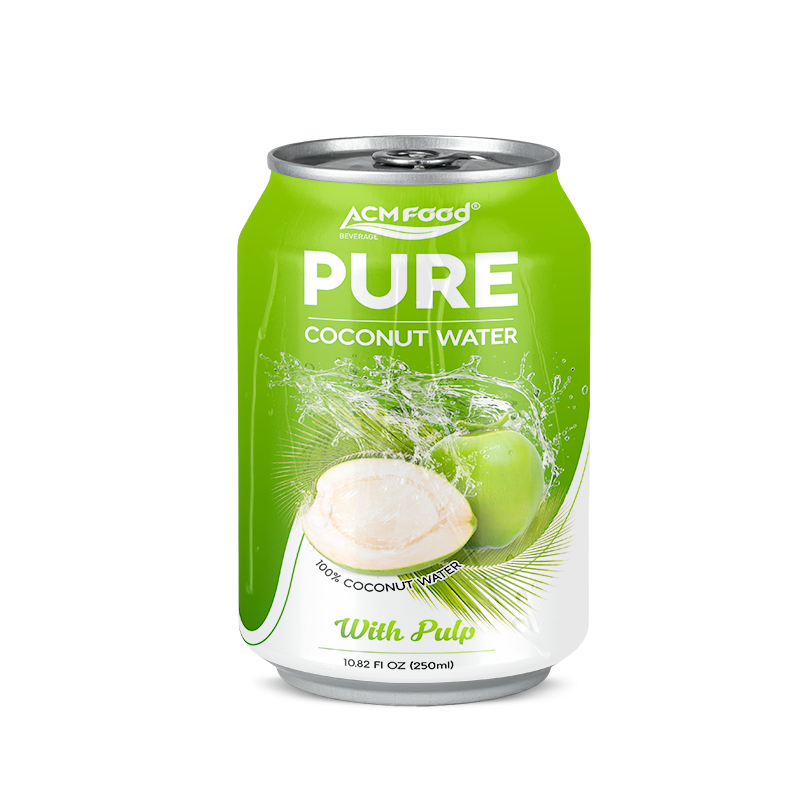
Coconut water is generally treated as a fruit juice and classified in heading 2009 under the residual position for juices of other single fruits, because the liquid is drawn from the fruit rather than formulated from water. Buyers frequently expect it to fall in Chapter 22 alongside bottled waters, and that expectation is the source of a good deal of confusion at clearance.
The classification can shift when the product is altered. Coconut water blended with other juices moves towards the mixture position. Coconut water that is carbonated, substantially diluted or built into a flavoured formulation begins to look like a beverage of 2202 instead. Pulp content on its own does not usually change the heading.
For exporters this is worth confirming in writing with the buyer before the first shipment, alongside the origin paperwork discussed in the guide to the certificate of origin for Vietnamese exports, because the origin declaration and the tariff code are checked together.
What does a misclassification cost at clearance?
A wrong code rarely stays a paperwork problem. The consequences fall into a predictable sequence, and each step adds cost that was not in the landed cost model.
- Delay first. A query from customs holds the consignment while the classification is examined, and demurrage begins to accrue on the container.
- Reassessment second. If the authority adopts a different code, the duty and tax calculation is redone on that basis and the difference becomes payable.
- Penalties where the error is treated as avoidable. Many jurisdictions distinguish between a genuine mistake and a pattern, and repeated errors attract more attention.
- Loss of preference. A trade agreement claim is made against a specific code, so a reclassification can invalidate the preferential claim even when the goods genuinely originate as declared.
- Retrospective review. Once a code is challenged, earlier shipments under the same code can come under review.
The last point is why preferential claims deserve particular care. The rules of origin that qualify a product for reduced duty are written by tariff classification, so the code underpins the claim described in the article on EVFTA rules of origin for Vietnamese drinks.
How to settle the code before you ship
Classification is a judgement made against the tariff text, the explanatory notes and national practice, so the reliable approach is to document the reasoning rather than to copy a code from a previous invoice. A short classification note kept on file, setting out the composition, the process and why a heading was chosen, answers most customs queries before they escalate.
Where the value at stake justifies it, an advance ruling from the destination authority converts a judgement into a binding decision. Most major markets operate such a scheme under one name or another, and the ruling is issued to the applicant for the product described. It takes time to obtain, so it belongs in the launch plan rather than in the response to a held container. The per-market articles on import duty for beverages entering Germany and UK beverage import duty and preferences set out how classification then feeds the national calculation.

Frequently asked questions
Is the HS code the same in every country?
The first six digits are the same in every country that applies the Harmonized System. Digits beyond the sixth are set nationally, so an importer may use an eight or ten digit code that begins with the same six digits you declared. A difference in those later digits is normal.
Who is responsible for the classification?
The declarant in the importing country is responsible for the code on the import declaration, which usually means the importer or their customs broker. The exporter still has a practical role, because the composition data and product specification that support the classification come from the manufacturer.
Does added sugar move a juice into Chapter 22?
No. Heading 2009 expressly covers juices whether or not they contain added sugar or other sweetening matter. It is dilution, carbonation and formulation into a water-based drink that move a product towards heading 2202, not sweetening on its own.
Can one product have two codes?
A single product has one correct classification, but variants of a product often differ. A still and a sparkling version, or a single-strength and a diluted version, can legitimately carry different codes even when the brand treats them as one range.
Getting the code right the first time
Beverage classification follows composition. Unfermented fruit and vegetable juices, sweetened or not, sit in heading 2009; water-based, carbonated and formulated drinks sit in heading 2202; and coconut water usually behaves as a juice rather than as a water. The decisions that move a product between those headings are made in formulation, long before the invoice is raised.
Brands preparing a first shipment are best served by fixing the classification during product development, documenting the reasoning, and confirming the code with the importer in writing. Where the volume justifies it, an advance ruling removes the remaining uncertainty. Practical guidance on assembling the wider export file sits in the compliance and export article series.