


 Français
 Español
 العربية
 한국어
한국어Germany beverage import duty is set by the EU’s Common Customs Tariff via TARIC and depends on your product’s HS classification, composition, and packaging. Preferential duty under the EU–Vietnam Free Trade Agreement (EVFTA) may reduce or phase out the tariff where rules of origin are met. Import VAT in Germany is typically 19% (Einfuhrumsatzsteuer) on eligible imports.
This guide explains how to determine duty for beverages entering Germany, how EVFTA preferences work for Vietnamese shipments, what German Customs (Zoll) will verify, and which country-specific charges can apply. It focuses on Germany’s processes and terminology (Zoll, EZT‑Online, ATLAS, DPG deposit), with practical steps to classify, claim preferences, and clear your goods efficiently.
What determines germany beverage import duty?
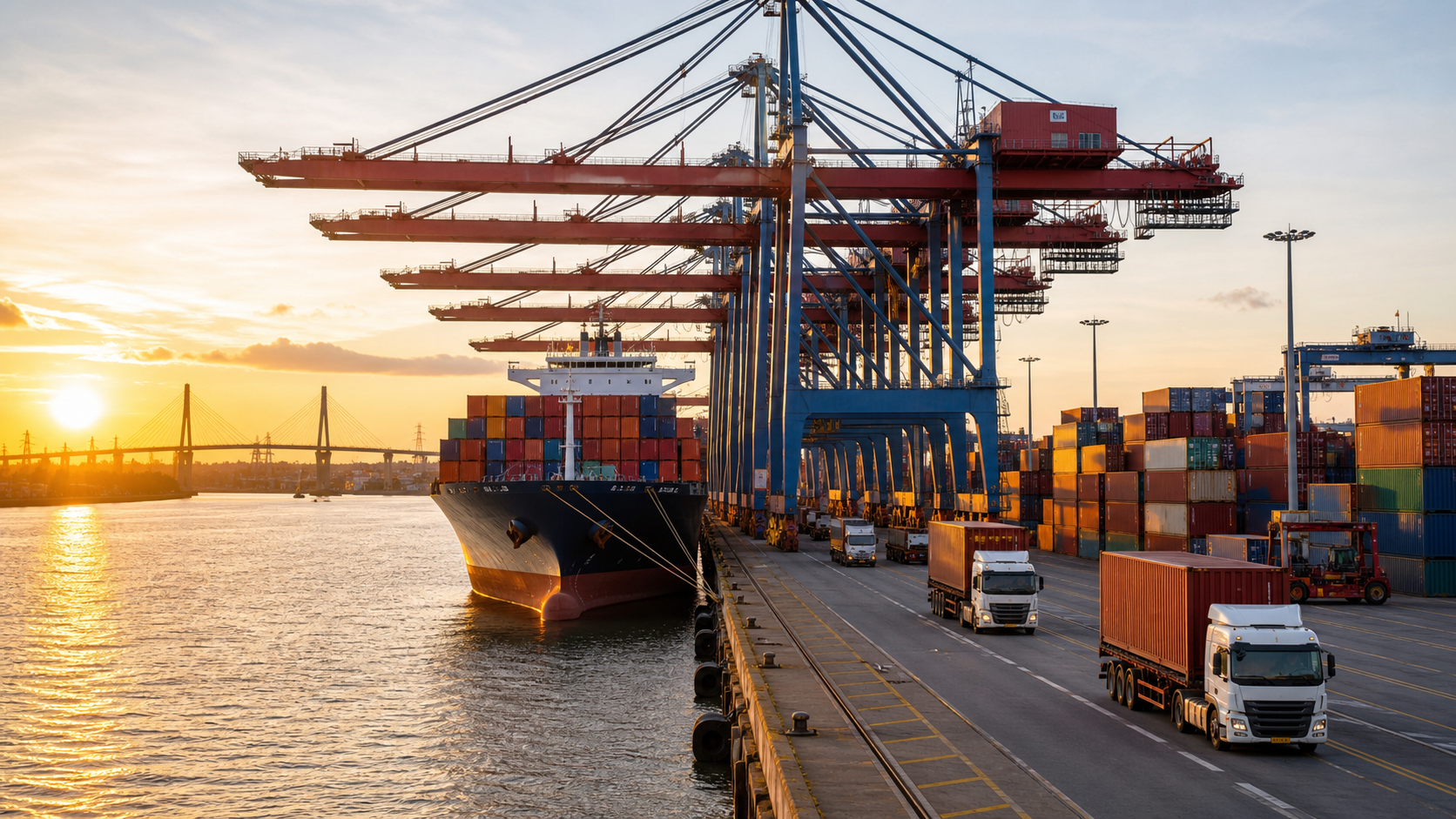
Duty in Germany is determined by the EU TARIC measure that applies to your exact beverage HS code, plus any preferential rate under a trade agreement such as EVFTA when valid proof of origin is presented. Packaging format, alcohol strength, sugar content, and ingredients can all influence classification and duty treatment.
In practice, several variables drive the final rate and measures:
- HS classification (CN/TARIC): Beverages fall mainly under Chapters 20 and 22 (e.g., 2009 fruit juices; 2202 waters, soft drinks; 2203–2208 alcoholic beverages). Your precise subheading determines the base (MFN) duty.
- Preferential agreements: EVFTA can grant reduced or zero duty if rules of origin are met and proof of origin is presented at import into Germany.
- National or EU measures: For certain products there may be additional requirements (e.g., excise for alcohol categories) that are listed in TARIC/EZT‑Online alongside the duty line.
- Customs valuation: Duty is calculated on the customs value of the goods (often based on the transaction value) before import VAT is assessed.
- Packaging & presentation: Retail vs. bulk, container size, and product form (concentrate vs. ready‑to‑drink) can shift classification.
How do I look up the tariff in TARIC or Germany’s EZT‑Online?
Start by classifying your beverage correctly, then use the EU TARIC or the German EZT‑Online interface to confirm measures. TARIC/EZT‑Online will show the MFN duty, any preferential tariff (e.g., EVFTA), and other applicable measures like import VAT or excise frameworks.
- Define your product precisely: composition (juice %, sugars, sweeteners), alcohol by volume if any, carbonation, flavors, dairy content, caffeine, packaging, and intended presentation.
- Assign an HS/CN code: Identify the correct eight‑digit CN code; TARIC then refines measures at ten digits for the EU.
- Consult TARIC or EZT‑Online: Search your CN code to see duty, preferential rates, excise applicability, and any licensing or other measures.
- Check preferential eligibility: If shipping from Vietnam, verify if EVFTA appears as an available preference for your HS code, and note the required proof of origin.
- Record evidence: Keep screenshots or printouts of the applicable measures and date, and align your customs declaration accordingly.
The following table summarizes where each charge or measure is determined and how it usually applies to beverage imports into Germany:
| Component | Determined by | Where to check | Notes for beverages |
|---|---|---|---|
| Customs duty (MFN) | EU Common Customs Tariff | TARIC / EZT‑Online | Rate depends on exact HS code and product form (e.g., juice vs. soft drink). |
| Preferential duty (EVFTA) | EVFTA schedule by HS code | TARIC / EZT‑Online | Reduction/phase‑out varies by code; requires valid proof of origin. |
| Import VAT (Einfuhrumsatzsteuer) | German VAT law | Shown with measures | Standard rate is typically 19% for beverages; applied on customs value + duty. |
| Excise (alcohol/coffee, etc.) | German excise law | TARIC notes / national | Beer, spirits, sparkling wine, and coffee can attract specific national excise. |
| Other national requirements | German market rules | National guidance | DPG deposit for many one‑way beverage containers; VerpackG registration duties. |
Do EVFTA preferences apply to beverages from Vietnam?
Yes—if your beverage meets EVFTA rules of origin and you present acceptable proof of origin at import, Germany can apply the preferential EVFTA rate shown in TARIC/EZT‑Online for your HS code. The agreement reduces or phases out duty by product line, sometimes over multiple years.
Key points for suppliers and importers working under EVFTA:
- Product‑specific rules of origin (PSR): Many beverages require a tariff shift or a limit on non‑originating materials, sometimes with regional cumulation options. Verify the PSR for your exact HS code before finalizing formulation and sourcing.
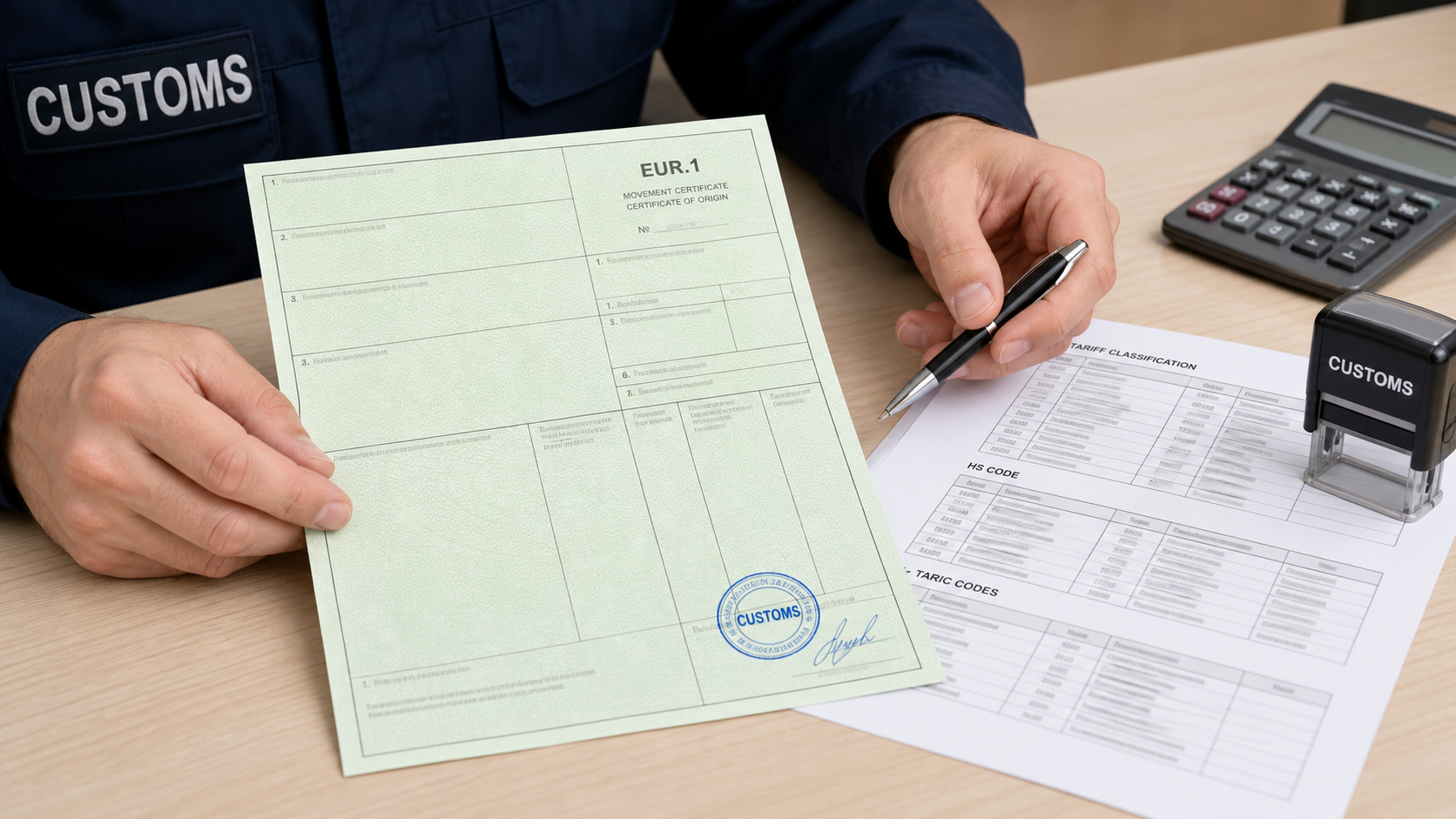
- Proof of origin: Typically an EUR.1 movement certificate issued by the competent Vietnamese authority, or an origin declaration on a commercial document by an approved exporter (subject to EVFTA provisions and value thresholds).
- Direct transport: Shipments should meet EVFTA consignment requirements (e.g., no alteration beyond what is necessary for preservation/transit).
- Consistency across documents: Description, HS code, weight, and consignee details should align on the invoice, packing list, bill of lading, and proof of origin.
- Record‑keeping: Maintain supplier declarations, manufacturing records, and costed BOMs to substantiate origin if Zoll audits your claim.
Because EVFTA preferences are HS‑code specific and can be staged, never assume a zero rate. Always confirm the current EVFTA line in TARIC/EZT‑Online for your product’s CN code and entry date.
What will German Customs (Zoll) review at import?
Zoll verifies classification, declared value, origin, and all applicable measures in line with TARIC/EZT‑Online. Your customs broker files the import entry in Germany’s ATLAS e‑customs system; local Hauptzollamt offices may inspect documents or goods before release.
- Identification & access: EU EORI of the importer, ATLAS data input, and any power of attorney for your customs broker.
- Commercial documents: Signed invoice, packing list, transport document (B/L, AWB, or CMR), freight and insurance details when part of valuation.
- Classification & measures: HS/CN code, duty line, import VAT, and any excise category or licensing requirement that applies to your beverage.
- Origin evidence: EVFTA proof (EUR.1 or valid origin declaration) if you claim preference; otherwise MFN applies.
- Physical checks: Potential sampling or inspection to confirm composition (e.g., sugar level, alcohol strength, juice content) against declared classification.
Germany’s customs portal, the Elektronischer Zolltarif (EZT‑Online), mirrors EU TARIC but also indicates national specifics. Keep your EZT/TARIC printout with your file to support the declared measures.
Import VAT, excise, and national charges in Germany
In addition to customs duty (MFN or EVFTA), Germany assesses Einfuhrumsatzsteuer (import VAT), typically at 19% for beverages, calculated on the customs value plus duty and certain costs. Some food categories can have reduced VAT in Germany, but many beverages remain at the standard rate—confirm the VAT treatment for your exact product.
- Excise duties: Alcoholic beverages fall under German excise regimes such as Biersteuer (beer), Schaumweinsteuer (sparkling wine), and Alkoholsteuer (spirits). There is also Kaffeesteuer (coffee tax) applicable to coffee and certain extracts. If your product qualifies, the excise is separate from customs duty/VAT and requires compliance with national excise procedures.
- DPG deposit (Einwegpfand): Many one‑way beverage containers sold in Germany carry a mandatory deposit—currently €0.25 per eligible unit—administered under the DPG system. Importers placing products on the German market are typically the initial distributors and must ensure deposit labeling and system participation where applicable.
- Packaging Act (VerpackG): Before placing retail beverages on the German market, register in the LUCID packaging register and participate in a dual system for household packaging coverage where required. These are market‑placement obligations, not import duty, but they are enforced and budget‑relevant.
Labeling and consumer information rules flow from EU law with national specifics; this article focuses on duties and market‑entry charges. Address labeling compliance as a separate workstream in your Germany launch plan.
Ports, logistics, and brokerage planning for beverages to Germany
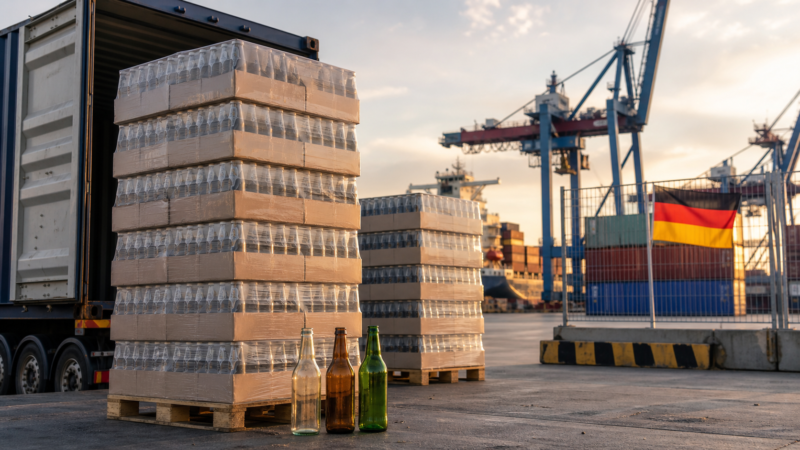
Germany’s major entry points for beverages include Port of Hamburg and Bremerhaven for sea freight, with extensive inland rail and road links. Select a broker experienced in beverage classification and EVFTA claims to streamline ATLAS entries and manage potential inspections by the local Hauptzollamt.
- Mode & equipment: Choose ambient vs. refrigerated containers based on product stability (e.g., aseptic PET vs. fresh juice concentrates). Monitor temperature if required by your specification.
- Incoterms & risk: Allocate responsibility for customs clearance, duty/VAT payment, and DPG or excise handling in your sales contract. Ensure valuation data and freight/insurance elements match the chosen Incoterm.
- Document timing: Align the arrival of proof of origin (EUR.1 or origin declaration) with the import entry to avoid paying MFN and seeking refunds later.
For a broader view of market dynamics and routes into German retail and foodservice, see the Germany market overview for beverages. For a step‑by‑step perspective on border processes, refer to the Germany beverage import process guide.
Common classification pitfalls for drinks
Misclassification is the fastest way to overpay duty or trigger delays. Several beverage‑specific issues recur:
- Juice vs. nectar vs. drink: Fruit content, added sugars/sweeteners, and water determine whether a product belongs in 2009 (juice) or 2202 (other beverages). Small formulation differences can shift HS code and duty.
- Flavoring and caffeine: Energy drinks and flavored waters stay in 2202, but subheading choices depend on sweeteners, caffeine, taurine, and presentation.
- Alcohol strength: Products at or above relevant ABV thresholds fall under Chapters 22.03–22.08 with excise implications.
- Dairy or plant‑based content: The presence of milk, whey, or cereal derivatives can redirect classification toward composite preparations rather than simple soft drinks.
- Concentrates and syrups: Retail syrups may classify differently from bulk flavor bases for the beverage industry.
EVFTA planning for brands and importers
To benefit from EVFTA while protecting your brand’s margin, integrate origin compliance early in product development and sourcing:
- Formulation planning: Map non‑originating inputs to the PSR. Adjust recipe or supplier sources to lock in originating status where feasible.
- Supplier declarations: Collect origin statements for key inputs and maintain version control as recipes change.
- Packaging choices: Packaging usually has minimal origin impact under many PSR, but confirm any value thresholds or processing requirements.
- Audit trail: Keep production records, BOMs, and costing files that connect directly to batch codes shipped under EVFTA preference.
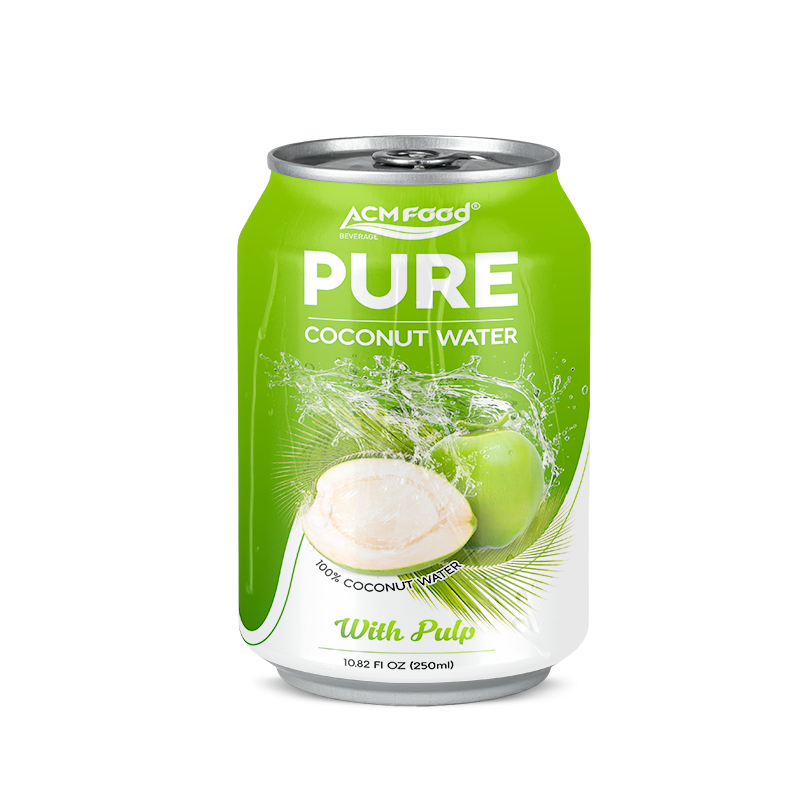
For category‑specific development examples, beverage brands may explore specialized guides like our private label coconut water guide for brands to understand how technical specifications and sourcing choices affect classification and margin.
Step‑by‑step checklist to claim EVFTA in Germany
Use this operational checklist for a Vietnam‑to‑Germany beverage shipment seeking EVFTA preference:
- Classify accurately the beverage to the correct CN code based on composition, ABV (if any), and packaging.
- Verify EVFTA availability for that CN code and entry date in TARIC/EZT‑Online.
- Confirm rules of origin and ensure your BOM and processing meet the PSR.
- Secure proof of origin: EUR.1 or a valid origin declaration by an approved exporter (as per EVFTA).
- Prepare the customs file: invoice, packing list, transport docs, valuation supports, and broker instructions for ATLAS.
- Plan for national charges: import VAT at 19%, excise where applicable, VerpackG/DPG obligations for market placement.
- File the entry with Zoll; respond to any queries from the Hauptzollamt; retain the customs and origin record for audit.
If you are comparing EU entry options, our guide to importing beverages into Poland provides a second reference point for EU border processes and paperwork flows.
Frequently asked questions
FAQ: Import duty and trade agreements for beverages entering Germany
Does EVFTA guarantee zero duty for all Vietnamese beverages?
No. EVFTA preferences are HS‑code specific and may be phased over several years. Some tariff lines can fall to zero, others may reduce but remain positive, and some may be excluded. Always confirm the current EVFTA rate for your exact CN code in TARIC/EZT‑Online.
What proof of origin is needed to claim EVFTA in Germany?
Usually an EUR.1 movement certificate issued by the competent Vietnamese authority, or an origin declaration on a commercial document by an approved exporter (subject to EVFTA conditions). The proof must match the goods and shipment covered.
Is import VAT the same as customs duty?
No. Customs duty is the tariff on the imported goods; import VAT (Einfuhrumsatzsteuer) in Germany is typically 19% and is charged on the customs value plus duty and certain costs. Both can apply to the same shipment.
Are there Germany‑specific charges beyond duty and VAT?
Yes. Depending on the product, national excise regimes (e.g., beer, spirits, sparkling wine, coffee) can apply. Many one‑way beverage containers also carry a DPG deposit (Einwegpfand), currently €0.25 per eligible unit, managed under the VerpackG framework.
Which ports are common for beverage imports into Germany?
Hamburg and Bremerhaven are leading seaports for containerized beverages, supported by strong inland logistics and customs infrastructure.
Conclusion
Determining germany beverage import duty starts with precise HS classification and a verified TARIC/EZT‑Online check. If you source from Vietnam, EVFTA can materially reduce tariffs—but only when rules of origin and documentation align. Plan for Germany‑specific items like 19% import VAT, potential excise, and DPG deposit duties when placing goods on the market.
When you are ready to map duty, preferences, and clearance into your launch timeline, review the Germany import process guide and the broader Germany market overview for beverages to align product, paperwork, and route‑to‑market decisions.