


 Français
 Español
 العربية
 한국어
한국어To import beverages into Argentina, you must register the local establishment (RNE) and the product (RNPA) with ANMAT, comply with front-of-pack octagonal warnings under Law 27.642 when applicable, meet Spanish labeling per the Argentine Food Code (CAA), use a local importer of record, and clear customs via AFIP/DGA—often through the Port of Buenos Aires or Rosario.
This guide focuses on practical, sequential actions so you can plan regulatory approvals, labeling, documentation, logistics, and market launch without guesswork. It highlights Argentina-specific requirements—including ANMAT oversight, RNE/RNPA registration, and Ley 27.642—so teams can align compliance, timelines, and costs before shipping.

Argentina’s foods and beverages are primarily regulated by ANMAT—through its food institute INAL—under the Argentine Food Code (CAA). Customs clearance is handled by AFIP/DGA. Certain categories also face specialized oversight (for example, wine is additionally controlled by INV), but most non-alcoholic drinks follow ANMAT/INAL rules.
Step-by-step: how to import beverages into Argentina
The process combines product scope assessment, local representation, ANMAT/INAL registrations (RNE and RNPA), Spanish labeling compliant with the CAA and Law 27.642, and customs clearance with AFIP/DGA. Use the ordered steps below to structure your project plan from feasibility to market release.
- Define product scope & HS classification. Confirm whether your drink is water, soft drink, juice, nectar, energy drink, dairy-based, or alcoholic. Assign the correct HS heading (e.g., 2201, 2202, 2009, 2203–2208) and identify any special controls (e.g., INV for wine). This drives registration path, labeling, and taxes.
- Appoint a local importer of record (IOR). Your Argentine partner will represent you with ANMAT/INAL and AFIP/DGA, sponsor registrations, coordinate inspections if required, and manage customs and tax payments. Sign a power of attorney so the IOR can act on your behalf.
- Check claim, formula & labeling feasibility under the CAA. Review ingredients, additives, caffeine/taurine, sweeteners, colors, and claims against the CAA. Verify Spanish common name, category definition, and any mandatory advisory statements (e.g., for high caffeine). Align early to prevent relabeling or reformulation later.
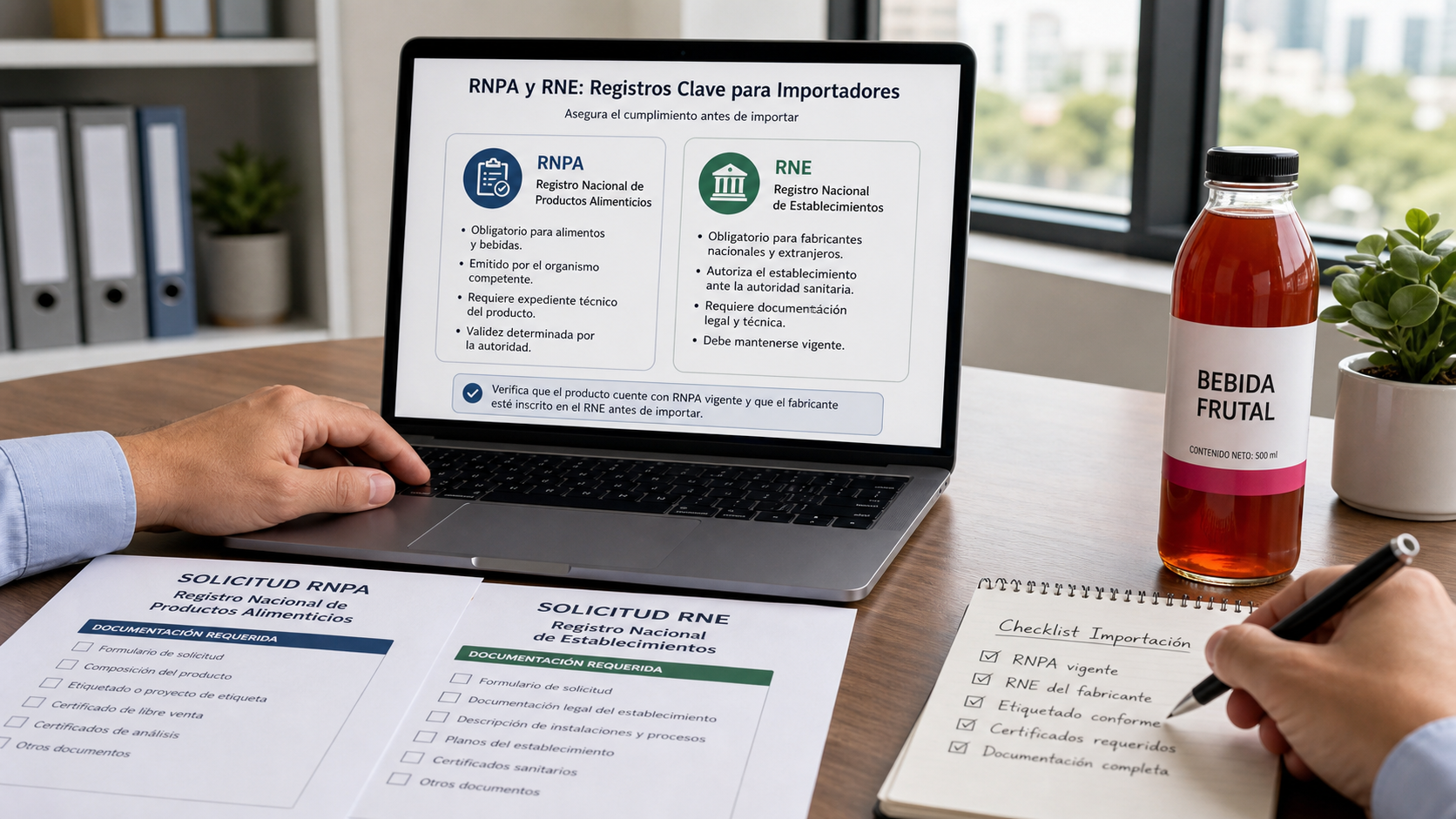
- Secure establishment registration (RNE). The local establishment responsible for the product in Argentina (typically the importer/distributor or co-packer) must hold a valid RNE (Registro Nacional de Establecimientos). Without an RNE sponsor, you cannot obtain RNPA.
- Obtain product registration (RNPA) with ANMAT/INAL. Each beverage needs a RNPA (Registro Nacional de Productos Alimenticios) before commercialization. Your IOR submits the technical dossier—label artwork in Spanish, formula/ingredients, shelf life, processing description, and when applicable, lab results—per ANMAT/INAL instructions.
- Design compliant Spanish labels under the CAA. Build the full label (or a compliant over-sticker) in Spanish with required elements (see the labeling section below). If the product triggers front-of-pack warnings, integrate the black octagons mandated by Ley 27.642. Plan print lead times with your packaging suppliers.
- Perform front-of-pack (FOP) warning assessment. Model nutrition values per serving and per 100 mL/g to determine whether black octagonal warnings apply under Law 27.642. Align serving size, nutrition panel, and artwork with your regulatory team before final RNPA submission.
- Prepare pre-shipment documents. Typical sets include commercial invoice, packing list, certificate of free sale or sanitary certificate if applicable, certificate of origin (as needed), CoA or analysis results, bill of lading (or AWB), and the Spanish label proof aligned with RNPA expectations.
- Book logistics & choose port/airport of entry. Common gateways include the Port of Buenos Aires and the Port of Rosario for sea freight; Ezeiza for air cargo. Confirm palletization, temperature control, and shelf-life upon arrival with your forwarder and warehouse provider.
- File customs clearance with AFIP/DGA. Your customs broker lodges the import declaration, attaches documents, and arranges inspections if flagged. Duties, VAT (IVA), and any applicable internal taxes are settled by the importer before release.
- Comply with inspections & sampling when required. ANMAT/INAL and customs may inspect or sample shipments to verify labeling, identity, and safety. Cooperate through your importer and maintain traceability (lot codes, invoices, supplier statements).
- Release, warehousing & market launch. Once cleared, the importer stores goods per CAA/label conditions and arranges distribution. Keep RNPA/RNE references on commercial documentation, and ensure any e-commerce listings mirror on-pack data in Spanish.
- Maintain ongoing compliance. Monitor regulatory updates (CAA changes, ANMAT notices, Law 27.642 thresholds/graphics updates). Manage artwork version control, track shelf-life lots, and renew or amend RNPA if you change formula, claims, or packaging.
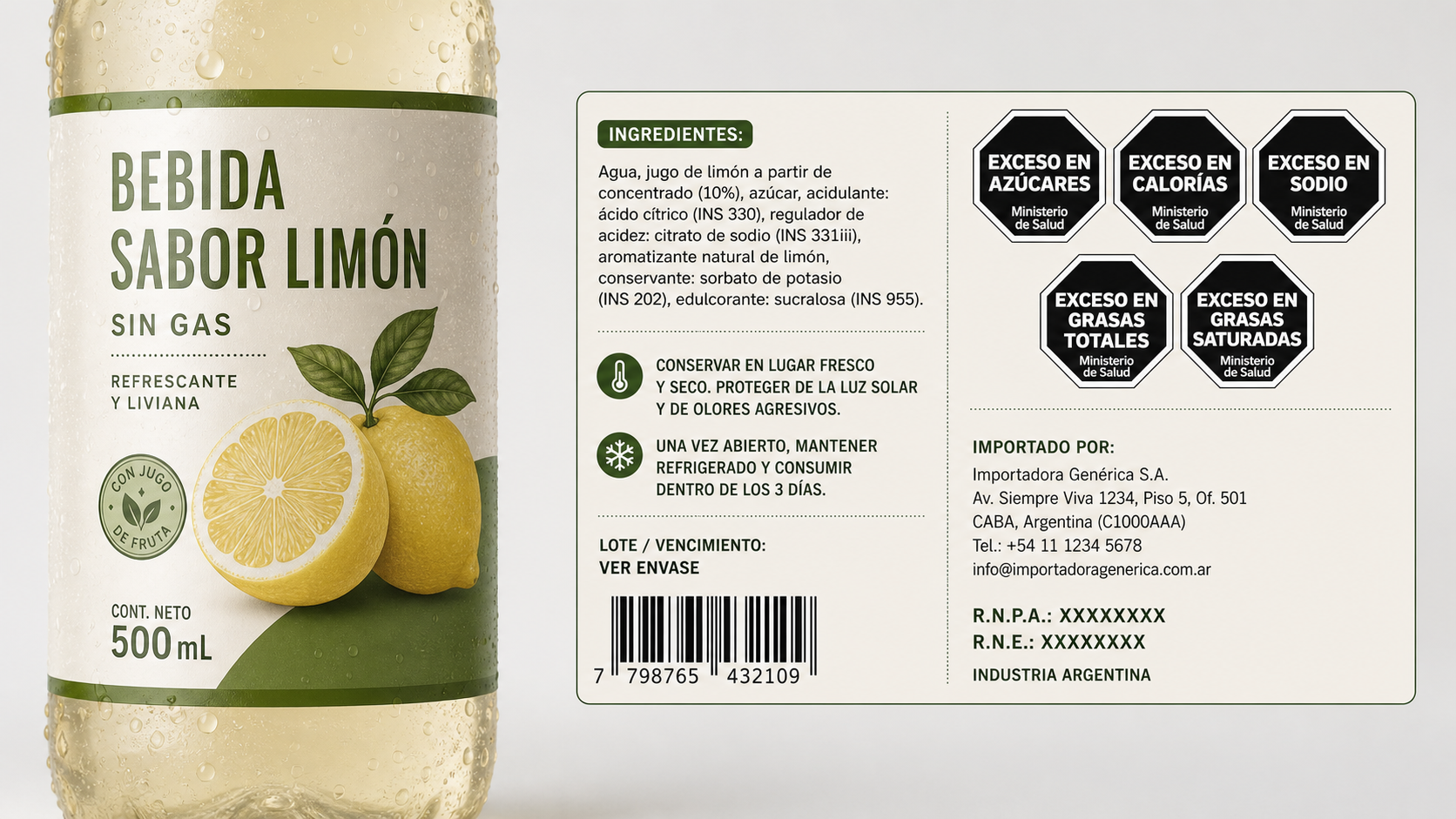
What must be on your beverage label in Argentina?
Argentina requires Spanish labeling aligned with the CAA and ANMAT/INAL criteria. The following elements are commonly expected for beverages sold domestically; your exact set depends on category and composition.
- Product name (Spanish): The legal/common name that matches the CAA category (e.g., agua, bebida sin alcohol, jugo/néctar).
- Ingredient list: In descending order by weight; declare additives by functional class and name as required by the CAA.
- Allergens: Highlight per CAA; use Spanish terms and required prominence/format.
- Net content: In SI units (mL or L) and formatted per CAA typography rules.
- Nutrition facts: In Spanish, per serving and/or per 100 mL as applicable; ensure consistency with your FOP assessment.
- Importer & establishment details: Name, address, and the RNE number of the Argentine establishment responsible.
- RNPA number: The product’s registration number issued for Argentina.
- Lot code & date marking: Lot/batch and best-before/date format acceptable under the CAA; include storage instructions if needed.
- Country of origin: Declare origin per customs and CAA rules.
- Mandatory statements (when applicable): E.g., for high-caffeine or energy drinks, or sweeteners—use CAA-prescribed phrasing in Spanish.
- Front-of-pack octagons: If thresholds are exceeded, apply the black octagonal warning icons required by Ley 27.642. For a regional overview of such systems, see front-of-pack warning labels in Latin America.
100% juice, nectar & juice drink: positioning in Argentina
Argentina distinguishes beverages by composition and permitted claims. Use the table below to align formulation and labeling strategy with the CAA and commercial positioning.
| Format | Typical HS scope | Added sugar | Positioning & notes |
|---|---|---|---|
| 100% juice | Often 2009 (non-fermented fruit juices) | Not permitted for 100% claim | Emphasize fruit content; validate category name, Brix references, and nutrition panel against CAA. |
| Nectar | Commonly 2009/2202 depending on composition | May be permitted within limits | Requires correct Spanish denomination (néctar); align fruit content, sweeteners, and any additives with CAA. |
| Juice drink | Often 2202 (non-alcoholic beverages) | Permitted per category rules | Do not imply 100% juice; ensure claims and imagery match fruit content and CAA definitions. |
Do you always need RNPA and RNE to sell beverages in Argentina?
Yes. Commercialized beverages generally require RNPA for each product and a sponsoring Argentine establishment with a valid RNE. The RNPA appears on the label. Your importer/distributor typically holds the RNE and submits RNPA dossiers to ANMAT/INAL.
Customs, taxes & paperwork at AFIP/DGA
Your customs broker files the import declaration to AFIP/DGA using the invoice, packing list, transport document (BL/AWB), certificate of origin (if applicable), RNPA/RNE references, and any sanitary or analysis documents requested by ANMAT/INAL. Duties, VAT (IVA), and any applicable internal taxes must be settled before release. Keep consistent data across documents (quantities, descriptions, HS headings) to avoid holds or reclassification.
Logistics: ports, airports & warehousing
Plan routing and storage according to shelf life and temperature needs. Common gateways include the Port of Buenos Aires and the Port of Rosario for ocean freight, and Ezeiza International Airport for air cargo. Coordinate with your forwarder for pallet specs, humidity control, and arrival storage options. Confirm whether compliant over-stickering in Spanish can be completed in bonded facilities for your case, or pre-print final labels before export—your IOR and INAL can advise the permissible path.
Differences for alcoholic beverages
Alcoholic drinks (beer, wine, spirits) may face additional controls and taxes. Wine, in particular, is subject to oversight by the INV in addition to general customs and labeling rules. Align category-specific requirements early, especially for denomination, strength declaration, and any origin statements.
Project planning tips for Argentina
- Lock claims early: Align marketing with the CAA. Avoid on-pack promises that trigger reclassification or additional warnings under Law 27.642.
- Structure your dossier: Keep a single source of truth for formula, ingredient specs, CoAs, and Spanish label files used for RNPA.
- Test logistics windows: Build buffers for port congestion, regulatory queries, and artwork changes.
- Regional benchmarking: If you sell across LATAM, harmonize base artwork and adapt local layers (e.g., octagons in Argentina). For comparison, see market entry rules in Chile.
FAQ: import beverages into Argentina
Do imported drinks require Spanish labels before customs clearance?
Plan for Spanish-compliant labels aligned with the CAA and RNPA. In some workflows, compliant over-stickers may be applied in bonded facilities before commercialization; confirm the acceptable pathway with your importer and INAL for your specific product and port.
Where do front-of-pack octagons apply on my label?
If nutrient thresholds are exceeded, black octagonal warnings under Law 27.642 must appear on the principal display panel with the prescribed format and phrasing. Coordinate nutrition panel values and serving size early so your artwork and RNPA submission stay consistent.
Who holds the RNPA—the foreign manufacturer or the Argentine importer?
RNPA is issued for products marketed in Argentina and is typically sponsored by a local establishment that holds RNE (often the importer/distributor). The RNPA number then appears on the Argentine label for that product.
Which ports are most common for beverages?
The Port of Buenos Aires and the Port of Rosario are common sea freight gateways. Air shipments typically move via Ezeiza International Airport. Choose based on lead time, cost, and your warehouse network.
Important limitations
This guide summarizes regulatory practices for beverages in Argentina but is not legal advice. Requirements can change, and interpretations may vary by product category, composition, and presentation. Work with your Argentine importer, customs broker, and ANMAT/INAL contacts to validate the exact path for your SKU.
Sources
- ANMAT (Administración Nacional de Medicamentos, Alimentos y Tecnología Médica)
- INAL – Instituto Nacional de Alimentos (ANMAT)
- Código Alimentario Argentino (CAA) – ANMAT/INAL
- Ley 27.642 – Promoción de la Alimentación Saludable