


 Français
 Español
 العربية
 한국어
한국어To import beverages into Iraq, you must secure a Certificate of Conformity from the Central Organization for Standardization and Quality Control (COSQC) before arrival, apply Arabic labelling, and provide Halal documentation. Expect 1 conformity certificate per shipment, coordinated pre-shipment with an approved inspection provider to avoid holds and re-inspection at Iraqi ports.
This guide focuses on practical steps, documents, timelines, and risk controls to help you and your Iraqi importer clear goods smoothly under Iraq’s food import controls. It also highlights mandatory Arabic labels and Halal requirements, with a step-by-step workflow you can execute with your logistics partners.
What does COSQC require before your beverages reach Iraq?
You must obtain a COSQC Certificate of Conformity (CoC) through an approved inspection body before the shipment arrives. The CoC confirms your products meet Iraqi standards and is presented at the port to enable customs and quality clearance without costly delays or re-inspection.
In practice, you will submit your product documents and samples to an approved provider for conformity assessment, labeling review, and, where required, testing. When approved, the provider issues a shipment-specific CoC. Your importer or customs broker then uses this CoC with the entry file to complete clearance.
Step-by-step: how to import beverages into Iraq
The ordered steps below reflect a typical import flow for non-alcoholic beverages. Adjust for your HS code, packaging format, and shipping mode.
- Define product scope & HS classification. Confirm product type (e.g., 100% juice, nectar, juice drink, carbonated soft drink, flavored water) and assign the correct HS code with your broker. Correct classification drives duty, taxes, and testing requirements.
- Assemble your technical dossier. Prepare a product specification, full ingredient list with percentages where needed, manufacturing flowchart, allergen statement, shelf-life statement, sample Certificate of Analysis (COA), and Safety Data Sheets if applicable (e.g., for CO2 cylinders).
- Plan Arabic labelling from the start. Draft compliant Arabic artworks covering product name, ingredients, net content (mL/L), storage, production & expiry dates, country of origin, importer details in Iraq, and any claims supported by evidence. Ensure label content matches the product formula.
- Secure Halal documentation. Obtain a valid Halal certificate from a recognized body for the finished product or critical ingredients (e.g., flavors, emulsifiers). Ensure the certificate holder, scope, and validity dates align with the shipment timeline and COSQC expectations for Halal evidence.
- Choose an approved inspection provider for COSQC CoC. Coordinate pre-shipment conformity assessment with a provider authorized to issue Iraq CoC. Share labels, documents, and samples on time to avoid sailing delays. The provider will review standards compliance and issue a Certificate of Conformity when all requirements are met.
- Confirm shelf-life and batch coding. Align production and shipping so the goods arrive with commercially reasonable remaining shelf life. Ensure batch/lot coding, production date, and expiry date on the units and outer cartons match invoices and packing lists.
- Compile shipping documents. Finalize commercial invoice, packing list, bill of lading/air waybill, certificate of origin (if required), the COSQC CoC, and any additional attestations requested by your Iraqi importer or broker.
- Pre-alert your importer and broker. Share the draft document set and CoC before departure to allow entry pre-filing, tariff checks, and early resolution of discrepancies.
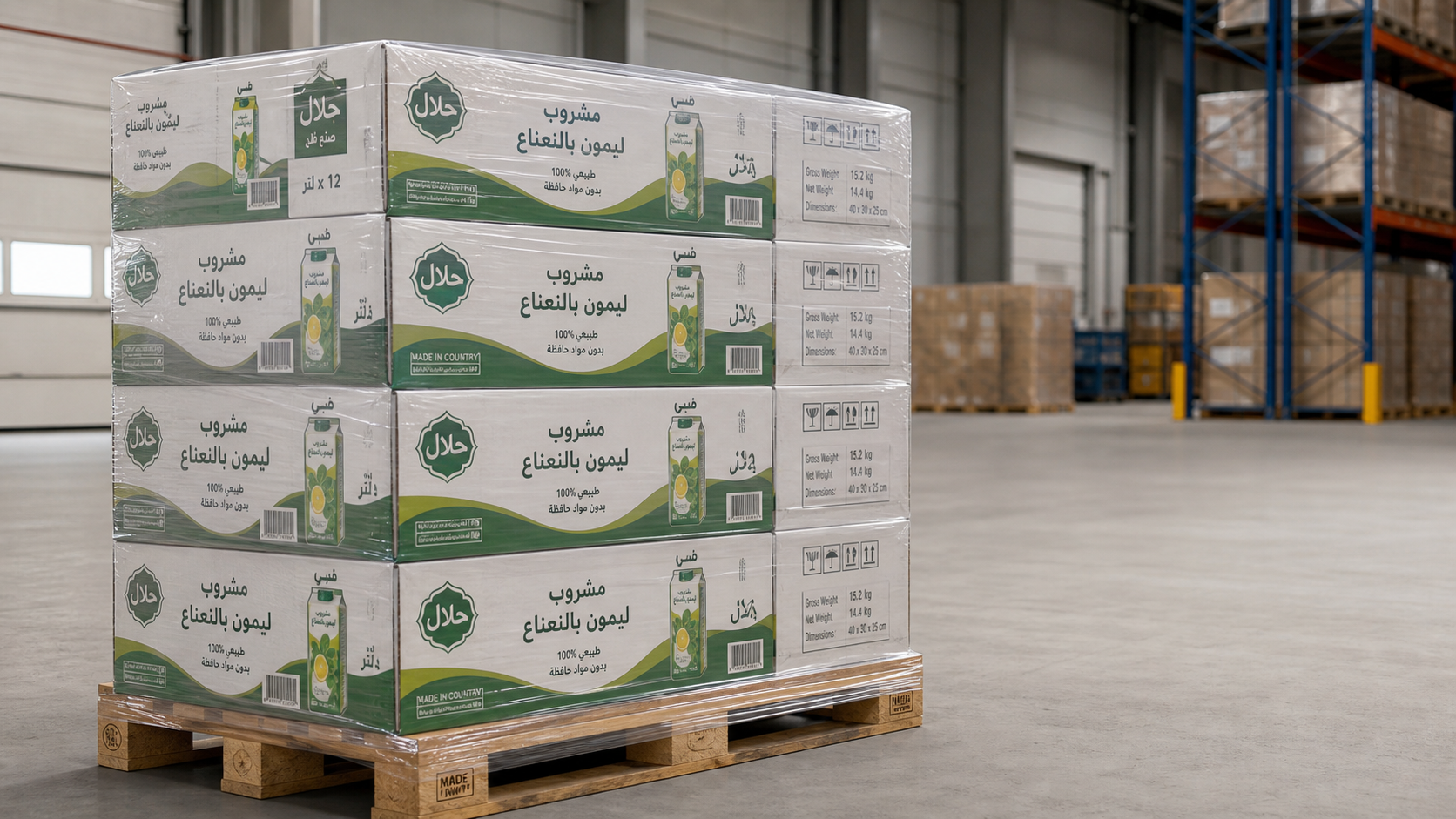
- Ship with compliant markings. Ensure outer cartons include Arabic product name, net content, fragile/up symbols as needed, lot code, and importer details. Keep labels consistent across consumer units and outers.
- File customs & quality clearance on arrival. Your importer or broker submits the customs declaration with the CoC to facilitate COSQC quality clearance alongside customs, duty, and taxes according to the HS code.
- Prepare for inspection, if requested. While a valid pre-arrival CoC is intended to streamline release, authorities may verify documents or sample goods. Keep master samples, artworks, and COAs handy to respond quickly.
- Release, distribution & post-market controls. After clearance, maintain traceability records, keep Halal and CoC files accessible, and monitor Arabic label accuracy in-market. Update labels or documents if formulas, pack sizes, or claims change.
Document checklist for Iraq beverage imports
Gather these documents early. Use the CoC to anchor your file and match every label, statement, and figure across documents.
| Document | Who prepares | When used | Iraq-specific notes |
|---|---|---|---|
| Certificate of Conformity (CoC) | Approved inspection body | Pre-shipment & at customs | Required by COSQC before port arrival to avoid holds |
| Halal certificate | Recognized Halal body | With product file & entry | Halal is mandatory for beverages; align scope with formula |
| Arabic label artwork | Brand owner / designer | Pre-approval & production | Arabic language required; importer details must be present |
| Specification & ingredient list | Manufacturer | Pre-shipment review | Support standard conformance and label consistency |
| COA and microbiology | Manufacturer / lab | Pre-shipment & on request | Helps address quality queries at clearance |
| Commercial invoice & packing list | Exporter | Customs entry | Must align with pack sizes, batches, and labels |
| Bill of lading / Air waybill | Carrier / forwarder | Customs entry | Ensure consignee and notify details match importer info |
| Certificate of origin | Chamber/authority | Customs entry (if needed) | Check with broker for HS-specific requirements |
For a broader standards context across neighboring markets, see the GCC beverage import requirements. For macroeconomics and buyer profiles, review our Iraq market overview.
Arabic labelling checklist for Iraq
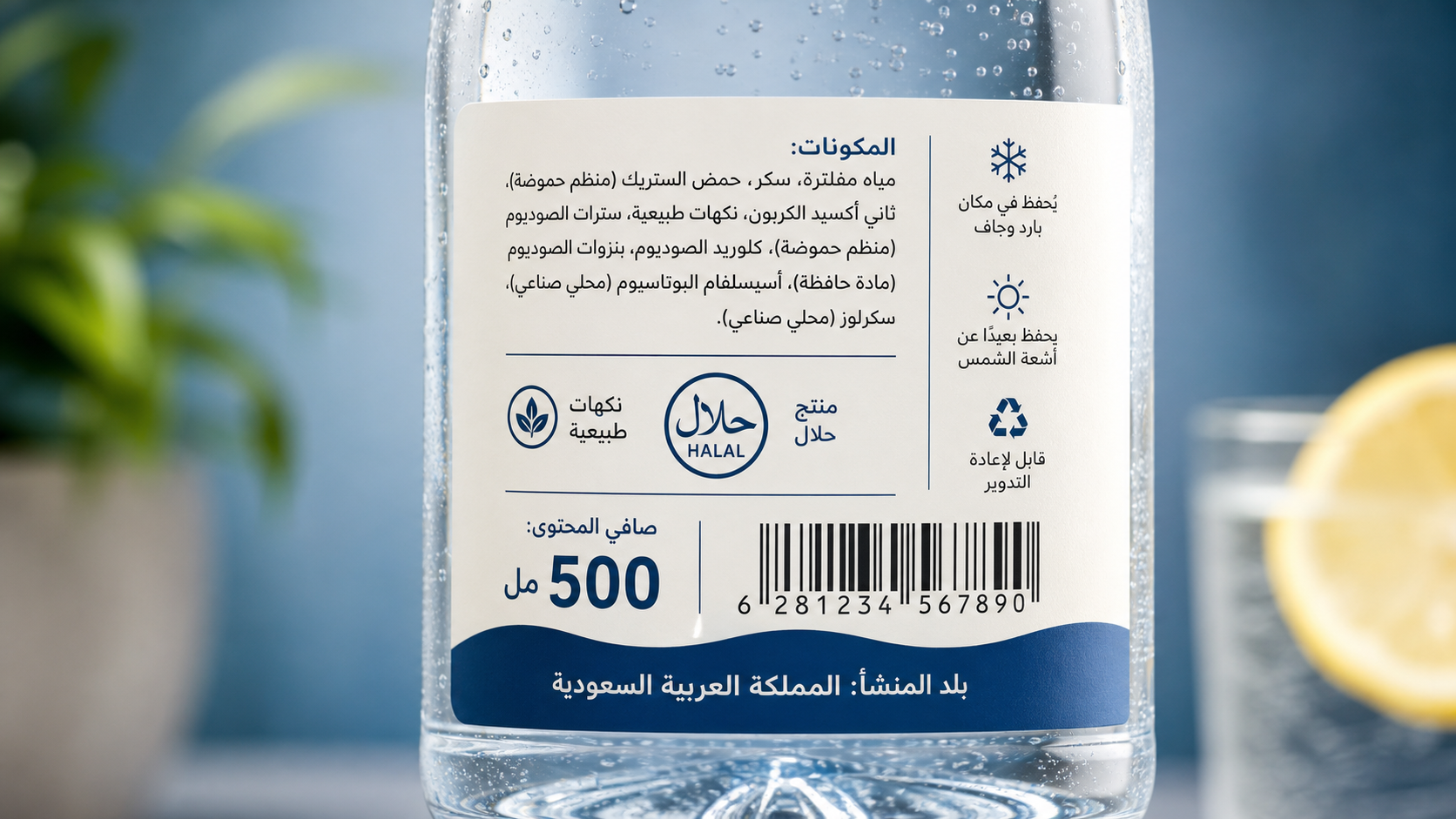
Arabic labelling is mandatory in Iraq. Apply it to the consumer unit and ensure consistency on outer cartons. Keep designs clean and legible.
- Product name in Arabic. Use an accurate, not misleading, common name.
- Ingredients list in Arabic in descending order; include additive classes and names where required.
- Allergen disclosure in Arabic where applicable.
- Net content in metric (mL or L) and any count; font size proportional and legible.
- Production & expiry dates on unit and outer; format consistent across documents.
- Storage conditions (e.g., ambient, refrigerate after opening) in Arabic.
- Country of origin stated clearly.
- Importer/Distributor in Iraq: legal name, address, and contact.
- Nutrition table if you present nutrition or functional claims; keep units consistent.
- Halal mark or statement aligned with your Halal certificate and product scope.
Label accuracy is checked during conformity assessment and can be verified during clearance. Mismatched dates, net content, or importer details are common grounds for delays.
Halal documentation for beverages
Halal is mandatory for beverages entering Iraq. The depth of evidence depends on your formula—products with complex flavors, emulsifiers, or processing aids may require additional ingredient-level Halal attestations.
- Choose a recognized Halal body and ensure certificate validity covers your production dates.
- Match formula to scope: list key ingredients in the Halal file so auditors can map them to the label and specification.
- Keep consistency: the Halal certificate, label claims, and shipment dates should all align with the batch documents.
COSQC conformity assessment and your CoC
The COSQC pre-arrival conformity program is designed to verify that imported products meet Iraqi standards before they reach the port. Working with an approved provider, you submit your product and label files, and they may test representative samples. When approved, you receive a shipment-specific Certificate of Conformity.
- One CoC per shipment: if multiple SKUs are shipped together, ensure the CoC covers each SKU and pack size listed on the invoice and packing list.
- Traceability: batch/lot codes on labels, COAs, and the CoC should match.
- Avoid label redesigns last-minute: changed net content or importer details after CoC issuance can trigger re-approval.
Product format notes: juice, nectar, drinks
Classification and labelling depend on formulation and Brix. Align your marketing terms with composition and local standards language.
| Format | Typical positioning | Arabic label focus | Positioning & notes |
|---|---|---|---|
| 100% juice | No added sugar claim depends on formula | Fruit content clarity, Brix-raising items disclosed | Ensure product name matches pure juice composition |
| Nectar | Juice + water + sugar/edulcorants | Ingredients order, sweeteners declarations | Avoid implying 100% if diluted or sweetened |
| Juice drink / CSD | Lower juice content, often carbonated | Additives classes/names, flavor nature | Claims should not mislead on fruit content |
Customs clearance workflow and timing
With a valid pre-arrival CoC, clearance focuses on customs processing, duty/tax payment, and document verification. Timelines depend on carrier schedules, broker efficiency, and the completeness of your file.
- Pre-file with your broker: share scanned documents and the CoC before vessel arrival to front-load checks.
- Keep originals accessible: if originals are requested, ensure swift courier or electronic release arrangements with the carrier.
- Expect verification: authorities can request additional information or samples even when a CoC is present.
Common pitfalls and how to avoid them
- Late label localization: Arabic artworks finalized after production create mismatches. Lock labels before CoC review.
- Incomplete Halal paperwork: missing ingredient-level attestations can slow assessment. Map each sensitive input.
- Inconsistent dates and batch codes: keep production/expiry dates and lot codes identical across unit, carton, COA, and invoices.
- Scope gaps in the CoC: ensure every SKU and pack size on the invoice appears on the CoC.
- Unclear importer details: use the registered legal name and address the broker will file at customs.
Commercial planning: costs, MOQ, logistics
Plan landed cost with your importer and forwarder. Duties and taxes depend on HS classification, and logistics choices affect transit and demurrage risks.
- Consolidation: group compatible SKUs under one CoC when feasible to simplify clearance.
- Incoterms: align responsibilities for pre-shipment CoC fees, testing, and any destination port charges.
- Packaging robustness: hot climates and long inland hauls demand sturdy secondary packaging and pallet stability.
For broader compliance planning across the Gulf, review the GCC beverage import requirements. For in-country demand cues and channels, visit the Iraq market overview.
Buyer checklist to brief your partners
Share this brief with your design house, lab, and broker so each party delivers their part on time:
- Confirmed HS code and product description
- Finished Arabic labels and carton markings
- Halal certificate valid for production window
- Specifications, COAs, microbiology plan
- CoC provider booked and timelines agreed
- Importer legal details for labels and filings
- Batch coding and date formats standardized
- Shipping plan with buffer for inspections

FAQ: importing beverages into Iraq
Quick answers to common questions about how to import beverages into Iraq.
Is the COSQC Certificate of Conformity always required?
Yes. Under Iraq’s pre-arrival conformity program, a shipment-specific CoC from an approved provider is expected before the cargo reaches port. It is central to quality clearance and helps prevent re-inspection or holds.
Is Arabic labelling mandatory for beverages?
Yes. Consumer units and outer cartons require Arabic information, including product name, ingredients, net content, dates, country of origin, and importer details. Keep label content consistent with your specification and invoices.
Is Halal mandatory for beverages?
Yes. Provide a valid Halal certificate aligned to your formula and production dates. Where relevant, include ingredient-level attestations (e.g., flavors or emulsifiers) in the Halal file.
Do I need product registration before import?
Requirements can vary by category and change over time. Coordinate with your Iraqi importer and your conformity assessment provider to confirm if any pre-registration applies to your specific beverage.
What about alcoholic beverages?
This guide focuses on non-alcoholic beverages. Alcoholic imports are subject to separate, tighter controls and licensing; consult specialized legal and customs advisors for that category.
Conclusion
To import beverages into Iraq reliably, build your workflow around three non-negotiables: a pre-arrival COSQC Certificate of Conformity, Arabic labelling on units and cartons, and Halal documentation that matches your formula and shipment dates. Align labels, batch codes, and documents early, and keep your broker engaged from pre-shipment to final release to minimize delays.
Sources
- Central Organization for Standardization and Quality Control (COSQC) – Iraq
- Iraq Customs Authority
- Relevant Iraqi food standards and import circulars as advised by your approved CoC provider