


 Français
 Español
 العربية
 한국어
한국어To import beverages into Kuwait, you must secure KUCAS pre-shipment conformity, pass Public Authority for Food and Nutrition (PAFN) clearance, and budget for a typical 5% customs duty on many HS lines. Most cargo enters via two main seaports—Shuwaikh and Shuaiba—or through Kuwait International Airport for urgent airfreight.
This guide focuses on Kuwait-specific steps, timelines and agencies so you can move from product idea to compliant, customs-cleared beverages without guesswork.
What does it take to import beverages into Kuwait?
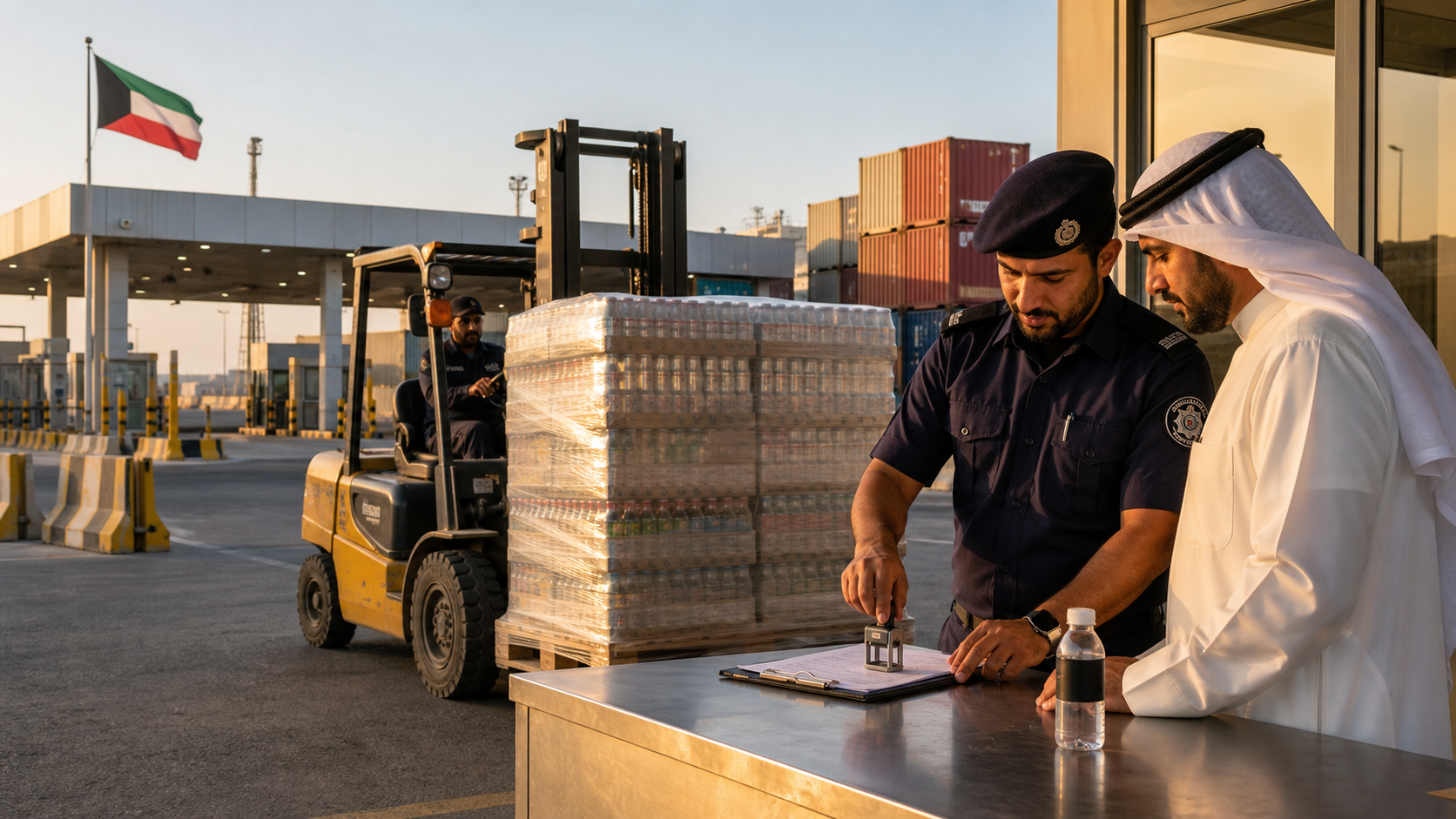
You need a KUCAS Certificate of Conformity obtained before shipment, Arabic-compliant labels that align with GCC/GSO rules, and shipment-level clearance by PAFN on arrival. Work with a Kuwait-licensed importer and ensure documents, testing and label proofs are ready to avoid storage fees or re-export.
Step-by-step: How to import beverages into Kuwait
Follow this ordered workflow from product scoping to delivery. The sequence reflects how Kuwaiti authorities and ports handle beverage consignments.
- Define scope and HS codes. Identify the exact beverage type, ingredients and HS classification. Your HS code drives KUCAS coverage, customs duty (commonly 5% for many beverages) and any additional controls.
- Appoint a Kuwait-licensed importer. Your local partner should hold the appropriate commercial registration and be set up to clear food and beverage shipments. They will file with Customs, interface with PAFN, and receive goods post-release.
- Confirm GCC/GSO baseline rules. Review Arabic labelling, Halal (where applicable) and common Gulf standards via the GCC beverage import requirements page. Do not rework GCC details here—apply them as your baseline.
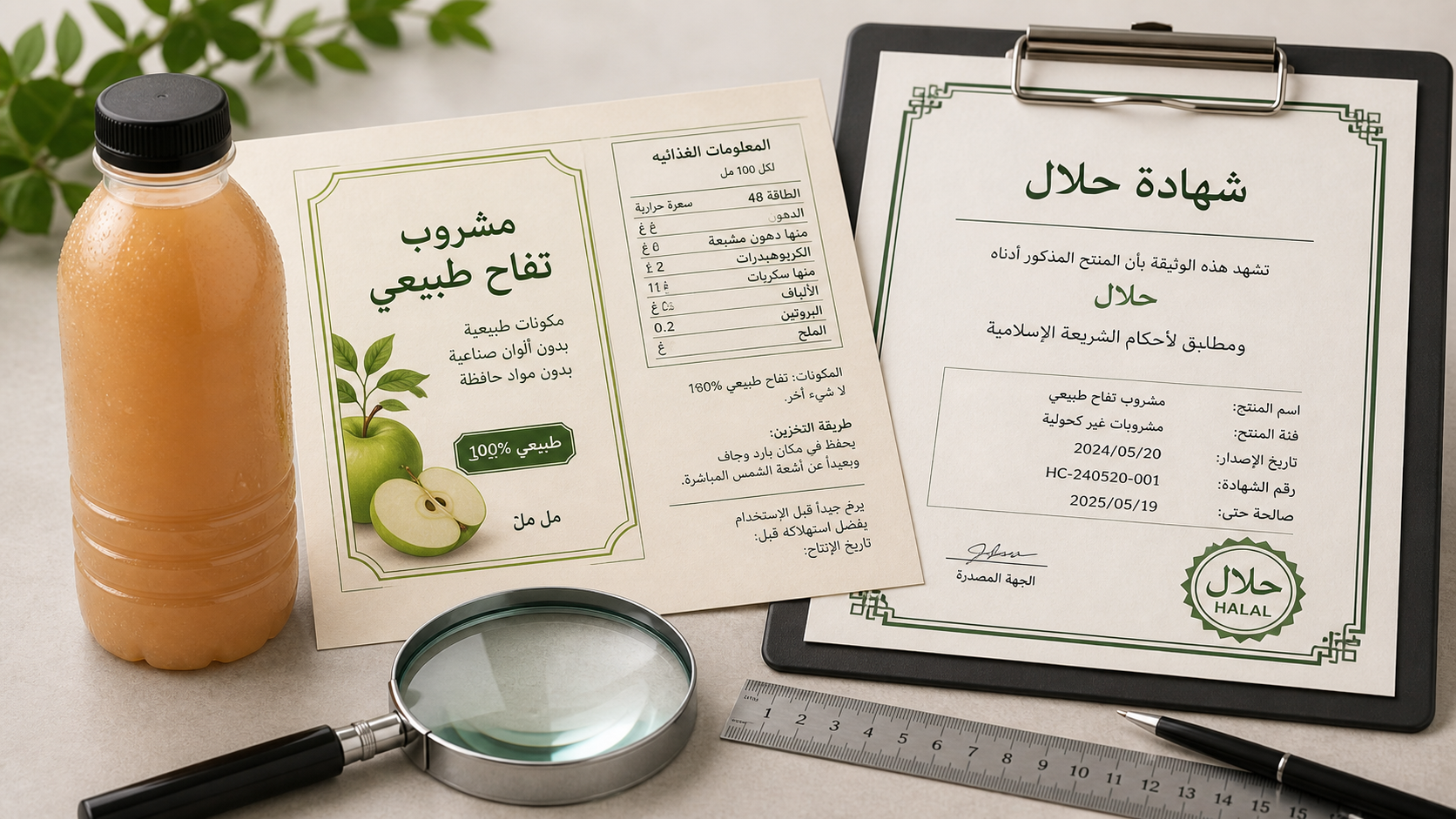
- Prepare Arabic labels for Kuwait. Ensure product name, ingredients, net content, country of origin and date coding appear in Arabic and match your artwork/translation. Labels must be present on units entering Kuwait; plan permanent, legible application.
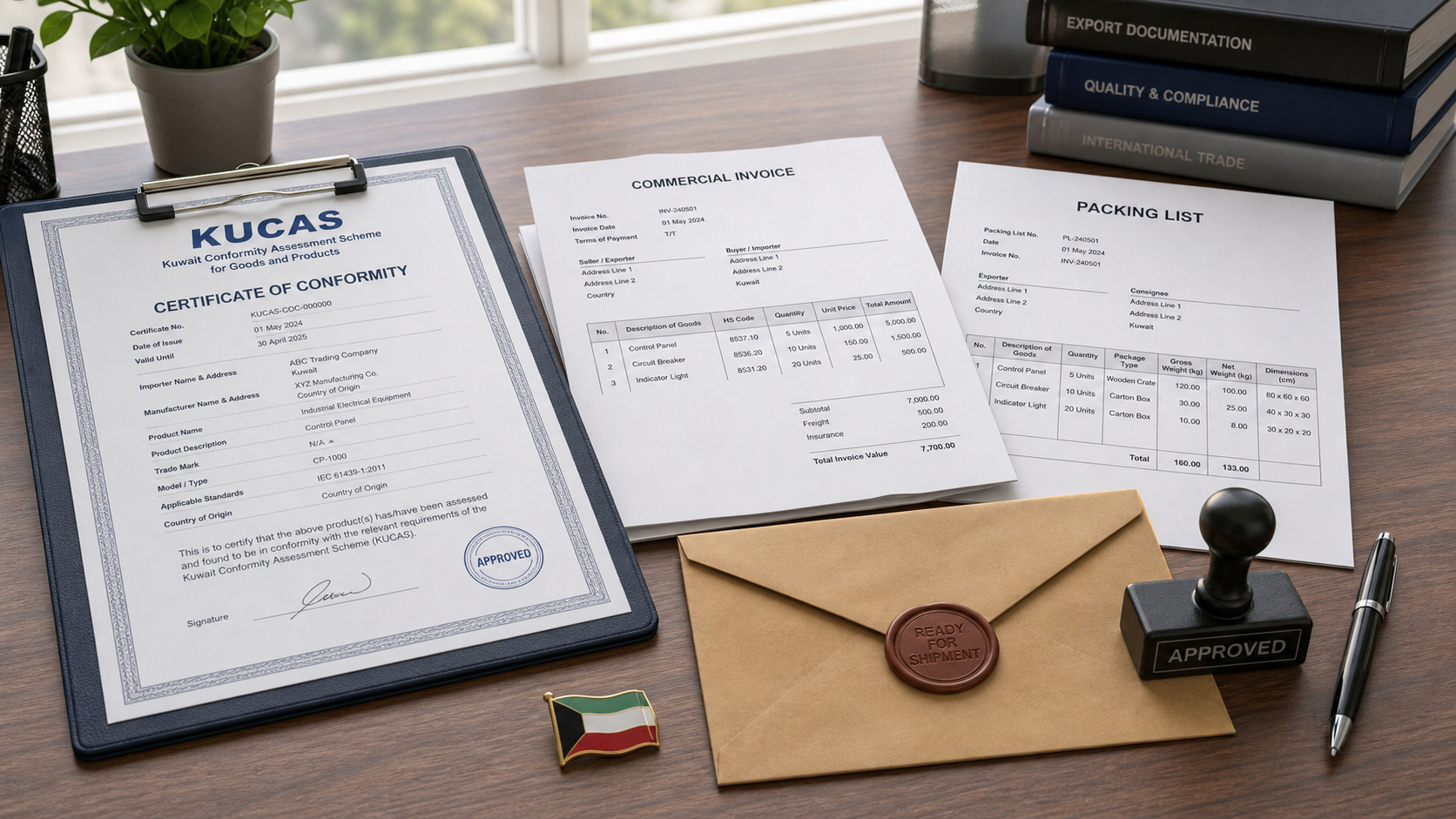
- Secure KUCAS conformity pre-shipment. Kuwait Conformity Assurance Scheme (KUCAS) requires regulated products to obtain a Certificate of Conformity (CoC) before cargo arrives. Engage an approved conformity assessment body recognized in Kuwait to review test reports, labels and product specifications.
- Testing and inspection (as required). Provide lab test results and samples if asked by your chosen body. When compliant, you receive the KUCAS CoC covering the shipment or product scope defined by the scheme.
- Halal documentation (if relevant). For products with animal-derived ingredients or processing aids, arrange acceptable Halal certification in line with GCC expectations; see the GCC beverage import requirements page for the baseline framework.
- Compile shipment documents. Typical sets include commercial invoice, packing list, certificate of origin, bill of lading/air waybill, health/manufacturer certificate, KUCAS CoC, and label proofs. Keep details consistent across documents.
- Book the route to Kuwait. Choose Shuwaikh Port, Shuaiba Port, or Kuwait International Airport based on lead time and volume. Coordinate temperature control and stowage to protect quality in hot-climate transit.
- Pre-arrival importer filings. Your importer uploads or pre-submits data and scans on the customs e-portal, including the KUCAS CoC, invoice, and HS codes. Align declared values, quantities and descriptions to minimize queries.
- Arrival, duty assessment and fees. Customs assesses duties (commonly 5% on many beverage HS codes) and applicable port charges. Kuwait has no VAT as of late 2024; verify current policy before shipment.
- PAFN inspection and release. PAFN officers verify labels, documents and shipment condition. They may draw samples for laboratory analysis. Once cleared, Customs authorizes release.
- Post-clearance logistics. Arrange domestic transport and warehouse intake checks. Keep batch, expiry, and distribution records aligned to your traceability procedure.
- Maintain compliance for repeat shipments. Track any standard updates, importer license renewals, and KUCAS or labelling changes that could affect future consignments.
Who regulates beverage imports in Kuwait?
PAFN oversees food safety and shipment clearance, while KUCAS (administered through Kuwait’s conformity program) controls pre-shipment product conformity. Customs classifies goods, assesses duty and executes the final release at ports and the airport.
| Agency | Primary responsibilities |
|---|---|
| Public Authority for Food and Nutrition (PAFN) | Shipment-level clearance, label and document verification, sampling and laboratory checks where needed. |
| Kuwait Conformity Assurance Scheme (KUCAS) | Pre-shipment product conformity via approved bodies; issuance of Certificate of Conformity required before arrival. |
| Kuwait General Administration of Customs | HS classification, duty assessment, customs control and release formalities at ports and airport. |
KUCAS for beverages: what must be secured pre-shipment?
You must have a valid KUCAS Certificate of Conformity in hand before the cargo lands in Kuwait. Shipping without it risks inspection delays, storage fees or return-to-origin.
- Scope: KUCAS verifies your beverage’s compliance with applicable Kuwait/GCC standards and label requirements.
- How it works: An approved conformity assessment body reviews documents and tests; where applicable, conducts inspection; then issues the CoC referencing product, batch or shipment.
- Artifacts to prepare: Test reports, full label artwork and translations, ingredient list and composition, product specifications, and manufacturing declarations.
- Tip: Align the CoC details with your invoice, packing list and HS codes. Mismatches are a common cause of holds.
Coordinate KUCAS timing with your production schedule. Aim to finalize the CoC before booking ocean space to avoid rollovers or idling at origin.
Ports and clearance routes in Kuwait
Most beverage imports move through Shuwaikh or Shuaiba, with air consignments via Kuwait International Airport. Choose by cost, lead time and inland distribution plan.
| Entry point | Typical use | Positioning & notes |
|---|---|---|
| Shuwaikh Port | Primary seaport for containerized FMCG, including beverages. | Close to Kuwait City; high throughput; plan for port appointment windows. |
| Shuaiba Port | Industrial seaport handling containers and bulk. | Alternative to Shuwaikh; consider network and yard capacity. |
| Kuwait International Airport | Air cargo for urgent or high-value beverages. | Higher freight cost; shorter lead time; useful for launches or replenishment. |
Labelling, shelf-life and Halal: Kuwait practice
Apply the GCC/GSO baseline—Arabic labelling, ingredient transparency and Halal (where applicable)—as described on the GCC beverage import requirements page. In Kuwait, enforcement typically focuses on whether Arabic labels are already present at arrival, accuracy of translations, and date coding legibility.
- Arabic present on arrival: Plan labels or durable stickers at origin. Late relabelling is risky and subject to authority discretion.
- Consistency matters: Label text, artwork, and declared specs must match the documents and KUCAS submission.
- Date coding: Ensure clear, permanent production/expiry coding consistent with Gulf practices and your declared shelf life.
- Storage claims: Temperature or handling statements on labels should reflect the real supply chain, particularly in hot months.
Duties, taxes and fees in Kuwait
For many beverage HS codes, a 5% customs duty under the GCC common external tariff is typical. Kuwait had not implemented VAT as of late 2024, and excise on soft drinks had not been enacted there at that time. Always verify current rates and policies before shipping.
- Landed cost logic: CIF value → apply customs duty (e.g., 5% where applicable) → add port/handling and inspection-related fees.
- HS-driven outcomes: Duty and controls depend on the exact HS code. Confirm classification with your importer to prevent reassessment.
- Currency and valuation: Ensure invoices, Incoterms and freight evidence support a defensible customs value.
Document checklist for Kuwait beverage imports
Use this shipment-level checklist. Bring originals or attested copies as requested by your importer and officials.
| Document | Issuer | Kuwait-specific notes |
|---|---|---|
| KUCAS Certificate of Conformity | Approved conformity body | Must be secured before arrival; details must align with invoice and labels. |
| Commercial invoice | Exporter/brand owner | Clear product descriptions and HS codes facilitate smooth classification. |
| Packing list | Exporter/shipper | Show carton and pallet counts matching physical cargo. |
| Certificate of origin | Chamber/authorized authority | Match manufacturer and origin statements used in KUCAS. |
| Health/manufacturer certificate | Competent authority/manufacturer | Supports PAFN clearance; content must reflect actual formulation. |
| Bill of lading or air waybill | Carrier/forwarder | Consignee must be the Kuwait importer authorized to clear food. |
| Arabic label artwork & translation | Exporter/local agent | Provide full artwork and translation used for KUCAS and PAFN checks. |
| Importer license/registration | Kuwait-licensed importer | Proves the consignee is authorized to import food/beverages. |
Common pitfalls and how to avoid them
- Shipping without KUCAS CoC: Expect holds or re-export risk. Always complete KUCAS pre-shipment.
- Arabic label added too late: Labels must be present on arrival. Build them into production, not post-landing fixes.
- Document mismatches: Keep product names, pack sizes, batch/expiry, and HS codes consistent across invoice, labels and KUCAS.
- Insufficient shelf life at arrival: Plan production and transit so remaining life meets authority expectations.
- Heat exposure damage: Specify stowage and insulation to protect quality during Gulf summer months.
- Wrong HS code: Classification errors trigger reassessment and delays. Align early with your importer/broker.
- Unclear responsibilities: Define who secures KUCAS, who files pre-arrival, and who responds to PAFN queries—before booking space.
For broader Kuwait context and buyer behavior, review the Kuwait market overview to align portfolio, packaging and price points with local demand.
FAQ
Do I need a KUCAS certificate for beverages shipped to Kuwait?
Yes. Regulated beverages require a KUCAS Certificate of Conformity obtained before shipment. Without it, clearance can be delayed or refused.
Can I ship without Arabic labels and relabel in Kuwait?
Generally, labels in Arabic are expected to be present when the goods arrive. Late relabelling is risky and subject to authority discretion; plan labels at origin.
PAFN handles food safety checks; Customs manages duty and release. KUCAS provides the pre-shipment conformity evidence required for clearance.
Which ports handle beverage imports?
Shuwaikh and Shuaiba are the main seaports; Kuwait International Airport handles urgent air consignments.
What duty should I budget?
Many beverage HS codes attract a 5% customs duty. Confirm the exact HS code with your importer to verify the rate applicable to your product.
Sources
- Public Authority for Food and Nutrition (PAFN)
- Public Authority for Industry (KUCAS program)
- Kuwait General Administration of Customs