


 Français
 Español
 العربية
 한국어
한국어To import beverages into Peru, you need a Peruvian importer with a valid RUC, a DIGESA sanitary registration for each product, labels in Spanish (including octagonal warnings under Law 30021 when applicable), and customs clearance with SUNAT. Budget for Peru’9s IGV at 18% and any excise tax that may apply to your drink type.
This practical guide focuses on regulatory and commercial steps importers actually follow, from dossier preparation to post-market controls. If you’re still validating demand, our Peru market overview can help you position formats and price points before you commit to registration.
Step-by-step: How to import beverages into Peru
The sequence below reflects how importers typically move from feasibility to first shipment while meeting Peru beverage import requirements.
Confirm your importer and tax profile (RUC with SUNAT). The importer of record must be a Peruvian entity or authorized representative registered in the RUC (Registro Único de Contribuyentes) with SUNAT (customs & tax authority). Ensure your activity codes cover food and beverage importation and that you can issue electronic invoices.
Classify the product and scope the landed cost. Work with a Peruvian customs broker to determine the correct HS code. Estimate total landed cost including ocean/air freight, insurance, port fees, import duty (if any), IGV at 18%, and any excise tax (ISC) that may apply to certain beverage categories (e.g., sugar-sweetened or alcoholic beverages). Duty and ISC vary by code and regime—confirm before pricing.
Check whether your beverage needs a DIGESA sanitary registration. In Peru, processed foods and non-alcoholic drinks require a Registro Sanitario from DIGESA (Dirección General de Salud Ambiental). Plan registration for each distinct product (and often each flavor/variant). Alcoholic beverages follow additional rules; coordinate with your broker on the correct path for spirits, wine, or beer.
Assemble the DIGESA dossier. Typical components include: product name and category, full quantitative ingredient list (including additives), manufacturing process summary, shelf life and storage, manufacturer details and address, label artwork in Spanish, and supporting certificates from the country of origin (often a Certificate of Free Sale/Health Certificate). DIGESA may request product analysis, stability evidence, or other clarifications during review.
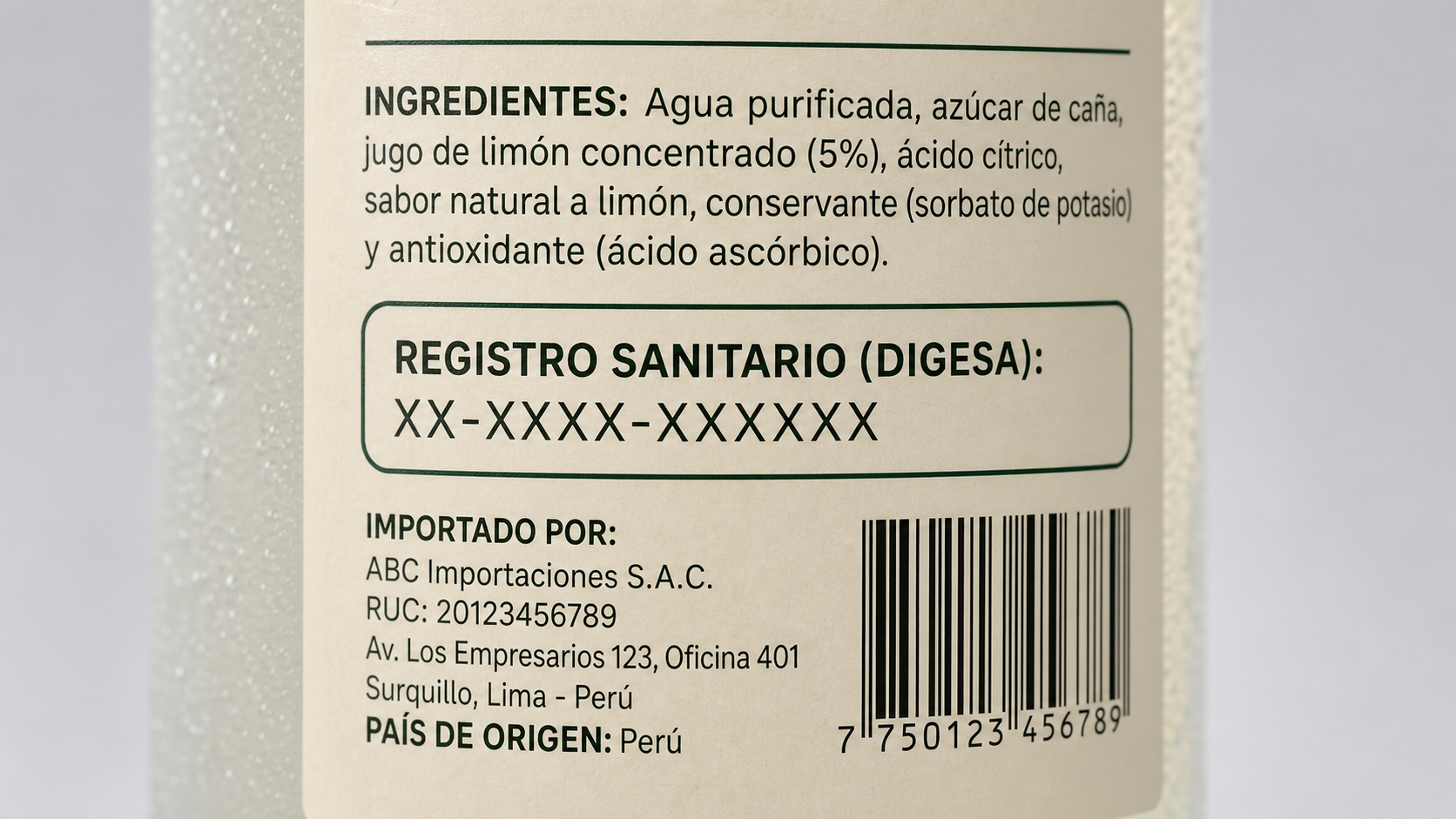
Design the Spanish label to Peruvian rules. Your draft label must be in Spanish and show at least: product name, net content (metric), ingredient list and additives, allergens if present, lot/batch, manufacturing/expiry date, country of origin, importer name and RUC in Peru, and space for the DIGESA sanitary registration code once granted. Ensure legibility, contrast, and correct units.
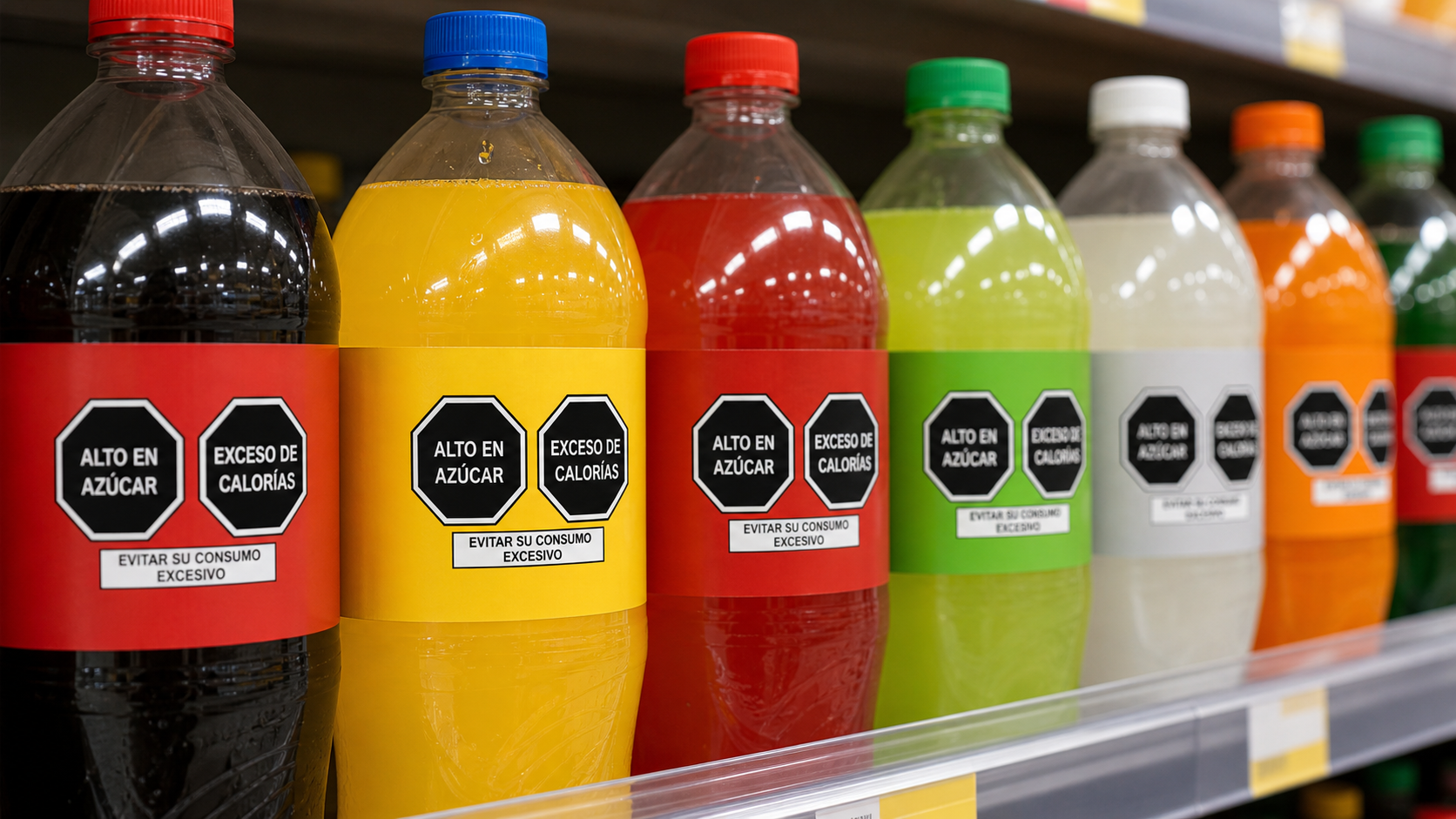
Address octagonal front-of-pack warnings under Law 30021. Peru mandates black octagon warnings for beverages that exceed specific nutrient thresholds under Ley 30021. Apply the correct octagons (e.g., high in sugar, saturated fat, sodium, or contains trans fat) where applicable. For a region-wide context and design principles, see front-of-pack warning labels in Latin America.
Submit the application to DIGESA and monitor review. File through the authorized channel and keep your broker/regulatory partner aligned. Respond quickly to DIGESA observations to avoid delays. Only produce export labels after the registration is approved and the R.S. code is confirmed.
Prepare pre-shipment paperwork. Align commercial invoice, packing list, bill of lading/air waybill, certificate of origin (if claiming a preferential tariff), and any health certificates required by the registration. Match descriptions and HS codes precisely. For multi-flavor shipments, ensure each SKU appears as registered.
Ship to a suitable Peruvian entry point. Common gateways include the Port of Callao (near Lima) and Port of Paita (Piura) for sea freight, and Jorge Chávez International Airport (Lima) for air cargo. Confirm reefer capacity, free time, and handling requirements if your beverage needs temperature control.
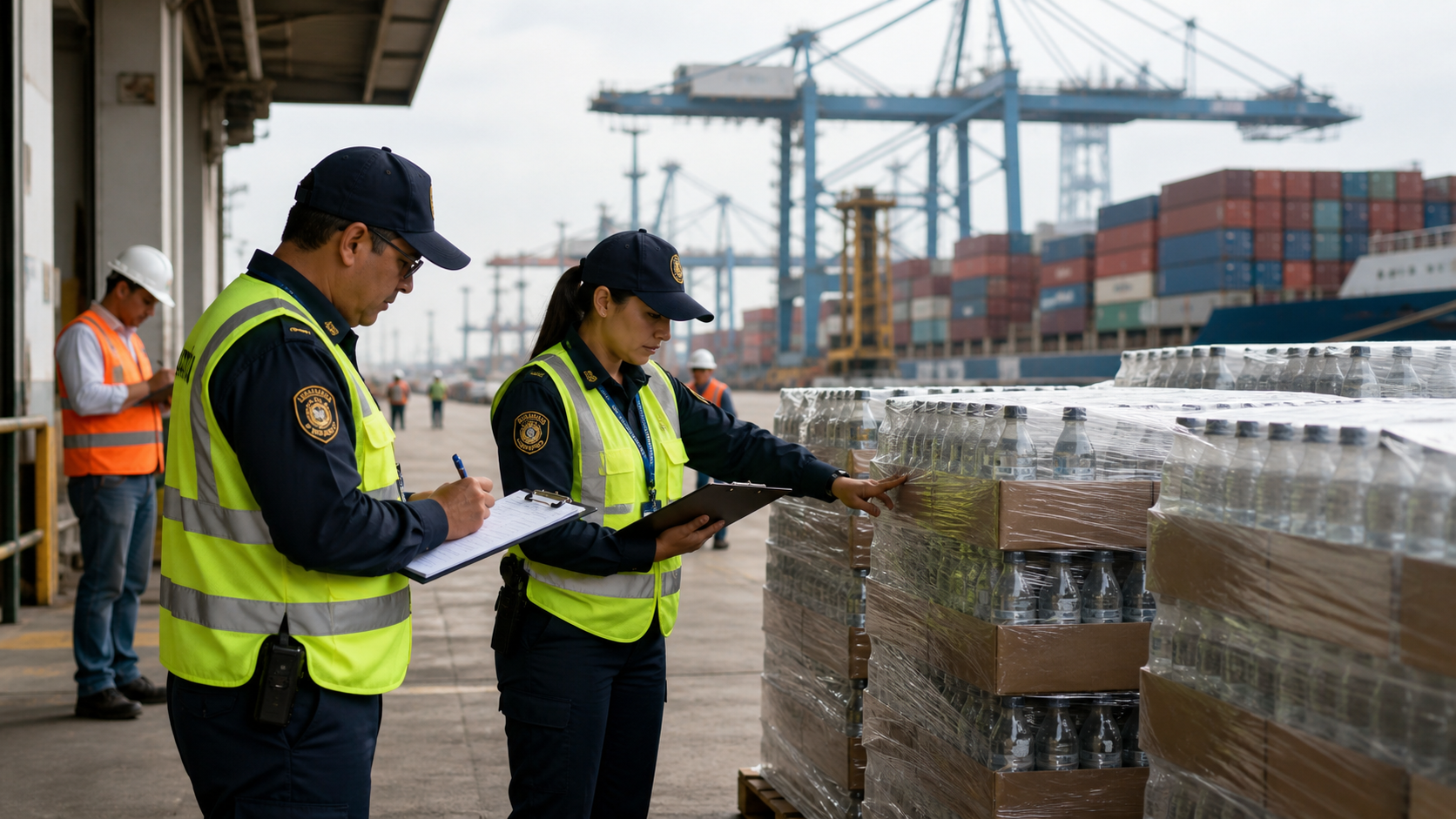
Customs clearance with SUNAT and potential inspections. Your broker files the customs declaration with SUNAT, pays assessed duties/taxes, and coordinates any physical or document examination. Port health or compliance checks can occur; have registration approvals, labels, and documents ready to minimize dwell time.
Post-market compliance and traceability. Keep samples, records, and traceability documents. Ensure the market packs match approved labels (including octagons where required) and carry the DIGESA R.S. code. Be ready for on-shelf controls or consumer-protection checks by authorities such as INDECOPI.
Plan renewals and change control. Track registration validity and re-registration timelines. Refile or notify DIGESA when you change formulation, supplier, factory, or label elements that affect the original approval. Manage artwork version control to keep the market label synchronized with approvals.
Peru-specific compliance touchpoints to know
- DIGESA sanitary registration (Registro Sanitario) is required for processed foods and non-alcoholic beverages marketed in Peru.
- Ley 30021 mandates black octagon front-of-pack warnings when a beverage exceeds defined nutrient thresholds.
- IGV at 18% applies at import; additional duty and/or ISC may apply depending on HS classification and drink type.
- Ports of entry commonly used: Callao and Paita for sea; Jorge Chávez International (Lima) for air.
- Labels must be in Spanish, include the importer’s name and RUC, and show the DIGESA registration code once approved.
Labeling in Peru: what to prepare before printing
Peru food import regulations require that consumer units placed on the Peruvian market carry a Spanish label that aligns with both DIGESA and consumer-protection expectations. Build your master label with the following elements:
- Product name and legal sales denomination in Spanish
- Net content in metric units and format accepted locally
- Complete ingredients and additives list in descending order
- Allergen declaration when applicable
- Lot/batch code and date marking (manufacture and/or expiration)
- Country of origin statement
- Importer/distributor name, address, and RUC number in Peru
- Space for the Registro Sanitario (DIGESA) code once granted
- Front-of-pack octagon warnings under Law 30021 when required
Two practical tips: print country-specific labels to avoid mixed-market inconsistencies, and run a pre-print check against your approved DIGESA dossier to ensure every text element and measurement unit aligns.
Which beverage categories face what in Peru?
Different drink types can trigger different regulatory and commercial considerations. Use this high-level matrix to plan dossier scope, labeling, and pricing assumptions before you file:
| Beverage category | Primary sanitary authority | Front-of-pack octagons | Positioning & notes |
|---|---|---|---|
| 100% juice / puree drinks | DIGESA | Possible if thresholds apply | Confirm juice vs. nectar classification; verify additives and brix claims match dossier. |
| Nectar / juice drink | DIGESA | Common risk on sugar | Octagon design/size must follow Peru rules; watch sweetener declarations. |
| Carbonated soft drink | DIGESA | Common risk on sugar | Formula and colorants must match the registration; ensure bottle sizes match labels. |
| Energy drink | DIGESA | Possible sugar warning | Verify caffeine and additives are declared as registered; check any usage advisories. |
| Bottled water / flavored water | DIGESA | Low risk unless sweetened | Source, treatment method, and mineralization claims should reflect dossier. |
| Alcoholic beverages | Additional rules apply | May vary | Coordinate with broker on applicable excise and any specific labeling additions. |
Logistics and ports: routing into Peru
For sea freight, the Port of Callao is Peru’s principal container hub, with Paita serving northern flows. For urgent or high-value consignments, airfreight via Jorge Chávez International Airport (LIM) can reduce time-to-market at higher cost. Confirm:
- Temperature profile and insurance coverage for sensitive SKUs
- Free time, demurrage/detention risk, and expected dwell at the chosen terminal
- Packaging integrity for altitude/pressure if flying carbonated drinks
- How port storage calculates weekends/holidays, to avoid surprise fees
If you’re comparing entry strategies across the region, see our context on neighboring markets such as the Chile beverages market to coordinate regional launches and packaging harmonization.
Taxes, duties, and pricing structure
Peru’s import cost stack typically includes:
- Customs duties: ad valorem based on HS code and any preferential rate you qualify for (requires correct certificate of origin).
- IGV: Peru’s value-added tax, 18%, applied at import.
- ISC (excise): applies to certain beverage categories; rates and method vary by product.
- Port and handling fees: terminal, storage, inspection, and broker fees.
To protect margin, build several pricing scenarios and sensitivity-test duty/ISC outcomes for your exact HS lines. Keep your label, invoice description, and registration language consistent—misalignment can cause reclassification or delays.
Documents checklist for a smooth first shipment
Before cargo departs, align your paperwork to Peru beverage import requirements:
- DIGESA Registro Sanitario approval for each SKU (and final Spanish artwork)
- Commercial invoice and packing list matching HS and registration names
- Bill of lading or air waybill
- Certificate of origin if claiming preference
- Country-of-origin certificate of free sale/health certificate if referenced in your dossier
- Any test reports that DIGESA requested during registration
- Broker instructions and delivery order details for the receiving terminal
Risk control: common mistakes to avoid in Peru
- Printing labels before approval: Always wait for the DIGESA code to lock your artwork.
- Missing or incorrect octagons: Under Ley 30021, warnings must follow size, contrast, and placement rules when applicable. See this guide to FOP octagons for region-wide context.
- Non-Spanish labels: Consumer units must be in Spanish; multi-language is fine, but Spanish text must be complete and legible.
- Invoice/registration mismatch: Product names, net contents, and descriptions should mirror the DIGESA approval.
- Underestimating IGV and ISC: Validate taxes early; that 18% IGV hits cash flow at clearance.
- Ignoring importer credentials: Ensure the Peruvian importer’s RUC and activities cover beverage imports.
Planning a LATAM expansion centered on Lima? Start with a focused Peru plan, then adapt for Andean and Southern Cone markets to minimize label rework and inventory splits.
FAQ
Do I need a DIGESA sanitary registration to import drinks into Peru?
Yes. For processed foods and non-alcoholic beverages, a Registro Sanitario from DIGESA is required before placing products on the Peruvian market. Alcoholic beverages follow additional rules; coordinate with your broker for the correct path and any extra labeling.
Are octagon warnings mandatory on all beverages?
No. Octagons under Ley 30021 apply when a beverage exceeds specific nutrient thresholds. Many sugary drinks trigger them, while unsweetened water typically does not. Confirm applicability during formulation and label design. For a broader LATAM view, see front-of-pack warning labels.
What ports are best for importing beverages into Peru?
Most beverage importers use the Port of Callao due to capacity and proximity to Lima. Paita supports northern flows and agro-industrial corridors. For urgent or high-value SKUs, air cargo via Jorge Chávez International Airport can cut lead time at higher cost.
Which taxes impact my landed cost?
At minimum, plan for IGV at 18%. Duty depends on HS code and any trade preference you qualify for. Certain beverages can face ISC (excise). Model scenarios with your broker before committing to price lists.
Conclusion
To import beverages into Peru successfully, align three pillars: (1) a valid DIGESA sanitary registration and Spanish label aligned with your dossier, (2) correct octagon warnings under Ley 30021 when applicable, and (3) precise customs execution with SUNAT while budgeting for IGV 18% and any excise. With those locked, ports like Callao and Paita offer reliable access for nationwide distribution.
Sources
Primary Peruvian authorities for beverage imports include DIGESA (food safety and sanitary registration) and SUNAT (customs and taxation). Consult their official publications for current procedures and forms.