


 Français
 Español
 العربية
 한국어
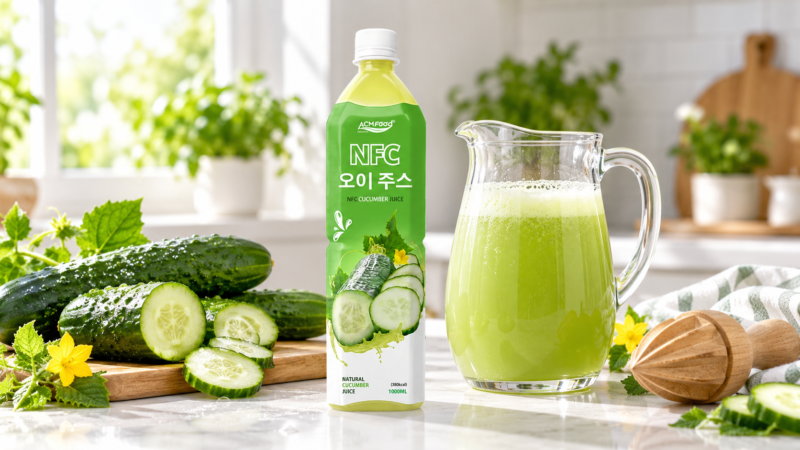
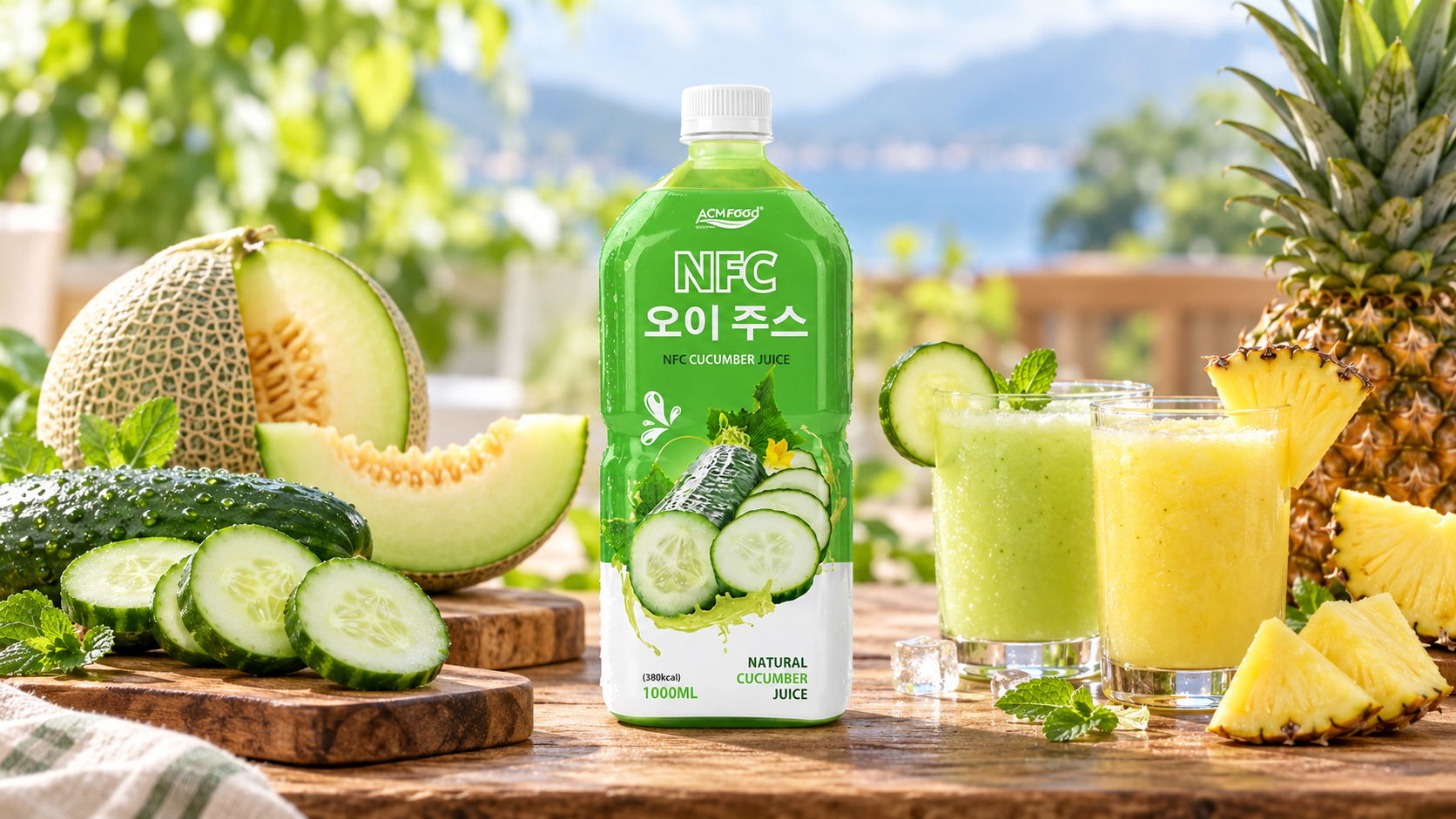
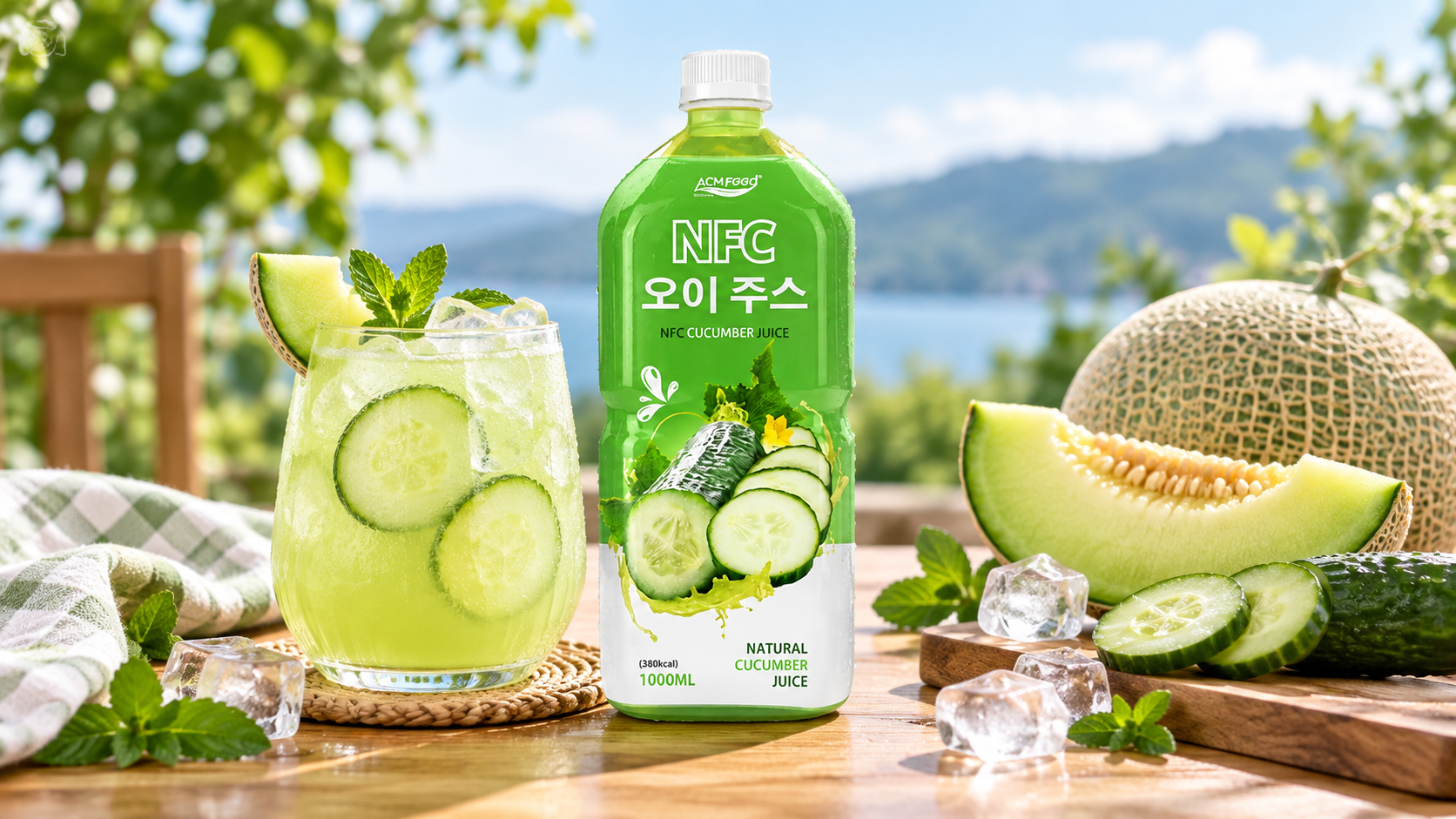
A cucumber blend for co-packing is a ready-to-drink recipe in which cucumber juice is combined with a fruit base, usually melon or a tropical fruit, and produced by a contract manufacturer in cans or bottles. The pairing works because the fruit supplies sweetness, acidity and body that cucumber lacks, while cucumber supplies a clean, cooling freshness that fruit alone does not have.
This guide looks at the blend from the production side rather than the flavour side. It explains how a co-packing project is structured, how fruit bases are chosen, what changes in pH, colour and stability when fruit is added and how the filling and heat steps are organised. It uses only fruit and vegetable ingredients that are already part of the ACMFOOD range. ACMFOOD, a Vietnam beverage manufacturer, supplies finished drinks in cans and bottles under OEM, ODM and private label arrangements.
What does co-packing mean for a cucumber and fruit blend?
Co-packing means that a manufacturer produces and fills a drink to the brand’s recipe or to a recipe developed together, and the brand sells the finished product under its own name. For a cucumber and fruit blend, the contract covers recipe, raw materials, process, packaging, quality documents and responsibilities for each step.
Points that a co-packing contract usually settles:
- Recipe ownership. Who owns the formula and whether the manufacturer may use similar recipes for others.
- Raw materials. Whether the manufacturer buys the juices and bases, or the brand supplies them, and the specifications they must meet.
- Packaging. Who sources cans, bottles, closures and cartons, and who approves artwork.
- Quality and documents. Specifications, certificates of analysis and audit rights.
- Changes. How recipe, supplier or process changes are agreed and revalidated.
ACMFOOD handles finished beverages in cans and bottles, which is the scope of this article. The vegetable range can be seen in the vegetable drink category.
Which fruit bases pair well with cucumber?
Melon is the closest partner because it shares aroma compounds with cucumber, while tropical fruits such as pineapple, mango, guava and passion fruit supply stronger flavour and acidity. Each one changes sweetness, colour and pH in a different way, so the choice shapes both taste and process.
| Fruit base | Contribution | Effect on process | Colour effect |
|---|---|---|---|
| Melon | Soft sweetness, matching aroma | Low acidity, so pH stays high | Pale green to cream |
| Pineapple | Strong acidity, bright flavour | Lowers pH, helps hot-fill | Yellow-green |
| Mango | Thick body, sweetness | Adds pulp, needs particle control | Yellow-orange |
| Guava | Distinctive aroma | Moderate acidity, fibre | Pink or cream |
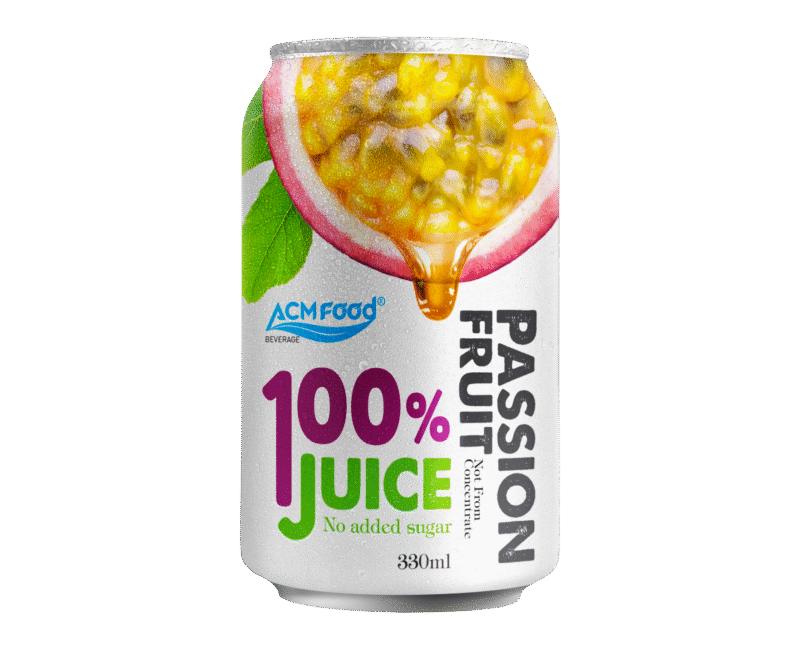
| Passion fruit | High acidity, strong aroma | Lowers pH strongly | Yellow |
| Lychee | Floral sweetness | Mild acidity, delicate aroma lost in heat | Pale cream |
More about one of these partners is available in the article top benefits of lychee juice, which describes the fruit and its typical use. The final choice depends on the target consumer and on the price tier of the product.
How do fruit bases change the process of a cucumber drink?
Adding fruit raises solids, adds acid and changes colour, and each of these affects the process. A pure cucumber drink is thin and low in acid, whereas a fruit blend has more body and a lower pH, which can make a milder and safer heat route possible.
- pH. Acidic fruit lowers the blend pH. If it falls below the safety limit set by the process authority, acidified hot-fill or tunnel pasteurisation becomes available.
- Brix. Fruit adds sugar, so the blend can taste sweet without added sugar, and the Brix of the finished drink rises.
- Viscosity and pulp. Mango and guava add thickness and particles that need filtration or homogenisation to stay suspended.
- Aroma balance. Strong tropical aromas can overwhelm cucumber, so fruit shares are kept moderate to keep the cucumber identity.
- Foaming and deaeration. Pulpy blends foam more at the filler, so deaeration and defoaming need attention.
How are the steps of a co-packing run organised?
A run follows a fixed sequence of preparation, blending, heat treatment, filling and release. The same sequence applies whatever the recipe, but the settings change with the base and the pack.
- Raw material receipt. Cucumbers, fruit juices or purees are checked against their specifications and released to production.
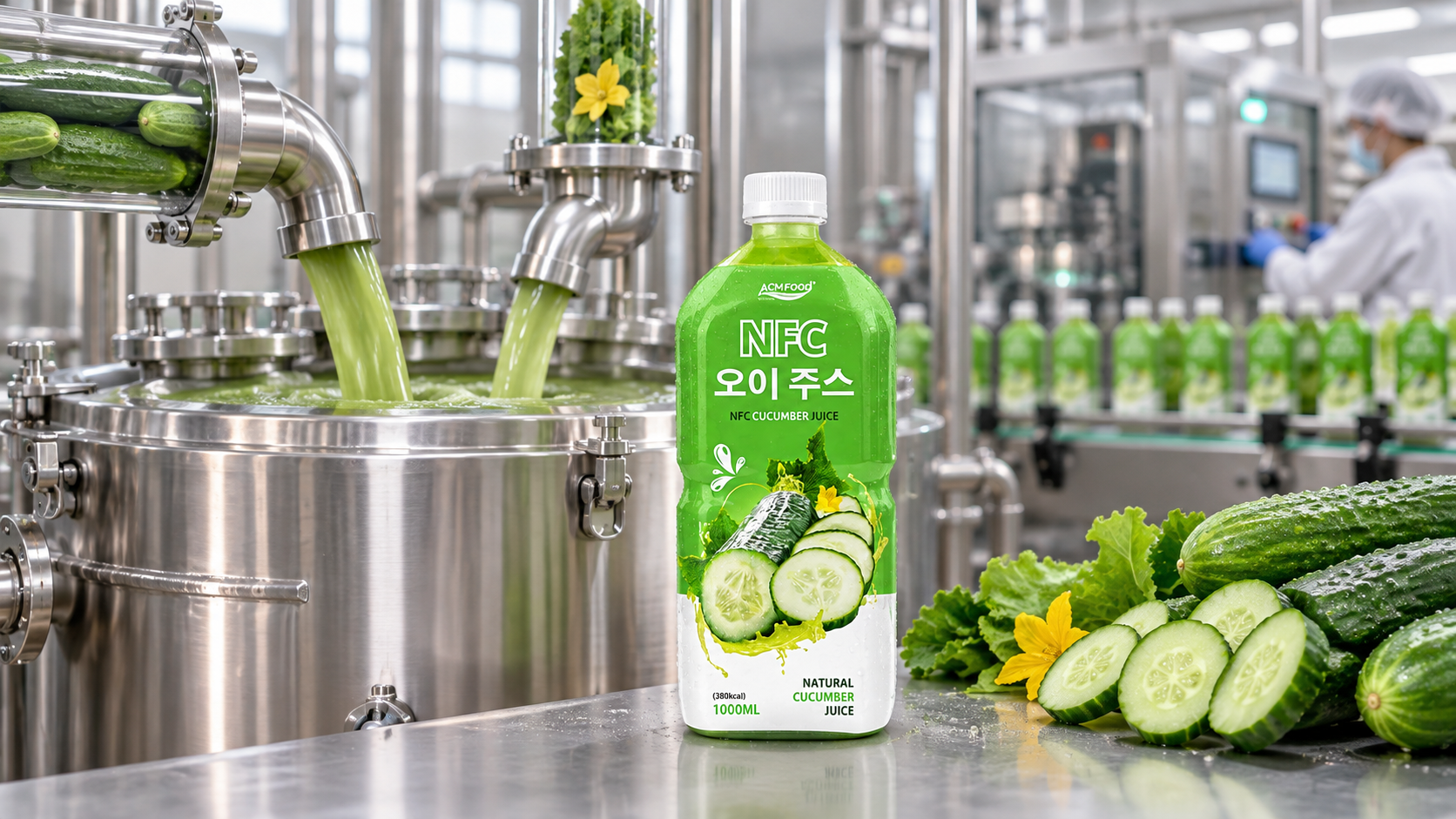
- Cucumber extraction. Cucumbers are washed, crushed and pressed quickly to limit aroma loss.
- Blending. Juices, water, acid and flavour are metered into a tank according to the recipe, with in-process checks of Brix and pH.
- Deaeration and heating. The blend is deaerated and heated by a validated step suited to the final pH.
- Filling and sealing. Cans or bottles are filled, sealed and, where required, held at temperature.
- Cooling and coding. Packs are cooled, dried and coded.
- Quality release. The batch record is reviewed, tests are checked and the batch is released.
Brand teams usually attend the first run, or review its report, to confirm that the product matches the approved sample and that the documents are complete.
Which packs suit a cucumber and fruit blend?
Both cans and bottles work. Clear PET or glass shows the pale green and yellow tones of a cucumber and fruit blend, while cans give full light and oxygen protection for longer shelf life.
- Slim and sleek cans. Modern, single-serve, good in convenience channels and for multipacks.
- PET bottles. Light and practical, with family sizes for households and foodservice.
- Glass bottles. Premium and strong barrier, with weight and breakage trade-offs.
The heat route decides which pack is possible: hot-fill needs heat-set PET or glass, retort needs cans, and aseptic filling works with PET or glass. The brief should say which route and pack the brand prefers, and the factory should confirm.
What quality risks should a brand watch?
The main risks are fading colour, loss of cucumber freshness, separation of pulp and flavour imbalance between batches. Each has a control, and each should be written into the specification.
- Colour drift. Chlorophyll turns olive in heat and acid, and fruit colours change with storage. A colour reference and an agreed range after storage handle this.
- Weak cucumber note. Heat flattens it. Keeping the cucumber share high enough and adding lime or mint supports it.
- Pulp separation. Controlled by particle size, homogenisation and, where permitted, a stabiliser.
- Batch variation. Fruit varies by season, so Brix and acidity tolerances need to be set realistically.
- Label accuracy. The ingredient list, juice percentage and claims must match the recipe.
How are samples evaluated in a blend project?
Samples are evaluated in three rounds: bench samples for direction, pilot samples for process and stored samples for stability. Each round has a clear purpose, and the brand approves one result before the next round starts, which keeps the project from drifting.
- Bench round. Three to five recipes in small volume, tasted blind, to choose a direction. Heat is simulated in the laboratory.
- Pilot round. The chosen recipe is produced on the real equipment in the final pack, with measured Brix, pH, colour and sensory scores.
- Stability round. Pilot packs are stored at ambient and warm conditions and checked at intervals for colour, taste and microbiology.
The approved pilot sample becomes the reference for production. Photographs, colour readings and a retained physical sample should be kept, so a later dispute about colour or taste can be settled against a clear standard.
How does scheduling work in a co-packing project?
Scheduling depends on raw material availability, line capacity, packaging lead time and quality release. Cucumbers and fruit have limited windows, and cans and bottles have their own lead times, so the project plan works backward from the planned shipment date.
- Confirm the recipe and pack at least several weeks before production, so packaging can be ordered and printed.
- Reserve the line. The factory books a production slot that suits the raw material window.
- Order materials. Cans or bottles, closures, cartons and labels are delivered and inspected.
- Produce and hold. The batch is produced and held until quality tests are complete.
- Release and load. After release, documents are issued and the shipment is loaded.
Brands should keep a buffer for retests or reruns. A delayed can delivery or a failed test can move the schedule by weeks, and a plan with some slack is more reliable than one that assumes every step works the first time.
What labelling points apply to a vegetable and fruit blend?
The label must list ingredients in order of weight, state the juice content where required and match the claim to the recipe. A drink made of a vegetable and a fruit is regulated according to its composition, and its name should not suggest a single ingredient if another one dominates.
- Ingredient list. Every juice, added acid, sweetener and flavour has to appear, with additive names or numbers as required.
- Juice percentage. Many markets require the share of juice or restrict the use of terms such as juice or drink according to the content.
- Sugar statements. Natural sugar from fruit still counts as total sugars, so a claim such as no added sugar must be checked against the recipe.
- Allergens and additives. A blend with natural flavours or stabilisers should be reviewed for each destination.
- Name and imagery. The picture and the name should match the real fruit and vegetable shares.
Supplier data helps, but the brand owner remains responsible for the final label. Regulatory review before printing avoids costly reprints.
What should a co-packing brief contain?
- Concept. Taste direction, target consumer and price tier.
- Recipe frame. Cucumber share, fruit base, sweetener and acid, with ranges.
- Raw material responsibility. Who sources which ingredient, and the specification each must meet.
- Heat route and pack. Preferred route, pack type, size and closure.
- Quality targets. Brix, pH, colour range and sensory reference.
- Shelf life. Duration and storage conditions.
- Documents. Specification, certificates such as HACCP, ISO 22000 and FSSC 22000, and test reports.
- Change control. How and when recipe or supplier changes are agreed.
The cucumber side of the range is described in the cucumber juice category, which shows current product formats.
FAQ about cucumber blend co-packing
Why is melon such a common partner for cucumber?
The two belong to the same plant family and share aroma notes, so the flavour feels natural. Melon also adds sweetness that cucumber lacks.
Can a cucumber and fruit blend be hot-filled?
Yes, if the blend pH is low enough for a validated hot-fill process, and the bottle or can tolerates the temperature. Melon-rich blends may need extra acid.
Does a fruit blend still taste of cucumber?
It can, if the cucumber share and flavour support are balanced. Too much strong fruit hides cucumber, and the recipe should be tasted after heat treatment.
Who owns the recipe in a co-packing agreement?
It depends on the contract. Brands that supply the recipe usually keep ownership, and brands that use a manufacturer’s recipe may share rights under agreed terms.
Are cans or bottles better for this blend?
Cans protect colour better, while clear bottles show the pale blend. Both can work, and the decision follows the channel and shelf-life target.
Briefing a cucumber blend project
A cucumber and fruit blend gets its balance from melon or a tropical base, and its safety and stability from pH, heat and packaging decisions. A clear co-packing brief covers recipe, raw material responsibility, heat route, pack and documents, which keeps the project moving.
Brands interested in a cucumber blend can send ACMFOOD a brief with concept, fruit base, pack and markets. The team can propose recipes from its range and prepare samples for review.