


 Français
 Español
 العربية
 한국어
Fermented beetroot juice is beet juice, or beets in brine, that has been acidified by lactic acid bacteria. The fermentation lowers the pH, builds a sour and savoury flavour and, if the product is not heat treated afterwards, can leave live cultures in the final drink.
The process is simple in principle and demanding in practice. Safety depends on how fast and how far the pH falls, how clean the raw material is and how the finished drink is stabilised and packed. This guide explains the process, the controls that matter, the packaging implications and the product ideas brands usually explore. It makes no health claims, and it is written for beverage developers rather than consumers. ACMFOOD, a Vietnam beverage manufacturer, supplies finished drinks in cans and bottles.
What is fermented beetroot juice?
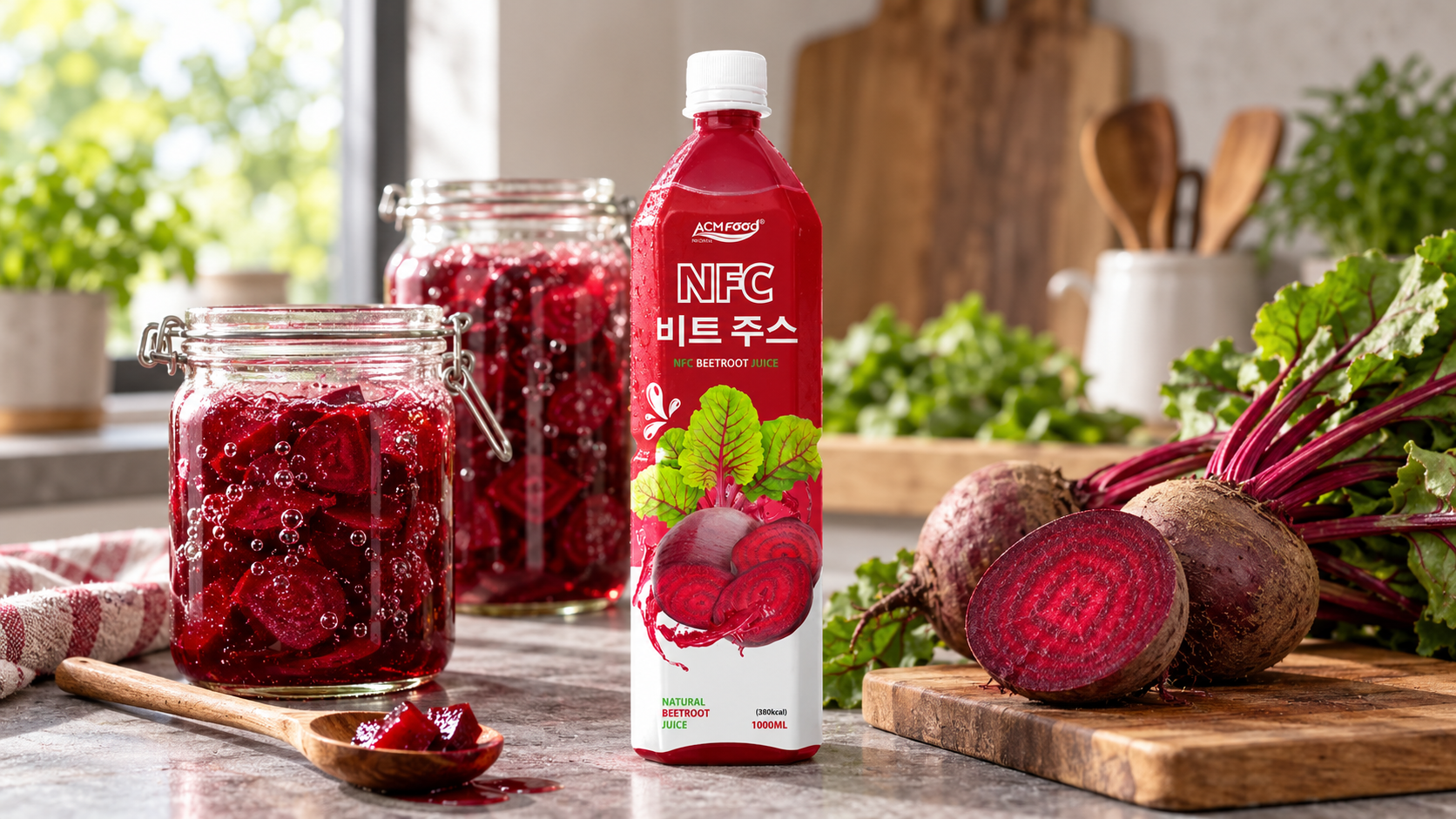
Fermented beetroot juice is a sour, deep red drink produced by lactic fermentation of beets. Bacteria convert natural sugars into lactic acid, which lowers the pH and protects the drink from many spoilage organisms.
It sits between a plain juice and a traditional fermented beverage. Compared with plain beet juice, it has a sharper, tangier taste and a lower sweetness. Compared with a classic fermented beverage from grain, the alcohol content is usually trace and the focus is on acid and flavour.
Brands usually follow one of two styles. The first is a stabilised sour beet drink, where fermentation is stopped by heat and the pack is shelf stable. The second is a refrigerated product that keeps its cultures alive, which needs cold logistics and a shorter shelf life. This article concentrates on the stabilised style, because cans and bottles for ambient or mixed-chain distribution need predictable behaviour.
How is fermented beetroot juice made?
It is made in five stages: raw material preparation, fermentation, monitoring, stabilisation and filling. Each stage has its own controls, and the quality of the final drink depends on keeping them in sequence.
- Preparation. Beets are sorted, washed and trimmed. They may be shredded, cooked lightly or juiced, depending on the recipe. Hygiene at this step lowers the load of unwanted microbes.
- Inoculation. A starter culture of lactic acid bacteria is added, or the fermentation starts from the beets’ own flora. Starter cultures give more predictable acidification and are generally preferred in commercial production.
- Fermentation. The mixture is held in clean vessels at a controlled temperature. Sugar is converted to lactic acid, and the pH steadily falls. Salt, sugar level and temperature set the speed.
- Monitoring. pH and titratable acidity are measured at set intervals. The batch is released to the next stage only when the target is reached.
- Stabilisation and filling. The fermented juice is filtered, adjusted if needed and treated with heat before filling into bottles or cans.
The fermentation vessel, the starter, the temperature and the time all become part of the product specification, since small changes alter the taste and the safety margin.
Which safety controls matter most?
The most important control is how quickly the pH drops below 4.6, the boundary under which most dangerous bacteria cannot grow in a low-acid food. Beetroot starts above this value, so the early hours of fermentation are the critical period.
A HACCP plan for fermented beet juice normally defines these control points:
- Raw material quality. Soil-borne bacteria and spores are reduced by washing and by sorting out damaged beets.
- Starter culture and inoculation rate. A strong, fast-acting culture acidifies the batch before undesirable organisms can multiply.
- Temperature. Warm temperatures speed fermentation but also favour unwanted microbes if acidification lags. A tight range is specified.
- pH limit and time. The batch must reach a defined pH within a defined time, and records must prove it.
- Salt and sugar balance. These influence the culture and the microbial competition, so each recipe is validated.
- Heat treatment. A validated step after fermentation inactivates cultures and spoilage organisms and fixes the flavour.
- Container integrity. Seals and closures keep air and microbes out after filling.
Fermentation is not a process to improvise. A process authority or an experienced food technologist should validate the recipe before commercial production, and the validation should be repeated when the recipe or the equipment changes.
What is the difference between live and stabilised fermented beet juice?
Live products keep their bacteria and continue to change in the pack, while stabilised products are heat treated so the flavour and gas level stay constant. The first needs refrigeration and a short shelf life, and the second can work in standard distribution.
| Aspect | Live, refrigerated | Stabilised, heat treated |
|---|---|---|
| Cultures | Present in the pack | Inactivated by heat |
| Storage | Cold chain required | Can suit ambient or mixed chain, depending on pH and process |
| Gas build-up | Possible, needs pressure-tolerant pack | Stable after process |
| Flavour over time | Continues to sour | Stays close to release profile |
| Shelf life | Short, depends on cold storage | Longer, supported by process validation |
| Packaging | Bottles with pressure management | Cans or bottles |
Cans and rigid PET bottles are not designed to hold ongoing fermentation gas. A live product in a sealed can risks swelling or leaking, which is why cans are normally reserved for stabilised drinks. Brands that want a live product should discuss pressure behaviour, closure venting and storage temperature with the factory first.
Which packaging works for fermented beetroot juice?
Stabilised fermented beet juice works in both aluminium cans and PET or glass bottles, because it is acidic and heat treated. The acidity helps shelf life, but it also requires a good can lining or a closure liner resistant to organic acids.
- Cans. They protect the colour from light and oxygen. The lining must tolerate acid and the heat step.
- PET bottles. Light and cost effective. Heat-set PET is needed for hot-fill, and an oxygen barrier supports colour over time.
- Glass bottles. Premium look and strong barrier, with weight and breakage trade-offs.
Beet pigments are most stable in a mildly acidic range, so a fermented, lower-pH juice can hold its colour comparatively well, although light and oxygen exposure still fade it over time. Colour testing during stability studies is recommended.
How is the flavour of fermented beet juice balanced?
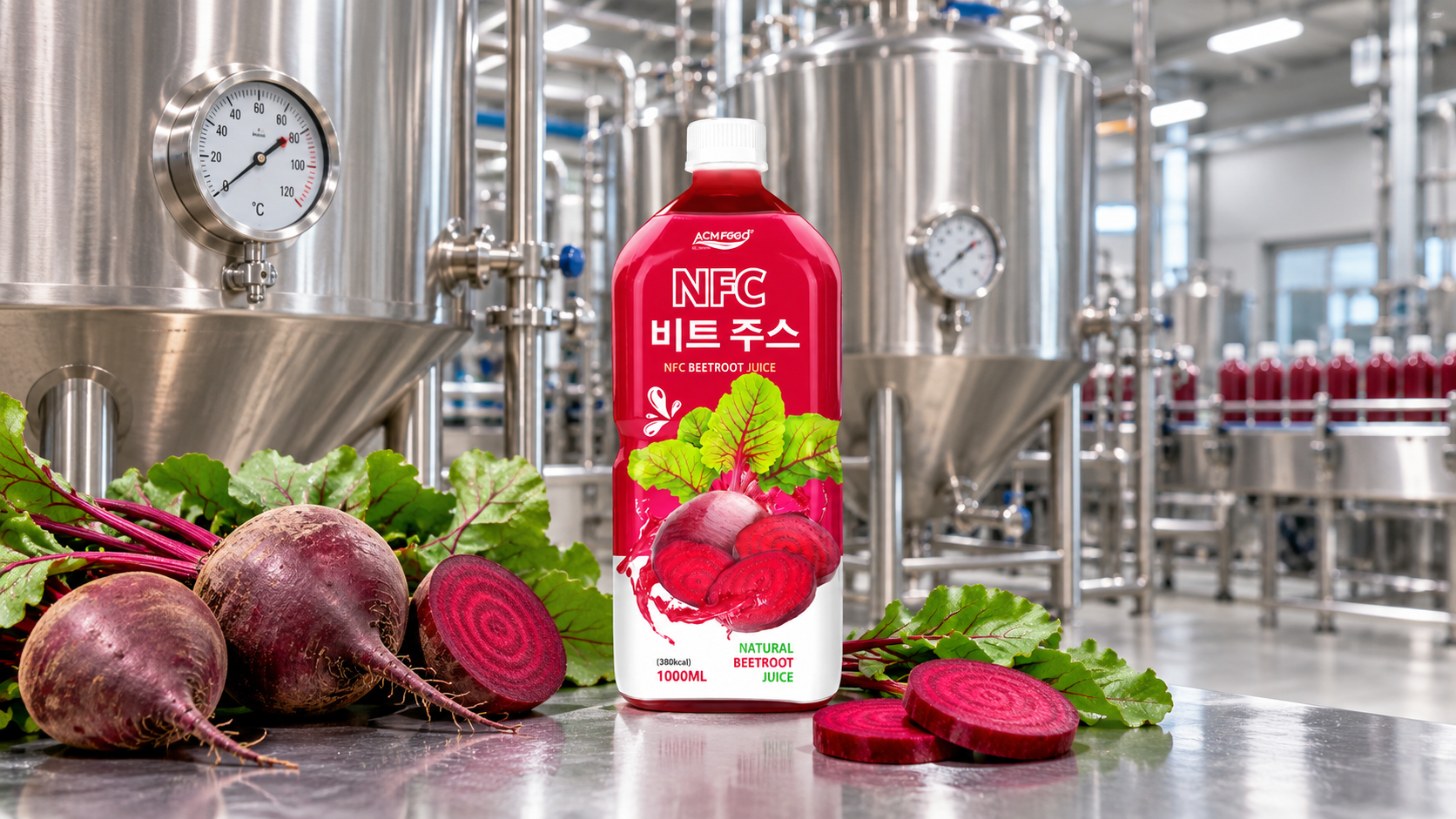
Flavour is balanced by adjusting the fermentation time, the sugar left in the juice and the blend with other ingredients. A short fermentation leaves more sweetness and a mild tang, while a long one gives a sharper acid and a more savoury, complex taste.
Developers usually work with four levers. The first is fermentation time and temperature, which decide how much sugar is consumed and how much acid forms. The second is salt, which supports the culture and adds a savoury note but must stay within the consumer’s tolerance. The third is blending with a sweeter juice such as apple, or with a spice such as ginger, to round off the sharp edge. The fourth is dilution, because a fermented beet base is intense and many drinkers prefer a lighter version.
Sensory panels should evaluate both the fresh sample and a sample stored for several weeks. A stabilised drink can drift slightly in sourness and colour during storage, and the final specification should include an acceptable range rather than a single point.
How should a fermentation batch be monitored and documented?
A batch should be monitored by regular pH and acidity readings, temperature logs and visual checks, and documented in a batch record that links raw material lots to the finished product. These records are the main evidence of safety if a customer or an authority asks questions later.
- Time-stamped pH readings. They show that acidification followed the expected curve.
- Temperature records. They confirm the batch stayed within the validated range.
- Culture and ingredient lots. Starter, salt and any added juices are traceable by lot number.
- Deviation reports. Any batch that was slow to acidify is investigated, and the decision to release or discard is recorded.
- Retained samples. Samples from each batch are kept to review the product at the end of its shelf life.
Good records also help brands answer retailer audits quickly. A supplier that already works under HACCP, ISO 22000 or FSSC 22000, as ACMFOOD publishes, is used to this kind of batch documentation, although a specific fermented recipe still needs its own validation.
What alcohol and labelling issues can appear?
Some yeast activity during fermentation produces trace ethanol. Many markets set limits for products described as non-alcoholic, and some religious or cultural markets apply stricter thresholds. A brand must measure the actual alcohol content of the finished drink and check the destination rules.
Other labelling points include whether the product can be called a juice or a fermented drink, how the process is described, how cultures are mentioned if present, and what storage statement is required. Health-related wording is a separate regulatory area and should not be used unless it is approved for that market.
What product opportunities exist?
Fermented beetroot juice gives brands a way to build a sour, savoury drink that differs from sweet juice. The flavour can be softened or sharpened to suit different consumers, and it pairs well with several ingredients already used in beverage ranges.
- Sour beet drink. A small-size can or bottle aimed at adults who like tangy flavours.
- Blends with apple or ginger. Sweetness and spice offset the acidity and make the drink easier to approach.
- Lightly carbonated styles. A bright, refreshing drink for mixed-drink and foodservice use, where the carbonation process is managed separately from fermentation.
- Base for mocktails. Foodservice buyers may use a stabilised sour beet drink as a mixer.
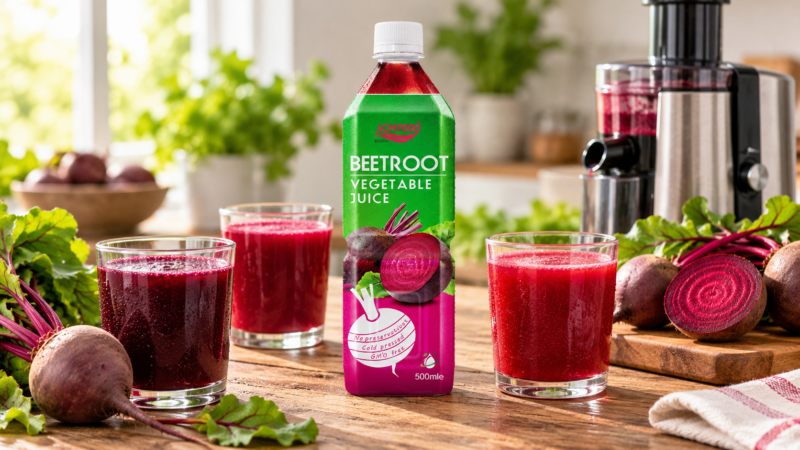
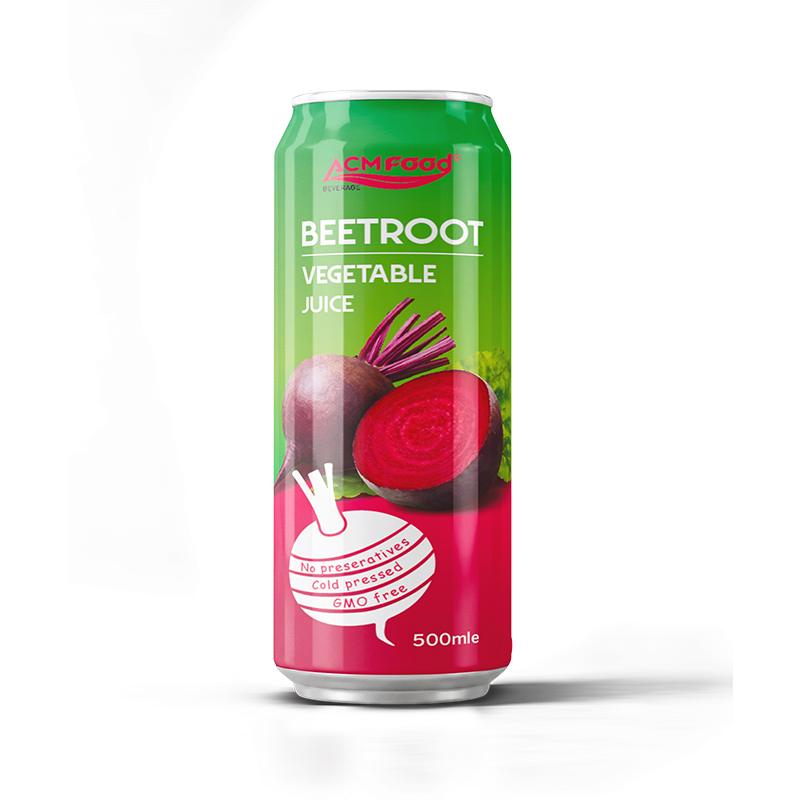
As with any new category, a test batch and consumer tasting save time before a full launch. Current beetroot drink formats from ACMFOOD can be seen in the beetroot juice category, which helps when a brand wants to compare a fermented concept with a standard juice.
What should a fermented beet juice brief contain?
- Style. Live or stabilised, and the desired sourness level.
- Recipe frame. Beet content, sugar and salt, and any blending juice.
- Culture. Starter culture type or the supplier’s recommendation.
- Safety limits. Target pH, maximum alcohol level and microbiology limits.
- Heat step. The stabilisation method agreed with the factory.
- Pack. Can or bottle, closure, size, and expected storage temperature.
- Documents. Specification, certificate of analysis and food safety certificates.
FAQ about fermented beetroot juice
Is fermented beet juice safe in a sealed can?
It can be, if the drink is acidified to a safe pH, heat treated to stop fermentation and sealed with a validated can and lining. A live, still-fermenting product should not be sealed in a standard can.
Why does fermented juice taste sour?
Lactic acid produced from the beets’ sugars gives the sour taste. The final level depends on fermentation time, temperature and the culture used.
Does fermentation change the colour?
The lower pH often supports the red colour, while heat, light and oxygen reduce it over time. The shade can shift slightly toward a deeper or more purple tone during fermentation.
Can fermented beet juice contain alcohol?
Trace amounts are possible if yeast is present. The finished drink must be measured and compared with the limits of the destination market.
Is a starter culture necessary?
It is not mandatory in traditional recipes, but commercial producers prefer starters because they give predictable acidification and make validation easier.
Planning a fermented beetroot juice project
Fermented beetroot juice offers a distinctive sour drink for brands that want to stand out from sweet juices. Safety depends on rapid acidification, clear records, a validated heat step and a pack suited to the product style, and these decisions should be taken before a recipe is finalised.
Brands interested in a stabilised sour beet drink can contact ACMFOOD with the brief above. The team can discuss feasibility in cans or bottles, propose sample plans and confirm what documents can be supplied.