


 Français
 Español
 العربية
 한국어
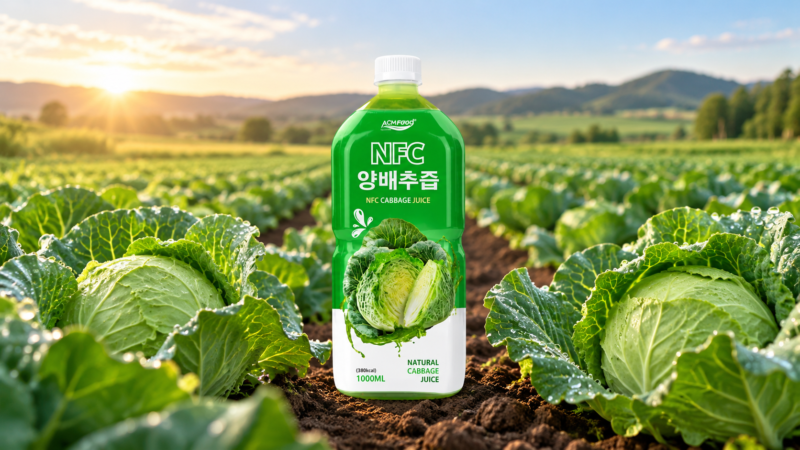
Raw cabbage juice is juice pressed from uncooked cabbage, and a manufacturer who wants to sell it has three main preservation choices: pasteurisation, high pressure processing (HPP) or cold-pressing with no kill step. Each choice trades freshness against shelf life and distribution reach, and cabbage’s sulfur chemistry makes the trade-off sharper than for most vegetables.
This guide compares the three options for beverage manufacturers and brand owners, explains how cabbage enzymes and sulfur compounds respond to each, and lists the points to check before choosing a route. It covers finished drinks in cans and bottles. ACMFOOD, a Vietnam beverage manufacturer, does not supply bulk juice or ingredients, and supplies finished drinks under OEM, ODM and private label arrangements.
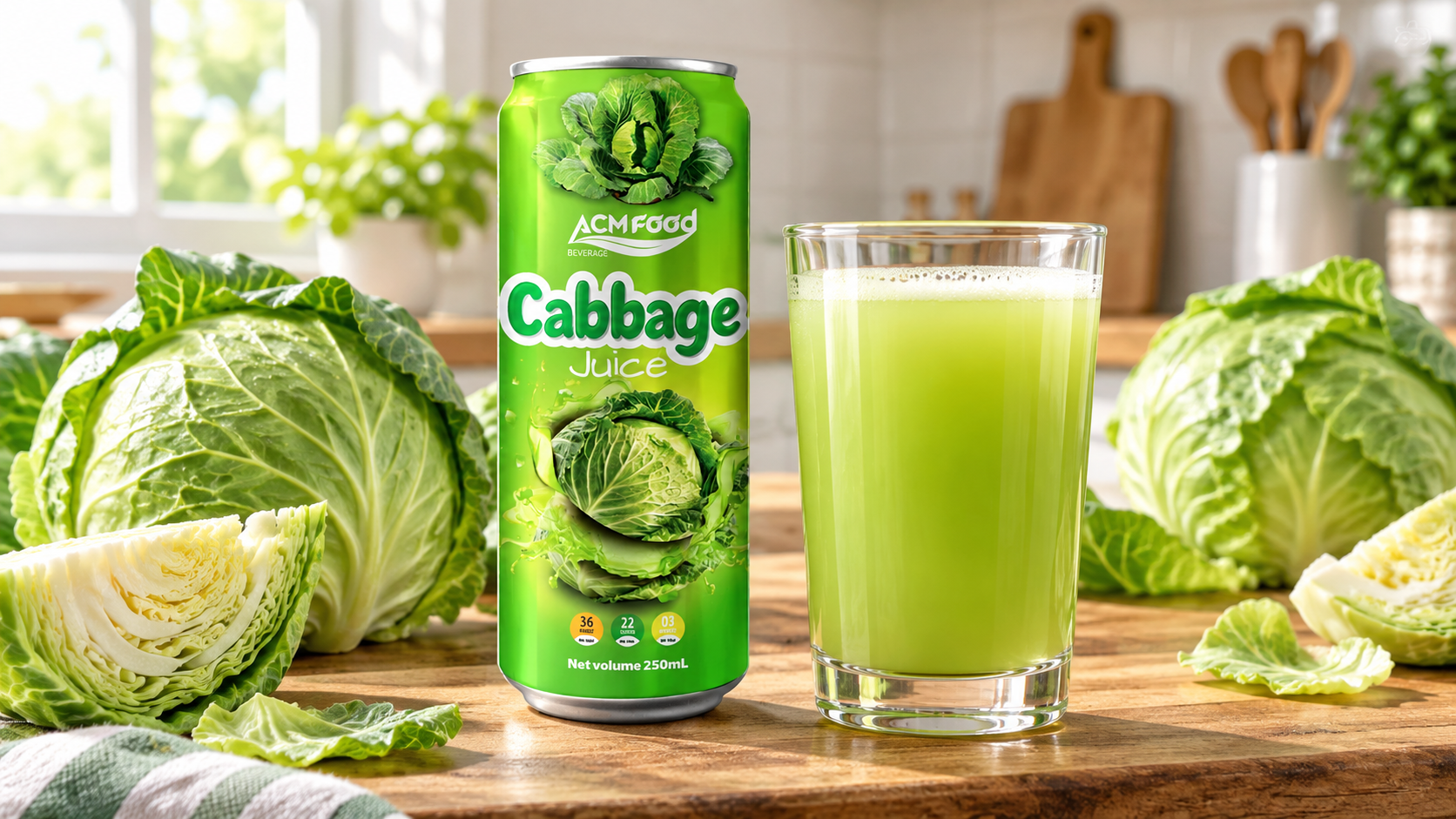
What happens chemically when cabbage is pressed?
When cabbage cells are broken, an enzyme called myrosinase meets glucosinolates and converts them into pungent sulfur compounds such as isothiocyanates. This is why freshly crushed cabbage smells sharp, and why the juice develops a stronger flavour within minutes of pressing.
Three effects follow:
- Flavour. The sharp, mustard-like or sulfurous note is part of the raw character and may be wanted or unwanted, depending on the product.
- Oxidation. Other enzymes darken the juice and lower freshness, and the process speeds up when the juice meets air.
- Microbial load. Cabbage carries soil organisms, and the juice is low in acid, so it can spoil quickly without treatment.
Heat inactivates myrosinase and other enzymes, and it also breaks down glucosinolates, which changes the flavour to a cooked-cabbage note. Non-thermal methods leave more of the raw profile. The right route therefore depends on which flavour the brand wants to sell.
What is the pasteurised route?
The pasteurised route heats the juice for a set time and temperature to kill vegetative bacteria and inactivate enzymes, then fills it into bottles or cans. It gives the longest and most flexible shelf life, and with acidification or sterilisation it supports storage at room temperature.
- Chilled pasteurisation. Moderate heat followed by refrigeration, for a short to medium shelf life.
- Acidified hot-fill or tunnel pasteurisation. A lowered pH allows ambient storage after a validated heat step.
- Retort or aseptic. Sterilisation of sealed cans or aseptic filling of bottles for unacidified recipes.
Heat gives a cooked-cabbage note and can dull the green colour. Many recipes cover it with apple or lemon juice, which also lowers pH. Details of the vegetable heat routes are described in the cabbage juice category alongside the product formats.
What is the HPP route?
HPP, or high pressure processing, treats sealed bottles of juice with very high pressure, typically in the range of several hundred megapascals, for a short time. It inactivates many microorganisms with little heating, so the juice keeps more of its fresh flavour and colour than pasteurised juice.
- Packaging. The container must be flexible and sealed, so PET bottles are used. Rigid cans and glass bottles are not suitable.
- Storage. A low-acid juice such as cabbage still needs refrigeration after HPP.
- Enzymes. Some enzymes survive HPP, so flavour and colour can continue to change slowly under refrigeration.
- Cost and access. Equipment is expensive, and many brands use toll processors, which adds logistics.
HPP gives a longer chilled life than untreated juice and a fresher profile than a heat-treated one, which makes it attractive for premium fresh-juice positioning in markets with a reliable cold chain.
What is the cold-pressed route without a kill step?
Cold-pressed juice without a kill step is extracted by pressing, bottled and kept cold, with no heat or pressure treatment. It has the freshest flavour and the shortest life, and it relies entirely on clean raw material, sanitation and the cold chain for safety.
For cabbage, the risk is higher than for acidic fruit juice, because the juice has a pH above 4.6 and supports microbial growth when it warms up. Many regulators and retailers expect a validated process for juice sold to the public, and some markets require a defined reduction of pathogens in juice, which a bare cold-press does not provide. A brand considering this route should check the local rules first, and should treat it as a local, short-chain product rather than an export one.
How do the three routes compare?
The table compares the routes in qualitative terms. Real shelf life and taste depend on the recipe, the pack and the validated process, and each product needs its own study.
| Aspect | Pasteurised | HPP | Cold-pressed, no kill step |
|---|---|---|---|
| Flavour | Cooked note, sulfur change | Closer to raw, some change over time | Rawest, strong sulfur character |
| Colour | Duller green | Brighter green | Brightest, but browns quickly |
| Shelf life | Months if acidified or sterilised | Longer chilled life | Very short, days |
| Storage | Ambient possible | Refrigerated | Refrigerated |
| Packs | Cans, PET, glass | Flexible PET only | PET or glass |
| Export suitability | High | Limited by cold chain | Very limited |
| Process cost | Moderate | Higher, often toll processing | Lowest in equipment, highest in risk |
How should a manufacturer choose?
A manufacturer should choose from the market backwards: where the product is sold, how it travels, how long it must last and what flavour the consumer expects. The distribution chain usually decides, because a chilled product cannot be sold where cold storage is not available.
- Define the channel. Local chilled shelf, regional chilled network, or ambient export and general retail.
- Set the shelf-life target. Days, weeks or months.
- Decide the flavour direction. Raw and sharp, or softened and blended.
- Check the pack. Cans need heat routes, HPP needs flexible PET.
- Check the rules. Local requirements for juice safety and for the word raw.
- Run a pilot. Taste and test two routes side by side, including stored samples.
For export, the pasteurised route in cans or bottles is the most practical. Chilled HPP juice suits a regional premium range.
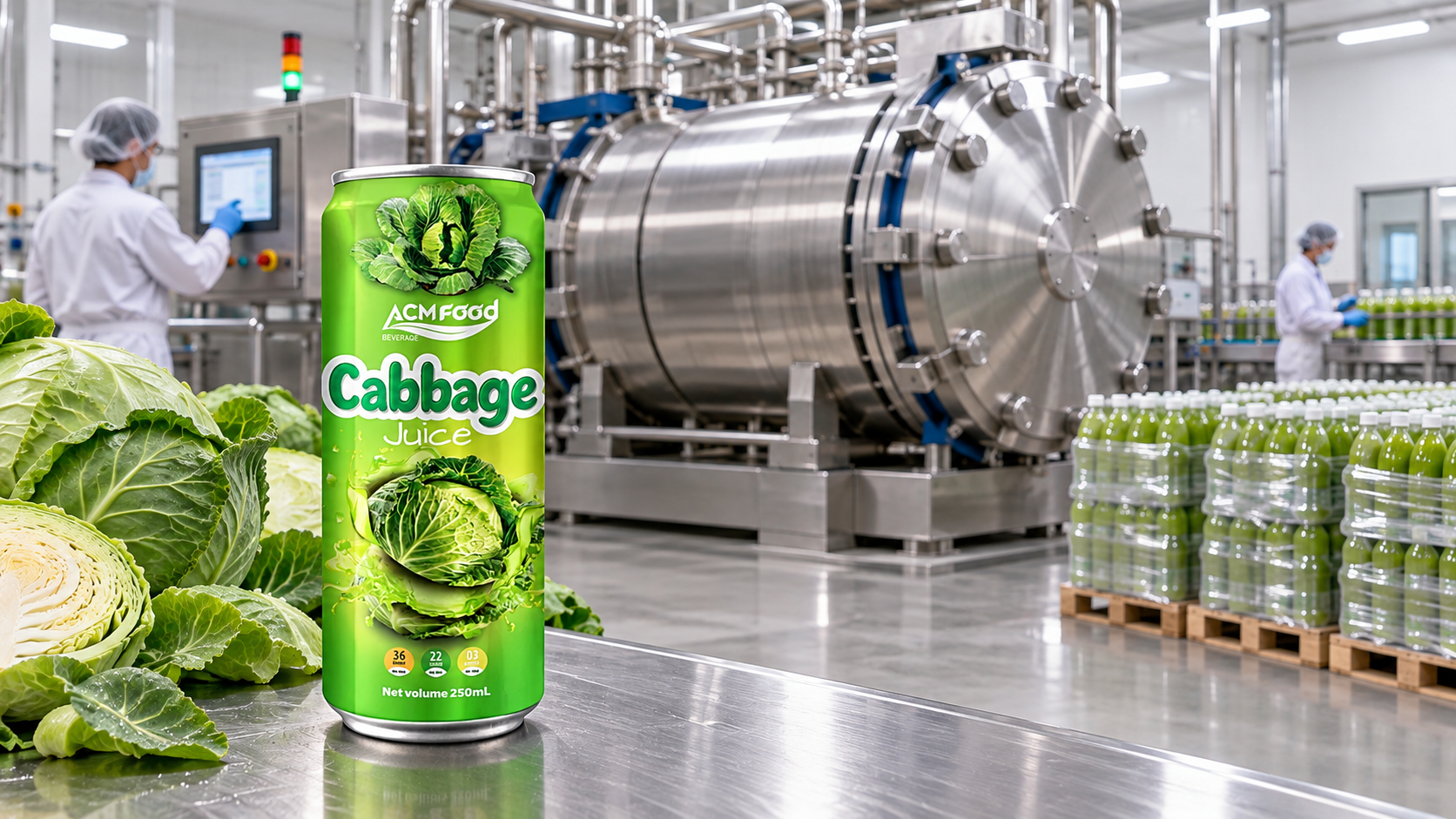
How is the safety of a non-heated juice validated?
Safety of a non-heated juice is validated by a challenge study that shows the process reduces target pathogens by a defined amount, together with hygiene controls and microbiological testing. Without such a study, a claim of safety rests on assumptions, and regulators and retailers increasingly ask for the evidence.
- Hazard analysis. Identify the organisms of concern for a low-acid vegetable juice, including those from soil and water.
- Define the target. Many juice rules ask for a reduction of the most resistant relevant organism by a set number of log units, which the process must achieve.
- Challenge study. A laboratory inoculates the juice with surrogate or target organisms, applies the process and measures the reduction.
- Set limits. Pressure, time and temperature limits are fixed based on the study, with a safety margin.
- Monitor and record. Each batch is logged against the limits, and deviations are handled by a written procedure.
- Verify. Periodic microbiological tests and retained samples confirm the process still works.
The study must be repeated if the recipe, the pH, the pack or the equipment changes in a way that could affect the result. A buyer who plans a chilled product should ask the supplier to show the validation summary, not just a certificate of the facility.
How do colour and flavour change in each route over time?
Colour and flavour change over time in all three routes, but at different speeds. Heat-treated juice starts duller and stays steady, HPP juice starts brighter and drifts under refrigeration, and untreated juice starts brightest and deteriorates quickly.
- Pasteurised. A slightly olive green and cooked note at filling, then slow change over months if stored cool.
- HPP. Fresh flavour and a bright green at filling, then gradual browning and flavour development over the chilled shelf life as surviving enzymes continue to act.
- Untreated. Bright and sharp on day one, browning and fermenting off-notes within days.
The tasting for approval should therefore include samples at filling, at the midpoint and at the end of the planned shelf life. A brand that tastes only fresh samples will overestimate the quality that reaches the consumer.
What does a pilot comparison look like?
A pilot comparison runs the three routes from the same cabbage lot, packs them in the intended containers and tracks them over the planned shelf life. It produces the evidence needed to choose a route and to support the shelf-life claim.
A practical plan prepares a pasteurised acidified sample, an HPP sample and a chilled control from one pressing. All are stored at their intended conditions, with the ambient sample also stored warm to speed up change. Colour readings, pH, sensory scores and microbial counts are taken at set intervals. The results are summarised in a table that compares quality and risk, and the brand then chooses the route that best fits its channel and price. The pilot also shows what the factory can handle: a route that looks attractive on paper may need equipment, toll processing or cold logistics that the project cannot support.
What labelling issues arise with raw cabbage juice?
The word raw implies no heat treatment, and several markets expect it to be used carefully. HPP juice is not heated, but whether it can be called raw varies, so the label should describe the process accurately, for example cold-pressed and HPP treated, and avoid claims that the process cannot support.
- Process wording. Pasteurised, HPP treated or cold-pressed, matched to the validated process.
- Storage instruction. Keep refrigerated for chilled products, with a use-by date.
- Juice content. Single juice or blend, with the percentage where required.
- Allergens and sulfites. Check requirements for any added preservatives and for sulfite declaration.
FAQ about raw cabbage juice
Is raw cabbage juice safe to sell without heat?
It carries more risk than acidic juice and may not meet the rules of every market. A validated kill step such as heat or HPP is generally expected for commercial juice.
Does HPP remove the sulfur smell?
No. HPP leaves more of the raw sulfur character than heat does. Blending with other juices is the usual way to soften it.
Can HPP juice be shelf stable?
Not for a low-acid juice. It needs refrigeration unless the recipe is acidified and processed in a validated way.
Why do pasteurised cabbage drinks taste cooked?
Heat changes sulfur compounds into cooked notes. Short heat steps and blending with fruit juice reduce the effect.
Is a can better than a bottle for cabbage juice?
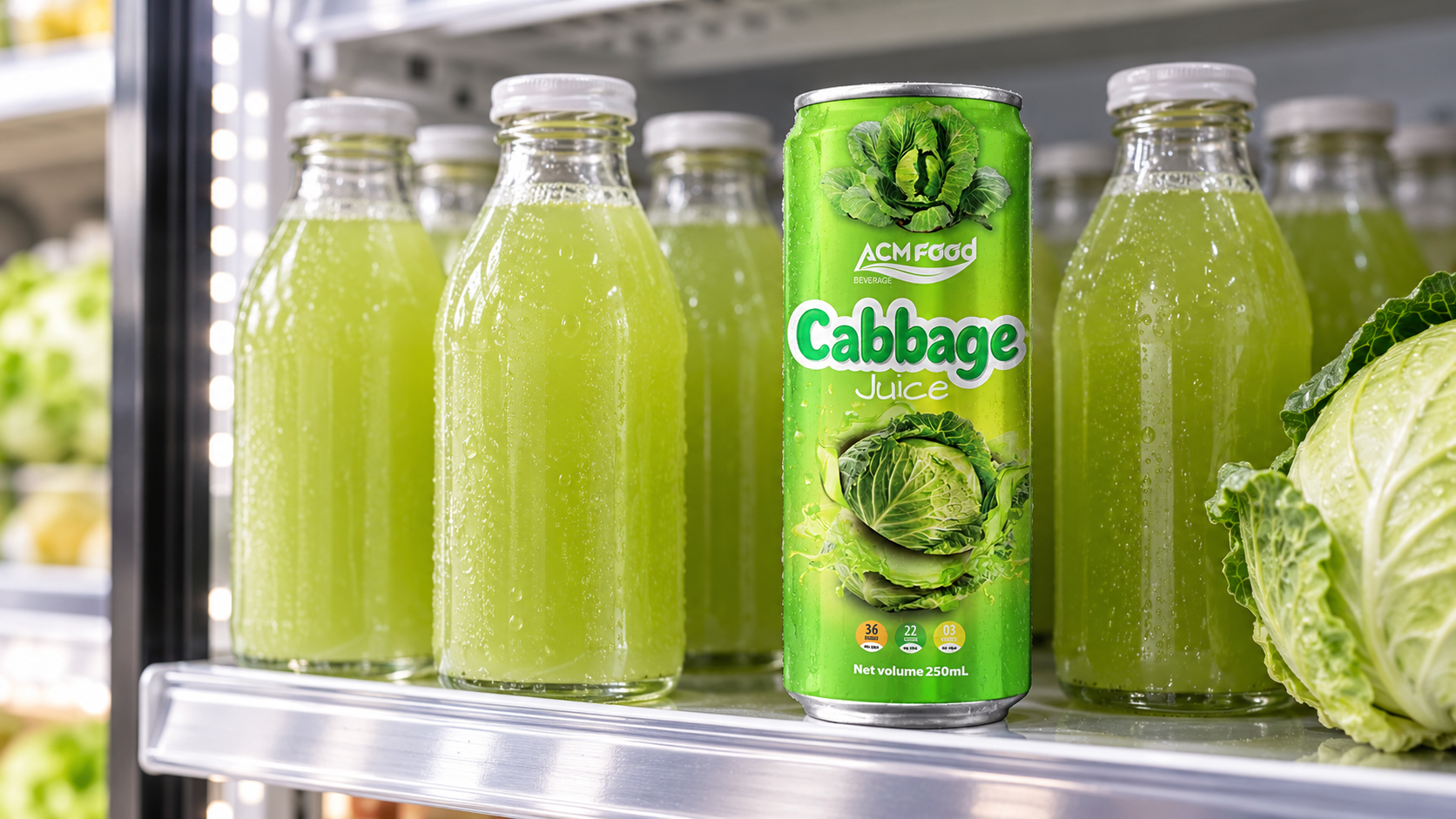
Cans protect colour and suit heat-treated products. Bottles show the colour and are the only option for HPP.
Choosing a processing route for cabbage juice
Raw cabbage juice offers a fresh, sharp flavour, but it needs a processing route that matches its low acidity and the distribution chain. Pasteurisation suits export and ambient storage, HPP suits chilled premium products and a bare cold-press suits only local, short-chain sales with strict controls.
Manufacturers and brands that want to compare routes can send ACMFOOD a brief with channel, shelf-life target and pack preference. The team can recommend a shelf-stable option in cans or bottles and prepare samples.