


 Français
 Español
 العربية
 한국어
Bitter melon juice is a vegetable juice pressed from the fruit of Momordica charantia, also called bitter gourd, a green, ridged vegetable widely eaten across Southeast and South Asia. As the name suggests, its defining trait is strong bitterness, which is exactly what makes a bottled, not-from-concentrate version difficult to produce for a wider audience.
This article looks at bitter melon juice from the manufacturing side: how bitterness is managed, how blends are built, how browning is controlled, and how pasteurisation and the 1L NFC PET format fit together. It is written for brand owners and importers considering a niche Asian vegetable juice. ACMFOOD produces NFC juices in 1L PET bottles, and the notes below reflect that context. For a general introduction to the vegetable itself, see our article on bitter melon juice.

Why is bitter melon juice so hard to sell as a bottled drink?
Bitter melon juice is hard to sell because its bitterness is intense and lingers, which limits repeat purchase outside consumers who already drink it. A bottled version also has to survive heat treatment and shelf life without turning brown or developing off-flavours, so the product must solve both a taste problem and a stability problem.
The audience for this product is real but specific. It includes consumers from cultures where bitter melon is a familiar food, health-food shoppers interested in traditional vegetables, and Asian grocery channels in export markets. A brand that knows which of these groups it serves can decide how much bitterness to keep.
There is also a regulatory boundary. Bitter melon is often discussed informally in connection with blood sugar, but such claims are not authorised on product labels in the European Union or the United States. A commercial bitter melon drink should be sold on taste, origin and ingredient story, not on medical promises.
How do manufacturers manage bitterness?
Manufacturers manage bitterness through raw material selection, processing choices and blending. Younger, greener fruit tends to taste milder than over-mature fruit, removing seeds and pith reduces some bitter material, and blending with sweeter juices softens the finish. The target is a level of bitterness that is recognisable but drinkable.
Main levers:
- Variety and maturity. Bitter melon varieties differ in bitterness, and the stage of harvest matters. Consistent sourcing is the first step to a consistent drink.
- Preparation. Removing seeds and the spongy inner pith before pressing changes the flavour profile. Some processes include a brief blanching step.
- Blending. Mixing with apple, pineapple, cucumber or other mild juices lowers perceived bitterness.
- Sweet and acid balance. A little natural sweetness and acidity can mask bitterness, though adding sugar may conflict with the drink’s positioning.
- Flavour support. Lemon, ginger or mint notes distract the palate from bitterness without hiding the vegetable entirely.
Each lever has a cost. Heavy blending makes bitter melon a minor ingredient, which may disappoint consumers who want the real taste. A buyer should decide where the product sits on the scale from “pure and bitter” to “mild blend”.
What blend ratios work for bitter melon juice?
Blend ratios depend on positioning. A “pure” product keeps bitter melon as the main or only juice, while a mainstream product uses bitter melon as a minority share in a blend of milder juices. The exact ratio is set on samples, because bitterness varies with raw material and processing.
| Positioning | Blend approach | Taste outcome | Typical buyer |
|---|---|---|---|
| Pure bitter melon | Bitter melon juice only, or with a very small share of another juice | Strong, lingering bitterness | Consumers who already know and drink bitter melon |
| Balanced blend | Bitter melon as the leading juice with apple or pineapple | Bitter but rounded | Health-food and Asian grocery channels |
| Mild vegetable blend | Bitter melon as a minority share with cucumber, apple or other vegetables | Gentle bitterness, green flavour | Wider retail, first-time buyers |
Blend partners from the vegetable side, such as cucumber or celery, keep the drink in the “green vegetable juice” category. Fruit partners make it more approachable but move it towards a juice drink. Our overview of vegetable juice manufacturing explains how these categories are usually built.

How is enzymatic browning controlled?
Enzymatic browning is controlled by limiting the time freshly cut bitter melon is exposed to air, keeping it cool, and inactivating the browning enzymes with heat or acidity as early as practical. Without these steps, the bright green juice can turn dull olive or brown, and flavour can change too.
Browning happens when enzymes released from cut plant cells react with natural compounds and oxygen. In bitter melon, as in many green vegetables, the result is loss of colour and freshness. Practical controls include:
- Processing quickly after cutting and pressing, without long holding times.
- Keeping raw material and juice cool before heat treatment.
- Adding an acid, such as a small amount of lemon juice or ascorbic acid, where the label allows it.
- Reducing oxygen contact through closed transfers and, where used, deaeration.
- Applying heat promptly to inactivate enzymes.
Even with good control, some colour change over shelf life is normal for green juices. Buyers should approve samples after storage, not just fresh, so expectations match the product consumers will see.
How is bitter melon juice pasteurised?
Bitter melon juice is pasteurised by heating it to a validated temperature for a set time, then filling and cooling it. The process must make the juice safe and stable for its intended shelf life while limiting the cooked flavour and colour loss that heat can cause in green vegetable juices.
Two factors shape the process:
- Acidity. Many vegetable juices are naturally less acidic than fruit juices. Whether the final blend is acidic enough for a standard pasteurisation and hot fill, or needs acidification or a different process, depends on the blend and must be confirmed during development.
- Heat sensitivity. Green colour and fresh flavour are sensitive to heat. The process is designed to deliver the required safety with as little extra heat as possible.
For a product sold as NFC, the juice is not concentrated and later restored with water. It is pressed, treated and filled as juice. The difference between NFC and juice made from concentrate is explained in our guide to NFC vs from concentrate.
Why a 1L NFC PET bottle?
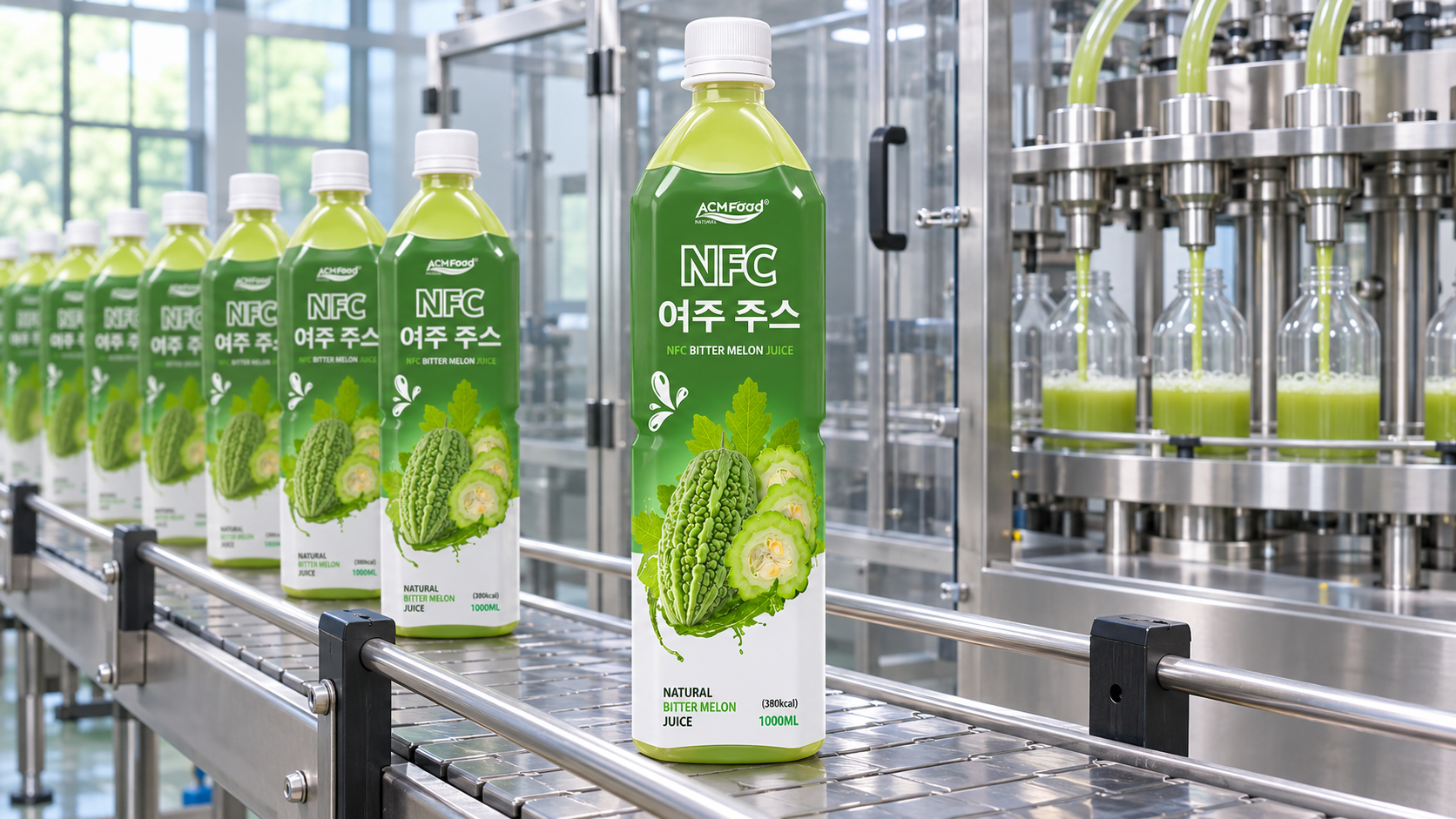
A 1L PET bottle suits NFC vegetable juices because consumers often drink them in small daily servings over several days, so a resealable, family-size pack fits the use. PET is light for export freight, and the bottle shows the juice colour, which is part of the appeal of a green drink.
Points to agree when choosing this pack:
- Whether the product is stored ambient or chilled after opening, and how the label states this.
- Bottle colour or sleeve coverage, since light can affect green colour over time.
- Cap type and tamper evidence for a multi-serve bottle.
- Case count and pallet pattern for export.
Smaller bottles or cans are possible for single-serve positioning, but they need their own process and packaging checks.
Sweet potato juice as a sister SKU
Sweet potato juice is a natural companion to bitter melon in an Asian vegetable juice range. It offers the opposite profile: sweet, earthy and smooth. Positioned side by side, the two products give retailers a “bitter and sweet” pairing within the same NFC 1L PET format, which keeps packaging, artwork style and production planning consistent. This page does not cover sweet potato juice in depth; it is mentioned here as an option for buyers building a range.
Specification points for a bitter melon juice project
| Parameter | What to agree |
|---|---|
| Raw material | Variety, maturity and origin of bitter melon |
| Juice content | Share of bitter melon and other juices in the blend |
| Bitterness target | Reference sample approved by the buyer |
| Colour | Acceptable colour range at production and at end of shelf life |
| Acidity and Brix | Ranges that support taste and the chosen heat process |
| Pack | 1L PET bottle, cap and label type |
| Label wording | NFC statement, juice content and no medical claims |
How should the label describe a bitter melon drink?
The label should describe what is in the bottle and how it tastes: the product name, the juice content, the NFC status where applicable, the ingredient list and storage instructions. Descriptions such as “traditional Asian vegetable” or “naturally bitter” set honest expectations and reduce complaints from first-time buyers.
Several wording points are worth agreeing early:
- Product name. “Bitter melon juice” suits a pure product; a blend may need a name such as “bitter melon and apple juice” in the order of ingredient share.
- Juice percentage. Where fruit or vegetable images appear, many markets expect the juice content to be declared.
- Alternative names. Bitter gourd, karela or the local name in the destination market can help shoppers recognise the product.
- Taste cue. A short line such as “naturally bitter taste” prepares consumers who are new to the vegetable.
- Storage after opening. A 1L bottle is a multi-serve pack, so refrigeration and a use-within period after opening should be stated.
Health-related wording deserves particular care. Even indirect phrases that hint at blood sugar or disease can be read as medical claims, so the safest approach is to avoid them entirely and let taste and origin carry the story.
Commercial terms
ACMFOOD’s terms for NFC vegetable juices are a minimum order of 500 cartons per SKU and a production lead time of 15–30 days after samples and artwork are approved. Production runs under HACCP, ISO 22000 and FSSC 22000 systems, and the available packs are cans, PET bottles and glass bottles. Prices depend on blend, pack and volume and are quoted per project. Buyers who are also considering other green juices can compare our notes on cucumber juice manufacturing.
Frequently asked questions
Can bitter melon juice be made less bitter without blending?
Partly. Raw material selection, removing seeds and pith, and careful processing reduce bitterness, but the vegetable remains bitter. Blending is the most effective way to make it milder.
Can the label mention blood sugar?
No. Blood sugar and other medical claims for bitter melon are not authorised in the EU or the US. Labels should describe taste, ingredients and origin instead.
Why does bitter melon juice change colour?
Colour change is mainly caused by enzymatic browning and heat. Fast processing, cool handling, acidity and prompt heat treatment reduce it, but some change over shelf life is normal.
Is NFC bitter melon juice made from fresh vegetables?
Yes. NFC means the juice is pressed and treated without being concentrated and later diluted, so it is made directly from the vegetable.
Bringing bitter melon to the shelf
Bitter melon juice can work as a bottled NFC product when the brand decides how much bitterness to keep, chooses blend partners carefully, controls browning and uses a heat process that protects colour and flavour. Honest positioning, without medical claims, keeps the product compliant in export markets.
To discuss a bitter melon or Asian vegetable juice range, send ACMFOOD your target market, preferred blend style and pack. We will prepare samples and confirm the specification for your first order.