


 Français
 Español
 العربية
 한국어
A fruit tea drink is a ready-to-drink beverage that combines brewed tea or tea extract with fruit juice or fruit flavour, usually sweetened and acidified, then filled into bottles or cans. In fruit tea drink manufacturing, the central task is balance: enough tea to taste like tea, enough fruit to taste like fruit, and a sweet-acid profile that holds both together through shelf life.
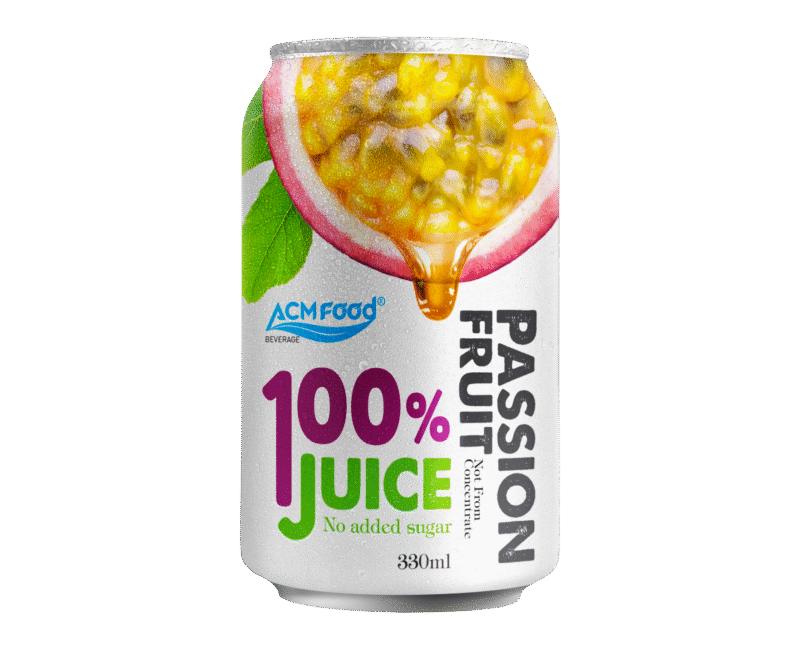
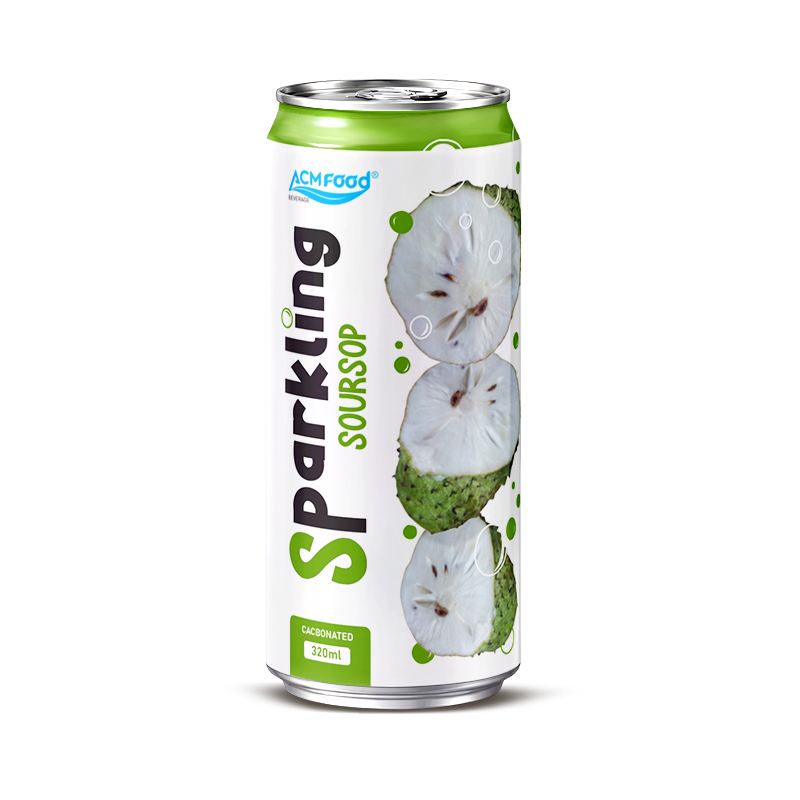
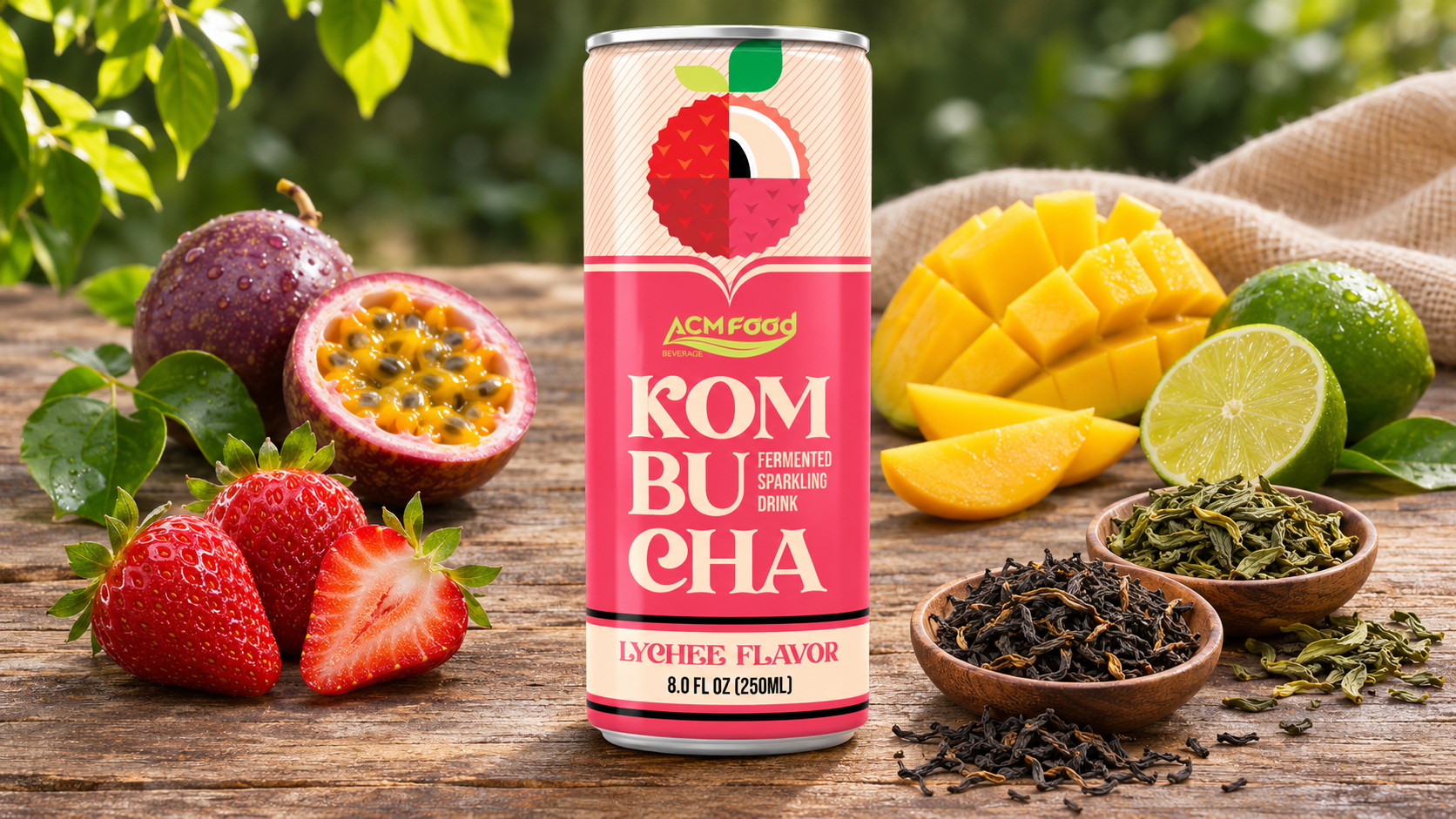
This article explains how manufacturers balance tea solids and juice, why haze and cream-down appear, how hot fill in 500ml PET bottles works for this category, and how sweetness and acidity are set. It draws on fruit tea flavours commonly produced at ACMFOOD, including strawberry, soursop, passion fruit, mango and lime, and is written for brand owners planning a private label range.
What is a fruit tea drink, and how is it different from juice?
A fruit tea drink is built on a tea base with fruit added for flavour and body, while a juice drink is built on fruit with no tea. The tea gives astringency, aroma and a lighter finish; the fruit gives sweetness, colour and a recognisable flavour name. Most commercial fruit teas contain a modest share of juice rather than a high one.
Three broad recipes are common:
- Tea with fruit flavour: brewed tea with natural flavour and little or no juice; clear, light and low in fruit sugar.
- Tea with a small share of juice: the most common style; juice adds authenticity, colour and body.
- Tea and juice blend: a higher juice share, closer to a juice drink with tea notes; fuller taste but more sugar and more stability work.
The choice shapes the label as well as the taste. If the front of the bottle shows fruit images or names a juice, some markets require the juice percentage to be declared. Our page on RTD tea manufacturing covers the plain tea side of the category.
How do manufacturers balance tea solids and juice content?
Manufacturers balance tea and juice by fixing the tea strength first, then adding fruit until the flavour is clear without hiding the tea. Too much tea makes the drink bitter and astringent alongside acidic fruit; too much juice turns it into a juice drink with a tea label. The balance point differs for each fruit.
Some practical guidance by fruit:
| Fruit | Tea base that suits it | Balance notes |
|---|---|---|
| Strawberry | Black or green tea | Delicate aroma; easily masked by strong tea |
| Soursop | Green or jasmine tea | Creamy, tropical note; can add slight cloudiness |
| Passion fruit | Green or black tea | Strong aroma and acidity; carries well through tea |
| Mango | Black tea | Rich and sweet; puree adds body and cloud |
| Lime | Black or green tea | Sharp and refreshing; peel oils add bitterness if overused |
Tea strength is usually specified as tea solids or extract dosage, and juice content as a percentage. Both are written into the specification so that the drink tastes the same from batch to batch. The buyer’s role is to approve the taste on samples; the manufacturer’s role is to translate it into fixed numbers.
Tea type matters too. Black tea gives a fuller, malty base that stands up to rich fruits such as mango. Green and jasmine teas are lighter and suit delicate or floral fruits. Some brands use one tea base across the whole range for consistency; others match the tea to each fruit for the best taste.
Why does fruit tea turn hazy, and what is cream-down?
Haze in fruit tea comes from two sources: tea cream-down, where tea polyphenols bind with caffeine and other compounds as the drink cools, and fruit particles or proteins that form a cloud. Cream-down is not a safety issue, but in a clear PET bottle it can make the drink look old or faulty.
Manufacturers manage haze with a combination of steps:
- Choosing tea material and extraction conditions that limit the compounds that form cream.
- Cooling and filtering the tea extract before blending to remove particles that would otherwise settle later.
- Using clear juice or clarified concentrate when a bright, transparent look is wanted.
- Accepting a natural cloud with puree-based fruits such as mango, and designing the label around it.
- Testing samples under storage conditions so the buyer sees the end-of-shelf-life appearance before approval.
Some fruits interact with tea more than others. Fruits rich in proteins or pectin can combine with tea polyphenols to form sediment. When a buyer wants both a high juice content and a clear look, extra stability work and storage testing are needed.
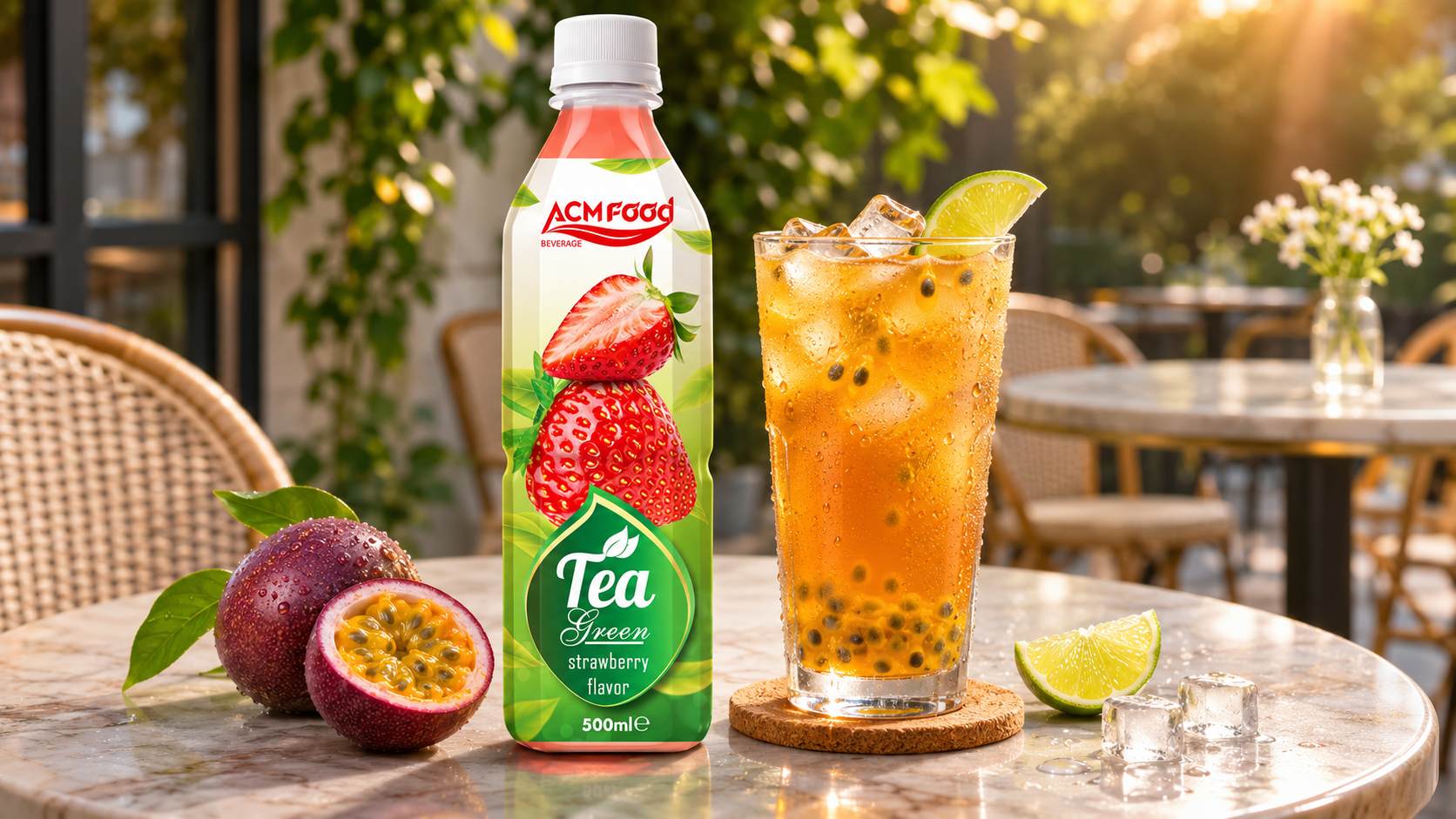
Why is hot fill common for fruit tea in 500ml PET?
Hot fill is common for fruit tea because the drink is acidic, so filling it hot into heat-resistant PET bottles treats both the product and the inside of the pack without the cost of aseptic filling. The 500ml PET bottle is a natural format for this category: resealable, light and large enough for an on-the-go serve.
Points that shape a hot-fill fruit tea project:
- Heat-set bottles. Hot fill needs PET bottles designed to resist the filling temperature without deforming. Standard thin-wall bottles are not suitable.
- Vacuum panels. As the hot product cools, the bottle contracts; heat-set bottles have panels or features designed to absorb this.
- Acidity. The drink’s pH must be low enough for the hot-fill process to be appropriate, which is why fruit teas are acidified.
- Flavour impact. Heat can dull fresh fruit aroma, so flavour levels are set to taste right after processing, not before.
- Cooling. Bottles are cooled after the hold period to protect flavour and colour.
The specific requirements for bottles used in this process are explained in our guide to hot-fill PET bottles. Cans and other PET sizes are also possible for fruit tea, but 500ml PET is the most common starting point.
How do you set the sweet-acid balance?
The sweet-acid balance is set by adjusting sugar or sweetener against acid until the drink tastes refreshing rather than syrupy or sour. It is usually described in a specification by Brix, which reflects sugar content, and by acidity or pH. Fruit tea tends to be lighter than juice, so both values are generally lower.
Tea adds its own bitterness and astringency, which affects how sweetness and acid are perceived. A drink that tastes balanced as plain juice may taste harsh once tea is added. For this reason, sweet-acid balance is always tuned on the full recipe, not on the fruit base alone.
Options for sweetness include:
- Regular sweetened: sugar only; the most familiar taste.
- Reduced sugar: sugar partly replaced by sweeteners to lower sugar content and possible tax exposure.
- Lightly sweetened: a lower sugar target that keeps a natural taste, popular in Asian markets.
- Unsweetened fruit tea: possible but uncommon; fruit flavour can taste thin without any sweetness.
Claims such as “less sugar” or “no added sugar” must match the tested formula and the rules of the target market.
Specification table for a fruit tea range
A buyer brief for a fruit tea range can follow the structure below. It shows what to define, not fixed values.
| Parameter | What to define | Why it matters |
|---|---|---|
| Tea type | Black, green, jasmine or blend | Sets base flavour and caffeine |
| Tea strength | Tea solids or extract dosage | Controls bitterness and tea character |
| Juice content | Percentage, or flavour only | Affects taste, sugar, cloud and label |
| Sweetness | Brix target and sweetener type | Drives taste, nutrition panel and tax |
| Acidity | pH and acidity range | Defines taste and supports the heat process |
| Appearance | Clear, slightly hazy or cloudy | Sets clarity expectations in PET |
| Pack | 500ml heat-set PET or can | Determines the filling process |
Which checks keep fruit tea consistent between batches?
Fruit tea stays consistent when each batch is checked for Brix, acidity, tea strength, colour and taste against the approved standard, and when the hot-fill temperature and hold are recorded. These checks catch drift in raw materials, such as a juice concentrate that is slightly sweeter than the last lot, before the product is bottled.
- Brix and acidity confirm that sugar and acid were dosed as specified.
- Colour and clarity are compared with the approved sample, especially for clear PET.
- Sensory evaluation checks tea character and fruit aroma side by side with a retained reference.
- Fill temperature and hold time are logged as process records for every run.
- Fill level and cap torque make sure each bottle is correctly filled and sealed.
Results are summarised on a certificate of analysis that accompanies each shipment, so the buyer can match the product to its specification.
Developing a private label fruit tea range
A private label fruit tea range usually starts with three flavours that cover different taste profiles, for example a red fruit, a tropical fruit and a citrus. Strawberry, passion fruit and lime is a balanced first set. Each flavour is sampled, adjusted and approved before artwork is finalised.
Formulation work happens at the sample stage. ACMFOOD’s formulation and R&D team adjusts tea strength, fruit content and sweetness against the buyer’s comments. For brands that also want a pure juice range alongside fruit tea, our page on private label fruit juice describes that route.
Commercial terms for fruit tea drinks at ACMFOOD are a minimum order of 500 cartons per SKU and a production lead time of 15–30 days after samples and artwork are approved. Production runs under HACCP, ISO 22000 and FSSC 22000 systems, with cans, PET bottles and glass bottles available. Prices are quoted per project.

Frequently asked questions
Does fruit tea contain caffeine?
Yes, when it is made with real tea. The amount depends on tea type and strength. Herbal fruit infusions without tea leaves do not naturally contain caffeine.
Why does my fruit tea sample look clear but later turn cloudy?
Cloudiness that develops over time is often tea cream-down or fruit particles settling. Filtration, formulation and storage testing reduce the effect before approval.
Can fruit tea be filled in cans instead of PET?
Yes. Cans hide slight haze and protect against light, but they use a different process from hot fill in PET. The pack choice is made at the brief stage.
How much juice should a fruit tea contain?
There is no single rule. Many commercial fruit teas use a small share of juice for authenticity; higher juice levels give more taste but more sugar and stability work.
Getting the balance right
Fruit tea drink manufacturing is a balancing exercise between tea strength, juice content, sweetness and acidity, all of which must hold up through hot fill in PET and through shelf life. Specifying these parameters clearly, and approving samples after storage, avoids surprises in the market.
To start a fruit tea range, send ACMFOOD your target market, preferred flavours, sweetness level and pack. We will prepare samples and confirm the specification for your first production run. Our product capabilities page lists the other drink categories we produce.