


 Français
 Español
 العربية
 한국어
The Vietnam beverage industry is the network of farms, ingredient processors, packaging suppliers and drink manufacturers that turns tropical fruit, coconuts, tea, coffee and herbs into finished beverages for domestic and export markets. For a foreign buyer, it matters because raw materials, processing and filling can often be found within the same country, close to a deep-sea port.
This brief explains where the main raw materials come from, where processing is concentrated, which trade agreements affect landed cost, and which documents a shipment needs. It is written for importers and brand owners who are considering Vietnam as a sourcing base. ACMFOOD, a beverage manufacturer near Ho Chi Minh City, is used as an example only where it helps to show how the pieces connect.
Why do foreign buyers look at the Vietnam beverage industry?
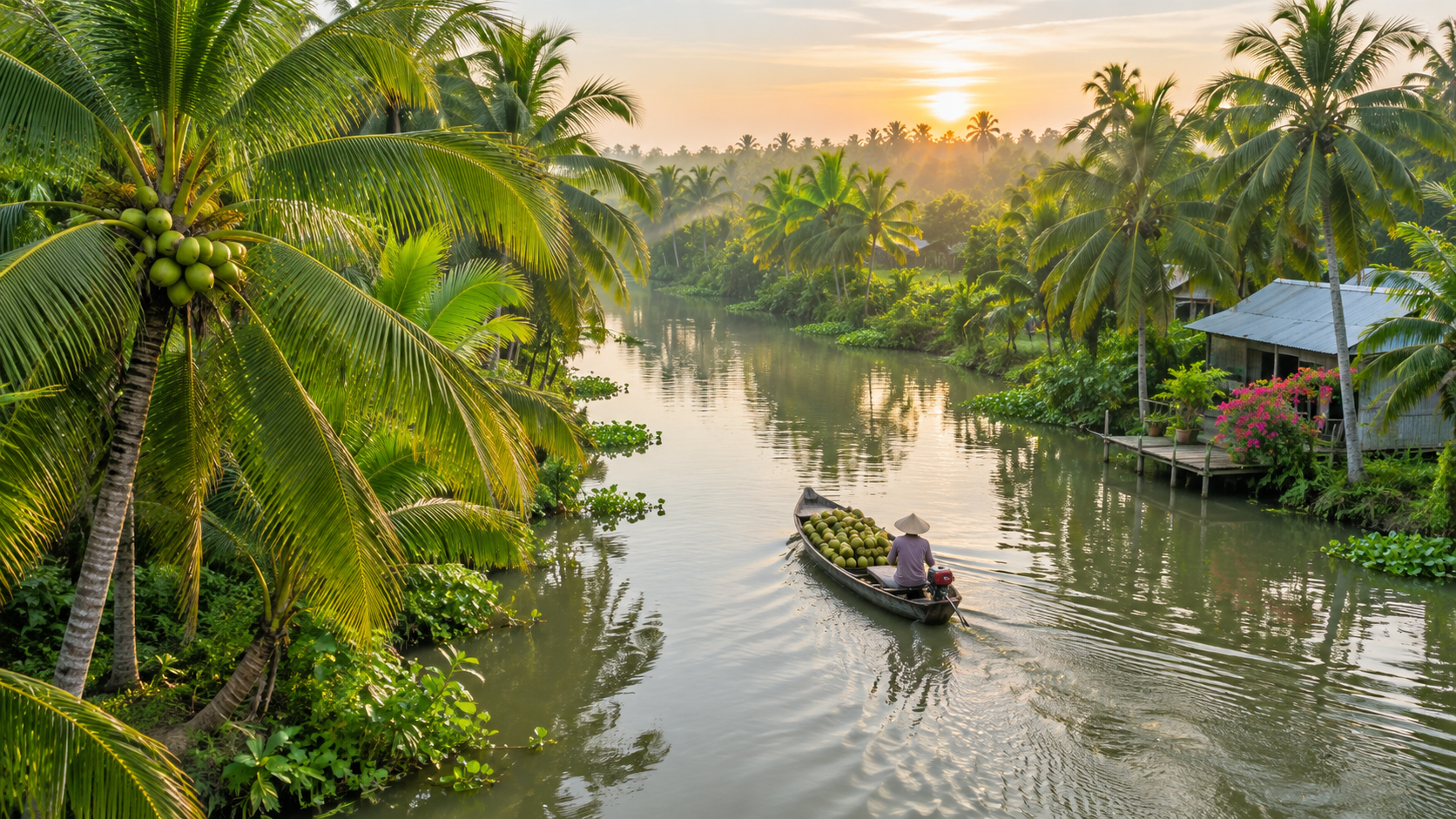
Foreign buyers look at Vietnam because it combines tropical raw materials, established food processing, a growing packaging supply base and preferential trade agreements with major markets. For drinks built on coconut, tropical fruit, tea or coffee, the main ingredient is often grown in the country rather than imported, which shortens the supply chain.
The appeal is not the same for every product. A drink based on Vietnamese coconut water or dragon fruit benefits directly from local supply. A drink built mainly on imported concentrate, such as blueberry or apple, gains less from origin and more from manufacturing flexibility, pack options and trade terms. A useful sourcing brief separates these two cases from the start.
Buyers also weigh softer factors: how easily they can visit factories, how quickly samples move, and whether the supplier’s team works comfortably in English or the buyer’s language. These do not appear in trade statistics but often decide whether a project moves forward.
Where do Vietnam’s beverage raw materials come from?
Vietnam’s beverage raw materials come from distinct growing regions: coconuts from the Mekong Delta, robusta coffee from the Central Highlands, artichoke from the Da Lat plateau, dragon fruit from the south-central coast around Binh Thuan, and lychee from the northern provinces around Bac Giang. Each region shapes flavour, seasonality and the products that make sense to develop.
| Raw material | Main growing area | Typical beverage use | Sourcing note |
|---|---|---|---|
| Coconut | Mekong Delta | Coconut water, coconut milk drinks, blends | Harvested year-round; variety and nut age affect taste |
| Robusta coffee | Central Highlands | Ready-to-drink coffee, milk coffee | Strong, bitter profile; often blended in RTD formats |
| Artichoke | Da Lat plateau | Herbal tea drinks | Traditional local tea; stems, leaves and flowers are used |
| Dragon fruit | South-central coast (Binh Thuan area) | Juice drinks, colour in blends | Red-flesh varieties give strong natural colour |
| Lychee | Northern provinces (Bac Giang area) | Lychee juice drinks, flavour in blends | Short harvest season; processed or frozen for year-round use |
Two practical points follow from this map. First, seasonality matters: fruits with short seasons, such as lychee, rely on processed or frozen material outside the harvest window. Our calendar of Vietnam fruit harvest seasons shows when each fruit is fresh. Second, Vietnam reorganised many provinces in 2025, so traditional names such as Ben Tre, Binh Thuan or Bac Giang may appear under new provincial names on recent documents. The growing regions are the same; the administrative labels changed.
Where is beverage processing concentrated?
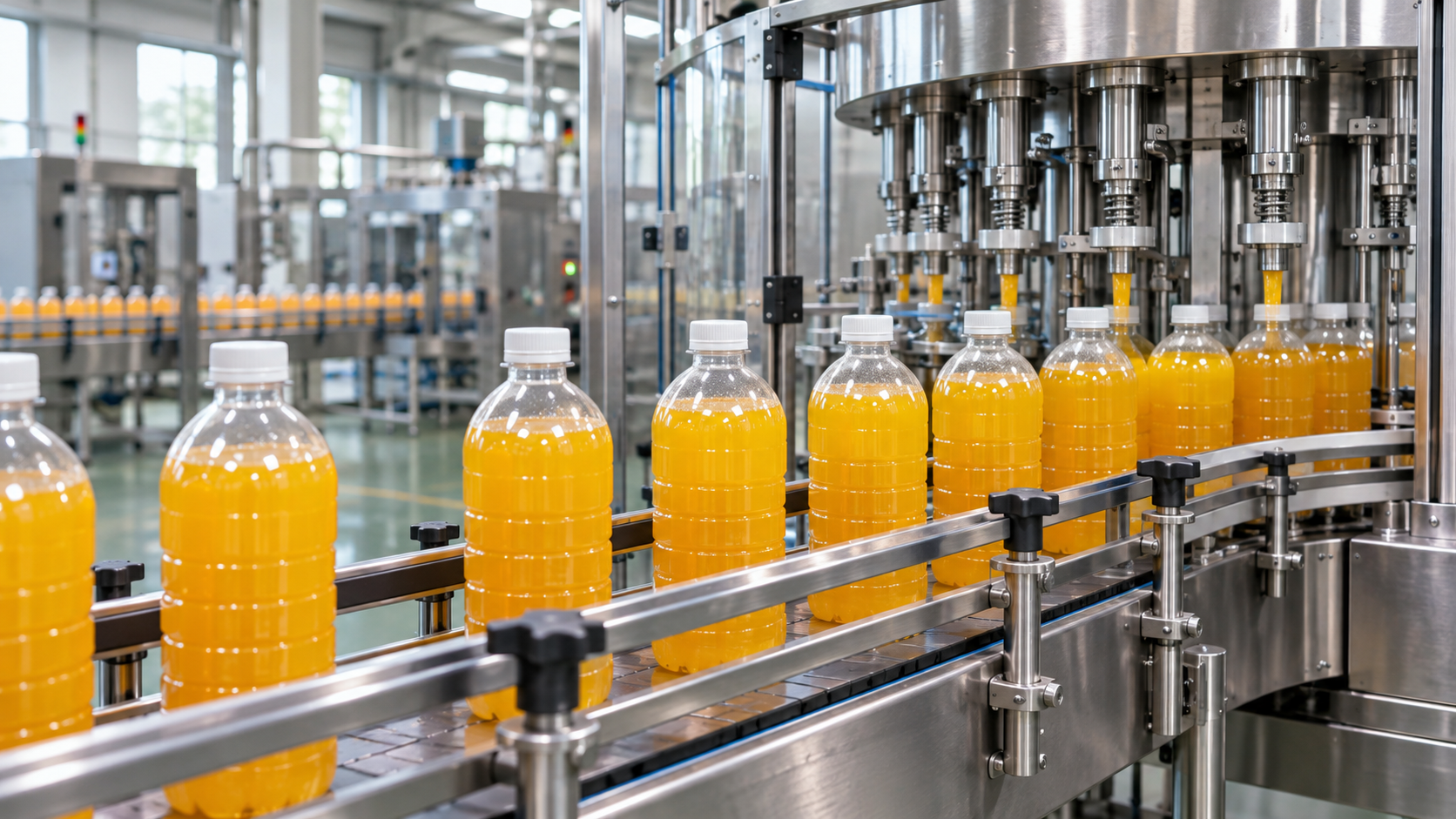
Beverage processing in Vietnam clusters around Ho Chi Minh City and its neighbouring provinces in the south, with a second concentration around Hanoi in the north. The southern cluster sits between the Mekong Delta’s raw materials and the main container ports, which is why many export-oriented drink manufacturers operate there.
The southern cluster offers several advantages for an export project:
- Short inbound distance. Coconuts and many tropical fruits travel a relatively short distance from farm to factory, which helps freshness and limits transport cost.
- Port access. Ho Chi Minh City’s port system handles a large share of the country’s container traffic, so finished goods reach a vessel quickly.
- Packaging suppliers. Producers of PET preforms, cans, labels and cartons operate in the same industrial zones, which shortens the lead time for packaging materials.
- Industrial parks. Food factories sit in planned industrial zones with utilities and wastewater treatment designed for processing.
ACMFOOD is an example of this pattern: its office is in Ho Chi Minh City and it runs four factories in Cu Chi and Can Giuoc, on the edge of the city and its neighbouring province. More background is on our about page.
Which trade agreements affect beverages sourced from Vietnam?
The trade agreements most relevant to beverage buyers are the EU–Vietnam Free Trade Agreement (EVFTA), the Comprehensive and Progressive Agreement for Trans-Pacific Partnership (CPTPP) and the Regional Comprehensive Economic Partnership (RCEP). Each can reduce import duty, but only when the goods meet the agreement’s rules of origin and travel with the right certificate.
According to the European Commission, the EU–Vietnam trade agreement entered into force on 1 August 2020 and provides for the elimination of 99% of tariffs between the two sides. For a beverage importer in the EU, the practical question is not the headline figure but the tariff schedule for the specific HS code and whether the drink qualifies as originating in Vietnam.
- EVFTA matters for importers in the European Union. Duty treatment depends on the HS code and the year of the phase-out schedule.
- CPTPP matters for buyers in member countries around the Pacific, such as Canada, Australia, Japan and Mexico.
- RCEP covers much of the Asia-Pacific region, including ASEAN members, China, Japan, Korea, Australia and New Zealand.
Rules of origin deserve attention. A drink made mainly from Vietnamese coconut water is more likely to qualify than one made mainly from imported concentrate, although the outcome depends on each agreement’s product-specific rules. Our article on EVFTA duty benefits for beverage OEM works through this for EU buyers. The United Kingdom has its own agreement with Vietnam, which runs separately from the EU one after Brexit.
What export documents does a beverage shipment from Vietnam need?
A typical beverage shipment from Vietnam travels with a commercial invoice, packing list, bill of lading and certificate of origin, plus product documents such as a certificate of analysis. The destination market may require more, for example health certificates, facility registration or label approvals, so the final list is agreed with the importer before shipment.
- Commercial invoice and packing list. These describe the goods, quantities, values and packaging for customs.
- Bill of lading. Issued by the carrier as the transport contract and receipt for the cargo.
- Certificate of origin. Needed to claim preferential duty under a trade agreement. The form depends on the agreement. See our guide to the certificate of origin for Vietnamese beverages.
- Certificate of analysis. Shows test results for the production batch against the agreed specification.
- Market-specific documents. Some importing countries require facility registration, product registration, health certificates or halal certification for certain channels.
Documents are only one part of compliance. The label must also meet destination rules on ingredient lists, nutrition panels, allergen statements, importer details and language. These are best checked on the artwork before production rather than at the port.
How should a foreign buyer evaluate a Vietnamese beverage manufacturer?
Evaluate a Vietnamese beverage manufacturer on four points: certified food safety systems, relevant processing and packing capability, transparent commercial terms, and experience with export documents for your market. Ask for evidence on each point rather than relying on catalogue statements or headline capacity figures.
| Area | What to ask for | Why it matters |
|---|---|---|
| Food safety | Current certificate copies with scope and expiry date | Retailers and importers often require a GFSI-recognised scheme |
| Capability | Pack formats, heat treatment routes, product examples | Not every factory can fill every pack or product type |
| Commercial terms | MOQ per SKU, production lead time, payment terms | Defines how quickly and at what scale you can launch |
| Export experience | Document sets used for shipments to your market | Reduces delays at the destination port |
| Communication | Named contact, response time, sample turnaround | Development moves only as fast as feedback |
For reference, ACMFOOD works with a minimum order of 500 cartons per SKU, a production lead time of 15–30 days after approval, HACCP, ISO 22000 and FSSC 22000 systems, and cans, PET and glass bottles. Other manufacturers will state different terms; the point is to obtain them in writing and compare like with like.
A factory visit, in person or by video, often answers more than a questionnaire. Seeing the raw material intake, the filling area and the quality laboratory helps a buyer judge whether the supplier’s claims match daily practice.
Common risks and how buyers manage them
Sourcing from any country carries risks, and Vietnam is no exception. The most common issues for beverage buyers are predictable and can be managed with a clear brief and agreed specifications.
- Raw material variation. Fruit and coconut taste change with season and variety. A specification with acceptable ranges for key parameters, confirmed on samples, keeps batches consistent.
- Label errors. Ingredient lists and nutrition panels that do not match the final formula are a frequent cause of rejection. Approve artwork against the tested product.
- Origin assumptions. Assuming a product qualifies for preferential duty without checking the rules of origin can lead to unexpected cost.
- Timeline pressure. Sampling, artwork and packaging procurement happen before production. Planning these steps avoids pressure on the production window.
Freight and seasonality interact as well. Peak shipping periods and fruit harvest windows do not always line up, so buyers who need a launch date often confirm raw material availability and vessel space together. Building a small buffer between the planned production date and the required arrival date protects a launch from a single delayed sailing.
Frequently asked questions
Is Vietnam a good place to source coconut water?
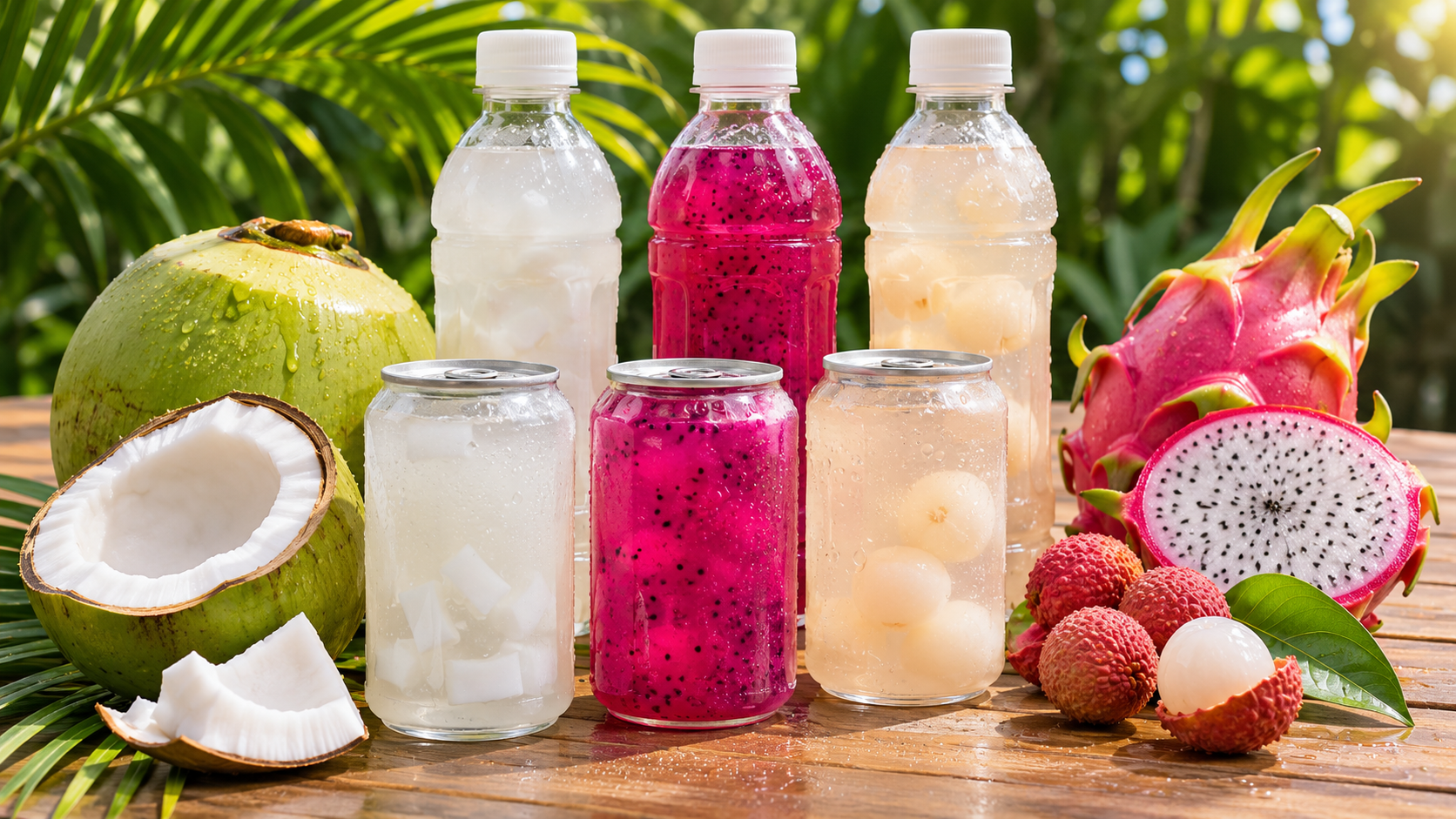
Vietnam is a strong option for coconut water because coconuts are grown in the Mekong Delta close to processing plants and ports. Taste depends on variety and harvest age, so buyers should approve samples.
Do all beverages from Vietnam get duty-free access to the EU?
No. Duty treatment under the EVFTA depends on the HS code, the phase-out schedule and whether the product meets the rules of origin, supported by the correct certificate of origin.
Which port do beverage exports usually leave from?
Many southern manufacturers ship through the Ho Chi Minh City port system. Northern producers often use the Hai Phong area. The choice depends on factory location and vessel schedules.
What should be in the first enquiry to a manufacturer?
State the destination market, product type, pack format, flavours, target volume per SKU and any required certifications. This lets the manufacturer reply with relevant samples and terms.
Using this brief
The Vietnam beverage industry offers buyers a close link between tropical raw materials, processing clusters and export ports, supported by trade agreements with the EU and much of the Asia-Pacific. The gains depend on the product: drinks built on Vietnamese ingredients benefit most, while every project still depends on clear specifications, correct labels and the right origin documents.
If Vietnam is on your shortlist, send ACMFOOD your market, product idea and pack preference. We will reply with samples, commercial terms and the documents your shipment will need.