


 Français
 Español
 العربية
 한국어
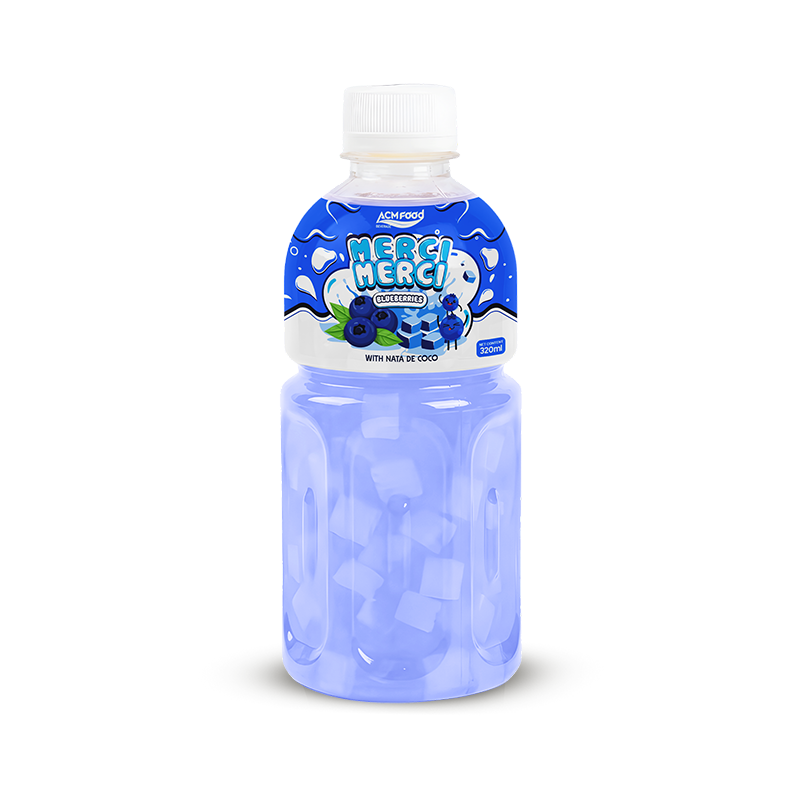
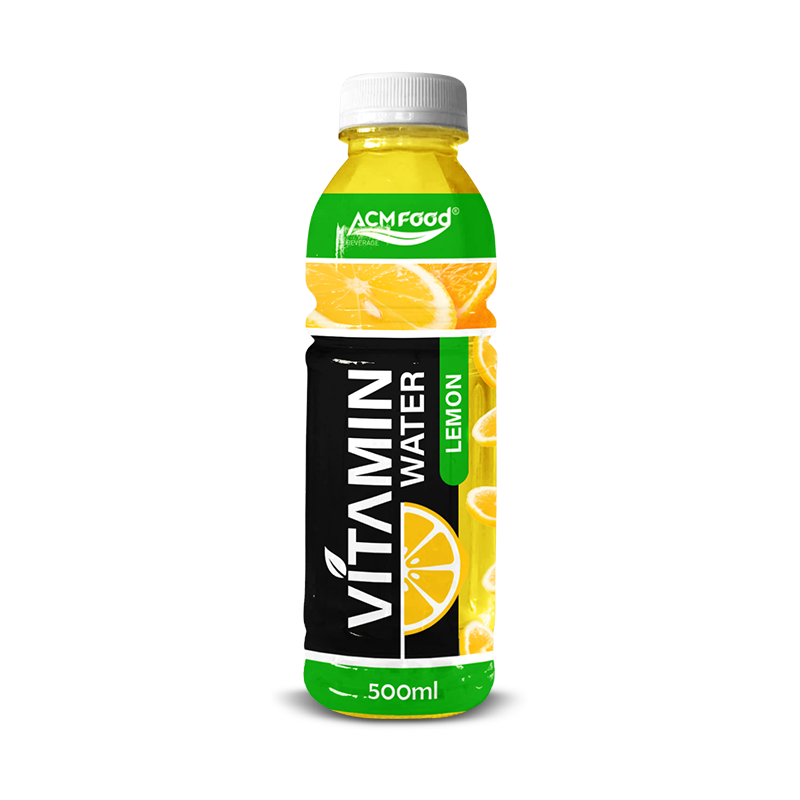
한국어Coconut juice in PET bottles is the most common format for exporting coconut drinks because PET is light, affordable, shapeable and safe for long ocean freight. For B2B buyers, OEM bottling means choosing a standard or custom bottle, a recipe, a label format and export documents, with a manufacturer that can keep flavour consistent from batch to batch.
ACMFOOD, a coconut water manufacturer in Vietnam, works with distributors across Europe, the Middle East and Asia. This guide covers bottle formats, recipes, labels, logistics and certification for OEM coconut juice in PET.
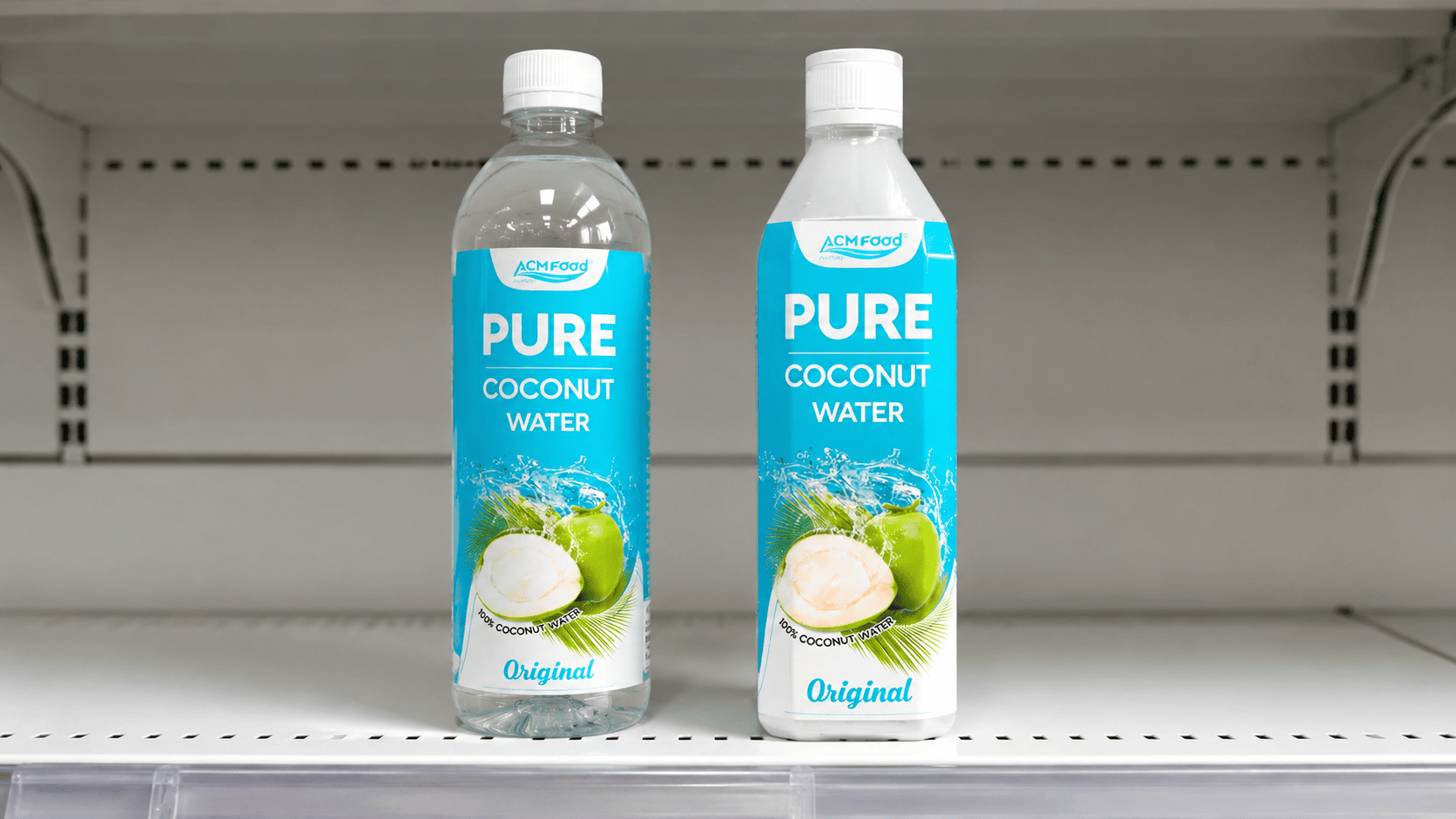
Why do PET bottles dominate coconut beverage exports?
PET is lighter than glass, which lowers freight cost per container, and it is sturdier than glass in handling. It also allows custom shapes, embossed logos and grip zones at reasonable tooling costs, and brands that invest in a distinctive bottle often gain stronger shelf presence than those relying on labels alone.
Standard or custom bottle: which should you choose?
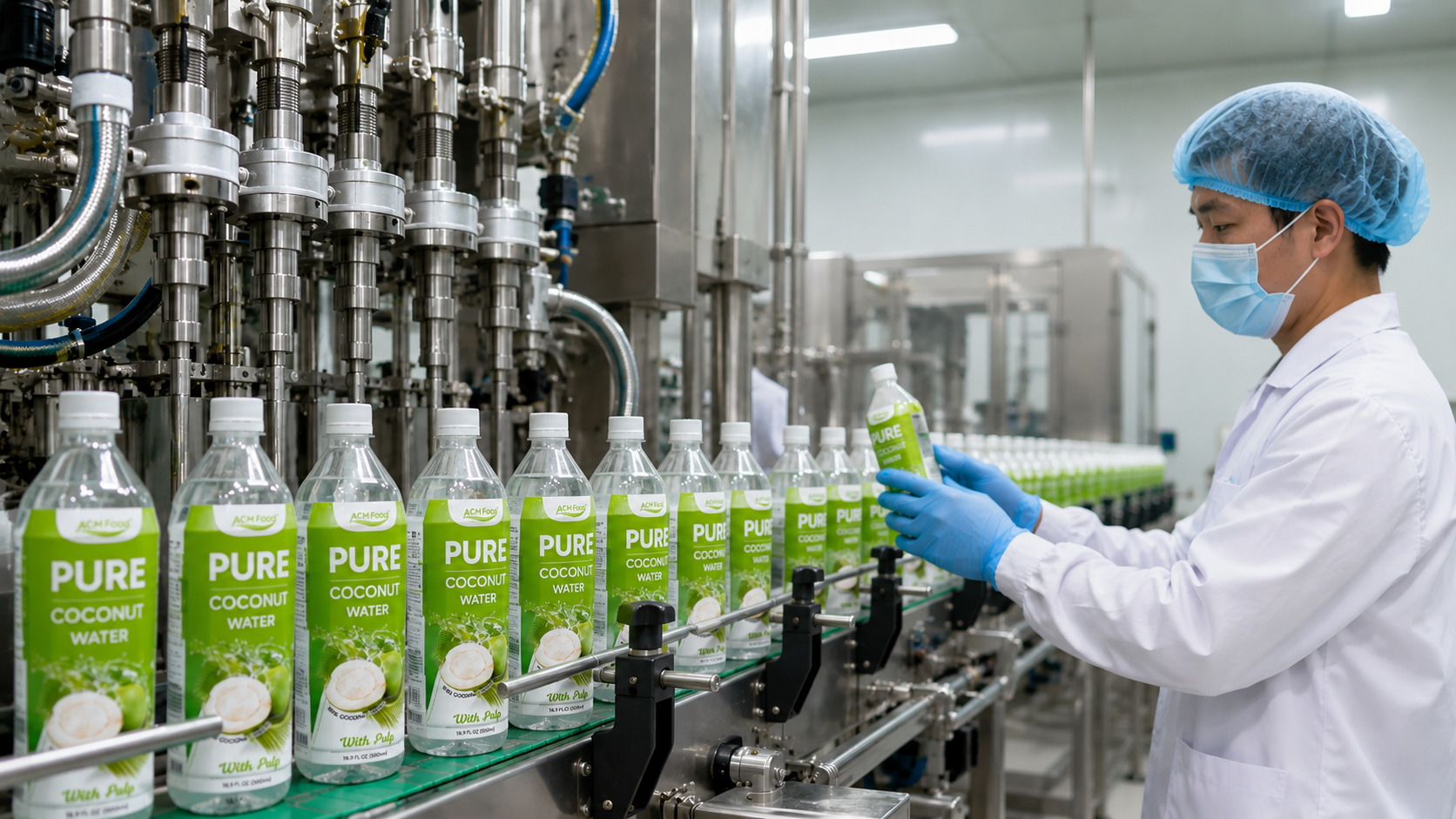
Standard bottles give faster launches and lower upfront cost; custom bottles build brand recognition but need tooling time and higher minimums.
| Standard size | Typical channel |
|---|---|
| 250 ml | Single-serve, convenience retail |
| 350 ml | Cafés and foodservice |
| 500 ml | Mainstream retail, the most requested size |
| 1,000 ml | Family size, hypermarkets and club stores |
- Standard bottles: minimums from 500 cartons per SKU; production usually 20–25 working days after order confirmation.
- Custom moulds: add roughly 30–45 days to the first run and carry a higher first-order minimum to cover tooling; repeat orders follow the standard schedule.
- Container loads: a 40-foot container holds roughly 2,000–2,500 cartons of 24 × 500 ml, depending on carton configuration. Smaller trial shipments are possible, but unit economics improve with full containers.
Which recipes are available?
Plain 100% coconut water is still the most requested product, but blends are growing, especially in the Middle East and Europe.
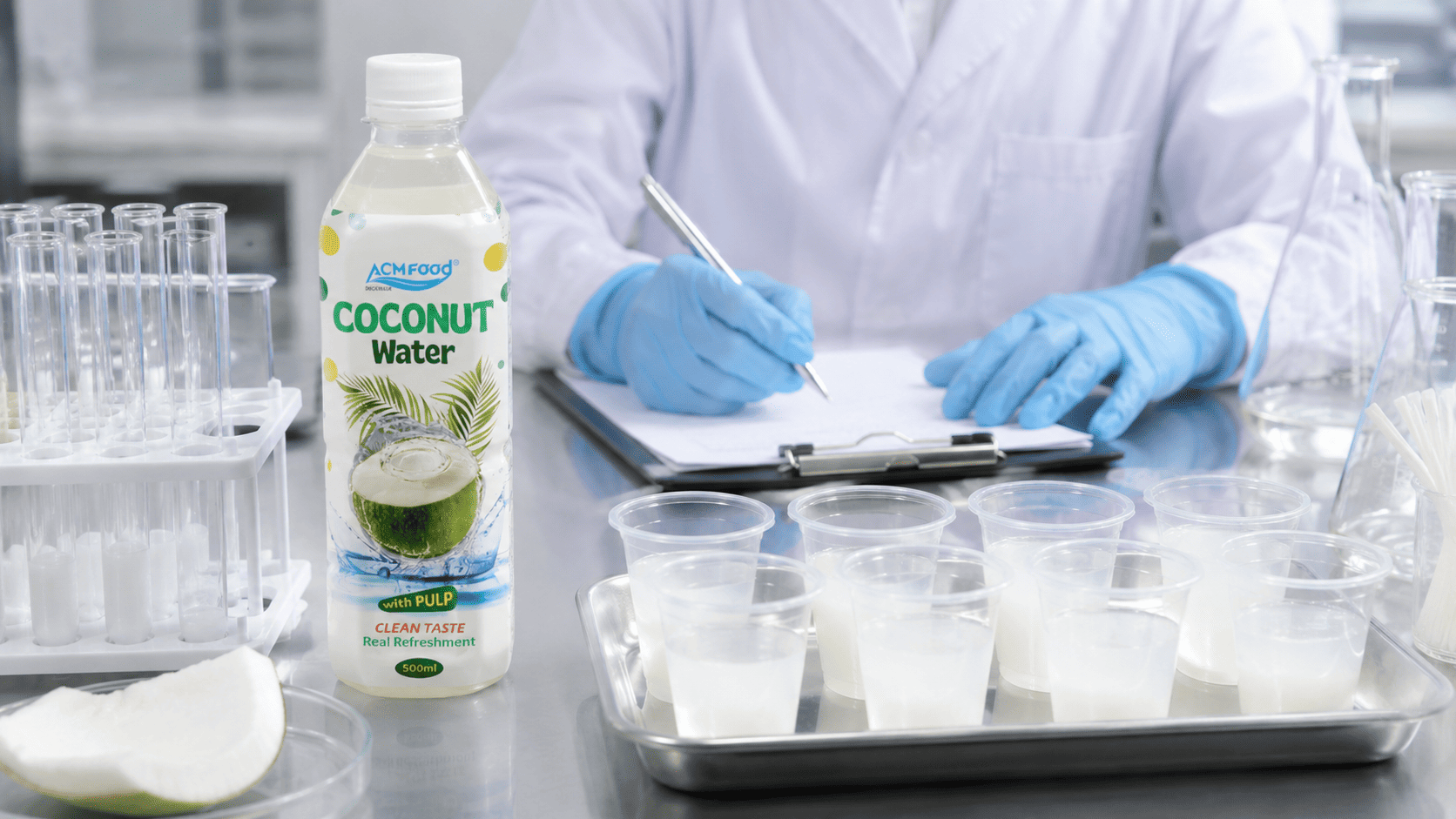
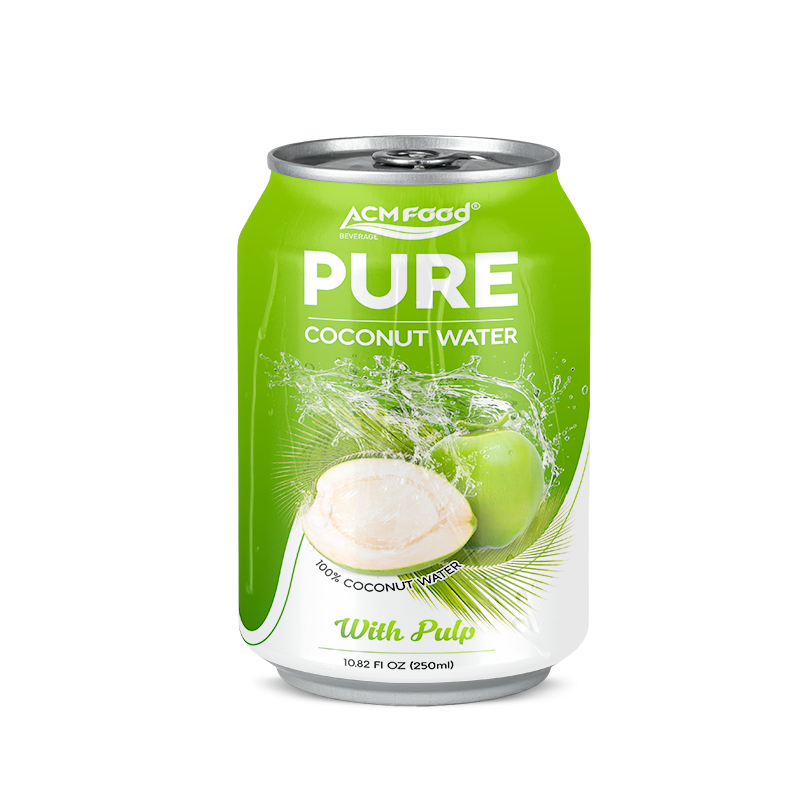
- Coconut juice with pulp.
- Coconut with aloe vera.
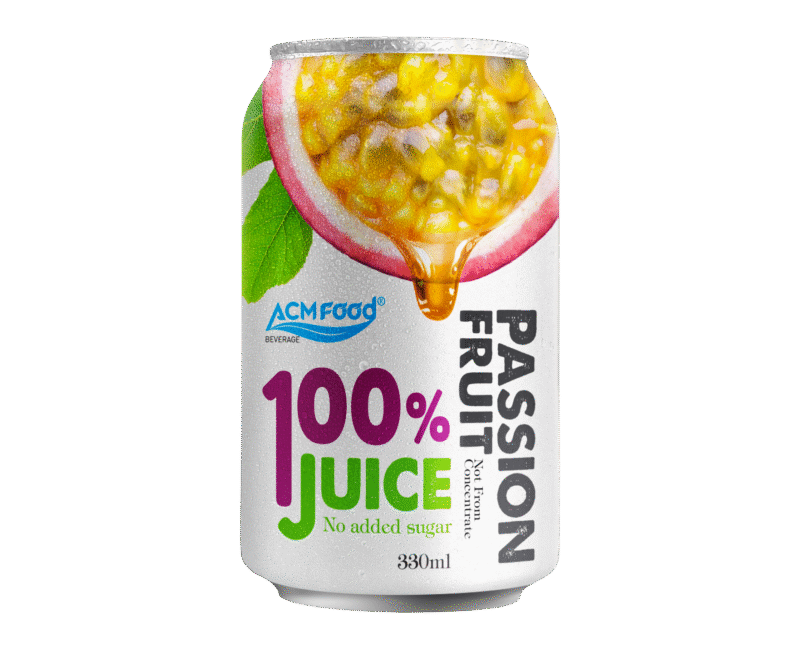
- Coconut blended with mango, pineapple or passion fruit.
- Low-sugar variants with electrolytes for fitness and pharmacy channels.
- Sweetened with cane sugar, coconut sugar, stevia or monk fruit, or unsweetened.
Samples are ready in 7–10 working days, and most buyers go through one or two rounds of adjustment to sugar, acidity, pulp content or colour. Because natural coconut water varies in sweetness between batches, check that the manufacturer has the blending and standardisation capacity to meet strict retail consistency; ACMFOOD does.
What label options are available?
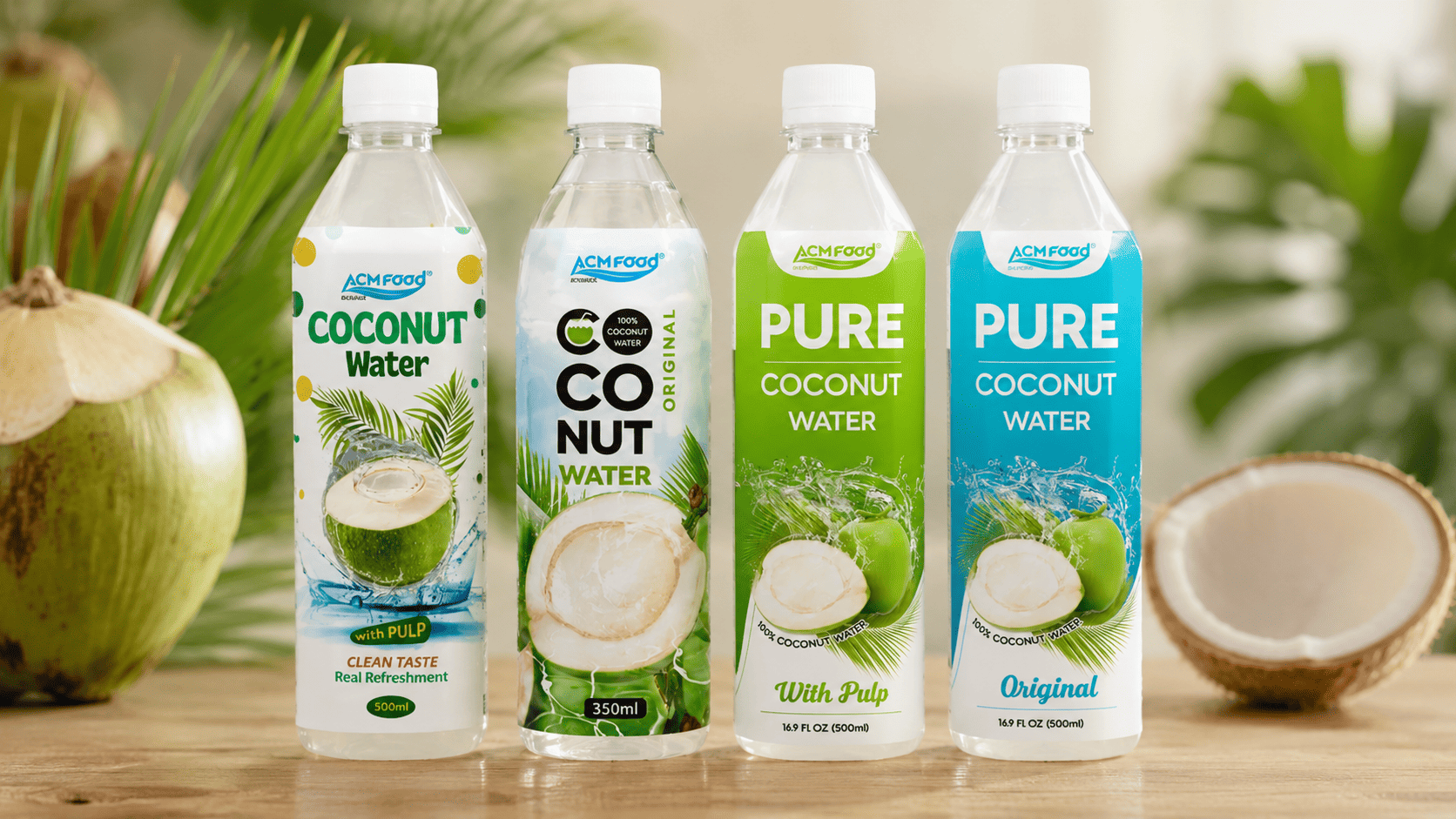
- Label types: wet-glue and pressure-sensitive labels on standard bottles; shrink sleeves for custom shapes.
- Artwork: vector files at 300 DPI with CMYK profiles for the target market.
- Languages: multi-language labels such as Arabic and English or French and English; plan the panel layout early.
- Programmes: private label with your artwork, brand development support, or white label.
What should you know about lead times and logistics?
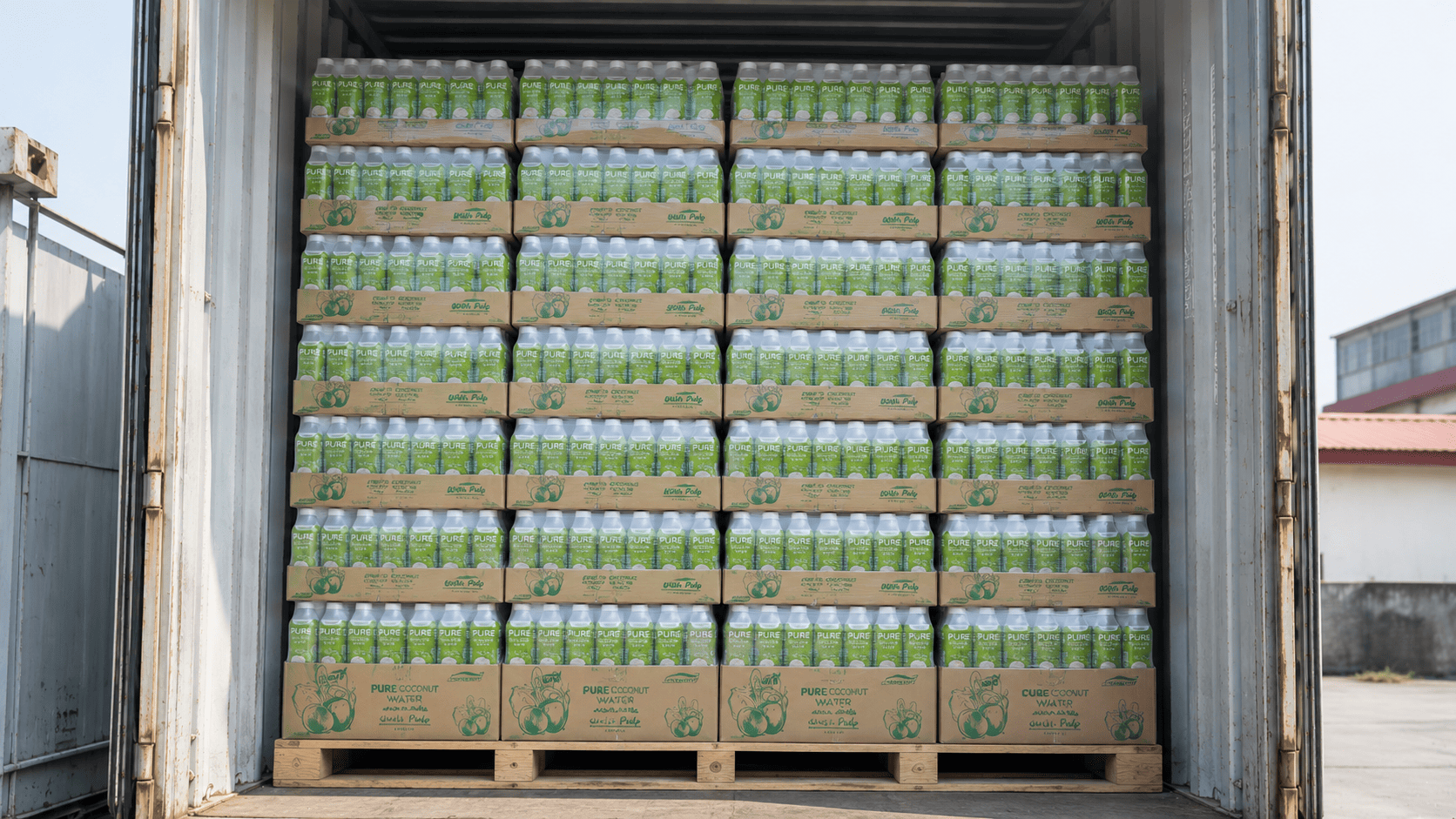
- Production: 20–30 working days from PO and approved artwork.
- Peak season: October to February can add 5–10 days; planning 60–90 days ahead avoids the rush.
- Loading: managed by our logistics team with photo records; you can use our forwarders or nominate your own.
- Shelf life: ambient coconut juice in sealed PET typically lasts 12–18 months depending on recipe and pasteurisation; confirm what your distribution network needs.
Which certifications and documents are provided?
ACMFOOD holds ISO 22000, HACCP, FSSC 22000 and Halal certification. Standard export documents include the certificate of origin, health certificate, phytosanitary certificate where required, Halal certificate and product specifications. We support buyers with market-specific requirements such as FDA registration for the US and SFDA requirements for Saudi Arabia. Organic products need third-party certification owned by the brand.
Frequently asked questions
What is the minimum order for OEM coconut juice in PET bottles?
From 500 cartons per SKU for standard bottles. Custom bottle tooling needs a higher first-order volume to recover the mould cost.
Can I adjust the sugar or use natural sweeteners?
Yes: cane sugar, coconut sugar, stevia, monk fruit or unsweetened versions are possible.
How long from first inquiry to first shipment?
Around 6–8 weeks with standard bottles and supplied artwork; 10–14 weeks for custom bottles with new tooling.
Do you offer exclusivity?
Partial exclusivity by market can be negotiated for consistent container-level volumes; full formula exclusivity is covered under a separate OEM agreement.
Conclusion
Choosing a coconut juice bottle is a branding, logistics and compliance decision at once. PET gives the best balance for export, and a manufacturer with standard and custom formats, flexible recipes, multi-language labels and complete documents keeps the launch on track.
Send us your target market, format and volume estimate, and we will reply with a production proposal and sample offer within 48 hours. WhatsApp: +84 96 763 19 38. Email: sales@acmfood.com.vn. See also beverage packaging options, our production process and minimum order quantity.
Request a quote