


 Français
 Español
 العربية
 한국어
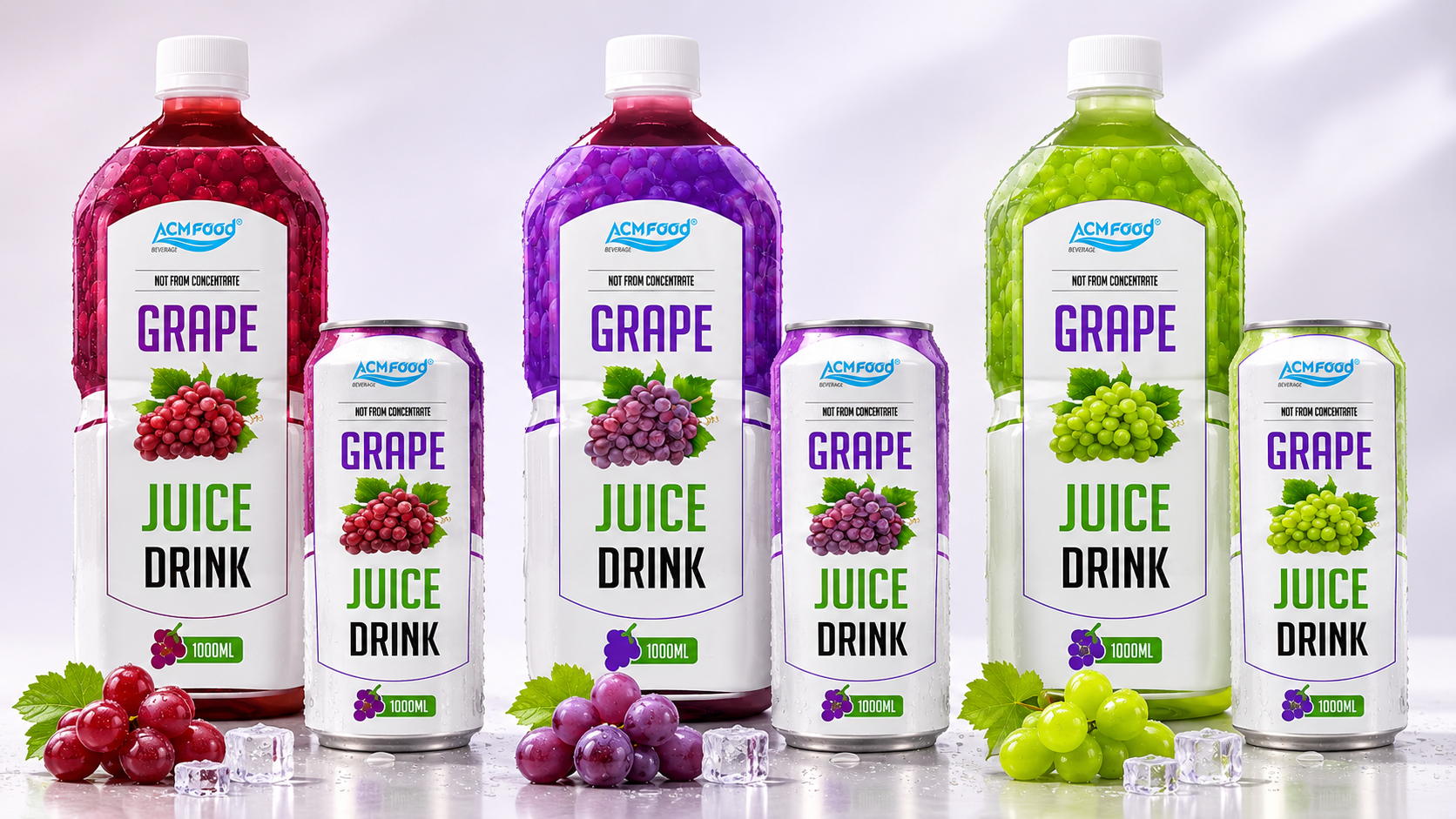
Grape juice OEM is the production of grape juice or grape-flavoured drinks by a manufacturer to a buyer’s specification, sold under the buyer’s brand. Grape works across many drink types, from juice drinks and vitamin waters to aloe, chia seed, sparkling and nata de coco drinks, and it comes in three colour families: red, white and green grape.
This guide explains the decisions behind a private label grape drink: how much juice to include, where grape concentrate comes from, how to control tartrate crystals, how to keep red grape colour stable, and which sugar options fit different markets. ACMFOOD produces grape variants across several of its drink lines, and the points below come from that range.

Which grape drink styles can be produced under OEM?
Grape can be produced as a juice drink, a nectar-style drink, a flavoured drink with a small juice share, or as a flavour within other drink lines such as aloe, chia seed, sparkling or nata de coco drinks. The style sets juice content, sugar, cost and label wording, so it is the first decision in a grape juice OEM brief.
Common formats include:
- Grape juice drink: a still drink with a defined share of grape juice, sweetened and acidified to taste.
- Grape vitamin drink: a lighter grape drink with added vitamins in measured amounts.
- Aloe grape drink: grape flavour with aloe gel cubes for texture.
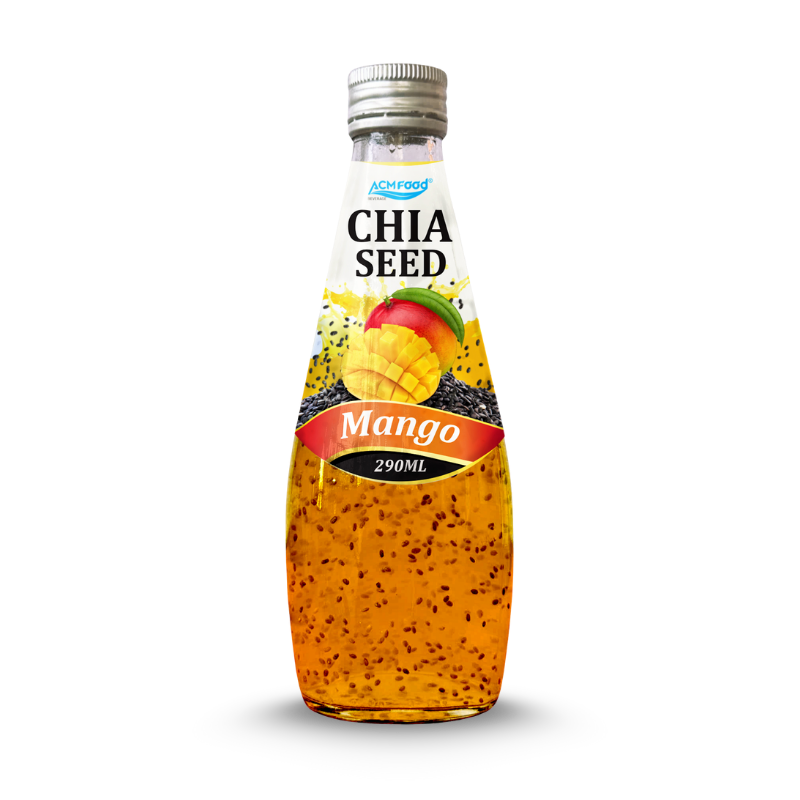
- Grape chia or basil seed drink: seeds suspended in a grape drink, a popular Asian format. See our page on chia and basil seed drinks.
- Sparkling grape drink: carbonated grape soda or sparkling juice drink.
- Grape nata de coco drink: grape drink with coconut gel pieces. See drinks with nata de coco.
Because grape is so widely used as a flavour, buyers often add it to an existing range rather than build a stand-alone grape brand. In that case, keeping the grape SKU consistent with the rest of the range in sweetness, pack and label style matters as much as the grape itself.
How much grape juice should the drink contain?
Juice content depends on positioning and price. A drink can range from flavour only, with little or no juice, to a high-juice product close to a nectar. Higher juice content gives more authentic taste and colour but also more sugar from the fruit and a higher ingredient cost. The band is chosen in the brief and confirmed on samples.
| Juice content band | Taste and look | Typical use | Label note |
|---|---|---|---|
| Flavour only, little or no juice | Light, aromatic; colour from added colouring if any | Sodas, flavoured waters, value drinks | May need “flavoured” wording rather than “juice” |
| Low juice share | Recognisable grape taste, light body | Aloe, chia, nata de coco and vitamin drinks | Juice percentage often declared |
| Medium to high juice share | Fuller grape flavour and natural colour | Juice drinks and nectars | Minimum levels for “nectar” vary by market |
| 100% grape juice | Full flavour, natural sweetness | Premium juice positioning | Must contain only juice, with defined quality rules |
For inclusion drinks such as aloe, chia or nata de coco, a low juice share is common because the inclusions are the main feature. For a drink sold as “grape juice”, the market’s naming rules decide the minimum content.
Where does grape concentrate for a Vietnamese-made drink come from?
Most grape juice used in drinks made in Vietnam comes from imported grape concentrate, because large-scale juice grape growing is limited in the country. Concentrate is produced in major grape regions, shipped in drums or bulk, and restored with water during production. Its origin, variety and quality grade affect taste, colour and cost.
Points to agree with the manufacturer:
- Grape type. Red grape concentrate, often from Concord-type or other dark varieties, gives deep colour and a “grape candy” note. White grape concentrate is lighter and is often used as a neutral sweet base. Green grape flavour usually combines white grape juice with a fresh, green flavour profile.
- Quality grade. Concentrates differ in Brix, acidity, colour intensity and clarity. The specification should state the grade or parameters used.
- Consistency. Switching concentrate suppliers can change taste and colour. The manufacturer should notify the buyer before a change.
- Origin labelling. Some markets require or reward origin information; check whether the label needs to mention the origin of the juice.
Because the grape itself is imported, the value a Vietnamese manufacturer adds lies in formulation, pack options, inclusions and the ability to combine grape with tropical ingredients such as aloe, coconut gel and seeds.

What are tartrate crystals, and how are they controlled?
Tartrate crystals, sometimes called wine crystals or wine diamonds, are harmless crystals of potassium bitartrate that can form in grape juice when it is chilled or stored. They come from tartaric acid and potassium naturally present in grapes. They are not a safety issue, but consumers may mistake them for glass or sugar.
Manufacturers control tartrates in several ways:
- Using stabilised concentrate. Many grape concentrates are cold-stabilised by the supplier so that most tartrates have already been removed.
- Cold stabilisation. Chilling juice and allowing crystals to form and settle before filtration removes them before bottling.
- Formulation. At low juice content, tartrate formation is usually less likely; at high juice content, it needs more attention.
- Storage testing. Chilled storage tests reveal whether crystals form over shelf life.
Buyers selling high-juice grape drinks in cold markets, or recommending chilled serving, should ask how tartrates are controlled and see samples after cold storage.
How is red grape colour kept stable?
Red grape colour comes from anthocyanins, natural pigments that are sensitive to heat, light, oxygen and pH. Over shelf life, they can fade from bright purple-red to a duller brown-red, especially in clear PET bottles exposed to light. Stability depends on formulation, process and pack.
Practical steps include:
- Keeping the drink acidic, since anthocyanins are generally more stable and redder at lower pH.
- Limiting heat exposure to what the process requires.
- Reducing oxygen in the product and headspace.
- Choosing cans, tinted bottles or full-body sleeves when light exposure is a concern.
- Agreeing an acceptable colour range at production and at the end of shelf life.
Some brands accept natural colour change as a sign of real juice; others add colour from permitted sources to keep a consistent look. Either approach should be reflected correctly on the label.
Which sugar options suit grape drinks?
Grape is naturally sweet, so grape drinks can reach a satisfying taste with less added sugar than sour fruits. Buyers usually choose between a regular sweetened version, a reduced-sugar version with sweeteners, and a no-added-sugar version that relies on grape juice sugar alone. The choice depends on market rules, sugar taxes and positioning.
- Regular: familiar sweet taste; most exposed to sugar taxes.
- Reduced sugar: part of the sugar replaced by sweeteners; check sweetener rules and label statements.
- No added sugar: sweetness from juice only; needs a higher juice share and must meet local claim conditions.
White grape juice is also widely used as a natural sweetening base in other fruit drinks, which is one reason white grape concentrate appears in many ingredient lists.
Specification table for a grape OEM project
| Parameter | What to define |
|---|---|
| Grape type | Red, white or green grape profile |
| Juice content | Percentage or flavour only |
| Concentrate | Type, grade and stabilisation status |
| Sweetness | Brix target, sugar or sweetener system |
| Acidity | pH and acidity range |
| Colour | Target shade and acceptable range over shelf life |
| Inclusions | None, aloe, chia, basil seed or nata de coco |
| Pack | Can, PET or glass, and size |
How is a grape drink sampled and approved?
A grape drink is approved through rounds of samples tasted against the brief, usually chilled and side by side with a reference product. The buyer comments on grape intensity, sweetness, acidity and colour; the manufacturer adjusts the formula; and the approved sample becomes the standard for every production batch.
- Brief review. The manufacturer confirms grape type, juice band, inclusions and pack, and flags any label or market issues.
- First samples. One sample per flavour, sometimes in two sweetness levels so the buyer can choose.
- Adjustment. Specific feedback, such as “more grape aroma, slightly less sweet”, guides the next round.
- Storage check. For red grape and high-juice drinks, samples kept under storage conditions show how colour and tartrates behave.
- Sign-off. The buyer approves the sample and specification, and artwork is finalised from the approved formula.
Comparing samples in the intended pack, not only in a glass, gives a truer picture. A purple drink in clear PET under shop lighting looks different from the same drink poured into a cup, and that difference can influence the colour target.
Commercial terms
ACMFOOD’s terms for grape drinks are a minimum order of 500 cartons per SKU and a production lead time of 15–30 days after samples and artwork are approved. Production runs under HACCP, ISO 22000 and FSSC 22000 systems, with aluminium cans, PET bottles and glass bottles available. Prices depend on juice content, inclusions, pack and volume and are quoted per project. Grape is also produced as a sparkling flavour; see our page on sparkling beverage manufacturing for that route.
For buyers who want grape alongside other fruit flavours, it is efficient to brief the whole range together so that sampling, artwork and production share one schedule. Each flavour remains a separate SKU for minimum order purposes.
Frequently asked questions
What is the difference between red and white grape juice in a drink?
Red grape juice brings deep colour and a bold, familiar grape taste. White grape juice is lighter in colour and flavour and is often used as a sweet, neutral base or for green grape profiles.
Are tartrate crystals in grape juice harmful?
No. Tartrate crystals are natural potassium bitartrate from grapes and are harmless. Manufacturers reduce them with stabilised concentrate, cold stabilisation and storage testing.
Why does red grape drink lose colour over time?
Red grape colour comes from anthocyanins, which fade with heat, light, oxygen and higher pH. Acidity, careful processing and light-protective packs slow the change.
Can grape be added to an existing aloe or chia seed range?
Yes. Grape is a common flavour in aloe, chia seed, basil seed and nata de coco drinks, and it is developed as a separate SKU within the range.
Building a grape range
Grape juice OEM projects succeed when juice content, concentrate type, tartrate control, colour stability and sweetness are agreed before production. Red, white and green grape profiles each suit different positions, and grape fits easily into inclusion drinks and sparkling lines as well as juice drinks.
Send ACMFOOD your target market, preferred grape style, pack and any inclusions, and we will prepare samples and confirm the specification for your first order. Background on general juice production is available in our overview of the fruit juice manufacturing process.