


 Français
 Español
 العربية
 한국어
한국어A QR code on a beverage label can carry supplementary information to a consumer, but in most food categories it cannot replace the mandatory particulars printed on the pack. Understanding which of those two statements applies to a given product and market is the whole of the subject, because the rules differ by category and are still developing.
This article separates what must remain printed from what may move off-pack, explains where digital labelling has actually been permitted, and sets out how to build a landing destination that supports rather than undermines a compliant label. Confirm the current position with the destination authority, since this area is changing.
What is digital labelling?
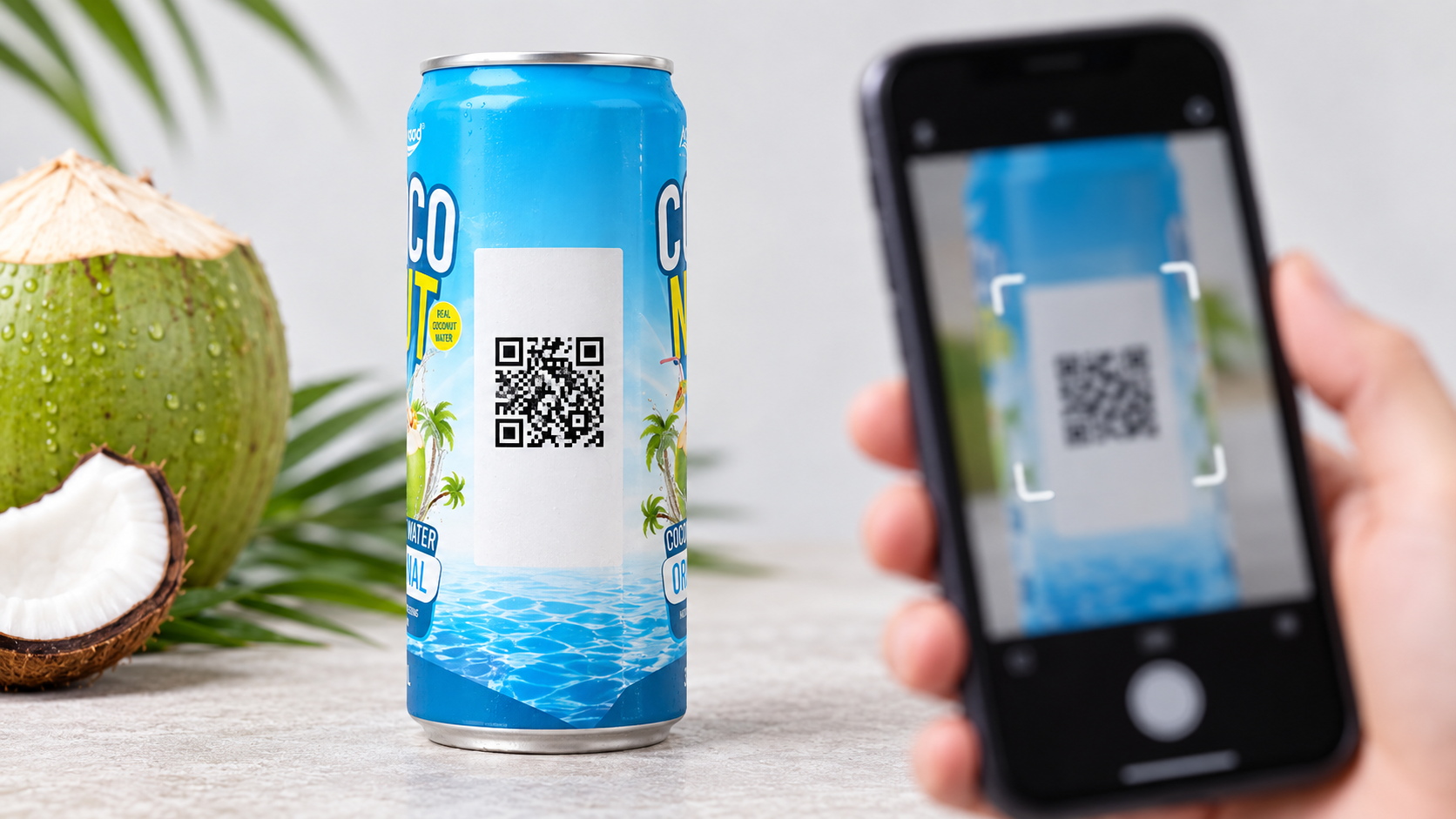
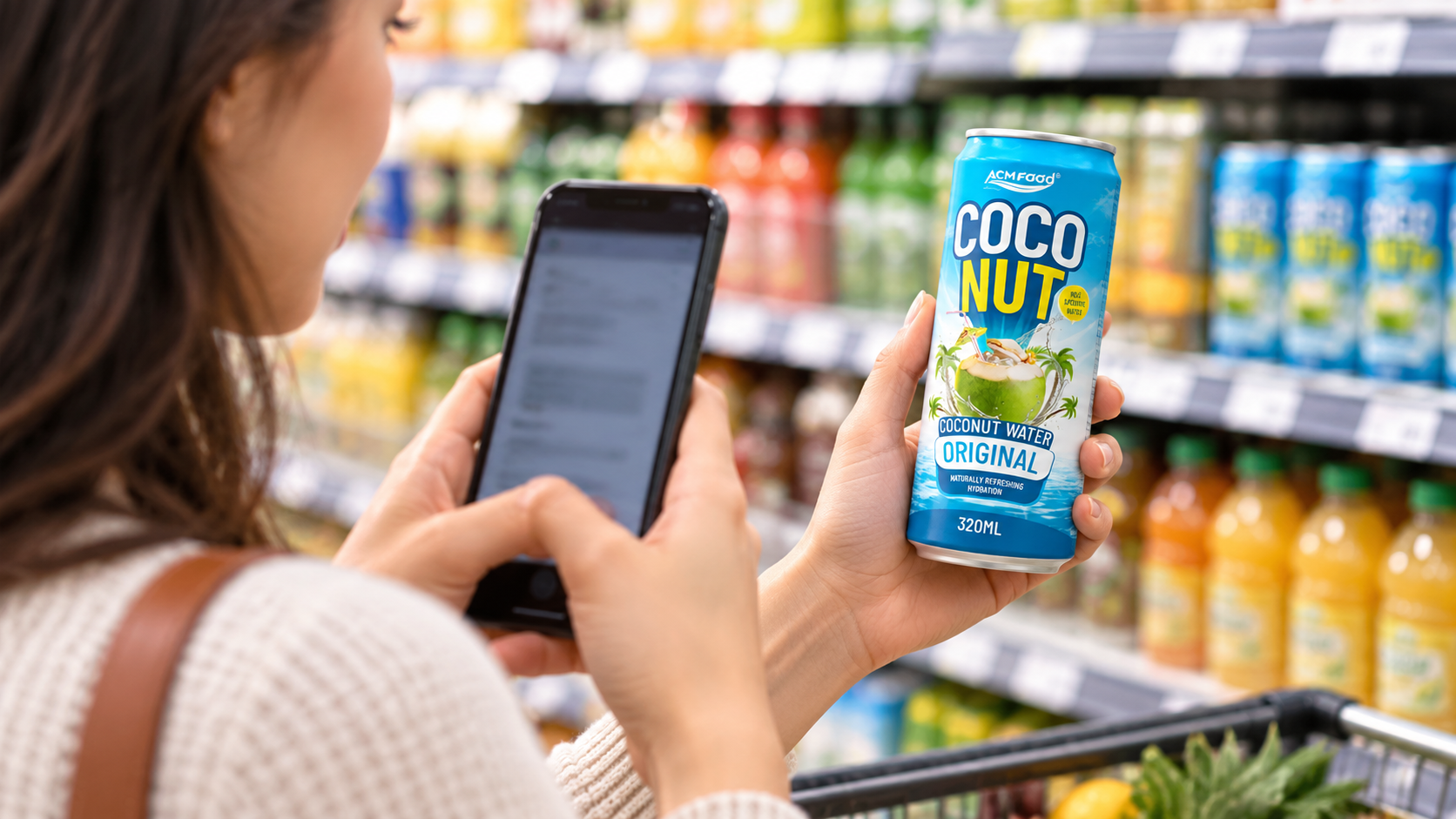
Digital labelling is the practice of providing label information through an electronic destination, usually reached by scanning a code on the pack, rather than printing all of it on the packaging itself. It is sometimes called e-labelling or smart labelling, and it is distinct from a marketing QR code that leads to a brand campaign.
The distinction matters legally. A marketing code is voluntary additional information and is treated as such. A digital label carries information that would otherwise be mandatory, and is only permitted where the rules for that product category expressly allow it.
What must stay printed on the pack?
In most food and beverage categories the mandatory particulars remain a printed requirement. The general principle across major markets is that a consumer must be able to read the essential information at the point of sale without needing a device, a network connection or an account.
The elements that consistently remain on pack include:
- Allergen information, which is treated as safety-critical and is not permitted to move off-pack in any framework covered here.
- The name of the food, since the consumer must be able to identify what the product is.
- Net quantity, which is also tied to weights and measures rules rather than food information rules alone.
- The durability date, because it is specific to the physical unit in the consumer’s hand.
- Storage and use conditions where they affect safety.
- The responsible business operator, so that a consumer or authority can identify who placed the product on the market.
Anything moved behind a code has to be additional to these, not a substitute for them, unless a category-specific rule says otherwise.
What can move behind a QR code?
| Information | Usual position | Comment |
|---|---|---|
| Allergens | Must stay printed | Treated as safety information in every framework here |
| Name of the food | Must stay printed | Identification at point of sale |
| Durability date and lot | Must stay printed | Specific to the physical unit |
| Full nutrition declaration | Generally printed; category exceptions exist | The clearest example of an exception is EU wine |
| Full ingredient list | Generally printed; category exceptions exist | Same category exception applies |
| Provenance and sourcing detail | May be off-pack | Voluntary information, subject to not misleading |
| Recycling and disposal guidance | Increasingly supported off-pack | Printed sorting marks may still be required |
| Serving suggestions and recipes | May be off-pack | Purely voluntary content |
The European Union position
The EU framework for general food information requires the mandatory particulars to appear on the package or on a label attached to it. Voluntary information may be provided by any means, including a code, provided it does not mislead and does not crowd out or obscure the mandatory content.
The significant exception is the wine sector, where rules introduced specifically for wine and aromatised wine products allow the ingredient list and the nutrition declaration to be provided electronically, while the energy value and any allergen declaration must remain printed on the label. That exception is category-specific and does not extend to soft drinks, juices or other non-alcoholic beverages.
The practical reading for a non-alcoholic beverage exporter is therefore conservative: print everything required by the general framework, and treat a QR code as a channel for additional content. The shared mandatory layer is set out in the article on EU beverage labelling and import rules.
A second EU development runs alongside this. Packaging rules are moving towards harmonised marking for sorting and disposal, and digital carriers are part of how that information is expected to be conveyed. This is a packaging obligation rather than a food information one, but it lands on the same artwork and is worth planning together.
The Korean position
Korean labels are required in Korean, carry the mandatory particulars on the pack, and identify the Korean importer. Korea has been actively examining digital and QR-based labelling as a way of handling the space constraints that Korean-language labels create on small formats, and pilot approaches have been explored for some categories.
Because the scope of what is permitted is category-dependent and has been changing, an exporter should not assume that an approach seen on one Korean product is available for another. The reliable step is to ask the Korean importer to confirm, in writing, what may be presented digitally for the specific product category before any artwork is built around it. The broader packaging and marking expectations for the market are covered in beverage packaging options for the Korean market.
Designing a landing destination that works
Where a QR code carries information the consumer is expected to rely on, the destination becomes part of the label and needs to behave like one. A campaign microsite is not an adequate destination for that purpose.
- Language must match the market. A destination serving a market where the label is in Korean or Spanish must present the information in that language, not only in English.
- No barriers to access. No login, no app download, no cookie wall before the information, and no redirect through a marketing page.
- Stable and versioned. The destination has to remain live for as long as product is on shelf, and must show the information for the version of the product that carries the code.
- Separate from marketing. Regulated information should sit on its own page, not interleaved with promotional content that could be read as a claim.
- Accessible and readable. Legible on a phone, with text that can be enlarged, since the purpose is to substitute for small print.
- Traceable to the batch where relevant. Where the code is used for provenance, it should resolve to something specific rather than to a generic statement.
The physical side matters too. A code has to survive printing, condensation and handling, which means adequate size, quiet zone and contrast on the substrate actually used. The production considerations are covered in beverage label printing and artwork files.
Who maintains the destination, and for how long
The part of a digital labelling project that fails most often is not the code or the page. It is the ownership of the page two years later, once the campaign that created it has ended and the person who built it has moved on.
A printed label is fixed at the moment of production and needs no maintenance. A digital destination needs a domain that stays registered, hosting that stays paid, content that stays accurate through formulation changes, and someone who notices when it breaks. Product on shelf can outlive all four, particularly for a shelf-stable beverage with a long durability date, and a code that resolves to nothing is worse than no code at all because the consumer has been invited to scan it.
Three arrangements reduce that risk. Hosting the destination on the brand’s primary domain rather than on a campaign domain keeps it inside normal IT renewal. Versioning the content by product specification rather than overwriting it means an older pack still resolves to the information that matches it. And naming an owner for the destination in the same document that approves the artwork makes the responsibility explicit rather than assumed.
What a QR code does not solve
Codes are often proposed as an answer to a crowded label, and in some cases they genuinely help. They do not, however, solve the problems most exporters hope they will.
They do not create space on the front panel, because the elements that crowd a front panel are usually the mandatory ones and the warning marks, neither of which can move. They do not remove the need for local language on pack. They do not substitute for a front-of-pack warning mark where one applies, as described in the article on front-of-pack warning labels in Latin America. And they do not reduce the compliance workload, since the content behind the code is still regulated content that has to be prepared and kept current.
Where a small format genuinely cannot carry the mandatory information, the answer is usually a format or label construction change, such as a booklet or wrap-around label, rather than a code. The available constructions are set out on the packaging options page.
Frequently asked questions
Can a QR code replace the ingredient list?
Not for non-alcoholic beverages in the markets covered here. The category exception permitting an electronic ingredient list applies to EU wine products, and it does not extend to soft drinks or juices. Treat the ingredient list as a printed requirement unless a specific rule says otherwise for your category and market.
Does a QR code need to work without internet access?
A code that carries regulated information assumes connectivity, which is one of the reasons regulators have been cautious about allowing safety-critical content to move off-pack. For voluntary content the expectation is lower, but a destination that fails to load is a poor consumer experience regardless of the legal position.
Who is responsible for the content behind the code?
The same party responsible for the label, which is normally the business named on the pack in that market. That is worth settling contractually in a private label arrangement, because the destination is usually hosted and maintained by whoever controls the website rather than by whoever is legally responsible.
Should the same code be used across all markets?
A single code can resolve to different content by market, and that is generally preferable to printing different codes, because it keeps one artwork. The routing has to be reliable, and the default destination should be sensible for a scan from an unexpected location.
Using codes for what they are good at
QR codes work well as a channel for provenance, disposal guidance, usage suggestions and detail that would never fit on a pack. They work poorly as a way of avoiding printed mandatory information, because in most beverage categories that is not permitted.
The practical approach is to design the printed label to be fully compliant on its own, then add a code for content that genuinely benefits from being digital. Where the pack is too small for the mandatory content, address it through label construction rather than through a code, and confirm any category-specific digital labelling allowance with the destination authority before relying on it.