


 Français
 Español
 العربية
 한국어
한국어To import beverages into Mexico, you must clear COFEPRIS sanitary controls, present NOM-051-compliant Spanish labels before customs clearance, and work with a Mexican importer of record. Expect to pay 16% VAT (IVA) and any applicable customs duty or excise (IEPS) based on product type and origin.
This guide walks you through the end-to-end process—from confirming scope and labeling to pedimento filing with Mexican Customs (ANAM) and final delivery—so your drinks arrive legally and sell-ready on day one.
What are Mexico’s beverage import requirements?
Mexico requires beverage imports to comply with sanitary oversight by COFEPRIS and labeling under NOM-051 before customs clearance. A Mexican importer registered in the Padrón de Importadores must file the pedimento with the Agencia Nacional de Aduanas de México (ANAM), paying 16% VAT and any applicable duty or IEPS.
In practice, most non-alcoholic, shelf-stable drinks are controlled by COFEPRIS through labeling and documentation checks at entry. Alcoholic beverages have additional rules and, in many cases, sectorial registry and specific excise. For non-alcoholic ready-to-drink products, ensure your formula, label, and shipping paperwork align with Mexican law before the goods arrive.
Step-by-step: How to import beverages into Mexico
- Define product scope & HS classification. Align your product description, ingredients, and format (e.g., 100% juice, nectar, carbonated soft drink, flavored water) with the correct tariff code (fracción arancelaria in the LIGIE schedule). Your broker will help validate the HS code because duty, IEPS, and documents depend on it.
- Choose a Mexican importer of record (IOR). The IOR must hold a valid RFC tax ID and be registered in the Padrón de Importadores. Many foreign brands appoint a local distributor or hire a third-party IOR to assume customs responsibility.
- Engage a licensed customs broker (agente aduanal). Your broker will pre-validate data, classify the product, calculate applicable taxes, and lodge the digital pedimento with ANAM. Share draft labels, formulas, and certificates early for feasibility checks.
- Confirm COFEPRIS scope. Beverages are under the sanitary authority of COFEPRIS. Some categories may require prior notices or specific documentation; for typical shelf-stable non-alcoholic drinks, controls focus on compliance and labeling. Your broker/IOR will confirm if any additional sanitary procedures apply to your SKU.
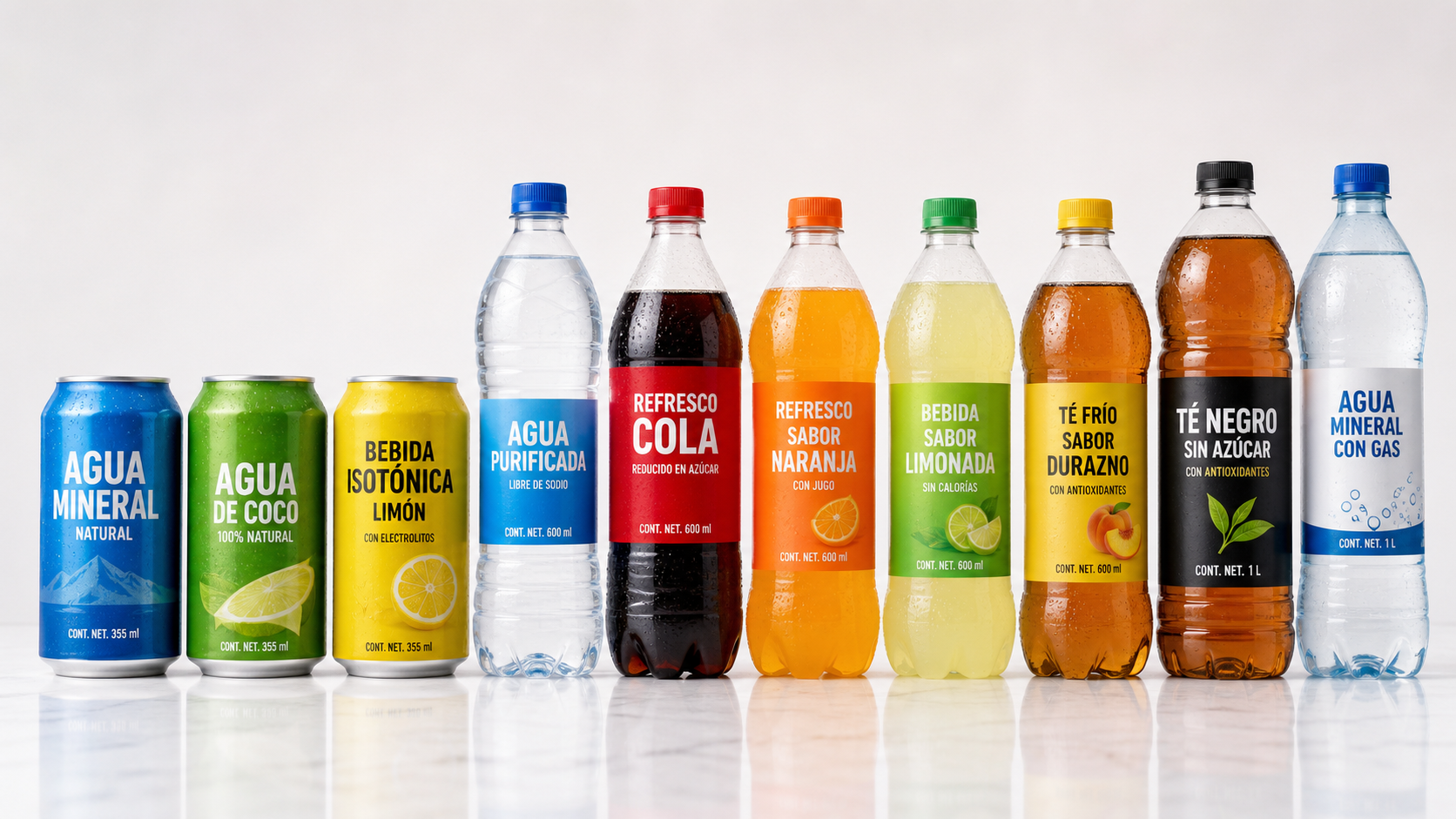
- Develop a Spanish label to NOM-051. Before customs clearance, retail packs must bear NOM-051-compliant Spanish labeling, including product name, ingredients, allergens (if any), net content in metric, nutrition facts format, importer name/RFC, and lot/date marks. Many importers apply compliance stickers in the bonded area before clearance.
- Check front-of-pack warnings (NOM-051). Mexico uses black octagonal warnings if thresholds are exceeded and precaution statements for caffeine or non-nutritive sweeteners. Rather than summarizing rules here, review the region-wide framework in our guide to front-of-pack warning labels in Latin America and confirm exact Mexico labeling with your broker.
- Review formula and claims. Avoid unsubstantiated nutrition/health claims. If you plan optional statements (e.g., vitamin content), your final formulation and serving sizes must support compliant labeling in Spanish, consistent with NOM-051 and any related standards.
- Prepare shipping documents. Typical sets include commercial invoice, packing list, bill of lading/air waybill, and certificate(s) of origin if you claim preferential duty (e.g., under T-MEC/USMCA for qualifying North American goods). Keep product descriptions, quantities, and HS codes consistent.
- Plan Incoterms, ports, and timelines. Common ocean gateways for beverages are Manzanillo and Lázaro Cárdenas (Pacific) and Veracruz and Altamira (Gulf). For air, Mexico City (AICM) and Guadalajara are major hubs. Align routing with shelf life and launch dates.
- Budget taxes and fees. Expect 16% IVA (VAT) applied on the customs value plus duties/fees, plus the applicable customs duty per the tariff schedule, and possible IEPS excise for sweetened non-alcoholic beverages. Administrative fees (e.g., DTA) and brokerage charges also apply.
- Pre-validation and label application. Your broker may pre-validate data and arrange in-bond stickering so that every consumer unit meets NOM-051 before customs release. Have final, high-contrast Spanish labels ready to avoid storage charges.
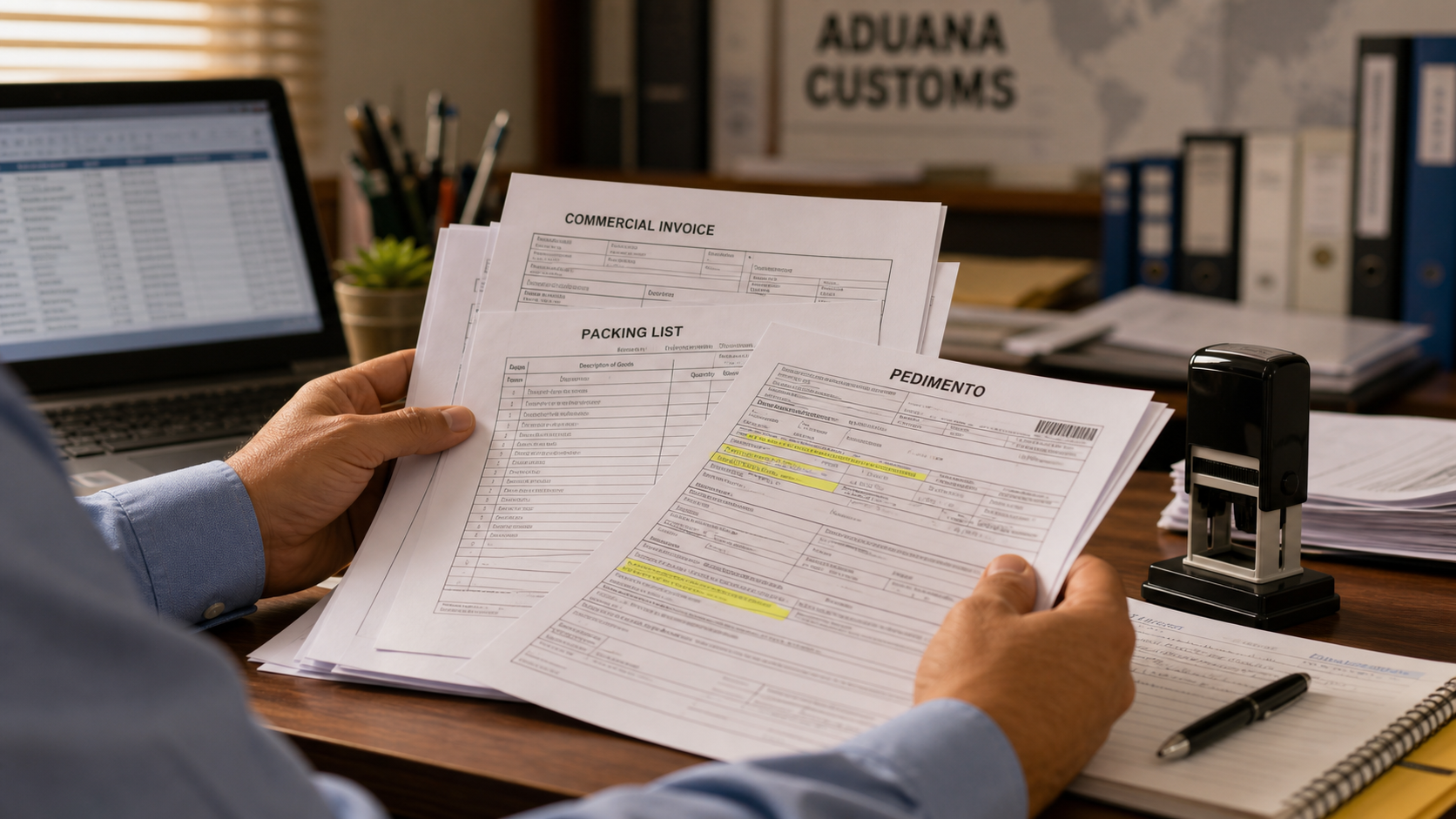
- File the pedimento with ANAM. The importer/broker submits the digital pedimento, attaches supporting documents, and pays calculated taxes/fees. Keep copies of the pedimento number and payment receipts for your compliance files.
- Inspection and clearance. ANAM may select shipments for red/green channel inspections. If chosen, prepare to present samples and documents. Once cleared, coordinate transport to the DC or co-packer.
- Post-entry recordkeeping and traceability. Retain labels, invoices, pedimentos, and lot/date records. Traceability supports withdrawals or communication if a market issue arises.
- Scale replenishment. After first-lot learnings, lock forecasts, coordinate label print-runs, and align future vessels or flights to maintain shelf life and service levels.
Core documents and who issues them
Document names can vary by broker and route, but the following set is typical for beverage imports into Mexico. Ensure consistency across all data fields (descriptions, HS codes, net/gross weights) to reduce rework at the border.
| Document | Issuer | Mexico-specific notes |
|---|---|---|
| Commercial invoice | Exporter/brand owner | Show currency, Incoterms, HS code, unit price, and totals in a clear, itemized format. |
| Packing list | Exporter/forwarder | Match counts, weights, and dimensions; align carton and pallet IDs with labels. |
| Bill of lading / Air waybill | Carrier / forwarder | Consignee must be the Mexican importer of record; include notify party (broker). |
| Certificate of origin (if claiming preference) | Exporter | Used to claim preferential duty (e.g., T-MEC/USMCA) when origin rules are met. |
| Label artwork (Spanish, NOM-051) | Brand/importer | Must be present on packs before customs release; stickering in-bond is common. |
| Pedimento (customs entry) | Broker/IOR | Filed electronically with ANAM; basis for duties, IVA, and fees collection. |
NOM-051 label essentials for beverages
Mexico’s NOM-051-SCFI/SSA1 sets mandatory consumer information for prepackaged foods and non-alcoholic beverages. The label must be in Spanish, legible, and placed on each consumer unit before clearance. At a minimum, ensure the following elements are present and consistent with your formulation and serving size.
- Product name and description in Spanish that clearly conveys the nature of the beverage.
- Ingredient list in descending order, including additives and flavorings where applicable.
- Allergen statements where relevant, in Spanish.
- Net contents in metric (mL or L) with proper typography and contrast.
- Nutrition facts laid out according to NOM-051 format and serving size rules.
- Importer’s name, address, and RFC (tax ID) in Mexico.
- Lot/batch code and date mark consistent with your production records.
- Front-of-pack warnings and statements if thresholds are exceeded or if the beverage contains caffeine or non-nutritive sweeteners. For a region-wide view, see front-of-pack warning labels in Latin America.
Taxes and duties when you import drinks to Mexico
Mexico typically levies three main categories at import: customs duty (per tariff schedule and trade agreements), value-added tax (IVA), and, for certain categories, an excise tax (IEPS). Administrative and brokerage fees also apply. Plan landed-cost scenarios with your broker before you confirm Incoterms and retail pricing.
| Charge | Who applies | How it’s determined | Example note |
|---|---|---|---|
| Customs duty (Arancel) | ANAM/SAT per LIGIE | By HS code and origin; preferences may apply if rules of origin are met. | Rate varies; confirm via your broker’s tariff query. |
| Value-Added Tax (IVA) | Federal | Calculated on customs value plus duty/fees. | Standard rate: 16%. |
| Excise (IEPS) | Federal | Applies to sweetened non-alcoholic beverages, calculated per specific rules. | Amount depends on category and formula; broker to confirm. |
| Administrative fees (e.g., DTA) | Customs | Entry-related fees; may vary by operation. | Broker includes in the cost estimate. |
Ports, timelines, and logistics tips for Mexico
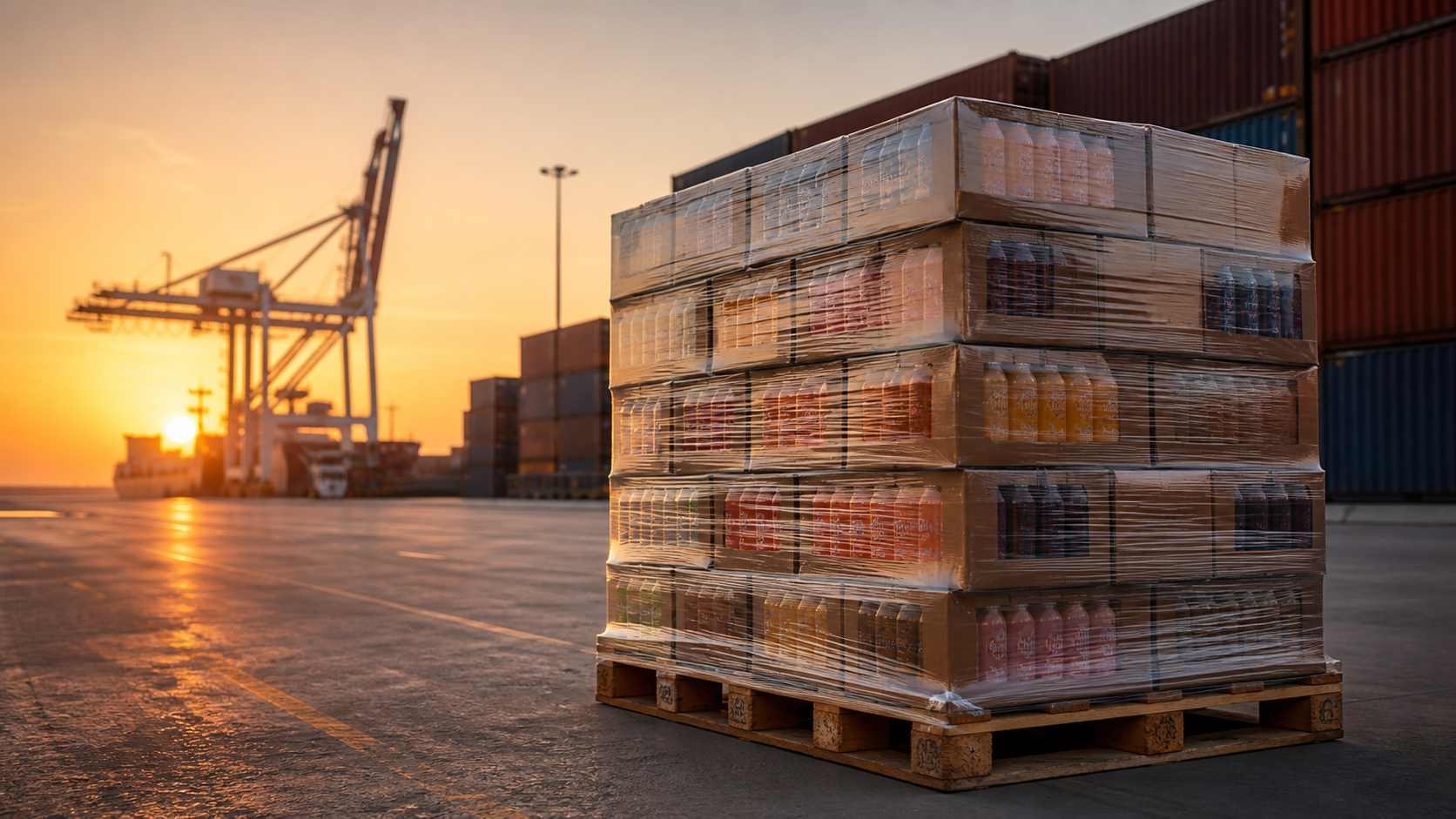
Match your route to shelf life and launch plans. Ocean freight is common for high-volume RTDs, while air is used for urgent launches or short-dated items.
- Pacific gateways: Manzanillo and Lázaro Cárdenas serve Asia-origin flows with extensive intermodal options into central Mexico.
- Gulf gateways: Veracruz and Altamira connect well with Europe and the U.S. East Coast.
- Air hubs: Mexico City (AICM) and Guadalajara enable faster clearance for small-lot or premium lines.
For market context on categories, pricing tiers, and channel dynamics, see our Mexico Market page. If your sourcing base is in Asia, the guidance in our piece on trade terms and logistics for imports from Vietnam can help you plan documents and handoffs across time zones.
Quality, packaging, and stickering at the border
Because NOM-051 compliance must be in place before clearance, many importers apply a Spanish label sticker in the bonded area. Coordinate artwork proofing and print-run timing so every consumer unit is compliant upon release. For carbonated drinks, check cap torque and paneling risks after long-haul ocean legs; temperature swings through Manzanillo, Veracruz, or inland yards can stress packaging. Use durable inks and adhesives suitable for humidity and rework handling.
Common pitfalls and how to avoid them
- Mismatched HS codes: An incorrect fracción arancelaria can trigger wrong duty/IEPS. Have the broker validate samples and ingredients early.
- Incomplete Spanish labels: Missing importer RFC, net content format, or nutrition facts layout leads to delays. Pre-validate labels against NOM-051 checklists.
- Unclear invoices: Generic product descriptions slow classification. Make invoice lines specific and consistent with labels and packing lists.
- Late stickering plans: If stickers arrive after cargo, storage costs add up. Time label deliveries to the bonded area ahead of vessel ETA.
- Ignoring IEPS exposure: Sweetened RTDs may face IEPS. Model landed costs with and without excise to set viable retail pricing.
FAQ: Import beverages into Mexico
Quick answers to common questions teams raise during their first shipments.
Do I need a local importer of record (IOR) in Mexico?
Yes. A Mexican entity with RFC and registration in the Padrón de Importadores must file the pedimento and assume customs responsibility. Foreign exporters can’t file entries directly.
Must my labels be in Spanish before customs clearance?
Yes. NOM-051 requires compliant Spanish labeling on each consumer unit before release. Many importers apply compliant stickers under broker oversight in the bonded area.
Is COFEPRIS approval needed for soft drinks?
COFEPRIS oversees sanitary risk for foods and beverages. For typical shelf-stable non-alcoholic drinks, controls focus on compliance and labeling rather than pre-market approvals, but your broker should confirm category-specific requirements.
Which taxes typically apply at import?
Plan for customs duty (per tariff schedule and origin), 16% IVA, and possible IEPS for sweetened beverages, plus administrative and brokerage fees.
What are the best ports to bring beverages into Mexico?
Common choices are Manzanillo and Lázaro Cárdenas (Pacific) and Veracruz and Altamira (Gulf). For urgent or premium lines, consider air via Mexico City (AICM) or Guadalajara.
Conclusion
Successful beverage imports into Mexico hinge on four essentials: validated classification, a registered Mexican importer and broker, NOM-051 Spanish labels on pack before clearance, and accurate tax modeling that includes 16% IVA and any duty or IEPS. Lock these early, align routes and timelines with shelf life, and you’ll minimize storage costs and launch on schedule.
Sources
Key authorities and standards referenced in this guide include Mexico’s sanitary authority (COFEPRIS), customs authority (ANAM), the tax administration (SAT), and NOM-051-SCFI/SSA1 for food and beverage labeling.