


 Français
 Español
 العربية
 한국어
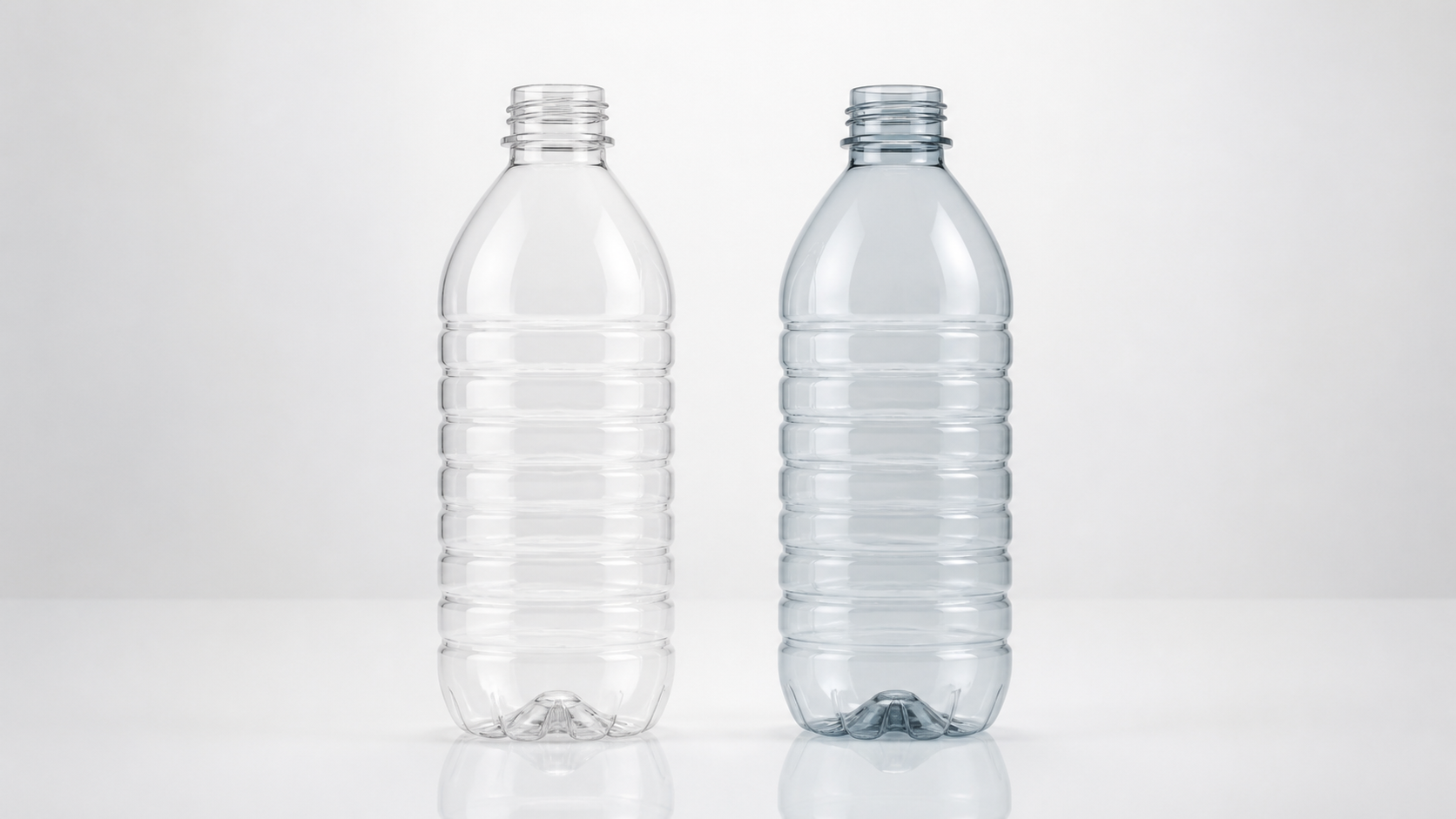
한국어A PET bottle’s price is set mostly by preform weight, neck finish and mould choice, not by the bottle shape itself. A 500ml still-water preform typically weighs 9 to 15 grams; the same size for a carbonated drink needs 20 to 26 grams to hold pressure. That single difference moves unit cost more than artwork ever will.
This page covers the specification decisions that sit behind a PET bottle quotation, so you can brief a manufacturer without leaving cost on the table. If you are still choosing between formats, read aluminium can vs PET bottle first. If your question is about recycled content, start with what rPET is.
What actually drives the cost of a PET bottle?
Five things, in roughly this order of impact:
- Preform weight. PET resin is sold by weight. The grams in the preform are the single largest variable in the bottle price.
- Neck finish. The neck determines which closure fits, and a heavier neck standard carries more resin on every unit.
- Mould. A stock mould costs nothing up front. A custom mould is a one-time tooling charge that only pays back over volume.
- Fill method. A bottle that survives hot filling needs heat-set processing and more material than a cold-fill bottle.
- Decoration. Shrink sleeve, wrap-around label and direct print each carry a different minimum print run.
Note what is not on that list: bottle shape. Within a given weight and neck standard, a distinctive silhouette usually costs the same to blow as a plain one, provided it is mould-feasible.
How much does preform weight change the price?
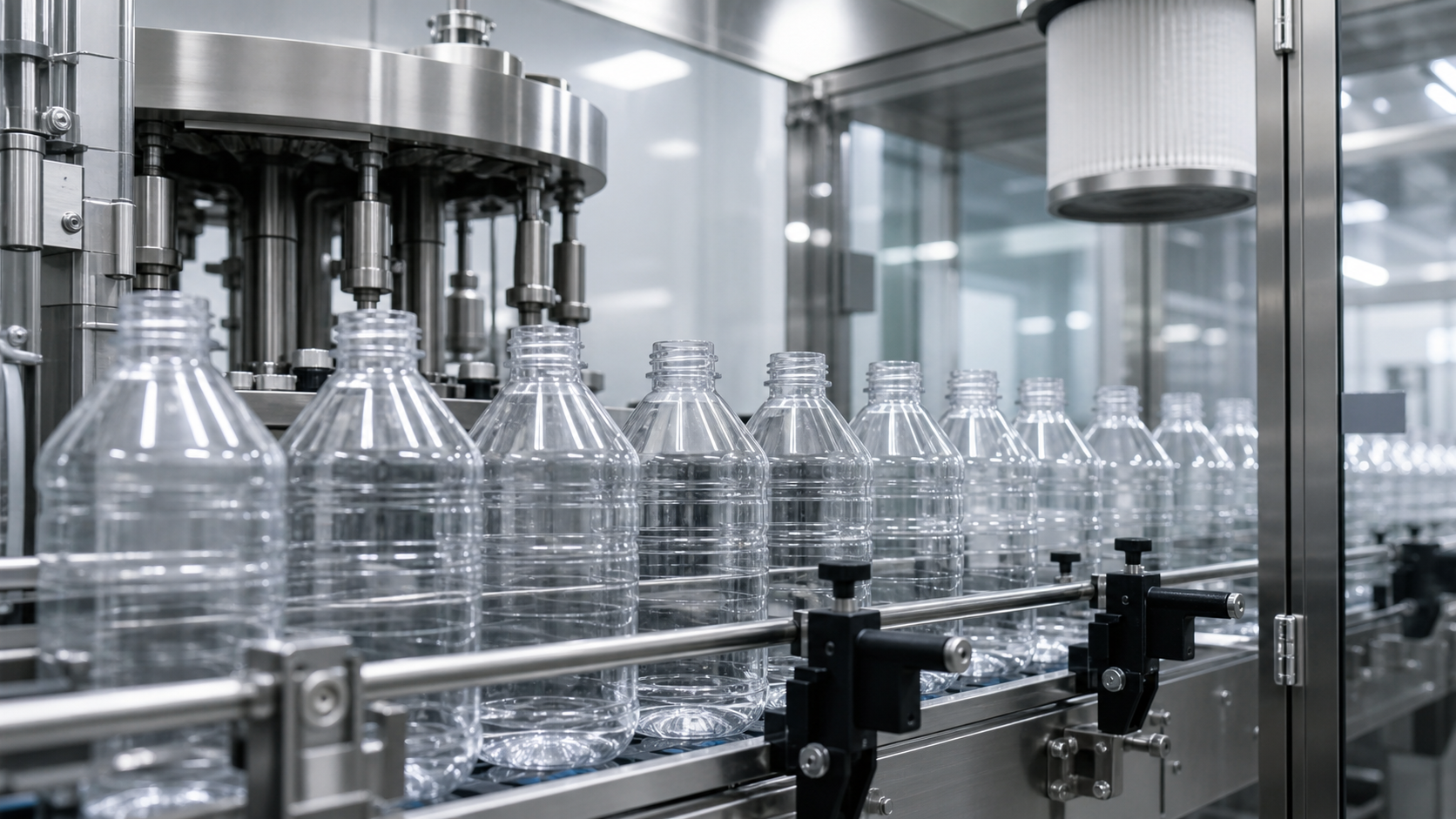
Preform weight is chosen to match the pressure and handling the bottle must survive. Under-specify it and the bottle panels, leaks or fails on the pallet. Over-specify it and you pay for resin the product does not need.
Indicative ranges for a 500ml bottle:
| Product | Typical preform weight | Why |
|---|---|---|
| Still water | 9 to 15 g | No internal pressure; lightweighting is aggressive in this category. |
| Still juice or tea, cold-filled | 16 to 22 g | Needs more panel stiffness than water for handling and stacking. |
| Carbonated drink | 20 to 26 g | Must contain CO2 pressure over the full shelf life without creeping. |
| Hot-filled juice or tea | 24 to 34 g | Heat-set bottle with vacuum panels to absorb cooling shrinkage. |
Treat these as starting points for a conversation, not as a quote. The correct weight depends on your fill temperature, closure torque, secondary packaging and how the pallets will be stacked and shipped. Confirm the figure against your own product before you sign off artwork.
Which neck finish should you specify?
The neck finish is a standardised thread profile. It decides which caps fit your bottle anywhere in the world, so it is worth fixing early. Changing it later means new closures, a new capping change part and often a new preform.
| Neck finish | Common use | Note |
|---|---|---|
| PCO 1881, 28 mm | Carbonated drinks | The current CSD standard. Shorter than PCO 1810, so it uses less resin in the neck. |
| PCO 1810, 28 mm | Carbonated drinks, legacy lines | Being replaced by 1881 on most new projects. |
| 30/25 lightweight | Still water | Very light neck; only suitable where there is no internal pressure. |
| 38 mm | Juice, tea, hot-fill, wide-mouth | Larger opening for pulp or particulate, and the usual choice for hot filling. |
Can PET bottles be hot-filled?
Yes, but not standard PET bottles. An ordinary cold-fill PET bottle begins to distort well before typical hot-fill temperatures, so filling one hot will deform it.
Hot filling requires a heat-set bottle: the mould runs hot during blowing so the material crystallises further and holds its shape at fill temperature. These bottles carry visible vacuum panels along the sidewall, which flex inward as the contents cool and contract. They also weigh more, which is why the hot-fill row in the table above sits highest.
The alternative is to move the thermal step off the bottle entirely by filling cold under aseptic conditions. That changes the equipment, not the packaging. The trade-offs are set out in aseptic filling vs hot fill.
What shelf life can a PET bottle realistically hold?
PET is a good moisture barrier and a moderate gas barrier. That distinction is what limits shelf life.
- Oxygen ingress matters for juices, teas and anything with vitamins or delicate flavour. Over months, oxygen crossing the wall degrades colour and taste.
- CO2 loss matters for carbonated drinks. Carbonation escapes slowly through the wall, so a small PET bottle goes flat sooner than a large one, because it has more surface area per unit of volume.
Where the plain material is not enough, the usual answers are a multilayer wall, an oxygen-scavenging additive in the preform, or a heavier bottle. Each adds cost, so specify the shelf life you actually need for your route to market rather than the longest one available. ACMFOOD products carry an 18 to 24 month shelf life depending on the product and packaging format.
Stock mould or custom mould?
A stock mould is a bottle the factory already owns. There is no tooling charge, no lead time for tooling, and you can see and hold a sample before committing.
A custom mould gives you a shape nobody else has. It carries a one-time tooling cost and adds development time before the first commercial run. It only makes commercial sense when the volume is large enough to spread that cost, or when the shape is genuinely part of the brand.
A middle path is worth knowing about: keep a stock bottle and put the differentiation into decoration. A full-height shrink sleeve covers the entire bottle and can change the shelf presence of a stock shape substantially, at a fraction of tooling cost.
How does decoration change the minimum order?
Decoration is usually what sets the floor on a first order, not the liquid.
- Shrink sleeve. 360-degree coverage, works over complex shapes, and printed in relatively short runs. The most flexible option for a launch.
- Wrap-around label. Lower material cost per unit at volume, but wants a straight-walled label panel and a longer print run.
- Pressure-sensitive label. Premium finish, higher unit cost, common for small-batch and higher-priced products.
ACMFOOD’s minimum order is 500 cartons per SKU, with production running 15 to 30 days after the order is confirmed. Full details, including what moves that number, are on minimum order quantity.
Does recycled content change the specification?
It changes what you have to verify, more than what you have to design. Recycled PET is processed to be usable in the same moulds and on the same lines as virgin PET, but the resin has a supply chain and a documentation trail of its own, and the percentage you claim on pack has to be substantiated.
If recycled content is part of your brief, read partially recycled PET for how 30% and 50% blends are defined and verified, and 100% rPET bottles for what changes when the whole body is recycled material.
What to send a manufacturer for an accurate PET quote
- Product and fill temperature. Carbonated or still, and whether it will be cold-filled, hot-filled or aseptically filled. This decides the bottle class before anything else.
- Fill volume. ACMFOOD fills from 200ml to 1.5L. Name the exact volume, not a range.
- Target shelf life and destination market. These set the barrier requirement and the labelling requirement together.
- Neck finish and closure preference. If you have no preference, say so and let the manufacturer propose a standard.
- Stock or custom bottle. If custom, send the concept drawing early; mould feasibility is easier to solve on paper than in steel.
- Decoration method and artwork status. Whether artwork exists, and in what format.
- Quantity per SKU and number of SKUs. Minimums apply per SKU, so four flavours means four minimums.
With those seven items a manufacturer can quote properly instead of quoting a range. You can send them through the quotation request.
Frequently asked questions
Is a lighter PET bottle always cheaper?
Cheaper in resin, yes. But a bottle that is too light fails somewhere else: panelling in the warehouse, leaking under closure torque, or collapsing in a stacked pallet. The saving disappears the first time a shipment arrives damaged. Lightweight the bottle to the point your supply chain can actually carry, and no further.
Can I reuse my existing bottle design with a new manufacturer?
Only if the mould travels with you or an equivalent stock mould exists. A blow mould belongs to whoever paid for it. Confirm mould ownership in writing at the start of any project involving custom tooling, not at the point you want to move.
Why is a small bottle more expensive per litre than a large one?
Because packaging cost does not scale with volume. A 330ml bottle and a 1.5L bottle both need a neck, a closure, a label and a place in a carton. Spread across less liquid, those fixed elements cost more per litre.
Does bottle colour affect cost or shelf life?
Both. Colourant is an added material cost, and a tinted or opaque bottle blocks light, which helps light-sensitive contents. It also complicates recycling: clear and light-blue PET is the most valuable stream to recyclers, while dark colours are worth less and some are rejected outright.
How long does a custom PET bottle take to develop?
Longer than the production run itself. Mould design, tooling manufacture, trial blowing and sample approval all sit before the 15 to 30 day production window. If a launch date is fixed, a stock bottle with distinctive decoration is the lower-risk route.
Specifying a PET bottle with ACMFOOD
PET stays the default beverage format for good reasons: it is light, it does not break in transit, it shows the product, and it recycles into itself. Whether it is the right choice for your product comes down to fill method, shelf life and volume, and those three answers set the specification.
ACMFOOD fills PET bottles from 200ml to 1.5L at facilities certified to HACCP, ISO 22000 and FSSC 22000, shipping from Ho Chi Minh City Port under T/T terms.
Packaging and production at ACMFOOD
For the container formats, fill volumes and case configurations available, see beverage packaging options. For how the product is filled and controlled on line, see our production process. Minimums are set per SKU — see minimum order quantity. To cost a format, request a quote.
Request a quote