


 Français
 Español
 العربية
 한국어
한국어Beverage plant water treatment is the set of processes that turn incoming water into a consistent, food-grade utility and ingredient for production. Because water touches formulas, equipment, and sanitation at every step, the way a plant treats, stores, and distributes it largely decides batch-to-batch consistency.
Source water varies by location and season. Without a robust treatment train, distribution loop, and monitoring plan, the same recipe can taste different week to week, foul membranes, form off-notes, or drive microbial risk. This guide explains how process water is defined, which specifications matter, what a typical treatment train includes, and what buyers should verify during supplier selection and audits.
What is process water in beverage production?
Process water is the water a beverage plant uses for both product-making (ingredient water) and operations (utilities such as CIP, boiler, and cooling). It must be treated, stored, and distributed so its quality consistently meets the specific requirements of the beverage and the equipment it touches.
Why does beverage plant water treatment decide product consistency?
Because water carries minerals, oxidants, organics, and microbes that alter taste, color, stability, and shelf-life, the treatment design and control plan determine whether your beverage profile stays uniform. Well-engineered systems remove or standardize these variables and protect downstream processes, fillers, and packaging.
Which water sources supply beverage plants, and why do they vary?
Plants draw from municipal supply, wells, surface water, or pre-treated tanker deliveries. Each source has a distinct fingerprint shaped by geology, seasonality, infrastructure maintenance, and upstream treatment practices. Storms, droughts, line repairs, and source switching can shift taste, hardness, oxidant type, turbidity, and micro load—even when legal potability is maintained. Change management and incoming-water monitoring are therefore essential.
Which water specifications matter for drinks?
Specifications should be product-led and risk-based. While exact limits are brand- and market-specific, most beverage programs track:
- Microbiological indicators and absence of pathogens in ingredient water and the distribution loop.
- Organoleptics: neutral aroma, taste, and color suitable for the beverage style.
- Mineral profile: hardness, alkalinity, and ions that affect mouthfeel, sweetness perception, and precipitation.
- Conductivity or TDS as a quick proxy for overall mineral load.
- pH suitable for product development targets and process compatibility.
- Oxidants: free chlorine or chloramine control for flavor protection and membrane longevity.
- Metals that can catalyze oxidation or cause haze.
- Turbidity and particulates for clarity and membrane/filter protection.
Core treatment train: from intake to filler
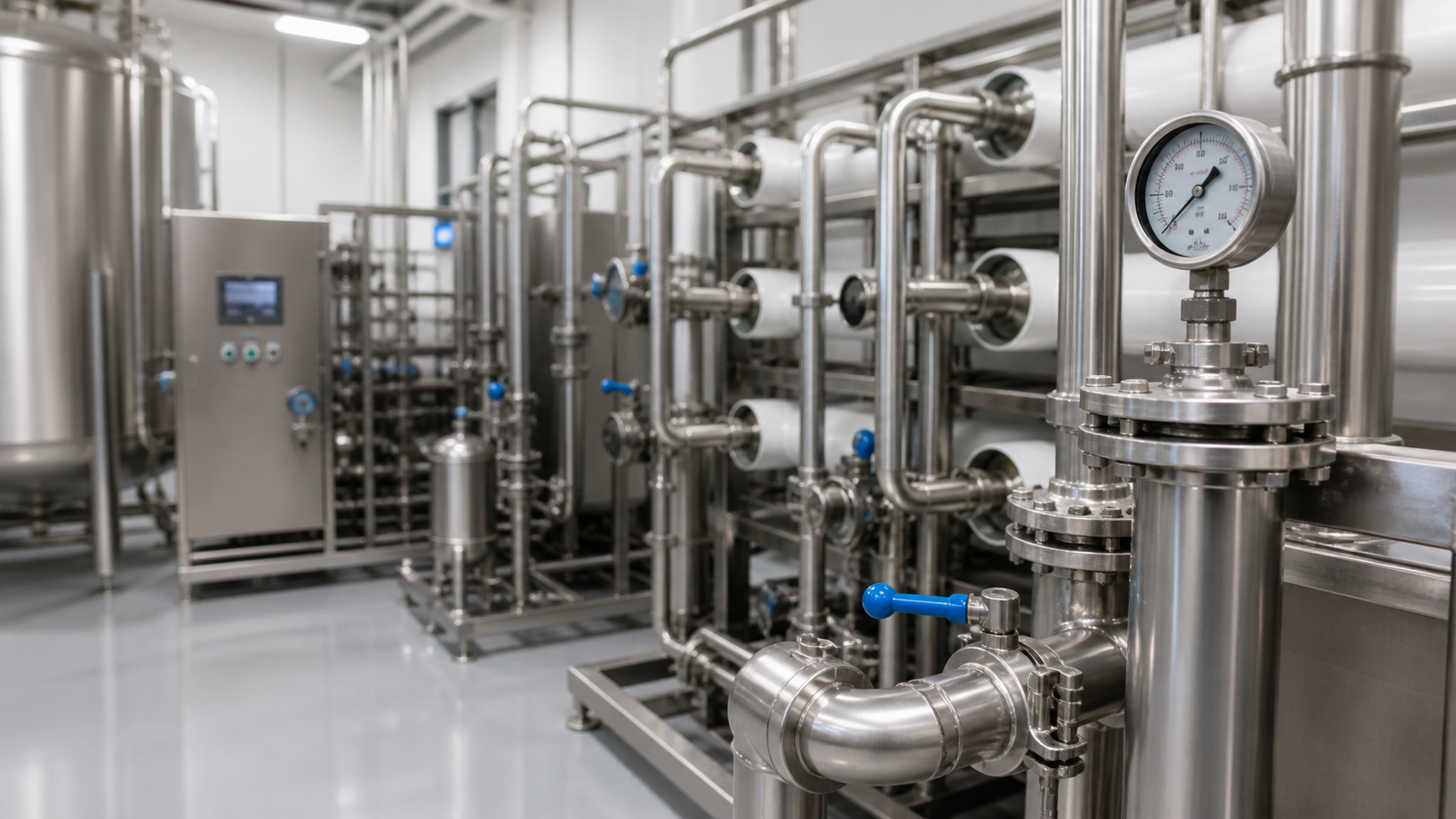
There is no one-size design, but many beverage plants use a modular train that progressively removes particulates, organics, oxidants, hardness, and microbes, then stabilizes water before filling. Design depends on source quality, product needs, and utility integration.
| Stage | Purpose | Positioning & notes |
|---|---|---|
| Coarse/Media Filtration | Remove sediment and reduce turbidity | Protects downstream equipment; often multi-media or depth filtration |
| Activated Carbon | Reduce chlorine/chloramine and organics | Prevents off-notes and protects RO membranes; monitor for breakthrough |
| Softening or Antiscalant | Mitigate scaling minerals | Chosen based on hardness profile and RO/NF strategy |
| RO/NF Membranes | Lower dissolved solids and standardize minerals | Creates neutral base water; common in ro water drinks plant setups |
| Polishing (e.g., carbon block, mixed bed, or blending) | Fine-tune taste and mineral balance | Depends on beverage style; some formulas need remineralization |
| UV/Ozone or Equivalent | Microbial reduction and loop hygiene | Applied to storage and distribution; control residuals for flavor |
| Final Filtration | Particulate control before filler | Sanitary housings; integrity testing and change control required |
Ingredient water vs utility water: what’s the difference?
Ingredient water directly enters the beverage and therefore must meet the tightest sensory and microbiological expectations. Utility water supports operations (CIP, boilers, cooling) and has fit-for-purpose specs that protect equipment and processes without necessarily matching ingredient-water organoleptics.
| Attribute | Ingredient water | Utility water |
|---|---|---|
| Primary use | Product make-up, syrup prep, dilution | CIP, boiler feed, cooling, rinsing |
| Key focus | Taste, odor, color, micro safety | Scale, corrosion, heat transfer, hygiene |
| Typical treatment | Carbon, RO/NF, polishing, UV/ozone, final filtration | Softening/chemistry for boilers, filtration for rinses, biocide strategy as allowed |
| Distribution | Sanitary loop, continuous circulation, periodic sanitization | Industrial pipework sized and treated for equipment needs |
| Monitoring | Organoleptics, conductivity/TDS, pH, micro indicators | Corrosion/scale indices, biocide levels, equipment performance |
How does RO water affect beverage quality?
Reverse osmosis reduces dissolved minerals and organics, creating a neutral base that highlights intended flavors and limits scale or haze. However, many beverages perform best with controlled mineral content, so plants often blend RO permeate with treated water or add food-grade salts to achieve a target taste and perception.
Do different beverage styles need different water?
Yes. Beverage style drives how neutral, mineralized, or oxidant-free your water should be, and how tight the micro and particulate controls must run.
- Carbonated soft drinks: Neutral taste and stable minerals help with syrup integrity and CO2 solubility; oxidants should be managed to protect flavor compounds.
- Ready-to-drink tea/coffee: Oxidant and metal control help protect delicate aromas; a defined mineral profile influences extraction and mouthfeel.
- Juice drinks and nectars: Color and aroma are sensitive to oxidants and metals; robust micro control for low-acid or extended shelf-life products.
- Isotonic and functional drinks: Consistent minerals matter for flavor and label compliance; micro and particulate controls protect clarity and stability.
- Dairy-alternative and protein beverages: Tight micro control and distribution hygiene are critical due to nutrient-rich matrices.
Microbial control without over-chlorination
Primary disinfection may arrive from a municipal utility, but many beverage plants remove residual oxidants before sensitive processing and membranes. Instead, they rely on barriers like UV or ozone and sanitary design to manage microbes in storage and loops. The goal is a hygienic system that avoids flavor carryover while maintaining control over biofilm risk.
- Dechlorination and organic reduction via activated carbon with breakthrough monitoring.
- Sanitary tanks with headspace management and periodic sanitization as validated by the plant.
- Continuous recirculation in a closed, sanitary loop to discourage stagnation.
- Validated cleaning and sanitization procedures, with documentation under a food safety plan.
Designing distribution loops for stable quality
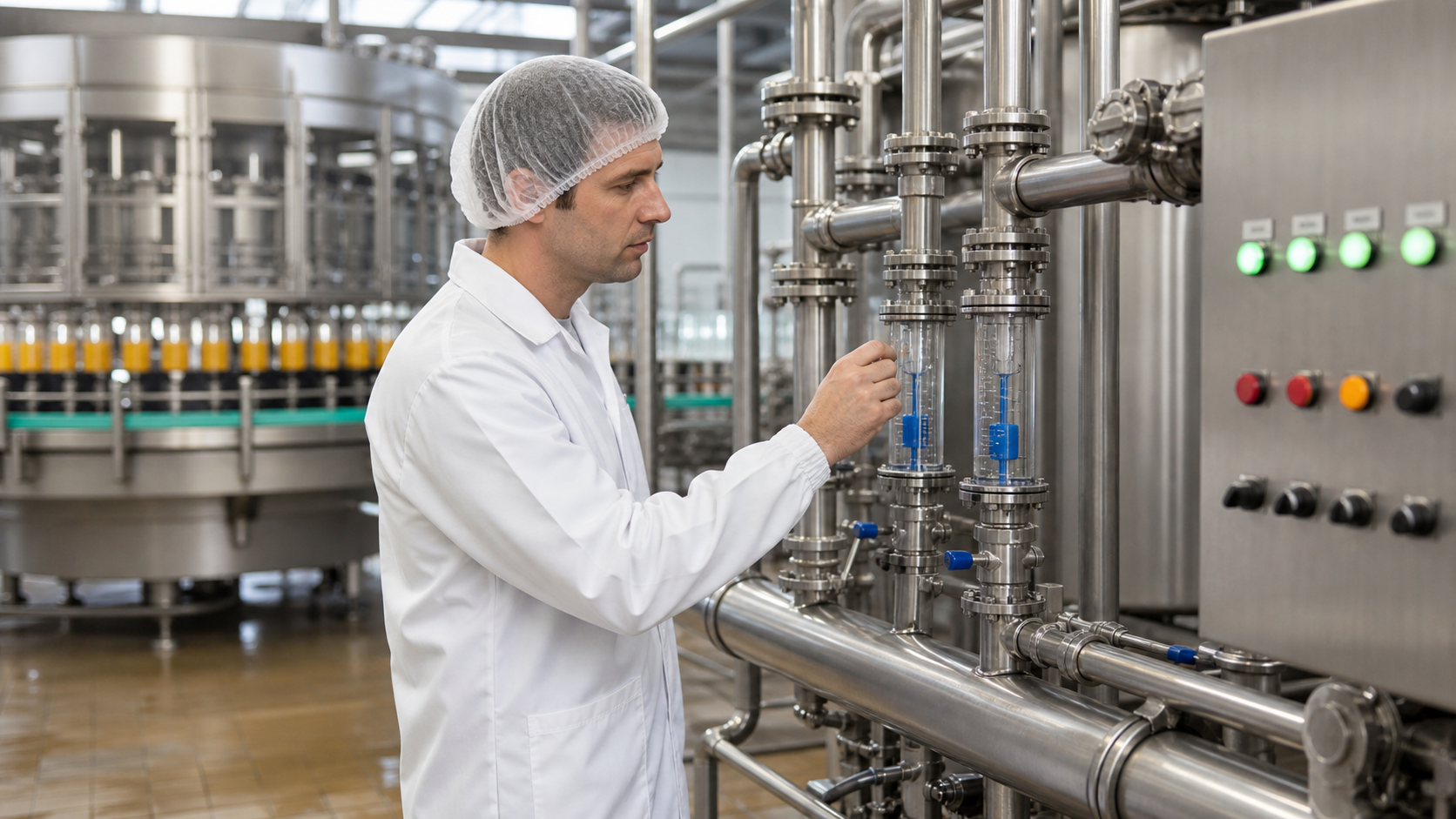
A well-designed loop keeps treated water moving through sanitary stainless piping with minimal dead legs, sloped drains, and accessible sample points. Strategic placement of UV/ozone contact and final filtration helps protect fillers. Storage tank design (spray-ball coverage, vent protection) and materials compatible with your sanitization method support long-term stability.
Mechanical and instrumentation details matter: flow control that maintains target velocities, pressure balance to protect filters, and sensors for temperature, conductivity, and flow tied into trending. Treat your loop like a product contact system and validate changes before commissioning.
Testing regime: what to verify, how often?
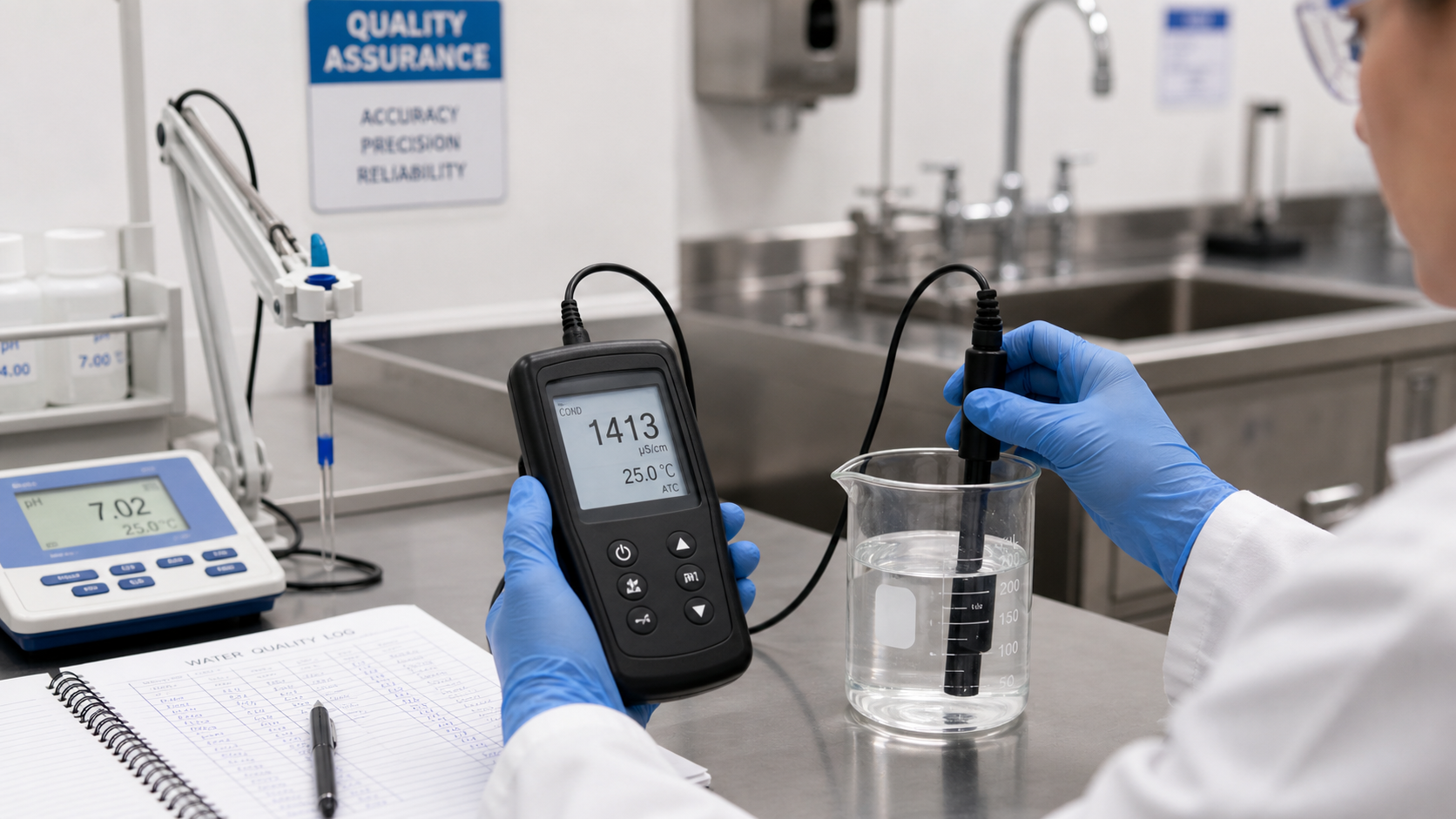
Frequency and methods should be defined by your HACCP plan, product risk, and customer requirements. Plants typically combine quick in-line checks (conductivity, pH, temperature, oxidant residuals) with routine microbiological testing and periodic verification of filter integrity and membrane performance. Trend results, define action limits, and document corrective actions to sustain control.
For an overview of food safety expectations in beverage facilities, see What HACCP certification covers. Align your testing plan with identified hazards, preventive controls, and verification activities.
Supplier and plant evaluation checklist for water systems
When you audit or qualify a beverage manufacturer, water systems merit focused attention. Ask for evidence, not only verbal assurances:
- Current P&ID of the water treatment train, tanks, and distribution loop, with sampling points and instruments.
- Commissioning and validation reports, including performance against agreed specifications.
- Membrane, media, and filter maintenance logs; change-control procedures and integrity testing records.
- Sanitization SOPs for tanks, loop, and housings, including chemicals or thermal methods and verification steps.
- Monitoring plan: parameters, methods, locations, acceptance limits, and trending practices.
- Deviation management: documented root cause analysis, corrective/preventive actions, and release decisions.
- Redundancy and contingency plans for source changes, power loss, and component failure.
For a structured approach to on-site reviews, see how to audit a beverage factory in Vietnam. The checklist applies broadly, regardless of location.
Regulatory, labeling & export implications
Water treatment influences labeling terminology (for example, how water is named on the ingredient statement), suitability of processing aids, and verification expectations in certain markets. Requirements vary by jurisdiction, and label text must reflect the actual process and composition verified through documentation and testing.
- For label planning, consult the U.S. food label checklist early in development.
- For compliance expectations that importers often check, see FDA compliance for U.S. buyers.
Always confirm final claims and classifications against your target market’s regulations, the validated process, and the finished-product specification.
Brief for your co-manufacturer: what to specify
A precise brief turns “good water” into repeatable beverage quality. Capture at least the following:
- Intended water source(s) and the product-water specification relevant to your recipe and pack format.
- Treatment philosophy: extent of demineralization, whether blending or remineralization is needed, and allowable oxidant residual at fill.
- Microbiological expectations for ingredient water and the loop, including verification and hold-time policies.
- Distribution loop design expectations: sanitary standards, recirculation targets, sampling plan, and sanitization approach.
- Instrument list and data capture: which parameters must be trended, reporting frequency, and release criteria.
- Change control: triggers (e.g., source switch, media change), notification timelines, and re-validation requirements.
- Contingency planning: how production will pause or adapt if key parameters move out of spec.
If you are preparing a project for the U.S. market, align early with a capable beverage manufacturer for U.S. brands so the water system and documentation match buyer and regulatory expectations.
Practical pitfalls that derail consistency
Even strong designs fail without disciplined operation. Common pitfalls include:
- Carbon breakthrough undetected until off-notes appear; install routine checks and define change triggers.
- Membrane fouling from inadequate pre-treatment; track pressure differentials and clean per validated procedures.
- Loop stagnation during downtime; maintain recirculation policies and sanitize before restart.
- Sampling limited to a single location; verify at intake, post-treatment, storage, and near the filler.
- Uncontrolled blending; document ratios and verify with rapid proxies (e.g., conductivity) plus periodic lab tests.
FAQ
Is RO mandatory for all beverage plants?
No. The need for RO depends on source water and product requirements. Some plants achieve consistent quality with carbon, softening, and polishing. Others require RO or NF to stabilize taste and protect equipment. Design should be based on risk assessment and validated performance.
Do we need distilled or deionized water for drinks?
Not typically. Many beverages perform best with controlled mineral content, not fully stripped water. Distillation or strong deionization is reserved for niche needs. Most mainstream products use well-treated, polished, or blended RO water guided by sensory and stability targets.
How long do carbon filters or cartridges last?
There is no universal interval. Life depends on incoming load, flow, and operating practices. Use differential pressure, chlorine/chloramine testing, and scheduled change control to prevent breakthrough or collapse of protection.
Can we reuse rinse water?
Possibly for utilities if risk-assessed, treated, and permitted. Reuse as ingredient water requires robust treatment and verification aligned with regulatory and food safety plans. Decisions should be documented within HACCP and validated for your process.
Where can I learn more about system expectations?
Start with food safety frameworks and buyer requirements. The resources on What HACCP certification covers and FDA compliance for U.S. buyers outline common expectations you can tailor to your product and market.
Conclusion
Water is the constant in every beverage plant, and beverage plant water treatment is what makes that constant reliable. A source-aware, validated train; a hygienic, well-instrumented loop; and a documented testing and change-control plan together deliver the taste, clarity, and stability your brand expects. Keep specifications product-led, verify performance, and audit routinely. For market-specific projects, align early on labeling and buyer expectations using the U.S. food label checklist and, if applicable, a qualified beverage manufacturer for U.S. brands.