


 Français
 Español
 العربية
 한국어
한국어The Canadian beverage market is shaped by clean-label expectations, bilingual packaging, and distinct seasonal peaks, with a federal Goods and Services Tax (GST) of 5% applied nationally on most goods. This guide maps demand drivers, retail and foodservice channels, positioning cues, and practical steps to enter Canada effectively.
Canada is particularly sensitive to “no artificial” cues, while functional drinks and coconut water are gaining share in natural & organic outlets. Compliance is anchored by Health Canada and the Canadian Food Inspection Agency (CFIA), and import flows center on ports such as Vancouver and Montreal.
What is driving beverage demand in Canada right now?
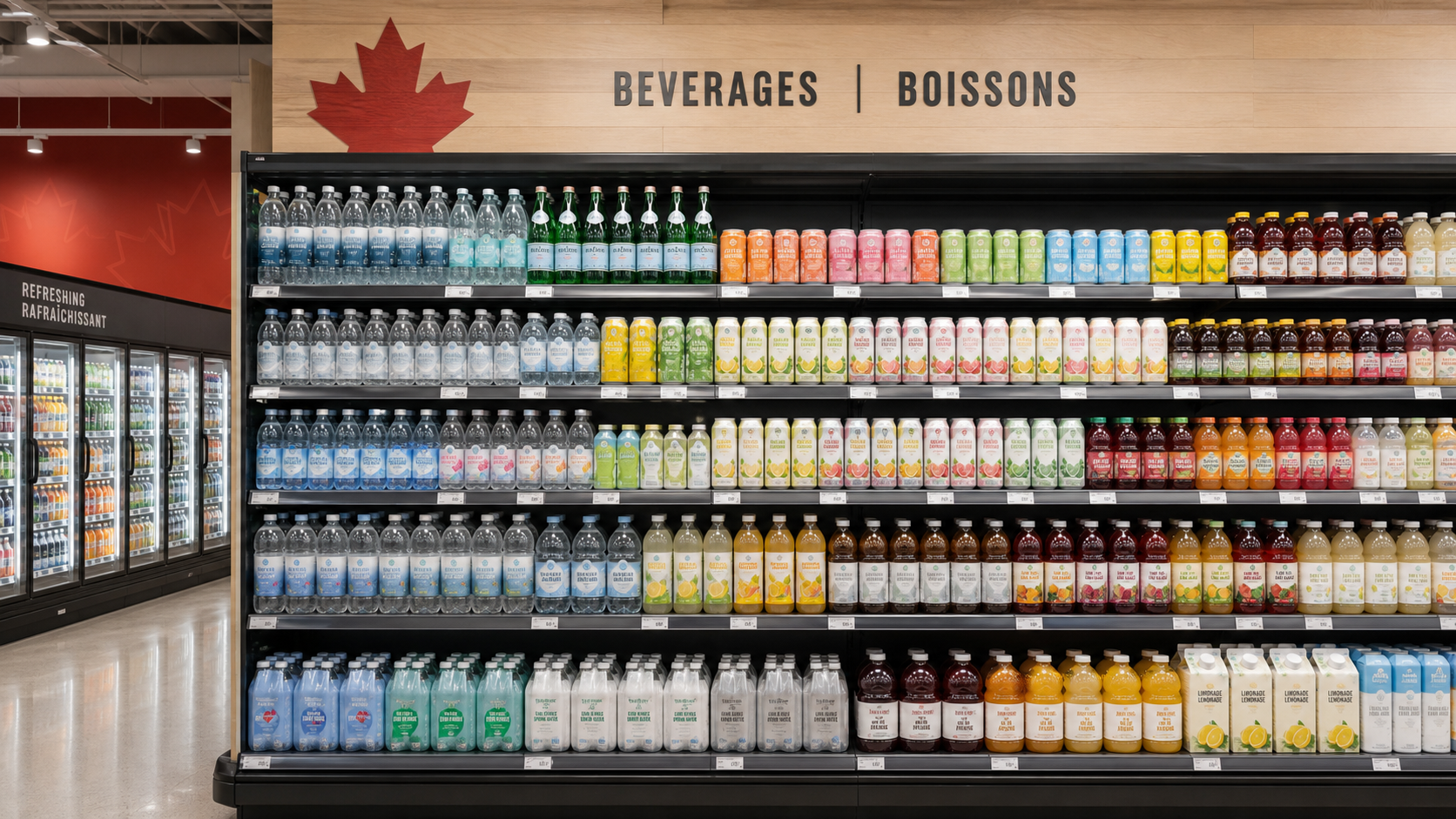
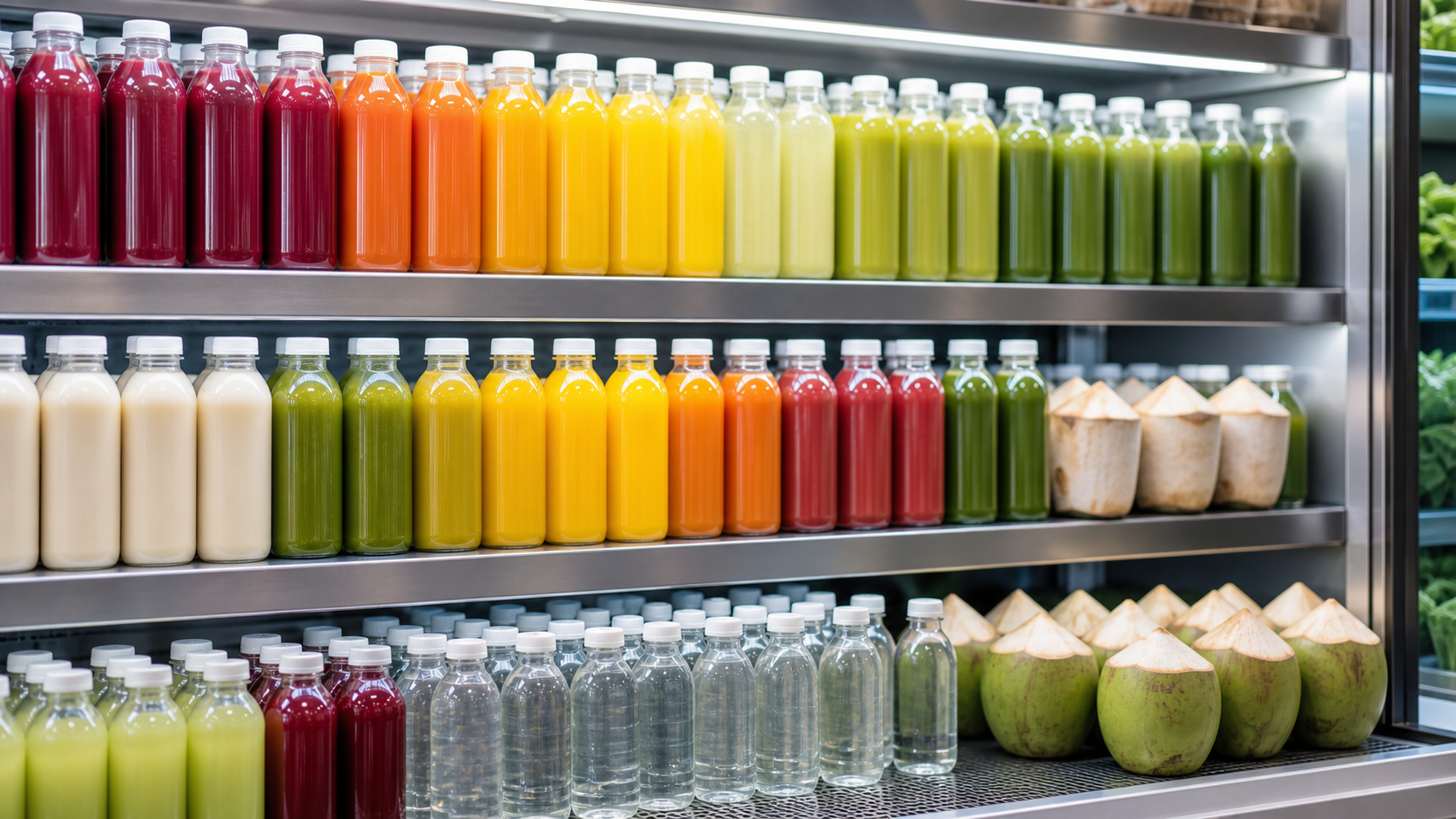
Clean label and low-to-no artificial ingredients lead, supported by reduced sugar, functional benefits, and global flavors. Growth is strongest where credibility is high—natural & organic stores, specialty grocery, and better-for-you sets—while mainstream grocery increasingly dedicates cooler space to coconut water, kombucha, and low-sugar hydration.
Buyers often prioritize:
- No artificial sweeteners, colors, or flavors, communicated clearly and credibly.
- Lower sugar or naturally lower-sugar formats (lightly sweetened, unsweetened, or fruit-forward).
- Functional positioning aligned to everyday needs (hydration, focus, calm), without medical claims.
- Natural & organic channel resonance as a launchpad before scaling to mass grocery.
- Global and multicultural flavors that reflect Canada’s diverse population.
For an at-a-glance view of country specifics and trade context, see the Canada market overview.
Which seasons and occasions shape beverage sales?
Summer drives cold RTD velocity, with May–August delivering peak trial during warm weather, festivals, and outdoor activities. Q4 brings gifting and entertaining, while late August–September back-to-school drives multipacks and better-for-you pantry fills. Canada Day (July 1) often anchors promotional calendars.
- Summer (May–Aug): Iced tea, lemonades, coconut water, sports hydration, sparkling waters.
- Back-to-school (late Aug–Sep): Multipacks, lunchbox sizes, low sugar cues.
- Holiday (Nov–Dec): Premium mixers, special flavors, larger formats.
- Winter (Jan–Mar): Cozy flavors, immunity-adjacent ingredients framed as ingredients rather than claims, and pantry packs.
What retail and on-premise channels matter in Canada?
Canada blends national chains with regionally strong players. The following table outlines where beverage brands typically launch and scale, plus how positioning differs by channel.
| Channel | Examples | Buying model | Positioning & notes |
|---|---|---|---|
| Grocery / Mass | Loblaw, Sobeys/Safeway, Metro, Walmart Canada | Central category review; some DSD in select sets | Mainstream reach; clear shelf-ready packaging; strong “no artificial” and reduced-sugar cues |
| Club | Costco Canada | Fewer SKUs, high velocity | Value and trust; larger formats and multi-packs; operational reliability is critical |
| Convenience | Circle K, 7‑Even Canada | Regional buyers; DSD common | Immediate consumption; cold availability; core flavors + selective functional trial |
| Natural & Organic | Whole Foods Market Canada, Choices Markets | Distributor-managed (e.g., UNFI Canada) | Early adopters; clean label, coconut water, kombucha, and functional sets |
| Drug | Shoppers Drug Mart, London Drugs | Central & regional | Health-forward cues and convenient package sizes; seasonal wellness tie-ins |
| Foodservice | Tim Hortons, Starbucks Canada; Sysco Canada, GFS | Direct or via distributors | Format fit for QSR and coffee chains; reliability, kegs or bag-in-box when relevant |
| Liquor boards (alcoholic) | LCBO (ON), SAQ (QC), BC Liquor | Provincial control | Relevant for alcoholic RTDs; non-alc cross-promos vary by province |
| E-commerce / Delivery | Grocery-owned sites, Instacart | Retailer-driven | Expanded assortments, trial size, and bundle promos; bilingual content assets help conversion |
Channel choice changes the story you tell: natural & organic often validates the clean-label credentials first, then grocery and convenience roll out for scale, while club tests value and operational readiness.
How is beverage distribution organized in Canada?
Distribution mixes direct-to-warehouse for national chains with DSD in convenience and select grocery sets, and specialized distributors in natural and foodservice. Quebec can add linguistic and route-to-market nuances that benefit regional partners.
- Warehouse delivery (centralized): Suits grocery and mass; requires strong case pack, pallet patterns, and OTIF service.
- DSD (direct store delivery): Common in convenience and select chilled sets; speeds rotation and merchandising.
- Natural/organic distribution: UNFI Canada and specialty wholesalers streamline listings in Whole Foods Market Canada and independents.
- Foodservice: Broadliners like Sysco Canada and Gordon Food Service (GFS) support QSRs, cafes, and institutional accounts.
- Quebec considerations: French-forward assets, localized POS, and sometimes separate distributor relationships are helpful.
Brands weigh coverage vs. control: national breadth with warehouse delivery, or velocity-build with DSD and natural channels before scaling. Cold-chain and code management are important for chilled and HPP items across Canada’s long distances.
How do labeling and compliance shape go-to-market?
Canada requires bilingual English/French labeling, with the framework overseen by Health Canada and the Canadian Food Inspection Agency (CFIA) under the Food and Drugs Act, Food and Drug Regulations (FDR), and Safe Food for Canadians Regulations (SFCR). The Nutrition Facts table format and ingredient list conventions differ from the U.S. and must be followed.
- Bilingual packaging: English and French; in Quebec, French prominence is governed by the Charter of the French Language.
- Claims: Keep “no artificial” and ingredient descriptions factual; avoid medical or disease-related claims.
- Recycling & deposits: Provincial container deposit-return programs apply; requirements vary by province.
For a practical checklist of label elements and market-specific rules, use this guide: Canada beverage label requirements.
What positioning works for the Canada drinks market?
Positioning that balances taste, trust, and moderation wins. Clean recipes, credible sourcing, and a modern, bilingual design system are foundational. Avoid over-claiming; emphasize ingredients and usage occasions instead.
- Clean label first: State “no artificial” elements precisely (e.g., “no artificial colors or flavors”).
- Low sugar or unsweetened: Lead with taste plus moderation; natural sweetness from fruit or botanicals.
- Functional but everyday: Hydration, calm, focus, and energy cues via known ingredients (e.g., tea-based caffeine) framed non-medically.
- Coconut water momentum: Especially in natural & organic; ladder into mainstream with multipacks and trusted sourcing stories.
- Format fit: 330– 355 ml singles, 500 ml hydration, and family multipacks; fridge-friendly footprints.
- Quebec-ready branding: French-forward copy hierarchy and cultural nuance on primary display panel.
Which product and pack choices ease retail adoption?
Retailers assess category clarity, shelf efficiency, and operational readiness. Make decisions that remove friction in planograms and replenishment.
- Assortment logic: Start with 2–3 hero SKUs to explain the brand quickly (e.g., core, unsweetened, seasonal).
- Case & pallet specs: Retailer-preferred pack counts and stable pallet builds for Canadian warehouses.
- SRP & multipacks: Club and grocery value stories via 6/8/12-packs; test trial-size formats in convenience.
- Chilled vs. ambient: Chilled sets favor premium and functional cues; ambient drives pantry and value.
- Bilingual SRP/PDQ displays: Speeds adoption in both English Canada and Quebec.
How do imports and logistics typically flow?
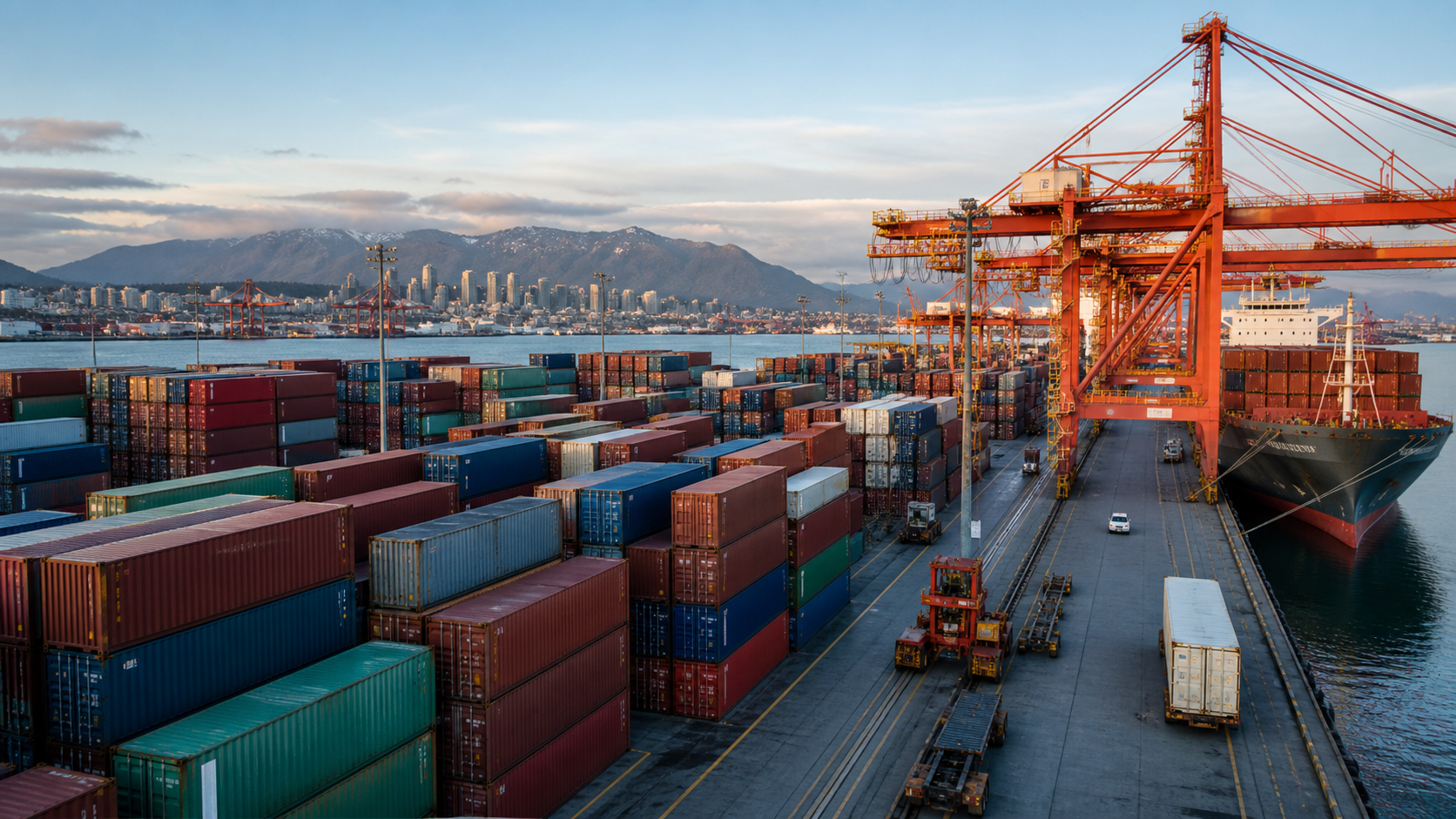
For ocean freight, the Port of Vancouver is Canada’s primary West Coast gateway, with the Port of Prince Rupert offering additional capacity; the Port of Montreal serves the East via transatlantic routes. Cold-chain planning, inland rail, and final-mile distribution must be coordinated to protect shelf life and landed cost.
- Incoterms & documentation: Align on responsibilities and temperature control where relevant.
- Duty and trade: Many beverage HS codes from Vietnam benefit under CPTPP schedules; verify your exact HS classification.
- GST: A 5% GST applies federally; provincial taxes and deposits vary by province.
- Customs agencies: The Canada Border Services Agency (CBSA) administers border processes.
Plan your route and compliance steps with these guides: shipping beverages from Vietnam to Canada and Canada beverage import duty and trade agreements. For a step-by-step process, see how to import beverages into Canada.
How should a Canada-ready product brief read?
Summarize the value proposition in English and French, SKU lineup, pack specs, shelf location, and intended channels. Define operational readiness to de-risk listings for buyers.
- Proposition: One-sentence claim-free promise plus supporting ingredient statements in EN/FR.
- SKU plan: Flavors, sizes, UPCs, case packs, shelf/cooler intent.
- Regulatory: FDR-compliant Nutrition Facts table, bilingual ingredients/allergens, and Quebec considerations.
- Operations: Shelf life, storage (ambient/chilled), shipping temperature, palletization, OTIF metrics.
- Channel roll-out: Natural & organic pilot, then targeted grocery regions, convenience for trial, club when velocity confirms.
If you are aligning sourcing and production for North America, also review trade pathways and compliance early alongside your go-to-market assumptions.
What buyer questions should you be ready to answer?
Canadian buyers probe credibility, sustainability, and execution. Prepare concise, evidence-based answers.
- How does your “no artificial” and low sugar story show up on pack and in the ingredient list?
- Why will this turn faster than current items in the set, and what proof do you have from similar channels?
- What is the operational plan for Western vs. Eastern Canada (rail, cold-chain, and distributor coverage)?
- Are your bilingual assets ready (pack, SRP trays, sell sheets, digital content)?
- How will you drive trial in summer and sustain repeat into fall and winter?
Practical tips by channel and region
Execution varies across provinces and banners; tailor your playbook accordingly.
- Ontario: Large grocery volumes; leverage summer and back-to-school multipacks; tailor for LCBO adjacencies if relevant (mixers).
- Quebec: Prioritize French-forward copy and Quebec-specific POS; consider regional distributors for DSD niches.
- British Columbia: Natural & organic presence is strong; sustainability and clean-label cues resonate; Vancouver retail is competitive and trend-forward.
- Prairies & Atlantic: Focused assortments; ensure reliable replenishment and right-size packs for regional velocities.
How to forecast and set guardrails without hard market numbers
Category size data may be proprietary; use comparative benchmarks and pilot reads to shape a pragmatic forecast.
- Start with a pilot in natural & organic or a regional grocery cluster; read velocity per facing and repeat.
- Triangulate with retailer POS, distributor shipments, and your DTC/e-commerce demand signals.
- Set gates: Distribution expansion only when weekly unit targets and waste thresholds are met for 8–12 weeks.
- Build seasonality: Expect summer peaks; align promos and inventory buffers ahead of heat waves and holidays.
For broader context on policy, duty and logistics, combine your pilot metrics with the resources linked above and your customs broker’s guidance.
Checklist: getting Canada-ready
Use this quick pass before you engage buyers or book containers.
- Label pack: FDR-compliant bilingual copy, Nutrition Facts, ingredients/allergens.
- Quebec review: French prominence per the Charter of the French Language.
- Claims: Focus on ingredients (no medical language); clarify “no artificial” precisely.
- Format readiness: Case pack, pallet specs, cold-chain notes; shelf vs. chilled intent.
- Channel plan: Natural & organic pilot, then targeted grocery; convenience for trial; club when ready.
- Import plan: HS classification, trade eligibility, GST handling, destination warehouse.
Use these guides as you finalize compliance and inbound flow: Canada beverage label requirements, Canada beverage import duty and trade agreements, and shipping beverages from Vietnam to Canada.
What does all this mean for new entrants?
Canada rewards clear, honest drinking experiences with a modern bilingual voice. If your product delivers on “no artificial”, moderation, and everyday functional relevance, natural & organic doors can validate the story, grocery can scale it, and convenience can unlock impulse. Back this with Canada-specific compliance and a logistics plan that respects distance and climate.
When you are ready to blueprint your import pathway and list-building plan, start with how to import beverages into Canada and the broader Canada market overview. Together they connect the dots from product brief to shelf.
FAQ
Do Canadian retailers require bilingual packaging?
Yes. English and French are required nationally, and Quebec expects French prominence under the Charter of the French Language. Align with the Food and Drug Regulations for Nutrition Facts, ingredients, and allergen statements.
Is there a national sugar tax in Canada?
No national sugar tax exists as of this writing. Taxes and container deposits vary by province, while a 5% federal GST applies broadly. Confirm provincial specifics with your broker and retail partners.
Which ports are most common for imported beverages?
On the West Coast, the Port of Vancouver is the primary gateway with additional capacity at Prince Rupert; on the East, the Port of Montreal serves transatlantic routes. Select ports based on lead times, inland rail, and final distribution hubs.
Where should new brands launch first?
Many start in natural & organic outlets or select regional grocery banners to prove velocity and refine positioning, then expand nationally through grocery, convenience, and club once operations and repeat are solid.
What claims resonate without risking compliance?
Ingredient-forward statements and “no artificial” declarations written precisely (e.g., no artificial colors or flavors) work well. Avoid medical or disease-related language; let the ingredient list and Nutrition Facts speak for themselves.
For end-to-end planning on duties, labeling, and shipping, see: Canada beverage import duty and trade agreements, Canada beverage label requirements, and shipping beverages from Vietnam to Canada. These resources complement your broker’s latest regulatory updates.
In short, the beverage market Canada rewards brands that communicate cleanly, deliver reliable operations, and respect bilingual compliance. Nail those foundations and you’re set to ride seasonal peaks and scale through the country’s major channels.