


 Français
 Español
 العربية
 한국어
한국어Poland beverage import duty is the customs charge applied when drinks enter Poland, determined by the product’s HS code and any trade preference such as the EU–Vietnam EVFTA that took effect on 1 August 2020. The final landed cost also depends on VAT, possible excise, and Poland’s domestic sugar levy.
This guide explains how tariff preferences work under EVFTA, how to verify duties by HS code, and how Poland’s national charges—especially the sugar tax—interact with EU customs law. It also lists the Polish agencies and ports you will work with, and what a certificate of origin for Poland-bound shipments needs to show.
What does “Poland beverage import duty” actually include?
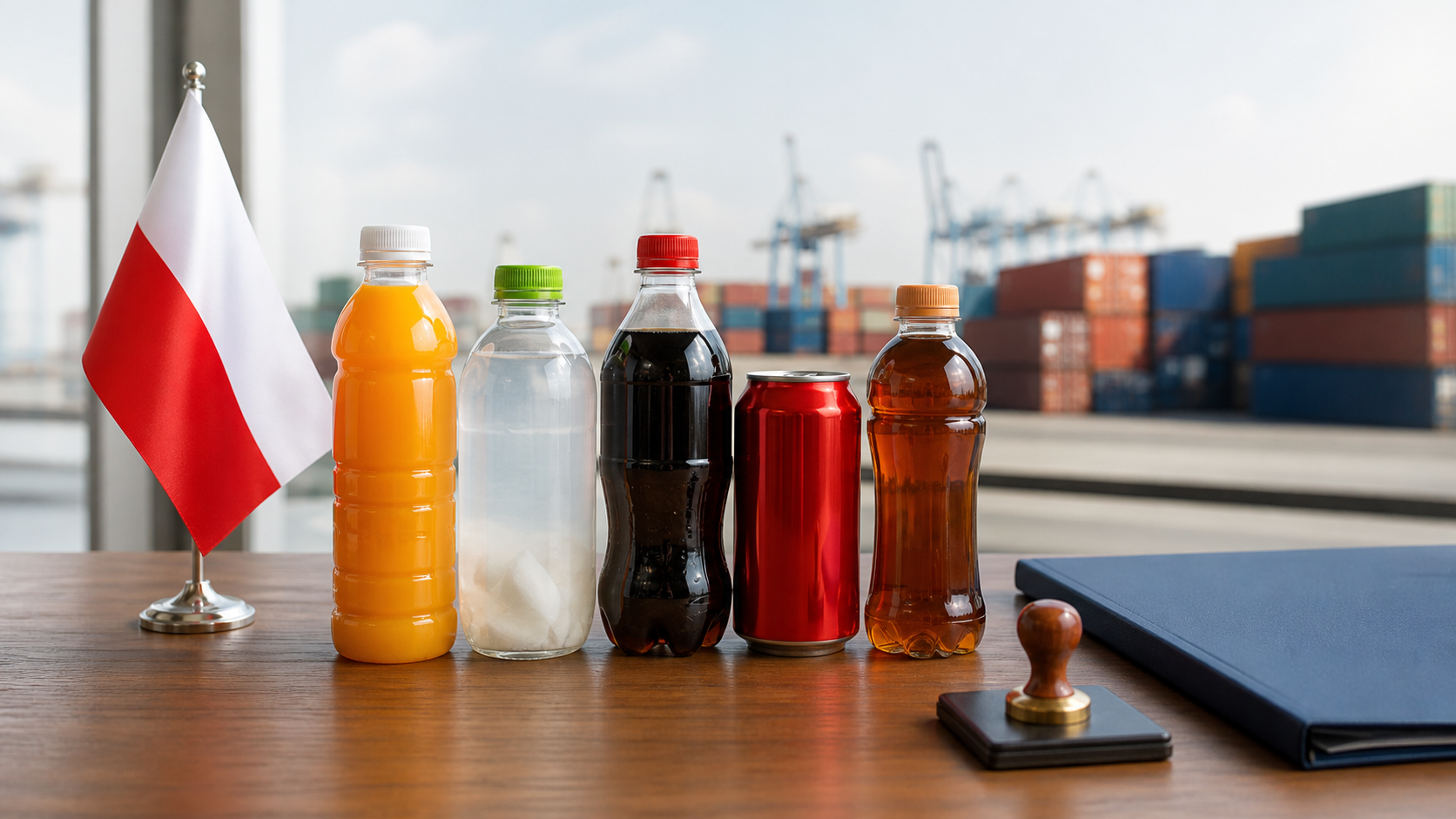
Import duty in Poland refers to the EU customs tariff payable at the border, based on the correct HS code and origin. In practice, importers budget for a total fiscal package: EU customs duty (often reduced under EVFTA if origin criteria are met), VAT at import, any excise for alcoholic beverages, and Poland’s domestic sugar levy for qualifying sweetened drinks.
Think in layers: first the EU layer (classification, customs value, preferences), then the Poland-specific layer (VAT collection, sugar levy administration, and any national charges linked to packaging or recycling responsibilities).
How do EVFTA preferences apply to Vietnamese beverages?
EVFTA can reduce or eliminate EU customs duty for eligible Vietnamese-origin beverages, but only if the product meets the agreement’s product-specific rules of origin and you present valid preferential proof at import in Poland. If origin is not established, the standard EU MFN duty applies per the TARIC schedule.
Key points for Vietnam–EU shipments:
- Origin rule: Each beverage line has a rule (e.g., based on HS change or value-added). Blending, bottling, or sweetening in Vietnam does not automatically confer origin—check the EVFTA product-specific rules for your HS code.
- Preferential proof: Under EVFTA, preferential origin is typically proven by a certificate or a statement on origin by an approved/registered exporter, depending on the exporter’s authorization and shipment value. Confirm the applicable option for your supply chain before shipping.
- Consistency: Origin documentation must align with commercial invoices, packing lists, and the HS code used in the customs declaration at Polish entry.
If you are scoping entry strategy beyond tariffs, see our Poland beverage market overview for demand context and buyer expectations.
Which proof of origin works as a “certificate of origin” for Poland under EVFTA?
Polish customs (within the National Revenue Administration) accepts EVFTA-compliant preferential origin evidence: a certificate issued by the competent authority or a statement on origin made by an authorized or registered exporter, as provided for in the agreement. Commercial “non-preferential” certificates of origin can complement documentation but do not grant EVFTA preferences by themselves.
For buyers searching “certificate of origin Poland”: in an EVFTA context, ensure your proof explicitly cites EVFTA provisions and references the correct exporter authorization and origin criteria. Keep copies for audit, as Polish customs may verify origin retrospectively.
How do I find the correct import duty in TARIC and Poland’s ISZTAR?
You determine duty by HS code and origin using the EU’s TARIC, with Poland’s national copy (ISZTAR) reflecting the same EU tariff plus national measures. Do not guess rates—verify them for your exact product and origin scenario.
- Classify precisely: Identify the HS code to 8 or 10 digits as needed. Juice, nectar, juice drinks, energy drinks, RTD tea/coffee, and alcoholic RTDs can fall into different headings (e.g., Chapters 20 or 22). Ingredients such as added sugar, sweeteners, caffeine, milk, or alcohol change classification and duty.
- Check TARIC: Use the EU TARIC database to see the base third-country duty and any preferential rates under EVFTA. Note footnotes, suspensions, quotas, and Meursing-type components that may affect certain composite products.
- Confirm in ISZTAR: Poland’s ISZTAR (national tariff portal) mirrors TARIC and shows any Polish measures layered on EU law. Align your HS code, origin, and product description with what you will declare at the Polish border.
- Record the conditions: For any preferential rate, check the required proof of origin and validity dates. Print or save the tariff screen with the legal footnotes for your compliance file.
- Validate before shipment: Share the HS code and tariff printout with your broker. Ensure invoices and packing lists match the description and origin claim.
When building your project, combine tariff work with operations and route planning—our import beverages into Poland checklist highlights documentation and timing at a glance.
Does Poland apply a sugar tax on drinks?
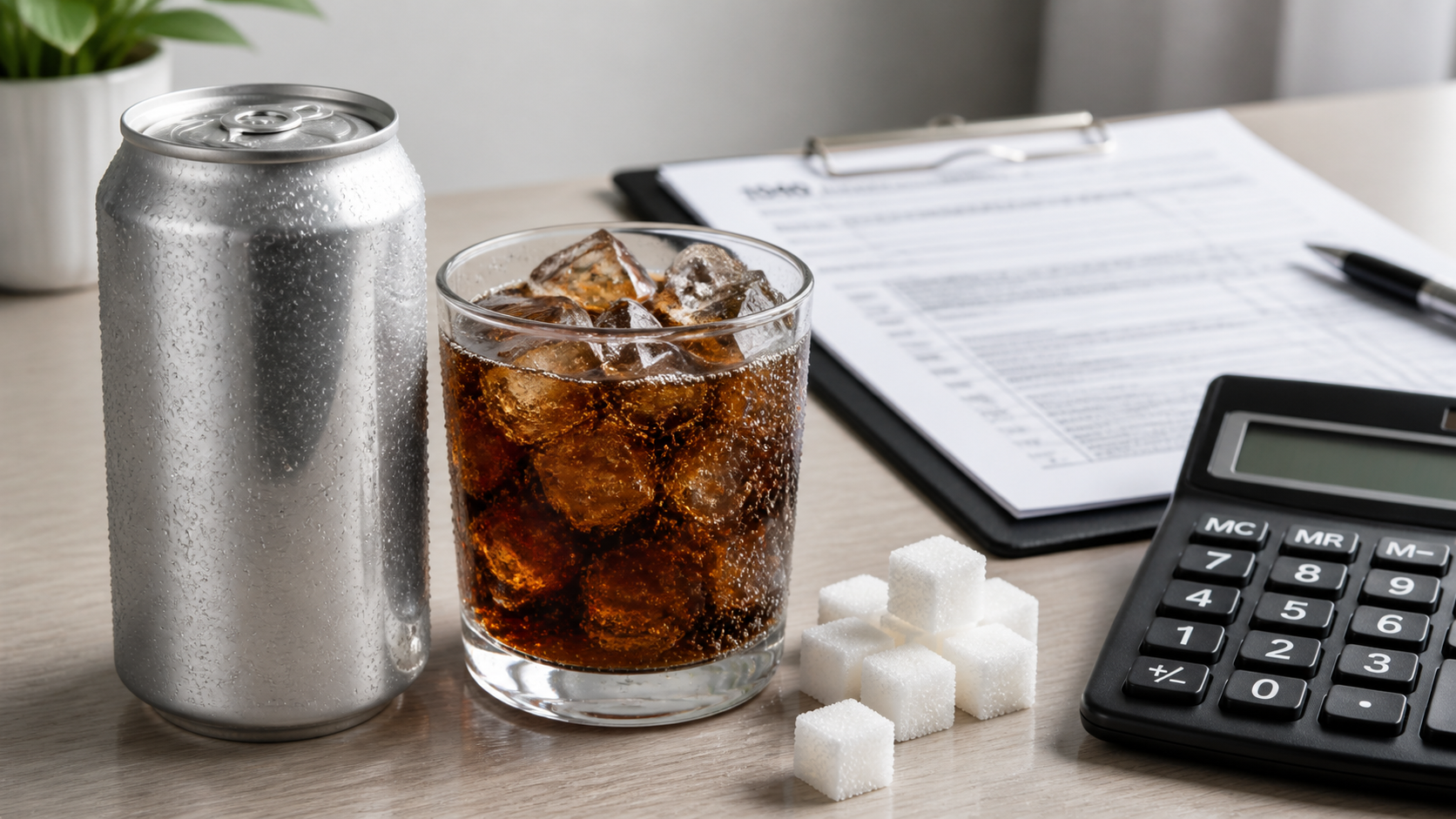
Yes. Poland levies a domestic sugar tax (known as opłata cukrowa) on qualifying sweetened beverages placed on the Polish market. This is separate from EU customs duty and is administered by Polish tax authorities after import clearance. It typically applies when drinks contain added sugars and/or certain sweeteners or functional additives.
What to prepare:
- Formula transparency: Keep a detailed ingredient and nutrient breakdown (sugars per 100 ml, sweeteners used, caffeine/taurine where relevant). Label claims and recipe variations can change liability.
- Responsible entity in Poland: The tax is generally reported and paid by the entity that introduces the product into the Polish market (importer or first seller). Align contracts so the responsible party can file and pay correctly.
- Timing and records: Returns and payments follow Polish tax rules. Maintain supportive documents for inspections by the National Revenue Administration.
At the border and in-market, several Polish bodies may be involved. Importers should map roles early to avoid delays.
- Krajowa Administracja Skarbowa (KAS) – National Revenue Administration: Oversees customs clearance, duty/VAT collection, and enforcement. Electronic submissions run through the Polish e-Customs portal often known as PUESC.
- Główny Inspektorat Sanitarny (GIS) – Chief Sanitary Inspectorate: Supervises sanitary controls for food and beverages; local sanitary inspectorates (Sanepid) can check compliance at border and inland.
- Inspekcja Jakości Handlowej Artykułów Rolno-Spożywczych (IJHARS): The Agricultural and Food Quality Inspection may verify quality parameters and compliance of imported agri-food goods, including juices and drinks.
Remember: EU-wide labelling rules apply in Poland; consult your dedicated EU labelling resource for the horizontal framework, then layer Polish requirements such as the sugar levy and local enforcement practice.
Where do beverages typically enter Poland? Ports and practical routing
Most containerized beverages enter via Baltic seaports and flow into central Poland’s distribution hubs. Lead times and costs vary by service and season, so coordinate with your forwarder early.
- Port of Gdańsk: Poland’s largest seaport with deepwater container terminals and frequent mainline services.
- Port of Gdynia: A major container and Ro-Ro gateway linked to northern logistics corridors.
- Szczecin–Świnoujście: Twin-port complex serving western Poland and connections toward Germany and Scandinavia.
- Air freight: Warsaw Chopin Airport for urgent or high-value beverage SKUs, noting higher landed cost.
After customs, domestic distribution usually runs by road to regional DCs. Align incoterms, customs broker coverage, and unloading slots with your Polish consignee.
VAT, excise, and other domestic charges in Poland
In addition to customs duty, imports face Polish VAT at the border. Alcoholic products also incur excise (akcyza). Poland’s sugar levy is a separate public-health charge on qualifying beverages. Finally, packaging placed on the Polish market may trigger producer responsibility obligations.
- VAT at import: Applied on the customs value plus duty and certain costs to the first Polish import declaration; special VAT accounting regimes may be available to established importers via Polish rules.
- Excise (if alcohol): Beer, wine, spirits, and some RTDs carry excise based on alcohol type and strength. Non-alcoholic drinks generally do not pay excise unless covered by specific rules.
- Packaging & EPR: Entities placing packaged goods on the Polish market may need registration in Poland’s waste database (BDO) and to meet recovery/recycling or fee obligations. Confirm roles if you are the importer of record.
Snapshot: charges affecting beverages entering Poland
| Charge | Applies to | Basis | Set by | Collected by | Positioning & notes |
|---|---|---|---|---|---|
| EU customs duty | All imports | HS code, origin, customs value | EU (TARIC) | Polish customs (KAS) | Check TARIC/ISZTAR; EVFTA may reduce duty with valid origin proof. |
| VAT at import | All imports | Customs value + duty | Poland (VAT law) | Polish customs/tax | Standard VAT rules at border; potential special accounting for established entities. |
| Excise | Alcoholic beverages | Alcohol category/strength | Poland (excise law) | Polish tax authority | Non-alcoholic drinks typically outside excise unless specified by law. |
| Sugar levy (opłata cukrowa) | Sweetened beverages | Recipe components & thresholds | Poland (public health law) | Polish tax authority | Separate from customs duty; documentation must show sugars/sweeteners and additives. |
| Packaging/EPR | Packaged goods | Placed-on-market duties | Poland (waste law) | Authorized bodies | BDO registration and reporting may be required for the Polish market. |
Document checklist for smooth entry into Poland
Your exact pack depends on product type and route, but beverage importers typically prepare:
- Commercial invoice, packing list, bill of lading/air waybill.
- Preferential origin evidence under EVFTA (certificate or statement on origin) when claiming reduced duty.
- Technical file: ingredient list, nutrition data, production flow, allergens, and declarations on sugars/sweeteners/additives for sugar levy assessment.
- Certificates required by product type (e.g., phytosanitary or health attestations where relevant).
- Polish consignee details with EORI and broker authorization for customs representation.
If you are mapping operations from factory to port and into Poland, align documentation with your route plan—our import beverages into Poland checklist pairs well with your forwarder’s milestones.
EVFTA in practice: implications for product development
Designing a beverage for Poland involves both tariff and non-tariff thinking. EVFTA can enhance price competitiveness, but formulation choices also drive sugar levy exposure, HS classification, and consumer acceptance.
- Classification-aware recipes: Small changes (e.g., juice content, dairy addition, caffeine/taurine) can shift HS code and fiscal profile. Validate early with a mock tariff ruling via your broker.
- Sweetening strategy: Consider reduced-sugar lines. Document sweetener types and levels clearly so the Polish importer can assess sugar levy liability.
- Packaging for route & retail: Choose formats that suit Baltic port handling and Polish retail shelves. Evaluate pallet patterns and container loading stability.
- Origin planning: If you target EVFTA, lock compliant sourcing and processing flows, and train your team on making and retaining origin statements.
For inspiration on premium hydration formats, see how best quality coconut water performs in export markets and why buyers prefer clean ingredient decks.
Commercial readiness: what Polish buyers expect
Polish distributors prioritize certainty on classification, origin, and domestic charges. Arrive with a clear brief, validated HS code scenario, and documented preferences. Coordinate incoterms, consignee responsibilities for sugar levy, and EPR duties for packaging placed on the market.
- Broker alignment: Share your draft HS, TARIC screenshots, and origin proofs in advance.
- Contract clarity: Define who files and pays the sugar levy and manages any packaging compliance in Poland.
- Lead time buffers: Align vessel schedules into Gdańsk/Gdynia and secure unloading slots to avoid detention/demurrage.
For a broader market entry picture, check our Poland beverage market overview and discuss demand windows with your buyer.
FAQs: Poland beverage import duty, EVFTA, and sugar levy
Is EVFTA zero duty for all Vietnamese beverages in Poland?
No. EVFTA preferences apply only when your beverage meets the specific rule of origin for its HS code and you present valid preferential proof at import. Some lines may phase down over time, and certain products can retain a positive duty. Always confirm the exact rate and conditions in TARIC/ISZTAR for your HS and origin.
Do unsweetened juices pay Poland’s sugar levy?
The sugar levy targets qualifying sweetened beverages as defined in Polish law. If a product has no added sugars or specified sweeteners/additives, it may fall outside the levy’s scope. However, liability depends on the legal definitions and your exact recipe, so the Polish importer should verify based on your technical file.
What counts as a valid certificate of origin for Poland under EVFTA?
Under EVFTA, preferential origin can be proven by a certificate issued by the competent authority or a statement on origin by an authorized/registered exporter, depending on program conditions and shipment value. Non-preferential certificates alone do not grant EVFTA rates.
Where should I start if I’ve never shipped to Poland?
Begin with product classification and a rough landed-cost model (duty, VAT, sugar levy potential). Align with a Polish broker and finalize incoterms and responsibilities. For an actionable outline, see our import beverages into Poland checklist and discuss your route into Gdańsk or Gdynia with your forwarder.
Conclusion
To price beverages for Poland, combine EU customs duty (validated in TARIC/ISZTAR and potentially reduced via EVFTA) with Poland’s VAT, any excise for alcohol, and the domestic sugar levy where applicable. Keep origin documents airtight and your recipe sheet transparent so the Polish importer can assess national charges. With these basics in place, you can move to commercial planning and align demand, route, and shelf timing for the Polish market.