Français
 Español
 العربية
 한국어
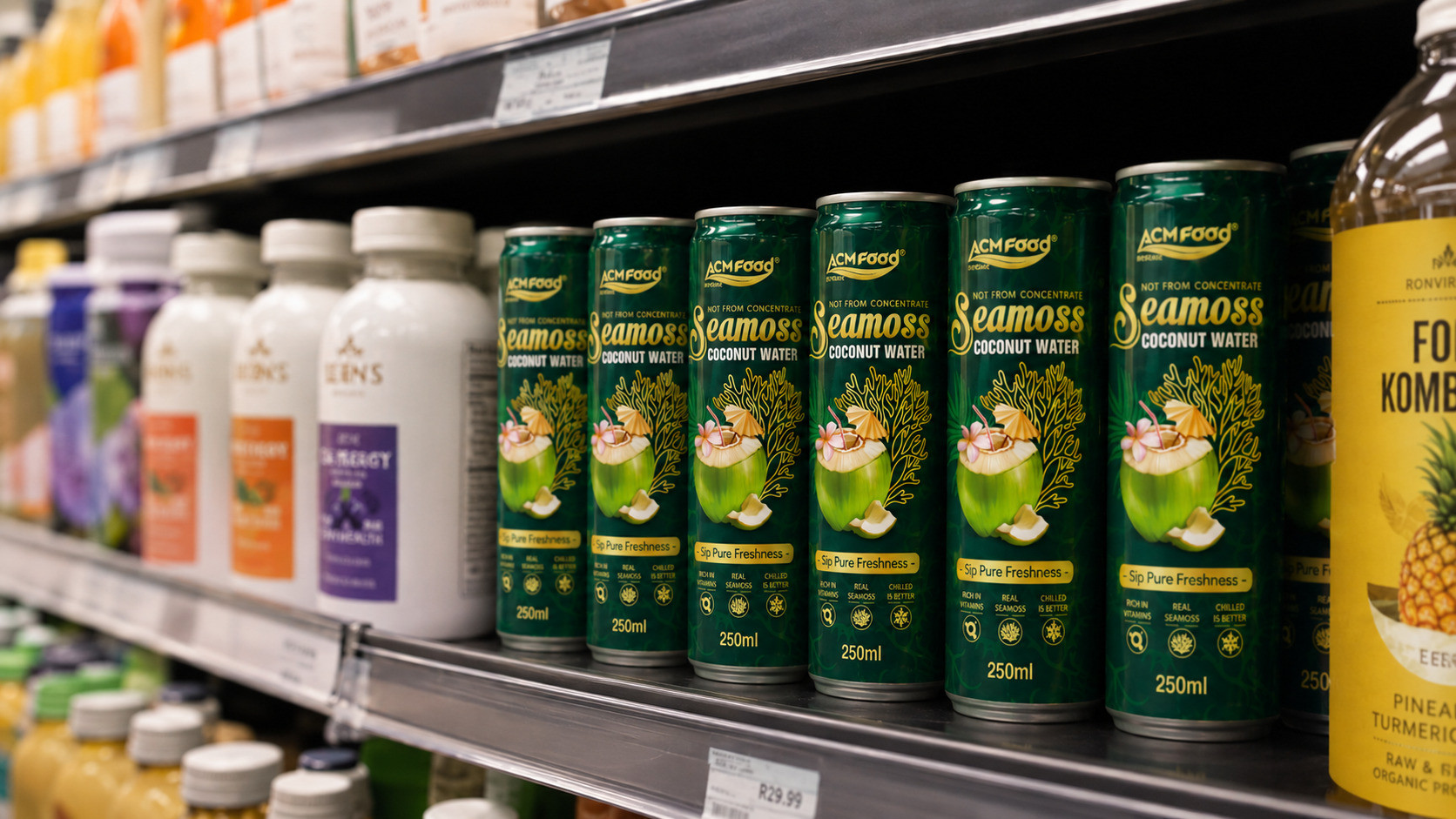
한국어Sea moss coconut water is a functional drink that combines coconut water with sea moss gel or extract, made from red algae such as Chondrus crispus or Gracilaria. It pairs coconut water’s natural electrolytes with sea moss’s minerals and gel texture, and it is taking off because it sits where three trends meet: functional drinks, plant-based superfoods and clean labels.
Sea moss has a long history as a food in the Caribbean, Ireland and parts of West Africa, and social media has brought it to a much wider audience. This article explains what the drink is, what it contains, who buys it and what the trend means for beverage brands and importers.
What is sea moss coconut water?
Sea moss coconut water is coconut water blended with sea moss, a red seaweed also called Irish moss. The result tastes lightly sweet and tropical with a subtle earthy note, and the sea moss adds body to the drink.
What do the two ingredients contribute?
Coconut water provides hydration and electrolytes; sea moss adds minerals and a natural thickening effect.
| Ingredient | What it contains | Role in the drink |
|---|---|---|
| Coconut water | Water, natural sugars, potassium, magnesium, sodium | Light, refreshing, electrolyte-containing base |
| Sea moss | Iodine, calcium, potassium, magnesium; carrageenan, a natural polysaccharide | Mineral content, body and mouthfeel |
Both ingredients are plant-based and vegan, and the blend works in still, sparkling, flavoured and unflavoured formats.
What are the benefits of sea moss coconut water?
The realistic benefits are practical and compositional: hydration, naturally occurring electrolytes and minerals, and a clean, plant-based label. There is limited research on the drink itself, so it should not be marketed with health claims.
- Hydration: coconut water is mostly water and counts toward daily fluid intake.
- Natural electrolytes: potassium, magnesium and sodium come from the ingredients rather than added salts.
- Plant-based and vegan: both ingredients are plant-derived.
- Clean label: recognisable ingredients without artificial colours or preservatives.
- Convenience: ready-to-drink sea moss avoids sourcing, soaking and blending raw sea moss at home.
- Alternative to sugary drinks: lightly sweet without the high sugar of many sodas and energy drinks.
Sea moss is naturally high in iodine, and the amount varies widely between batches. Brands should test iodine levels and follow the rules of each market; people with thyroid conditions should ask their doctor before consuming sea moss regularly.
Why is sea moss coconut water trending?
Four forces drive the trend:
- Functional drink demand: consumers want drinks that do more than quench thirst.
- Plant-based and natural products: sea moss coconut water is fully plant-derived.
- Superfood interest: sea moss has strong recognition in North America and the UK.
- Social media: Instagram, TikTok and YouTube introduced millions of consumers to sea moss through recipes and influencer content.
Who buys sea moss coconut water?
The main buyers are health-conscious adults, fitness enthusiasts, natural-food and vegan shoppers, and Millennial and Gen Z consumers interested in new superfood ingredients. They tend to read labels, shop online and pay more for products that match their values.
How does it compare with regular coconut water?
| Feature | Sea moss coconut water | Regular coconut water |
|---|---|---|
| Ingredients | Coconut water + sea moss | Coconut water only |
| Positioning | Hydration plus superfood wellness | Hydration and light recovery |
| Taste | Tropical, slightly earthy, fuller body | Light, sweet, tropical |
| Market stage | Fast-growing, trend-led | Established, mainstream |
| Price | Premium | Mainstream to premium |
What product opportunities exist for beverage brands?
The biggest near-term opportunity is ready-to-drink sea moss coconut water, which brings the trend into mainstream retail, gyms, cafés and e-commerce.
- RTD formats: shelf-stable or chilled, in cans, glass, cartons or pouches.
- Organic lines: certified organic coconut water supports premium positioning.
- Functional ranges: alongside turmeric, ginger, probiotic or collagen drinks.
- Premium channels: upscale gyms, wellness hotels, spas and specialty stores.
- Future variants: sparkling, tropical fruit flavours and concentrated shots.
How can private label and OEM brands enter the category?
Private label and OEM let retailers and wellness brands launch their own sea moss coconut water without a factory. Brands can set the sea moss level, choose still or sparkling, add ingredients such as ginger or turmeric, and pick glass, cartons, cans or pouches.
Demand is strongest in North America, Western Europe, the Middle East and Australia. In a trend-led category, an experienced OEM manufacturer shortens development, keeps quality consistent and helps brands reach shelf while interest is high.
What is the outlook for sea moss coconut water?
The outlook is positive. In North America the drink is moving from novelty to regular purchase; in the UK and Europe it is starting to appear next to established coconut water brands; and in the Middle East and Asia-Pacific, demand for premium wellness products and familiarity with coconut drinks support growth.
Frequently asked questions
What is sea moss coconut water?
A functional drink combining coconut water with sea moss gel or extract, a red seaweed traditionally eaten as food.
Is sea moss coconut water a functional beverage?
Yes. It is positioned beyond basic hydration, combining coconut water’s electrolytes with the minerals of sea moss.
Who should be careful with sea moss?
Sea moss is high in iodine, so people with thyroid conditions or on iodine-restricted diets should check with their doctor first.
Why is it becoming popular?
Functional drink demand, interest in plant-based superfoods, clean-label preferences and social media visibility have all contributed.
Conclusion
Sea moss coconut water combines a familiar hydration base with a trending superfood, in a plant-based, clean-label format. For brands, retailers and importers it offers differentiation and premium pricing, provided claims stay modest and iodine levels are controlled.
For the categories, formats and ingredients the factory runs, see beverage product capabilities. For moving a recipe into production, see contract beverage manufacturing; to launch under your own label, see private label beverages. To brief a concept, request a quote.
Request a quote