


 Français
 Español
 العربية
 한국어
한국어Green coconut water is the liquid from a young coconut harvested while its husk is still green, before the nut has fully matured. It is the coconut water most people drink fresh from the shell and the raw material behind most packaged coconut water. Mature coconuts, recognisable by their brown, fibrous husk, contain less water with a different taste, and are used mainly for coconut meat, milk and oil.
This guide explains how young and mature coconuts differ, why maturity changes the taste and volume of the water, and how to recognise a good green coconut. It also covers what “green coconut water” means on a packaged product and which points beverage brands should check when sourcing it. Keep in mind that variety, growing region and handling also shape the water, so maturity is one important factor rather than the only one.
What is green coconut water?
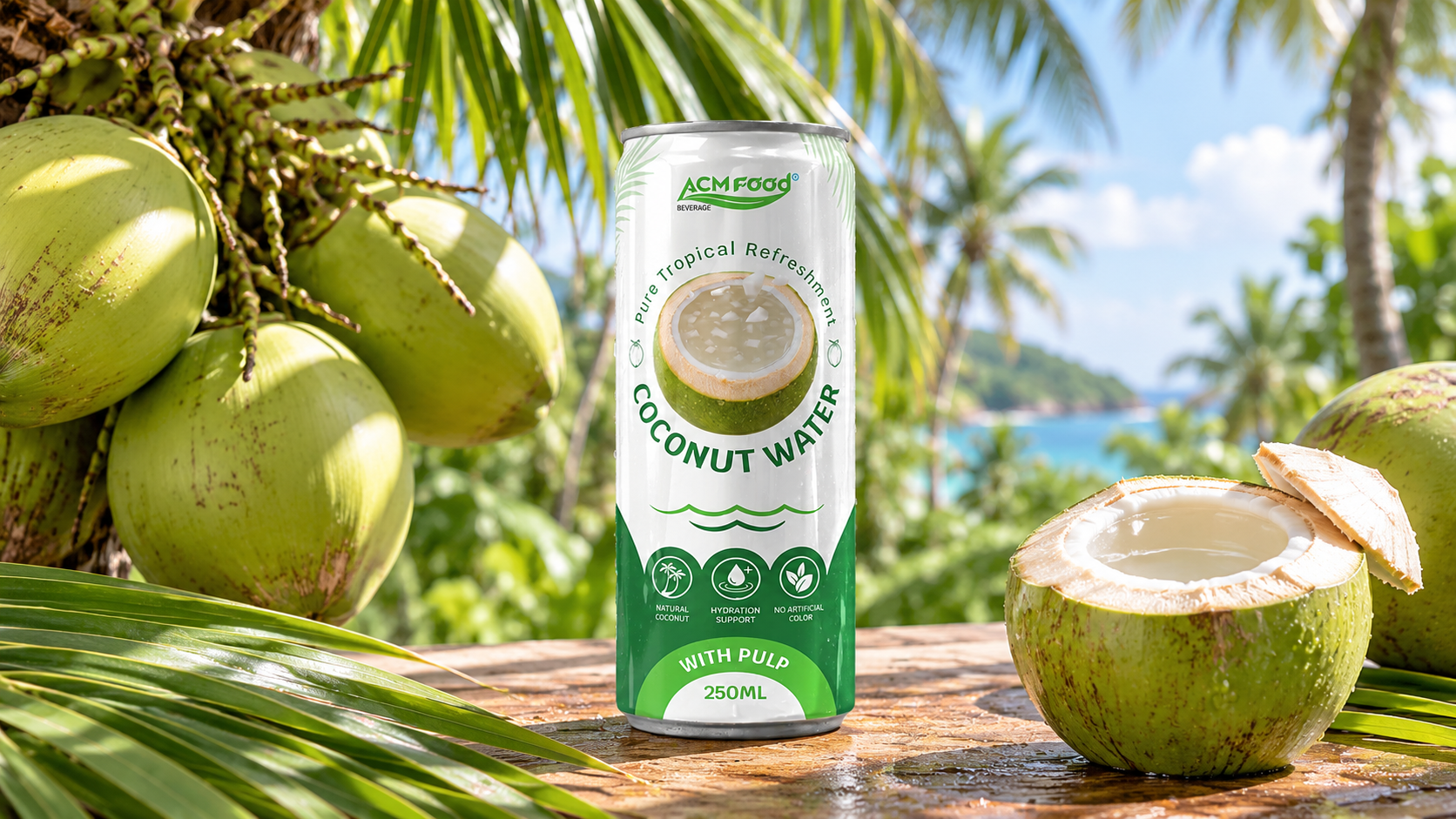
Green coconut water is the clear liquid inside a young, green coconut, typically harvested several months before the nut reaches full maturity. At this stage the nut holds its largest volume of water and only a thin, soft layer of jelly-like meat lines the shell.
The colour refers to the husk, not the water. Coconut water itself is clear or very slightly cloudy at every stage. Searches for “coconut water green” or “green water coconut” usually mean one of two things: drinking water from a green coconut, or buying packaged coconut water made from young coconuts. Both point to the same raw material.
Some coconut types have yellow, orange or reddish husks when young, so “green” is a common shorthand rather than a strict botanical label. In practice, the trade uses “young coconut” and “green coconut” interchangeably for drinking nuts.
How do young and mature coconuts differ?
Young coconuts are harvested for drinking, while mature coconuts are harvested for meat and oil. As a coconut ages on the palm, its husk turns from green to brown, the meat thickens and hardens, and much of the water is used up as the meat develops.
| Feature | Young green coconut | Mature brown coconut |
|---|---|---|
| Husk | Smooth, green and moist | Brown, dry and fibrous |
| Water volume | High; the nut feels heavy and full | Lower; you can often hear it slosh |
| Water taste | Light, often sweeter and more aromatic | Less sweet, more nutty, sometimes slightly sharp |
| Meat | Thin, soft, jelly-like, eaten with a spoon | Thick, firm and white |
| Main uses | Drinking fresh; packaged coconut water | Grated coconut, coconut milk and cream, oil, desiccated coconut |
| How it is sold | Whole, trimmed or polished drinking nuts | Dehusked nuts with the hard shell exposed |
The figures inside any coconut vary with variety, growing conditions and exact age, so this comparison describes general patterns rather than fixed values.
Does green coconut water taste different from mature coconut water?
Yes. Water from young green coconuts is usually lighter, fresher and sweeter, while water from mature coconuts tends to taste flatter and nuttier. The change happens gradually as the nut ripens, so there is a window in which coconuts are considered ideal for drinking.
Several things drive the difference in taste:
- Sugar balance: the sugars in coconut water shift as the nut matures, which changes perceived sweetness.
- Aroma: young coconuts of aromatic varieties have a distinctive fragrant note that fades with age.
- Volume: as water is absorbed into the developing meat, less remains, and what is left can taste more concentrated in some compounds and weaker in others.
- Freshness after harvest: even a perfectly timed green coconut loses quality if it is stored too long before opening.
For drinkers, this means the best green coconut water comes from nuts harvested at the right age and opened soon after.
Is green coconut water healthier than mature coconut water?
Green coconut water is not proven to be “healthier” in a general sense, but it is the type usually described in nutrition references and the type used for most coconut water drinks. Coconut water from young nuts contains potassium and other minerals, along with natural sugars. Composition varies between coconuts and between packaged products.
Mature coconuts are valued for their meat, which contains fat and fibre that the water does not. Comparing the two is a little like comparing a drink with a food, since people use them for different purposes. For a fuller look at what coconut water contains and what the evidence actually supports, read our guide to coconut water benefits and nutrition.
Coconut water is a beverage that can fit into a varied diet. It does not treat or prevent disease, and people who watch their sugar or potassium intake should check portion sizes and labels.
How to choose a good green coconut for drinking
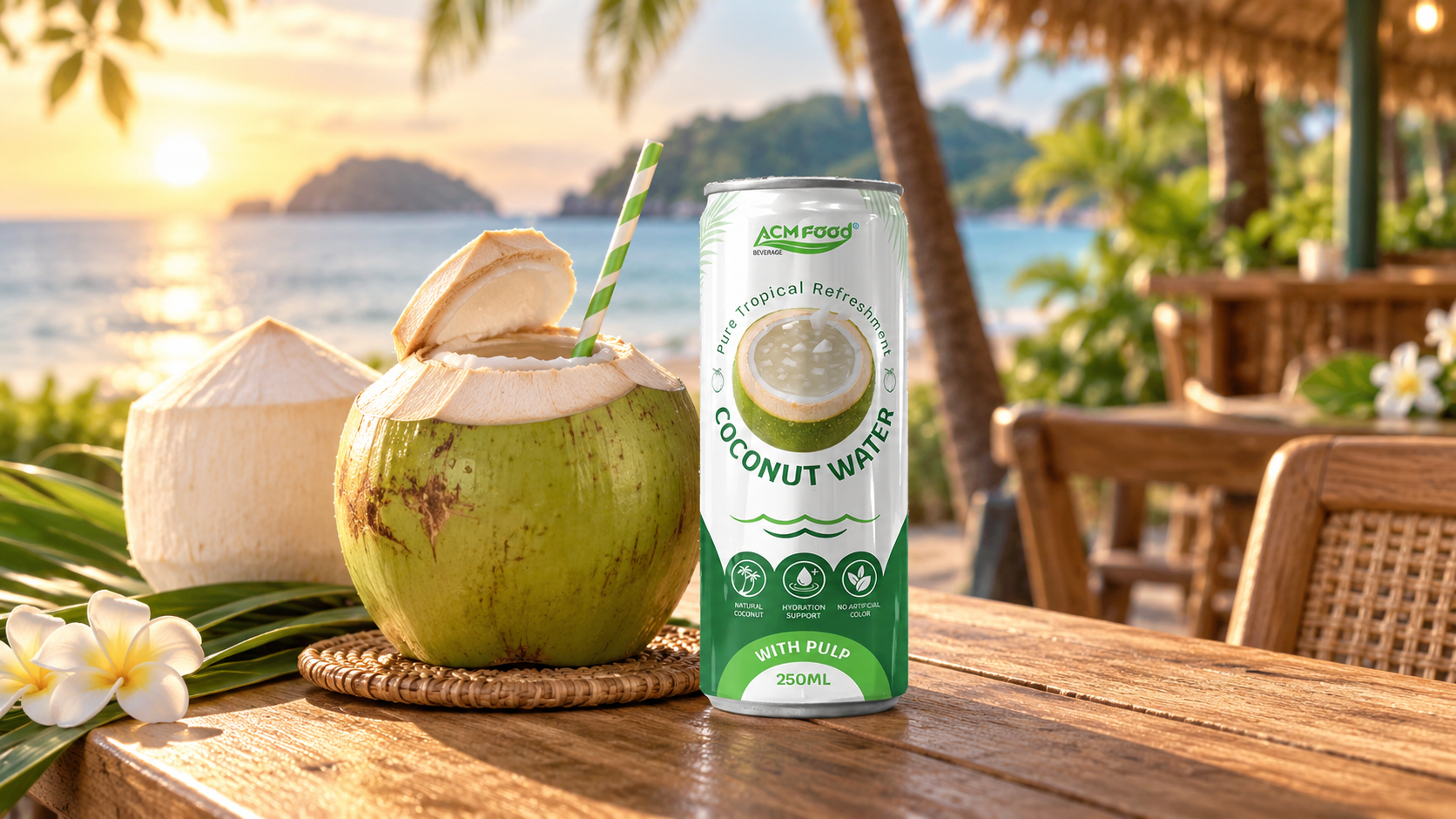
A good drinking coconut feels heavy for its size, has a fresh, unblemished husk and no signs of leaks or mould. These signs suggest the nut is young, full of water and has not been stored too long.
Practical checks when buying whole or trimmed young coconuts:
- Weight: pick it up and compare a few nuts. The heavier one usually holds more water.
- Husk condition: a green husk should look fresh and moist rather than dry or cracked. Trimmed white coconuts should be clean and free of grey or dark patches.
- Smell: there should be no sour or fermented odour around the top or base.
- Sound: a young coconut full of water makes little sloshing noise. A strong slosh can indicate an older nut with less water.
- Storage: keep trimmed coconuts refrigerated and use them within a few days. Once opened, drink the water the same day.
Opening a green coconut takes a heavy knife or a coconut opener, so trimmed young coconuts with a pre-cut top or a pull-tab opening are popular in shops and cafés.
Common misconceptions about green coconut water
Several popular beliefs about green coconuts are only partly true. Clearing them up helps both shoppers and buyers set realistic expectations.
- “Green coconut water is green.” It is not. The water is clear or slightly cloudy; only the husk is green.
- “Every green coconut tastes the same.” Taste varies considerably between varieties, farms and seasons, and even between nuts from the same bunch.
- “The younger the coconut, the better.” Very young nuts can taste thin and less aromatic. Most drinking coconuts are picked within a preferred window rather than as early as possible.
- “Coconut water is the same as coconut milk.” Coconut milk is made by pressing grated mature coconut meat with water, so it is rich and creamy. Coconut water is the light liquid found naturally inside the nut.
- “Packaged coconut water is made from old coconuts.” Most packaged coconut water is made from young coconuts, although processing and storage change its taste compared with drinking from the nut.
Another frequent question is whether coconut water from a green coconut can be stored for later. Once the nut is opened, the water begins to change quickly, so it should be chilled and finished the same day. That short life is the main reason packaged coconut water exists.
Green coconut water in drinks and recipes
Beyond drinking it straight, green coconut water is used in smoothies, as a light base for iced tea or fruit drinks, and in some Southeast Asian dishes where it adds gentle sweetness to braised meats or desserts. The soft young meat is often scooped out and eaten alongside, or added to drinks for texture. When a recipe calls for coconut milk or cream, however, coconut water is not a substitute, because it has none of the richness of pressed coconut meat.
What does “green coconut water” mean on a packaged product?
On a label, “green coconut water” or “young coconut water” usually signals that the product is made from young coconuts rather than mature ones. It describes the raw material, not the colour of the drink, and it does not by itself tell you how the product was processed or whether anything was added.
To understand what you are buying, read beyond the front of the pack:
- Ingredient list: “100% coconut water” with no other ingredients is the closest to drinking from the nut. Some products add sugar, flavours or pulp.
- Origin: the growing region and variety influence taste. Our comparison of Vietnam and Thailand coconut water sourcing explains how origin affects flavour and supply.
- Storage type: chilled products generally aim for a fresher profile with a short shelf life, while ambient products are heat treated for longer storage.
- Claims: words like “fresh” have specific meanings in some markets. Our article on what “fresh” means on packaged coconut water covers this in detail.
Why maturity matters for beverage brands and importers
For a coconut water brand, maturity at harvest is one of the first quality decisions. Nuts that are too young may give less flavour, while nuts that are too mature can reduce yield and make the water taste flat. Consistent harvest timing helps keep taste stable from batch to batch.
Points worth defining when sourcing young coconut water:
- Variety and origin: specify the preferred variety or region if a particular taste profile is part of the brand.
- Maturity standard: agree on how the supplier selects drinking-age nuts and how off-specification nuts are rejected.
- Time from harvest to processing: shorter intervals help protect aroma.
- Sensory benchmarks: approve a reference sample and test new batches against it for sweetness, aroma and appearance.
- Label accuracy: terms such as “young coconut”, “100%” and “not from concentrate” must match the actual product and the rules of the target market.
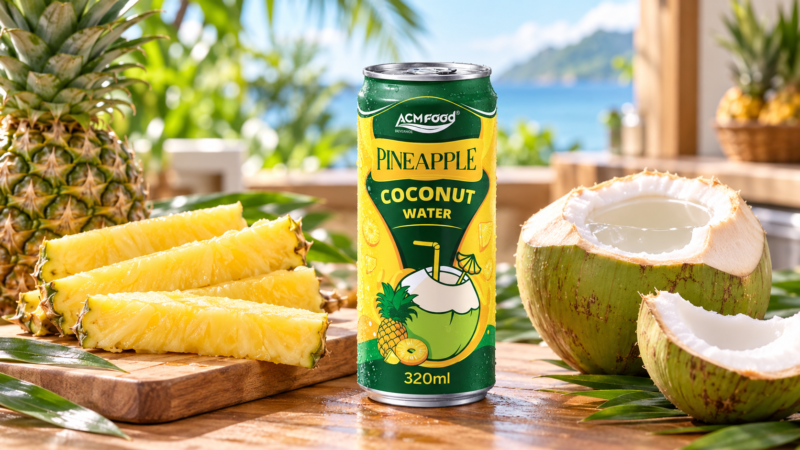
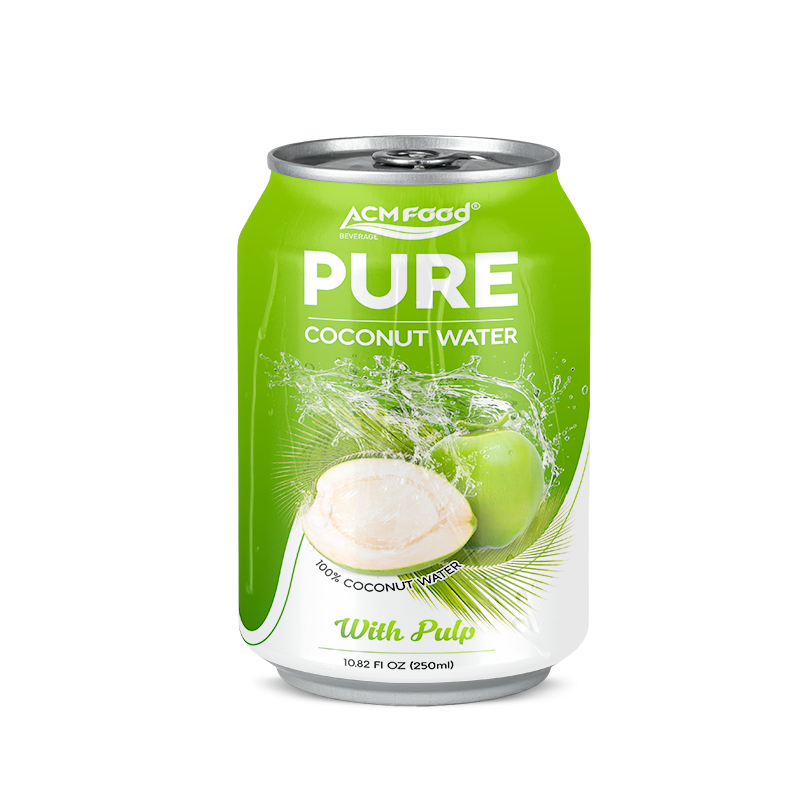
ACMFOOD processes coconut water from young coconuts for brand owners and importers, in original, pulp and flavoured styles. Variety, recipe, packaging and label wording are agreed for each project during product development.
FAQ about green coconut water
Is green coconut water the same as young coconut water?
Yes. Both terms describe water from coconuts harvested before full maturity. “Green” refers to the husk colour typical of young nuts.
Can you drink water from a brown coconut?
You can, if the nut is fresh and the water smells and tastes normal. It is usually less plentiful and less sweet than water from a green coconut, which is why brown coconuts are mainly used for meat and milk.
Why is the water in my green coconut slightly pink?
Some coconut water turns pinkish after opening or processing because natural compounds react with air or light. A light pink tint is not necessarily a defect, but a sour smell or fizzy taste means the water should be discarded.
How long does a green coconut keep?
A whole green coconut keeps for a limited time and lasts longer when chilled. Trimmed coconuts should be refrigerated and used within a few days, and opened coconut water should be drunk the same day.
Conclusion
Green coconut water comes from young coconuts harvested at drinking age, which is why it is lighter, fresher and more plentiful than the water in mature brown coconuts. Maturity is a key factor in taste and volume, but variety, origin and handling also matter, and packaged products add processing and recipe choices on top. Reading the ingredient list and origin is the best way to judge a packaged green coconut water.
If you are developing a coconut water product, ACMFOOD can discuss raw material selection, recipe style, packaging and labelling for your target market, and provide samples for evaluation.