


 Français
 Español
 العربية
 한국어
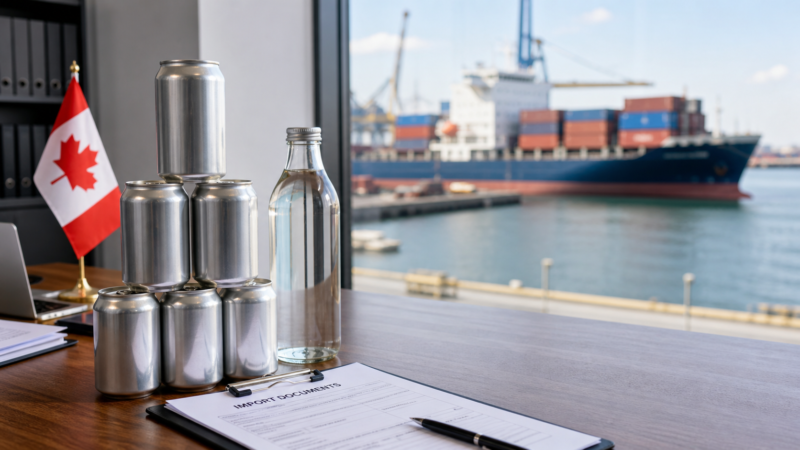
한국어Shipping beverages from Vietnam to Canada typically moves via two ocean gateways—Vancouver on the West Coast and Montreal on the East Coast—with inland rail or truck to final destinations. Expect 5% GST on import, plus any applicable provincial fees, and plan transit to protect remaining shelf life on arrival.
This guide focuses on routing choices, compliance steps under CFIA/CBSA and the Safe Food for Canadians Regulations (SFCR), Incoterms selection, packaging, and a practical timeline to land product in good condition while preserving shelf life for retail.
Which routes and ports work best for shipping beverages from Vietnam to Canada?
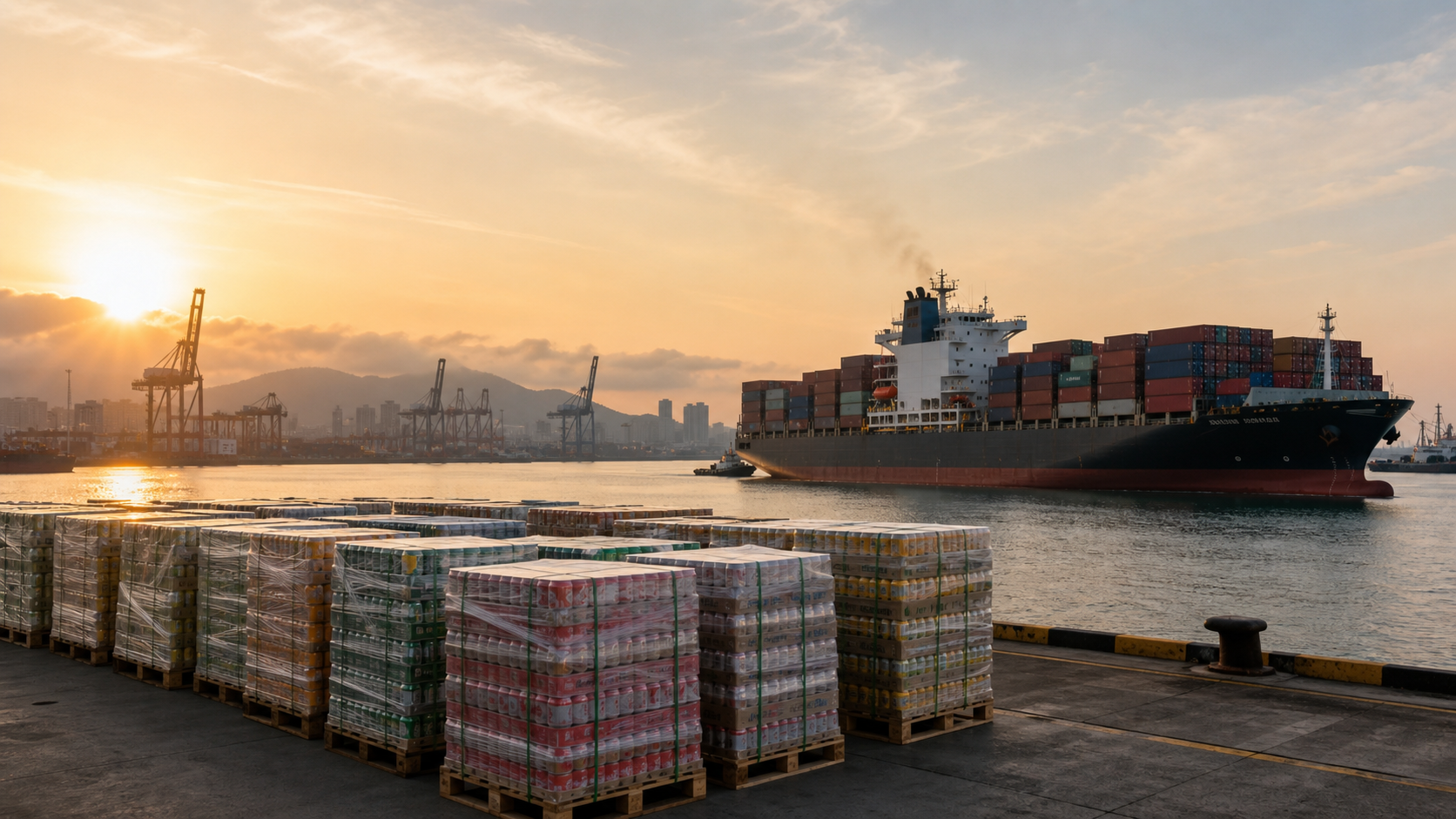
Use Vancouver for most West & Central Canada deliveries and Montreal for Quebec & Atlantic Canada. Transit times differ significantly between the two routes and by carrier service; confirm the latest schedules and transshipment points with the ocean carrier or forwarder before booking.
From Vietnam, common load ports include Cai Mep–Thi Vai and Cat Lai (Ho Chi Minh City area) for southern origin, and Hai Phong for northern origin. To Canada, the primary discharge ports are:
- Port of Vancouver (British Columbia) for Western Canada and rail to the Prairies and Ontario.
- Port of Montreal (Quebec) for Quebec and Atlantic Canada, with trucking or rail to regional DCs.
Some carriers may also route via Prince Rupert (for Western Canada) or via transshipment hubs before the Atlantic crossing to Montreal. Seasonal factors—including winter ice conditions in the St. Lawrence—can influence routing and reliability to Montreal.
| Routing option | Typical service & path | Best for | Key watchouts |
|---|---|---|---|
| Vietnam → Vancouver | Transpacific services via direct or single transshipment; rail to Calgary, Edmonton, Winnipeg, Toronto | Western Canada distribution; national programs staging in BC or moving inland by rail | Rail capacity swings; port exams/dwell can impact shelf life—build buffer time |
| Vietnam → Montreal | Transshipment, then North Atlantic to Montreal; truck/rail to Quebec & Atlantic provinces | French/English labeling launches, Quebec-focused listings, Atlantic coverage | Winter navigation constraints; seasonality affects schedules—confirm with carrier |
For market context and demand signals that can guide your destination-port choice, see the Canada beverage market overview.
How do transit time and remaining shelf life connect?
Remaining shelf life at arrival is the buyer’s first check: the product must still meet customer, retailer, or distributor minimums. Work backward from the required on-arrival shelf life to set your latest acceptable ship date and routing choice.
Use a simple framework to plan:
- Required remaining shelf life on arrival: Confirm retailer/distributor policy in writing (varies by product and channel).
- Total shelf life: Based on formulation and process (e.g., aseptic/UHT vs. hot-fill vs. chilled).
- Lead times before vessel: Production, cooling/curing (if applicable), QA release, booking, VGM/cut-off, port gate-in, and possible pre-carriage to the port.
- Ocean leg: Highly service-specific; confirm with the ocean carrier/forwarder for both Vancouver and Montreal services.
- Arrival & inland: CFIA/CBSA clearance, any examinations, terminal dwell, demurrage/detention risk, and inland rail/truck to consignee.
To protect shelf life on arrival:
- Choose the route with fewer transshipments when possible, especially for sensitive SKUs.
- Plan a realistic buffer for port exams, winter schedules to Montreal, and inland rail variability.
- Align processing method with logistics: shelf-stable ambient products generally tolerate longer routes better than refrigerated lines.
- Place data loggers to document temperature/humidity and support claims if issues arise.
What Incoterms make sense for Canadian beverage importers?
Most beverage shipments use terms where the importer controls Canadian customs clearance. FCA/FOB at origin or CFR/CIF to the Canadian port are common, with the importer as Importer of Record for CFIA/CBSA. DAP can also work if roles are clearly defined. DDP is less common due to tax registration and clearance responsibilities.
Consider these practical points:
- FCA/FOB (Origin): Buyer controls main carriage and Canadian arrival handling. Pros: visibility, carrier choice, and alignment with CFIA/CBSA processes. Cons: importer must manage more steps.
- CFR/CIF (Port Canada): Seller books ocean freight; buyer handles destination charges and clearance. Pros: predictable ocean cost. Cons: destination costs may vary; ensure clarity on who handles ACI/eManifest data.
- DAP (Consignee): Seller manages carriage to consignee’s site; buyer remains Importer of Record. Pros: simpler for the buyer’s logistics team. Cons: risk of misaligned destination fees if not specified.
- DDP (Consignee): Seller assumes import clearance and taxes. Pros: simplest for buyer. Cons: complex in Canada due to GST/PST/QST and importer obligations; use only with competent local representation.
Whichever term you choose, define Importer of Record, ACI/eManifest data submission, who pays destination charges, who appoints the customs broker, and responsibility for demurrage/detention. Align Incoterms with your Canadian partner’s compliance capacity and retailer onboarding timelines.
Do your drinks need reefer or can they move ambient?
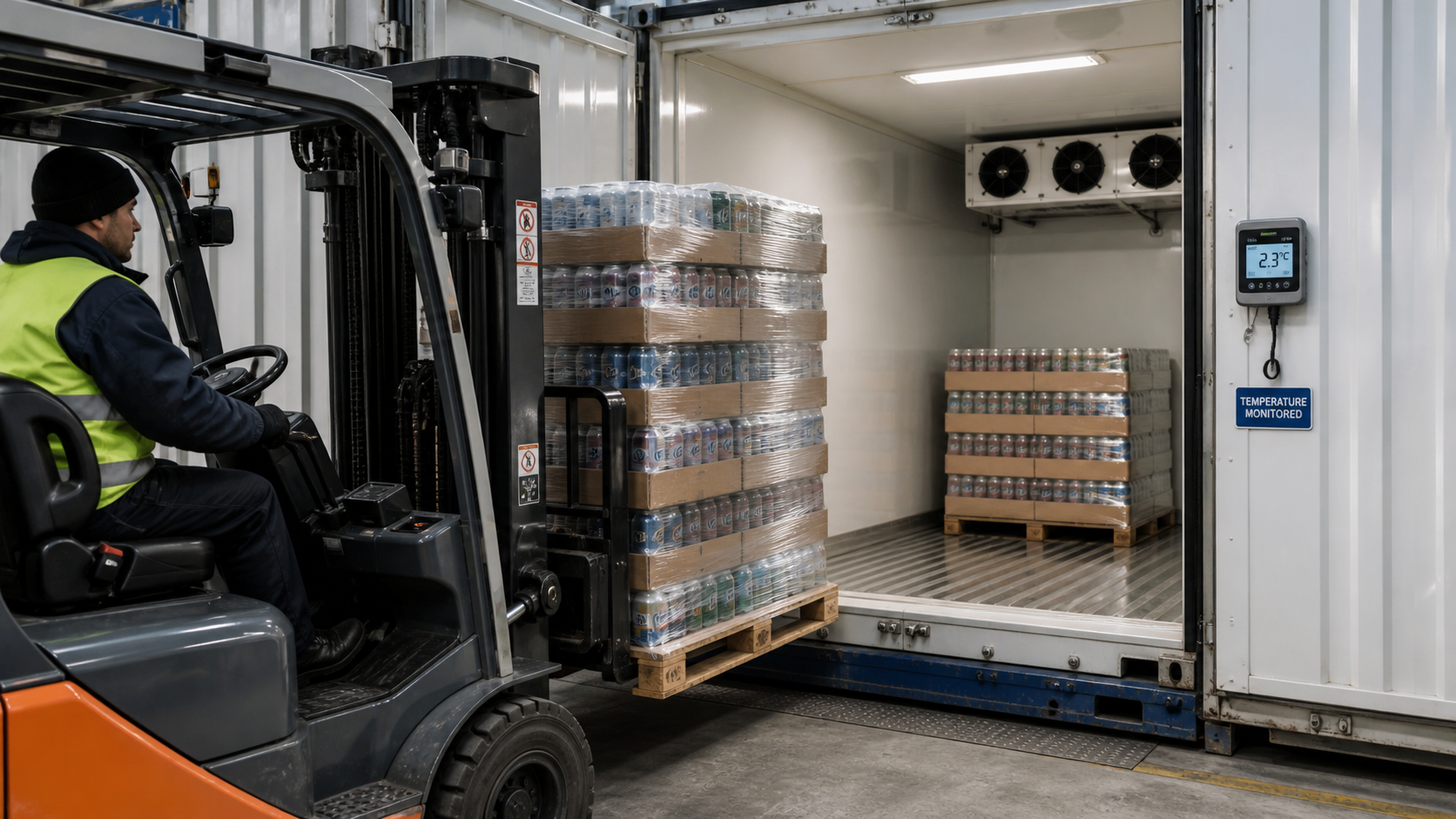
Shelf-stable beverages (e.g., aseptic, UHT, hot-fill with ambient storage) often ship safely in dry containers with good bracing and humidity control. Chilled, fresh, or short-code products generally require reefers. Ingredients like concentrates or NFC juices may be ambient or temperature-controlled depending on specification and packaging.
Key packaging & loading practices:
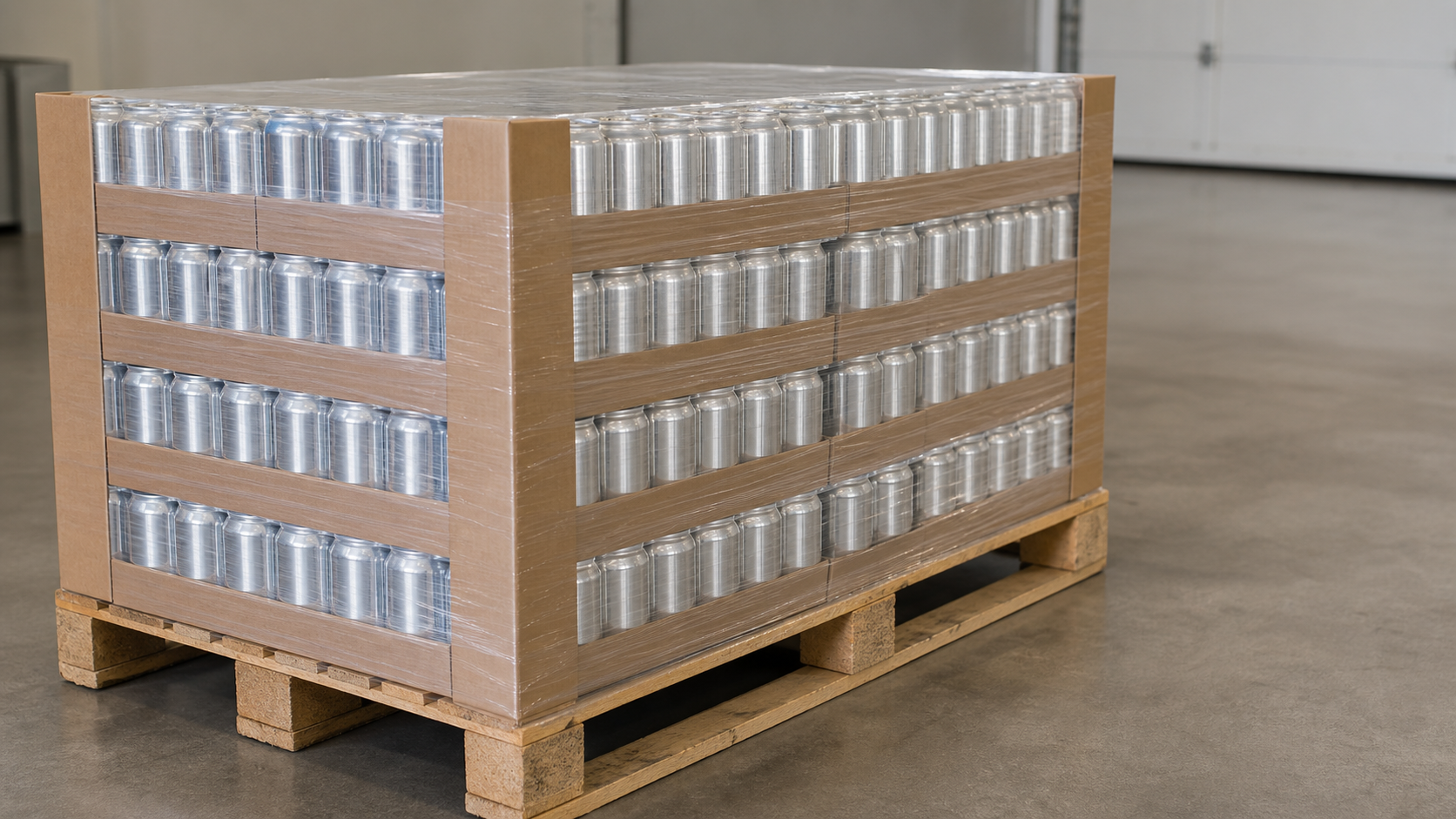
- Palletization: Export-grade pallets compliant with ISPM 15 if wood. Use corner boards, slip sheets, and tight stretch-wrap.
- Bracing: Airbags, load bars, or wooden blocking to prevent shift during ocean and rail segments.
- Moisture management: Desiccants/liners to control humidity for cans, labels, and cartons.
- Temperature monitoring: Data loggers inside cartons and, for reefers, place near the return air path.
- Cleanliness: Food-grade container inspection, odor-free and dry. Record pre-load photos.
For reefers, setpoint, ventilation, and defrost cycles should follow the product specification. For ambient loads, avoid container doors facing direct sun when possible during staging, and minimize dwell in high-heat conditions.
Canadian compliance checkpoints to clear CFIA and CBSA
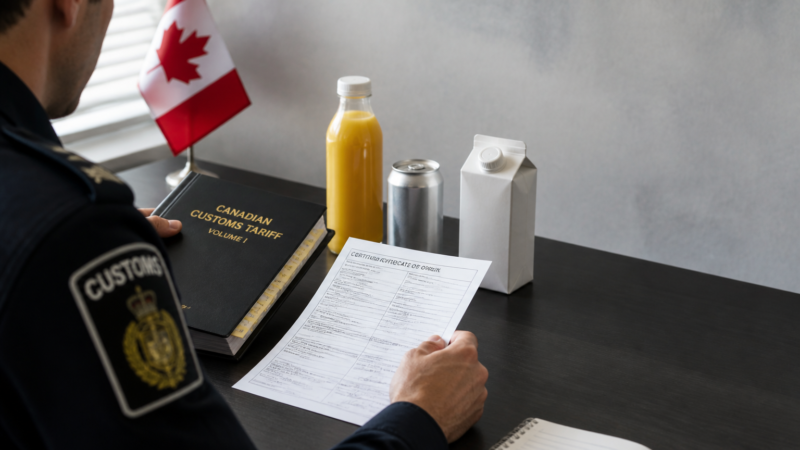
Non-alcoholic beverages imported into Canada are overseen by the Canadian Food Inspection Agency (CFIA) and cleared by the Canada Border Services Agency (CBSA). Importers typically need a Safe Food for Canadians (SFC) licence under the Safe Food for Canadians Regulations (SFCR) for food imports. Coordinate early with your Canadian partner’s customs broker.
- Documentation: Commercial invoice, packing list, ocean bill of lading, and accurate HS classification. Provide ingredients, processing method, and shelf life if requested by CFIA.
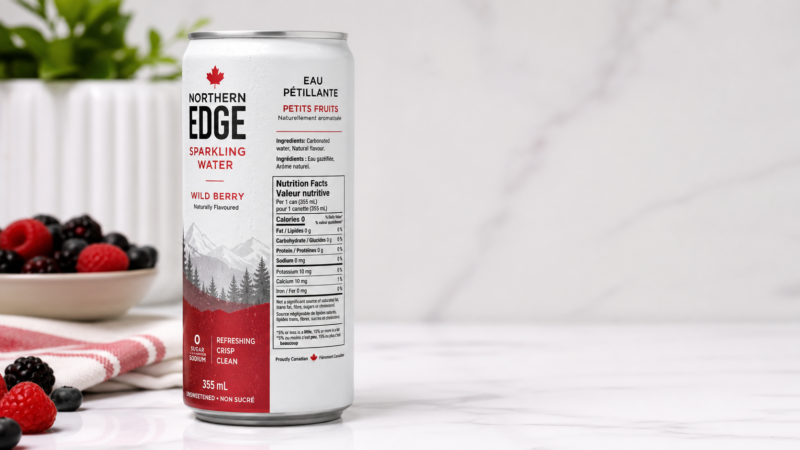
- Labeling: Bilingual (English/French) labels, metric units, Canadian-format Nutrition Facts, allergens, and country of origin. Some provinces apply container deposit-return fees or environmental handling charges.
- eManifest (ACI): Carriers must submit Advance Commercial Information for cargo entering Canada. Ensure data alignment to avoid holds.
- Broker coordination: Pre-arrange inspection location, CFIA hold procedures, and any lot sampling protocol to reduce dwell impacting shelf life.
For a deeper walkthrough of importer obligations, see how to import beverages into Canada step-by-step.
Cost and lead-time drivers specific to the Canada lane
End-to-end timing and landed cost vary by routing choice, equipment, seasonality, and destination terminal. Build a budget and schedule that reflect the following Canada-specific drivers.
- Port selection: Vancouver often provides stronger rail connectivity to the Prairies and Ontario; Montreal shortens the last mile for Quebec. Choose based on final DCs.
- Seasonal reliability: Winter operations on the St. Lawrence can affect Montreal schedules and berthing windows. Confirm service frequency with the carrier.
- Customs & CFIA exams: Holds, exams, and sampling add variable dwell. Plan buffer days to protect shelf life and factor potential exam fees into landed cost.
- Rail capacity & equipment: Peak seasons may constrain railcars, chassis, or reefer plugs at terminals/inland ramps.
- Demurrage/Detention: Clarify free-time terms at the destination terminal and for container detention on the inland leg.
- Taxes & fees: Expect 5% GST federally; provincial taxes/fees may apply, including deposit-return or environmental handling for beverage containers.
- Insurance: Consider cargo insurance suited to beverage risk (breakage, temperature abuse, moisture).
Planning your shipment timeline from Vietnam to Canada
Align operations, logistics, and compliance so your product arrives with sufficient shelf life and minimal surprises. The outline below helps structure responsibilities and checkpoints.
- Product readiness: Confirm formulation, processing (aseptic/UHT/hot-fill/chilled), stability data, and labeling compliant with Canadian requirements.
- Booking & cut-offs: Reserve equipment and space early. Share weight/dimensions, reefer needs (if any), and dangerous goods status (if applicable).
- Pre-shipment QA: Retain samples and COA where relevant. Record production and lot coding for traceability.
- Export steps: Container cleanliness inspection, VGM, customs export filing (Vietnam), and timely port gate-in.
- Ocean leg: Monitor vessel milestones and transshipment ETA updates. Keep the broker informed for ACI and pre-arrival CFIA steps.
- Arrival & clearance: Coordinate CBSA release, CFIA inspection holds, and terminal appointments. Watch demurrage thresholds.
- Inland to DC: Rail or truck to consignee; capture data logger reports and arrival condition photos.
For category-specific logistics notes on a popular SKU, see guidance on importing coconut water from Vietnam.
Information for beverage brands and buyers
Turning logistics choices into commercial outcomes requires cross-functional alignment. A few practical considerations for Canada:
- Route-to-shelf strategy: If launching first in Quebec, shipping to Montreal may improve freshness at DC intake and reduce bilingual label changeovers.
- Pallet & case optimization: Match pallet height and case count to Canadian DC and retailer guidelines to minimize rework.
- Code dating: Use clear, bilingual, Canadian-formatted date codes (e.g., YYYY-MM-DD if policy requires) and ensure they are legible after ocean transit.
- Forecasting: Pair a conservative shelf-life buffer with rolling forecasts to keep safety stock in Canada without excess expiry risk.
FAQ: shipping beverages from Vietnam to Canada
Do I need an SFC licence to import beverages?
Importers of foods generally require a Safe Food for Canadians (SFC) licence under the SFCR. Your customs broker can confirm applicability based on product category and processing method.
Which port should I choose—Vancouver or Montreal?
Pick the port closest to your main DCs. Vancouver typically suits Western & Central Canada with rail inland; Montreal suits Quebec and Atlantic Canada. Confirm service reliability and seasonality with your carrier.
What taxes apply at import?
A federal 5% GST applies, and some provinces have additional taxes or container-related fees. Your broker can advise based on consignee location and product type.
Do I need a reefer for shelf-stable drinks?
Often no, if the product is truly ambient-stable and packaged appropriately. Follow your product specification; consider reefers for chilled or short-code items, and use data loggers for any sensitive SKUs.
Are wood pallets acceptable?
Yes, provided they comply with ISPM 15. Many shippers use heat-treated, stamped pallets; verify retailer DC requirements in Canada.
Conclusion
For shipping beverages from Vietnam to Canada, the big levers are port selection (Vancouver vs. Montreal), alignment with CFIA/CBSA & SFCR requirements, and a schedule that protects remaining shelf life upon arrival. Lock in responsibilities via clear Incoterms, document your temperature/humidity controls, and build a modest buffer for exams and inland variability.
To continue planning, explore the Canada beverage market overview and the operational steps in how to import beverages into Canada. For category nuances, review practical notes on importing coconut water from Vietnam. And always confirm current ocean schedules and transit time with your carrier or forwarder before you book.