


 Français
 Español
 العربية
 한국어
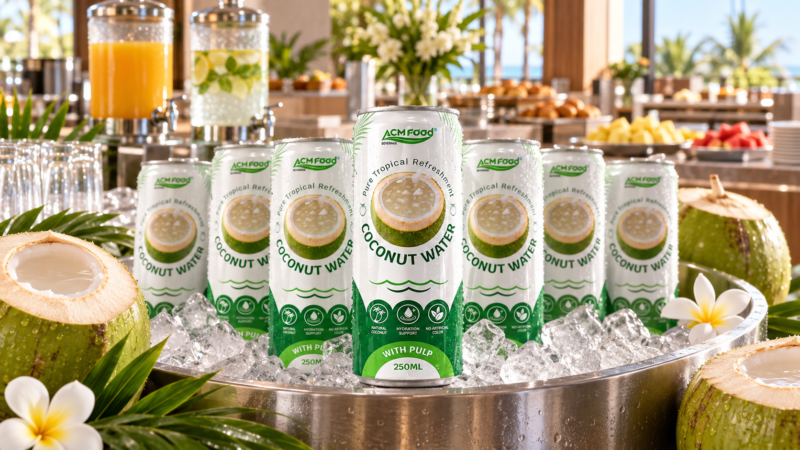
한국어Buying coconut water cans in bulk through OEM, ODM or private label lets you sell coconut water under your own brand without owning a factory. Key decisions are coconut origin, pure or flavoured formula, can size (often 250–330 ml), sugar level, certifications, shelf life and minimum order quantity per SKU.
The global beverage market has changed significantly over the last decade. Consumers are paying closer attention to ingredients, sugar content, and the source of their drinks. As a result, coconut water has moved far beyond its original niche and become a mainstream beverage category in supermarkets, convenience stores, gyms, hotels, and food service channels across many countries.
For importers, distributors, retailers, and beverage brand owners, coconut water cans represent an attractive opportunity. They offer convenience, long shelf life, efficient transportation, and growing consumer demand. At the same time, launching a coconut water product can be challenging without the right manufacturing partner.
This is where Vietnam has become a preferred sourcing destination. With abundant coconut-growing regions, modern beverage factories, and flexible OEM, ODM, and private label services, Vietnamese manufacturers help businesses bring coconut water products to market faster and more cost-effectively.
Consumer demand for healthier beverages is not slowing down. According to multiple industry reports, the global coconut water market has experienced consistent growth driven by demand for natural hydration and lower-calorie alternatives to carbonated soft drinks.
What makes coconut water attractive to consumers? The answer is relatively simple. Natural coconut water contains electrolytes such as potassium, magnesium, calcium, and sodium. Many consumers view it as a refreshing drink suitable for active lifestyles, sports recovery, and everyday hydration.
Canned coconut water adds another layer of convenience. Unlike fresh coconuts, which require preparation and have a limited shelf life, canned products can be stored, transported, and displayed easily. A 330ml or 500ml can fits naturally into modern retail channels and vending systems.
For distributors, this convenience translates into lower handling costs and broader market opportunities.
Why importers choose Vietnam for coconut water production

Vietnam is among the world’s leading coconut-producing countries. Provinces such as Ben Tre, Tra Vinh, and Tien Giang provide a stable supply of young coconuts throughout the year.
From my experience working with beverage sourcing projects, buyers often focus only on product pricing. However, raw material availability is equally important. A manufacturer may offer attractive pricing today, but without reliable coconut supply, consistency becomes difficult during peak seasons.
Vietnam’s coconut industry helps reduce that risk.
Many beverage factories operate close to coconut-growing regions, allowing coconuts to be processed shortly after harvesting. This helps preserve flavor quality while supporting large-scale production.
In addition, Vietnam benefits from established export infrastructure. Major ports connect manufacturers to North America, Europe, the Middle East, Australia, and Asia, making international shipments more efficient.
Understanding OEM, ODM, and private label coconut water solutions
Many buyers encounter these three terms during supplier discussions. While they are related, they serve different business goals.
OEM coconut water manufacturing
OEM, or Original Equipment Manufacturing, is suitable for businesses that already have a clear product concept.
In this model, the buyer typically provides product specifications, branding guidelines, packaging requirements, and sometimes flavor profiles. The manufacturer handles production according to those requirements.
For example, a beverage importer may request:
- 100% pure coconut water
- 330ml slim cans
- English and French labels
- Specific nutritional targets
- Custom packaging design
The factory produces the product based on those specifications while the buyer owns the brand.
OEM works well for established beverage companies seeking greater control over product positioning.
ODM coconut water development
ODM, or Original Design Manufacturing, is often the faster route for new market entrants.
Instead of developing everything from scratch, buyers can choose from formulations already developed by the manufacturer. The factory may offer multiple coconut water variations, including:
- Pure coconut water
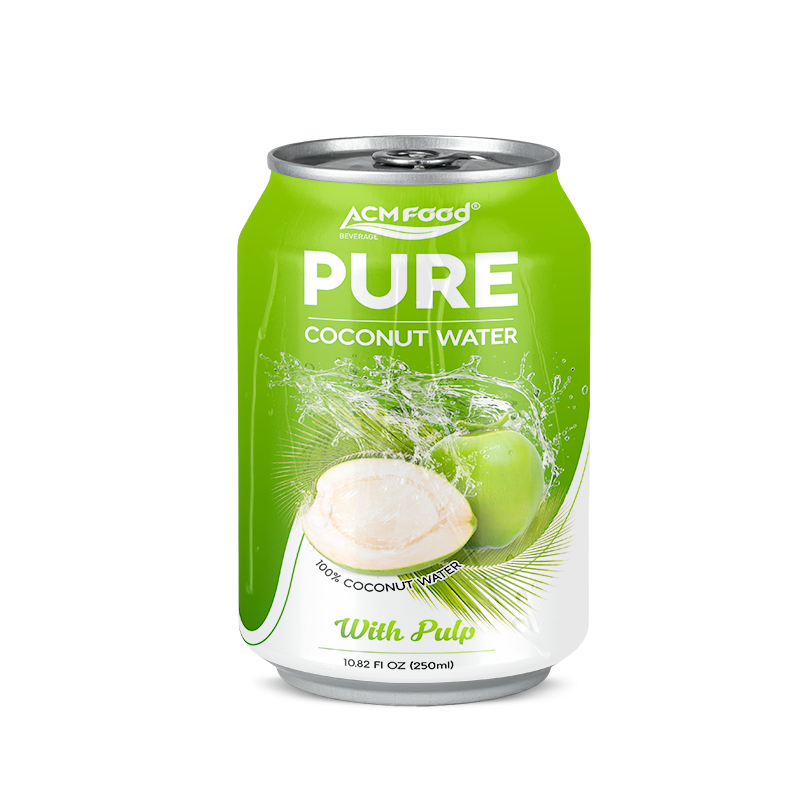
- Coconut water with pulp
- Coconut water with tropical fruit flavors
- Low-calorie formulations
- Functional beverage blends
The buyer then customizes branding and packaging while leveraging the factory’s existing product expertise.
This approach reduces development time and lowers initial investment.
Private label coconut water cans
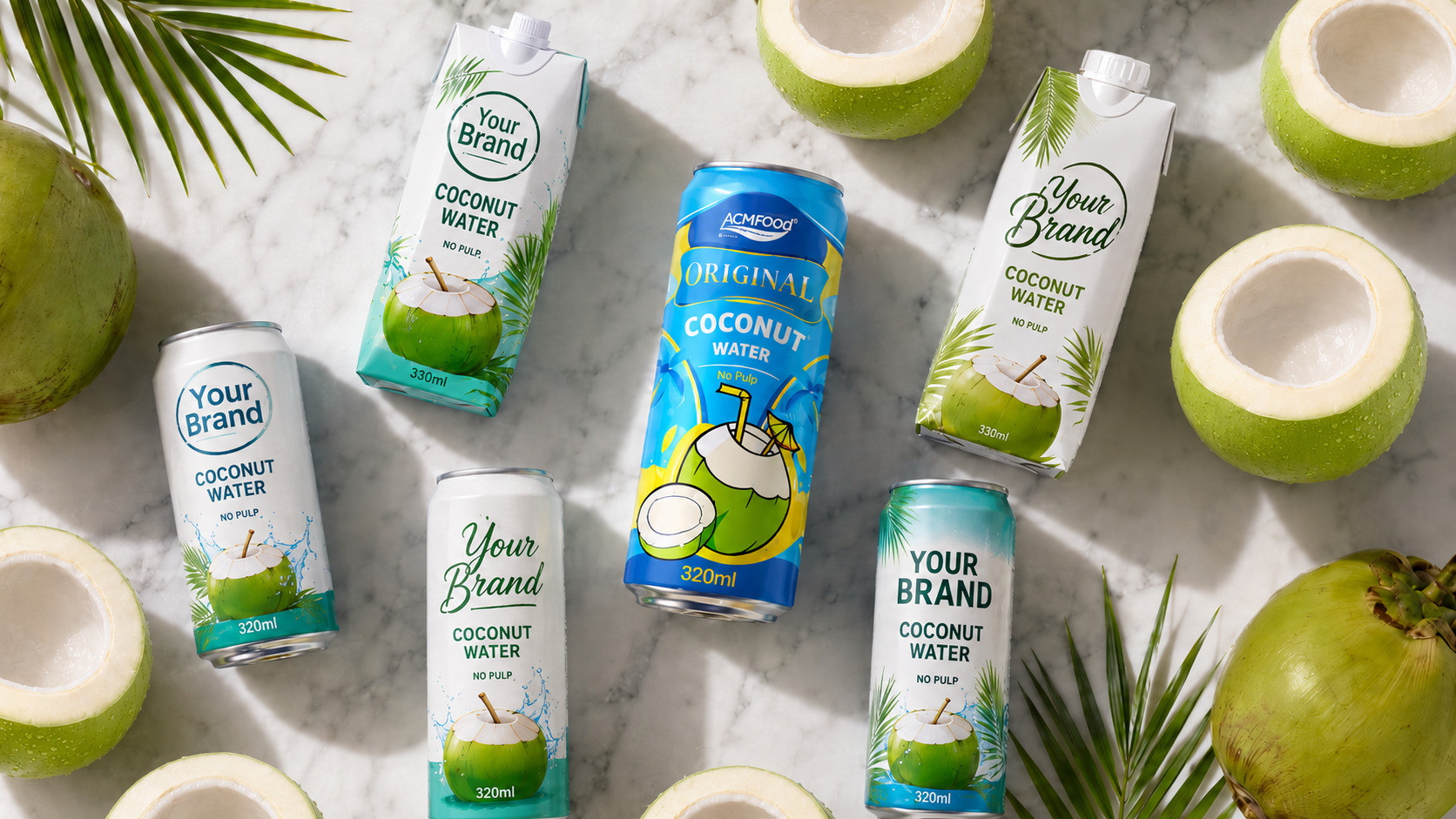
Private label services are particularly attractive for supermarket chains, distributors, wholesalers, and e-commerce brands.
The concept is straightforward. The manufacturer produces a proven coconut water product while the buyer applies their own brand identity.
Private label programs allow businesses to launch products quickly without investing heavily in research, formulation development, or production facilities.
For many first-time beverage brands, private label represents the lowest-risk entry strategy.
What coconut water products can be customized?
One of the biggest misconceptions is that coconut water is simply coconut water. In reality, modern beverage manufacturing offers substantial flexibility.
Today’s buyers often request product customization based on target markets, consumer preferences, and retail positioning.
Coconut water concentration options
The most common option is 100% natural coconut water. However, manufacturers may also produce coconut water beverages blended with fruit juices or natural flavors.
Some markets prefer pure formulations, while others show stronger demand for flavored products.
Popular flavor combinations include:
- Mango
- Pineapple
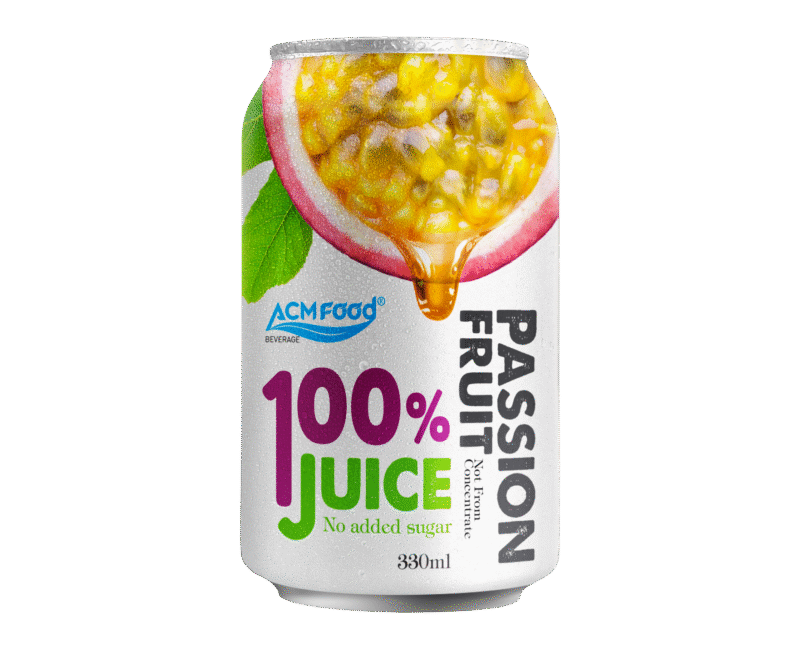
- Passion fruit
- Calamansi
- Lychee
- Watermelon
The ideal choice depends on local consumer behavior and retail trends.
Packaging formats
Although this article focuses on coconut water cans, buyers often compare several packaging options before making a decision.
Common formats include:
- 250ml cans
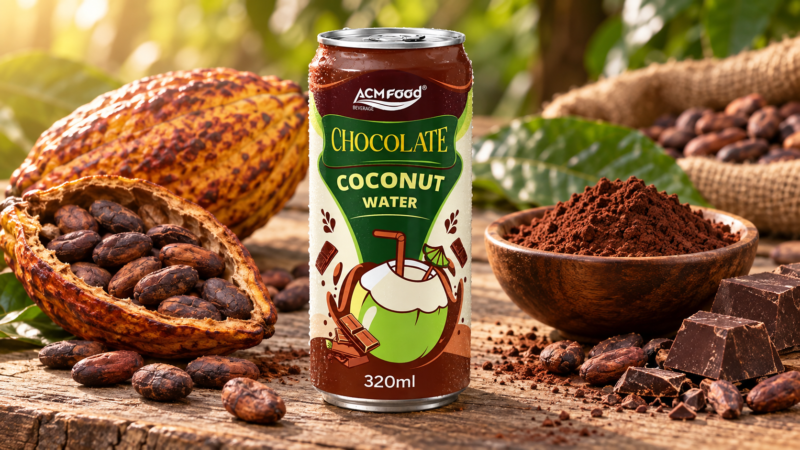
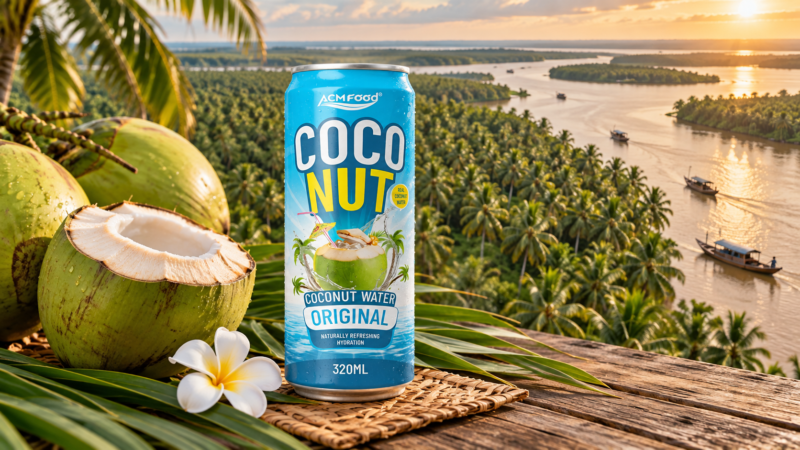
- 320ml cans
- 330ml slim cans
- 500ml cans
- Tetra Pak cartons
- PET bottles
Among these, 330ml slim cans remain one of the most requested formats due to their balance between convenience, shelf presence, and logistics efficiency.
Label and branding customization
Private label buyers typically customize:
- Product name
- Logo
- Label design
- Language requirements
- Nutrition panel
- Barcode
- Regulatory information
This flexibility allows brands to maintain a consistent identity across multiple product categories.
Quality standards international buyers should expect
When sourcing coconut water cans internationally, quality assurance should never be treated as an afterthought.
A reliable manufacturer should be able to provide documentation supporting production standards and export compliance.
Depending on target markets, buyers commonly request certifications such as:
- HACCP
- ISO 22000
- BRCGS
- FDA registration
- Halal certification
- Kosher certification
These certifications help facilitate market access and build confidence among distributors and retailers.
Beyond certificates, buyers should also evaluate laboratory testing procedures, traceability systems, and production controls.
A supplier that can explain their quality process in detail usually demonstrates stronger operational maturity.
Shelf life and export considerations
One question appears in almost every sourcing discussion:
How long can canned coconut water remain stable during international transportation?
The answer depends on formulation, packaging technology, and processing methods.
Most export-grade coconut water cans offer shelf lives ranging from 12 to 24 months when stored under recommended conditions.
This extended shelf life creates several advantages.
Importers can maintain inventory without excessive waste. Retailers gain more flexibility in stock management. Distributors can ship products over longer distances without compromising product quality.
For markets with extended logistics routes, this becomes particularly valuable.
How to choose the right coconut water manufacturer
Not all suppliers are equally prepared for international business.
A factory may have strong production capacity but limited export experience. Another may offer attractive pricing while struggling with documentation or communication.
When evaluating manufacturers, buyers should look beyond the quotation sheet.
Ask questions about annual production volume. Request product samples. Review certification documents. Evaluate response times. Understand lead times for production and shipping.
I often recommend that buyers request a video factory tour before placing larger orders. It provides a clearer picture of production conditions and operational scale.
Consistency is usually more valuable than finding the lowest possible price.
Minimum order quantities and production planning
MOQ requirements vary depending on packaging format, customization level, and manufacturing setup.
For private label coconut water cans, minimum order quantities often start from one container load, although some manufacturers offer lower trial quantities for new customers.
Businesses planning long-term partnerships should discuss annual volume projections early in the process.
This allows manufacturers to secure raw materials, optimize production schedules, and potentially provide more competitive pricing.
Good planning often results in better commercial terms for both parties.
Emerging opportunities in the coconut water category
The coconut water market continues to evolve.
Consumers increasingly seek beverages that combine natural ingredients with functional benefits. As a result, new product concepts are appearing across global markets.
Examples include:
- Coconut water with vitamins
- Coconut water energy drinks
- Sparkling coconut beverages
- Coconut water with collagen
- Coconut water blended with botanical extracts
These niche segments may not yet represent the majority of sales, but they offer interesting opportunities for brands seeking differentiation.
For importers entering competitive retail environments, product innovation can create a meaningful advantage.
Why private label coconut water cans can accelerate brand growth
Building a beverage manufacturing facility requires significant investment, technical expertise, regulatory approvals, and operational management.
Private label production removes many of these barriers.
Instead of spending years developing infrastructure, brands can focus on sales, marketing, distribution, and customer relationships.
This model allows businesses to test market demand, launch products faster, and scale production as sales increase.
For many distributors and retailers, that flexibility makes a substantial difference during the early stages of brand development.
The demand for coconut water cans continues to grow across retail, food service, hospitality, and health-focused beverage channels worldwide. Consumers appreciate the natural hydration, convenient packaging, and clean-label appeal, while distributors value the product’s export-friendly characteristics and broad market potential.
Vietnam offers several advantages for businesses sourcing coconut water in bulk. Strong coconut supply chains, experienced beverage manufacturers, international certifications, and flexible OEM, ODM, and private label services make the country an attractive production hub.
Whether you are launching a new beverage brand, expanding an existing product portfolio, or seeking a reliable manufacturing partner, working with an experienced Vietnamese coconut water producer can help reduce development time, maintain product quality, and support long-term business growth in an increasingly competitive market.