


 Français
 Español
 العربية
 한국어
한국어Coconut water for foodservice means coconut water supplied in formats and quantities suited to hotels, restaurants, cafés, gyms and caterers, rather than single bottles for retail shoppers. Operators use it as a drink sold by the unit, as a base for smoothies, mocktails and juices, and as an ingredient in kitchens. Choosing it well depends on the venue: a hotel minibar, a busy café and a gym fridge need different pack sizes, styles and supply arrangements.
This guide covers how each type of venue uses coconut water, which pack formats and product styles fit which use, how to evaluate a supplier, and what to consider for a private label foodservice range. It does not quote prices or order quantities, because those depend on the product, packaging, destination and agreement with each supplier.
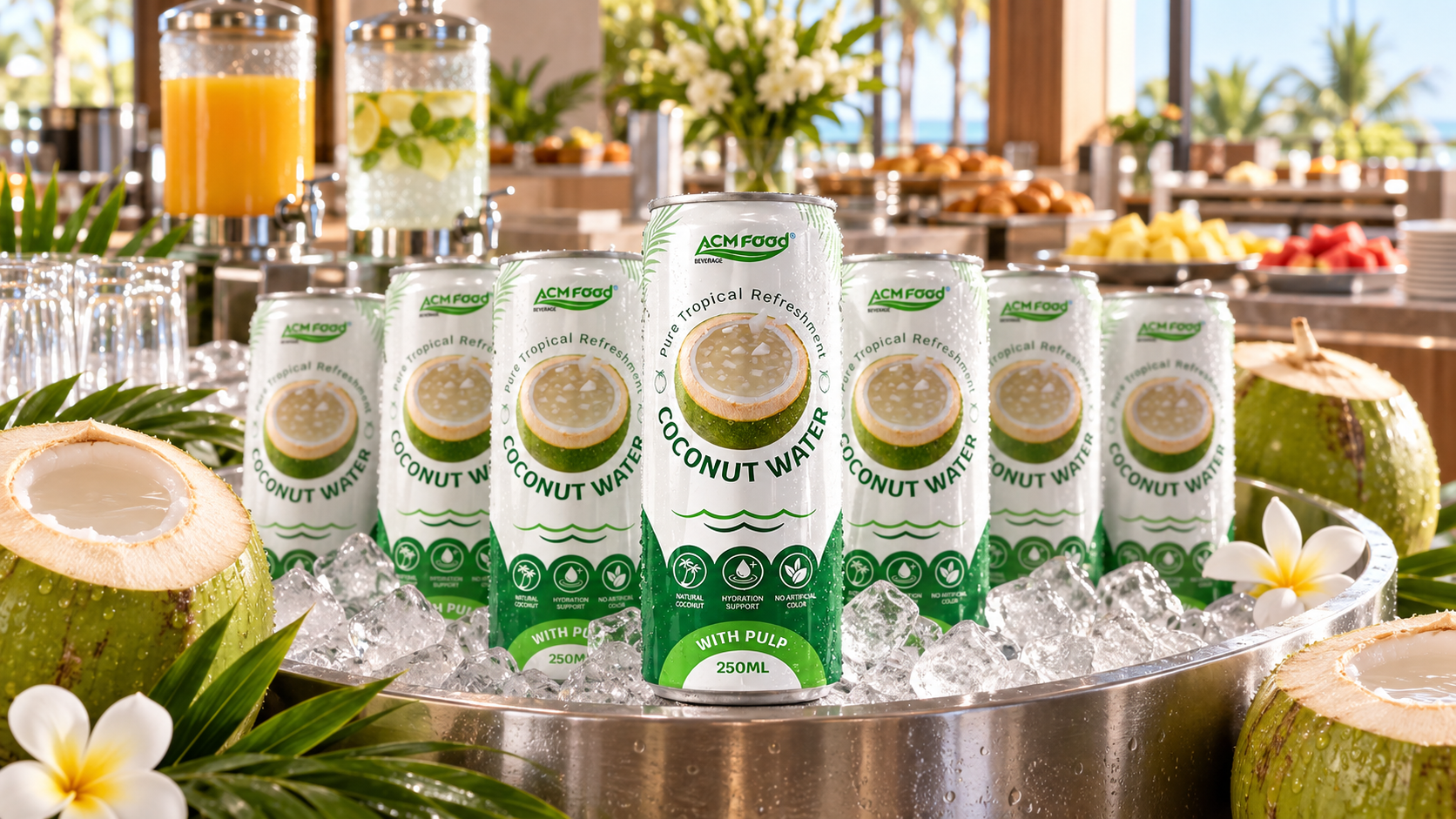
Operators add coconut water because guests increasingly look for lighter, natural-tasting drinks, and coconut water works both as a ready-to-sell product and as a versatile ingredient. A single product can appear in the fridge, on the drinks menu and in the kitchen, which makes it easier to justify shelf space.
Typical reasons venues give for stocking it:
- Menu variety: it offers a non-alcoholic, non-carbonated choice alongside juices, soft drinks and bottled water.
- Recipe flexibility: baristas and bartenders use it in smoothies, iced coffee, mocktails and cocktails.
- Guest expectations: travellers, especially in resort destinations, often expect tropical drinks to be available.
- Simple handling: shelf-stable packs are easy to store and chill, with no preparation needed.
How do hotels, cafés and gyms use coconut water differently?
Each venue type has its own service style, so the right product and pack size change from one to another.
Coconut water for hotels and resorts
Hotels use coconut water in several places at once: minibars, breakfast buffets, pool bars, spa lounges, room service and banqueting. Single-serve cans or bottles suit minibars and pool service, where presentation and convenience matter. Breakfast buffets and spa areas often use larger packs poured into dispensers or carafes. Resorts in tropical locations may also serve fresh whole coconuts as a signature item, with packaged coconut water as the consistent everyday option behind the bar.
Coconut water for cafés and juice bars
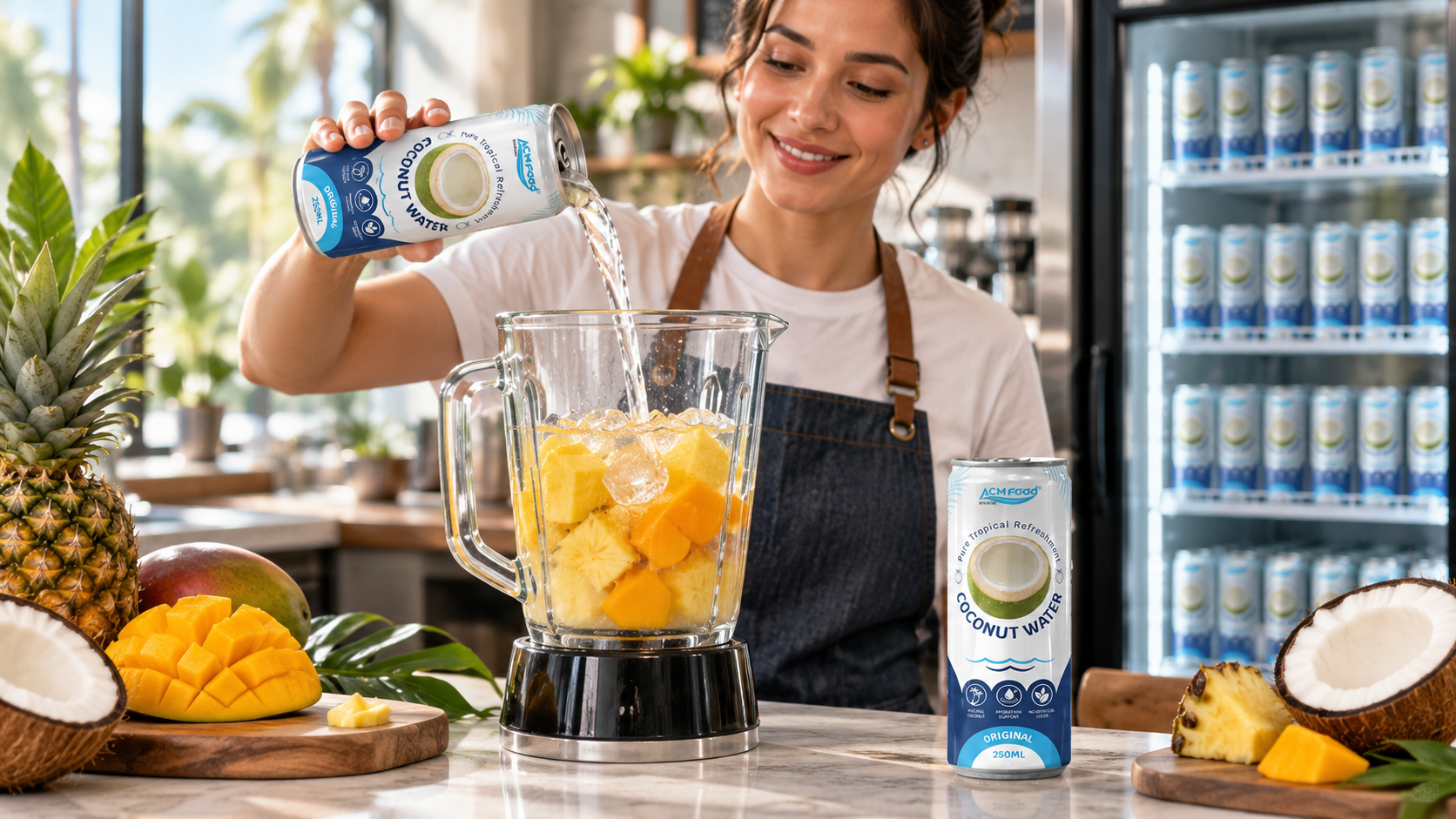
Cafés mainly use coconut water as an ingredient. It appears in smoothies, cold-pressed style juice blends, iced coffee drinks such as coconut cold brew, matcha drinks and bowls. For these uses, larger packs reduce waste and opening time, while a small range of single-serve cans in the grab-and-go fridge captures take-away customers. Flavour consistency matters, because a recipe built on one coconut water may taste different with another.
Coconut water for gyms and fitness venues
Gyms, studios and sports clubs usually sell coconut water as a ready-to-drink item from a fridge or front desk, and sometimes use it in post-workout shakes at an in-house bar. Single-serve packs that are easy to grab, open and carry are the norm. Guests often read labels closely here, so a clear ingredient list matters. Venues should avoid presenting coconut water as a recovery or medical product; it is a beverage that contains natural minerals and sugars, not a substitute for specialised sports nutrition advice.
Restaurants and catering
Restaurants list coconut water as a soft drink, use it in mocktails and occasionally in cooking, for example in Southeast Asian braises or desserts. Caterers and event companies value packs that are easy to transport and serve at scale, and appreciate products that look attractive when presented on ice.
Which coconut water formats work best for foodservice?
The best format depends on whether the coconut water is sold as a unit or poured as an ingredient. The table below matches common pack types to venue needs in general terms.
| Format | Best suited to | Strengths | Points to consider |
|---|---|---|---|
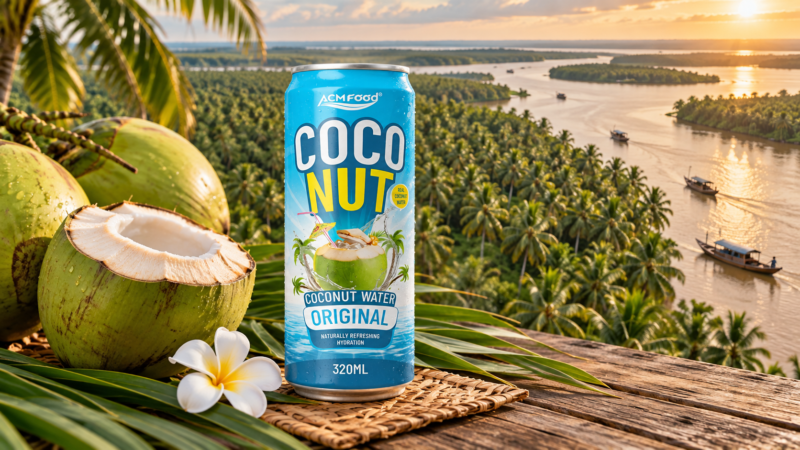
| Slim or sleek cans (single serve) | Minibars, gym fridges, grab-and-go | Chill fast, stack well, protect against light | Glass or cup needed for poured service |
| Standard cans (single serve) | Cafés, pool bars, catering | Familiar format, good value per serve | Fridge space planning |
| PET bottles (single serve) | Take-away, events, sports venues | Resealable, lightweight | Less protection from light than cans |
| Larger PET bottles | Café and bar ingredient use, buffets | Fewer openings, less packaging waste | Must be refrigerated and used promptly once opened |
| Fresh whole coconuts | Resort signature service | Strong visual appeal | Short life, labour to open, variable supply |
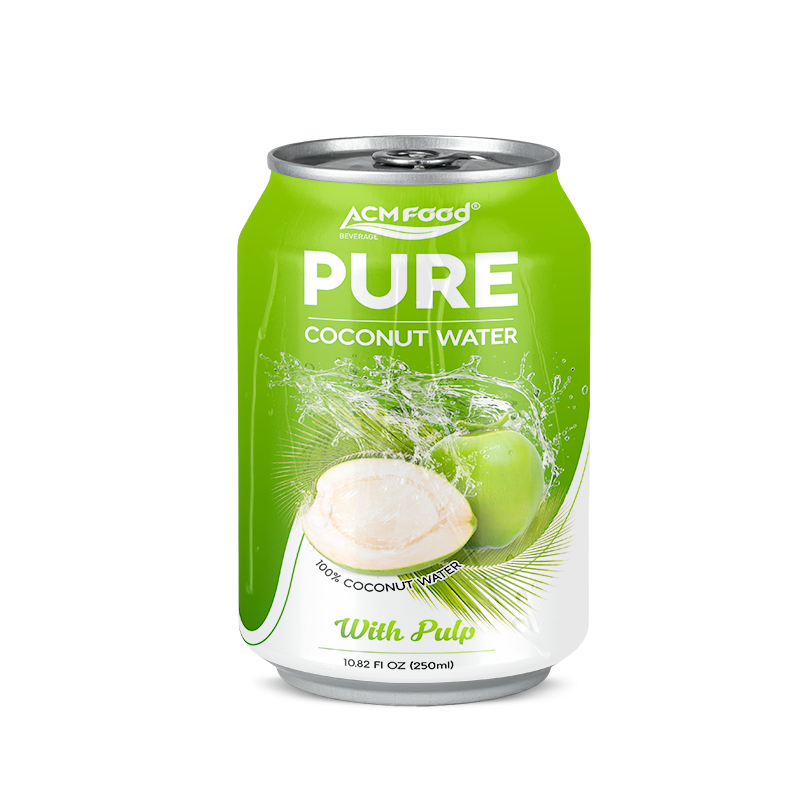
Product style matters as much as pack size. Original 100% coconut water is the most versatile for recipes. Coconut water with pulp adds texture that guests often enjoy as a stand-alone drink; our article on how coconut water with pulp adds value explains why. Flavoured and sparkling styles help a menu stand out, and our look at sparkling coconut water trends for distributors covers that segment.
What should you look for in a foodservice coconut water supplier?
Look for consistent taste, reliable documentation, packaging that fits your venues, and a supply arrangement that matches your volumes and storage. A good supplier makes the product easy to use at every outlet, not just good in a sample.
A practical evaluation checklist:
- Taste consistency: ask for samples from more than one batch and test them in your actual recipes, not only on their own.
- Product range: check whether the supplier offers the styles you need, such as original, with pulp, flavoured or sparkling, and in which pack sizes.
- Shelf life and storage: confirm how long products keep, whether they need refrigeration before opening, and how they should be stored once delivered.
- Documentation: request specifications, ingredient lists, certificates and test reports relevant to your market. Our coconut water sourcing preparation guide lists the documents importers commonly request.
- Labelling: make sure labels meet the language and regulatory requirements of the country where the product will be served or sold.
- Supply model: clarify ordering, delivery frequency and whether supply goes through an importer, distributor or directly from the manufacturer.
- Support: ask whether the supplier can provide samples, recipe suggestions or product information for staff training.
How to plan quantities and storage for coconut water
Planning starts with how the venue actually uses coconut water. A unit-sale product is forecast by the number of drinks sold, while an ingredient product is forecast by the recipes that use it and the volume each recipe needs. Mixing the two in one estimate often leads to over-ordering one format and running out of the other.
A simple approach many operators follow:
- List every place coconut water appears: fridges, minibars, drinks menu, smoothie recipes, cocktails and kitchen dishes.
- Estimate weekly use for each place, separating single-serve packs from bulk packs.
- Check storage space for both ambient stock and chilled stock, since cans and bottles need fridge space before service.
- Agree a reorder point with the supplier or distributor that leaves a buffer for busy periods, holidays and delivery delays.
- Review sales and waste after a few weeks and adjust the mix of formats and flavours.
Seasonality matters as well. Resorts and venues in warm climates often see higher demand in peak travel months, and gyms may see changes around the start of the year. Tracking these patterns helps a venue order enough stock without tying up storage space or risking products approaching the end of their shelf life.
Should foodservice groups consider private label coconut water?
Private label makes sense for hotel groups, café chains and caterers that want a consistent product across many outlets and a brand that reflects their own identity. It is usually less practical for a single venue with modest volumes, which is often better served by an established product through a local distributor.
Reasons groups choose a private label coconut water:
- Brand experience: a coconut water carrying the hotel or café brand reinforces the guest experience in rooms, lounges and take-away fridges.
- Specification control: the group can set the style, sweetness, pack size and label wording that suit its menus.
- Consistency: one product across all locations simplifies recipes, training and purchasing.
A private label project needs a clear brief covering product style, pack format, label design, target markets, documentation and planned volumes. Our overview of premium coconut water OEM and private label explains how such projects are usually structured. Minimum order quantities, lead times and costs vary by supplier and specification, so confirm them directly rather than relying on general figures.
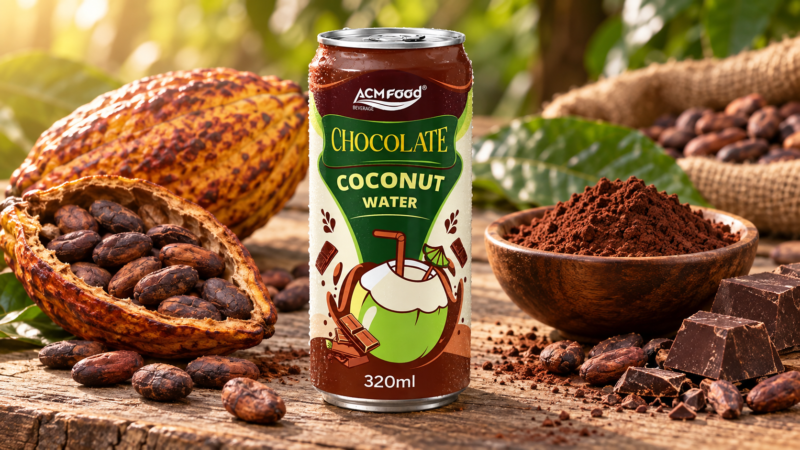
ACMFOOD produces coconut water in canned and PET formats, including original, with pulp, flavoured and sparkling styles, for importers, distributors and brand owners. Foodservice groups can discuss specifications and private label options, with details confirmed for each project.
Practical tips for serving coconut water in a venue
Good handling keeps coconut water tasting fresh and reduces waste. Most issues in venues come from temperature and opened-pack management rather than the product itself.
- Serve it cold: chill packs well before service, as coconut water tastes flatter when warm.
- Label opened packs: mark the opening time on large bottles used behind the bar and follow the label guidance for use after opening.
- Rotate stock: use first-in, first-out so older stock is served before newer deliveries.
- Describe it accurately: menu wording such as “100% coconut water” or “coconut water with pulp” should match the product used.
- Avoid health claims: describe taste and origin rather than claiming medical or performance benefits.
FAQ about coconut water for foodservice
Which pack size is best for a café?
Most cafés use larger bottles for recipes such as smoothies and iced drinks, plus a small range of single-serve cans for the take-away fridge. The right mix depends on how many drinks use coconut water each day.
Can coconut water be used in cocktails and mocktails?
Yes. Its light sweetness works well with rum, gin, tequila and fruit juices, and it makes a refreshing base for alcohol-free drinks. Original 100% coconut water gives bartenders the most control over flavour.
Does coconut water need refrigeration in a hotel minibar?
Shelf-stable products do not need refrigeration before opening, but guests expect them cold, so minibars and fridges should keep them chilled. Always follow the storage instructions on the label.
How do I find a coconut water supplier for my venue?
Start with local distributors for established products. Hotel groups and chains with larger volumes can also work with manufacturers or importers directly; our page on coconut water supply, OEM and wholesale explains the options.
Conclusion
Coconut water for foodservice works best when the format matches the venue: single-serve cans or bottles for minibars, gyms and take-away, larger packs for cafés and bars that use it as an ingredient, and a consistent product across outlets for groups and chains. Taste consistency, documentation, storage guidance and accurate menu wording matter as much as price.
If you are planning coconut water for a hotel group, café chain or catering business, ACMFOOD can review your requirements for product style, pack format, labelling and private label options, and provide samples for testing in your own recipes.