


 Français
 Español
 العربية
 한국어
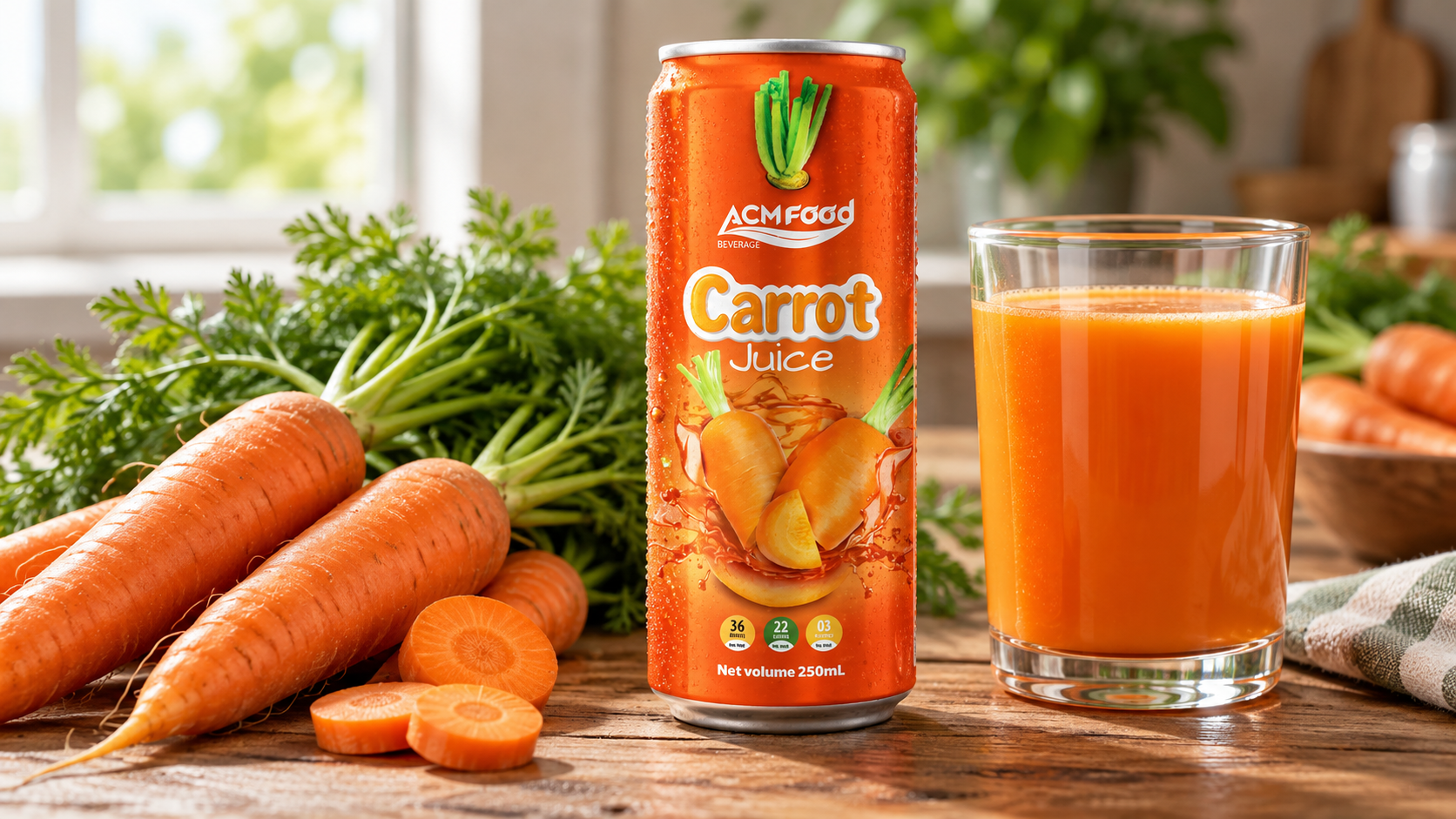
한국어Carrot juice OEM is a manufacturing arrangement in which a factory develops, produces and packs carrot juice under your brand, using a formula, format and label agreed with you. For a brand owner, it removes the need to build a processing plant while keeping control over the recipe, positioning and packaging that customers see on the shelf.
This guide explains which carrot juice formats you can develop, why carrot behaves differently from most fruit juices in production, what a manufacturer needs in your product brief, and how to compare OEM partners. ACMFOOD, a beverage manufacturer in Vietnam, produces carrot juice for private label clients, and the practical points below reflect the questions buyers raise when they start a project.
What does carrot juice OEM involve?
Carrot juice OEM covers everything from turning your product idea into a stable formula to delivering finished, labelled cans or bottles ready for export. The manufacturer supplies the processing know-how, raw material sourcing and production lines, while you own the brand and decide the market positioning.
In practice, the arrangement usually sits on a spectrum. At one end, you take an existing recipe and only change the label, which is often called white label. At the other end, the factory builds a new formula to your specification, which is closer to ODM or full custom development. Most carrot juice projects fall in between: a proven base recipe adjusted for juice content, sweetness, blend partners and pack size.
The key point for buyers is that carrot juice is not a simple copy-and-paste product. Its low natural acidity, strong colour and tendency to separate mean the processing route has to be chosen together with the recipe, not after it.
Which carrot juice formats can you develop?
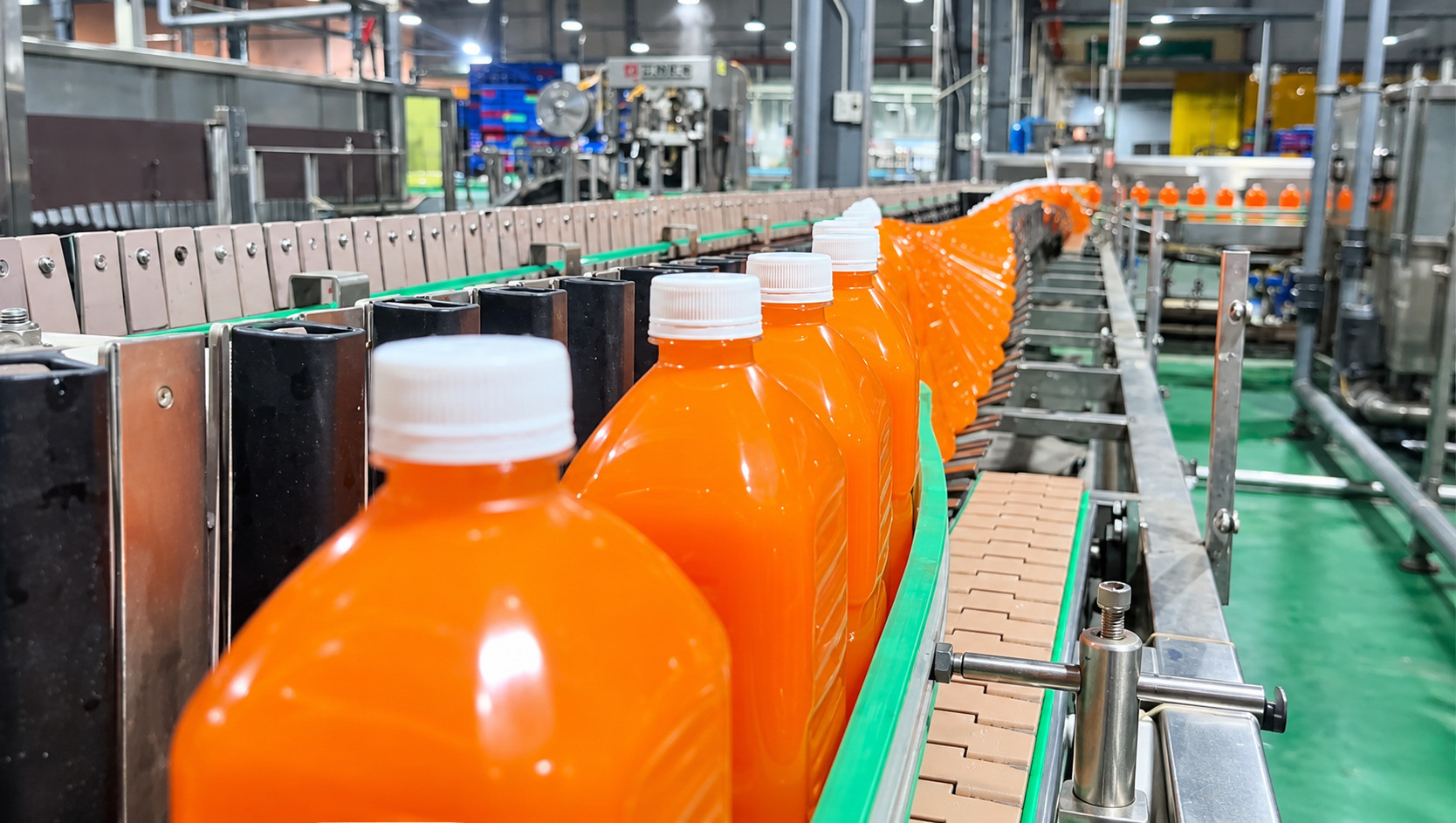
You can develop pure carrot juice, carrot blends with fruit or other vegetables, and lighter carrot juice drinks, and each format suits a different price point and consumer. The right choice depends on your target market, the taste profile your customers expect and how you want to position the product against existing brands.
| Format | Typical composition | Positioning & notes |
|---|---|---|
| 100% carrot juice | Carrot juice only, sometimes with an acidulant for processing | Premium, vegetable-forward taste; the most demanding format to stabilise because acidity stays low |
| Carrot and fruit blend | Carrot combined with juices such as orange, apple, mango or pineapple | Broader consumer appeal; fruit adds natural acidity and sweetness, which also helps processing |
| Carrot and vegetable blend | Carrot with beetroot, tomato, celery or ginger | Savoury or “green” positioning for health-food and specialty retail channels |
| Carrot juice drink | Lower juice content, water, sweetener and flavour | Lower cost per unit; naming and labelling rules for juice content vary by market |
Blends are often the easiest route into a new market. Apple is a common partner because it softens the earthy note of carrot, and the same thinking applies to other fruit-led projects such as apple juice OEM for private brands. Pure carrot juice, on the other hand, gives the clearest vegetable identity but needs tighter technical control.
Why is carrot juice harder to produce than most fruit juices?
Carrot juice is harder to produce because carrots are a low-acid vegetable, so the juice naturally sits above pH 4.6, the threshold regulators use to separate acid foods from low-acid foods. Above that level, standard fruit-juice pasteurisation is not enough on its own, and the product needs either acidification or a more intensive heat process.
This single fact shapes most decisions in a carrot juice OEM project. A manufacturer generally has two routes:
- Acidify the product. Adding fruit juice or an acidulant such as citric acid brings the pH down so the drink can be treated as an acidified product. This allows hot-fill or tunnel pasteurisation, but it changes the taste and must be controlled batch by batch.
- Keep it low-acid and sterilise. The juice keeps a rounder, more natural carrot flavour, but it requires commercial sterilisation, for example retort processing in cans or UHT with aseptic filling. This route needs validated equipment and, for some markets such as the United States, a filed process for low-acid foods.
- Blend to a naturally lower pH. Combining carrot with high-acid fruit can achieve the target acidity with fewer added ingredients, which suits brands aiming for a shorter ingredient list.
The choice between these routes affects flavour, shelf life, cost and regulatory paperwork, so it should be settled early. The trade-offs are covered in more depth in our guide to low-acid beverage formulation and packaging.
Beyond acidity, carrot juice brings three further technical challenges. Colour comes from carotenoids, which are fairly heat-stable but can dull or shift with excessive processing and light exposure. Flavour can develop cooked or earthy notes if heat treatment is too long. Finally, carrot juice contains fine insoluble particles that settle over time, so the manufacturer needs a plan for homogenisation, stabilisers or clear “shake well” guidance on the label.
How does the carrot juice OEM development process work?
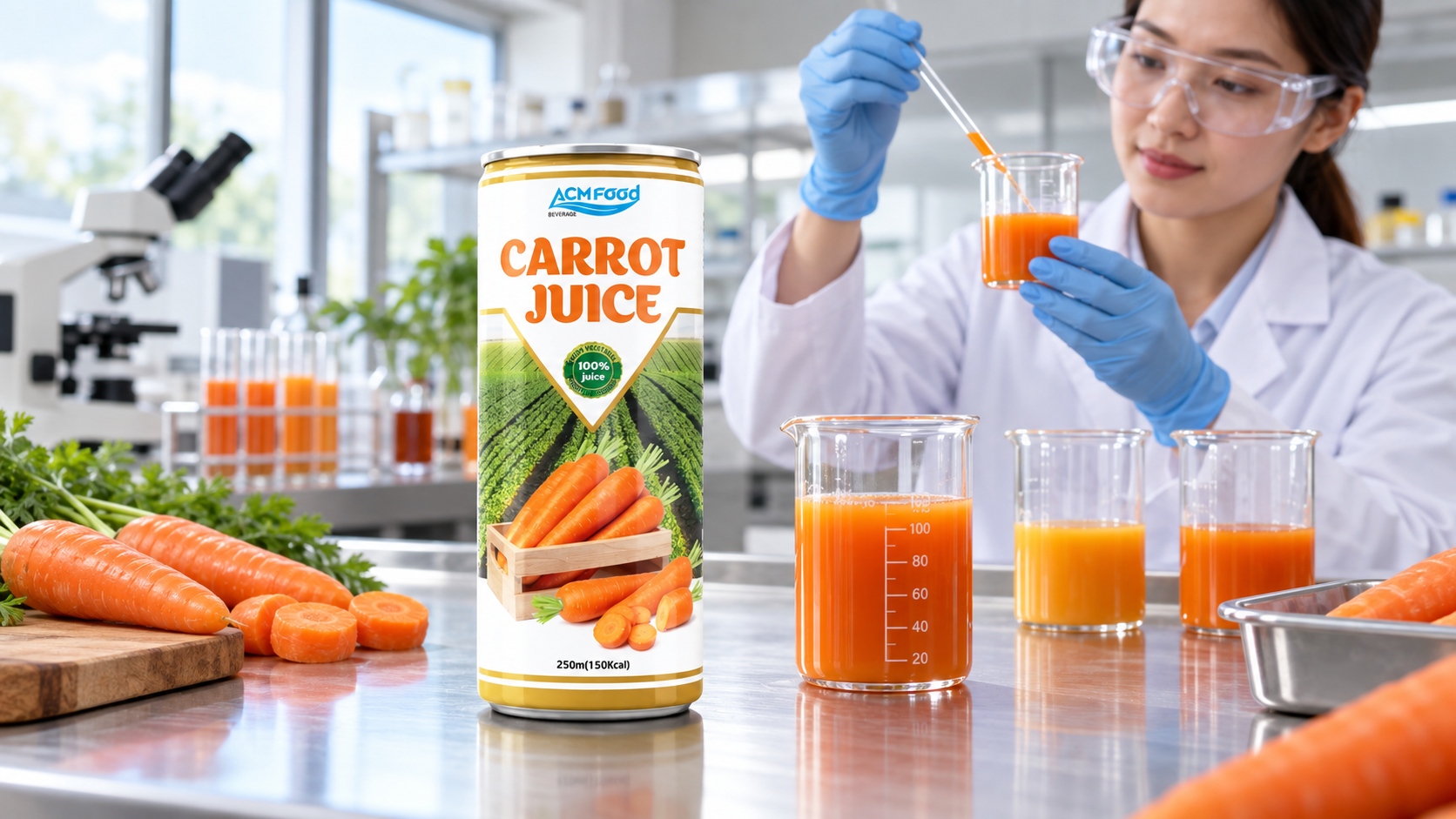
The development process typically moves from a written brief to lab samples, stability testing, packaging approval, a trial run and then full production. Each stage has a clear decision point, which helps both sides avoid expensive changes once production equipment is booked.
- Product brief. You share the target market, format, flavour direction, pack size and price range. The manufacturer checks technical and regulatory feasibility.
- Formulation and samples. The R&D team prepares lab samples with different juice content, sweetness and acidity levels. You taste, comment and narrow down to one or two recipes.
- Processing and stability checks. The selected recipe is tested on the intended heat treatment and pack to confirm colour, flavour, sedimentation and microbiological stability over time.
- Packaging and artwork. You approve the container, closure, label or can print, and carton layout. Label content is checked against the rules of the destination market.
- Trial production. A pilot or first commercial run confirms that the recipe performs the same on the production line as in the lab.
- Mass production and export. The order is produced, quality-checked, packed and shipped with the documents your importer needs for customs clearance.
Timelines depend heavily on how much the recipe changes and how quickly artwork is approved. A project based on an existing carrot juice formula moves much faster than a fully new blend that needs repeated sampling.
What should your carrot juice product brief include?
A useful brief states what you are selling, to whom and under what constraints, so the manufacturer can propose a realistic recipe and process instead of guessing. The more precise the brief, the fewer sample rounds you will need.
- Target market and channel: the country of sale and whether the product goes to supermarkets, convenience stores, foodservice or online retail.
- Format and juice content: pure juice, blend or juice drink, plus any minimum juice percentage you want to communicate.
- Taste direction: reference products you like or dislike, preferred sweetness and whether an earthy or fruity profile fits your brand.
- Ingredient rules: for example no added sugar, no preservatives, organic ingredients or allergen restrictions.
- Packaging: container type, volume, pack count per carton and any shelf-display needs.
- Shelf life and storage: ambient or chilled distribution and the minimum shelf life your importer requires.
- Volumes: expected first order and forecast for repeat orders, which influence pricing and line planning.
- Certification and documents: any food safety, halal or market-specific requirements your buyers ask for.
If you plan to market the drink as clean label, say so in the brief, because it affects which processing route is realistic. Our article on clean label juice formulation for private labels explains how ingredient choices interact with shelf life.
Which packaging options suit carrot juice?
Aluminium cans, glass bottles, PET bottles and aseptic cartons can all work for carrot juice, but each one pairs with a different processing route and shelf-life target. Light and oxygen protection matter more than usual because they affect the orange colour and fresh flavour.
Cans block light completely and handle retort sterilisation well, which makes them a strong fit for low-acid recipes and long ambient shelf life. Glass also tolerates heat and gives a premium look, although it is heavier to ship. PET is light and convenient but usually suits acidified, hot-filled recipes and may need barrier features to protect colour. Aseptic cartons pair with UHT processing and work well for larger family sizes.
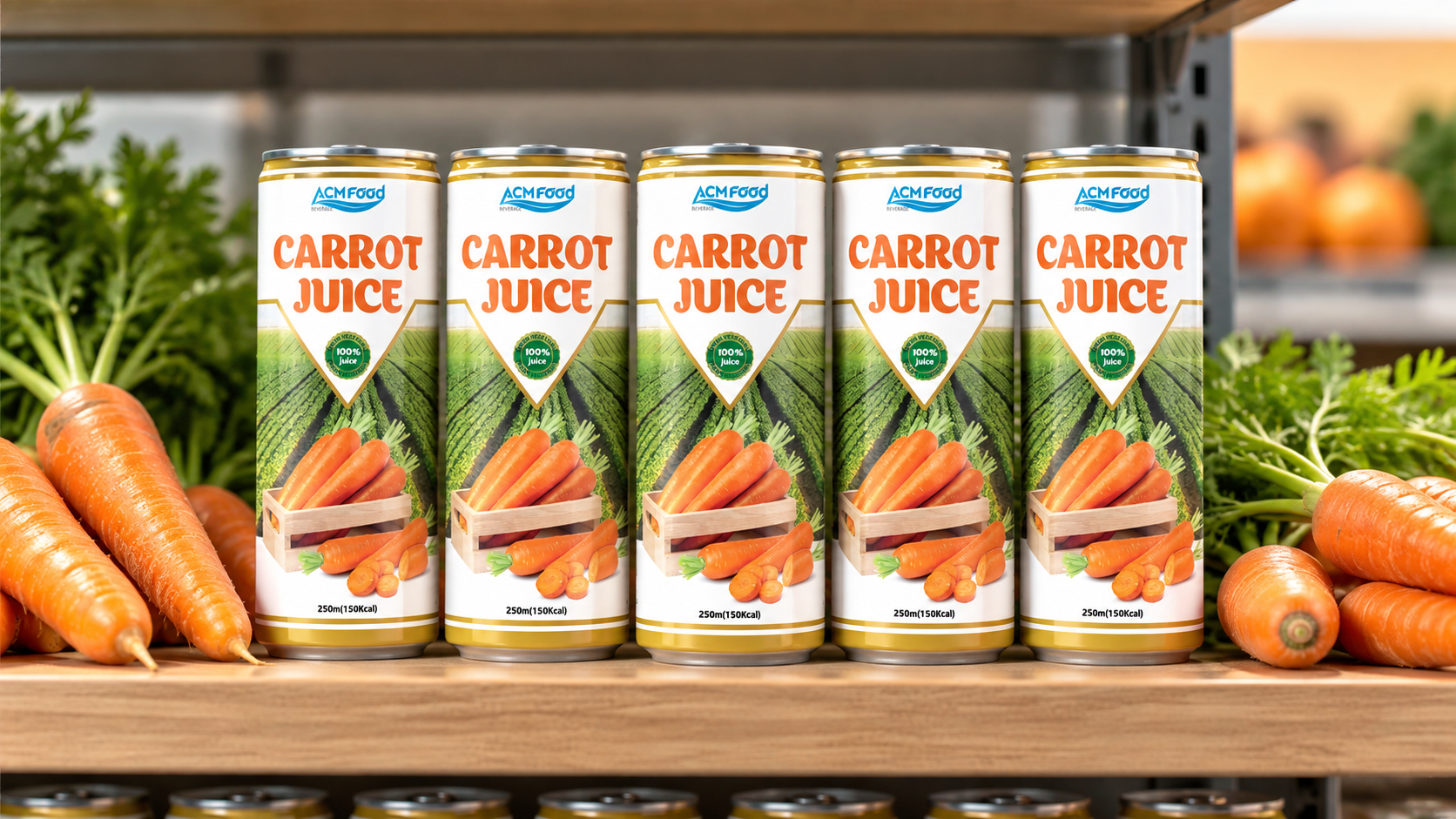
ACMFOOD’s current carrot juice range is packed in 250ml slim aluminium cans with a stated shelf life of 24 months, which gives buyers a tested starting point if a single-serve can fits their channel.
How do you evaluate a carrot juice OEM manufacturer?
Evaluate a carrot juice OEM manufacturer mainly on its ability to process low-acid products safely, its documented food safety system and how clearly it handles samples, commercial terms and confidentiality. Price matters, but a cheaper quote is not useful if the factory cannot stabilise the product for your target shelf life.
- Processing capability: ask which heat treatment the factory proposes for your recipe and whether it has run carrot or other vegetable juices before.
- Food safety certification: request current certificates and audit reports rather than relying on website logos, and check that the scope covers juice production.
- Sample and testing policy: confirm how many sample rounds are included and which tests are done before production.
- Commercial terms: clarify minimum order quantity per SKU, lead time, payment terms and port of loading at the quotation stage.
- Export documentation: check that the supplier can prepare certificates of origin, health certificates and product specifications for your market.
- Formula ownership and confidentiality: agree in writing who owns a custom recipe and whether an NDA is signed before technical details are shared.
If carrot is one of several vegetable products you plan to launch, it also helps to review the manufacturer’s wider capability in vegetable juice manufacturing for export brands, since one partner can often cover a full range in a single container.
Labelling and claims for carrot juice brands
Carrots naturally contain carotenoids, including beta-carotene, and brands often want to mention this on pack. Whether you can make a nutrition or content claim depends on the final formula, the tested content per serving and the regulations of the destination market, so claims should be confirmed with laboratory results and local regulatory advice before artwork is finalised.
Product naming also needs care. Terms such as “100% juice”, “juice”, “nectar” or “juice drink” are regulated differently in each market and are linked to the actual juice percentage. A good OEM partner will flag these points during the artwork review, but final responsibility for market compliance normally rests with the brand owner or importer.
Frequently asked questions about carrot juice OEM
Can a carrot juice recipe be made without preservatives?
Yes, in many cases. Shelf stability can come from the heat treatment and packaging rather than preservatives, for example retort-sterilised cans or UHT with aseptic filling. Whether this works for your recipe depends on its acidity, the chosen process and the shelf life you need.
Is it better to launch pure carrot juice or a blend?
Blends usually reach more consumers and are simpler to stabilise, because fruit adds acidity and sweetness. Pure carrot juice builds a stronger vegetable identity for specialty channels. Many brands start with one blend and add a pure variant once the market responds.
Who owns the formula in a carrot juice OEM project?
Ownership depends on the contract. When a factory adapts its existing base recipe, the base usually stays with the factory. When a formula is developed specifically for you, ownership and exclusivity should be written into the agreement before development starts.
What information do I need to request a quote?
Provide the format, pack size, estimated volume per SKU, target market and any ingredient or certification requirements. With these details, a manufacturer can quote realistically and indicate which processing route suits the recipe.
Start your carrot juice OEM project with ACMFOOD
A successful carrot juice OEM project starts with the right format, a processing route that matches the low natural acidity of carrots, and a brief that states your market, packaging and shelf-life needs clearly. Getting these three points right early saves sample rounds and avoids costly changes after production is planned.
ACMFOOD develops and produces private label carrot juice in Vietnam, with production in a facility certified to FSSC 22000, ISO 22000 and HACCP. Current carrot juice products are quoted from a minimum order of 500 cartons with lead times of 15 to 30 days. Share your product brief, target market and preferred packaging with our team, and we will propose a recipe direction and quotation for your brand.