


 Français
 Español
 العربية
 한국어
한국어To import beverages into the United States, you must comply with U.S. FDA food rules, U.S. Customs & Border Protection entry procedures, and any category-specific requirements (such as TTB for alcohol). Success depends on correct product classification, supplier verification under FSVP, compliant labeling, Prior Notice, and accurate customs filings.
This step-by-step guide explains the regulatory path, documents, labeling essentials, juice-specific rules, customs basics, and practical timelines so importers, distributors, and brand owners can move from product idea to compliant U.S. launch with fewer delays and costly holds. Where exact rules depend on your formula and processing, we indicate options and decisions you should confirm with your compliance team or broker.
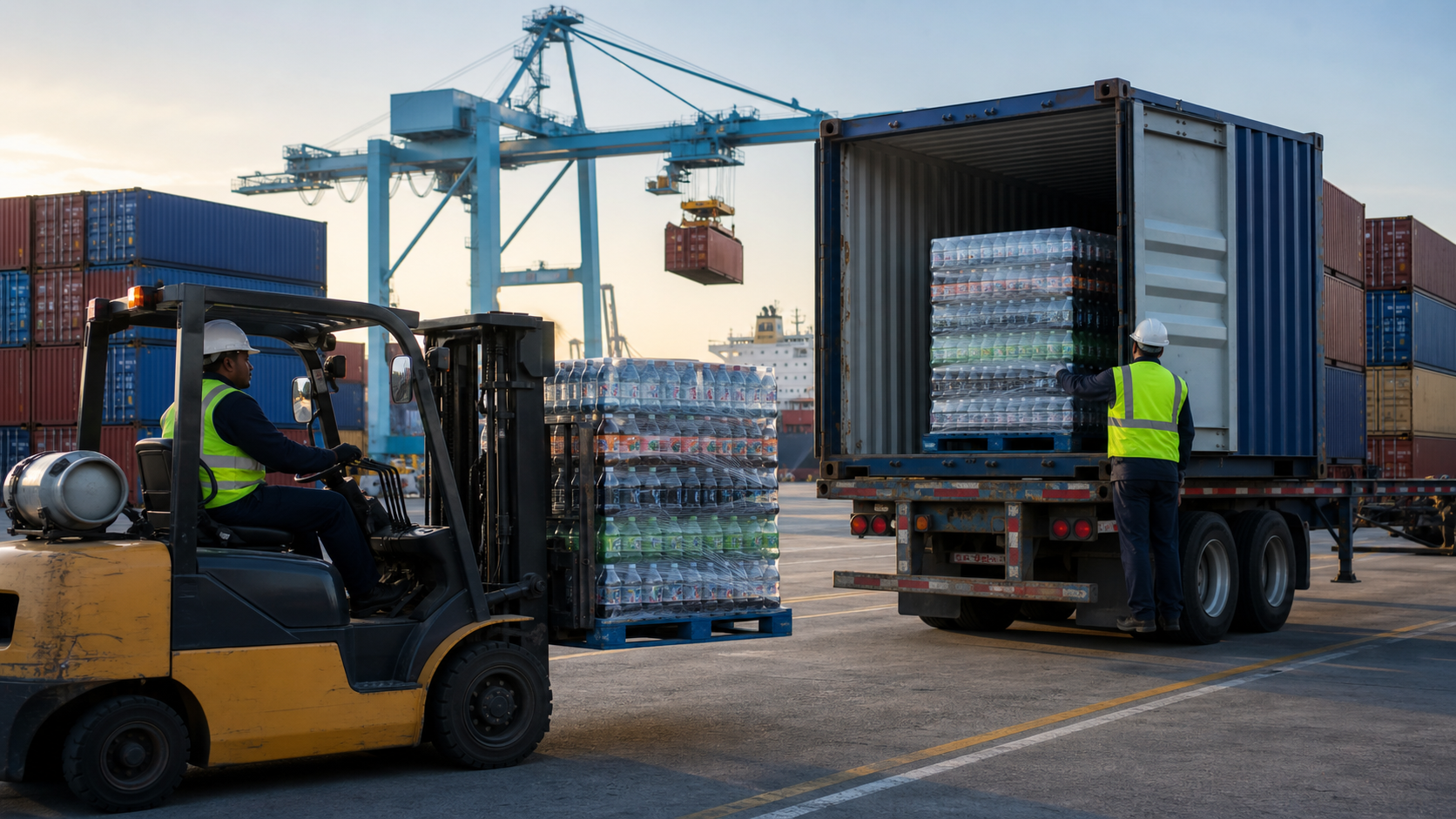
What does it mean to import beverages into the United States?
Importing beverages into the U.S. means acting as (or appointing) the party responsible for compliance with FDA food regulations, meeting FDA’s Foreign Supplier Verification Program (FSVP) obligations, filing Prior Notice, and serving as the Importer of Record for customs clearance with U.S. CBP. Alcoholic products introduce separate TTB steps.
In practice, you will define the correct product category (food, dietary supplement, or alcohol), confirm whether any special rules apply (for example, juice HACCP or acidified foods), prepare compliant labels and records, and coordinate documents with your supplier, customs broker, and logistics partners to ensure a smooth entry and release.
Who is the Importer of Record and who is the FSVP importer?
The Importer of Record (IOR) is the party responsible for making entry with CBP and paying duties. The FSVP importer is the U.S.-based party responsible for verifying that the foreign supplier produces food meeting U.S. safety standards. These roles can be the same company or two different parties; both must be clearly identified before shipping.
Every foreign food facility that manufactures, processes, packs, or holds food for U.S. consumption generally must register with FDA and designate a U.S. Agent. For FDA registration, FDA requires a Unique Facility Identifier (UFI), commonly a DUNS number. Registrations must be renewed biennially in even-numbered years.
Which agencies regulate beverage imports to the U.S.?
Multiple agencies may have a role, depending on the product:
- FDA: Most non-alcoholic beverages (juices, sodas, teas, waters, energy drinks) are regulated by FDA as foods.
- CBP: Oversees import entry, duties, country-of-origin marking, and admissibility.
- TTB: Alcoholic beverages (beer, wine, distilled spirits, and many RTD alcohol products) require TTB permits and label approvals.
- USDA: Limited roles (for example, certain ingredients under APHIS or egg products). Most fruit juices and soft drinks remain FDA foods.
Because rules differ by category, start by classifying your beverage accurately, including whether it is a 100% juice, a juice blend/nectar/juice drink, a carbonated soft drink, a tea/coffee RTD, an energy drink, a dairy-containing beverage, a dietary supplement beverage, or an alcoholic RTD.
What are the core steps to import beverages into the USA?
The core steps include defining your product classification, completing supplier verification under FSVP, preparing compliant labels, gathering entry documents, and coordinating filings and logistics. A typical sequence is:
- Define product & category: Identify whether your SKU is FDA food, dietary supplement, or alcohol. Clarify if juice HACCP, acidified foods, or bottled water standards apply. If you need a refresher on drink types, see the types of beverages guide.
- Confirm supplier readiness: Obtain FDA facility registration number (with UFI), HACCP/food safety plans, process validations (as applicable), and certificates of analysis (COAs).
- Select the FSVP importer: Identify the U.S.-based FSVP importer and build a written verification program covering hazard analyses and supplier approval activities.
- Label development: Create compliant labeling (statement of identity, net quantity, ingredient list, allergens, Nutrition Facts, name/address, country-of-origin, and any % juice statements if required).
- Pre-shipment checks: Confirm Prior Notice details, HTS code, country-of-origin marking on the outer packaging, pallet configuration, code dating, and shipping conditions (ambient vs. cold chain).
- Customs setup: Appoint a customs broker, secure an importer number (EIN/IRS), and obtain a customs bond (single or continuous) appropriate for your volume.
- File Prior Notice: Submit FDA Prior Notice for each shipment of food before arrival, ensuring data (manufacturer, shipper, product, and anticipated arrival) are accurate.
- Entry & arrival: Your broker transmits entry data to CBP; FDA screens entries electronically (and may examine or sample). Resolve any holds quickly.
- Post-entry: Keep FSVP and import records; respond to any queries; monitor ongoing compliance.
What documents are required to import drinks to USA?
While sets vary by product and port, importers typically prepare:
- Commercial invoice, packing list, and bill of lading/air waybill.
- HTS classification and country of origin for each SKU.
- FDA Prior Notice confirmation (per shipment).
- FDA facility registration details and U.S. Agent for any foreign facilities involved.
- FSVP records: hazard analyses, supplier evaluations/approvals, and verification activities.
- COAs or test reports relevant to safety/quality (microbiological, pH, Brix, shelf-life studies as applicable).
- For acidified or low-acid canned foods, applicable process filings and documentation from a process authority.
- For alcoholic beverages, TTB permits and label approvals (COLAs), and state licenses as required.
Regulatory paths by beverage category
The following table summarizes common U.S. regulatory pathways by category. Always verify the exact path based on your formulation, processing, and pack type.
| Category (examples) | Primary regulator(s) | Key rule(s) | Extra steps | Positioning & notes |
|---|---|---|---|---|
| Non-alcoholic shelf-stable (sodas, RTD tea/coffee, energy drinks) | FDA, CBP | Food: cGMPs, labeling, FSVP, Prior Notice | None typical beyond standard FDA/CBP steps | Verify caffeine and other added ingredients align with FDA food use; maintain records |
| 100% juice & juice concentrates | FDA, CBP | Juice HACCP, labeling (incl. % juice statement where required), FSVP | Process validation addressing pathogen controls | Unpasteurized juice triggers specific warning at retail; most imports are processed |
| Acidified or low-acid canned beverages | FDA, CBP | Acidified foods/LACF rules (category dependent), labeling, FSVP | Process filing and records from a process authority | Applies to certain shelf-stable products in sealed containers |
| Alcoholic RTDs, beer, wine, spirits | TTB, FDA (some aspects), CBP | TTB permits, formula (when required), label approval (COLA) | State-level distribution licenses | Different excise taxes and distribution rules by state |
| Dietary supplement beverages | FDA (dietary supplements), CBP | Supplement labeling format, ingredient compliance, FSVP | Distinct claims framework and records | Classification depends on ingredients and labeling |
| Refrigerated perishable beverages (e.g., dairy or cold-pressed) | FDA, CBP (USDA in limited cases) | Food safety plan, cold-chain controls, labeling | Temperature monitoring and distribution controls | Coordinate transit times and storage conditions tightly |
FDA requirements for non-alcoholic beverages
For most non-alcoholic beverages, FDA treats the product as a food. The foreign facility must be registered with FDA (with a U.S. Agent and UFI), the product must meet FDA cGMP and safety standards, and the FSVP importer must verify the supplier’s controls. FDA requires Prior Notice for each shipment. FDA may review entries electronically and can place shipments on hold for examination or sampling when needed.
Depending on the category, additional program rules may apply. For example, juices fall under Juice HACCP requirements, and some shelf-stable sealed products may fall into acidified foods or low-acid canned foods frameworks. Bottled water has standards of identity and quality. Identify any such program early to align processing records and labeling.
What changes if you’re importing juice into USA?
When importing juice, plan for Juice HACCP controls addressing microbiological hazards and relevant validation records. Labeling may require a percentage juice declaration for beverages that contain juice (with specific formatting) and a clear statement of identity (e.g., “100% orange juice” versus “orange juice drink”).
Most juice imports are processed (e.g., pasteurized) to control pathogens. Where juice is not pasteurized, U.S. retail distribution generally requires a warning statement. Work with your supplier on process validations and ensure the FSVP importer maintains written verification activities aligned to the hazards of the product and the supplier’s performance history.
Labeling essentials for beverage imports
FDA food labeling is precise. Before printing, confirm all mandatory elements appear correctly and are measured in the right units and type sizes. Core elements typically include:
- Statement of identity: The common or usual name (e.g., “Sparkling water,” “Orange juice beverage”).
- Net quantity: U.S. customary units with metric (e.g., fl oz and mL), in the correct placement.
- Ingredient list: In descending order by weight, with sub-ingredients as needed.
- Allergen disclosure: Major U.S. allergens must be declared when present according to U.S. law.
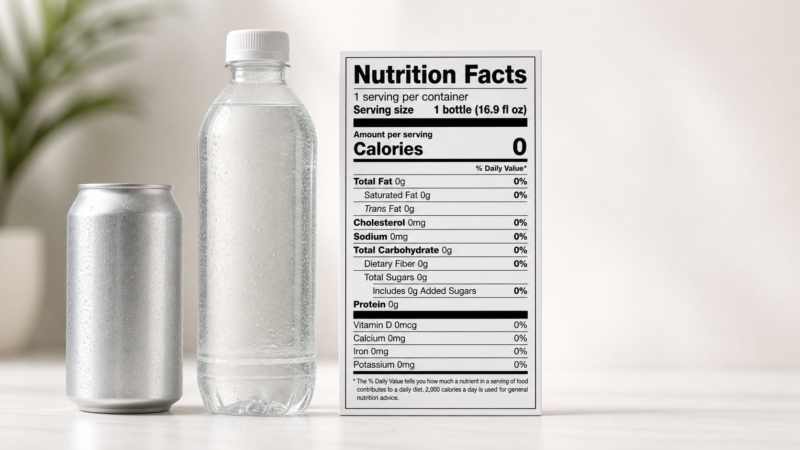
- Nutrition Facts: Use the correct U.S. Nutrition Facts format (some small businesses may qualify for exemptions; confirm applicability before relying on one).
- Name and address: Of the manufacturer, packer, or distributor (with qualifier if not the manufacturer).
- Country of origin: As required under CBP rules; outer packaging must also be marked.
- % juice statement: When the beverage contains juice, present as required for U.S. labeling.
Claims (e.g., “low calorie,” “no added sugar,” or functional descriptions) must meet U.S. criteria and may require specific wording and amounts per serving. Coordinate any claims with your regulatory team, and remember that what is allowed on-pack can vary by market. U.S. retailers often have internal label review processes—start early.
FSVP: food importer responsibilities in the USA
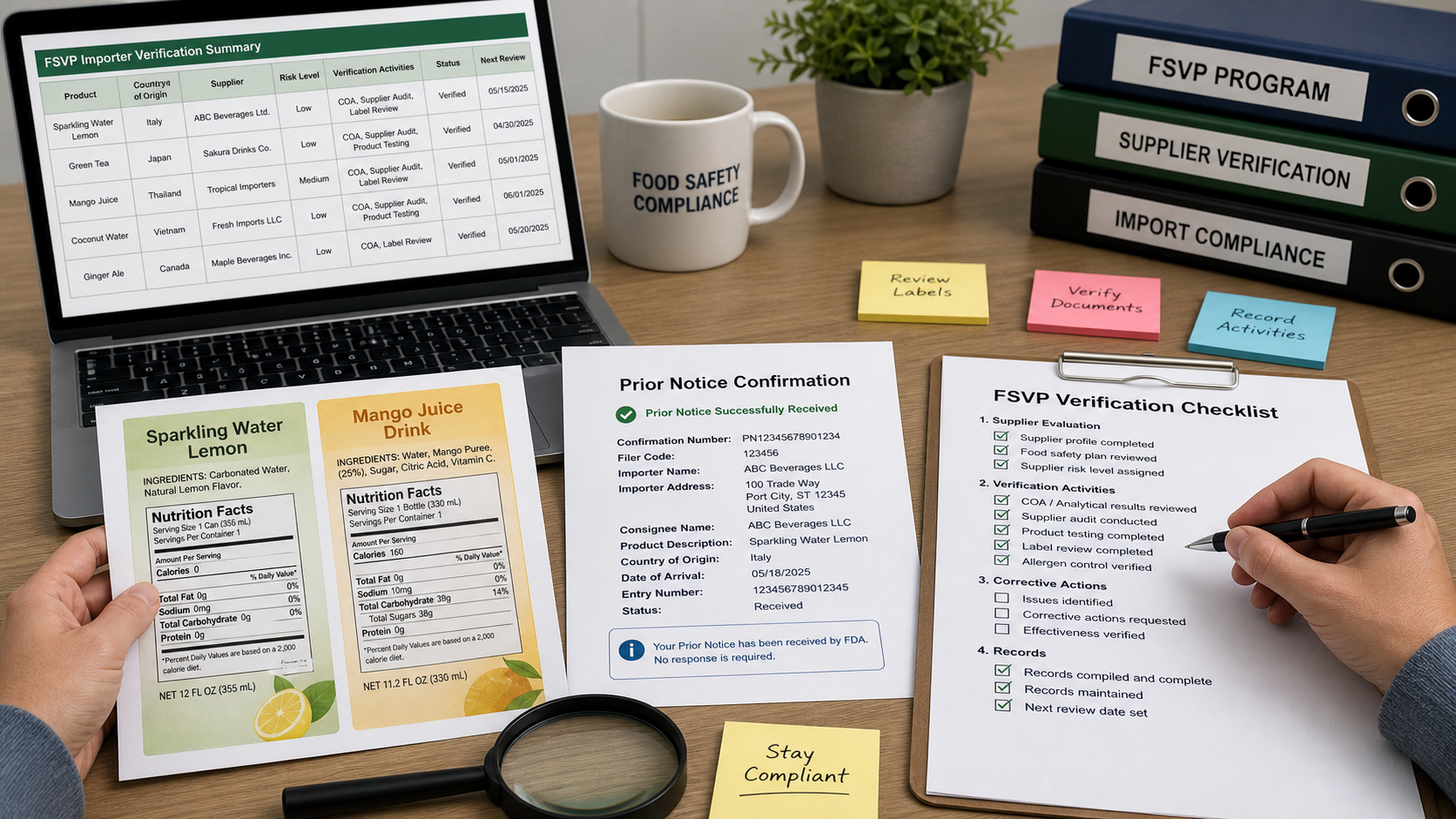
Under the Foreign Supplier Verification Program, the U.S.-based FSVP importer must verify that the supplier’s food safety controls provide the same level of public health protection as U.S. standards. In practice, this involves:
- Hazard analysis for each product/category.
- Supplier evaluation and approval based on performance and risk.
- Verification activities such as document reviews, sampling, or on-site audits depending on risk.
- Corrective actions when verification indicates a problem.
- Recordkeeping that is accurate, organized, and available for FDA inspection.
The FSVP importer must be identified on entry documents. Many international brand owners designate a U.S. subsidiary, importer/distributor, or qualified third party to serve in this role.
Customs and tariff basics for beverage importers
Importing beverages also requires accurate customs work. You must classify each SKU with the correct Harmonized Tariff Schedule (HTS) code, declare the accurate country of origin, and calculate any duties and applicable fees. Duties vary by HTS code and country; some products face additional trade measures. Your customs broker will advise on the best classification and required documents.
For ocean freight, transmit the Importer Security Filing (ISF) on time. Ensure you have an active customs bond (single-entry or continuous). At arrival, CBP and FDA may hold, inspect, or sample shipments. Keep documents consistent across commercial invoice, packing list, Prior Notice, and entry filings; mismatches can cause delays.
Shipping, cold chain, and packaging for import success
Packaging and logistics planning are central to admissibility and product quality upon arrival. Key considerations include:
- Transit conditions: Match time/temperature needs (ambient vs. refrigerated). Validate shelf life under realistic worst-case shipping conditions.
- Palletization: Standard pallets, shrink wrap, and corner protection reduce damage. Confirm maximum stack heights with carriers.
- Code dating: Many U.S. retailers expect best-by or lot codes; set a consistent format and communicate shelf-life expectations.
- Tamper evidence & closures: Ensure closures and shrink bands meet retailer expectations and U.S. norms.
- Outer case labeling: Include product name, lot, dates, and country-of-origin markings for warehouse handling and CBP visibility.
Quality, testing, and records importers must maintain
Beyond label compliance, importers should maintain a robust quality file. Typical contents include:
- Certificates of Analysis per lot covering relevant parameters (e.g., micro, pH, Brix).
- Process validations or thermal process records (where applicable, such as for certain shelf-stable sealed products).
- Supplier audits or assessments aligned to FSVP risk.
- Specifications for ingredients and finished products with acceptance criteria.
- Nonconformance and corrective action logs and a clear escalation path.
Keep records accessible and in English (or accompanied by reliable translations) to facilitate FDA requests. Sound documentation shortens regulatory questions and builds retailer confidence.
Common pitfalls and how to avoid them
These recurring issues can slow or stop an import shipment—and how to prevent them:
- Mismatched paperwork: Ensure product descriptions, lot codes, and quantities are consistent across invoice, packing list, Prior Notice, and labels.
- Unclear product classification: Decide early whether the item is a food, dietary supplement, or alcohol; adjust labeling and approvals accordingly.
- Late Prior Notice: File ON TIME and update if shipment details change.
- Label gaps: Validate all mandatory label elements and type sizes before printing.
- Insufficient FSVP records: Build a written program with documented supplier verification activities appropriate to risk.
- Temperature abuse: Match shipping mode and packaging to your product’s stability; monitor and log temperatures when needed.
Timeline and cost drivers
Timelines vary by product complexity, label iteration, and logistics. Steps that often drive time and cost include:
- Label development cycles with internal and retailer reviews.
- FSVP onboarding: collecting supplier documents and completing evaluations.
- Customs classification research for novel formats or ingredient combinations.
- Process validations for certain shelf-stable sealed products or juice HACCP.
- Freight lead times and consolidation schedules.
Build buffers into launch plans and coordinate across teams. Small, early investments in regulatory clarity typically save significant time and expense at the border.
For U.S. distributors and brand owners: building a compliant supply chain
If you are a distributor or brand owner seeking a manufacturer, align your product brief to regulatory needs from day one. Define category, target claims (subject to compliance), pack sizes, fill temperatures, shelf-life targets, and shipping conditions. For contract production discussions, see a beverage manufacturer for U.S. brands and shortlist based on process capability and quality systems.
When comparing overseas suppliers, evaluate FSVP readiness, documentation quality, and responsiveness. If you are exploring sources specifically suited for the U.S. market, review beverage supplier for U.S. importers options and align expectations on specifications, stability data, and pre-shipment checks.
Still deciding your product category? Map the competitive set first, then narrow formats and flavors using the types of beverages guide to ensure your regulatory path matches your market positioning.
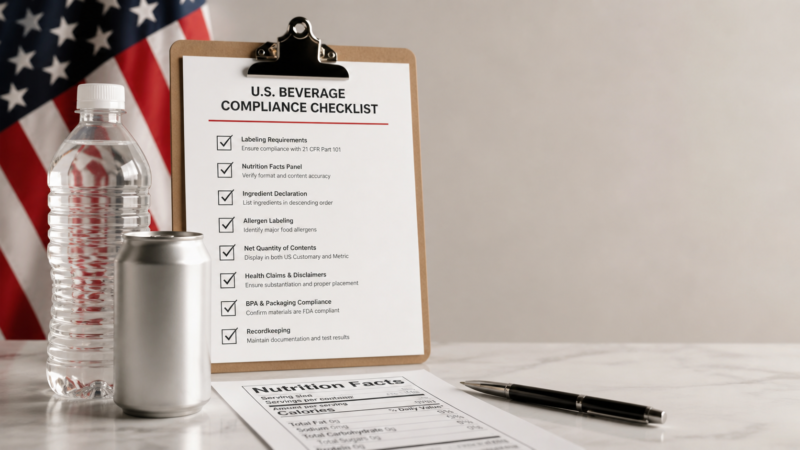
A practical, shipment-ready checklist
Before your first container sails, confirm you can tick every box below:
- Product classification confirmed (food vs. dietary supplement vs. alcohol), with any subcategory rules identified (e.g., juice HACCP).
- Supplier documentation in hand (FDA registration with UFI, food safety plan, COAs, process validations as applicable).
- FSVP importer identified and documented; written verification program in place.
- Compliant label pack-approved; statement of identity, net contents, ingredient list, allergens, Nutrition Facts, name/address, country-of-origin, and % juice (if required).
- Prior Notice workflow tested; responsible party assigned.
- Customs broker engaged; importer number and bond active; HTS codes finalized.
- Shipping plan matched to product stability; pallets and case labels set; code dating format defined.
- Records organized for quick retrieval during FDA/CBP queries.
Notes on alcoholic beverages
If your product contains alcohol, you will need to consult the TTB pathway. That can include permits, formula submissions in certain cases, and Certificate of Label Approval (COLA) before importation and sale. Alcohol also brings state-level licensing and distribution considerations. Coordinate TTB timelines alongside FDA/CBP steps to avoid launch delays.
Special cases: dietary supplement beverages
Some functional beverages are positioned and labeled as dietary supplements. In those cases, label format, ingredient permissibility, and claims categories differ from conventional foods. Accurately classifying the product and using the correct labeling framework are essential. Keep in mind that any claim strategy must match the final formula, serving size, and applicable U.S. regulations.
Country-of-origin marking and outer packaging
CBP requires country-of-origin marking on imported goods and typically expects outer cases to carry clear origin marking. Your retail label also needs appropriate origin statements where required. Apply origin markings consistently to avoid rework or delays during inspection.
What to do if your shipment is held or refused
If FDA or CBP detains a shipment, act quickly. Your broker will advise the reason for the hold (e.g., document review, label review, sampling). Provide requested information promptly. For refusals tied to labeling or documentation gaps, importers may sometimes propose reconditioning plans; in other cases, export or destruction may be required. A proactive quality and compliance file reduces the likelihood of holds.
Frequently asked questions
Do I need FDA approval to import beverages into the USA?
FDA generally does not pre-approve foods before import. Instead, your foreign facility must be registered, your shipment requires Prior Notice, your labels must comply with FDA rules, and your U.S.-based FSVP importer must verify supplier controls. FDA and CBP may examine or sample the shipment at the border.
How long does it take to import drinks to the USA?
Lead time depends on label iteration, FSVP onboarding, process validations (where applicable), freight transit, and any FDA/CBP reviews. Many delays trace back to early-stage gaps (classification, labeling, or documents), so address these well before booking freight.
Can a foreign company be the Importer of Record?
Yes, but you will typically need a U.S. importer number and a customs bond, and most importers appoint a U.S.-licensed customs broker to manage entries. Remember, the FSVP importer must be a U.S.-based party and may be different from the Importer of Record.
What is the difference between a 100% juice and a juice drink for U.S. labeling?
“100% juice” must meet specific criteria and uses different naming and declarations than “juice drinks,” “juice beverages,” or nectars that include added water, sweeteners, or other ingredients. Labels may require a percentage juice declaration for beverages containing juice; confirm format and placement.
Is a Nutrition Facts panel always required?
Most packaged foods need a U.S. Nutrition Facts panel. There are limited exemptions for some small businesses, but eligibility is specific and many retailers still require panels. Confirm any exemption before relying on it and ensure records support your position.
Do I need state registrations or deposits?
Some states have additional requirements (licenses for alcohol distribution or container deposit programs for certain beverages). Check destination state rules during route-to-market planning to avoid last-minute surprises.
Conclusion
To import beverages into the USA successfully, align category classification, FSVP responsibilities, Prior Notice, and labeling long before you ship. Build a clean customs file with accurate HTS codes, origin marking, and consistent documents. For juices and certain shelf-stable sealed products, incorporate the appropriate process validations and program requirements into your quality dossier. With clear roles, disciplined documentation, and the right partners, your launch can clear FDA and CBP efficiently and reach the shelf on time.
This overview is informational and not legal advice; regulations and retailer policies evolve. Coordinate with your broker and regulatory counsel for product-specific guidance.
Manufacturing for U.S. brands
If you are sourcing for the U.S. market, three pages cover what buyers ask first. Our OEM manufacturing programme describes what the factory takes on; certifications and food safety systems covers the documents customs and retailers will ask you to produce; export and logistics covers shipping terms and the document pack. To price a programme, request a quote.
Sources
This guide summarises requirements set out by the U.S. authorities below. Rules change; verify against the primary source before you file.
- U.S. Food and Drug Administration — Prior Notice of Imported Foods
- FDA — FSMA Final Rule on Foreign Supplier Verification Programs (FSVP)
- FDA — Online Registration of Food Facilities
- FDA — Juice HACCP
- FDA — Guidance for Industry: Food Labeling Guide
Where to go next
Sourcing for the U.S. market? The United States beverage market page covers the full OEM and private label programme for U.S. brands and importers: MOQ 500 cartons per SKU, 15-30 day production, HACCP / ISO 22000 / FSSC 22000, and shipping from Ho Chi Minh City. Request a quote and we reply within 24 hours.