





 Français
 Español
 العربية
 한국어
한국어Shipping time from Vietnam describes how long a shipment takes to move by sea from origin to destination. For cargo leaving Ho Chi Minh City, the actual duration depends on route, service type, port rotation, transshipment, and destination handling.
This guide explains what transit time covers, how to read a Vietnam port sailing schedule, factors that add or remove days, and indicative time bands for common lanes from Ho Chi Minh City. It is written for beverage brands, importers, and supply-chain planners who need realistic expectations and a clear planning workflow.
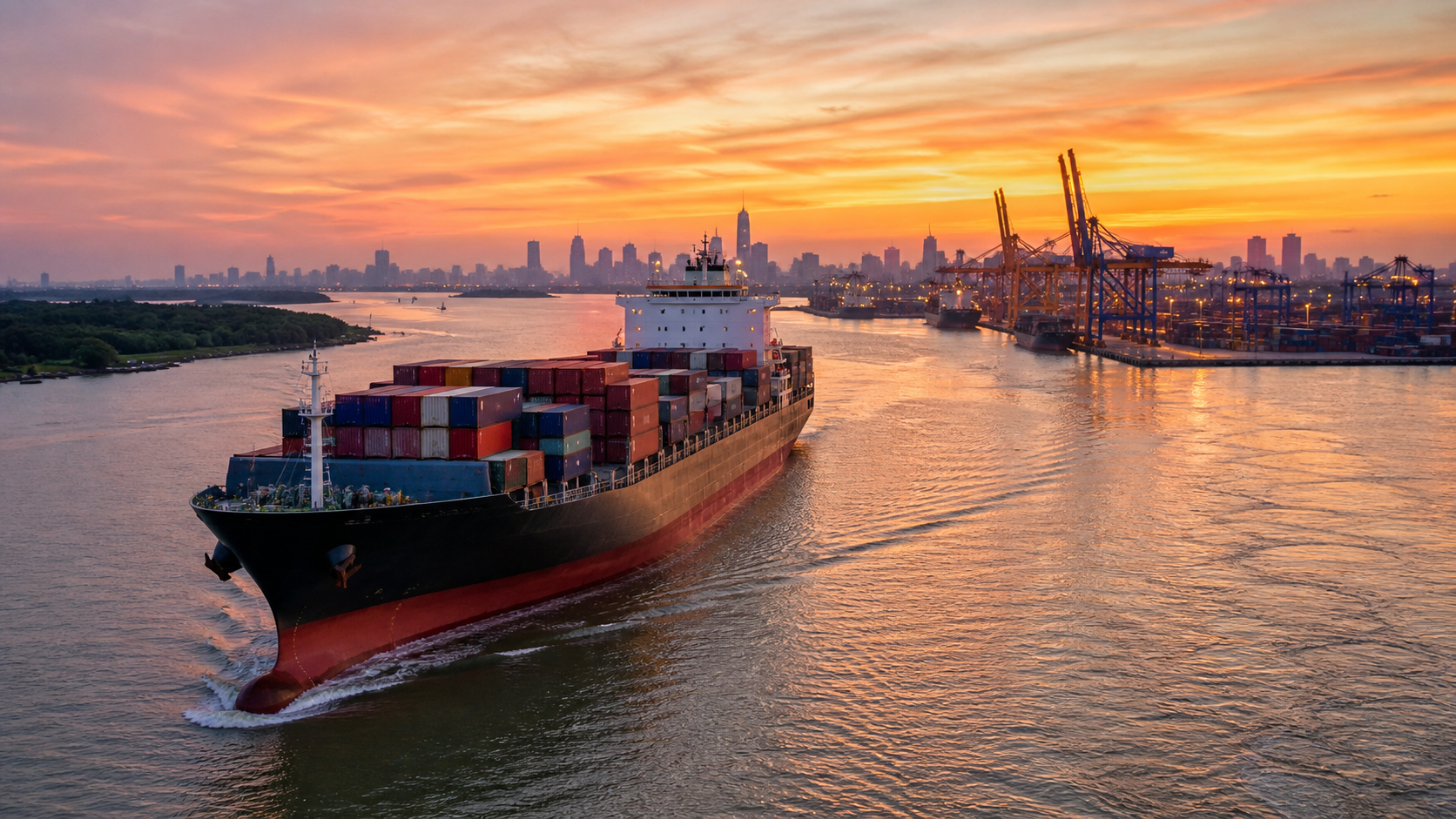
What does “shipping time from Vietnam” really include?
In practice, different parties use the term differently. Clarify the scope before you compare quotes or make promises to customers.
- CY–CY (port to port): Ocean transit from Vietnamese port (container yard) gate-in to destination port discharge. Excludes origin trucking, customs, destination delivery.
- Door–Door: Includes origin pick-up, export filing, ocean leg, destination import clearance, final delivery. Often the longest timeline and the hardest to predict without full details.
- Factory–Port: Time from finished goods ready at the plant to vessel departure, covering booking, VGM, SI, stuffing, and terminal cut-offs.
When asking for transit time Ho Chi Minh Port, specify whether you mean CY–CY, Door–Port, or Door–Door. The answer will differ materially.
How to read a Vietnam port sailing schedule
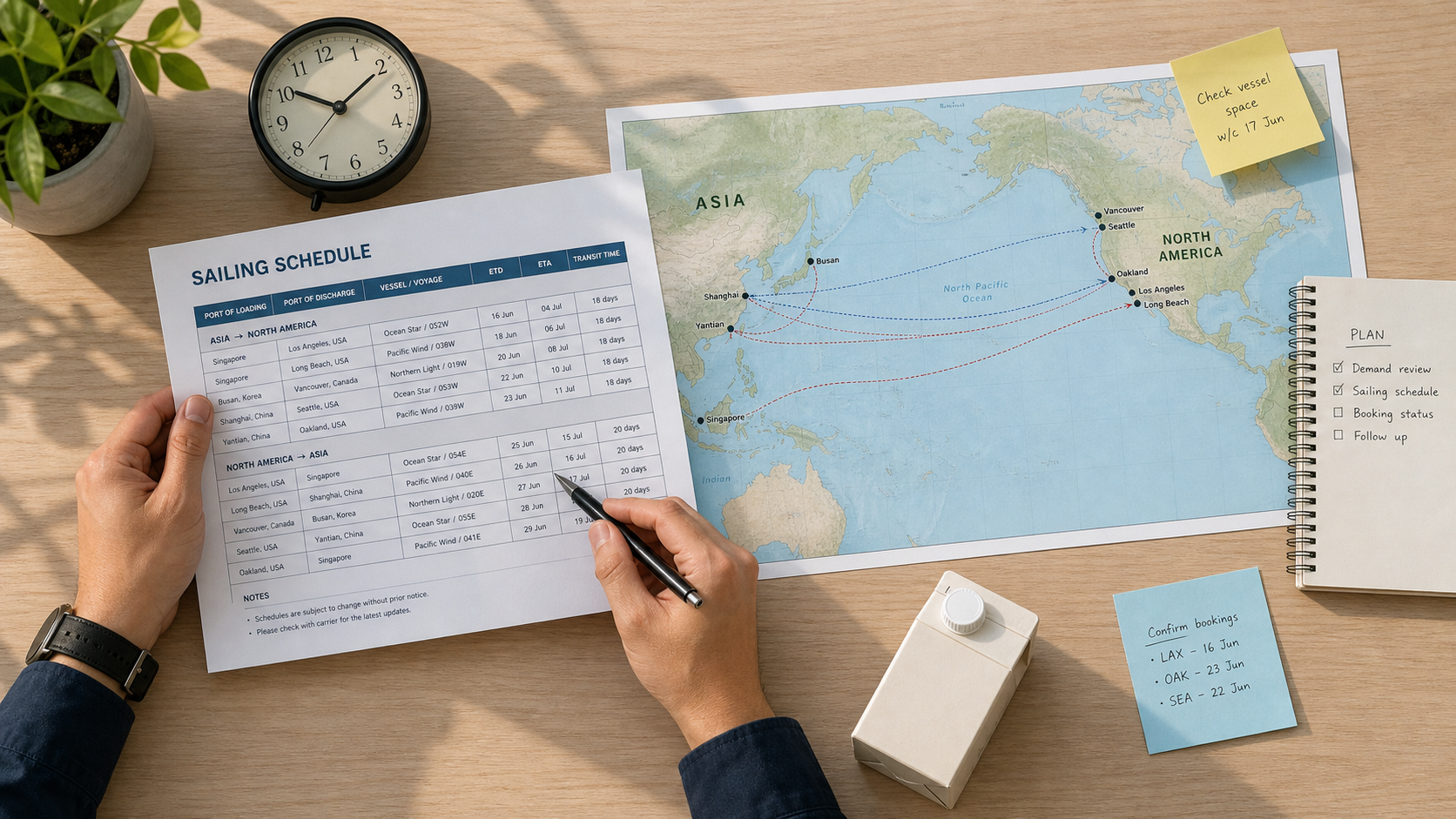
A Vietnam port sailing schedule lists vessels, ETD (estimated time of departure), ETA (estimated time of arrival), rotation, and transit days for each service string. Many forwarders publish weekly schedules for Ho Chi Minh City and Cai Mep–Thi Vai. When reviewing a Vietnam port sailing schedule:
- Check the actual load port: Bookings from Ho Chi Minh City may load at Cat Lai or truck to the deep-water terminals at Cai Mep–Thi Vai for mainline vessels.
- Confirm transshipment ports: Singapore, Port Klang, Hong Kong, and Busan are common hubs. Each connection can add variability.
- Compare service strings: Direct services are usually faster; feeder + mainline services can be longer but more frequent.
- Watch cut-off times: Documentation, VGM, and terminal receiving windows influence whether you make a sailing.
Where does Ho Chi Minh City cargo actually load?
For containerized exports, cargo is typically gated in at container terminals serving the Ho Chi Minh City region (for example, Cat Lai) or trucked to the Cai Mep–Thi Vai deep-water complex in Ba Ria–Vung Tau for mainline international departures. Your booking confirmation will state the load terminal, receiving window, and stack closing time. This matters because the chosen terminal and routing influence total transit time.
What affects ocean transit time from Ho Chi Minh City?
Several operational and market factors can shift timelines by days or even weeks:
- Service type: Direct vs. transshipment and the efficiency of the chosen hub.
- Port rotation: Sequence of calls and whether your destination is first or last on the loop.
- Seasonality: Peak season, Lunar New Year, and year-end demand spikes can create congestion and rolled bookings.
- Equipment & space: Reefer availability, empty container balance, and vessel capacity.
- Weather & disruptions: Typhoons, fog, labor actions, or channel restrictions.
- Terminal dwell: Time waiting for a berth or for a transshipment connection.
- Customs & compliance: Delays from documentation issues at origin or destination.
Indicative sea freight transit times from Ho Chi Minh City
Every shipment is unique. The following bands are planning references many shippers use under normal conditions. Always confirm current schedules and ETAs with your carrier or forwarder before committing to customers.
| Lane from Ho Chi Minh City | Service pattern | Indicative ocean time (weeks) | Notes |
|---|---|---|---|
| U.S. West Coast (e.g., Los Angeles/Long Beach) | Direct or via one hub | ~3–4 | Fastest USA option; inland rail adds time if not local to port |
| U.S. East & Gulf Coasts | Via Panama/Suez or transshipment | ~4–6 | Longer sailing distance and potential for multiple connections |
| North Europe (e.g., Rotterdam/Hamburg) | Direct mainline or via hub | ~4–6 | Check whether your discharge is first/last on rotation |
| Mediterranean (e.g., Barcelona/Gioia Tauro) | Direct or via hub | ~3.5–5.5 | Some routings favor hubs; timings vary by string |
| Australia (e.g., Sydney/Melbourne) | Direct or via Singapore | ~1–3 | Short-haul but can be connection-dependent |
| North Asia (e.g., Hong Kong, Busan, Yokohama) | Feeder or short-sea | ~1–2 | High frequency; shorter transit but watch cut-offs |
| Middle East (e.g., Jebel Ali) | Via hub | ~2–4 | Hub choice strongly affects time |
These ranges are not guarantees. Port congestion, rolled cargo, weather events, and schedule changes can extend transit. Always verify the latest ETD/ETA and consider premium options if you have fixed retail launch dates.
Sea freight Vietnam to USA: planning notes
For shipments to the United States, compare West Coast vs. East/Gulf Coast based on final delivery and total landed timeline. The ocean leg can be faster to the West Coast, but long inland moves may erase that time advantage. If your beverages are time-sensitive, assess service reliability, not just shortest-day listings.
- Align finished goods readiness with weekly sailings; avoid missing the stack close by finalizing documents early.
- Consider premium or expedited services on peak weeks if on-shelf dates are fixed.
- Coordinate with your 3PL on drayage appointments, chassis availability, and demurrage risk at destination.
See practical steps and checklists in Shipping beverages to the USA and market considerations in United States market insights.
Vietnam to Australia: planning notes
Transit to Australia is comparatively short, but reliability still hinges on service frequency and hub choice. If your cargo is temperature-sensitive or you need synchronized promotion dates across states, lock bookings early and confirm terminal receiving windows.
- Check port pair specifics (e.g., HCMC to Sydney vs. Melbourne) and whether the service is direct or via Singapore.
- Build buffer for destination biosecurity inspections and regional holidays.
- For ambient canned beverages, pallet height/weight compliance reduces handling delays.
For routes, cut-offs, and importer workflow, refer to Shipping beverages to Australia and country notes in the Australia market overview.
Short-haul Asia & Middle East routes
Short-haul lanes to North Asia and the Middle East often sail multiple times per week. While the ocean time is shorter, your overall lead time can still slip if factory readiness misses a cycle or if a transshipment misses its connection. Treat these lanes as frequent but not immune to disruption.
Direct vs. transshipment: what it means for time and risk
Direct services load in Vietnam and sail straight to the destination region without a hub change. Transshipment services move from a feeder to a mainline (or hub-to-hub). Direct is often faster and simpler; transshipment can offer better frequency or space but adds variability at the connection.
- Choose direct when you have strict launch dates, tight shelf-life windows, or limited buffer.
- Use transshipment when flexibility and frequency matter more, or when space on direct strings is tight.
- Monitor connections: Even a one-day slip at origin can roll your cargo to the next mainline vessel.
Beverage-specific considerations that influence transit time
For beverage cargo, the same sailing time can produce different business outcomes depending on formula, packaging, and label requirements. Build your plan around these realities:
- Shelf-life & coding: Ensure production date coding supports the longest realistic Door–Door timeline, including destination dwell.
- Reefer vs. dry: Temperature control can add equipment coordination steps; verify reefer availability and pre-trip inspections early.
- Palletization: Stable, compliant pallets reduce inspections and rework. Use corner boards and consistent heights.
- Documentation: Align commercial invoice, packing list, certificate of origin, and destination label compliance to avoid customs holds.
- Hazmat: Some beverages (e.g., high alcohol content) may require special handling—confirm classification.
If you are planning new SKUs, coordinate production windows and packaging readiness with your logistics plan. For manufacturing pathways, see OEM beverage manufacturing and commercialization options in private label beverages. For the end-to-end logistics framework, review export and logistics for beverages.
Build a reliable Door–Door timeline from Ho Chi Minh City
A simple way to structure your plan is to break the journey into milestones and assign buffers to each:
- Production release: QA sign-off, finished goods ready, pallet specs finalized.
- Booking & equipment: Secure space, allocate container type (reefer/dry), confirm pick-up date.
- Factory–terminal: Trucking time to terminal; meet terminal receiving window and cut-offs.
- Vessel leg: CY–CY transit per the booked string; monitor for schedule changes and potential rolls.
- Destination port: Discharge, availability, customs, possible inspections.
- Final delivery: Drayage and any inland rail/truck legs to the consignee or DC.
Assign realistic buffers based on lane, season, and your organization’s decision lead times (artwork approval, payment terms, compliance checks). The result is a pragmatic promise date that survives normal market volatility.
How to reduce variability in shipping time
- Book early on high-demand weeks and avoid last-minute factory releases that miss stack closing.
- Keep documents clean: Pre-validate HS codes, labels, and certificates with your broker.
- Choose stable strings with recent on-time performance rather than the shortest listed days.
- Use visibility tools from your forwarder or carrier to track port dwell and transshipment connections.
- Consider premium services if shelf-life is tight or retail dates are fixed.
If you sell into multiple regions, stagger production and load-out by service string so arrival waves align with in-store dates rather than landing all stock simultaneously.
FAQ: Common questions about sea freight transit times from Ho Chi Minh City
Does transit time include customs clearance and final delivery?
Usually not. Published transit time typically refers to CY–CY (port to port). Door–Door timelines add origin pick-up, export steps, destination customs, and last-mile delivery. Always confirm the scope used in any quote or schedule.
Why do schedules change even after I book?
Carriers update rotations for weather, congestion, or operational reasons. Transshipment connections also shift when a mainline is delayed. Monitoring ETD/ETA updates and building buffers helps protect your promise dates.
When are delays most likely?
Seasonal peaks around major holidays and year-end promotions can tighten space and extend dwell. Plan earlier bookings and consider alternative strings during high-demand periods.
How can I speed up a shipment without airfreight?
Options include selecting a direct string, using expedited or premium ocean services where available, ensuring documents are complete to avoid holds, and coordinating destination drayage appointments as soon as the vessel is within range.
Key takeaways
Shipping time from Vietnam depends on scope (CY–CY vs. Door–Door), service string, and market conditions. From Ho Chi Minh City, indicative ocean ranges can run from about one to two weeks for short-haul Asia, around one to three weeks to Australia, roughly three to four weeks to the U.S. West Coast, and longer to the U.S. East/Gulf and Europe. Use current schedules, protect your plan with buffers, and align production with realistic sailings.
When you are ready to align product development with logistics, explore the workflows in export and logistics for beverages, plus route-specific guidance in Shipping beverages to the USA and Shipping beverages to Australia. For manufacturing options that match your launch timeline, see OEM beverage manufacturing and private label beverages.
Compliance and shipping at ACMFOOD
For the certificates and food safety systems buyers and customs ask us to produce, see certifications and food safety systems. For shipping terms, the document pack and container planning, see export and logistics. To discuss a specific market, request a quote.
Request a quote