


 Français
 Español
 العربية
 한국어
한국어Wholesale noni juice is bought by importers and distributors in cartons, pallets and containers, not by the bottle. A first order only works when the carton count, the pallet plan, the Incoterm, the payment structure, the sample approval and the lead time are agreed before production starts. This guide walks through each decision in the order a buyer meets them.
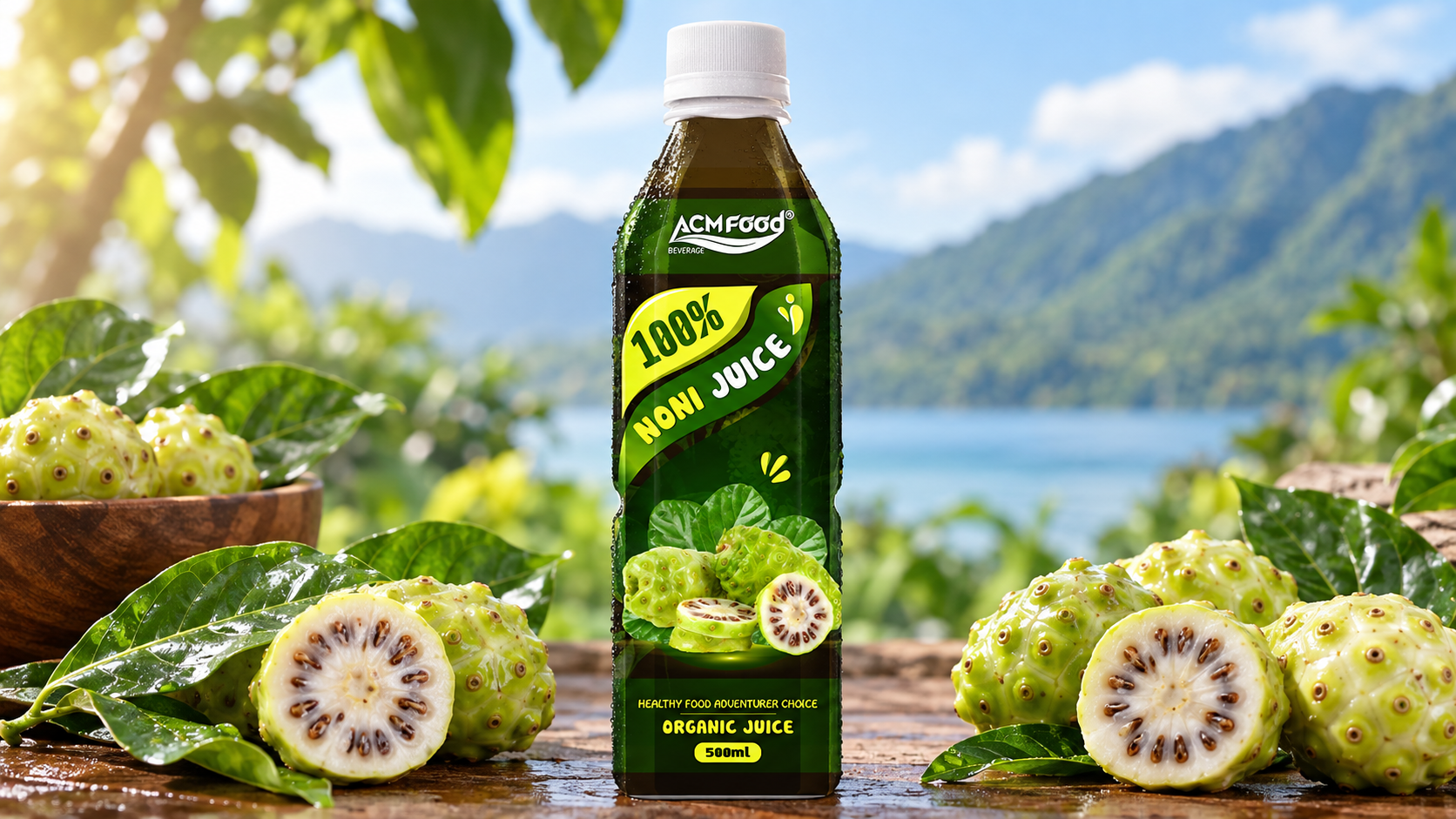
ACMFOOD supplies a 500ml PET bottle noni juice drink from Vietnam with a standard minimum of 500 cartons per SKU and a production lead time of 15 to 30 days. Carton and pallet counts are not published for this product, so the guide explains how to calculate them rather than quoting a number that may not match your packing specification.
What does a first wholesale noni juice order look like?
A first order is usually one or a few SKUs, shipped as a full container or as part of a mixed-SKU container. The buyer confirms the product, the carton configuration, the quantity per SKU, the label, the Incoterm and the payment terms, and approves a sample before the production slot is booked.
For ACMFOOD, the minimum applies per SKU, not per order. One noni SKU therefore needs at least 500 cartons, and a second SKU needs its own 500. Because the noni juice drink is a niche line, most importers pair it with other products in a mixed container rather than ordering it alone. The minimum order quantity page explains what moves the number up or down.
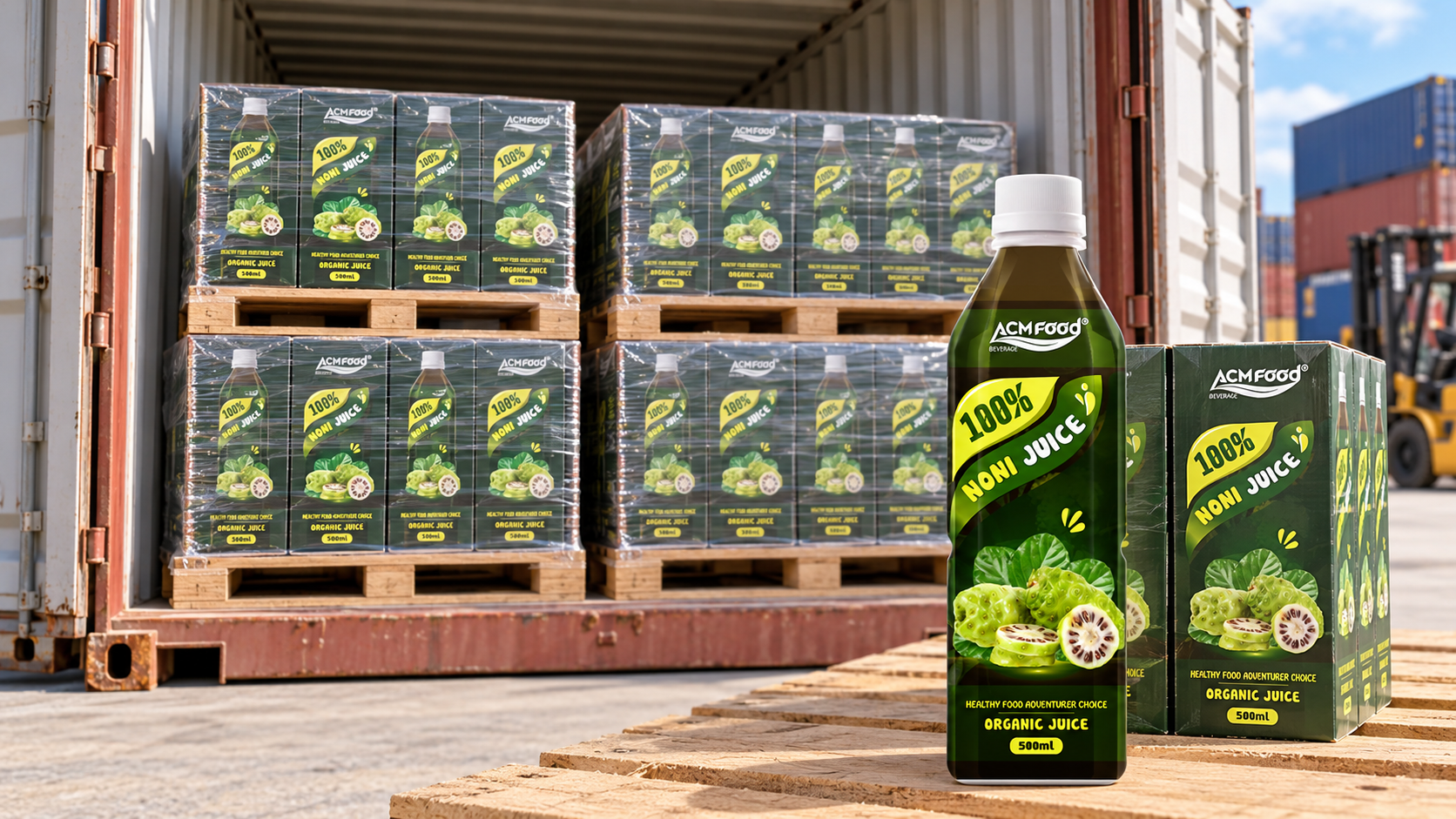
How many cartons and pallets fit in a container?
There is no single figure. Capacity depends on the carton dimensions, the carton weight, the pallet pattern and the stack height your packaging can bear. Liquids are dense, so weight often limits a container before volume does.
Use this sequence to estimate it for your own order, then ask the supplier to confirm the loading plan:
- Get the carton specification. Ask for the number of bottles per carton, carton dimensions and gross weight for the noni juice drink you are buying.
- Choose the pallet type and pattern. Confirm cartons per layer and layers per pallet, within the stack height the cartons can bear.
- Calculate cartons per pallet. Multiply cartons per layer by the number of layers.
- Check the weight limit. Multiply cartons per pallet by gross carton weight, add the pallet weight and compare against what the container and road limits allow.
- Count pallets that fit. The container’s floor space and door opening decide how many pallet positions exist.
- Multiply to get cartons per container. Pallets that fit and pass the weight check, times cartons per pallet.
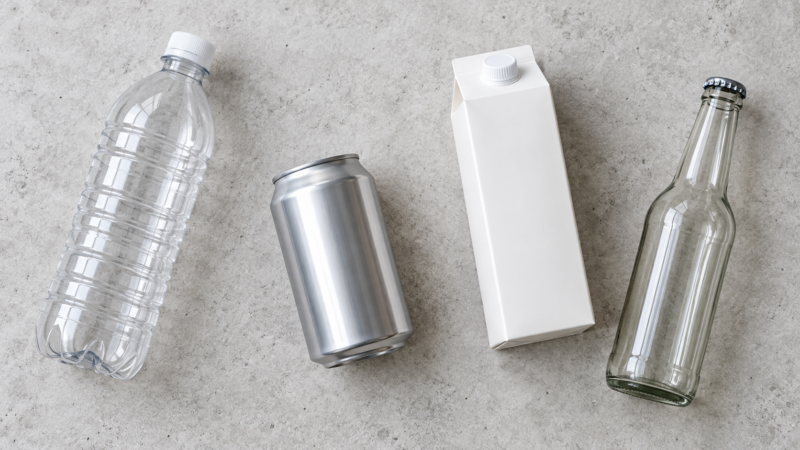
Our guide on how many cartons fit in a 20ft beverage container works through the method with the constraints that matter. Fill volume and format change the result: cans load more units per pallet than PET or glass at the same volume, and glass is heavy enough to cut the carton count sharply.
Should you ship FCL or LCL for the first order?
If your quantity fills most of a container, full container load (FCL) is normally simpler and cheaper per carton. If it does not, mixed-SKU FCL with other products, or less-than-container load (LCL), can work, with trade-offs in handling, transit time and risk of damage.
For a niche product such as noni juice, mixed-SKU loading is common, because it lets the buyer test the market without filling a container with a single product. ACMFOOD notes that several products in one container is normal and often the most efficient first order. The article LCL or FCL for a first beverage order sets out when each makes sense.
FOB, CIF or DDP: which Incoterm suits a noni juice import?
FOB (free on board) makes the seller responsible until the goods are loaded at the port of origin; the buyer then pays for sea freight and insurance. CIF (cost, insurance and freight) adds freight and insurance to the seller’s side up to the destination port. DDP (delivered duty paid) puts almost everything on the seller, including import clearance.
| Term | Seller pays up to | Buyer takes over | Good fit when |
|---|---|---|---|
| FOB Ho Chi Minh City | Loading at the port of origin | Sea freight, insurance, import clearance | The buyer has a trusted forwarder and wants cost control |
| CIF destination port | Freight and insurance to the destination port | Import clearance and inland delivery | The buyer wants a landed port price without managing the freight |
| DDP destination | Delivery including import duties and clearance | Receiving the goods | The buyer wants a single delivered price and the market allows it |
Which Incoterms are available for a given order must be confirmed with the supplier. All ACMFOOD shipments depart from Ho Chi Minh City Port. For a deeper comparison, read FOB or CIF: choosing Incoterms for a beverage import.
What payment terms apply to wholesale noni juice?
ACMFOOD’s standard payment term is T/T (telegraphic transfer), with a deposit and balance structure agreed per order. The exact split is set in the proforma invoice, so confirm it before you plan your cash flow.
Because the production lead time is 15 to 30 days after order confirmation, the deposit usually covers the period before shipment and the balance relates to shipping documents, though the details depend on the agreement. Our guide to T/T payment terms for beverage buyers explains the common structures and the risks each side should consider.
How do samples and pre-shipment checks work?
Ask for a sample of the exact product before you commit to volume, and agree what will be checked on the batch that ships. A sample proves the taste, packaging and label fit; batch documents prove the shipment matches it.
A sensible pre-shipment routine for a first noni order includes:
- Sample approval. Taste, appearance, closure and label review, recorded in writing.
- Certificate of analysis. Batch-level analysis against the agreed product specification.
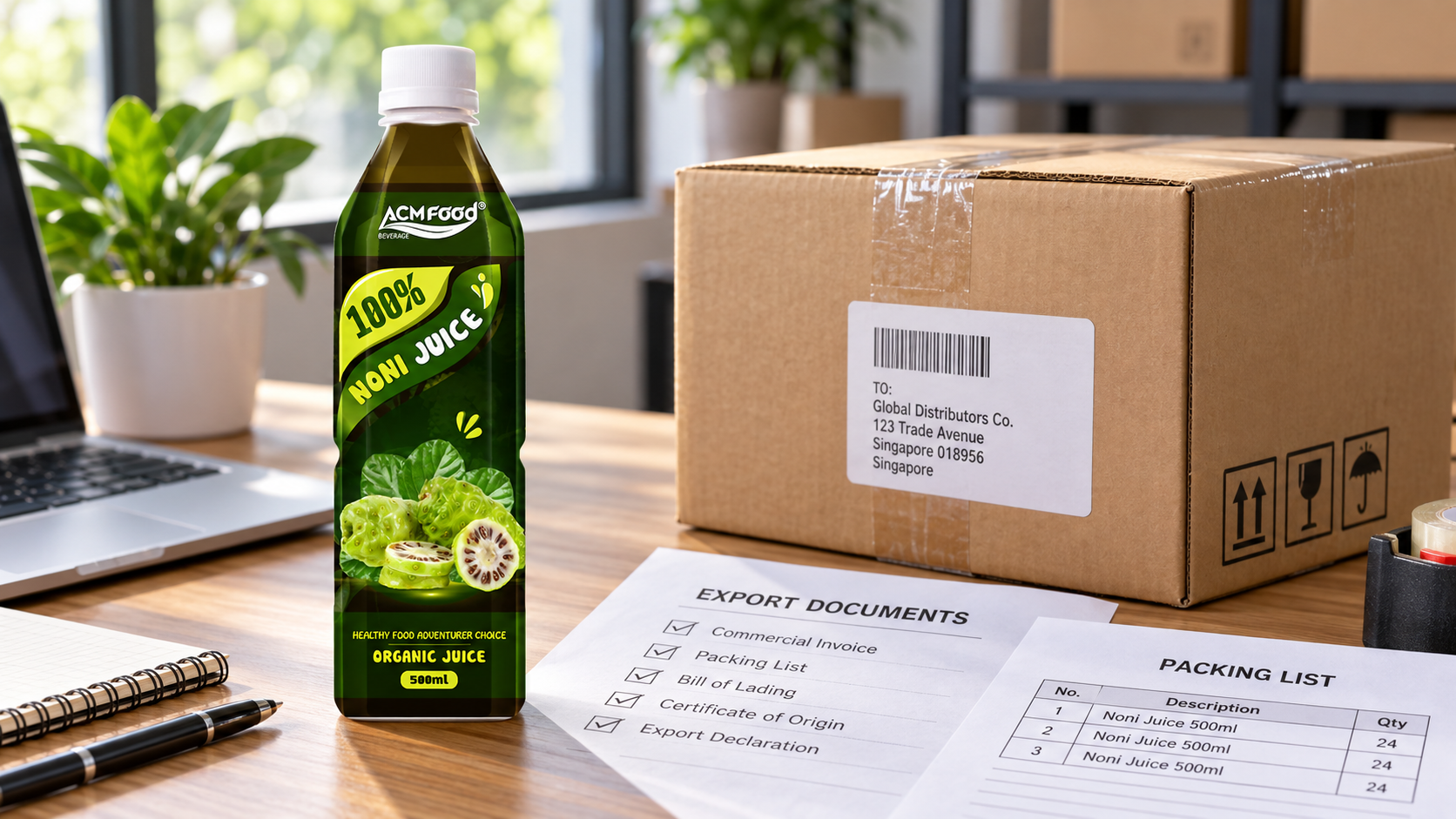
- Shipping documents. Commercial invoice, packing list, bill of lading and certificate of origin, plus health and free sale certificates where your market requires them.
- Loading check. Photographs or a loading report that shows the pallet pattern, stretch wrapping and container condition.
The set of documents is described on the export and logistics page, and the guide to reading a certificate of analysis helps your quality team check it.
What lead time should you plan for?
Production lead time at ACMFOOD is 15 to 30 days from order confirmation, subject to material availability. Add time for artwork approval if you use a private label, plus sea freight, port clearance and inland delivery.
The product has an 18-month shelf life, which leaves runway for sea freight and distribution. Even so, retailers often set a minimum remaining shelf life on arrival, so ask what your buyer requires and plan transit around it. The article on shelf life on arrival explains why retailers check this clause first.
What should you check about noni juice before importing?
Noni is regulated differently from market to market, so confirm the product category and the labelling rules in your destination before you pay a deposit. Some markets treat noni products as conventional beverages, others as supplements or as items that need prior authorisation.
Three checks protect a first shipment:
- Category and authorisation. Ask your customs broker or regulator how noni juice drinks are classified.
- Label wording. Do not copy claims from other markets. Wording depends on the final formula, tested content, serving size and local rules.
- Documents. Confirm which certificates and test reports your importer of record must hold.
Our overview of noni juice taste, safety notes and sourcing describes why marketing language for noni should stay factual and conservative.
What are the key specifications of the noni product?
The table lists the specification published for the noni juice drink today. Anything not listed here, including carton configuration and pallet pattern, should be requested in writing.
| Item | Published value |
|---|---|
| Product | 500ml noni juice drink |
| Packaging | PET bottle |
| Shelf life | 18 months |
| Minimum order | 500 cartons per SKU |
| Lead time | 15 to 30 days |
| Payment terms | T/T |
| Port of loading | Ho Chi Minh City Port |
| Certifications | HACCP, ISO 22000, FSSC 22000 |
How should you split a first order across SKUs?
Split the order by what you can sell in the first season, not by what looks balanced on paper. Since each SKU has its own minimum, adding SKUs raises the commitment faster than adding cartons to an existing SKU.
A practical approach for a first container is to choose one anchor SKU you are confident about, add one or two supporting SKUs from other categories to broaden the offer, and keep the noni juice drink to the quantity you can place within its shelf life. The noni drink carries an 18-month shelf life, which is comfortable for sea freight but still requires you to plan sell-through. A mixed container also spreads freight cost across more products, which suits distributors testing a new market.
What can delay a first container?
Delays usually come from paperwork and approvals, not from production. Missing or mismatched documents hold a container at port longer than any factory delay, so prepare the checklist early.
- Label or artwork approval. A private label design that is late or needs correction adds days before filling can start.
- Importer registrations. Some markets require product or importer registration before goods can clear.
- Document mismatches. Names, quantities or HS codes that differ between the invoice, packing list and certificates cause queries.
- Payment timing. A deposit that arrives late moves the production slot.
- Booking and port congestion. Freight space and port conditions change during the year.
Agree a timeline with named dates for artwork approval, deposit, production, shipping and arrival, and revisit it after each milestone.
What should you check before paying the deposit?
Before paying, confirm that the proforma invoice reflects exactly what you agreed. Errors are far easier to fix at this stage than after production.
| Item to check | What to confirm |
|---|---|
| Product and pack | Product name, volume, packaging and carton configuration |
| Quantity | Cartons per SKU, with each SKU at or above its minimum |
| Price basis | Incoterm, port and currency |
| Payment structure | Deposit amount, balance trigger and bank details |
| Timeline | Production lead time and expected shipping date |
| Documents | Which certificates and test reports are included |
Keep the signed proforma, the approved sample record and the specification sheet together. If a dispute arises later, these three documents define what was agreed.
Summary and next step
A sound first wholesale noni order starts with the carton specification, then the pallet and container calculation, the Incoterm, the payment structure, sample approval and a lead time that fits your retailer’s shelf-life rules. Verify noni’s classification and labelling in your market before paying a deposit.
If you distribute beverages and want to discuss noni juice, send your target quantity, destination port and preferred delivery terms through the contact page, and ACMFOOD will respond with the options and the exact minimum for your project.