


 Français
 Español
 العربية
 한국어
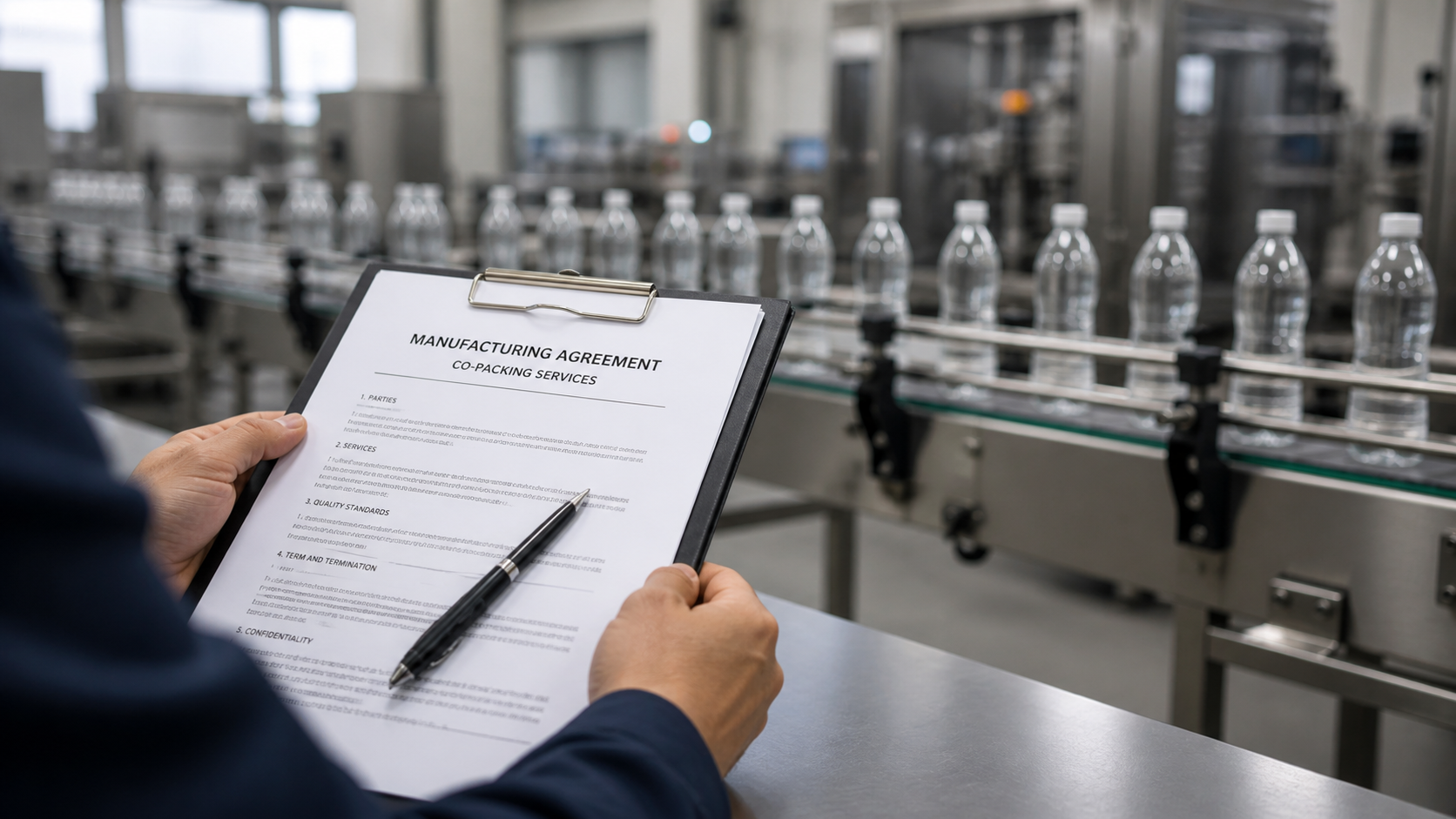
한국어A beverage contract manufacturing agreement is a formal co-packing contract that defines how a manufacturer will produce, pack, and deliver your beverage to agreed specifications, price, and timelines. It allocates responsibilities and risks across formulation, packaging, quality, delivery terms, and commercial conditions.
This guide outlines what belongs in a strong beverage contract manufacturing agreement—what to lock in, where flexibility is needed, and how to align specs, QA, forecasting, payment, and Incoterms. It is general information for beverage brands and buyers and is not legal advice.
What is a beverage contract manufacturing agreement?
A beverage contract manufacturing agreement sets the binding terms for a co-packer to produce and package your drink to defined specifications, under agreed pricing, lead times, quality controls, and delivery terms. It establishes who does what, who pays for what, and what happens if something goes wrong.
In practice, the agreement connects your product brief and quality standards to production realities—capacity, raw materials, testing, labeling, logistics, and change control. It typically sits alongside technical schedules (formulation, bill of materials, artwork), service-level metrics, and procurement attachments (forecasts, purchase order process).
How is it different from a beverage supply agreement?
They overlap, but a supply agreement focuses on buying finished goods (price, delivery, title, warranties), while a co-packing contract digs deeper into how the goods are made—manufacturing standards, change control, and responsibilities for inputs, testing, and recalls. Many brands use a hybrid that combines both.
The table below summarizes common positioning.
| Agreement type | Primary purpose | Typical scope | Positioning & notes |
|---|---|---|---|
| Contract Manufacturing Agreement (CMA) | Produce to spec | Specs, inputs responsibility, QA/testing, change control, capacity, tooling | Deep on process and risk allocation during production |
| Beverage Supply Agreement (BSA) | Buy finished goods | Price, MOQ, lead time, delivery, title & risk, warranties | Procurement-forward; may reference separate quality schedules |
| Hybrid CMA+BSA | One master document | Combines manufacturing and supply terms with schedules | Common for brand owners working long-term with a co-packer |
What clauses are essential in a co-packing contract?
Core clauses typically include product specifications and change control; responsibilities for ingredients and packaging; quality, testing, and recalls; capacity, forecasts, MOQ, and lead times; pricing and payment; delivery terms, title, and risk; labeling and regulatory compliance; IP and confidentiality; warranties, indemnities, and liability caps; term, termination, and exit; force majeure; and dispute resolution.
- Definitions and scope of products and services
- Specifications, formulation, and artwork control
- Inputs ownership and supply (ingredients, caps, bottles, cartons)
- Quality management, testing plans, and nonconformance handling
- Forecasting, MOQ, capacity reservation, and lead times
- Pricing, surcharges, and payment terms
- Delivery terms (Incoterms), title transfer, and risk of loss
- Regulatory, labeling, and document obligations
- IP, confidentiality, and tooling ownership
- Warranties, recalls, indemnities, liability caps, and insurance
- Term, termination rights, and exit/transition support
- Force majeure and change-in-law
- Governance, KPIs, and continuous improvement
Product specifications and change control: what must be locked?
Lock the product specification (organoleptics, Brix/acidity ranges, nutritional targets if applicable), packaging specification (materials, volumes, closures), and critical process parameters. Control changes through a documented process requiring written approval, a validation plan, and updated artwork and labels before any switch.
- Attach the current spec, bill of materials, and approved artworks as schedules.
- Define how trials, first-production approvals, and golden samples are handled.
- Require stability/shelf-life protocol alignment before launch and after changes.
Forecasts, capacity, MOQ, and lead times: how to plan supply?
Set a rolling forecast (e.g., non-binding for long horizon, binding lock period for near months), minimum order quantities per SKU, capacity reservation rules, and standard lead times. Clarify what happens if forecasts swing—expedite fees, partial shipments, or revised dates.
- Define the firm order lock window (e.g., X weeks) and allowable variance.
- State cut-off times for POs, artwork sign-offs, and ingredient call-offs.
- Explain surge capacity and peak-season planning, including overtime costs if any.
Pricing, surcharges, and payment terms
Price should reflect processing, packaging, and inputs. Protect both sides with a clear price review mechanism (e.g., formula-based adjustments for resin, sugar, or freight) and defined surcharges for small runs or urgent changeovers. State payment method, timelines, and consequences of late payment.
If you plan to use telegraphic transfer, align milestones, deposits, and document flows with your contract. See a practical overview of T/T payment terms for beverages.
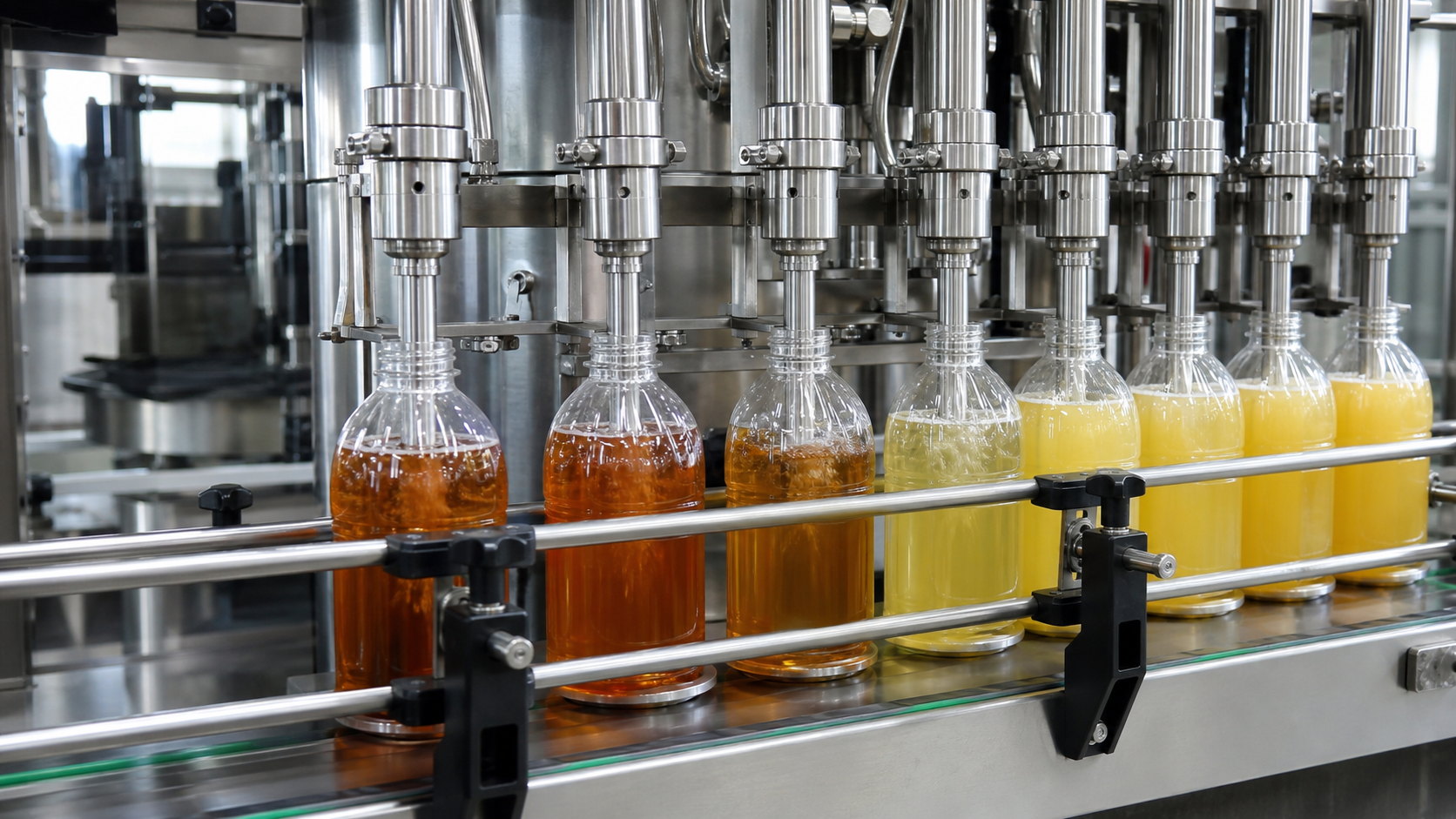
Quality, testing, and recall management: who does what?
Define the quality system baseline (e.g., HACCP-based, process controls, sanitation), incoming inspections, in-process checks, finished goods testing, and release criteria. Spell out who orders third-party tests, who pays, and how certificates of analysis are shared before shipment. Include a documented nonconformance process and a recall/withdrawal playbook with roles and timelines.
- Right to audit: scope, frequency, notice, and access to records and lines.
- Hold-and-release procedures for corrective actions and rework parameters.
- Complaint handling SLAs and traceability requirements (lot coding, retention).
For on-site verification, align your plan with best practices—what to check, documents to review, and how to escalate. This primer on how to audit a beverage factory can help structure your audit checklist and cadence.
Attach the testing matrix, sampling plans, and document list as schedules so both sides know exactly which results are needed before release. For a reference list of common files, see the supplier qualification document pack.
Materials and packaging: who buys and who owns them?
Clarify who procures ingredients and packaging, the approved vendors, safety stocks, and who bears obsolescence if forecasts are cut. If the brand supplies any inputs, define delivery windows, QC on receipt, handling losses, and replacement timing.
- Ownership transfer points for inputs and finished goods should be explicit.
- Artwork control and versioning rules prevent mixed labels across batches.
- For sustainability claims or recycled content, include verification steps.
If you plan to specify recycled PET or similar materials, align technical and sourcing aspects early. This explainer on rPET for beverage bottles can guide feasible content targets and testing considerations.
Delivery terms, title & risk: align with Incoterms
Use Incoterms to define delivery obligations, title transfer, and insurance responsibilities. The agreement should name the Incoterm rule, place, and version year, and map how title and risk move in purchase orders and shipment documents.
- Define partial shipments, split deliveries, and palletization/labeling standards.
- Clarify who books freight and who manages export customs clearance.
- State document timing (invoice, packing list, test results, origin documents).
Choose a rule that matches your team’s logistics capability and appetite for risk. For a quick comparison, review Incoterms for beverage imports before locking terms.
IP, confidentiality, and tooling ownership
Protect formulations, trade secrets, and brand assets through confidentiality obligations and IP ownership clauses. If the co-packer develops anything, state whether it is work-made-for-hire or if licenses apply. For molds, dies, and custom tooling, define who pays, who owns, how they are stored, and how they are returned on exit.
- Register approved versions of trademarks and artworks in the schedules.
- Limit manufacturer use of brand assets to fulfilling the contract.
- Require return or certified destruction of confidential materials upon termination.
Compliance and labeling responsibilities
Assign who ensures compliance with applicable food and beverage regulations in destination markets (e.g., compositional standards, additives, allergen statements, language). The party controlling artwork should validate label content and ensure pre-market notices or registrations are completed where required.
- Document control for regulatory updates and version release timing.
- Retention periods for batch records, test data, and label proofs.
- Recall notices: content, timelines, and authority to act in each market.
Warranties, indemnities, liability caps, and insurance
Include warranties on conformity to spec and merchantable quality, and on compliance with laws. Reflect the allocation of risk with indemnities (e.g., IP, labeling, contamination) and sensible liability caps, plus exclusions for fraud or willful misconduct if appropriate. State minimum insurance coverages and certificates to be provided upon request.
- Claims window and evidence requirements for visible and hidden defects.
- Remedies hierarchy: replace, refund, rework—who pays logistics and disposal.
- Batch quarantine and destruction protocols with cost allocation.
Term, termination, exit, and business continuity
Set an initial term and renewal mechanics, with termination rights for cause (e.g., repeated nonconformances, late deliveries) and convenience (with notice and wind-down costs). Plan an orderly exit—return of tooling, transfer of quality records, and final inventory disposition.
- Business continuity: backup power, water, and ingredient alternatives.
- Disaster recovery: priority scheduling after incidents and communication SLAs.
- Key-person and subcontracting restrictions or approvals.
Force majeure and change-in-law
Define how unforeseen events suspend obligations and what notice is required, along with mitigation efforts. Address change-in-law impacts on formulations, packaging, or labeling (and who covers transition testing, artwork changes, and scrappage).
Governance, KPIs, and continuous improvement
Formalize monthly or quarterly business reviews, agreed KPIs (OTIF, right-first-time, complaint rate), and corrective action timelines. A simple governance structure helps resolve minor issues early and sets the tone for collaborative problem-solving.
- Escalation path with named roles and response times.
- Joint improvement projects with clear ROI sharing if relevant.
- Data sharing—forecast accuracy, material yield, and waste dashboards.
Schedules and attachments: what should be included?
Attach the documents that operationalize the contract: current specifications, artwork and labeling files, testing plans, audit checklist, approved vendor list, and document pack requirements. Purchase order process maps, forecast templates, and batch record formats also belong here.
- Specifications and bills of materials per SKU, with version history.
- Testing matrix (micro, chemical, sensory) and release criteria.
- Artwork PDFs, palletization standards, and shipping label templates.
For a ready reference to typical files buyers request at onboarding and during release, see the supplier qualification document pack.
How to negotiate a balanced beverage contract manufacturing agreement
Start from your product risk profile (acidified juices versus dairy-based RTDs), launch timeline, and go-to-market plan. Convert those realities into must-haves (safety and compliance), nice-to-haves (surcharges clarity, surge capacity), and flex areas (renewal term length). Align incentives through realistic forecasts and timely approvals.
- Ground discussions with a detailed product brief and stability data where available.
- Keep change control disciplined—batch affects brand equity, shelf-life, and claims.
- Use pilot runs to validate critical parameters before scaling POs.
Be transparent on the commercial levers: the tighter the spec and the shorter the lead time, the higher the cost and risk premiums may be. Conversely, reliable forecasts and timely artwork approvals lower waste and unit costs for everyone.

FAQ
Is a co-packing contract the same as an NDA?
No. An NDA protects confidential information, while a co-packing contract covers manufacturing, pricing, QA, delivery, and liability. You generally need both—the NDA for early discussions and the manufacturing agreement for ongoing supply.
Who owns the formulation and artworks?
Typically the brand does, unless development is commissioned under terms granting the manufacturer ownership or joint rights. State ownership and licenses explicitly and attach the exact versions of formulations and artworks as schedules.
Can we require recycled content or special packaging?
Yes—if the co-packer can source and run it consistently. Add material specs, testing, and vendor approval steps, and align cost adjustments. For technical context, review rPET for beverage bottles.
How should we structure payments?
Match cash flow to risk and lead times—e.g., deposits for long-lead packaging, balance at shipment, with documents shared pre-release. See an overview of T/T payment terms for beverages for common structures.
What if we need to audit the site periodically?
Build audit rights into the agreement—scope, frequency, notice, and access to production and records. Prepare using a practical guide on how to audit a beverage factory.
Key takeaways
A strong beverage contract manufacturing agreement ties your brief to real-world production with clear specs, QA, and responsibilities, while balancing price, lead time, and risk. Lock what must not drift (critical specs, testing, labeling), define how change happens, and align delivery terms with Incoterms and document flows. Use schedules to keep everything current and auditable.
Before you sign, pressure-test forecast and capacity assumptions, confirm release documents and certificates, and align on payment and logistics flows. Useful references include Incoterms for beverage imports, the supplier qualification document pack, and how to audit a beverage factory. With these, you can negotiate a balanced beverage contract manufacturing agreement that supports quality, cost, and service over the long term.
Packaging and production at ACMFOOD
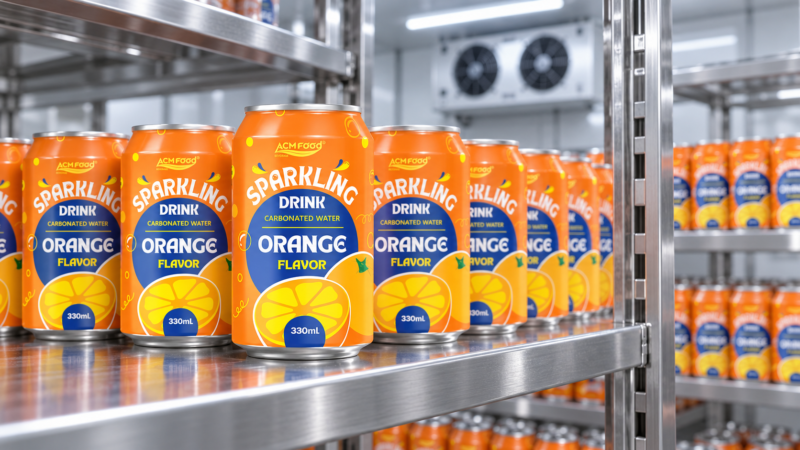
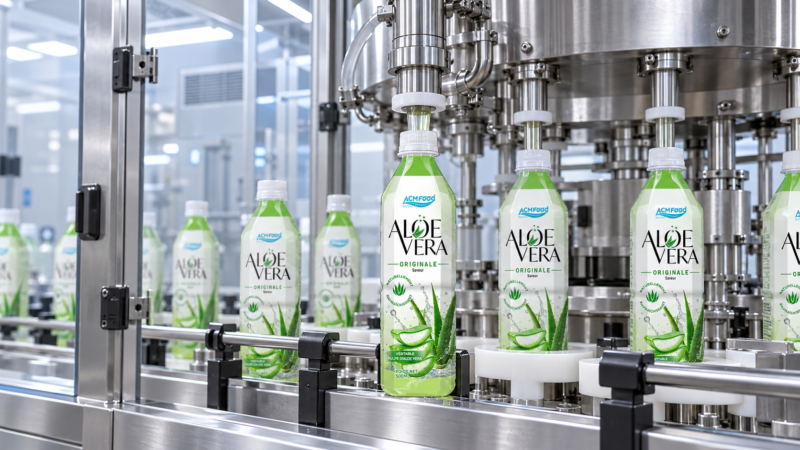
For the container formats, fill volumes and case configurations available, see beverage packaging options. For how the product is filled and controlled on line, see our production process. Minimums are set per SKU — see minimum order quantity. To cost a format, request a quote.
Request a quote