


 Français
 Español
 العربية
 한국어
한국어Recycled PET (rPET) in the beverage industry refers to polyethylene terephthalate that has been reclaimed and reprocessed from used PET materials to make new bottles, preforms and secondary packaging for drinks. In beverages, rPET is valued for circularity, reduced use of virgin plastic and compatibility with existing PET bottle systems when designed and qualified correctly.
This guide explains what rPET is, how it is made for food-contact applications, material & design considerations, safety and compliance, supply & cost signals, and how brands can brief packaging partners for successful rPET beverage projects.
What is rPET and how does it relate to beverage packaging?
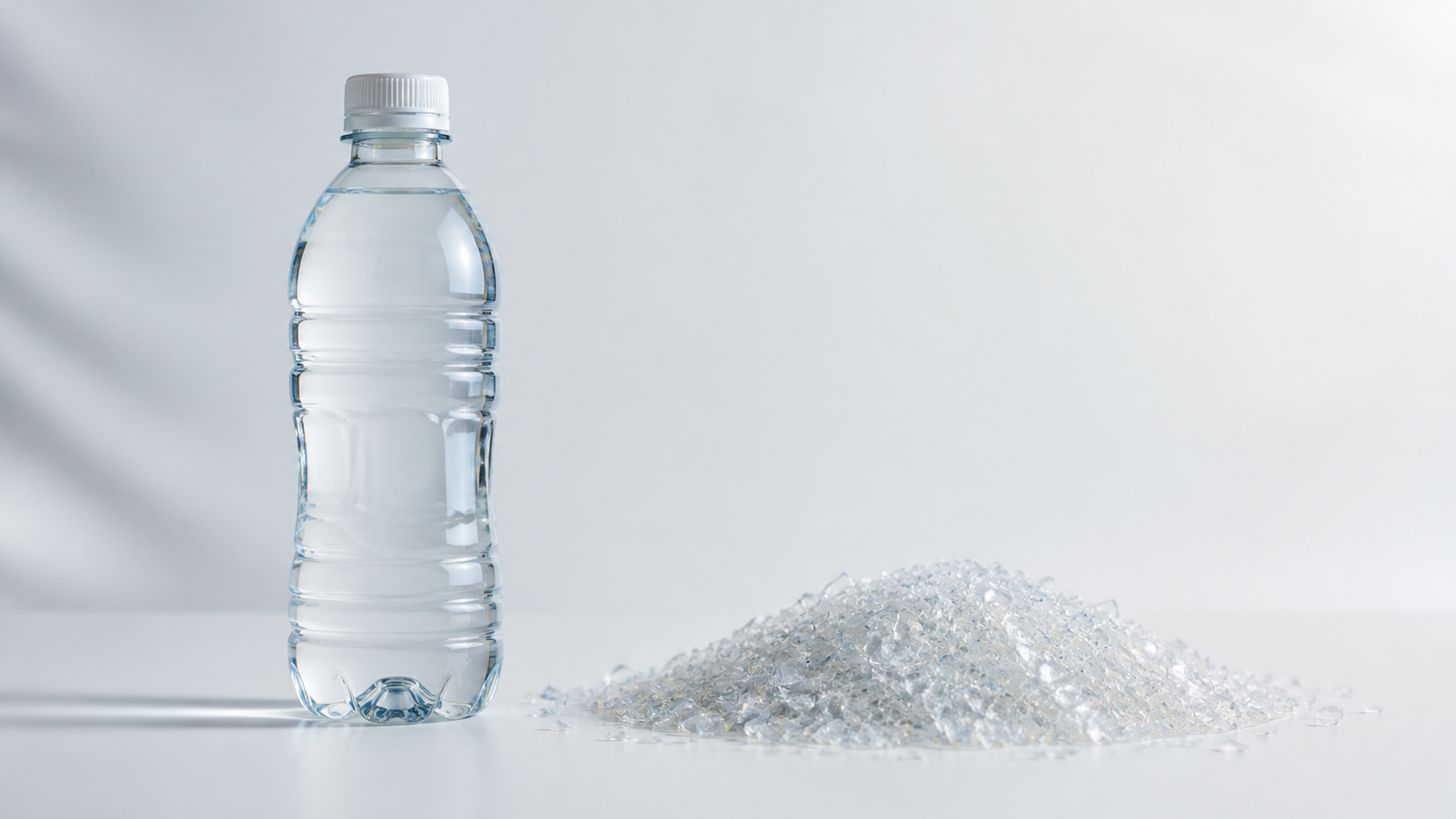
rPET is recycled polyethylene terephthalate derived from post-consumer or post-industrial PET, then processed into flakes or pellets for manufacturing new packaging. In beverages, rPET can be used in preforms and bottles, often as partial or full content, while maintaining the performance envelope required by the drink and its filling process.
PET is a lightweight, strong, and highly recyclable polyester commonly used for water, carbonated soft drinks, juices, teas and more. rPET closes the loop by turning used PET back into new packaging. Depending on regulation and process capability, rPET may be used in mono-layer bottles, multilayer structures, or blended with virgin PET to meet clarity, mechanical and barrier targets.
Two widely referenced feedstocks are post-consumer recycled (PCR) PET from returned bottles and post-industrial recycled (PIR) PET from clean production scrap. Mechanical recycling (sort–wash–flake–decontaminate–repelletize) is common for bottle-to-bottle; chemical recycling routes depolymerize PET and rebuild polymer chains, potentially yielding near-virgin material, though availability and infrastructure vary by region.
How is PET recycled into food-contact rPET?
Food-contact rPET is produced through controlled processes designed to remove contaminants and restore polymer properties suitable for beverage packaging. The general flow includes sorting, washing, decontamination and polymer rebuilding steps, with quality controls at critical points.
- Collection & sorting: Baled PET (often from deposit or kerbside systems) is sorted to remove non-PET items, colored PET, metals and labels.
- Washing & flaking: PET is washed to reduce residues, then ground into flakes. Further cleaning removes adhesives, labels and fines.
- Decontamination: Specialized high-temperature, high-vacuum steps reduce potential contaminants to food-contact thresholds as required by regulators.
- IV restoration & pelletizing: Solid-state processes can rebuild intrinsic viscosity (IV) to levels suitable for preform production; rPET may be delivered as pellets or flake depending on converter set-up.
- Converted into preforms: rPET (alone or blended with virgin PET) is injection-molded into preforms, then stretch blow molded into bottles.
- Verification: Migration testing, sensory checks and routine QC are used to confirm specifications defined for the target beverage and market.
Is rPET safe for beverage bottles?
Yes—when produced via approved processes that achieve food-contact compliance for the destination market, rPET can be used safely in beverage bottles. Compliance typically depends on the decontamination technology, verification testing and regulatory frameworks applicable to the country or region of sale.
Safety depends on both the recycling process and the final packaging system. Brands and converters often rely on regulatory opinions or clearances for specific recycling technologies and ensure that their finished bottles pass relevant migration, sensory and performance tests for the beverage, fill temperature, storage and shelf-life conditions.
rPET vs virgin PET: material and design implications
When engineered and processed well, rPET can achieve comparable performance to virgin PET for many beverage applications. However, designers should account for possible differences in color tone, haze, intrinsic viscosity stability and process window, which may be influenced by feedstock and recycling route.
| Aspect | Virgin PET | rPET (generalized) | Design & QA notes |
|---|---|---|---|
| Clarity & color | Typically very clear, neutral tint | May show slight tint or higher haze | Specify L*a*b* targets; manage label/sleeve to harmonize appearance |
| Intrinsic viscosity (IV) | Stable, tailored to application | Restored via process; batch variability possible | Define IV range for preforms; monitor over time and lots |
| Mechanical strength | Predictable under defined blow settings | Comparable when process is optimized | Tune preform weight, stretch ratios, and heat-set if needed |
| Barrier to CO2/O2 | Baseline PET barrier | Generally similar; depends on grade/process | Use coatings/multilayer if higher barrier is required |
| Sensory (taste/odor) | Neutral when processed correctly | Should be neutral after decontamination | Include sensory paneling and migration testing |
| Color options | Broad palette | Clear & light tints are common | Favor clear to support recyclability and branding flexibility |
| Availability | Broadly available | Supply can be tighter or seasonal | Plan buffer stock; align with recycler capacities |
| Cost drivers | Resin market pricing | Resin + collection/sorting premiums | Secure contracts; consider blended content strategies |
Practical implication: Treat rPET as a defined specification, not a commodity placeholder. Lock down color targets, IV windows, approved recycling processes and QC protocols in your technical agreement, and validate on the actual filling line conditions.
Which beverage formats and closures work with rPET?
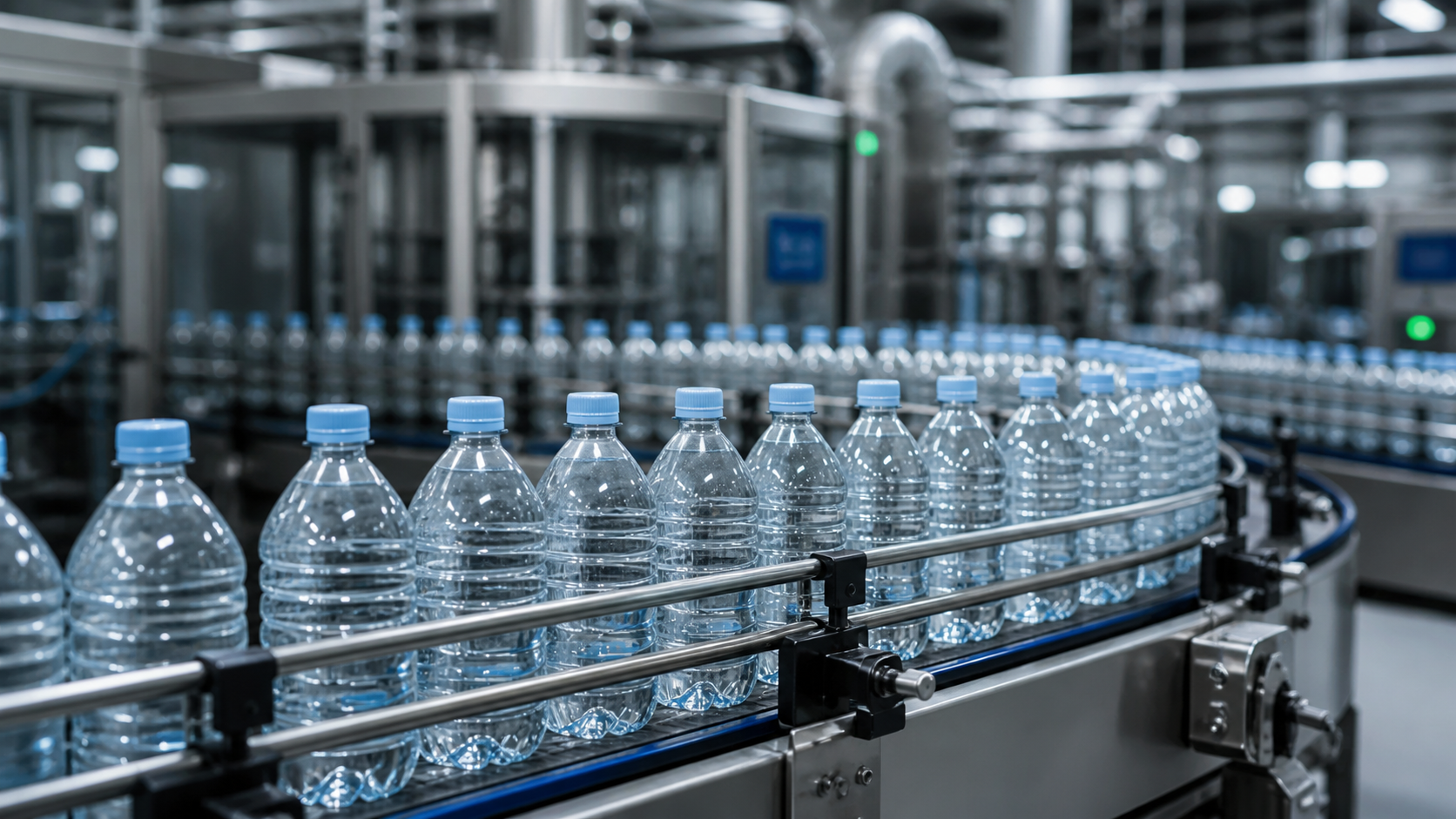
Most PET-appropriate beverages can also run in rPET when the grade, preform and blow settings are matched to the application. Still water and many RTD beverages are common early adopters. Carbonated soft drinks, sensitive juices and hot-filled products may require additional design controls or barrier strategies.
- Still beverages: Water, flavored water, many teas and isotonic drinks typically run well in clear rPET with standard preforms.
- Carbonated products: Define IV and wall distribution carefully; verify top-load, creep and CO2 retention under worst-case logistics.
- Juices & sensitive beverages: Consider oxygen barrier solutions (coatings, multilayer) and color specifications that preserve product appeal.
- Hot-fill or warm-fill: Evaluate heat-set bottles, crystallinity and panel design as required by the fill temperature profile.
- Closures: Common neck finishes (e.g., PCO families) and tethered caps are compatible; confirm application torque and seal performance.
Color, haze and branding with rPET
rPET can present a subtle tint or slightly higher haze depending on feedstock and processing. Rather than fighting every nuance, successful brands: (1) set realistic, testable color targets, and (2) make packaging and label choices that harmonize the finished shelf appearance.
- Specify measurable appearance: Agree acceptable color space targets and haze thresholds with vendors; validate on production samples.
- Label strategy: Pressure-sensitive labels with balanced opacity can unify visual tone without over-inking; avoid heavy, dark sleeves if clarity is part of your brand language.
- Design for recycling: Clear bottles with washable labels and compatible adhesives typically support better recyclability than fully opaque or multi-material solutions.
Printing, labeling & compliance on rPET bottles
Labels, inks and adhesives should be selected for both appearance and end-of-life compatibility. Wash-off labels and recycling-compatible adhesives can help improve yield in the next cycle. Claims such as “made with recycled plastic” or stated recycled content should follow local advertising and packaging rules.
For an overview of formats and trade-offs across materials, see the comparison of Cans, PET, Glass & Tetra Pak.
- Pressure-sensitive labels: Good for clarity and premium cues; select wash-off systems aligned with regional recyclers.
- Shrink sleeves: Maximize billboard space; plan for perforations or sleeve materials that meet local design-for-recycling guidance.
- Direct print: Consider carefully; ensure downstream recycling processes can handle inks and coverage.
- Compliance: On-pack recycled content statements, recycling marks and deposit symbols vary by market. Align legal text with counsel.
Supply, planning and cost signals for recycled PET packaging
rPET supply is linked to collection systems, sorting capacity and recycling infrastructure. Availability can fluctuate by season and region. Brands can reduce risk by aligning forecasts with recyclers and converters, qualifying multiple sources, and defining acceptable ranges for appearance and IV.
- Feedstock planning: Engage early to reserve capacity for target launches and promotional peaks.
- Specification flexibility: Where possible, allow a controlled appearance window (e.g., slight tint tolerance) to widen supply options.
- Preforms vs on-site conversion: Decide between buying preforms or resin; preforms simplify operations but require robust vendor QC.
- Testing regime: Include migration, sensory, mechanical, torque, top-load, drop and pallet compression tests under worst-case logistics.
For packaging engineering tactics that balance brand, performance and cost, review this PET bottle innovation guide.
Sustainability claims, audits and traceability
rPET supports circularity narratives, but claims must be accurate and verifiable. Where possible, use traceable supply models and keep documentation (e.g., chain-of-custody records from recyclers or converters) that align with your market’s advertising and environmental claim standards.
- Claim scope: Clearly state whether the claim refers to the bottle body only, or includes closures and labels.
- Mass balance vs segregated streams: Different supply models exist; ensure your claim language matches the actual sourcing approach.
- Market rules: Environmental and recycled content claims are regulated. Align wording with local guidance and legal review.
- LCA context: Impact comparisons depend on system boundaries and assumptions; avoid universal claims without supporting analysis.
Product development checklist for rPET beverages
Use the following as a practical, non-exhaustive checklist when moving a beverage into rPET:
- Beverage profile: carbonation, pH, oxygen/CO2 sensitivity, light sensitivity, fill temperature and shelf-life targets.
- Process: cold/ambient fill, warm/hot-fill, pasteurization, tunnel vs flash, and line speeds.
- Bottle design: volume, geometry, paneling, base type, neck finish, handle or grip features.
- Preform: weight, IV specification, color targets and allowable variability.
- Material strategy: mono rPET, rPET/virgin blends, or multilayer/barrier solutions.
- Closures & liners: seal performance, torque window, tethered cap requirements and compatibility with deposit systems.
- Labels & decoration: label material, adhesive, coverage, and recycling compatibility.
- Testing: migration/sensory, top-load/creep, burst, vacuum/pressure, drop, scuff, and pallet compression.
- Logistics: pallet pattern, film wrap, temperature/humidity exposures, stacking time and retailer handling.
- Compliance: target market regulations for food-contact, environmental claims, marking and returns/deposit labeling.
Regional notes: the U.S. and Australia
Regulatory pathways, deposit systems and recyclability guidance vary by region. Teams should confirm food-contact compliance, labeling and recycled content rules for each market, as well as any retailer-specific packaging requirements.
- United States: Coordinate recycled content claims, state-level deposit return labels where applicable, and retailer packaging standards. See an overview of beverage packaging for U.S. brands.
- Australia: Align with local design-for-recycling guidance and retailer expectations; consider scheme labeling and collection realities. Explore packaging options for Australia and plan logistics with import requirements in mind—start with how to import beverages into Australia.
Positioning rPET formats and use cases
Brands typically adopt rPET in phases—beginning with high-volume SKUs where visual targets are achievable, then expanding as supply and consumer acceptance grow. The table below summarizes common positioning paths.
| Format | Typical use cases | Positioning & notes |
|---|---|---|
| Partial rPET blend | Core SKUs in water or RTD beverages | Smoother transition on color/appearance; easier supply ramp |
| 100% rPET bottle body | Flagship SKUs, sustainability-led launches | Strong circularity message; requires tight color/IV control |
| rPET + barrier | CO2-rich or oxygen-sensitive products | Maintains product quality; confirm recycling compatibility |
| rPET with tethered caps | Markets with tethered-cap rules | Design closure/neck finish for line efficiency and consumer ease |
For a broader material comparison across cans, glass and cartons, refer back to Cans, PET, Glass & Tetra Pak.
Working with a recycled PET packaging supplier: what to brief
A precise brief accelerates technical feasibility and pricing. Share:
- Beverage type and conditions: carbonation level, fill temperature, shelf-life, storage exposures.
- Target bottle: volume(s), weight, neck finish, dimensions, and visual benchmarks.
- Material plan: desired rPET percentage, acceptable appearance window, and whether a barrier is needed.
- Compliance: destination markets and any required regulatory pathways for food-contact.
- Operations: line speeds, blow-molder model, changeover limits, and case/pallet constraints.
- Quality: testing plan, acceptance criteria, and documentation expectations (e.g., lot traceability).
- Program: ramp timeline, forecast by SKU, and contingency for supply variability.
If your portfolio spans multiple packaging materials, align bottle choices with broader route-to-market and retail needs by reviewing Cans, PET, Glass & Tetra Pak and region-specific notes above.
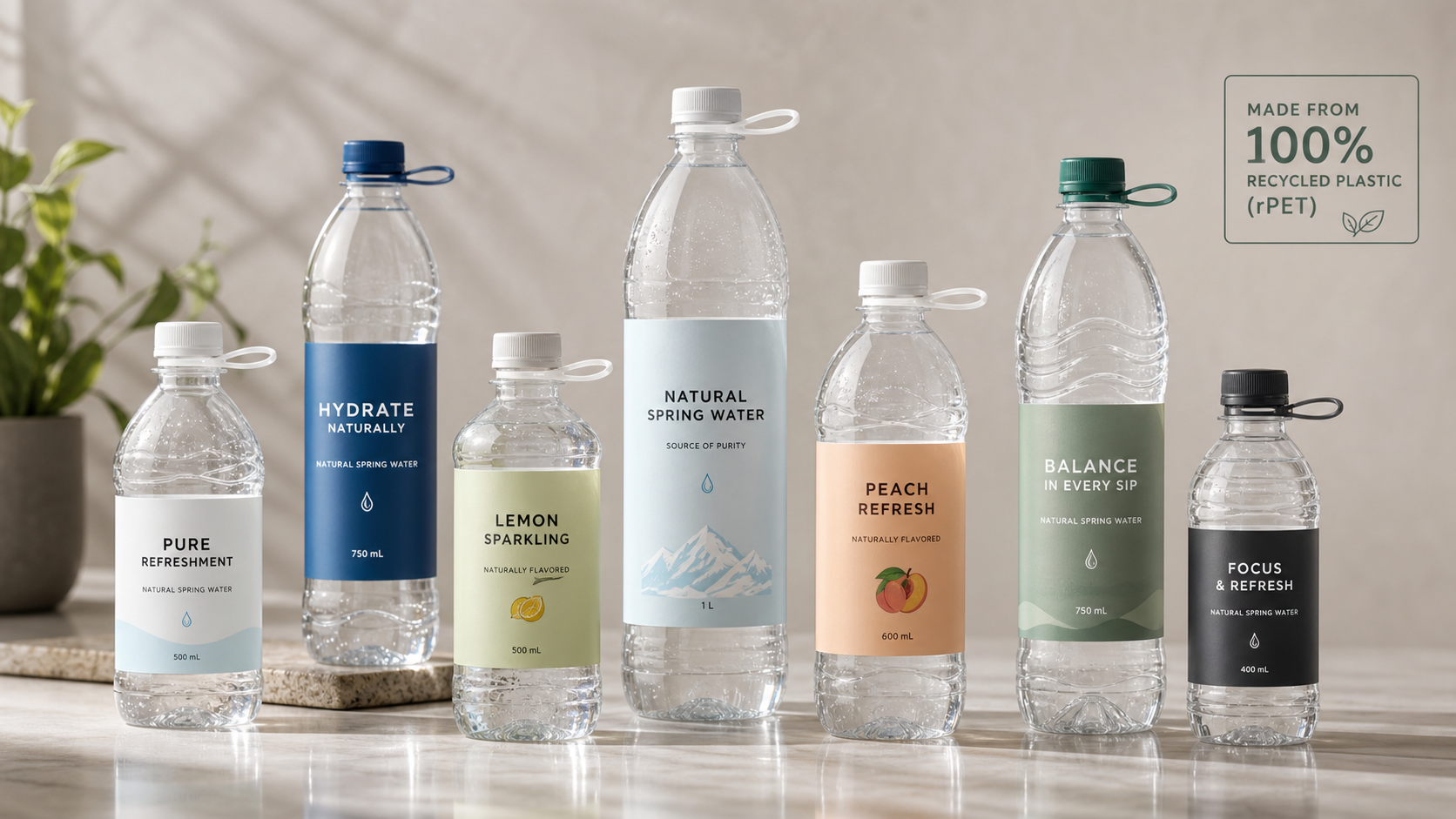
If a full rPET bottle is not yet practical, see partially recycled PET: understanding 30% and 50% rPET.
FAQ
Can beverage bottles be made from 100% rPET?
Yes, 100% rPET bottle bodies are feasible when the recycling process, resin quality and conversion parameters meet the product’s performance and compliance needs. Many brands begin with partial blends, then scale to higher rPET content as appearance and supply targets are achieved.
Does rPET affect beverage taste or odor?
Properly decontaminated and qualified rPET should present neutral sensory performance. Include migration and sensory testing in your validation plan, and assess under worst-case storage and distribution conditions.
Is rPET suitable for carbonated soft drinks?
Yes—pending grade selection, IV control, and bottle design tuned for CO2 retention and top-load stability. Validate with line trials and storage tests that reflect your distribution environment.
Can rPET bottles handle hot-fill?
Potentially. Heat-set designs and controlled crystallinity may be required, depending on fill temperature and dwell time. Confirm dimensional stability, seal integrity and paneling under your exact process.
How can we improve recyclability of rPET bottles?
Favor clear bottles, recycling-compatible adhesives, and labels designed for clean separation. Avoid heavy pigments and non-detachable components. Check local design-for-recycling guidelines and run trials with regional recyclers.
Conclusion
rPET enables beverage brands to reduce virgin plastic while staying within proven PET ecosystems. Success depends on defining clear specifications (appearance, IV, performance), validating under real filling and logistics conditions, planning supply with qualified recyclers, and making accurate, compliant claims. Tie your rPET roadmap to SKU-by-SKU feasibility and regional requirements to scale with confidence.