


 Français
 Español
 العربية
 한국어
한국어To import beverages into Spain, align with EU food import controls, clear Spanish border checks managed alongside AESAN, and complete customs via the DUA declaration. Most non-alcoholic drinks attract 21% VAT on import. Routing commonly uses the Valencia and Barcelona ports with established Border Control Posts for foods.
This guide focuses on Spain-specific steps and authorities. For the shared EU-level labelling and import framework, see the consolidated page on EU beverage labelling & import rules; we do not repeat those rules here.
What does Spain require to import beverages?
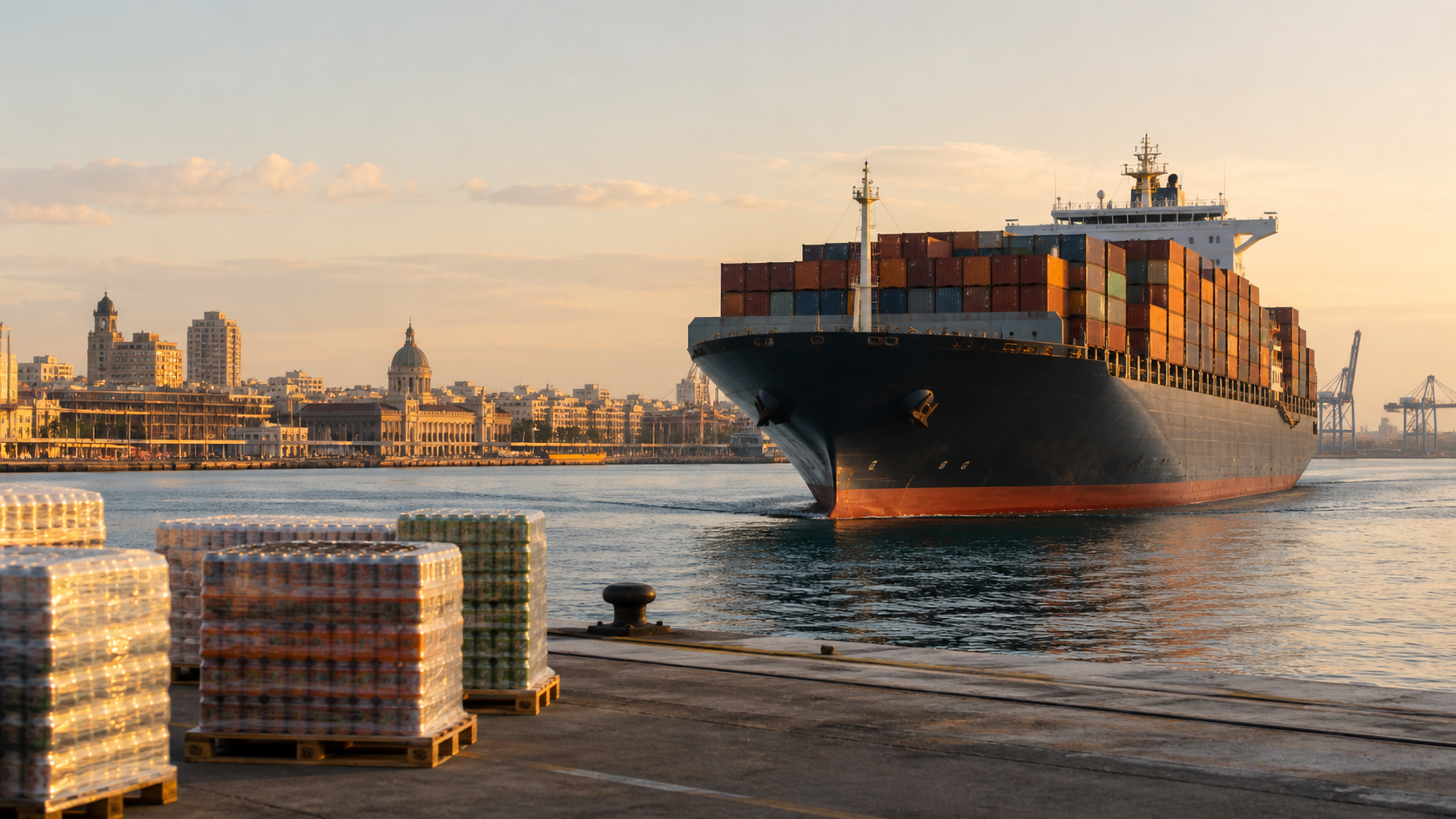
Spain applies EU food law at the border while its agency Agencia Española de Seguridad Alimentaria y Nutrición (AESAN) oversees food safety on the market. Shipments usually enter through Valencia or Barcelona ports, pass documentary/identity/physical checks at designated Border Control Posts (PCF), and clear customs via the DUA form before national distribution.
Step-by-step: How to import beverages into Spain
Use this Spain-focused workflow from first scoping to release. It complements EU-level requirements referenced above.
- Define the product and HS/CN code. Classify under the EU Combined Nomenclature (e.g., beverages in Chapters 20–22) to determine duties, excise (for alcohol), and documents. Keep specs, ingredients, and Brix/acidity on file for classification consistency.
- Confirm marketability in Spain. Ensure the product can be sold under Spanish law as applied to EU rules. Spain recognizes EU categories (e.g., fruit juice, nectar, soft drink), enforced in-market by AESAN and regional authorities.
- Appoint an EU-established Food Business Operator (FBO). The responsible name & address on pack must be in the EU. If your company isn’t EU-established, work with a Spanish or EU importer who assumes legal responsibility.
- Register the importer as required. Spanish importers placing foods on the market generally maintain registration in the RGSEAA (Registro General Sanitario de Empresas Alimentarias y Alimentos). Keep registration details available for inspections.
- Obtain an EORI number and prepare for Spanish customs. The importer needs an EU EORI to lodge the DUA (Documento Único Administrativo) with the Agencia Tributaria (AEAT). Set up electronic customs access and a customs broker if needed.
- Build Spain-ready labels. Mandatory particulars must appear at least in Spanish (Castilian). Align all general EU labelling rules via EU beverage labelling & import rules and ensure Spain-specific language and format details are ready before shipping.
- Check taxes and duties. Non-alcoholic beverages typically incur 21% IVA (VAT) on import into mainland Spain. Alcoholic beverages are subject to EU-harmonized excise in addition to VAT. Special territories (Canary Islands/IGIC, Ceuta & Melilla/IPSI) follow separate consumption taxes.
- Plan the route and entry port. For sea freight, Spain’s main food gateways are Valencia and Barcelona with established PCF. Align carrier schedules, reefer capacity (if needed), and port handling for beverage packaging stability.
- Prepare border documents. Keep a consistent pack: commercial invoice, packing list, bill of lading/air waybill, health/manufacture certificates (as applicable), certificate of origin (if using preferences), and product specifications. Where EU rules require pre-notification (e.g., for certain high-risk foods), ensure TRACES NT entry is correctly lodged to the Spanish PCF.
- Ship and pre-advise stakeholders. Share documents early with your Spanish customs broker, freight forwarder, and the receiving PCF at Valencia or Barcelona as applicable. Confirm cold chain or stowage requirements for sensitive beverages.
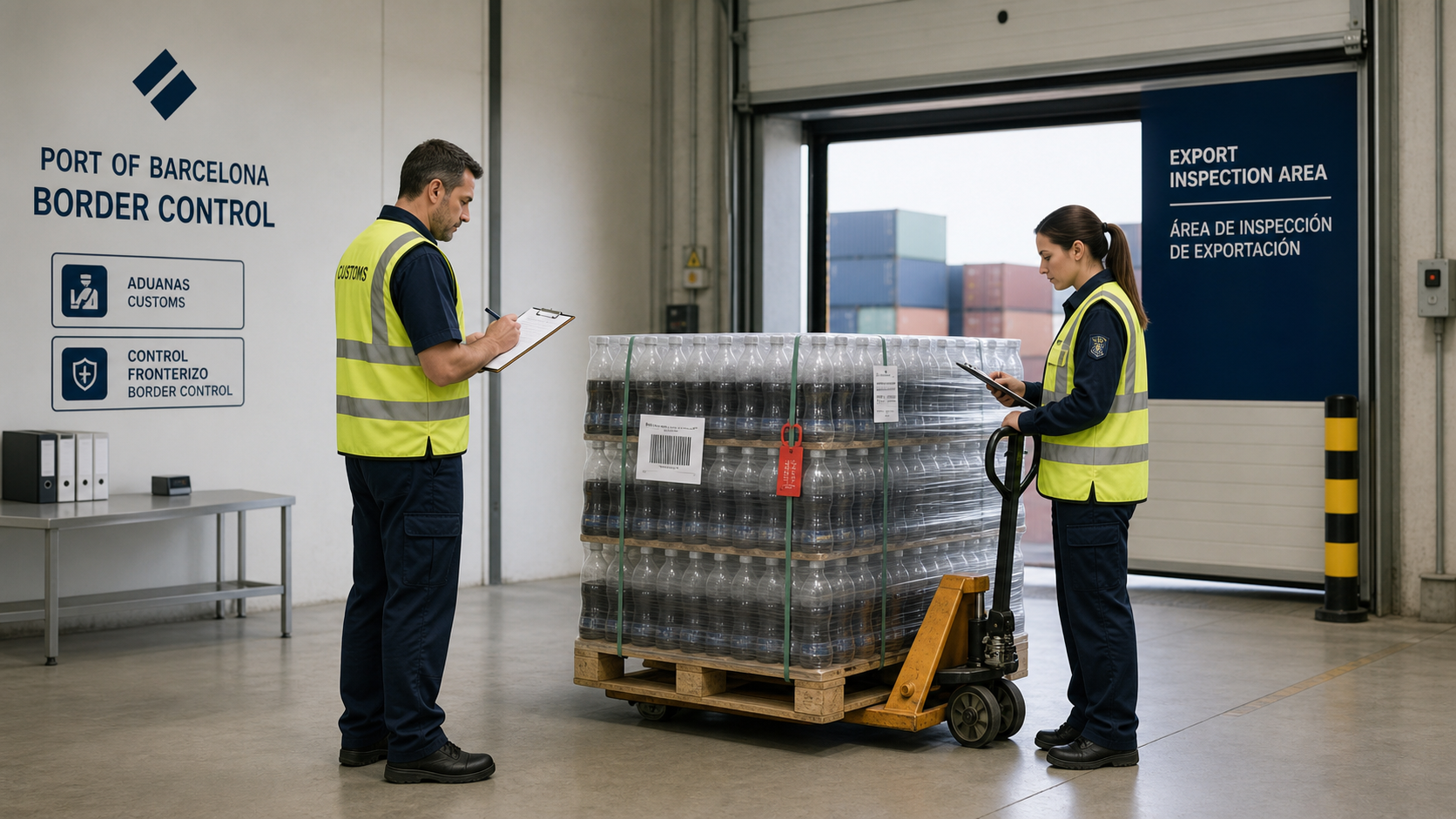
- Border control at the Spanish PCF. On arrival, shipments may undergo documentary, identity, and physical checks under EU official control rules, coordinated in Spain with AESAN and competent services at the PCF. Provide samples promptly if requested.
- Customs clearance via the DUA. Your broker lodges the DUA to AEAT, applies the correct CN code and origin, calculates any customs duty, and collects IVA 21% (and excise for alcohol, if applicable). Keep all tariff rulings and valuation evidence.
- Release, warehousing, and Spanish distribution. After green light at the PCF and customs release, move goods to your warehouse or 3PL. Maintain traceability and lot control suitable for Spanish market surveillance.
- Post-market oversight. Spanish authorities can sample beverages in retail/wholesale. Keep the RGSEAA registration current, retain batch records and labels, and respond quickly to any corrective actions.
Spanish labelling and presentation: what’s different?
Mandatory particulars must be in Spanish (Castilian) so consumers across Spain can understand them. This includes name of the food, ingredient list with allergens, net quantity, date/lot coding, storage/use instructions when relevant, and the responsible EU operator’s name & address. Nutrition information follows EU rules; we defer to the shared EU page: EU beverage labelling & import rules.
In practice for Spain:
- Language: Provide a full Spanish label or a compliant multilanguage label that includes Spanish for all mandatory particulars.
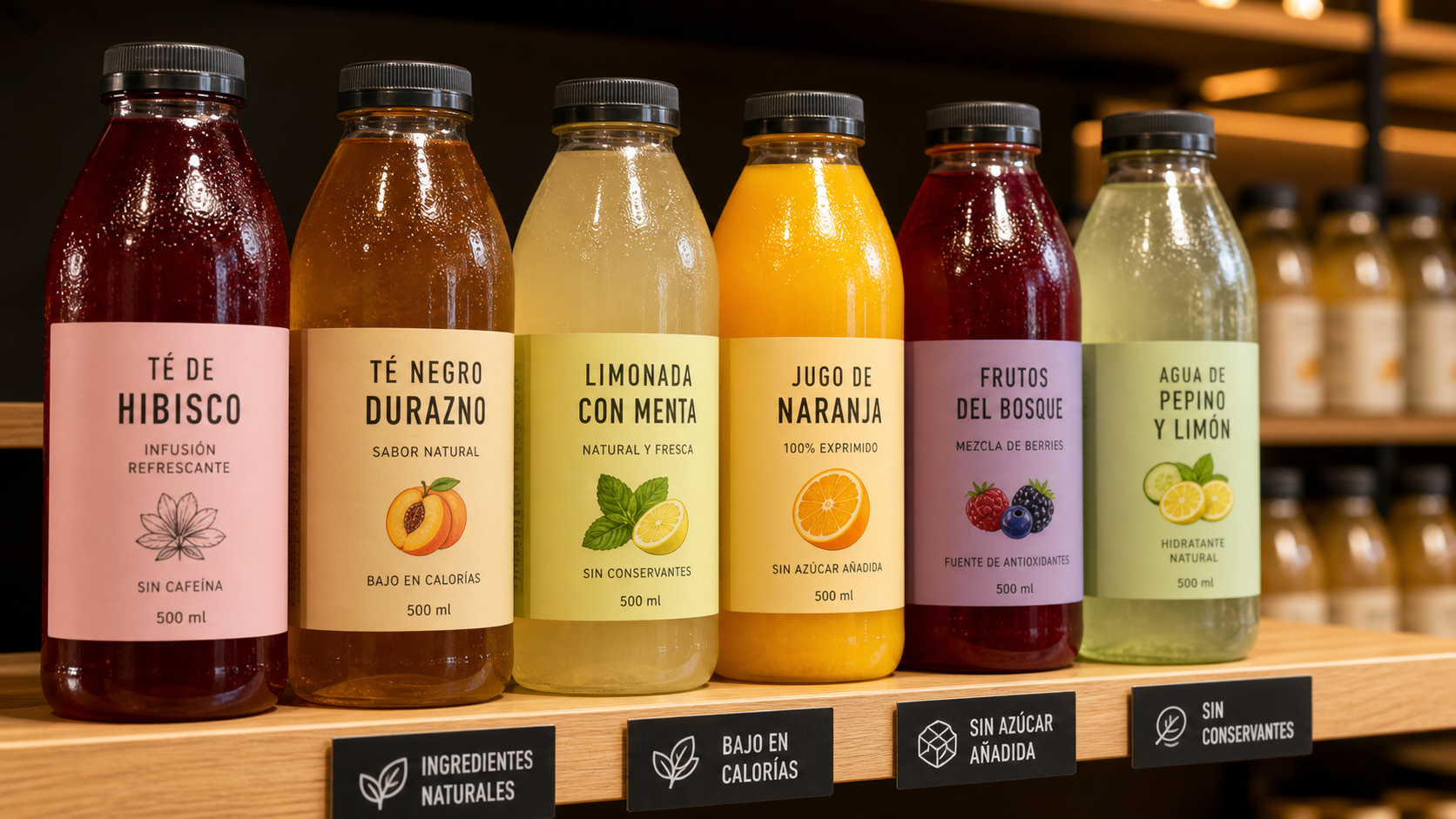
- Name of the food: Use the recognized Spanish product name (e.g., zumo, néctar) aligned with EU beverage categories to avoid misleading presentation.
- Claims & marketing: Any nutrition/health-related statements must comply with EU rules and reflect actual, verified composition per serving; Spain enforces misuse through market controls.
- Lot & dates: Ensure lot coding and durability date are clear and survive Spanish distribution conditions (humidity, abrasion) on outer cases and consumer packs where applicable.
Ports, Border Control Posts (PCF), and routing into Spain
For beverages, the busiest sea entry points are Valencia and Barcelona. Both host designated Border Control Posts (PCF) qualified for foods, supported by extensive reefer and general cargo capacity. Working with forwarders experienced at these ports reduces delays from misrouted paperwork or pre-notifications.
- Valencia: Major Mediterranean gateway with frequent container services from the Americas, Africa, and Asia; established food PCF and logistics ecosystem.
- Barcelona: Large multi-terminal hub with robust food and cold-chain infrastructure and an experienced PCF network.
If you plan direct imports into Spain’s special territories, account for separate tax regimes (e.g., IGIC in Canary Islands) and confirm the local PCF designation and availability for your beverage category.
Spain-specific taxes, duties, and excise
Non-alcoholic beverages: Typically charged 21% IVA (VAT) at import into mainland Spain, applied on the customs value plus duty. Customs duty depends on the CN code and applicable EU trade preferences.
Alcoholic beverages: Subject to EU-harmonized excise (rates differ by product type and strength) in addition to VAT. Ensure correct excise handling (e.g., EMCS procedures when relevant) before release into free circulation.
Special tax territories: Canary Islands apply IGIC instead of IVA, and Ceuta & Melilla apply IPSI. Plan distinct customs/tax workflows if your first point of entry or distribution occurs there.
Spanish definitions and category fit: a quick reference
Spain enforces EU beverage marketing standards in market surveillance. Ensure your formula and label match the intended Spanish category naming used by retailers and inspectors.
| Category | Spanish-facing label cues | Positioning & notes |
|---|---|---|
| 100% fruit juice | “Zumo 100%” with no added sugars (per EU rules) | Ensure Brix/acidity match recognized standards; Spanish name consistent with EU category. |
| Nectar | “Néctar” with declared fruit content and sweeteners if used | Spanish name must reflect nectar, not 100% juice; disclose sweeteners under EU rules. |
| Soft drink / soda | Spanish ingredient list and allergens, additives stated | Check CO2 handling in distribution; label in Spanish for all mandatory particulars. |
| Energy drink | Spanish label with caffeine statement per EU guidance | Marketing claims must align with EU claims lists; Spanish front/back text must be clear. |
| Alcoholic (beer/wine/spirits) | Alcohol strength, category-appropriate particulars in Spanish | Excise handled at import; verify any protected names and origin terms. |
Documentation and clearance tips tailored to Spain
- Consistency: Align commercial invoice, packing list, and label language in Spanish where they reference the product name. Inspectors appreciate one-to-one term consistency.
- DUA data quality: Double-check CN code, customs value, and origin; Spain’s AEAT systems flag mismatches quickly.
- PCF appointments: At Valencia/Barcelona, ensure your forwarder books any required PCF slot and that TRACES NT entries (when used) identify the correct Spanish PCF.
- Outer cases: Add durable lot/date markings in Spanish-facing format so wholesalers and control officers can trace without opening every case.
- Recordkeeping: Keep RGSEAA, supplier approvals, HACCP summaries, and lab results ready for on-market checks coordinated by AESAN.
Market entry context
For competitive landscaping and retailer expectations in Spain, review broader category dynamics alongside global benchmarks. A concise starting point is the roundup of global juice brand benchmarks. For Spain-specific trade and consumer insights, see our Spain market overview.
Common pitfalls when you import beverages into Spain
- Missing Spanish language: Labels without Castilian Spanish for mandatory particulars will face relabelling or detention.
- Wrong category naming: Calling a nectar “zumo 100%” triggers non-compliance; align formula, Brix, and naming.
- Inadequate pre-notification: Where EU rules require TRACES NT, late or wrong PCF choice stalls clearance.
- Excise oversight on alcohol: Treat excise separately from VAT and duty; prepare evidence for strength and product type.
- Territory taxes ignored: Shipping to Canary Islands or Ceuta/Melilla without planning IGIC/IPSI processes causes billing and clearance issues.
For duty rates, EVFTA preferences and Spain’s plastic packaging tax, see import duty and trade agreements for beverages entering Spain.
FAQ
Is a Spanish-based company required to import beverages into Spain?
No, but the responsible Food Business Operator on the label must be established in the EU. Non-EU brand owners can work with a Spanish/EU importer who assumes responsibility and manages customs and market compliance.
Do I have to translate everything into Spanish?
Yes for mandatory particulars. Spain requires mandatory consumer information to appear at least in Spanish (Castilian). You can use a multilingual label if Spanish is included fully and clearly.
Which ports are best to import beverages into Spain?
Valencia and Barcelona handle large beverage volumes and have designated PCF for food. The “best” port depends on sailings, container availability, and your distribution hub.
What taxes apply at import?
Most non-alcoholic beverages incur 21% IVA (VAT) on import into mainland Spain. Alcoholic drinks also attract excise. Special territories apply IGIC (Canary Islands) or IPSI (Ceuta & Melilla).
Do I need country-of-origin marking?
Origin marking depends on EU product rules and claim usage. If you trade multi-market, note that U.S. rules differ; see our overview of country-of-origin marking for the U.S. for contrast.
Conclusion
To import beverages into Spain efficiently, lock in the right CN code, ensure a Spain-ready label in Spanish, route via Valencia or Barcelona for food-qualified PCF, complete the DUA with your EORI, and plan for 21% IVA (plus excise for alcohol). Keep RGSEAA registration and documentation organized for AESAN-coordinated checks. For EU-wide rules, rely on the shared reference page and tailor the details above to Spain’s language, ports, and procedures.
Sources
Agencia Española de Seguridad Alimentaria y Nutrición (AESAN); Agencia Tributaria (AEAT) customs; Spanish Border Control Posts (PCF) at Valencia and Barcelona; European Commission guidance as referenced via our EU overview page.