


 Français
 Español
 العربية
 한국어
한국어To import beverages into UAE, you must clear customs, register products and labels with local authorities, and pay applicable taxes such as 5% VAT. In Dubai, food shipments are controlled through the Dubai Municipality Food Import & Re-export System (FIRS) in addition to customs procedures.
This guide focuses on UAE-specific steps and checkpoints, from selecting an entry port (e.g., Jebel Ali) to FIRS product registration, Arabic labelling verification, and excise tax for certain drink categories. For GCC-wide standards and Halal, see the separate pillar page linked below.
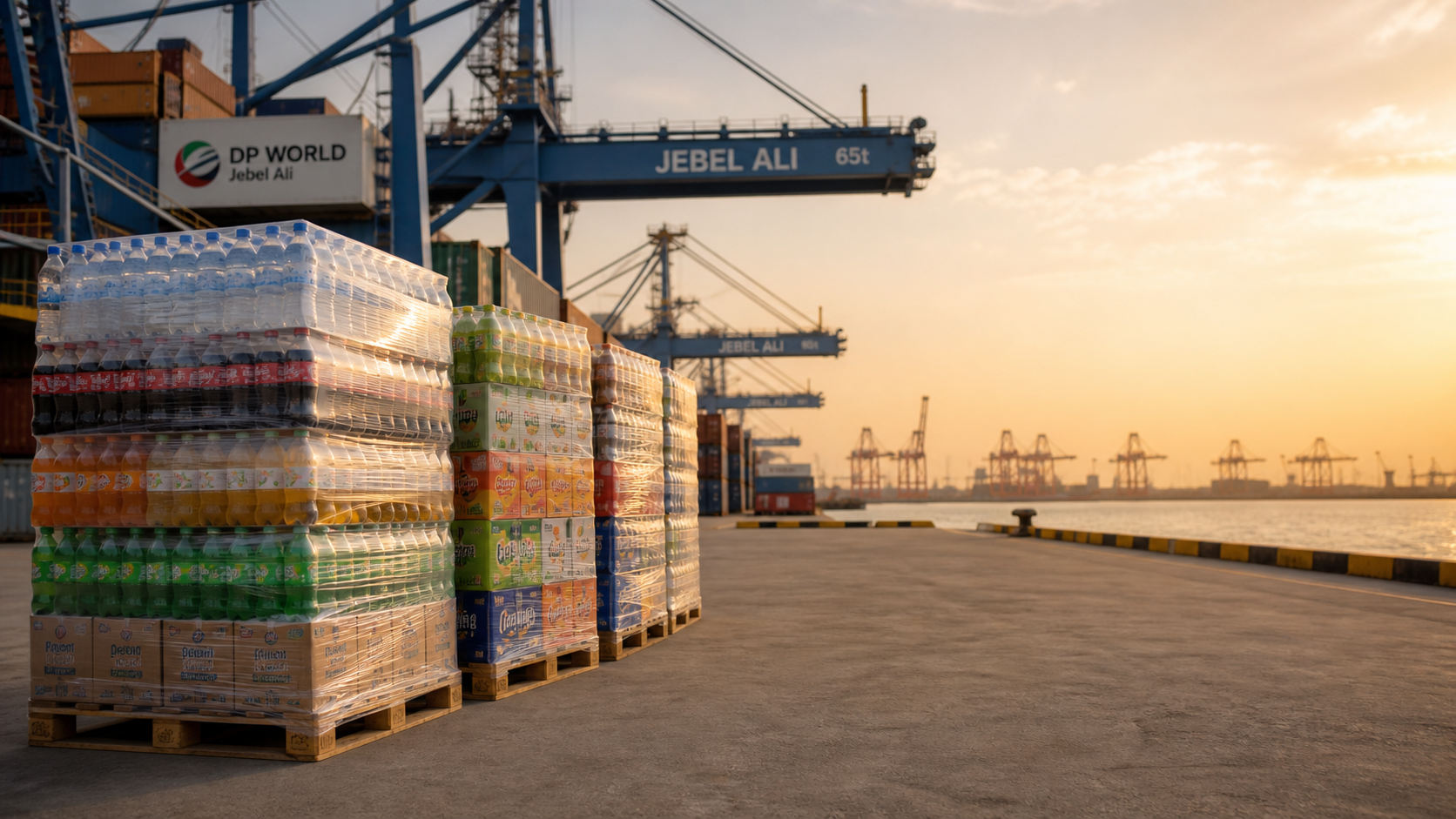
Who oversees beverage import control in the UAE?
MOIAT defines national standards and conformity programs, Dubai Municipality manages food import controls and inspections in Dubai via FIRS, Dubai Customs handles customs clearance, and the UAE Federal Tax Authority (FTA) administers VAT and excise tax. Your exact workflow depends on the emirate of entry; this article details the Dubai track that most beverage shipments use.
Step-by-step: How to import beverages into UAE (Dubai track)
The sequence below reflects the practical order most importers follow for beverages landing at Jebel Ali Port or Dubai air cargo terminals. Adjust if your shipment uses another emirate.
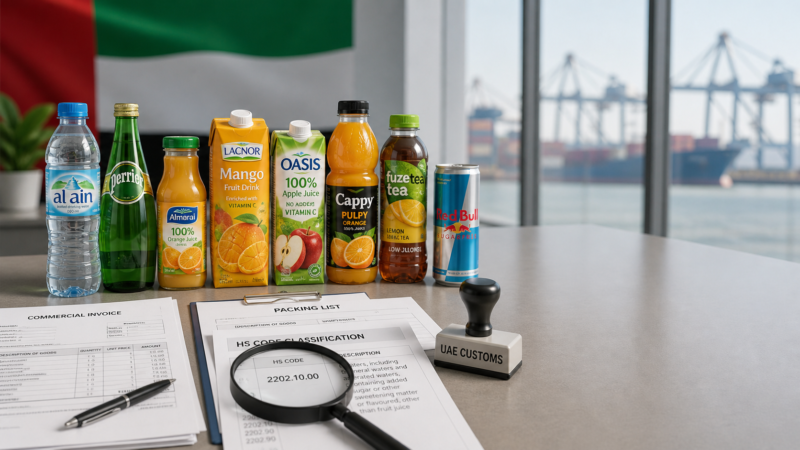
- Classify your product and confirm scope. Determine HS codes and whether your drink is 100% juice, nectar, carbonated soft drink, energy drink, still beverage, concentrate, or powder. For GCC/GSO, Halal scope, and Arabic labelling baselines, refer to the regional guide: GCC Beverage Import Requirements.
- Engage a UAE-licensed importer. Your partner needs a valid trade license covering beverage import/trade activities and an importer code with Dubai Customs. Many brands evaluate partners based on their FIRS competence and inspection track record.
- Create/importer account with Dubai Municipality FIRS. If goods enter via Dubai, the importer registers its establishment in FIRS, then registers each product and its label details prior to shipment. Expect to upload label artwork and core product data for review.
- Prepare the pre-shipment document pack. Typical documents include commercial invoice, packing list, bill of lading/air waybill, certificate of origin, health certificate (or manufacturer’s quality certificate as locally accepted), and Halal documentation where applicable. If your drink is subject to excise, prepare FTA registration and product lists.
- Verify remaining shelf life compliance. UAE authorities enforce a minimum remaining shelf-life threshold at arrival. In Dubai, this control is applied during FIRS clearance and physical inspection. Many beverages are cleared only when at least 50% of total shelf life remains; always confirm the exact requirement for your SKU in FIRS before shipping.
- Book an appropriate entry point and logistics plan. For full containers, Jebel Ali Port is the primary hub. For air freight, Dubai International (DXB) Cargo or Al Maktoum International (DWC) are common. Coordinate arrival windows so that inspection and cold-chain (if needed) are available upon landing.
- Make a pre-arrival FIRS shipment declaration (Dubai only). The importer creates the shipment file in FIRS, links product registrations, and obtains the reference needed for port clearance. Ensure product codes, batch/lot, and expiry data match the physical shipment.
- Lodge the customs entry via Dubai Trade/Dubai Customs. Submit the import declaration with HS codes, valuation, and certificates. Pay estimated customs duty (commonly 5% on CIF for many beverage HS lines, subject to exemptions/FTAs).
- Undergo Dubai Municipality inspection and, if directed, sampling. At Jebel Ali or the air cargo terminal, inspectors verify labels, expiry dates, and compliance. Some first-time or risk-based products may require lab analysis—plan time and fees accordingly.
- Account for VAT and excise where applicable. Standard VAT is 5% at import. Drinks classified under UAE excise (e.g., carbonated drinks, energy drinks, and most sweetened beverages) require FTA registration and excise accounting before release to market.
- Obtain Food Release/clearance and deliver to warehouse. After successful compliance checks and tax accounting, customs releases the goods. Keep traceability records and store per temperature and shelf-life controls stated on the label.
- Post-clearance housekeeping. If you intend to retail in Dubai, ensure ongoing product registration status in FIRS remains valid, update any label revisions, and maintain harmonization with customs tariff and excise listings.
Most beverage imports route through Dubai to leverage its container and air-cargo capacity. Your choice affects inspection location, lead time, and handling costs.
| Entry point | Typical use | Local authority touchpoints | Notes |
|---|---|---|---|
| Jebel Ali Port (Dubai) | Full containers, LCL | Dubai Municipality (FIRS), Dubai Customs | Primary UAE seaport for beverages; extensive inspection infrastructure |
| DXB Cargo (Dubai International) | Air freight | Dubai Municipality (FIRS), Dubai Customs | Faster but costlier; plan for rapid inspection & cold-chain if required |
| DWC (Al Maktoum International) | Air freight | Dubai Municipality (FIRS), Dubai Customs | Alternative to DXB with modern cargo facilities |
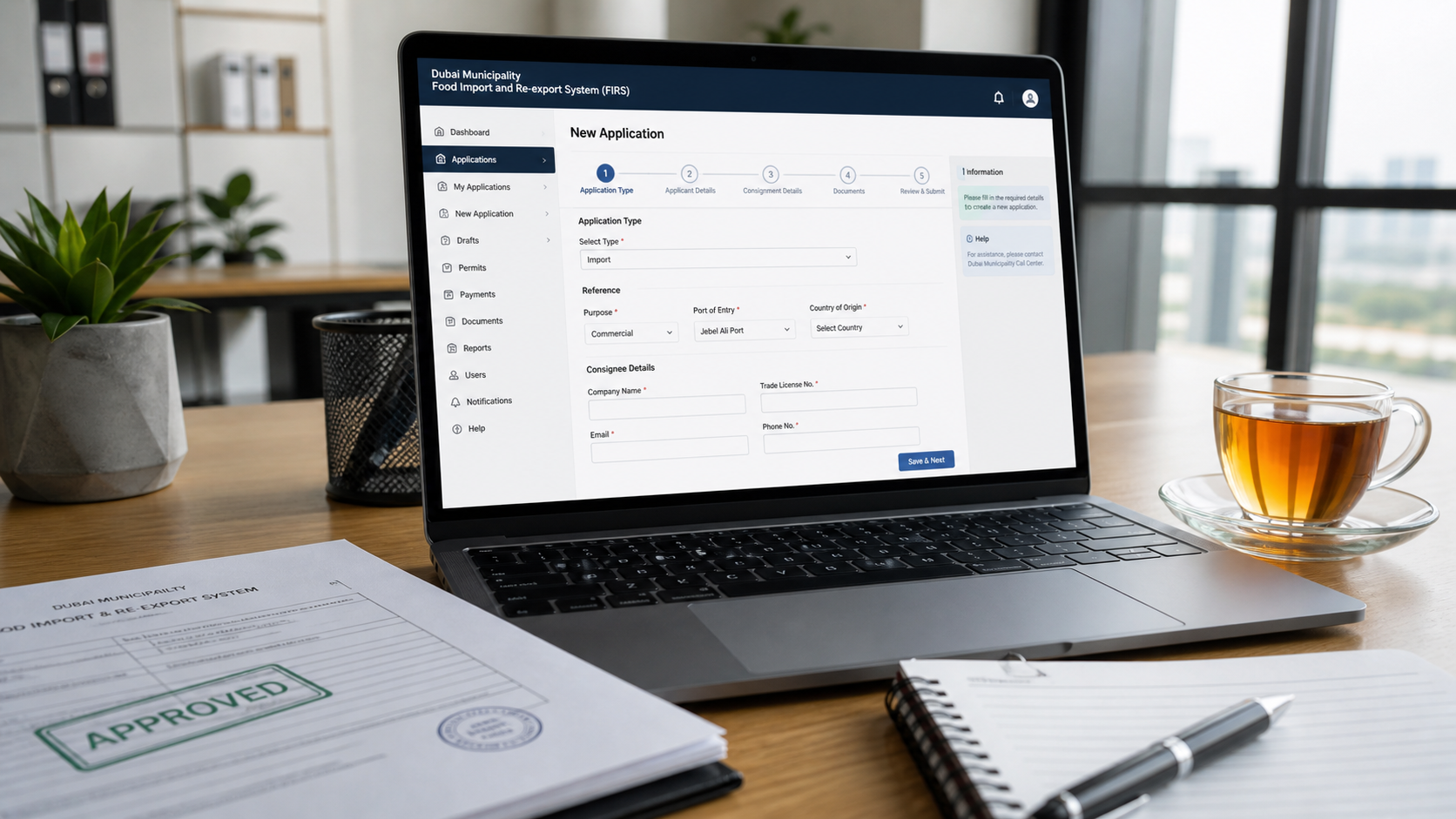
What documents does Dubai Municipality and Customs expect for beverage imports?
Documentation can vary by product type and origin. At a high level, expect:
- Commercial documents: Commercial invoice, packing list, bill of lading/air waybill, certificate of origin.
- Food safety documents: Health certificate or manufacturer’s quality certificate (as locally accepted), product specification, and, if requested, lab analysis from origin.
- Regulatory documents: FIRS product registration/label information (Dubai), HS code details, any permits for special categories.
- Tax documents: FTA excise registration for taxed beverages, VAT accounting at import.
- Halal documentation: Where applicable to ingredients or claims; for GCC/Halal criteria and GSO references, use the regional guide GCC Beverage Import Requirements.
Duties, VAT, and excise on beverages in UAE
Below is a practical view of indirect taxes you will plan for. Confirm precise rates and eligibility before filing, as HS classification and product composition drive outcomes.
| Levy | Applies to | Indicative rate | Positioning & notes |
|---|---|---|---|
| Customs duty | Most imported beverages | Often 5% of CIF | Subject to HS code, exemptions, and any applicable FTAs |
| VAT | All imports unless exempt/zero-rated | 5% | Calculated on customs value plus duty and certain charges |
| Excise tax | Carbonated drinks, energy drinks, sweetened beverages | Typically 50% (carbonated, sweetened) / 100% (energy) | Definitions and exclusions apply; check FTA rules and product scope |
UAE label checks before shipping
Dubai Municipality verifies on-label information at clearance. To minimize delays:
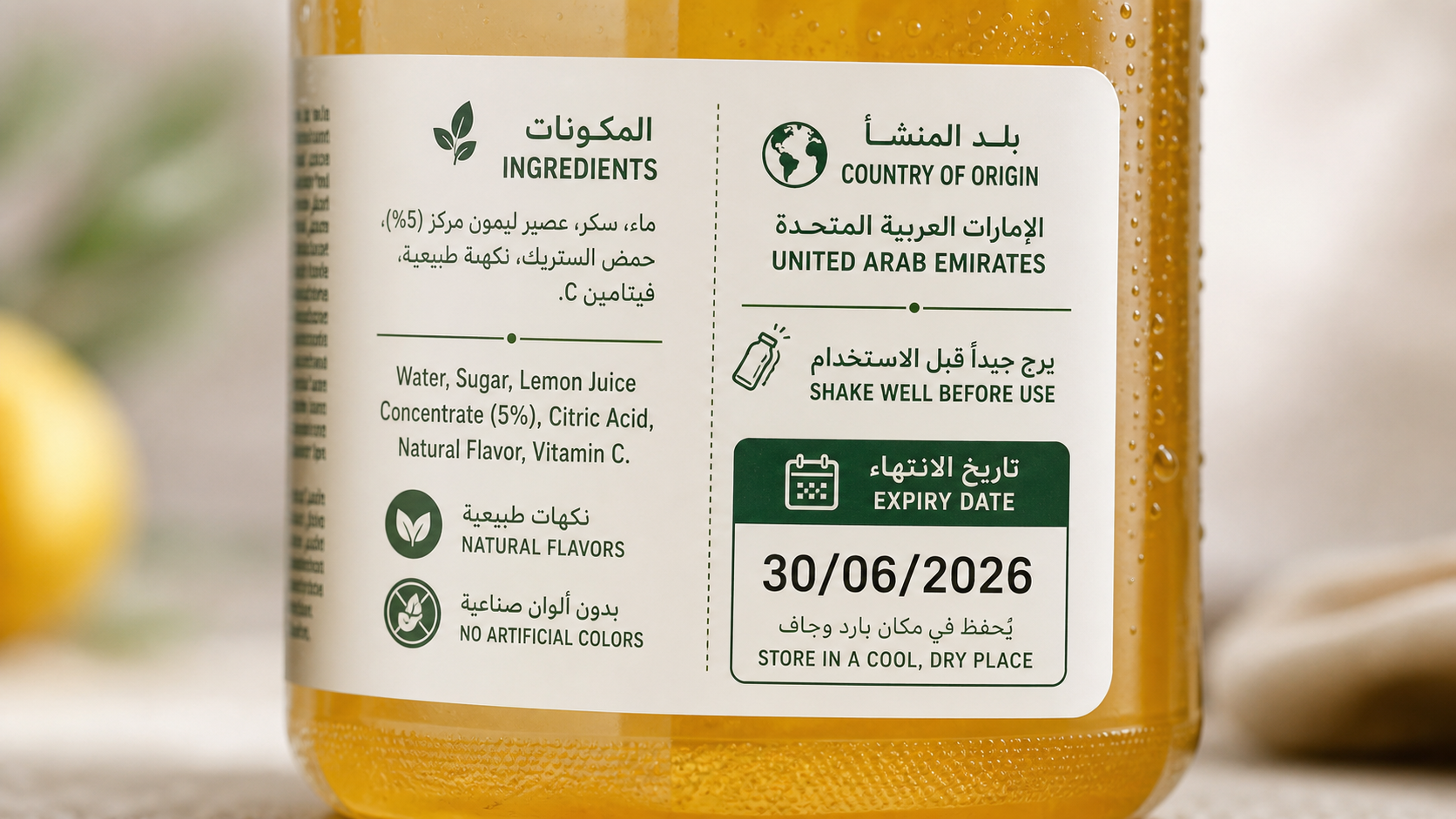
- Arabic language: Mandatory Arabic on label; bilingual Arabic–English is common.
- Date marking: Clear expiry or best-before date printed and legible; format must follow UAE/GCC rules for your category.
- Ingredient list & allergens: Declare ingredients in descending order and allergens per applicable regulations.
- Net content & nutrition: State volume and, if you make nutrition/health-related statements, ensure they are permitted and supported.
- Country of origin and batch/lot: Required for traceability.
- Halal and other marks: Use only where permitted by law and backed by acceptable certification routes. See GCC Beverage Import Requirements for the regional framework.
Common pitfalls and how to avoid them
- Insufficient remaining shelf life: Ship with comfortable margin above the enforced threshold and synchronize sailing time with inspections.
- Mismatched FIRS vs. physical labels: Align artwork, ingredient statements, and expiry formats in both systems before loading.
- Incorrect HS code or excise status: Pre-validate tariff lines and, if needed, seek a ruling to avoid reclassification and penalties.
- Missing Arabic: Stickers must be durable and compliant if used; direct print is preferred.
- Unplanned sampling time: First-time or reformulated SKUs can be flagged for testing—build this into your lead time and cost model.
- Seasonal congestion at Jebel Ali: Pre-book inspection windows and coordinate trucking to protect shelf life.
Information for beverage brands and import planners
If you are aligning product development with UAE import controls:
- Design for climate and shelf life: Heat resilience and secondary packaging strength reduce claims risk in port handling.
- Excise-aware formulation: Where commercially appropriate, consider sugar levels and formats that avoid excise categories.
- Labeling ready for Arabic: Reserve space for clear Arabic text and date codes; reduce last-minute sticker work.
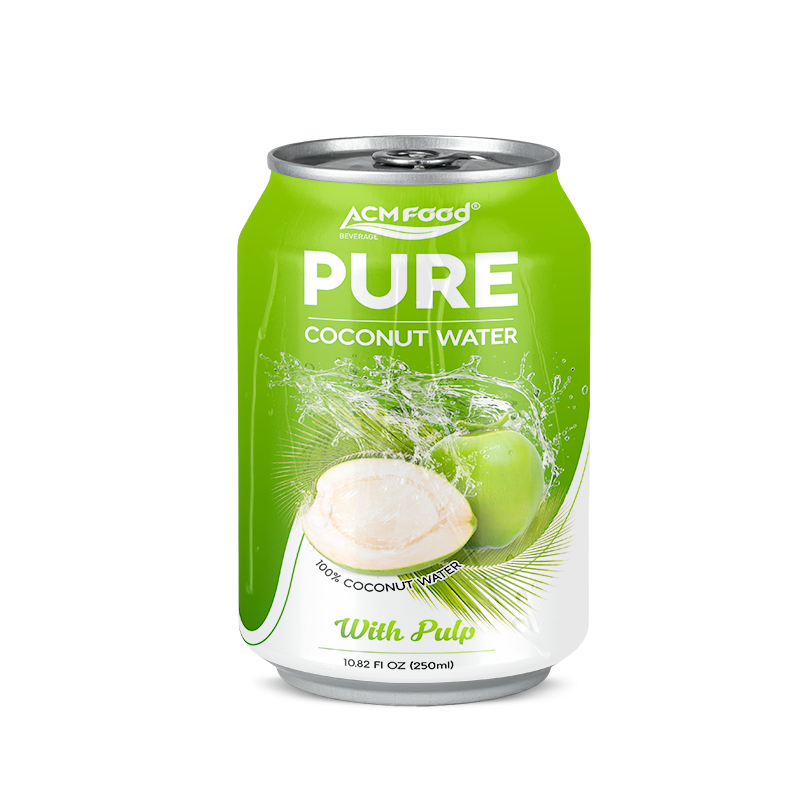
- SKU selection: Start with faster-moving formats validated in GCC retail. For inspiration on hydration-led ranges, see why best quality coconut water performs strongly and Premium Coconut Water: OEM & Private Label Solutions.
- Differentiated flavors: Regional palates welcome spice–herb blends; explore options such as ginger lemongrass drink sourcing for private label.
- Market access plan: Use the UAE market overview to prioritize channels, then align import cadence with promotion windows.
For customs duty, VAT and excise on sweetened drinks in detail, see import duty and trade agreements for beverages entering the UAE.
Shipping to other Gulf markets as well? See how to import beverages into Kuwait for KUCAS conformity and PAFN clearance.
FAQ: Import beverages into UAE
Do I need a local importer to bring beverages into the UAE?
Yes. You need a UAE-licensed entity with suitable trade activity and importer code to file customs and manage FIRS (in Dubai). Many foreign brands partner with established importers for speed and compliance.
Is product registration in FIRS required before the first Dubai shipment?
In practice, yes—if you land in Dubai, importers register the product and label details in FIRS before arrival and then link them to the shipment file for inspection and clearance.
Are all beverages subject to UAE excise tax?
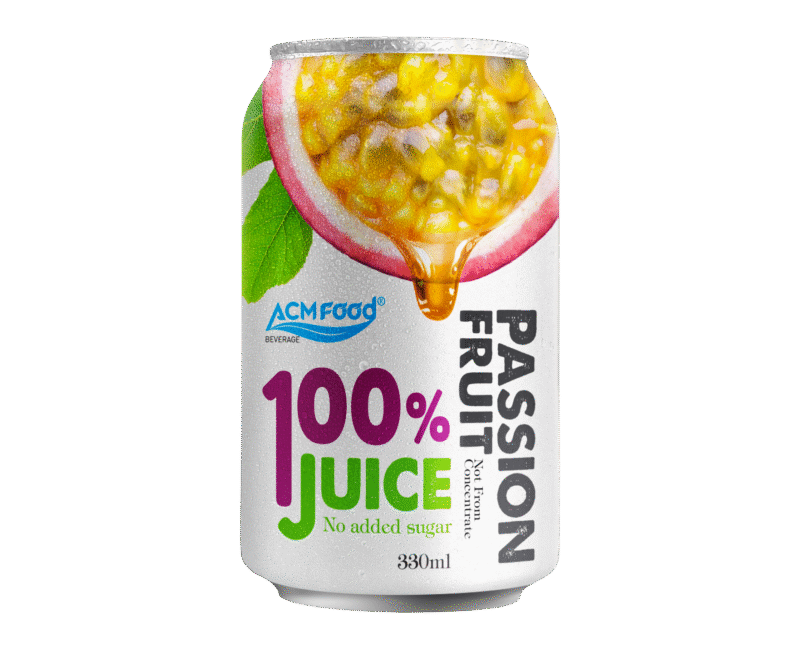
No. Excise targets categories such as carbonated drinks, energy drinks, and most sweetened beverages. 100% juice without added sugar is generally outside scope, but assess your specific formulation against FTA rules.
How long does clearance take at Jebel Ali or Dubai air cargo?
Timing varies with inspection load, whether sampling is required, and documentation quality. Well-prepared shipments clear faster; first-time SKUs and peak seasons may extend timelines.
Sources
- Ministry of Industry and Advanced Technology (MOIAT)
- Dubai Municipality
- Dubai Customs
- UAE Federal Tax Authority (FTA)