


 Français
 Español
 العربية
 한국어
한국어Energy drink manufacturing is shaped by two separate sets of limits that a beverage brand has to satisfy at the same time: formulation limits, which govern what ingredients and stimulant combinations can go into the product, and market rules, which govern how the finished product must be labeled and declared once it reaches a specific country. A formulation that is fully compliant in one market can still require adjustment before it is compliant in another.
For brands developing a private label or OEM energy drink, treating these two sets of limits as one checklist rather than two separate reviews is one of the more common sources of delay late in development, often after a flavor and positioning direction has already been agreed. For a broader look at building this kind of product line, see our guide on developing your own energy drink brand.
This matters more for energy drinks than for most other beverage categories, because the functional ingredients that define the category — caffeine and other stimulant sources — are also the ingredients most likely to be reviewed closely by regulators in any given market.
What Formulation Limits Commonly Apply to Energy Drinks?
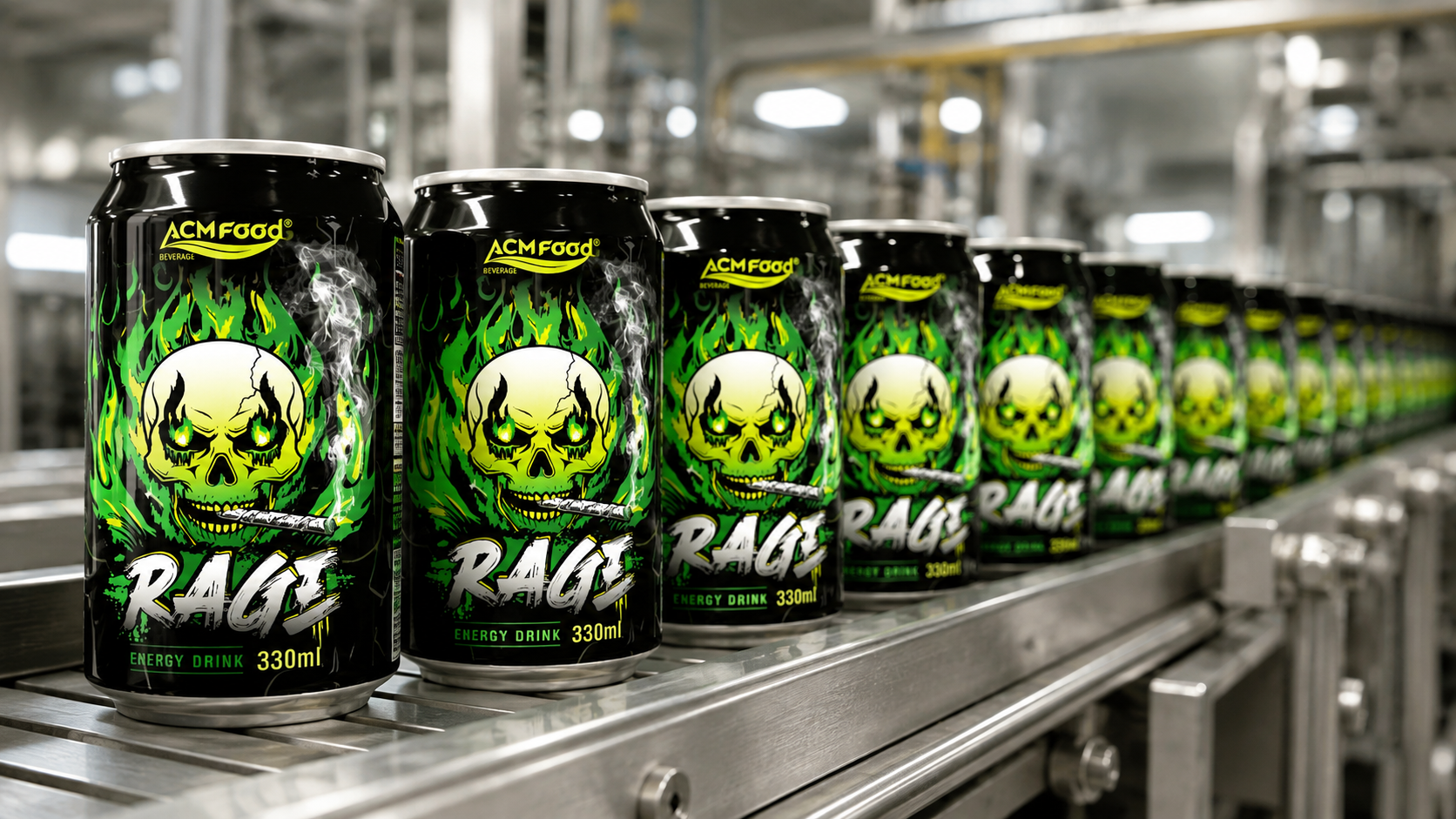
Energy drink formulations are typically reviewed against caffeine content per serving, the combination of stimulant sources used together, and whether every ingredient is permitted in the product category in the target market. These reviews happen before a formulation is finalized, not after, because reformulating a product that has already been produced is far more disruptive than adjusting a formulation on paper.
- Caffeine content per serving — many markets set some form of ceiling or mandatory declaration threshold, and the specific figure varies by country.
- Combined stimulant sources — caffeine paired with other stimulant ingredients such as guarana or taurine is often reviewed as a combination, not just as individual ingredients.
- Permitted ingredient lists — an ingredient allowed in one market’s beverage category may be restricted or require special approval in another.
- Serving size definition — how a “serving” is defined for declaration purposes can differ by market, which affects how a caffeine or ingredient limit is applied.
Why Formulation Rules Differ So Much Between Markets
Caffeine limits, restricted ingredient lists, and labeling requirements for energy drinks are set at the national or regional regulatory level, and they are reviewed and updated independently by each authority. This is why a single global formulation is uncommon in this category, and why the rules that applied when a brand last checked a market can change before the next production run. Markets in the Gulf region add another layer on top of this, since GCC beverage import requirements combine GSO standards with Halal and Arabic labelling expectations.
Because of this, any specific figure for a caffeine limit or a restricted ingredient should be confirmed against the current regulation for the exact target market at the time of formulation, rather than assumed from a previous project or a different country’s rules.
This also means a formulation that has not changed can still fall out of compliance if the destination market updates its rules after the product was first approved. Brands selling into several markets over a long period generally benefit from a periodic compliance check rather than treating the initial approval as permanent.
Common Label and Warning Requirements for Energy Drinks
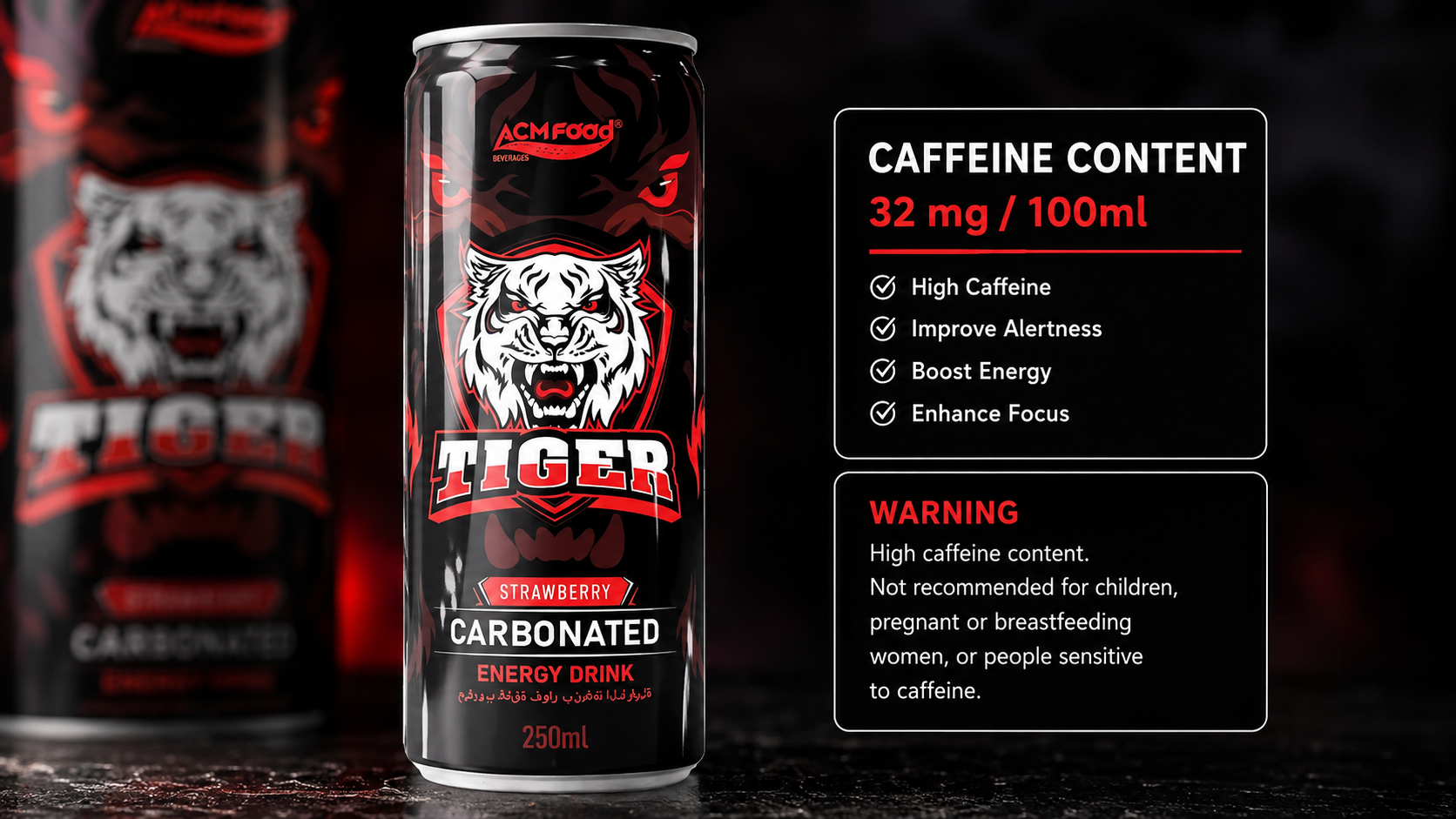
Beyond the formulation itself, many markets require energy drinks to carry specific label elements: a declared caffeine content per serving, a warning statement aimed at sensitive groups such as children, pregnant women, or caffeine-sensitive consumers, and in some markets a restriction on sale to minors that affects retail placement rather than the product itself. This kind of requirement is not unique to energy drinks either — several Latin American markets now require front-of-pack warning labels on drinks that carry high caffeine, sugar, or calorie content.
The exact wording, placement, and minimum text size for these statements vary by market, and some regulators require the warning to be prominent on the primary display panel rather than a secondary panel. This affects can or bottle design, since label space has to be planned around a warning statement that cannot be reduced or hidden to make room for other artwork.
Translation adds another layer to this planning. A warning statement approved in one language does not automatically carry the same legal weight once translated, so brands selling the same formulation into markets with different primary languages should have each translated warning reviewed rather than assuming a direct translation is sufficient.
How OEM Formulation Development Usually Works for Energy Drinks
Development typically starts from a flavor direction and market positioning provided by the brand, which the manufacturer’s formulation team then develops into a working recipe. That recipe is checked against the target market’s ingredient and caffeine rules before samples are produced, and again before commercial-scale production begins, since a formulation can pass an initial review and still need adjustment once packaging and labeling are finalized together.
Stability and sensory testing typically follow the same sequence: an early sample confirms flavor and positioning direction, and a pre-production sample confirms the formulation still performs as expected once packaging, shelf-life targets, and compliance labeling are locked in.
How Shelf Life and Stability Testing Fit Into Development
Shelf life for an energy drink is influenced by the same ingredients that drive its formulation limits, since stimulant compounds, added vitamins, and preservative systems can behave differently over time depending on the packaging format and storage conditions. Stability testing checks whether the formulation still meets its intended taste, appearance, and declared content by the end of its intended shelf life, not only at the point of production.
This testing typically runs in parallel with the compliance review rather than after it, because a change made to satisfy a market’s ingredient rules can also affect how the formulation holds up over time, and re-testing stability after a late formulation change is one of the more common causes of delay in energy drink development.
Packaging format also factors into shelf-life planning. A can, glass bottle, and PET bottle each interact differently with light, oxygen, and temperature, which can influence how a given formulation performs over its intended shelf life even when the recipe itself does not change.
Comparing Common Energy Drink Positioning Approaches
The table below summarizes general formulation emphasis by positioning, to frame a development conversation rather than to specify an exact recipe.
| Positioning | Typical Formulation Emphasis | Key Question to Confirm |
|---|---|---|
| Classic high-energy | Caffeine and stimulant blend as the primary functional claim | Does the stimulant combination meet the target market’s combined-ingredient rules? |
| Low or no added sugar | Sweetener system adjusted while keeping flavor and mouthfeel | Are the chosen sweeteners approved for this beverage category in the target market? |
| Natural or clean-label | Simplified ingredient list, natural caffeine sources | Does a shorter ingredient list still meet any mandatory declaration requirements? |
Common Mistakes When Developing a Private Label Energy Drink
Most delays in energy drink development come from treating formulation and market compliance as sequential steps rather than reviewing them together from the start. Each item below tends to surface only once samples or packaging artwork already exist, which is a more expensive point to discover a compliance gap than during formulation.
- Finalizing a formulation before confirming it against every target market’s current caffeine and ingredient rules, not just the first market planned for launch.
- Assuming a formulation approved in one country will be automatically accepted in a neighboring market without a separate review.
- Underestimating how much label space a mandatory warning statement requires, which can force late changes to can or bottle artwork.
- Not confirming how the target market defines a “serving” before checking a formulation against a per-serving limit.
- Treating a translated warning statement as equivalent to the original without a separate legal or regulatory review.
Information for Beverage Brands Developing an Energy Drink Program
When starting an energy drink development project, it helps to share every target market upfront, not just the first launch market, along with the intended positioning and any ingredients the brand specifically wants to include or avoid. This lets the formulation team check compliance across all target markets at the same time, rather than reworking the recipe market by market.
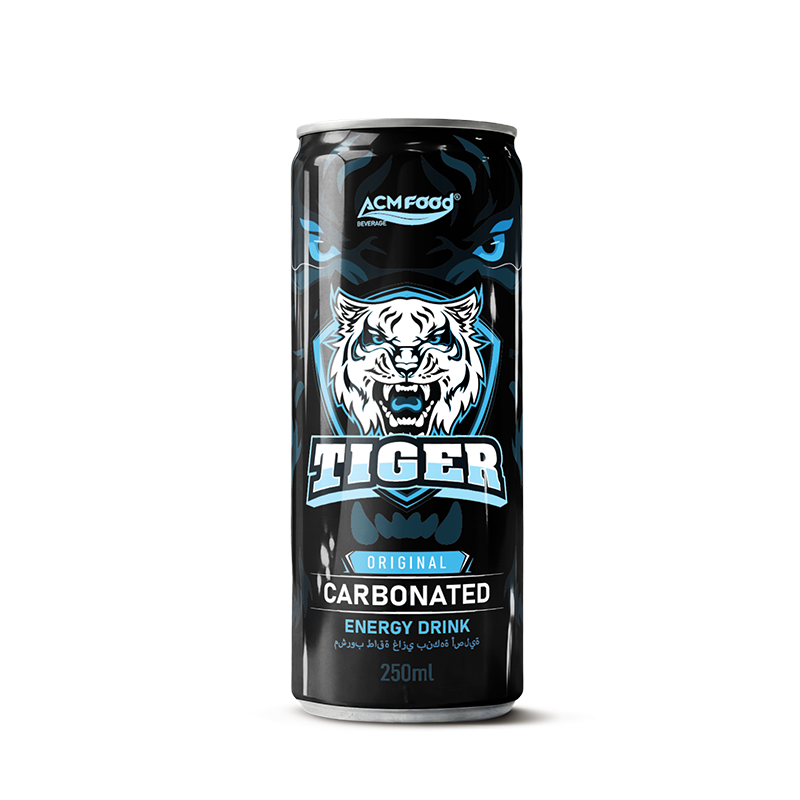
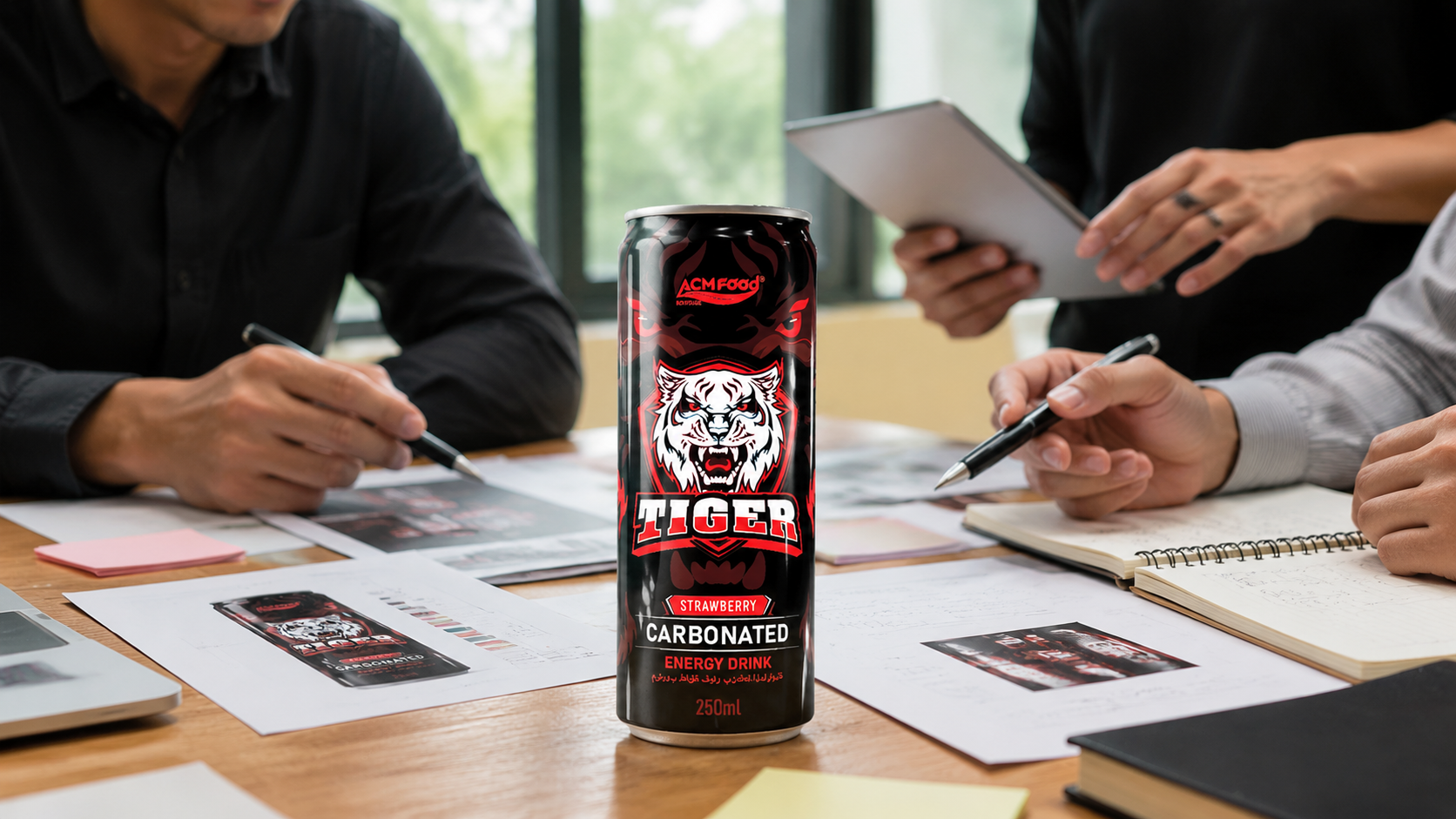
ACMFOOD works with beverage brands on private label and OEM energy drink development, and can review a proposed formulation and label direction against the target markets a brand is planning to enter before production begins. Raising compliance questions during the formulation stage is generally far less disruptive than raising them after packaging has already been designed. A food safety system such as ISO 22000 or FSSC 22000 supports this process but does not replace the market-specific formulation review itself.
This is also worth revisiting whenever a brand adds a new market to an existing product line, since a formulation and label already approved for current markets does not automatically clear the compliance requirements of a new one.
- Share the complete list of target markets, not only the first one planned for launch.
- Flag any ingredients the brand wants to feature or specifically avoid before formulation starts.
- Confirm label warning requirements early enough to be factored into can or bottle artwork.
Common Questions About Energy Drink Manufacturing
Is there one caffeine limit that applies to energy drinks everywhere?
No. Caffeine limits and declaration requirements are set independently by each market’s regulator and can differ significantly, so any specific limit should be confirmed against the current regulation for the exact target market rather than assumed from another country.
Can the same energy drink formulation be sold in every market without changes?
Not usually. Even when the core flavor and positioning stay the same, differences in permitted ingredients, caffeine declaration rules, or warning label requirements often require adjustments to the formulation, the label, or both before entering a new market.
Does private label energy drink development start from a fixed template recipe?
It typically starts from a direction rather than a fixed recipe — flavor profile, positioning, and any must-have or must-avoid ingredients — which the manufacturer’s formulation team then develops and checks against the target market’s rules.
How are restricted ingredients typically handled during formulation?
The formulation team cross-checks the proposed ingredient list against the target market’s permitted additive and stimulant rules before finalizing the recipe, and flags any ingredient that would need to be substituted or removed for a specific market.
Does a formulation need to be re-checked if a brand adds a new market later?
Yes. Adding a new market means checking the existing formulation and label against that market’s current rules, since approval in the original markets does not carry over automatically, even if no changes are made to the recipe itself.
Conclusion
Energy drink manufacturing sits at the intersection of formulation choices and market-specific compliance rules, and the two need to be reviewed together rather than in sequence to avoid late-stage rework. Confirming target markets, caffeine and ingredient rules, and label requirements before a formulation is finalized is what keeps a development timeline predictable.
For brands preparing an energy drink program, sharing target markets, positioning direction, and any ingredient preferences upfront makes it easier for a manufacturing partner like ACMFOOD to propose a formulation that fits the program’s actual compliance requirements.