


 Français
 Español
 العربية
 한국어
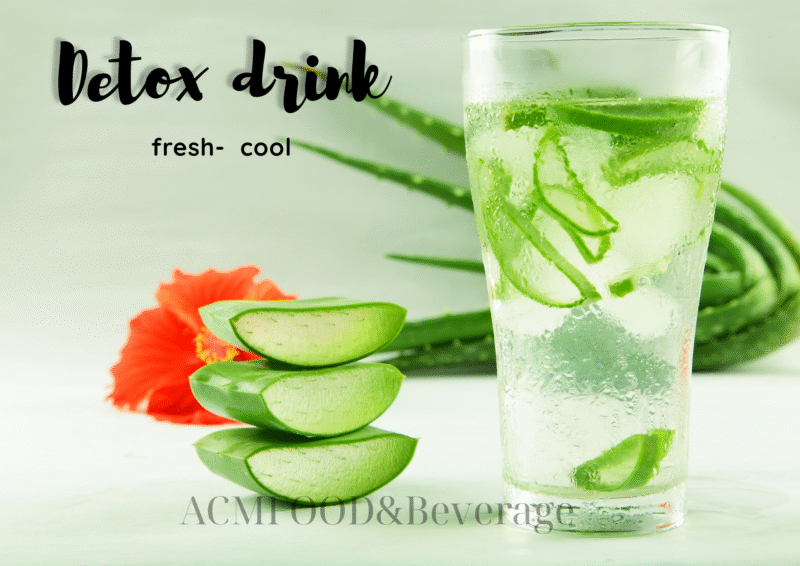
한국어Aloe vera drinks are made from the clear inner gel of the Aloe barbadensis leaf, usually cut into small translucent cubes and suspended in a lightly sweetened juice base. The visible pieces are the whole point of the category: they are what makes the drink recognisable on shelf, and they are also the reason it is one of the more demanding products to manufacture.
This guide covers how aloe vera is prepared for beverage use, why the gel pieces behave the way they do in a sealed pack, which formats suit the category, and what a brand should specify before starting an aloe vera project.

What part of the aloe plant goes into a drink?
Only the clear inner fillet is used. The leaf has three layers: a tough green rind, a yellow latex layer just beneath it, and the clear gel at the centre. Beverage production separates the gel from the other two, because the latex layer carries bitter compounds that are not wanted in a drink and are restricted in food use in many markets.
How cleanly that separation is done is one of the clearest quality markers in the category. Incomplete separation shows up as bitterness, off-colour and a shorter sensory shelf life.
Why do the aloe cubes float, sink or disappear?
Because the cubes are mostly water, their density sits very close to that of the liquid around them. Small changes in the base — sugar level, added stabiliser, temperature — decide whether the pieces sit evenly through the bottle, drift to the top, or settle at the bottom. Getting them to stay suspended is a formulation problem, not a filling problem.
A second issue is softening. The cubes are held together by cell structure that heat breaks down. Too severe a thermal process and the pieces lose their firmness, turn cloudy at the edges, or fragment into the base. The visual appeal of the product depends on avoiding that.
| Problem seen in the pack | Usual cause | Where it is fixed |
|---|---|---|
| Cubes settled at the bottom | Base viscosity too low for the cube density | Formulation: stabiliser system and soluble solids |
| Cubes floating in a layer at the top | Density mismatch in the other direction | Formulation: adjust base density or cube size |
| Cubes soft, cloudy or breaking up | Thermal process too severe | Process: heat treatment parameters |
| Bitter or medicinal off-note | Latex layer not fully removed | Raw material: supplier processing and specification |
| Uneven number of cubes per bottle | Insufficient agitation before filling | Filling: buffer tank agitation and nozzle clearance |
How does aloe vera reach a beverage factory?
Most beverage producers do not process raw leaves in-house. Aloe arrives as prepared gel cubes in a preserving liquid, or as a concentrate, from suppliers who specialise in the fillet separation step. The specification that matters to you covers cube size, firmness, colour clarity, the preserving medium, and the documentation confirming latex removal.
Cube size is worth deciding early. Larger cubes read as more premium and more visible, but they need more nozzle clearance during filling and are more prone to settling. Smaller cubes suspend more easily and fill more consistently, but they are less visually striking through the pack.
Which packaging formats work for aloe vera drinks?
Because the cubes are the selling point, the category leans heavily toward transparent packaging. A clear PET bottle or glass bottle lets the shopper see the suspension, which is exactly what distinguishes the product from a plain juice drink.
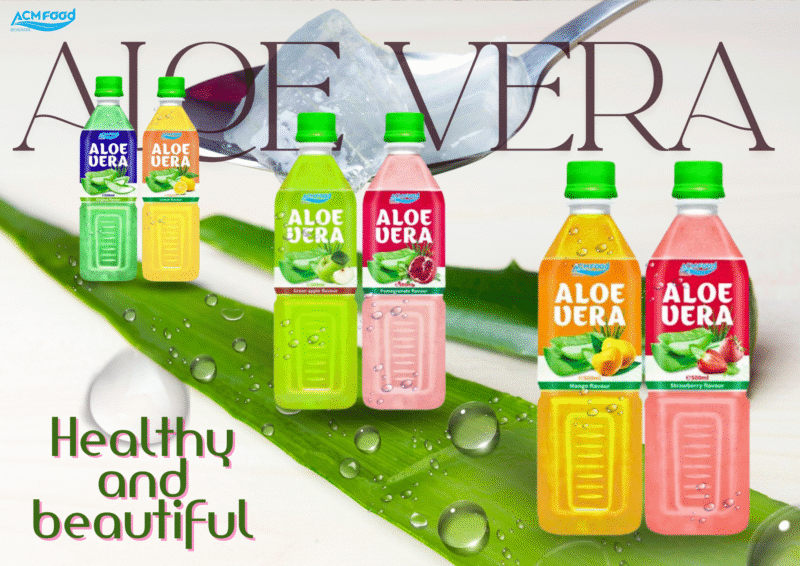
- Clear PET bottle — the dominant format; lightweight, shows the cubes, and suits a wide neck for easier filling and drinking.
- Glass bottle — premium presentation with the same visibility, at higher freight weight.
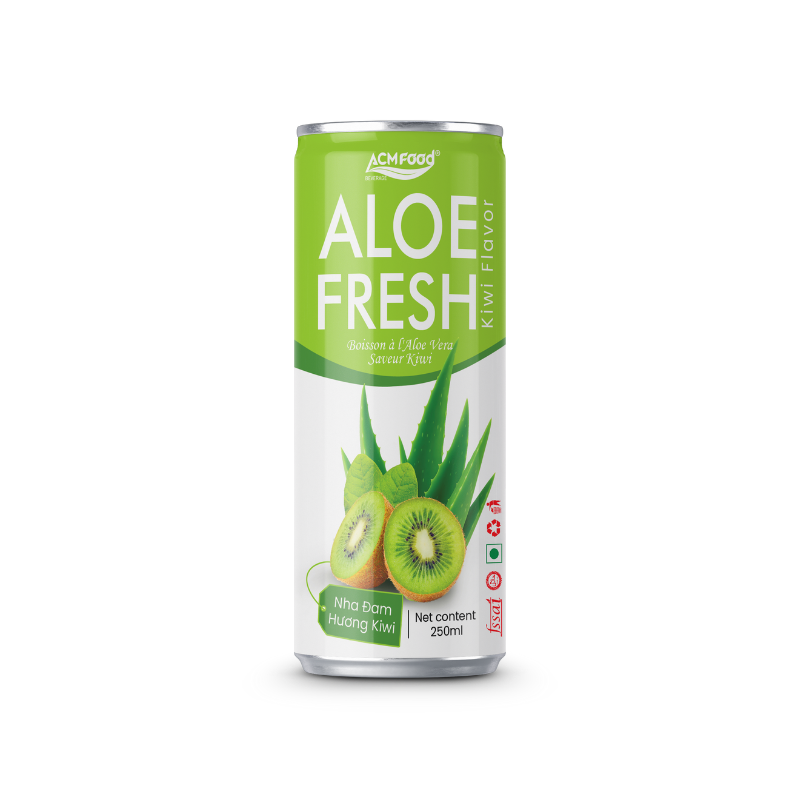
- Can — protects the product well but hides the cubes entirely, which removes the main visual cue.
Neck diameter matters more here than in a clear beverage. Too narrow and the cubes concentrate at the opening when the consumer drinks. See the packaging options overview for how format choice interacts with cost and line compatibility.
Filling an inclusion beverage: what changes on the line
A drink containing visible pieces cannot be filled the same way as a clear liquid. Four things typically need attention before a first production run:
- Nozzle and valve clearance — the opening has to pass the largest cube in the specification without shearing it. A line set up for clear juice will often clog or fragment the pieces.
- Pre-fill agitation — gentle, continuous movement in the buffer tank keeps the cubes distributed. Too little and the first and last bottles of a run contain very different amounts; too much and the cubes break down.
- Fill accuracy — a mixture of liquid and solid fills less predictably by volume than a clear beverage, so the tolerance band is usually wider and has to be agreed in advance.
- Cube count consistency — buyers and consumers both notice when one bottle has visibly more pieces than the next, so this is worth defining as an acceptance criterion rather than leaving it to chance.
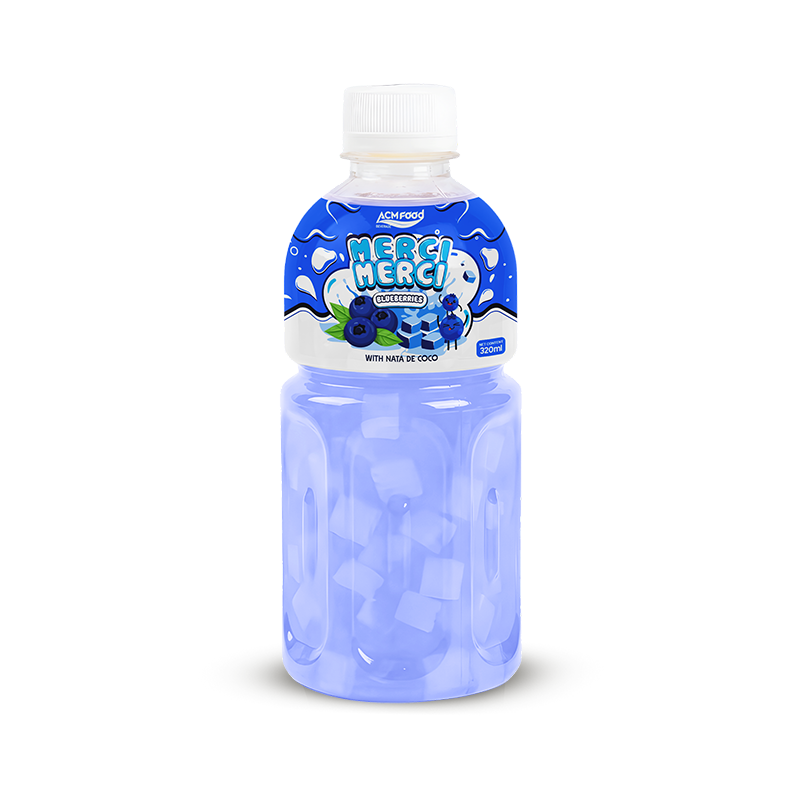
These are the same constraints that apply to other inclusion drinks such as nata de coco or seed beverages, so a manufacturer that already runs those categories will usually have the right equipment configured.
Sourcing and qualifying an aloe supplier
Since the fillet separation happens upstream, most of the quality risk in this category sits with the raw material supplier rather than the beverage plant. A qualification pack for aloe gel should cover the cube size distribution, firmness, colour and clarity, the preserving medium used, microbiological results, and documentation confirming the latex layer has been removed.
It is also worth asking how consistent the supply is across the year, since cube size and firmness can vary between lots. Where a brand is sensitive to that variation, agreeing an acceptance range up front is more effective than rejecting deliveries afterwards. See ingredients and sourcing for how raw material specification is normally handled.
Flavour directions that work with aloe
Aloe gel itself is close to neutral once the latex is removed, which is why the category supports such a wide flavour range. The base carries the flavour; the cubes carry the texture. Common commercial directions include grape, lychee, peach, mango, soursop, pomegranate and blueberry, alongside plain or honey-sweetened versions.
Sweetness level interacts with how the texture is perceived. A lighter base lets the cube texture come forward; a sweeter base makes the drink read more like a soft drink with an inclusion. Neither is wrong, but the choice should follow the positioning rather than be settled by default.
What to specify in an aloe vera product brief
- Cube size and target visible density in the pack.
- Base flavour and sweetness direction.
- Documentation required for the aloe raw material, including latex removal.
- Pack format, neck diameter and whether transparency is required.
- Shelf life target, and the acceptable degree of cube softening by the end of it.
Stability testing for an inclusion beverage
A stability trial for an aloe drink has to look at more than microbiology and flavour. It should track whether the cubes stay suspended, whether they hold their firmness and clarity, and whether the base develops any haze over the intended shelf life. A product that passes a standard flavour and safety check can still fail commercially if the cubes have settled into a layer by the time it reaches the shelf.
Frequently asked questions about aloe vera drinks
Are the pieces in an aloe vera drink real aloe?
In a genuine aloe product they are cubes cut from the clear inner gel of the leaf. Some products on the market use other gel-like inclusions instead, so the ingredient declaration is what tells you which you are looking at.
Why does aloe vera drink sometimes taste bitter?
Bitterness usually points back to incomplete removal of the yellow latex layer between the rind and the inner gel. It is a raw material and supplier specification issue rather than something corrected later in the process.
Can aloe cubes be added to any beverage base?
Technically many bases can carry them, but suspension depends on matching the base density and viscosity to the cubes. A base designed without the inclusion in mind will usually let them settle or float.
Does the aloe cube texture survive pasteurisation?
Partly, and it depends on how severe the thermal step is. Preserving cube firmness is one of the constraints that shapes the process design for this category, rather than an afterthought.
Information for beverage brands
Aloe vera is a mature category with a clear visual identity, which makes it easier to position than a novel ingredient but harder to execute than a clear juice. Share your target cube size, flavour direction and pack format at the brief stage, and plan a suspension-stability trial rather than relying on a bench sample alone. ACMFOOD produces aloe vera drinks in PET and can formats under OEM and private label programmes, with a minimum of 500 cartons per SKU.
Conclusion
An aloe vera drink lives or dies on the cubes: how cleanly they were separated from the leaf, how evenly they stay suspended, and how well they hold their firmness to the end of shelf life. Specify those three things properly and the flavour work becomes the easy part.