


 Français
 Español
 العربية
 한국어
한국어Korean importers need two layers of certification from an overseas beverage manufacturer: mandatory foreign manufacturing facility registration with Korea’s Ministry of Food and Drug Safety (MFDS), and a GFSI-recognised food safety certificate such as FSSC 22000, BRCGS or SQF, usually alongside HACCP. Halal, organic or vegan certificates are added only when the product claims them.
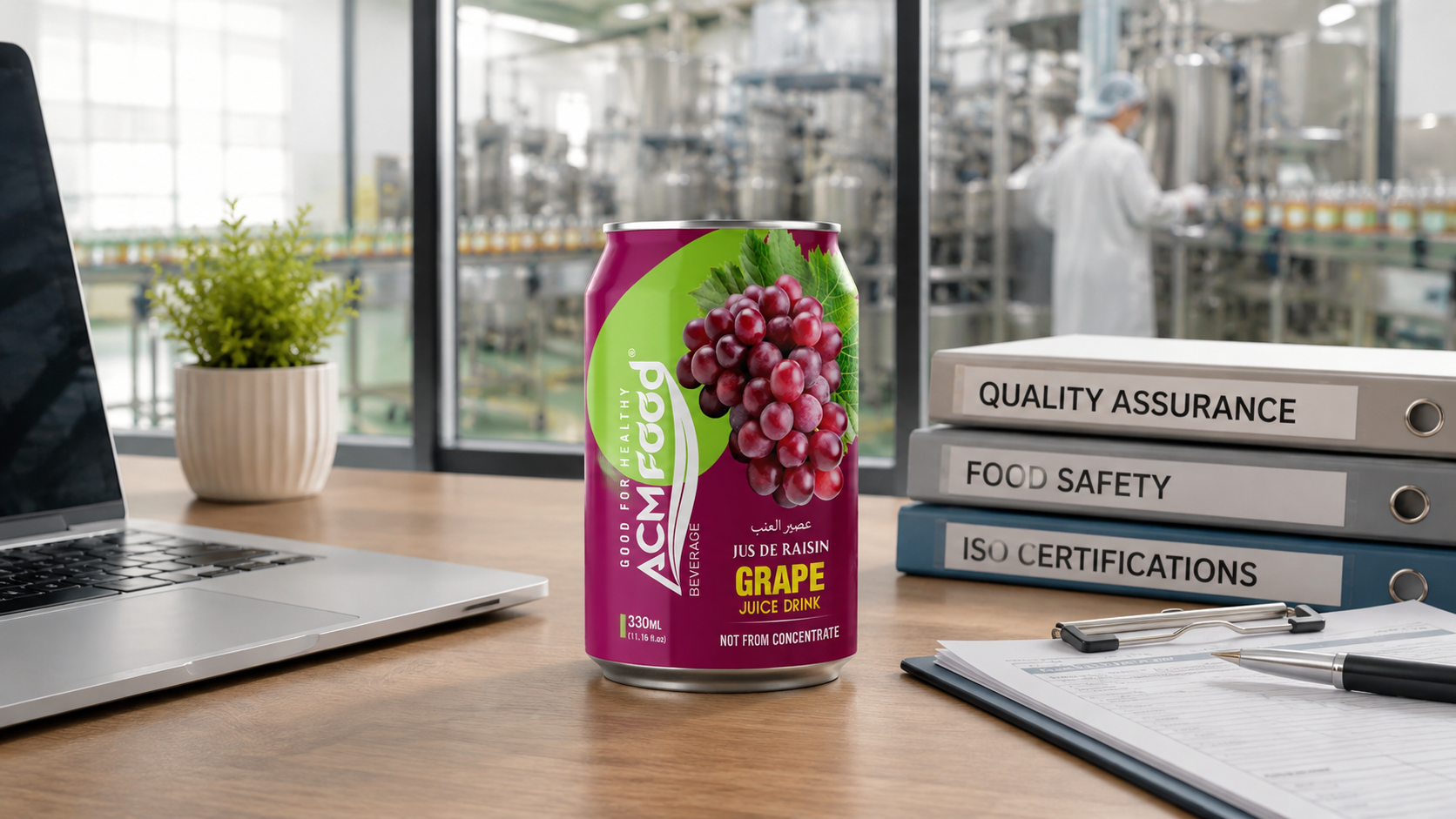
Which certifications are legally required and which are commercially expected?
Korea’s Food Sanitation Act and the Special Act on Imported Food Safety Management set the legal floor: your product must comply with the Korean Food Code, and many imported beverage categories require the overseas manufacturing facility to be registered with MFDS before the first shipment. HACCP has also been mandatory for domestic Korean beverage manufacturers since a phased rollout completed in 2020, which shapes what Korean buyers expect from an overseas supplier as a baseline, even where it is not a direct legal requirement for the import itself.
On top of that legal floor, most Korean retailers and distributors — like their counterparts in the US, EU, and Australia — look for a GFSI-recognised certificate (FSSC 22000, BRCGS, or SQF) as commercial due diligence before onboarding a new overseas supplier.
What is MFDS foreign manufacturing facility registration?
This is the step specific to Korea and the one most first-time exporters underestimate. Depending on your beverage category, MFDS may require:
- Registration of the exact legal name and address of the manufacturing site
- A product list associated with that facility, updated if the range changes
- Supporting documents on request — process flow, HACCP status, and product specifications
Registration is normally completed before the first import so MFDS can link the shipment to an approved facility. See how to import beverages into South Korea for the full declaration and first-lot inspection process.
How do GFSI-recognised schemes compare?
| Scheme | Scope focus | Typical beverage fit | Notes |
|---|---|---|---|
| FSSC 22000 | ISO 22000 plus prerequisite programmes | Broad beverage categories | Widely accepted by multinational and Korean buyers |
| BRCGS | Prescriptive site standard | RTD lines needing strong retailer acceptance | Graded audits; grade often referenced by buyers |
| SQF | Tiered certification programme | Brands supplying retailers with defined programme preferences | Strong in North America, recognised globally |
| HACCP | Product/process hazard analysis | All beverage sites; core prerequisite | Mandatory for domestic Korean beverage manufacturers; expected baseline for importers |

How do you verify a manufacturer’s certificate?
- Match the scope. The certificate must list the exact site address and cover the beverage processes you will use.
- Check dates. Confirm issue and expiry, and any surveillance audit due.
- Verify the issuer. Confirm the certification body and, where possible, the site listing on their public directory.
- Request the audit summary. Ask for the latest report summary or nonconformity closure evidence.
- Cross-check against MFDS registration. The registered facility name and address should match the certificate exactly.
Documentation checklist for a Korean import programme
- Full product specification: ingredients, Brix/pH where relevant, shelf life, storage conditions
- HACCP plan and process flow diagram
- Allergen statement
- Certificates of Analysis per batch or shipment
- Draft Korean label, reviewed against the Food Code
- MFDS foreign facility registration confirmation
- Certificate of origin, for VKFTA preferential duty where applicable
Category add-ons: Halal, organic, vegan
These are positioning tools rather than legal requirements for most beverage categories in Korea. Request current certificates from recognised bodies if your product will carry any of these claims, and ensure the claim wording on the Korean label matches what the certificate actually supports.
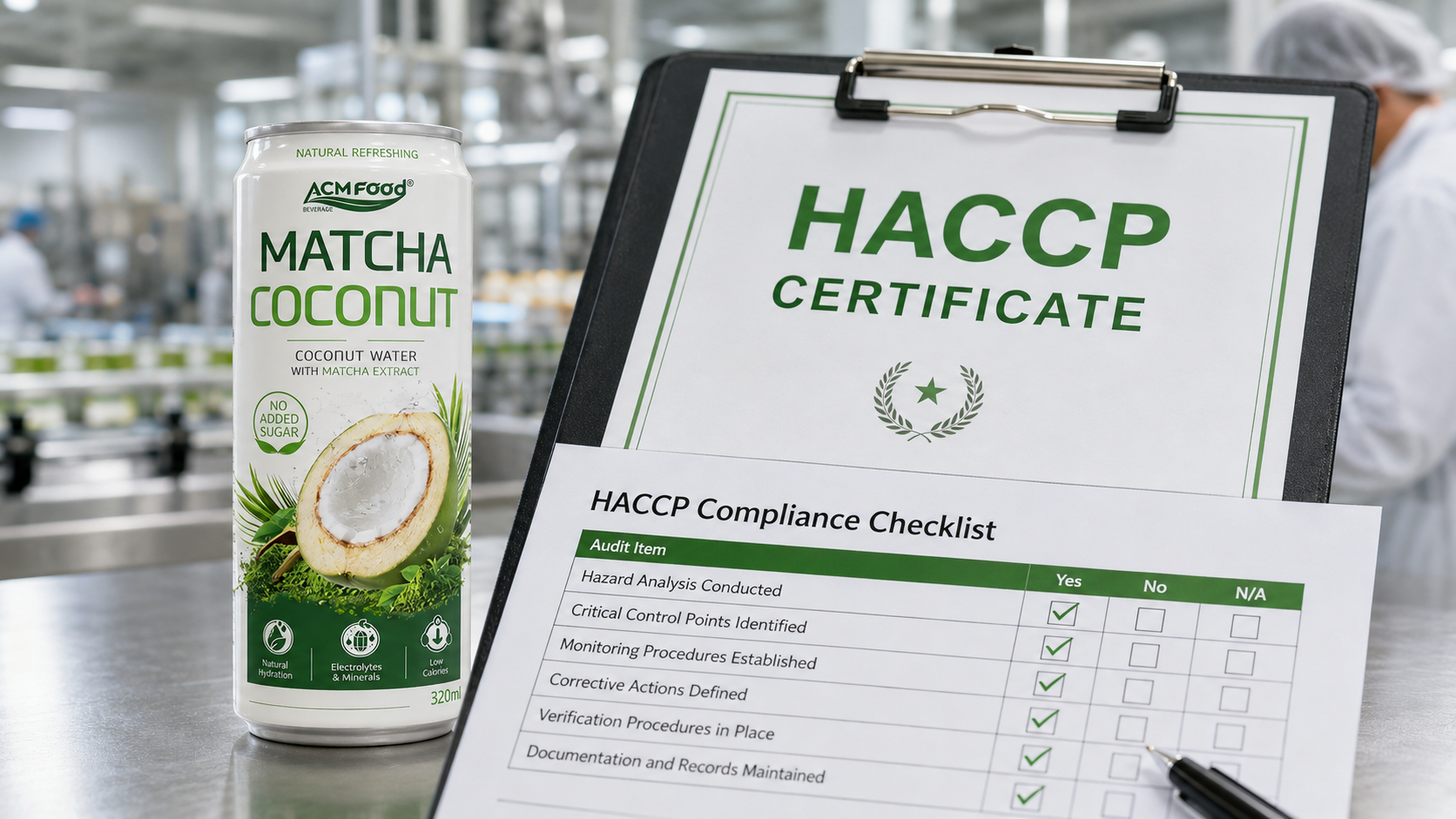
FAQ: beverage certifications for Korean importers
Is HACCP legally required to export beverages to Korea?
HACCP is mandatory for domestic Korean beverage manufacturers. For imports, the direct legal requirement is MFDS foreign facility registration and Food Code compliance; HACCP (or a GFSI scheme built on it) is what most Korean buyers expect as evidence of a controlled process.
Is a GFSI certificate enough on its own?
No. A GFSI certificate supports buyer due diligence but does not replace MFDS foreign facility registration or the product-level import declaration required for each shipment.
How long does MFDS facility registration take?
It varies by category and completeness of the submitted documents. Start it in parallel with your first production planning rather than after samples are approved, since it sits on the critical path to your first shipment.
Sources
- Ministry of Food and Drug Safety (MFDS) — English
- Global Food Safety Initiative (GFSI)
- Foundation FSSC — FSSC 22000 certification scheme
Manufacturing for Korean brands
If you are sourcing for the Korean market, start with OEM beverage manufacturing for how contract production is structured, certifications and food safety systems for the evidence importers and retailers require, and export and logistics for shipping terms and documentation. To price a programme, request a quote.
Request a quote