


 Français
 Español
 العربية
 한국어
한국어To import beverages into South Korea, you must file a food import declaration with the Ministry of Food and Drug Safety (MFDS), meet Korean labeling rules, and pass clearance with Korea Customs. Customs duty is applied by HS code and a 10% VAT generally applies at import.
This guide walks you through MFDS requirements, the first-shipment inspection, factory registration, labeling in Korean, and customs steps—focused on practical tasks you can execute with your importer.

Step-by-step: how to import beverages into South Korea (MFDS + customs)
You will declare the product to MFDS, ensure Korean labeling compliance, and complete customs clearance. The first shipment is subject to tighter checks, so plan extra lead time and be ready with a complete dossier.
- Confirm product scope & HS classification
- Define the beverage type (e.g., 100% juice, nectar, soft drink, tea drink, coffee drink, functional beverage, coconut water).
- Agree the HS code with your customs broker in Korea; duty rate depends on HS and any applicable FTA preference.
- If the product is alcoholic, a different regime applies; this guide focuses on non-alcoholic beverages.
- Appoint a Korean importer and set up the MFDS account
- Your Korean importer files the Food Import Declaration via MFDS systems and acts as the responsible party in Korea.
- Align on responsibilities for testing, storage, and labeling translation into Korean.
- Register the foreign manufacturing facility with MFDS (if required)
- Under Korea’s framework (including the Food Sanitation Act and the Special Act on Imported Food Safety Management), certain categories require foreign manufacturer registration before import.
- Coordinate with your factory to prepare legal name, address, product list, and supporting documents as requested by MFDS.
- Compile the product dossier for MFDS
- Final formula and full ingredient list (declare additives by their functional class and names authorized in Korea’s Food Code).
- Processing flowchart and origin of key ingredients if requested.
- Shelf life and storage conditions (ambient, chilled).
- Certificates available (e.g., HACCP of factory if applicable). Do not assume any certificate is mandatory unless MFDS specifies it for your category.
- Prepare compliant Korean labeling before sale
- Product name in Korean; net content; ingredient statement; allergens (if any); manufacturer/importer; country of origin; lot/date coding; storage instructions.
- Nutrition Facts panel when required by Korean rules; caffeine content is indicated for caffeinated drinks per MFDS requirements.
- Ensure all mandatory items appear in Korean; English-only labels are not sufficient for retail.
- Arrange pre-shipment checks and logistics
- Retain a label proof and a translation file for submission and internal control.
- Prepare the commercial invoice, packing list, and bill of lading/air waybill. Keep batch/lot mapping consistent with labels.
- Agree port/airport of entry (e.g., Busan Port, Incheon Port, Incheon International Airport) and decide on ambient vs. refrigerated transport as needed.
- First-shipment MFDS declaration & inspection
- Your importer files the MFDS declaration for the lot. The first lot is typically subject to stricter inspection, which may include document review, organoleptic check, and laboratory testing for standards and additives compliance.
- Be ready to provide samples and technical clarifications; testing fees and time depend on MFDS direction and the product.
- Customs clearance with Korea Customs Service (KCS)
- After MFDS release for sale, your customs broker processes KCS clearance.
- Pay customs duty per HS and the 10% VAT at import; preferential duty may apply under an FTA if rules of origin are met.
- Post-clearance: distribution & record-keeping
- Keep import documentation, test results, and labels on file for audits.
- Ensure the Korean label on every retail unit matches the approved content and lot/date coding used at import.
- Ongoing compliance management
- Monitor MFDS updates to the Food Code and labeling rules; reformulate or update labels when rules change.
- Renew or update foreign factory registration if the address or scope changes and as required by MFDS.
MFDS food import declaration: what gets checked?
MFDS checks whether the beverage meets Korea’s Food Code standards, additive permissions, microbiological and contaminant limits, and labeling requirements. For new products and first lots, MFDS can require lab tests before issuing release-for-sale.
- Composition & additives: Ingredients and additive functions must be permitted for the product category under the Korean Food Code.
- Contaminants: MFDS may direct testing for heavy metals, preservatives, sweeteners, colorants, and microbiological criteria as applicable.
- Labeling: All mandatory items must appear in Korean; MFDS can request correction before sale.
Do you need to register your foreign factory with MFDS?
Often yes. MFDS can require foreign manufacturing facility registration for beverages covered under the imported food framework. Registration is usually handled before the first import so MFDS can link the lot to an approved facility.
- Ensure the legal name and exact address of the plant match shipping documents.
- Keep a product list associated with the facility and update it if the range changes.
- If production is outsourced, clarify which site is the legal manufacturer presented to MFDS.
Korean labeling essentials for beverages
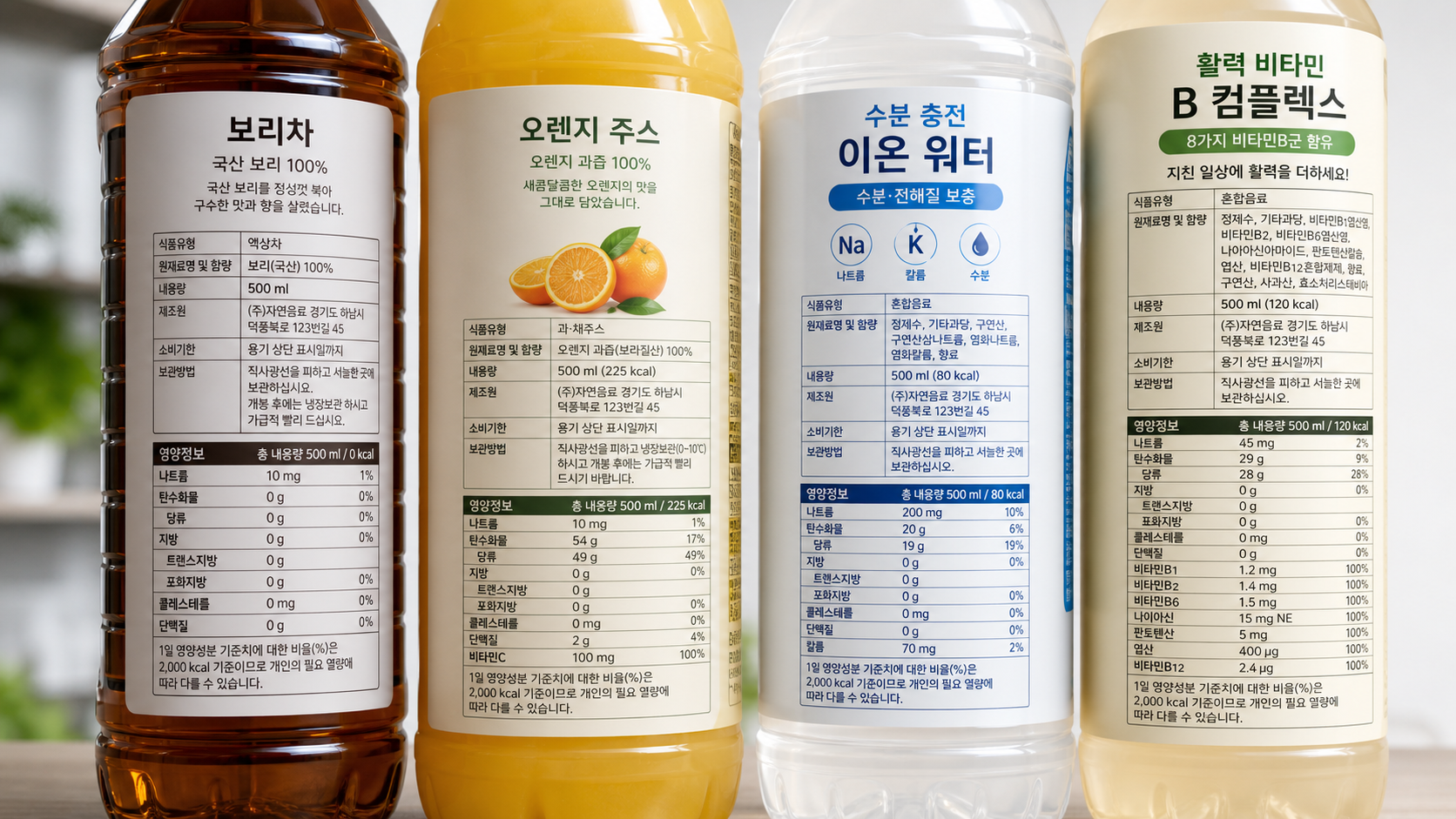
Labels must be in Korean and visible on retail units. Place a compliant sticker or print-on-pack before sale; import with English-only artwork risks delays or rework.
- Product name in Korean and the net content (mL or L).
- Ingredient list in descending order; declare additives by approved names and functions.
- Allergen declaration when present per Korean rules.
- Importer name, address, and contact; country of origin.
- Lot/date marking and storage conditions.
- Nutrition Facts when required by Korean regulations and caffeine content for caffeinated drinks.
If you plan wellness-oriented launches for the Korean market, study consumer trends and permissible positioning. For context on functional beverage direction, see insights on natural hydration innovation trends and category development such as lemongrass tea in wellness beverages.
Customs, tariff & VAT in South Korea
After MFDS releases the lot for sale, Korea Customs Service (KCS) finalizes clearance. Duty is determined by HS code and any preferential rate under a free trade agreement. A 10% VAT generally applies at import, calculated on the customs value plus duty and certain charges.
- Confirm the HS code and duty with your customs broker in Korea before shipment.
- If applicable, coordinate rules of origin documentation to claim FTA preference.
- Ensure invoice, packing list, and bill of lading/air waybill are consistent with the import declaration.
Key ports & airports for beverage imports
Plan routing and lead times with your logistics partner. The following Korean gateways are commonly used for beverages:
| Gateway | Typical use | Positioning & notes |
|---|---|---|
| Busan Port | Ocean freight (FCL/LCL) | Largest container port; broad sailing options and cold-chain capabilities. |
| Incheon Port | Ocean freight | Convenient for Seoul metro distribution; supports FMCG flows. |
| Incheon International Airport | Air freight | Fast entry for urgent launches or samples; higher landed cost. |
Common pitfalls and how to avoid them
- Shipping before factory registration: If MFDS requires it, unregistered sites cause delays. Clarify early and file before dispatch.
- Untranslated labels: Bring Korean labels to final form before the first lot. Keep a translation file aligned with your artwork.
- Unapproved additives: Verify each additive is permitted for the category in Korea; replace or reformulate if needed.
- Missing lot/date linkage: Ensure documents and labels share the same lot/date system to pass inspection.
- Underestimating first-lot testing: Build buffer time and budget for possible MFDS sampling and analysis.
Information for beverage brands & importers
Success in Korea requires technical readiness and clear positioning. Align your importer, R&D, and operations teams around the following:
- Product brief: Final formula, declared additives, sensory target, Brix and acidity range (if relevant), caffeine content (if any), shelf life and storage conditions.
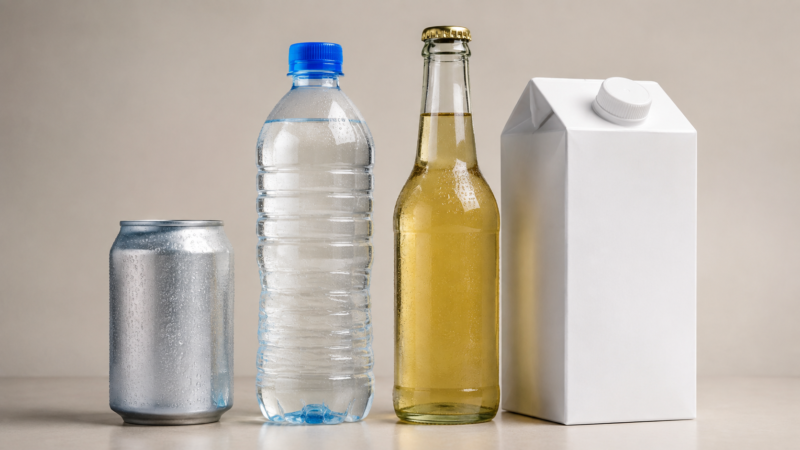
- Packaging: Confirm fill volume (e.g., 200–500 mL), cap type, tamper evidence, date coding format, and sticker space for Korean labels. Explore PET bottling options for ambient shelf-stable lines.
- Positioning: Validate claims permitted in Korea; avoid medical or disease-related statements. Consider clean-label angles aligned with local expectations.
- Supply chain: Ambient shelf-stable SKUs simplify distribution; chilled SKUs require reliable cold chain from port to retail.
- Scale-up: For brands exploring contract manufacturing, review OEM & private label beverage development pathways and align lead times with MFDS’s first-lot controls.
- Market insight: Monitor South Korea market dynamics and flavor trends; categories linked to natural hydration innovation trends can inform your pipeline.
Documentation checklist for the first lot
While MFDS can request different items depending on category, importers typically prepare:
- Commercial invoice and packing list.
- Bill of lading/air waybill.
- Final Korean artwork or label sticker proof.
- Full ingredient list with additive functions and names recognized in Korea.
- Process and quality controls summary (e.g., HACCP if available at the site).
- Certificates of origin if claiming FTA preference.
- Any testing results already available (voluntary pre-shipment checks can reduce surprises).
How the first-shipment inspection typically differs
MFDS often subjects the first imported lot to more rigorous controls than follow-up shipments. Expect closer document scrutiny and potential lab testing before release-for-sale. Later lots may move under eased regimes if history is compliant and unchanged.
- Plan a phased launch calendar to accommodate possible testing lead time.
- Lock the formula and label early; changes can trigger renewed checks.
- Keep open communication between the factory QA and the importer for technical queries from MFDS.
Example timelines and planning notes
Exact timelines vary by category, port workload, and whether laboratory testing is directed. Build contingency into your launch plan, particularly for new-to-market SKUs, unfamiliar factories, or complex formulas with multiple additives.
- Use pre-shipment label and formula reviews to reduce MFDS comments at arrival.
- Coordinate with the logistics provider to choose the gateway (e.g., Busan vs. Incheon) that best fits your distribution hub.
- Keep a change-control log for any reformulation or artwork updates between lots.
Frequently asked questions
Do beverage labels have to be in Korean?
Yes. Retail labels must be in Korean. English-only labels are insufficient for sale; prepare a Korean label or compliant sticker before release.
Is foreign factory registration always required?
MFDS may require registration depending on the product category and risk profile. Confirm early and register the relevant site before your first shipment if MFDS indicates it is required.
What happens to the first lot at MFDS?
The first lot is typically checked more closely, and MFDS may order laboratory tests for standards, additives, contaminants, or microbiology before allowing sale.
How are taxes calculated at import?
Customs duty is set by HS code and agreements; a 10% VAT generally applies on top of the customs value and duty.

Sources
Ministry of Food and Drug Safety (MFDS) – English
Where to go next
- Beverage manufacturer for Korean brands — how to scope and select a production partner
- Private label beverages for Korean brands — store-brand and quick-entry programmes
- OEM beverage manufacturing for Korean buyers — full custom formulation development
- Beverage certifications for Korean importers — HACCP, MFDS facility registration and GFSI schemes
- Beverage MOQ guide for Korean buyers — what sets minimums and how to structure a first order
- Beverage packaging options for the Korean market — cans, PET, glass, cartons and recyclability rules