




 Français
 Español
 العربية
 한국어
한국어Beverage export documents are the records that accompany your drinks from factory gate to destination customs, proving value, contents, origin, and transport details so the container can be shipped and released. The exact set depends on the product, route, Incoterms, and market rules, but a core pack travels with almost every container.
This guide maps the documents that move with your beverage container, who issues them, how they flow through the supply chain, and the errors that most often cause delays. If you are building your logistics plan, see our Export and Logistics guide for how documentation fits into timelines and responsibilities.
Which beverage export documents always travel with the container?
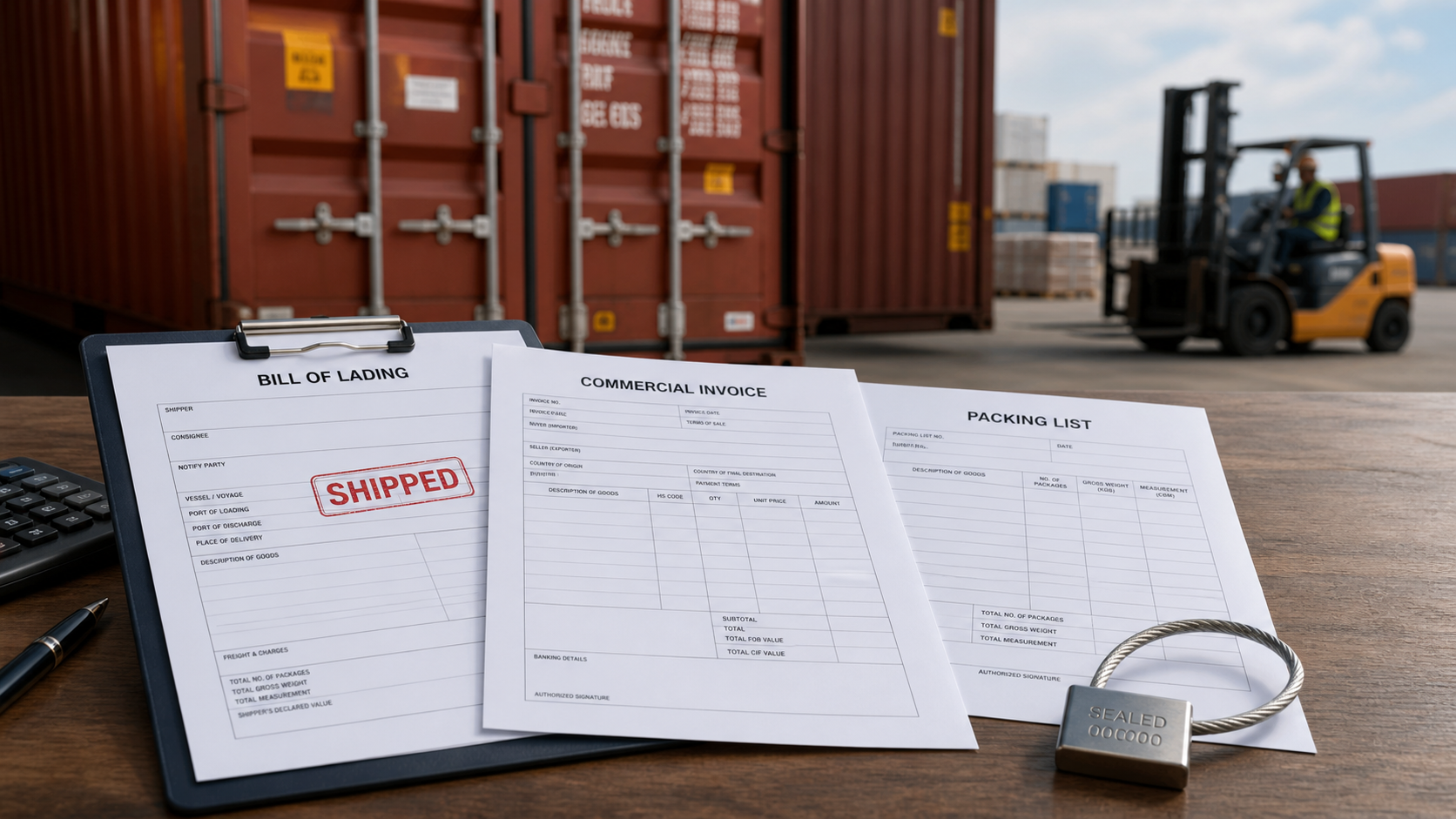
In nearly all lanes and modes, you will need a commercial invoice, packing list, and a transport document (ocean bill of lading or air waybill). These form the backbone of the file customs and carriers use to identify, move, and release your shipment.
- Commercial Invoice: States seller, buyer, consignee/notify, goods description, HS code, unit price and total value, currency, Incoterms, and payment terms. It is used for duty/tax assessment and must align with the purchase contract.
- Packing List: Details the physical make-up of the shipment—carton count per SKU, net/gross weight, package dimensions, pallet count, and the container seal number once loaded. Customs and warehouses use it to verify quantities and locate items.
- Transport Document:
- Ocean Bill of Lading (B/L): Issued by the carrier or NVOCC. Can be “original” (negotiable) or “telex release/express” (non-negotiable). Shows ship/voyage, POL/POD, container numbers, and freight terms (prepaid/collect).
- Air Waybill (AWB): Non-negotiable receipt of goods and contract of carriage for air shipments, with similar core details.
- Export Declaration (originating country): Filed by the exporter or agent as part of outbound customs; it may not physically travel in the pouch but its key data (e.g., exporter ID, HS code, value) should match the invoice.
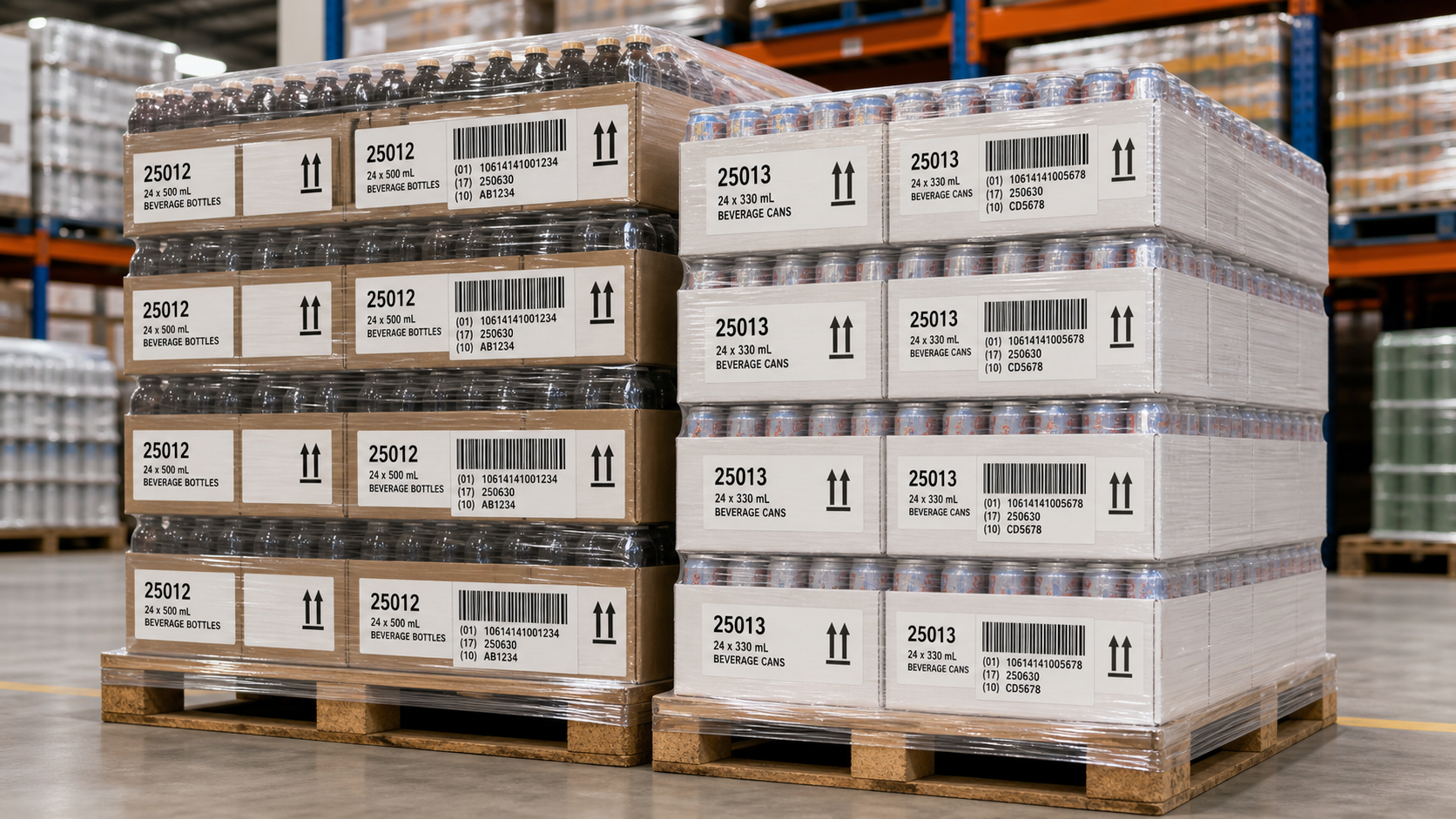
- Shipping Marks & Labels: Not a paper document, but the marks printed on cartons and pallets (consignee, PO, SKU, carton numbers, handling icons) must match the packing list so warehouses and customs can trace items quickly.
Core beverage export documents at a glance
The table below summarizes common documents that typically accompany a beverage container. Requirements can differ by market and commercial arrangements.
| Document | Primary purpose | Issued by | Travels as | Typical checkpoints |
|---|---|---|---|---|
| Commercial Invoice | Declares value, buyer/seller, Incoterms, HS code | Exporter | Original or digital copy | Export & import customs, broker, bank (if applicable) |
| Packing List | Carton/pallet breakdown, weights, dimensions, seal | Exporter | Original or digital copy | Warehouse, carrier, customs inspection |
| Bill of Lading / Air Waybill | Receipt & contract of carriage | Carrier/NVOCC or airline | Originals or express/telex; AWB copy | Carrier release, customs entry, bank (if LC) |
| Certificate of Origin | Confirms origin; may support tariff preference | Exporter; chamber/authority endorsement | Original or digital, depending on scheme | Customs for duty assessment |
| Insurance Certificate | Evidence of cargo insurance coverage | Insurer/broker | Original or PDF | Buyer risk management, bank (if CIF/CIP) |
| Sanitary/Health Certificate (if required) | Confirms product complies with food regulations | Competent authority at origin | Original or endorsed copy | Import food safety authority |
| Fumigation/ISPM 15 evidence | Shows pallets/wood packaging meet standards | Approved provider | Stamp on wood + certificate | Customs/quarantine |
| Certificate of Analysis (CoA) | Batch quality parameters per lot | Manufacturer or lab | PDF per batch/lot | Buyer QA, sometimes customs |
What documents vary by beverage type and destination?
The variable layer depends on the drink category, ingredients, alcohol content, packaging, and destination market rules. Request the importer’s broker checklist early and align it with your product brief.
- Certificate of Origin (preferential or non-preferential): Needed when buyers pursue reduced duties under a trade agreement, or when the destination requires proof of origin. Format and endorsement rules differ by scheme.
- Sanitary/Health Certificate: Some authorities ask for a shipment-level certificate confirming the product was manufactured in licensed facilities and is fit for consumption under local regulations. The issuing body and format vary by country.
- Certificate of Analysis (CoA): A batch-level summary of quality and safety parameters. It travels with the lot and is standard in many private label or brand-owner programs. Learn how buyers review it in how to read a beverage CoA.
- Religious or dietary certifications: Some markets or buyers request shipment documentation or copies of valid facility certification, for example Halal. See Halal Certification for Beverage Export for scope and typical documents. (Label claims must match the certified product and market rules.)
- Factory-level certifications: Copies of current certificates (e.g., HACCP) can be included in the documentation pack when requested by the buyer. For an overview of audit and certification topics, see our certifications overview.
- Wood packaging documentation: If you ship on wooden pallets, evidence of ISPM 15 compliance (heat treatment marks) or a fumigation certificate may be checked by quarantine/customs.
- Dangerous goods support (if applicable): High-alcohol beverages or certain pressurized formats may trigger extra transport documents; confirm classification with your carrier before booking.
- Market registrations and prior notices: Some destinations expect pre-import registrations or shipment notifications managed by the importer or their agent. Timing and documentation should be agreed in advance to avoid holds.
How do beverage export documents flow through the supply chain?
The document journey starts at the factory and ends with the consignee’s release. Getting the order right on the first attempt is faster than amending after departure.
- Draft stage: The exporter issues draft commercial invoice and packing list to the buyer and forwarder. The forwarder creates a booking and drafts the B/L or AWB details from these documents.
- Pre-carriage checks: Product labels, shipping marks, and palletization are cross-checked with the packing list; batches and date codes are recorded. For traceability best practice, see batch traceability in production.
- Loading & seal: The container is stuffed; the seal number is recorded on the packing list and will appear on the B/L. Photos of the load and seal can support claims handling.
- Export clearance: The exporter or agent files the export declaration. Any required government certificates are applied for and collected.
- Final documents: After the vessel departs (or cargo is accepted for air), the carrier issues the B/L or AWB. The exporter compiles the final document pack (invoice, packing list, transport document, and any certificates) and sends a pre-alert to the buyer/broker.
- Arrival & entry: The importer’s broker files the customs entry using the documents, the carrier releases the container upon proof of entitlement (original B/L or express release), and the consignee arranges pickup or delivery.
What goes on the box, pallet, and container?
Even perfect paperwork will not save a shipment if the physical labels do not match. Align on these basics:
- Carton marks: Consignee name, PO or reference number, SKU/product name, carton number range (e.g., 1–500), country of origin, handling icons, and, if used, GS1-128/SSCC barcodes. All should reflect the packing list.
- Pallet labels: Pallet ID, carton count, SKU list per pallet, gross weight, and destination warehouse code when supplied by the buyer.
- Container doors: Clearly visible seal applied and recorded; some buyers ask for the seal number to be photographed next to the packing list.
Digital vs paper originals—what should you expect?
Many lanes now accept digital documents for customs entry and carrier release, but some situations still require paper originals. Align your approach before booking:
- Original bills of lading: If the B/L is negotiable and consigned “to order,” banks or finance processes may require physically couriered originals for release. If speed matters, consider an express/telex release agreed by all parties.
- Chamber-endorsed documents: Certain certificates of origin and consular documents need physical or digitally authenticated endorsements. Confirm the format your destination accepts.
- Sanitary/health certificates: Some authorities require an original or endorsed copy presented at arrival. Check lead times for issuance to avoid post-sailing holds.
- Everything else: Invoices, packing lists, CoAs, and insurance certificates are commonly exchanged as PDFs, provided they are legible and consistent.
Common errors that delay beverage container release
Most holds trace back to mismatches between documents, labels, and what is physically shipped. Prevent the following:
- Inconsistent product descriptions: The invoice, packing list, and B/L should all describe the goods consistently (brand/private label name if applicable, beverage type, packaging format, and count).
- Wrong or vague HS code: A misclassified HS code can trigger review. Work with the importer’s broker to confirm the classification for your specific formulation and packaging.
- Mismatched weights and counts: Net/gross and carton/pallet counts must reconcile across invoice, packing list, and carrier VGM/manifest data.
- Incorrect Incoterms or consignee details: Ensure the Incoterms year and named place are clear, and the consignee/notify party match the broker’s records.
- Missing or wrong seal number: The seal number recorded on the packing list should match the B/L and the physical seal at arrival.
- Out-of-date certificates: Expired factory certificates or missing shipment-level certificates cause holds. Keep validity calendars and renewal reminders.
- Unreadable scans: Low-resolution PDFs, skewed stamps, or cut-off pages slow reviews. Use clean, high-contrast scans and searchable PDFs when possible.
What importers should request before the vessel sails
Lock the documentation early with a clear pre-alert pack:
- Draft review and sign-off: Approve draft invoice, packing list, and B/L/AWB details, including Incoterms, HS codes, and seal numbers.
- Certificates plan: List which shipment-level and factory-level certificates will be included, who issues them, and estimated availability dates. Coordinate with the buyer’s certifications overview.
- Batch traceability sheet: Lot codes and production dates for each SKU, tied to the CoA and packaging. See batch traceability in production for why buyers check it.
- Final digital set: PDFs of the invoice, packing list, CoAs, and any certificates sent as a single, logically named folder. Courier tracking provided for any needed originals.
- Release method confirmation: Original B/L with courier ETA or express/telex release number, aligned with the broker’s entry timeline.

FAQ: Beverage export documents and container release
Do I always need an original bill of lading? Not always. Many shipments use express/telex release, but your bank, buyer, and carrier must agree. If a negotiable B/L is part of your payment terms, originals may be required.
Which Incoterms affect who holds the documents? Incoterms allocate costs and risks, and they influence which party controls the transport document and insurance. Confirm the exact Incoterm and named place in the sales contract and reflect it consistently on the invoice and B/L.
Can multiple SKUs share one documentation set? Yes—one invoice and packing list can cover multiple SKUs if each item’s description, HS code, carton count, and weights are broken out clearly and totals reconcile.
Who is responsible for customs documents on import? Typically the importer of record and their customs broker prepare the entry using the exporter’s documents. Align responsibilities early and share drafts for classification review to avoid rework.
How long should I retain export documents? Retention periods vary by jurisdiction and contract. As a practical baseline, many companies keep export files for multiple years to support audits, claims, and customer inquiries.
Where can I learn about market-specific expectations? Requirements differ by country and product. For example, some markets have specific food-entry protocols. If you target specialized certifications like Halal, see Halal Certification for Beverage Export. If you are architecting your logistics plan, revisit the Export and Logistics guide.
Key takeaways for beverage brands and importers
The document pack that travels with your beverage container proves value (commercial invoice), physical contents (packing list), carriage (B/L or AWB), and—when required—origin and compliance (certificates). Keep descriptions consistent across all documents, align on Incoterms and HS codes with the importer’s broker, and decide early whether you will use express release or original B/Ls. Build a clean pre-alert pack with batch IDs tied to CoAs and labels so warehouses and customs can trace cartons to production lots; to sharpen your review process, see how to read a beverage CoA. For a broader program view, start with our Export and Logistics guide.
Compliance and shipping at ACMFOOD
For the certificates and food safety systems buyers and customs ask us to produce, see certifications and food safety systems. For shipping terms, the document pack and container planning, see export and logistics. To discuss a specific market, request a quote.
Request a quote