




 Français
 Español
 العربية
 한국어
한국어How many cartons fit in a 20ft beverage container depends on carton size, palletization choice, stacking pattern, and weight constraints. There isn’t one universal figure; instead, export teams estimate capacity using a simple method that balances space, weight, and transport safety.
This guide shows you how to plan cartons per 20ft container beverage shipments step by step. You will learn how to choose floor-loading vs pallets, configure beverage pallets, check weight and compliance limits, and build a defendable loading plan for customs, carriers, and insurers.
How many beverage cartons fit in a 20ft container?
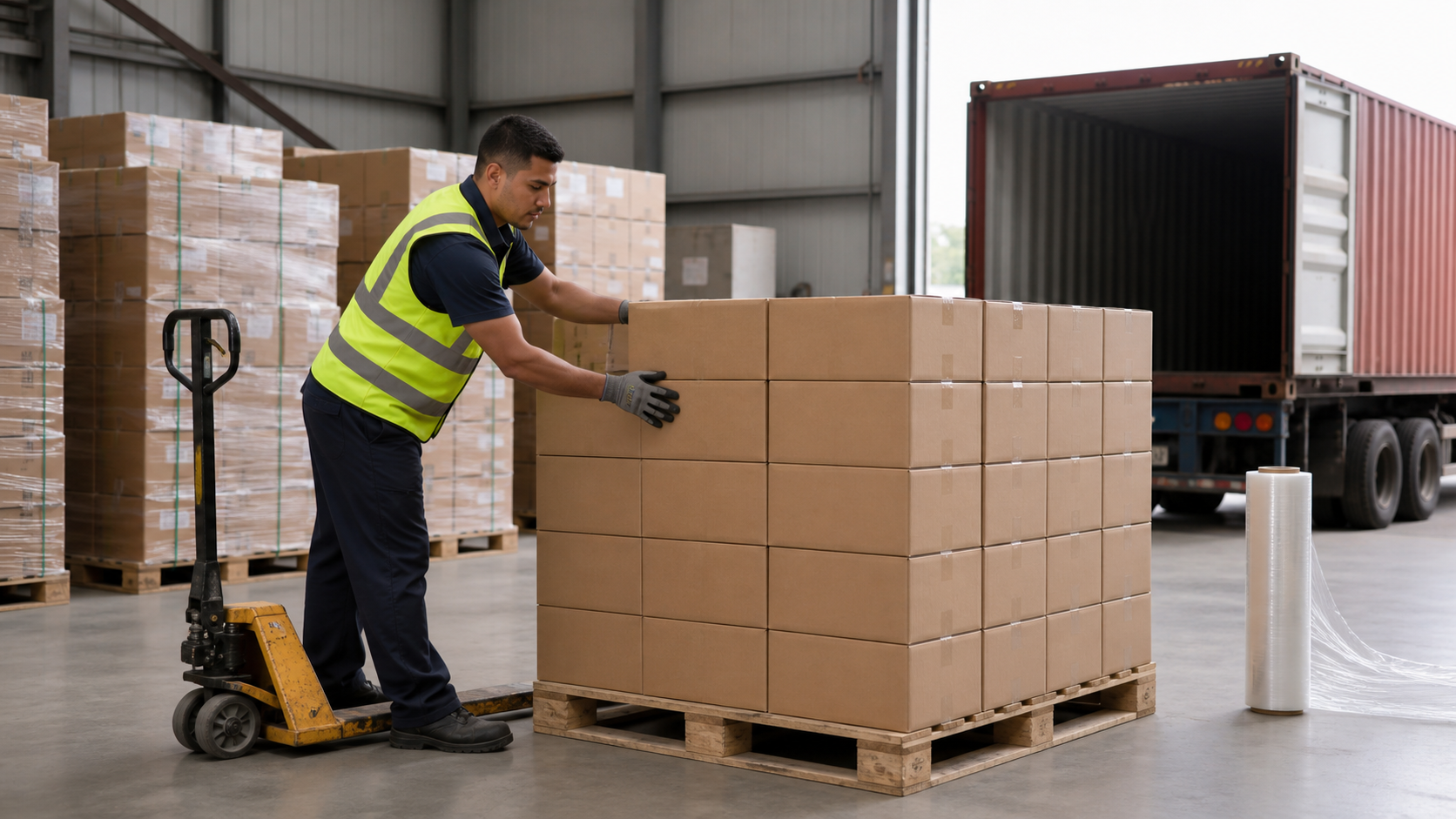
There is no single number. The actual cartons per 20ft container beverage load hinges on carton dimensions, orientation, pallet footprint, stack height limits, and max gross weight. The most reliable approach is to plan by pallets first, then cartons per pallet, and validate against both cubic and weight constraints.
In practice, two identical containers can carry very different carton counts because glass vs PET, can vs bottle, and 100% juice vs low-cal drink all change weight and stacking behavior. Use the calculation process below to reach a number you can defend to your logistics partners.
What determines carton count in a 20ft beverage container?
Start from the constraints that actually stop loads from moving safely. In beverages, weight and stability often limit you before pure volume does.
- Carton size & orientation: Small footprint cartons interlock differently than wide ones. Rotating cartons 90° may add or remove one column per layer.
- Palletization method: Floor-loaded cartons use the full footprint but take longer to handle. Pallets speed handling, protect integrity, and support traceability.
- Stack height limits: Beverage cartons have a crush strength limit; stack height is often set by packaging spec and QA, not just container height.
- Weight per carton: Liquids are dense; weight caps often trigger first, especially with glass bottles or high-fill weights.
- Container interior: Usable length, width, height, and door opening affect what patterns actually fit and move through the doors smoothly.
- Blocking & bracing: Dunnage, airbags, and corner posts take some space but stabilize loads and reduce damage risk.
- Regulatory & route limits: Road weight, bridge limits, and Verified Gross Mass (VGM) rules can cut theoretical capacity.
Floor-loading vs pallets vs slip sheets: which is best for drinks?
For most beverages, palletized loads are preferred for speed, integrity, and repeatability. Floor-loading may fit more cartons but adds handling time and risk. Slip sheets can save pallet space and weight when both shipper and receiver can clamp-handle.
Choose the option that best aligns with your receiver’s equipment, damage tolerance, and warehouse flow. For high-velocity retail beverages, standardized pallets with clear labels typically win.
| Method | Pros | Cons | Best for |
|---|---|---|---|
| Floor-loaded cartons | Maximizes footprint, no pallet weight; potentially more cartons per container | Slow loading/unloading; higher damage risk; traceability challenges; harder QA checks | Stable PET/can packs, cost-focused routes with low handling complexity |
| Palletized | Fast handling; consistent stacking; better protection; easier count & inspection | Pallets take space & add tare weight; may slightly reduce carton count | Retail-ready beverages, fragile packs, multi-stop DC networks |
| Slip sheets | Space/weight efficient like floor-load; faster using push-pull clamps | Requires specialized clamp equipment at both ends | Closed-loop receivers equipped for clamp handling |
Step-by-step container loading plan for drinks
Use this method to convert packaging specs into a defensible loading plan. It helps you balance cubic space, weight, and carton protection.
- Confirm container specs: Get the internal length, width, height, door opening, and max payload from your forwarder or container data plate. Use the actual series/spec, not an online generic.
- Define your case pack: Note carton external length × width × height, sealed; the count of primary packs per carton; and net weight per carton including dunnage.
- Decide handling method: Floor-loaded, pallets, or slip sheets. Confirm receiver’s equipment and unloading time window.
- Select pallet footprint (if any): Common footprints include regional standards. Confirm if the receiver requires a specific pallet, and ensure ISPM-15 compliance for export wood when applicable.
- Draft the pallet pattern: Choose column or interlocked pattern, with carton orientation to minimize overhang. Calculate cartons per layer × number of layers per pallet within stack height and crush limits.
- Check unit load stability: Add corner boards, top caps, and stretch/shrink wrap parameters. Lock in a safe top load limit per pallet per QA guidance.
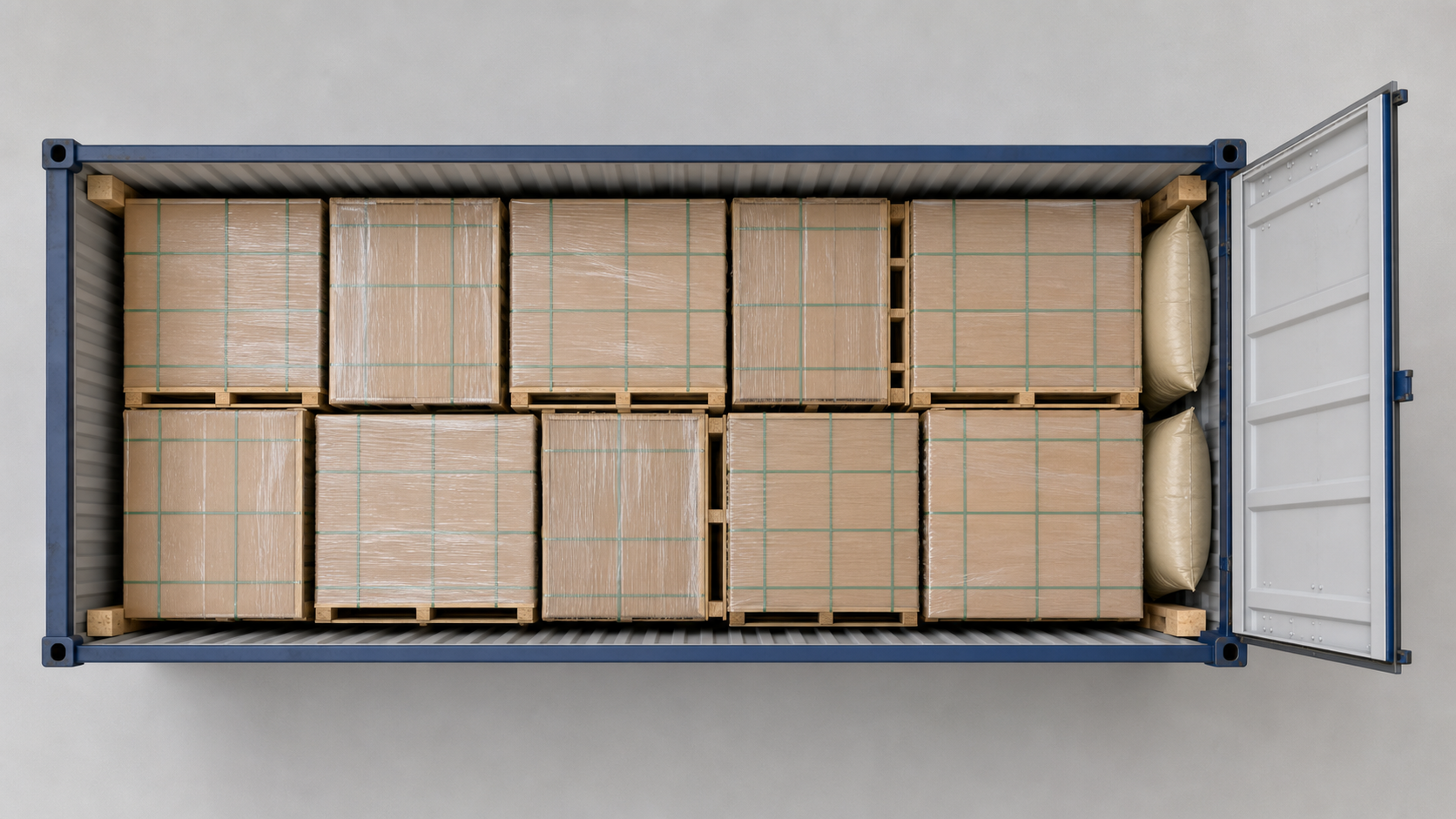
- Fit pallets in the container: Sketch a floor plan. Alternate pallet orientation where needed to tighten the fit while preserving door clearance. Mark space for airbags or bracing.
- Validate weight: Sum net product + packaging + pallets + dunnage. Confirm below container payload and route weight limits. Prepare VGM documentation per SOLAS.
- Validate height and access: Ensure stacked height passes the door opening and allows safe loading with your forklift mast, clamps, or pallet jack.
- Finalize count: Total pallets × cartons per pallet = cartons per 20ft shipment. For floor loads, cartons per row × rows × layers after allowing bracing and door clearance.
- Document the plan: Include diagrams, count by row, pallet IDs, and bracing positions. Share with warehouse, forwarder, and receiver before loading.
Beverage pallet configuration fundamentals
Configure pallets to protect primary packaging and maintain handling speed. For beverages, unit-load stability is often more valuable than squeezing one extra column of cartons.
- Orientation: Rotate cartons to align stronger edges outward. Mixed-orientation layers can lock columns and reduce shifting.
- Overhang: Avoid carton overhang beyond the pallet deck; it increases corner crush and puncture risk.
- Interlayer slip: Use anti-slip sheets between layers when cases are smooth; they improve stability without excessive wrap tension.
- Top load: Set a maximum top load per pallet per your packaging supplier; glass bottles, in particular, need conservative limits.
- Wrap: Consistent film tension with at least one top band and bottom band. Consider roping the film at the base for better anchoring.
- Labeling: Face SSCC/GTIN labels outward and high enough for scanners. This speeds receiving and count verification.
- Mixed SKUs: Keep SKUs per pallet minimal or layer-segregated; mixed-SKU pallets complicate counting and can slow DCs.
Weight, height & compliance checks before loading
Even a perfect spatial layout fails if it breaches weight or regulatory limits. Confirm these before you print labels.
- Container payload: Check the specific box’s maximum payload and tare weight. Dense beverages can hit payload long before cubic capacity.
- Route limits: Road and bridge laws at origin, trans-shipment, and destination may cap axle loads below the container’s rated payload.
- Verified Gross Mass (VGM): Declare VGM under SOLAS using an approved method. Align scales, calibration records, and sign-off authority.
- Door opening & mast height: Confirm stacked pallet height can pass the door and be lifted safely by your equipment.
- ISPM-15 (wood): Export wood pallets and dunnage typically require heat treatment and marking; verify for your destination.
- Food safety: Keep pallets clean and free of protruding nails; avoid contamination sources; segregate chemicals from food-grade goods.
- Blocking & bracing: Plan dunnage, corner boards, transverse beams, and airbags to prevent longitudinal and lateral movement.
- Moisture & temperature: Consider container desiccants for humid routes; for temperature-sensitive drinks, evaluate insulated liners or reefer containers.
How to estimate without guesswork: a practical formula
Turn packaging data into a capacity estimate you can share with buyers, forwarders, and QA in a single page.
- Cartons per pallet: (Cartons per layer) × (Max safe layers within height/crush limits) = Cartons/Pallet.
- Pallets per container: Fit count from your floor plan (accounting for door clearance and bracing) = Pallets/Container.
- Cartons per container: (Cartons/Pallet) × (Pallets/Container). For floor loads: (Cartons/Row) × (Rows) × (Layers) minus space for bracing.
- Weight check: (Cartons per container × Net weight per carton) + packaging + pallets + dunnage ≤ Payload and route limits.
- Height & door check: Pallet stack height ≤ Door opening and handling constraints.
Example scenarios (illustrative only)
These scenarios show how different beverage formats lead to different capacity drivers. Use them to anticipate your constraint, then insert your real measurements to calculate.
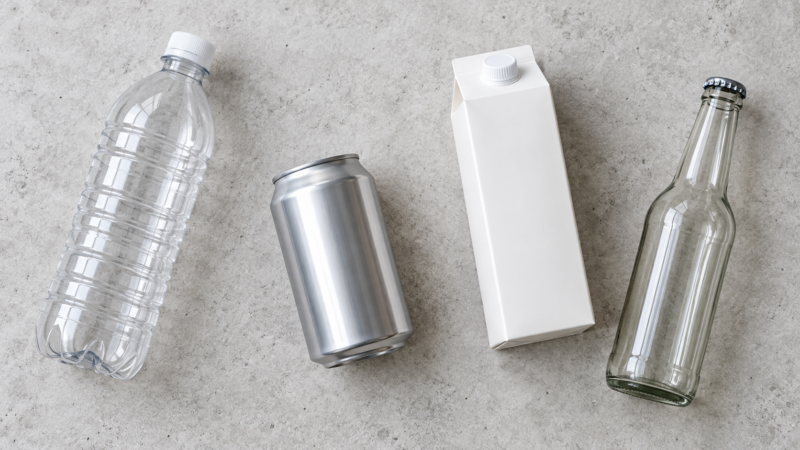
- Glass bottle multipacks: Weight and crush limits dominate. Carton pattern may be conservative to avoid pressure points. Expect payload to cap the load before you run out of floor space.
- PET bottles (e.g., 500 ml 24-packs): Space often limits before weight. Interlocking patterns and anti-slip sheets help you gain one more layer while keeping stability.
- Aluminum cans (e.g., 24×330 ml): Very stable bricks; floor-loading can be efficient. Still, pallets usually reduce damages and speed handling at DCs.
- Glass jars or concentrates: Dense and fragile; use pallets, corner boards, and limited stack heights. Bracing and airbags are essential to prevent longitudinal shifts.
Container loading plan for drinks: documentation package
A clear package helps everyone load the same way and minimizes claims. Include:
- Plan overview: Handling method, pallet footprint, and total pallets/cartons.
- Diagrams: Top-view floor plan with pallet orientation and bracing zones; side elevation for stack height.
- Unit load spec: Carton orientation, layers, wrap settings, corner protection, and top cap usage.
- Weights: Per carton, per pallet, total estimated gross mass; VGM method and sign-off.
- Compliance notes: ISPM-15 statement for wood; food safety and cleanliness checklist.
- Receiving instructions: Unload sequence, clamp or forks, where to stage mixed SKUs.
If you’re developing a new drink and want to align packaging with logistics from day one, consider integrating the load plan into your OEM beverage manufacturing brief so packaging, QA, and export teams work from the same assumptions.
Common pitfalls that reduce capacity or cause damage
Watch for these frequent issues that shrink your count or lead to costly claims:
- Ignoring door geometry: Pallets pass the dry internal dimensions on paper but won’t clear the door in real life.
- Overhang & edge crush: Chasing one extra column leads to crushed corners and leakage, especially with glass.
- Under-bracing: Longitudinal movement during braking damages bottom rows. Airbags and blocking are small investments.
- Moisture: Condensation weakens cartons. Desiccants and breathable wrap patterns can help on humid routes.
- Mixed-SKU chaos: Hard-to-count pallets delay receiving and inflate detention charges.
- Unverified weights: VGM discrepancies lead to rollovers or penalties. Align carton and pallet weights with calibrated scales.
How many pallets fit in a 20ft container?
Typical 20ft containers accept a limited number of standard pallets depending on footprint and orientation. In many routes, shippers plan around common counts for regional pallets, but always confirm against your specific container interior, door width, bracing allowance, and receiver’s pallet requirements.
Why this matters: once you fix the number of pallets, your total carton count is largely locked by the cartons-per-pallet figure from your pallet pattern and allowed stack height.
When to choose floor-loading for beverages
Floor-loading can make sense when cases are very stable, the receiver is set up for manual depalletization, and the route is short. Even then, document interlocking layers, add anti-slip sheets, and plan robust blocking & bracing to protect against fore-aft shifts.
If your buyer requires fast cross-docking or automated receiving, standardized pallets remain the safer, faster choice even if headline carton count is slightly lower.
FAQ
Quick answers to help you finalize your beverage loading plan.
Is there a universal number of cartons per 20ft container beverage shipment?
No. The correct count varies with carton size, palletization, stack height, and weight. Use the pallets-first method: pallets per container × cartons per pallet, then verify against payload and door height.
Do I need ISPM-15 pallets and dunnage for export?
Most destinations require ISPM-15 compliant wood pallets and blocking for international shipments. Confirm with your forwarder and ensure markings are visible for inspection.
Can I mix SKUs in the same container?
Yes, but aim to keep each pallet single-SKU or layer-segregated. Mixed cartons on the same pallet complicate counting, raise damage risk, and slow receiving.
How many pallets fit in a 20ft container?
Shippers often plan around common pallet counts depending on footprint and orientation. Treat those as planning references only—finalize with your exact container’s internal dimensions, door opening, and bracing needs.
What documents support my loading plan?
Include the floor plan diagram, unit load spec, carton and pallet weights, VGM declaration, and ISPM-15 statement. Share with the warehouse and forwarder before the loading date.
Conclusion
There is no single answer to how many cartons per 20ft container beverage shipments can carry, because the limiting factor shifts between space, weight, and stability. By planning pallets first, setting a robust pallet pattern, and validating weight, door clearance, and bracing, you get a safe, repeatable count that works in the real world.
If you are preparing a new launch, align packaging, logistics, and MOQ early. See our guidance on Minimum Order Quantity and fold your load plan into your OEM beverage manufacturing brief so your production and export teams work from the same assumptions.
Compliance and shipping at ACMFOOD
For the certificates and food safety systems buyers and customs ask us to produce, see certifications and food safety systems. For shipping terms, the document pack and container planning, see export and logistics. To discuss a specific market, request a quote.
Request a quote