


 Français
 Español
 العربية
 한국어
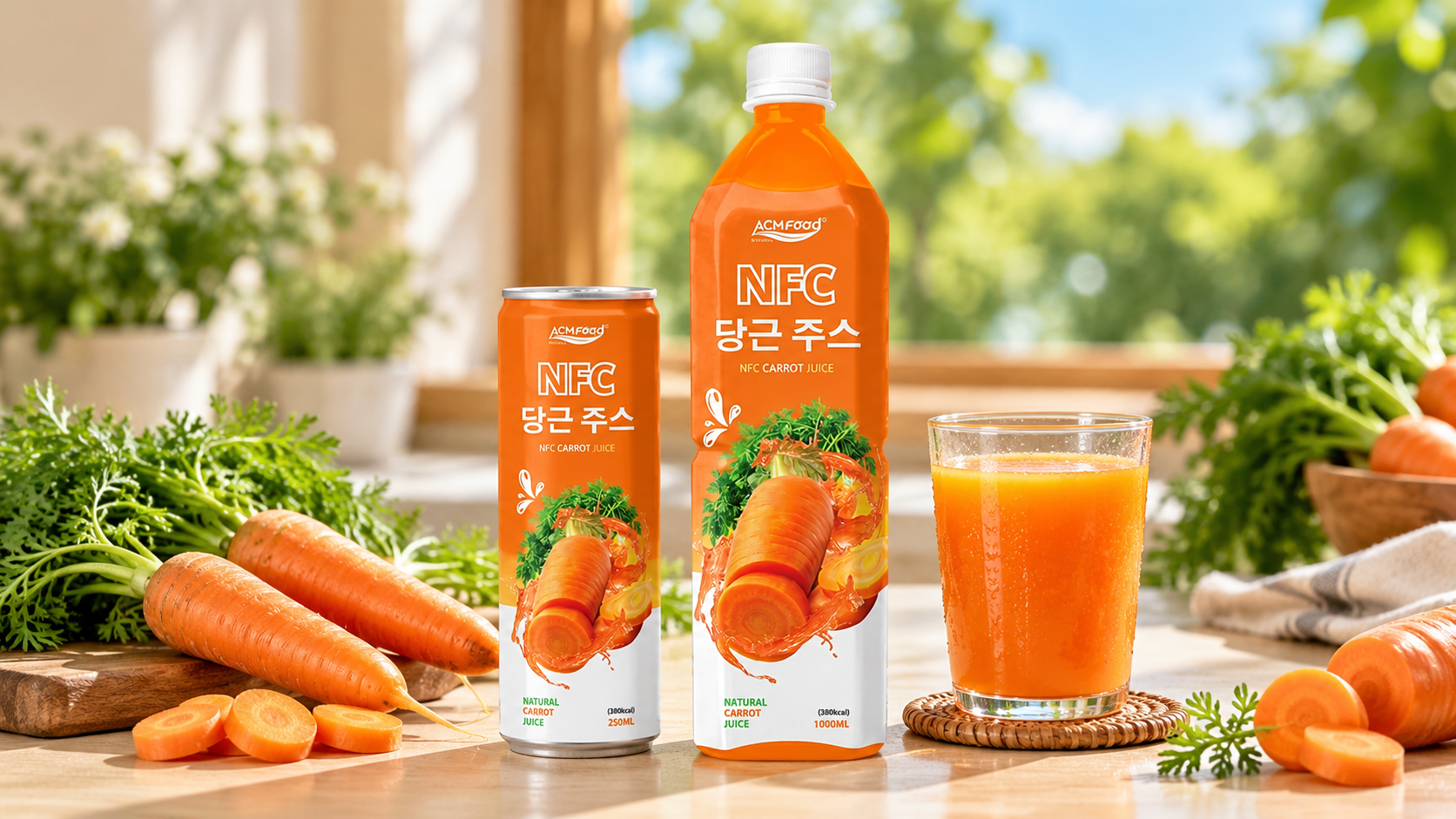
A carrot juice drink is a ready-to-drink beverage built on carrot juice, usually softened with water, a little sweetness and acid so that it tastes lighter than pure carrot juice. In 250 ml aluminium cans or PET bottles it becomes a single-serve product that suits convenience stores, vending, school and office channels.
This guide explains how a carrot drink base is built, why 250 ml is a popular size, how cans and bottles compare and what drives shelf life, colour and taste. It is aimed at brand owners who plan a private label range. ACMFOOD, a Vietnam beverage manufacturer, publishes HACCP, ISO 22000 and FSSC 22000 certificates and supplies finished drinks under OEM, ODM and private label arrangements.
What is a carrot juice drink and how does it differ from pure juice?
A carrot juice drink contains carrot juice together with water and other ingredients, so its juice share is lower than that of pure carrot juice. The taste is lighter and sweeter, the body is thinner, and the cost per serving is lower, which makes it easier to price for mainstream retail.
The main differences from 100% carrot juice are:
- Juice content. A defined share of carrot juice rather than the whole drink. The share is stated in the specification and, in many markets, on the label.
- Added ingredients. Water, sugar or sweetener, acidity regulators and sometimes natural flavour or vitamins.
- Texture. Less thick than pure juice, with a smoother mouthfeel and slower sedimentation.
- Naming. The word “drink” signals a diluted product. Whether names such as nectar or juice drink are allowed depends on local rules.
The product category and the wording are discussed in more detail in the vegetable juice manufacturing guide, which helps when choosing between pure juice, nectar and drink styles.
How is the base formula of a carrot drink built?
The base formula starts with carrot juice, then balances sweetness, acidity and body with water and permitted ingredients. Developers adjust each element in turn until the drink tastes close to the target reference and meets the safety and shelf-life requirements.
- Carrot juice share. Set by positioning. A higher share gives a stronger carrot taste and a higher cost.
- Sweetness. Natural carrot sugars may be enough, or a sweetener is added. The choice affects the nutrition panel and label claims.
- Acidity. A small amount of acid brightens the taste and lowers the pH, which supports microbiological stability.
- Water quality. Treated water with controlled minerals and no chlorine taste, because carrot’s mild flavour reveals water defects.
- Stability aids. If a stabiliser is used to hold the cloud, it must be permitted in the destination market and declared.
- Flavour balance. Some brands add a touch of apple or orange juice to make the drink more familiar.
Because carrot is a low-acid vegetable, the final pH is a safety parameter, not only a taste parameter. Details on how acid level shapes the process are described in the guide to low-acid beverage formulation and packaging.
Why is 250 ml a popular size for carrot drinks?
250 ml suits single-serve consumption and gives a good balance between portion size, cost and shelf presence. It is large enough to feel like a complete drink and small enough to finish at once, which matters for a product that does not store well after opening.
- Single serving. One can or bottle equals one portion, so there is no leftover to refrigerate.
- Price entry point. A smaller pack allows an accessible shelf price while still carrying a reasonable margin.
- Slim can look. A slim 250 ml can has a modern profile that stands out against standard 330 ml cans on the shelf.
- Channel fit. It works in convenience stores, school canteens, offices, cafes and multipacks.
- Freight efficiency. Small, regular packs load densely into cartons and pallets.
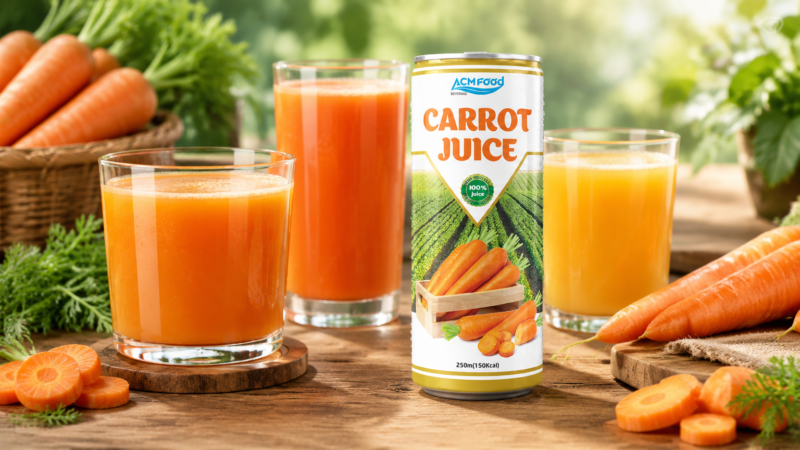
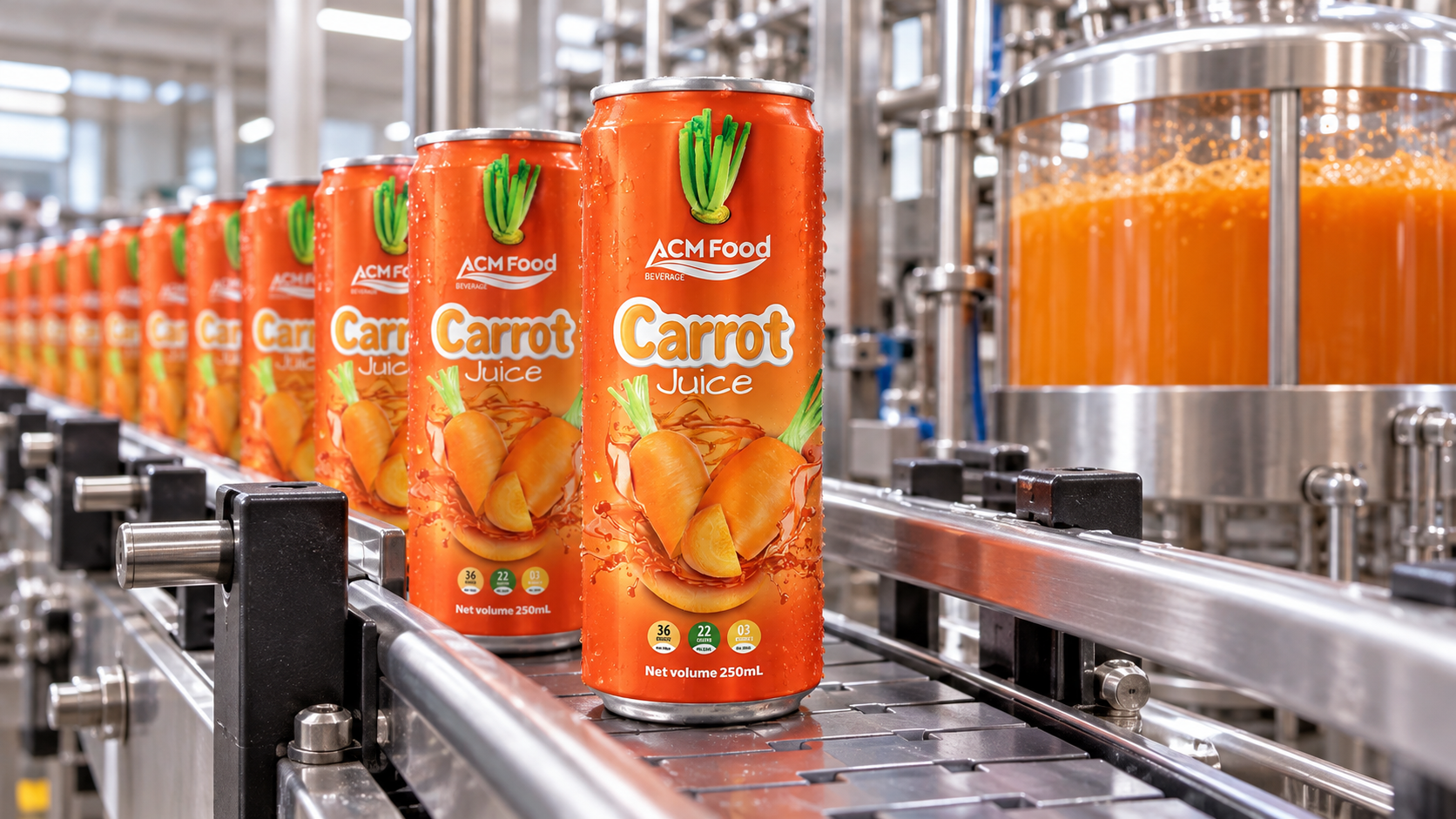
The current ACMFOOD carrot range is offered in 250 ml slim aluminium cans, as shown in the carrot juice category. Larger sizes are possible as a development project.
Can or bottle: which suits a carrot drink better?
A can protects the carotene colour and flavour from light, while a bottle shows the bright orange colour and allows resealing. Both formats work for a carrot drink, and the choice follows the channel and the brand message.
| Aspect | Aluminium can | PET bottle |
|---|---|---|
| Light protection | Complete | Partial, depends on label and material |
| Visibility of colour | None | Full, a selling point for carrot |
| Resealing | No | Yes, with a screw cap |
| Heat treatment options | Retort or acidified hot-fill | Hot-fill with heat-set PET or aseptic |
| Freight and stacking | Dense, strong when sealed | Light, stackable with proper cartons |
| Brand image | Modern, on-the-go | Everyday and family |
For a 250 ml single-serve product, cans are more common in convenience and vending, while PET bottles are common in school and foodservice channels. A brand with both channels can run the same recipe in both formats after confirming the heat treatment for each.
Which heat treatment makes a carrot drink shelf stable?
A carrot drink becomes shelf stable through acidification with hot-fill or pasteurisation, or through sterilisation. The lower the juice share and the higher the added acid, the milder the treatment can be, but the recipe must still be validated for the exact pack.
- Retort for cans. Sealed cans are heated under pressure so the whole content reaches commercial sterility. It suits low-acid carrot drinks, though it adds a cooked note.
- Acidified hot-fill. The recipe pH is lowered, filled hot and sealed. It keeps flavour fresh, but requires a recipe that tastes good at the lower pH.
- Aseptic filling. The drink is sterilised by short high heat and filled into sterile bottles. It protects flavour well and needs a dedicated line.
The process authority or factory validation determines the minimum values. Brands should avoid changing the recipe after validation without informing the factory, because even a small change in carrot share, sugar or acid can alter the heat requirement.
How can colour and cloud be kept stable?
Colour is kept stable by limiting heat and oxygen exposure, and cloud is kept stable by controlling particles and, where needed, homogenisation. Carrot colour comes from carotenoids, which resist heat better than many natural pigments, but light and oxygen still fade the colour over time.
Developers usually combine four steps: deaeration before filling, low headspace in the pack, a light barrier through can material or label coverage, and a controlled storage temperature. For cloud, fine particle size and mild homogenisation help the drink stay evenly orange rather than separating into sediment and a clear layer. A shake instruction on the pack manages the remaining settling.
What affects the shelf life of a carrot drink?
Shelf life depends on the heat route, the recipe pH, the barrier of the pack and the storage temperature. For reference, the category page for ACMFOOD’s 250 ml carrot range states a shelf life of 24 months without refrigeration, and any new recipe or pack must be tested in its own right.
- Process validation. The foundation of the claim, supported by microbiological tests.
- Seal integrity. Seam quality in cans and cap torque in bottles keep air out.
- Oxygen and light. The two factors that drive colour and flavour change.
- Temperature. Hot warehouses and containers shorten the period of good quality.
- Retained samples. Stored samples are reviewed at intervals to confirm taste and colour at the end of the period.
What sensory targets define a good carrot drink?
A good carrot drink tastes naturally sweet, with a clean vegetable note and no raw or cooked off-flavour. The colour should be a clear orange, the texture lightly cloudy and smooth, and the aftertaste short and pleasant rather than earthy or flat.
Developers usually score the sample on five points: aroma, sweetness, carrot character, acidity balance and mouthfeel. The target is written as a short description with an approved reference sample, so later batches can be compared by tasting rather than by memory. Typical defects include a cooked or metallic taste from excessive heat or poor lining, a harsh bitterness from old carrots, and a watery body from over-dilution. Tasting after storage matters as much as tasting fresh samples, because sterilised drinks often change in the first weeks as flavours settle.
How is the nutrition panel of a carrot drink prepared?
The nutrition panel should come from laboratory analysis of the finished drink or from a calculation method accepted in the destination market, not from generic carrot data. Values such as energy, sugars and sodium change with the recipe, the carrot lot and any added sweetener.
- Analysis of the pilot batch. Gives measured values for the specific recipe and pack.
- Serving size. A 250 ml single-serve pack makes the per-serving column simple, while the per-100 ml column is required in many markets.
- Tolerance. Markets allow a defined tolerance between declared and measured values, which the specification should respect.
- Update after recipe changes. A change in carrot share or sweetener needs a new analysis before the panel is reused.
Brands should avoid claims such as source of a vitamin unless the analysed level meets the legal threshold for the market. A supplier can provide the analysis report, but the claim itself remains the brand owner’s responsibility.
How does a private label carrot drink project run?
A private label project moves from a brief to samples, validation, label approval and production. The factory handles the formulation and filling, and the brand provides artwork, market requirements and sales channels.
- Brief. Juice share, sweetness, pack, size, target markets and documents.
- Bench samples. Several recipes are prepared for tasting and colour comparison.
- Pilot run. A small batch on the intended line, with the final pack, for stability tests.
- Label and documents. Artwork, ingredient list and certificates are checked against the market.
- Production. A scheduled run with batch records and quality checks.
- Shipment. Documents and loading plan prepared in advance.
ACMFOOD explains its approach to custom carrot beverages in the carrot juice OEM guide.
FAQ about carrot juice drinks
Is a carrot juice drink healthier than soda?
It depends on the recipe and the sugar content. A carrot drink contains carrot-derived ingredients, but the nutrition panel for the specific product should be read, and no health claim should be assumed from the vegetable alone.
Can the same recipe be used for cans and bottles?
Often yes, but the heat treatment and the barrier need to be checked for each pack. A recipe validated for retort cans may need adjustment for hot-fill bottles.
Why is carrot drink slightly cloudy?
Fine carrot particles remain in suspension and give the drink its body. Some settling is normal, and a gentle shake restores the appearance.
Does 250 ml carrot drink need refrigeration?
Not if the product is acidified or sterilised and sealed. Many consumers prefer it chilled, and opened packs should be refrigerated and finished quickly.
Can a carrot drink be sweetened without sugar?
Yes, with permitted sweeteners or by relying on the natural sugar of carrot and fruit juices. The ingredient list and label claims must reflect the actual recipe.
Planning a carrot drink for private label
A carrot juice drink in 250 ml cans or bottles gives brands a light, approachable vegetable product with a clear single-serve format. Success depends on the base formula, the heat route that suits carrot’s low acidity and a pack that protects colour and flavour.
Brands that want to explore a carrot drink can send ACMFOOD a brief with the juice share, sweetness target, pack and market. The team can propose recipes and prepare samples from its production range.