


 Français
 Español
 العربية
 한국어
An aloe vera drink manufacturer turns aloe gel from the leaf of Aloe barbadensis Miller into a ready-to-drink beverage, usually a sweetened, flavoured drink with soft gel cubes suspended in it or a clear version without pulp. For a brand owner, the work is less about the plant and more about format, texture, flavour, sugar level and how the drink is filled, labelled and shipped.
This guide explains the choices a buyer makes when developing a private label aloe vera drink in Vietnam: pack formats, pulp or clear styles, flavour pairings, sweetness, artwork and the sampling flow. ACMFOOD manufactures aloe vera drinks in cans and PET bottles for importers and brand owners, and the points below reflect the questions buyers usually settle before the first order.
What does an aloe vera drink manufacturer actually produce?
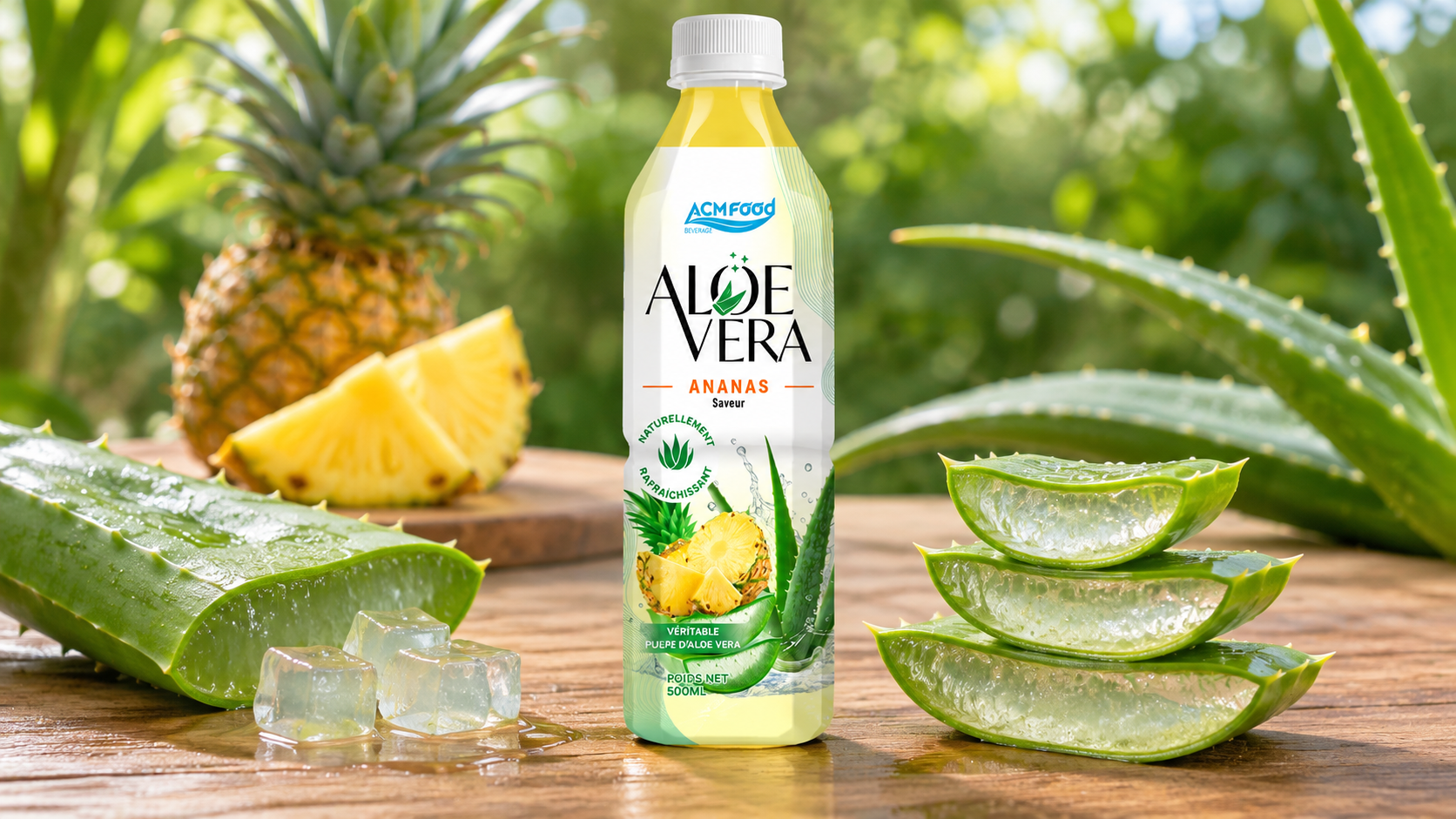
An aloe vera drink manufacturer produces a finished, shelf-stable beverage built on aloe gel: the gel is cut into cubes or reduced to a clear base, mixed with water, sweetener, acid and flavour, then filled and heat treated. The buyer chooses format, texture, flavour and sweetness; the manufacturer controls processing, filling and quality checks.
Most aloe drinks on export shelves fall into three groups:
- Aloe drink with pulp: visible gel cubes suspended in a lightly sweetened, flavoured liquid. This is the familiar style in Asian and international grocery aisles.
- Clear aloe drink: no visible pulp, a lighter mouthfeel and a cleaner look in a transparent bottle.
- Aloe blends: aloe gel combined with fruit juice, coconut water or other bases, where aloe adds texture and a familiar name to the flavour story.
The gel itself is prepared from the inner leaf fillet. In short, the leaf is washed, the outer skin is removed, and the clear fillet is cut and treated so that cubes stay firm in the drink. That preparation is a process topic of its own and is not repeated here; this page stays on what the buyer specifies.
Which pack formats suit an aloe vera drink?
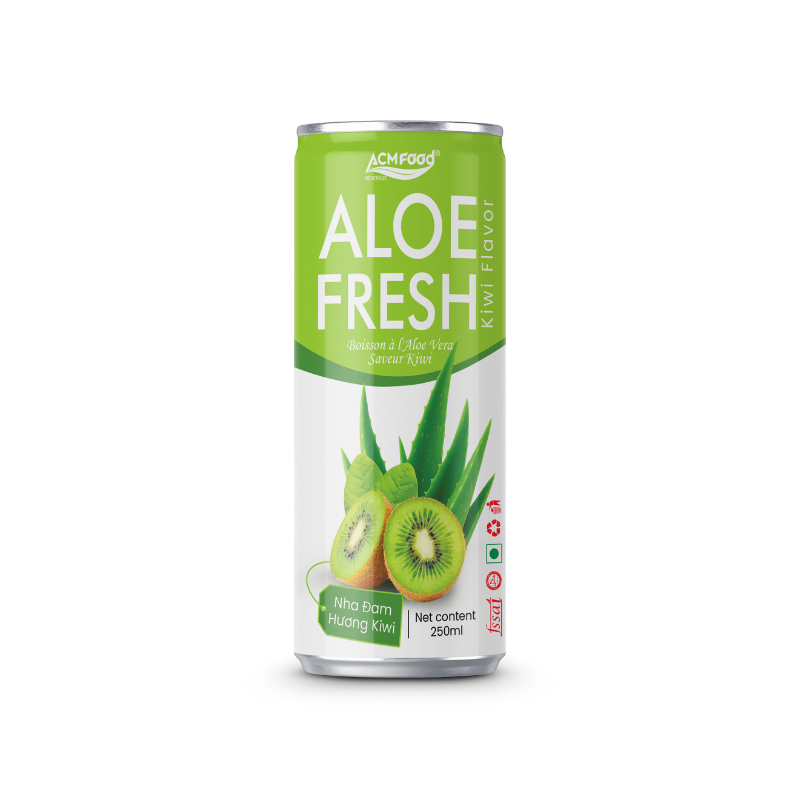
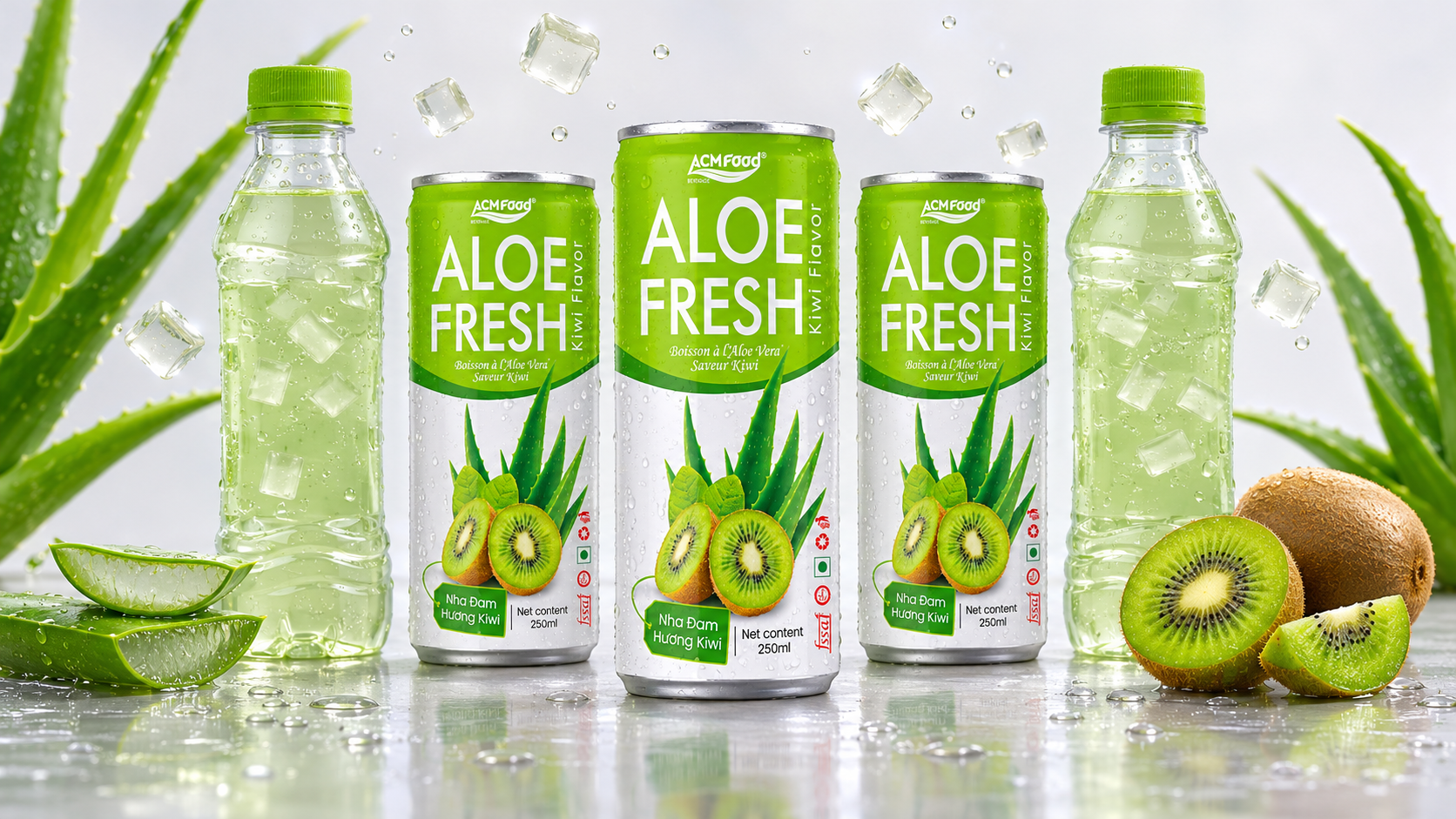
Aloe vera drinks are most often packed in 250ml slim aluminium cans and in 330ml or 500ml PET bottles. Cans suit convenience and multipack retail, while PET shows the gel cubes through a clear bottle and offers a resealable cap. Glass is possible for premium projects but is rarely chosen for this category.
The format decision affects more than shelf presence. It changes the case count, the pallet configuration and the way the gel cubes travel through the filler. A detailed comparison of can sizes is available in our guide to sleek, slim and standard can formats.
| Format | Typical use | Pulp visibility | Points to confirm |
|---|---|---|---|
| 250ml slim aluminium can | Convenience stores, single serve, multipacks | Not visible until opened | Can artwork, case count, liner suited to an acidic drink |
| 330ml PET bottle | Grocery and convenience, single serve | Visible through the bottle | Bottle shape, label type, cap colour |
| 500ml PET bottle | Value positioning, larger serve | Visible through the bottle | Label area, pallet height, shelf facing |
| Glass bottle | Premium or gift positioning | Visible | Breakage risk, freight weight, closure type |
For buyers who are new to the category, a can is often the simpler first project because the artwork is printed directly on the pack. PET gives the gel cubes visual impact, which many consumers associate with the product.
Should you choose aloe with pulp or a clear aloe drink?
Choose aloe with pulp when your market already knows the cube-in-drink style and you want visible texture; choose a clear drink when the audience prefers a lighter, juice-like experience or when the drink is a blend. The decision drives gel dosage, filling method and how the product looks in a transparent bottle.
The two styles behave differently in production and on the shelf:
- Gel content. Pulp drinks carry a measurable share of gel cubes per bottle, which must be dosed evenly so that the first and the last bottle in a run look the same. Clear drinks use aloe in a form that does not leave visible pieces.
- Cube size and firmness. Buyers often specify a cube size and a bite, from soft to slightly chewy. These are confirmed on samples, not on paper.
- Appearance over time. Gel cubes can settle in the bottle. Some settling is normal for this style, and consumers usually shake the drink, but the buyer should agree how the product should look after storage.
- Label wording. If the front label shows pulp or uses a word such as “pulp” or “pieces”, the drink must contain visible gel that matches the claim.
Some buyers run both styles: a pulp line for Asian grocery channels and a clear or blended line for mainstream retail.
Which flavours pair well with aloe vera?
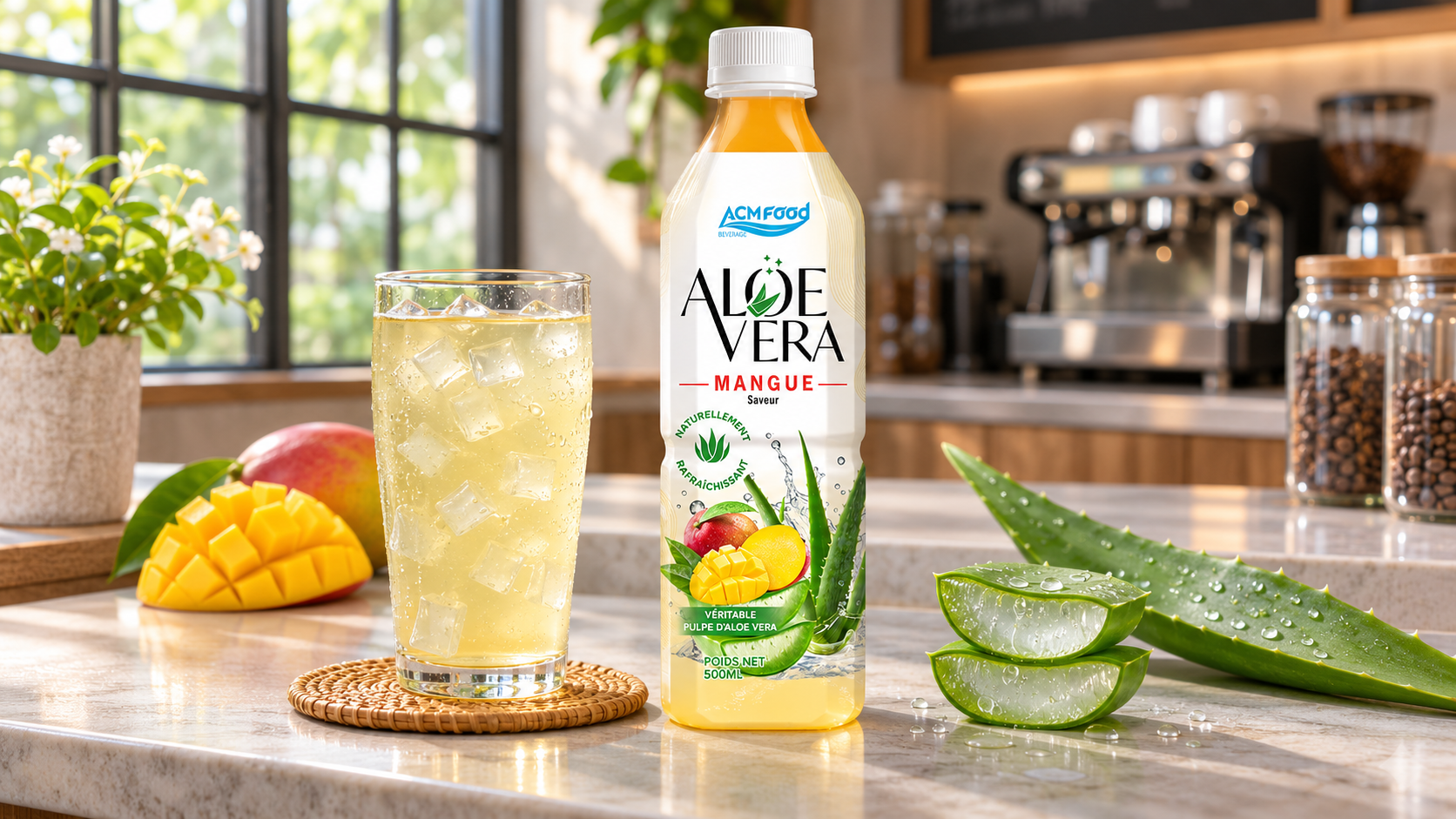
Aloe vera has a mild, slightly green taste, so it pairs well with fruit flavours that carry the drink. Common pairings include pomegranate, lychee, mango, grape, watermelon and blueberry, alongside an original or “plain” aloe flavour that relies on light sweetness and a little acidity.
Each pairing gives a different shelf story:
- Original aloe: the reference flavour; it tells the consumer exactly what the product is.
- Pomegranate and grape: deeper colour and a fuller fruit note; colour stability in clear PET should be checked during sampling.
- Lychee: floral and familiar in Asian markets, and it works well with the soft texture of the gel.
- Mango: broad appeal and a warm colour that hides slight variation in the base.
- Watermelon: light and summery, best kept at moderate sweetness.
- Blueberry: a berry option for markets that like dark fruit; colour may fade with light exposure in transparent bottles.
Aloe also combines with coconut water in blends that use both ingredients as part of the flavour name. If that direction interests you, see our article on coconut water with aloe vera.
The flavour list on a buyer brief does not need to be long. Many importers start with two or three flavours, check sell-through and then extend the range.
How do you set sugar levels for an aloe vera drink?
Sugar level is set by the target market, the price position and any sugar tax or labelling thresholds that apply. Buyers usually choose between a regular sweetened version, a reduced-sugar version and a version sweetened partly or wholly with non-sugar sweeteners. The final level is confirmed on tasting samples, not fixed in the first brief.
Points to settle early:
- Market rules. Sugar taxes and front-of-pack labelling vary between countries. The level that sells well in one market may trigger a tax band or a warning label in another.
- Sweetener choice. Replacing part of the sugar with sweeteners changes taste, aftertaste and the ingredient list. The trade-offs should be tasted side by side before a version is chosen.
- Balance with acid. Lower sugar often needs a small change in acid to keep the drink from tasting flat.
- Claims. Words such as “reduced sugar” or “no added sugar” follow the rules of the destination market and must match the final, tested formula.
What does the private label process look like, from brief to first order?
A private label aloe vera project usually follows four stages: product brief, samples and approval, artwork and packaging, then production and shipping. With a clear brief and quick feedback, most buyers move from first contact to an approved sample in a few rounds.
- Brief. The buyer states the market, format, pulp or clear style, flavours, target sweetness and any certification or labelling requirements.
- Sampling. The manufacturer prepares samples for each flavour. The buyer tastes, comments on sweetness, cube texture and colour, and the formula is adjusted until it is approved.
- Artwork. The buyer supplies label or can artwork that follows the destination market’s rules. The manufacturer checks technical fit: dimensions, barcode position, ingredient list and nutrition panel against the approved formula.
- Production and shipping. Once artwork and samples are approved, production is scheduled, quality checks are run and the goods are prepared for export.
If you are still deciding between building your own recipe or starting from an existing one, our page on OEM beverage manufacturing explains how a buyer-owned formula is handled.
Commercial terms buyers should know
ACMFOOD’s standard terms for aloe vera drinks are a minimum order of 500 cartons per SKU and a production lead time of 15–30 days after samples and artwork are approved. Production runs under HACCP, ISO 22000 and FSSC 22000 systems, and the available pack types are cans, PET bottles and glass bottles.
| Item | ACMFOOD standard | Buyer action |
|---|---|---|
| Minimum order | 500 cartons per SKU | Plan flavours and sizes so each SKU reaches the minimum |
| Production lead time | 15–30 days after approval | Approve samples and artwork early to protect launch dates |
| Food safety systems | HACCP, ISO 22000, FSSC 22000 | Request certificate copies for your importer file |
| Pack types | Aluminium cans, PET bottles, glass bottles | Choose format by channel, freight and shelf position |
| Styles | With pulp or clear; single flavour or blend | Confirm texture and appearance on samples |
Prices depend on format, flavour, sweetener, order volume and destination, so they are quoted per project rather than published. For a broader comparison of supply models, read our guide to white label, private label, OEM and ODM.
What should you check when choosing an aloe vera drink supplier?
Check that the supplier can show current food safety certificates, provide samples that match your brief, explain how gel cubes are dosed evenly, and confirm label content against the tested formula. A good aloe vera drink supplier also answers questions on settling, colour stability and shelf life before you place an order.
A practical checklist for a supplier evaluation:
- Certificate copies for the food safety systems the supplier claims, valid on the date of your order.
- Samples for every flavour, produced to your target sweetness and cube texture.
- A specification for each SKU, covering at least ingredients, pack size, gel content and appearance.
- Clarity on who is responsible for label compliance in the destination market.
- Documents provided with each shipment, such as a certificate of analysis and the export paperwork your importer needs.
- A realistic schedule that separates sampling time, artwork time and production lead time.
Frequently asked questions
What is the minimum order for a private label aloe vera drink?
At ACMFOOD the minimum order is 500 cartons per SKU. A SKU is one flavour in one pack size, so two flavours in the same can size count as two SKUs.
Can I order both a pulp and a clear aloe drink?
Yes. Pulp and clear versions are separate SKUs, each developed and approved on its own samples, and each needs to reach the minimum order.
How long does production take after approval?
Production lead time is 15–30 days after samples and artwork are approved. Sampling and artwork rounds come before that and depend on how quickly feedback is given.
Can the drink make health claims on the label?
Health and nutrition claims follow the rules of the destination market and must be supported by the final formula. They are not included by default and should be reviewed by the buyer’s regulatory advisor.
Which pack is best for export?
There is no single best pack. Cans travel well and print artwork directly, while PET shows the gel cubes and is lighter than glass. Choose by channel, freight cost and how the product should look on shelf.
Next steps for buyers
A successful aloe vera drink starts with a clear brief: the market, pack format, pulp or clear style, two or three flavours and a target sweetness that respects local rules. Samples settle the details that a brief cannot, such as cube bite and colour after storage. Working with an aloe vera drink manufacturer that understands both the product and export paperwork reduces the number of rounds before launch.
To start a project, send your market, format and flavour ideas through our contact page. ACMFOOD will prepare samples against your brief and confirm the specification, pack and schedule for your first order.