


 Français
 Español
 العربية
 한국어
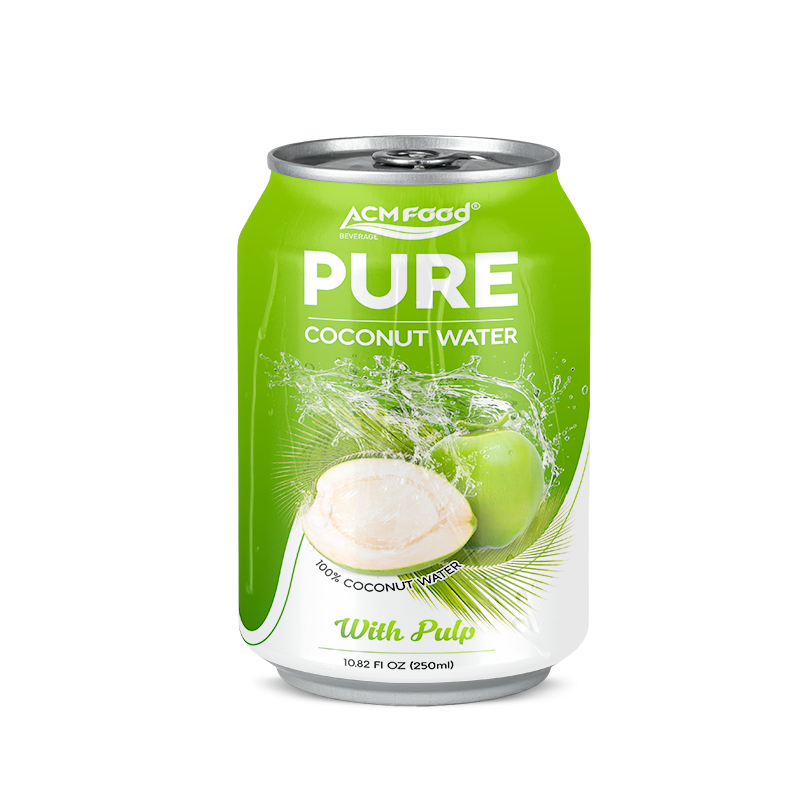
한국어Pure coconut water offers international buyers a mature, proven category in which the real opportunity now lies in sourcing well: finding a supplier whose “pure” product and export documents meet your market’s rules, whose quality is consistent, and whose logistics keep landed cost predictable. Vietnam is one of the most competitive origins for canned pure coconut water.
This guide covers what “pure” means on a label, why Vietnam is a strong origin, how long certification takes and what experienced importers check before ordering.
What does “pure coconut water” mean on a label?
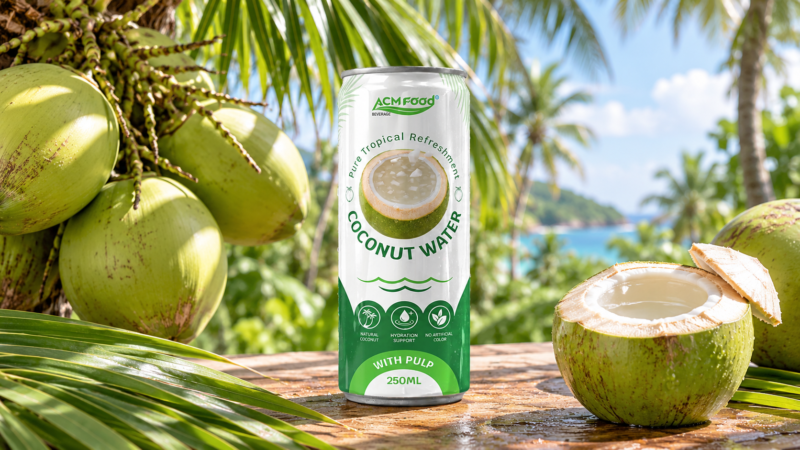
“Pure” generally signals coconut water from young green coconuts with no added sugar, no preservatives and no reconstituted concentrate, processed minimally before packing. Exact labelling rules differ between the US, EU, Australia and the Gulf, so a supplier’s definition of “pure” must match what your market’s authority accepts.
The most common friction is documentation, not price. Before choosing a supplier, ask for real certificates from past shipments, such as FDA registration, EU compliance records and Halal or Kosher where relevant, rather than templates. A regular exporter will have them on file.
Why is Vietnam a strong origin for pure coconut water?
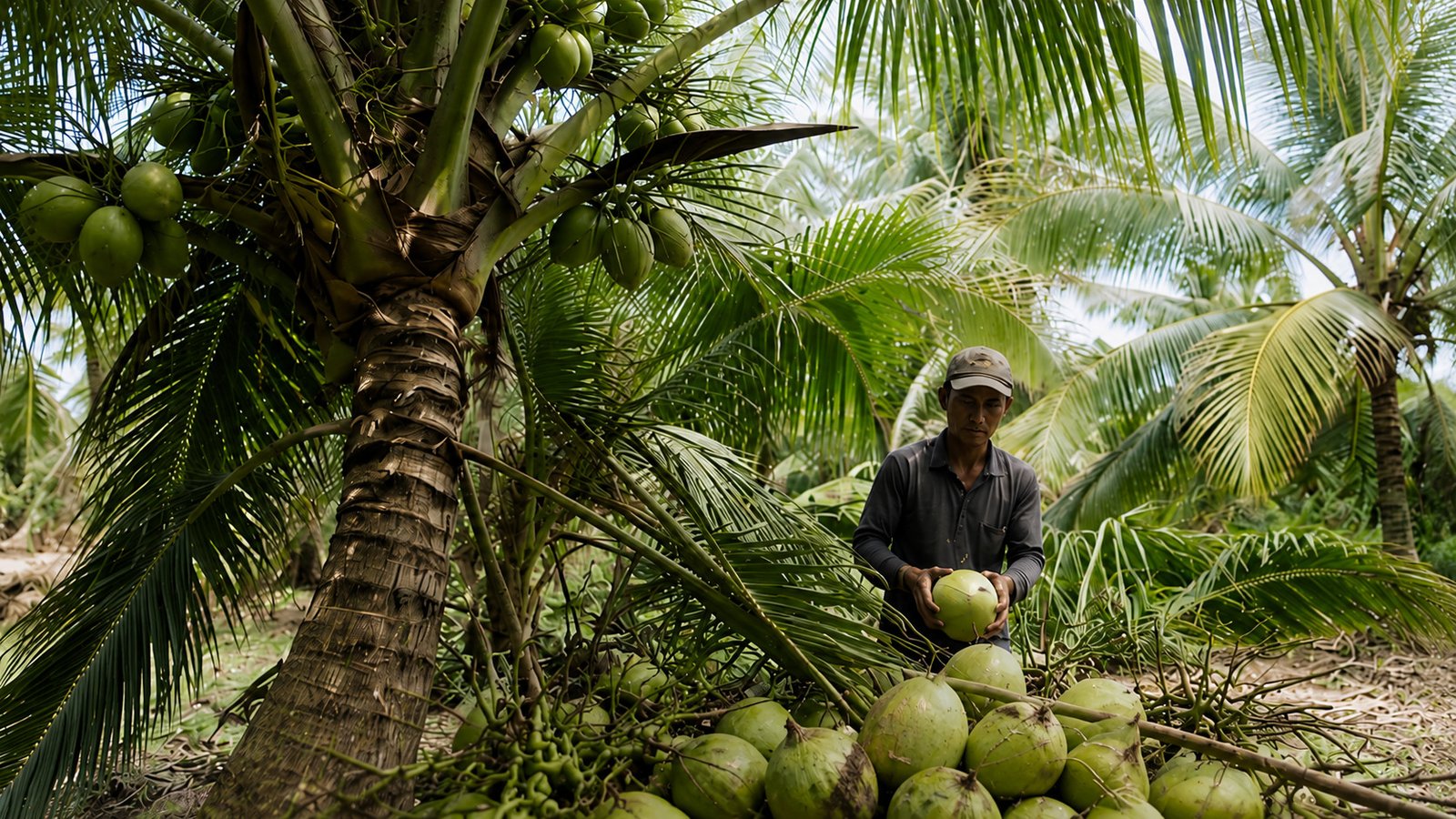
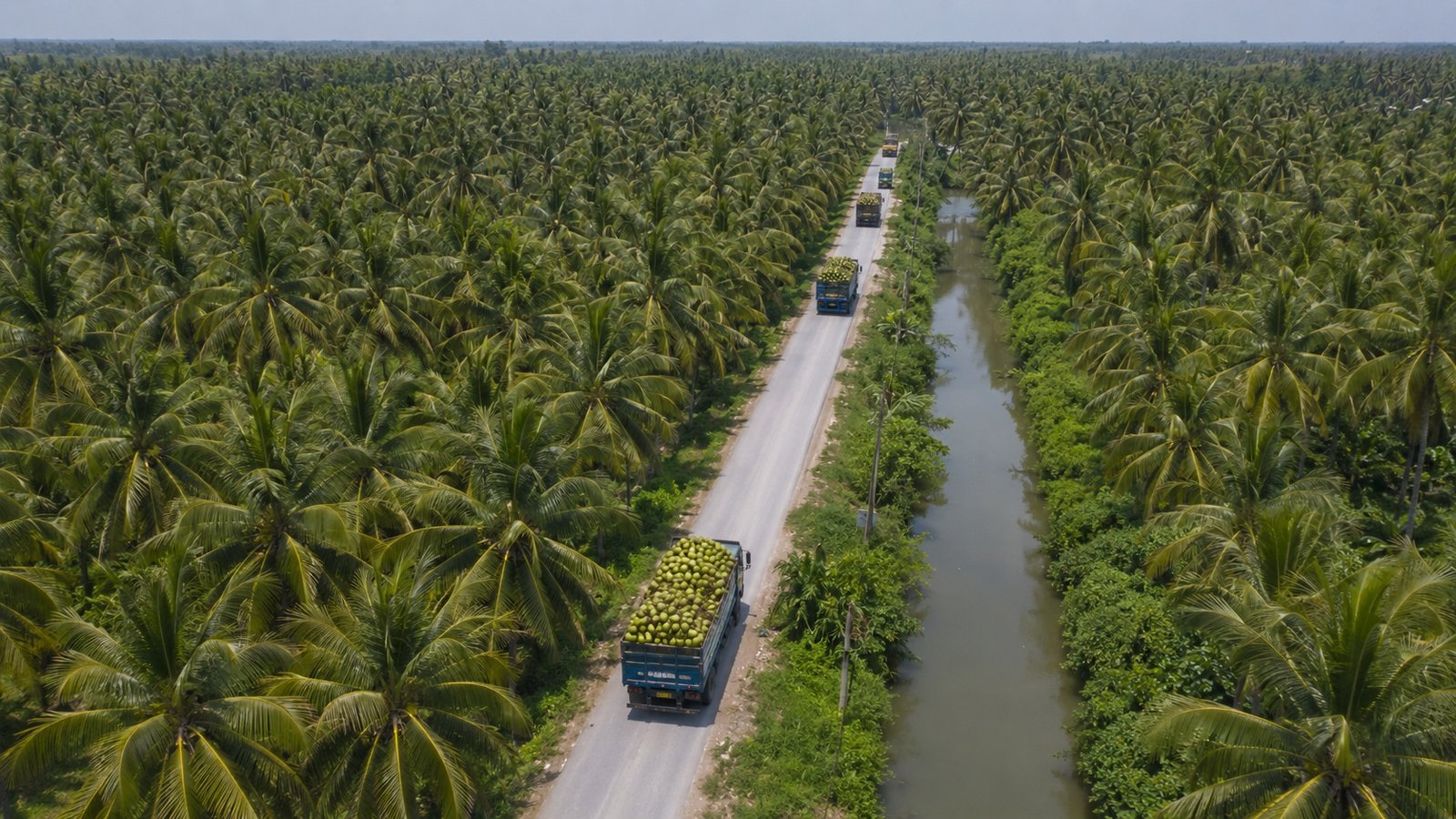
- Raw material: the Mekong Delta, especially Bến Tre, is a major coconut region, and young coconuts are harvested for a balanced natural sweetness.
- Freshness: farms are often close to processing plants, so coconuts reach treatment quickly.
- Technology: Vietnamese manufacturers have invested in aseptic and nitrogen-flushing lines, making canned coconut water shelf-stable for 12–18 months without preservatives.
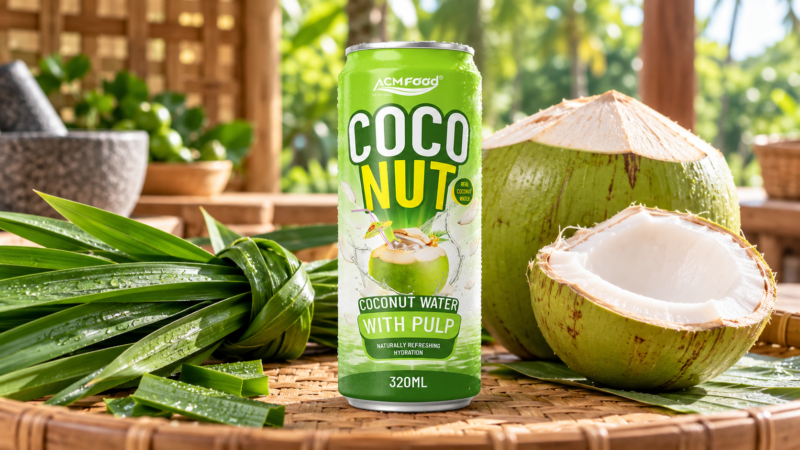
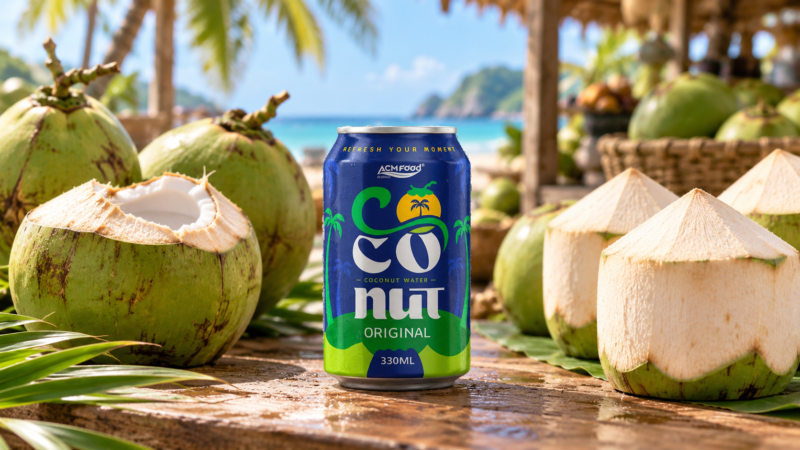
- Order size: at ACMFOOD, minimums start from 500 cartons per SKU; a 20-foot container holds roughly 2,000 cartons of 24 × 330 ml cans.
How long does certification take?
New importers often underestimate it. Budget roughly 8–14 weeks from choosing a supplier to the first cleared shipment, not 4–6.
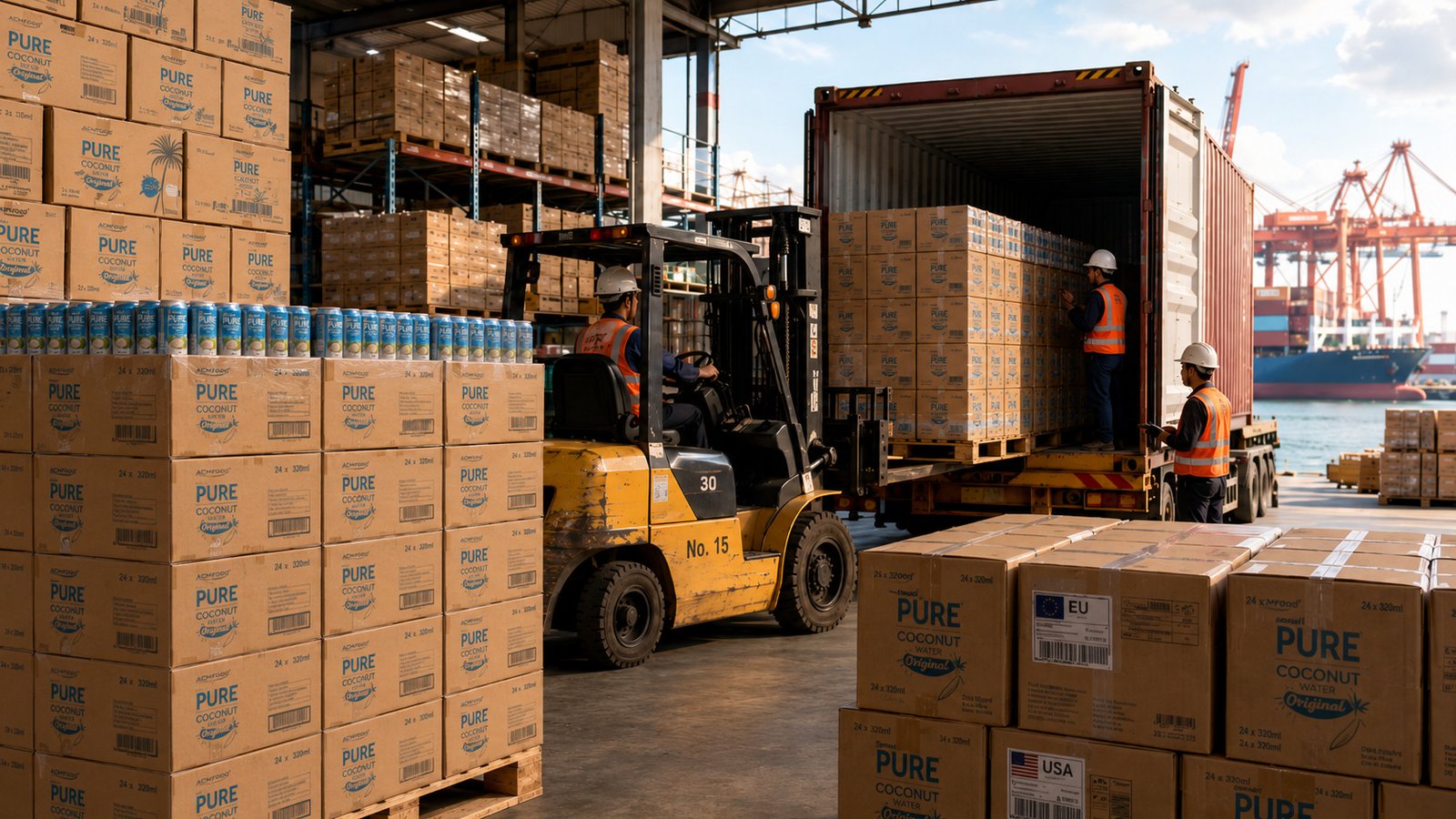
- United States: the supplier needs FDA facility registration, and the importer must meet FSVP obligations.
- European Union: coconut water is not a Novel Food, but labelling, nutrition declarations and traceability rules apply strictly.
- Track record: a factory that has shipped many containers to your market already has documents, broker relationships and tested QC in place.
What should importers check at the evaluation stage?
- Can specification: 330 ml and 500 ml are standard; aluminium is lighter than steel and looks more premium, and some European markets have packaging recycling rules.
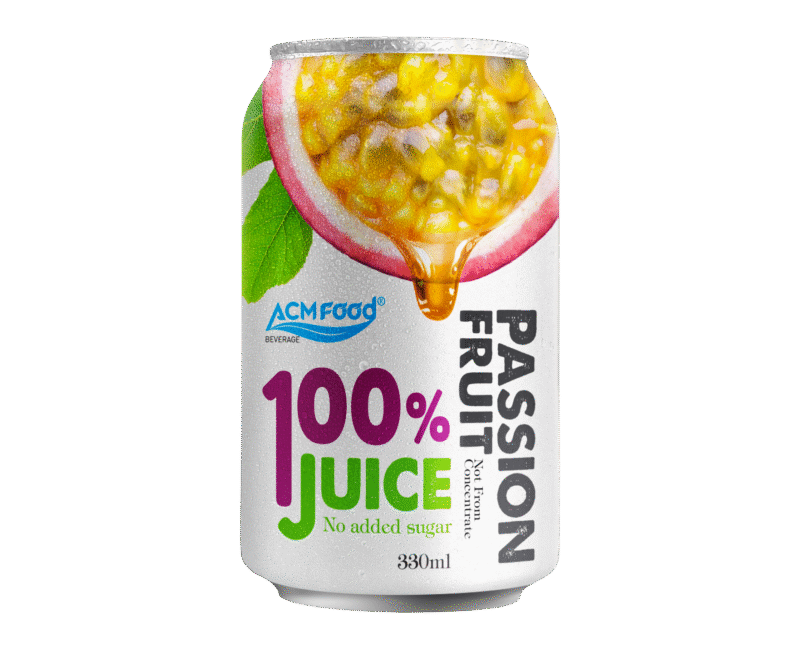
- Pure or flavoured: health food chains usually start with pure; mainstream grocery and foodservice may do better with fruit variants such as mango, pineapple or passion fruit.
- Ambient or chilled: ambient canned coconut water avoids refrigerated freight and temperature losses.
- Payment terms: typically 30% deposit and 70% against the bill of lading on first orders, with better terms after a few clean shipments.
Frequently asked questions
How long does canned pure coconut water last?
Typically 12–18 months unopened when aseptically processed and sealed.
Is coconut water a Novel Food in the EU?
No, but EU labelling, nutrition and traceability rules still apply.
What is the minimum order?
At ACMFOOD, from 500 cartons per SKU, and several SKUs can share a container.
Conclusion
Demand for pure coconut water is proven; success now depends on supplier qualification. Choose a Vietnamese manufacturer with real export documents for your market, consistent quality and ambient-stable canned product, and allow enough time for certification.
If you are ready to qualify suppliers, talk to an experienced coconut water supplier in Vietnam. See also beverage product capabilities, OEM beverage manufacturing and private label beverages. To brief a concept, request a quote.
Request a quote