Français
 Español
 العربية
 한국어
한국어Soursop (Annona muricata), also called graviola or guanábana and known in Vietnam as mãng cầu xiêm, is a tropical fruit with white, sweet-tangy pulp. Per 100 g of raw pulp it provides about 66 kcal, 3.3 g of fibre, 20.6 mg of vitamin C and 278 mg of potassium, according to USDA FoodData Central. It is eaten fresh, blended into smoothies and desserts, and processed into juice, and it has growing export potential.
This article covers what soursop is, its nutritional value, how it is used, safety points, and its business potential for beverage brands.
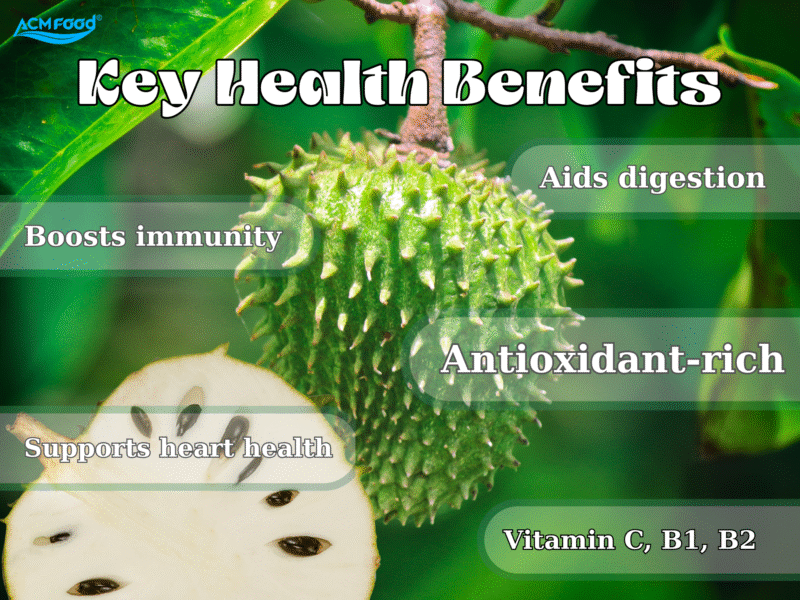
What is soursop?
Soursop is grown across Southeast Asia, South America and the Caribbean, and is especially popular in southern Vietnam. It is often confused with a smaller relative:
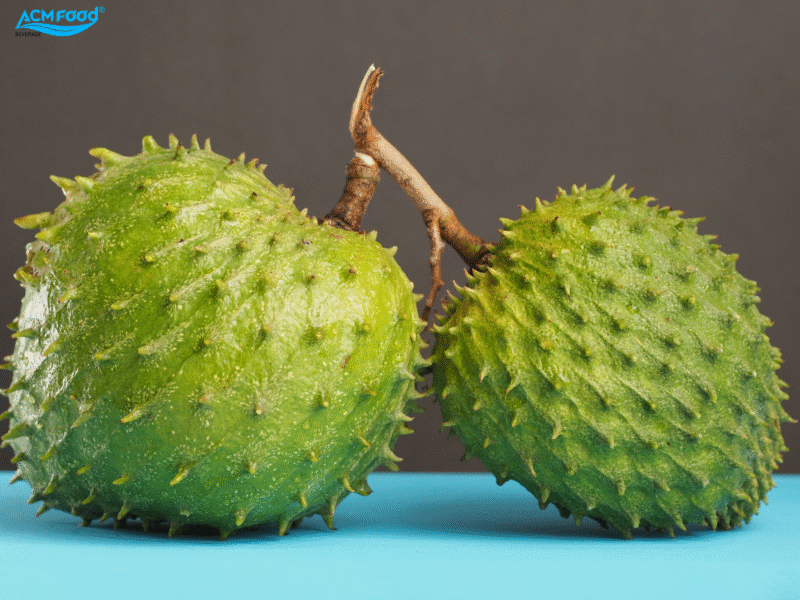
- Soursop (mãng cầu xiêm): large, green fruit with soft spines and white, sweet-tangy pulp.
- Sugar apple (mãng cầu ta): smaller, bumpy fruit with firmer, sweeter flesh.
What nutrients does soursop contain?
| Nutrient | Per 100 g raw pulp (USDA) |
|---|---|
| Energy | 66 kcal |
| Carbohydrates | 16.8 g |
| Fibre | 3.3 g |
| Vitamin C | 20.6 mg |
| Potassium | 278 mg |
| Magnesium | 21 mg |
Soursop is a source of vitamin C and fibre and contains potassium and polyphenols. These are nutritional facts, not proof of medical effects; claims that soursop treats disease are not supported by human evidence.
Is soursop safe to eat?
The ripe pulp, eaten in normal food amounts, is widely consumed. Avoid the seeds and do not use soursop leaves, seeds or extracts in large or regular amounts: they contain annonacin and related compounds that have been linked to nerve damage in studies. People with Parkinson’s-type conditions, and anyone pregnant or taking medication, should ask a doctor before consuming soursop products regularly.
How is soursop used?
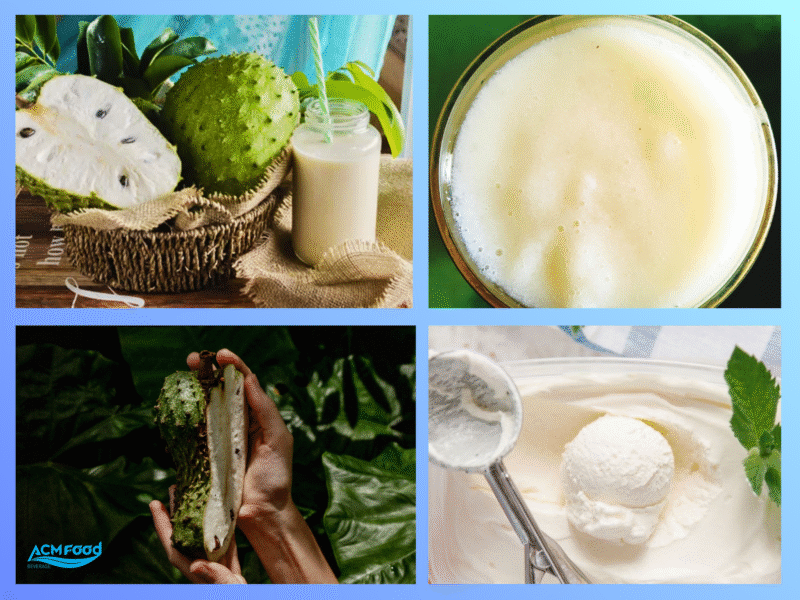
- Fresh: ripe pulp eaten with a spoon.
- Smoothies: blended with milk or condensed milk and ice, a Vietnamese favourite.
- Desserts: ice cream, sorbet and tropical menus.
- Juice blends: with pineapple, orange or apple.
- Cafés and restaurants: smoothie bowls and mocktails.
What about soursop leaf tea?
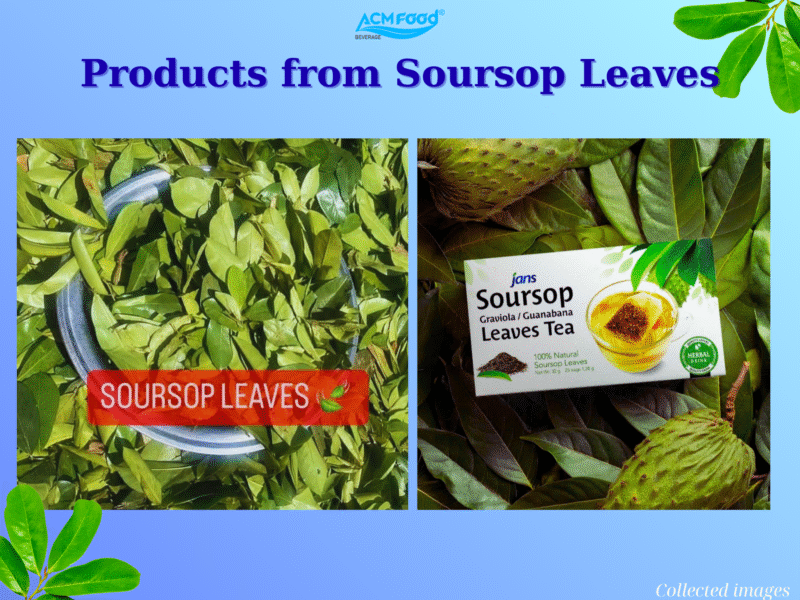
Soursop leaf tea is traditional in some countries, but because the leaves contain annonacin, regular or high intake is not recommended, and claims that it lowers blood pressure or treats illness are not established. If you choose to drink it, do so only occasionally and check with a doctor first.
What is the business potential of soursop?
Demand for tropical, natural fruit products is growing in the United States, Europe and Africa, and Vietnam has the raw material and processing base to supply it.
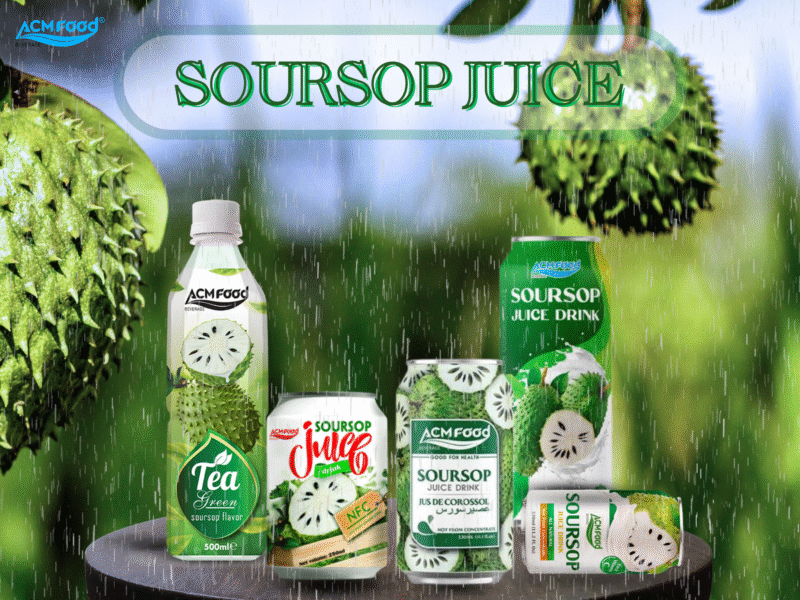
- NFC soursop juice and juice drinks in cans or PET.
- Soursop purée for smoothies, desserts and foodservice.
- Jams, syrups and confectionery from the pulp.
Because soursop pulp is thick and oxidises easily, stabilisation and batch quality control are key for beverage products.
Frequently asked questions
How many calories are in soursop?
About 66 kcal per 100 g of raw pulp, according to USDA data.
Can I eat soursop seeds?
No. The seeds should be discarded.
Does soursop cure cancer?
No. There is no human evidence that soursop treats cancer or any disease.
Conclusion
Soursop is a flavourful tropical fruit that provides vitamin C, fibre and potassium and works well fresh, in smoothies and in juice. Enjoy the pulp in normal amounts, avoid the seeds, and be cautious with leaf teas and extracts.
For brands, see beverage product capabilities, OEM manufacturing in Vietnam and private label beverages. To discuss a specification, request a quote.
Request a quote