


 Français
 Español
 العربية
 한국어
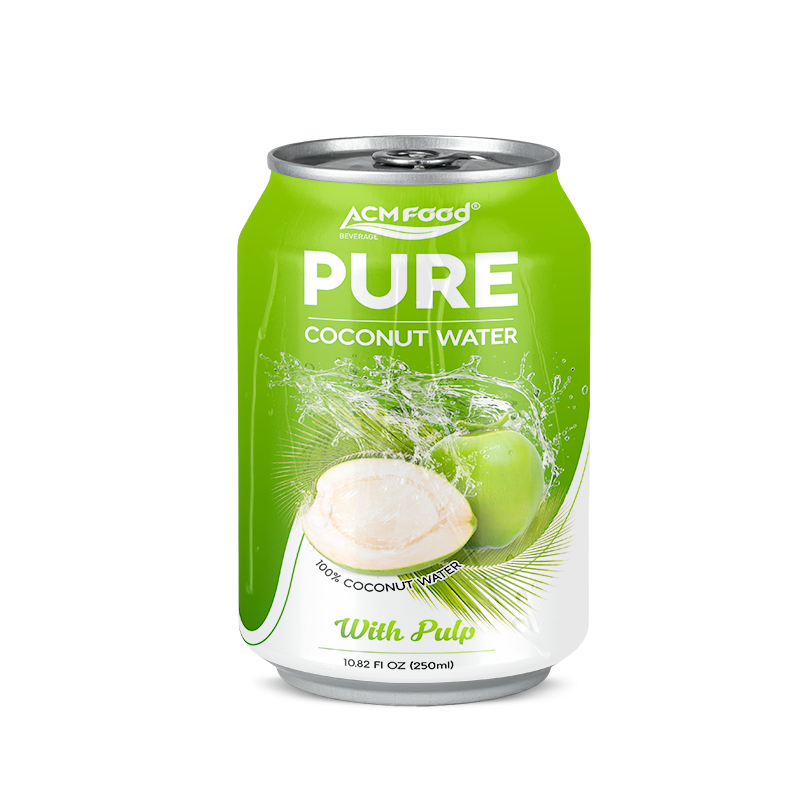
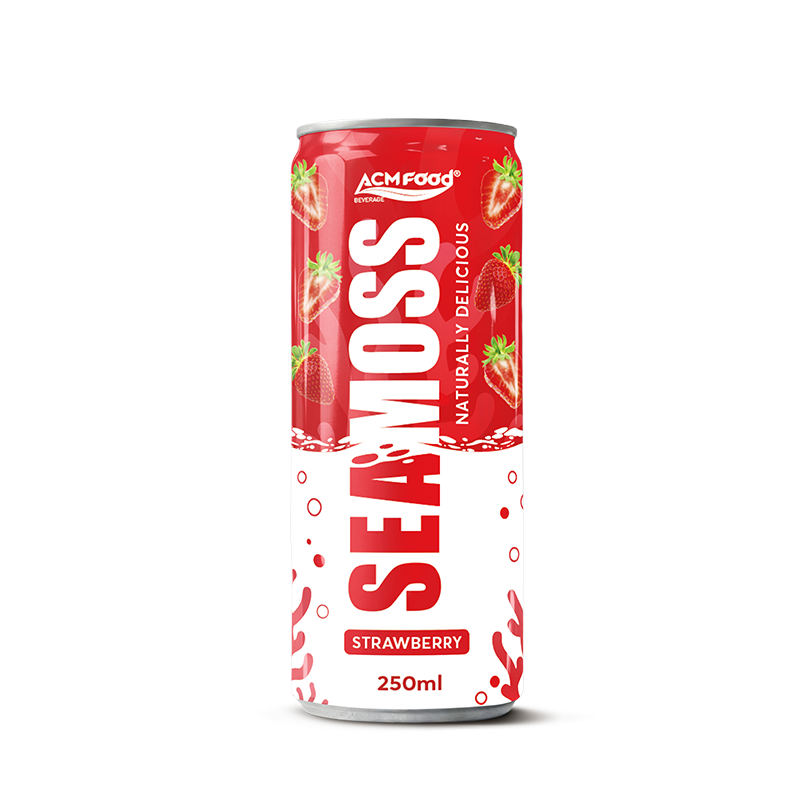
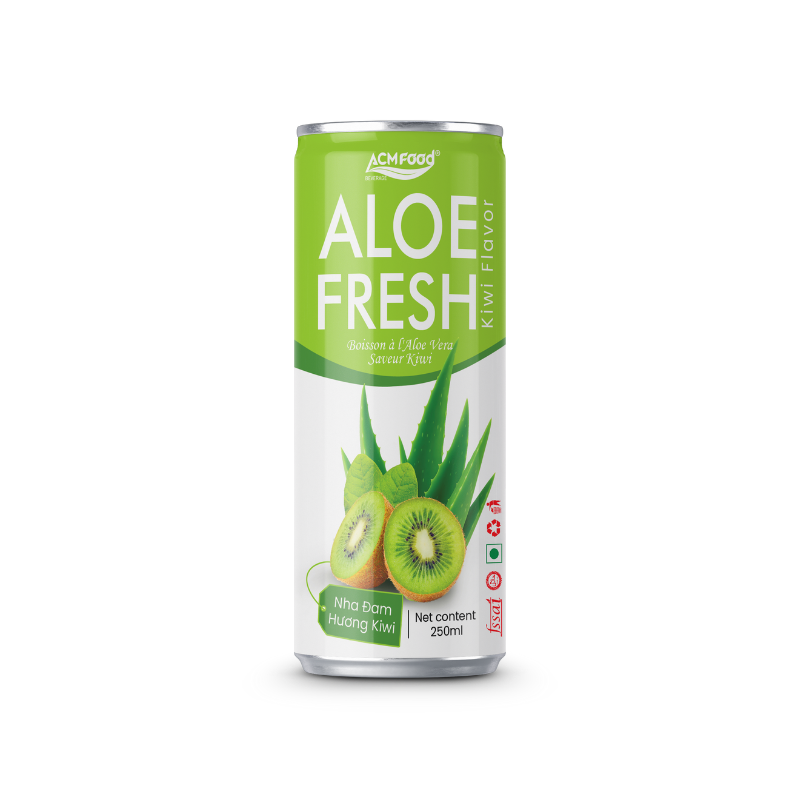
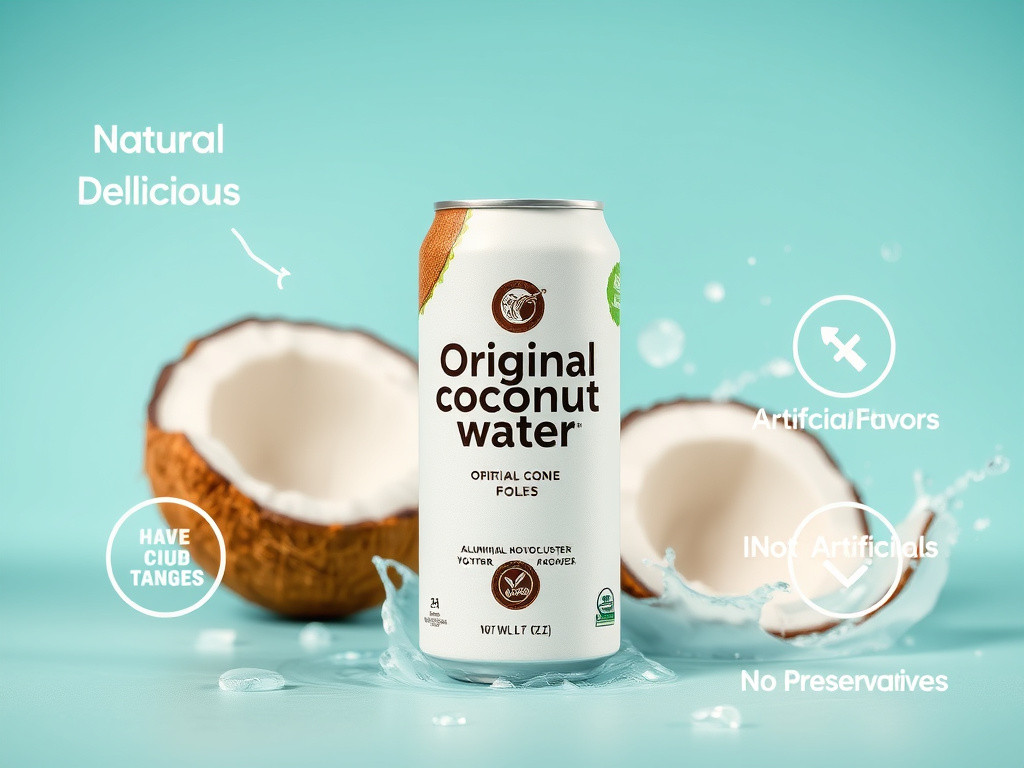
한국어Most coconut water sold internationally is in a 330 ml or larger pack. The 8 fl oz can — roughly 250 ml — is a deliberate exception, and buyers ask for it for reasons that have little to do with the liquid inside. This is a format decision guide: where the small can earns its place, what it does to your container and case maths, and when a larger fill is simply the better commercial choice.
For the differences between coconut water product types, see canned coconut water compared. For how format affects landed cost across a whole programme, see costs and unit economics.
What 8 fl oz actually means on a spec sheet
8 fl oz is a US customary measure of about 237 ml. In practice, cans sold as “8 fl oz” in the beverage trade are commonly a 250 ml can, and the two figures are used loosely in conversation. That looseness matters when you are writing a specification or a label, because the declared net quantity has to be accurate for the market you sell into — US labels declare in fluid ounces with a metric equivalent, while most other markets declare in millilitres.
Fix the actual fill volume in millilitres in your specification, and let the label declaration follow from it. Doing it the other way round is how a rounding difference ends up on a printed pack.
Where the small can wins
Trial and sampling
A smaller unit lowers the price of trying something unfamiliar. In markets where coconut water is still an unfamiliar category, that matters more than any label claim. It is also the format that works for in-store sampling and for multipack trial bundles.
Food service and hospitality
Hotels, airlines and catering want a single-serve unit that is consumed in one sitting and leaves nothing to store. A minibar or an in-flight cart has a fixed footprint, and a shorter can fits where a 330 ml does not.
Children and lunchbox occasions
Parents buying for children generally do not want a large serving. The small can matches the portion, and it also keeps the sugar per serving figure lower on a pack aimed at that shopper — which is a real merchandising consideration even though the drink itself is unchanged.
Price-point management
Where a shelf has an established price threshold, a smaller fill lets you meet it without cheapening the product. This is often the honest reason a buyer asks for the format, and it is a legitimate one.
Where it loses
- Cost per litre is worse. Packaging is a fixed cost per unit, so the smaller the fill, the higher the packaging share of each litre sold. Shoppers who compare on price per litre will see it.
- More units per container means more handling. Case count rises, picking time rises, and so does the number of units your warehouse touches per litre shipped.
- It is the wrong format for in-home consumption. A household buying for the fridge wants a larger fill or a multipack.
- Post-workout sales prefer volume. Someone drinking to rehydrate is buying quantity, and 250 ml reads as too small for the occasion.
What it does to container maths
This is the part that decides whether the format works commercially, and it is worth doing before you fall in love with the pack.
Beverages are dense. A 20-foot container generally reaches its weight limit before it fills the space, which is why canned drinks ship in 20-foot rather than 40-foot equipment. Because the limit is weight rather than volume, a smaller fill puts more sellable units in the same container — your freight cost per unit falls, even as your freight cost per litre stays roughly flat.
Three practical consequences follow:
- Your minimum order in units goes up. A full container of 250 ml cans is a lot more units than a container of 500 ml. If a container is your minimum, the small format commits you to more units to sell through.
- Case configuration changes. Case count per pallet layer, pallet pattern and case dimensions all shift. Confirm the exact figures per SKU in writing rather than scaling from the larger format.
- Retail-ready packaging matters more. Small cans in a plain case are slow to merchandise. Shelf-ready cases pay for themselves quickly in this format.
Choosing between 250 ml, 330 ml and 500 ml
| Fill | Best fit | Main trade-off |
|---|---|---|
| 250 ml / 8 fl oz | Trial, food service, children, price-point management | Worst cost per litre; highest handling per litre |
| 330 ml | The category workhorse — convenience, impulse, general retail | Rarely wrong, rarely distinctive |
| 500 ml and above | In-home, gym and sports, food service back-of-house | Higher shelf price; less impulse purchase |
If you are launching one SKU, 330 ml is the safer default. The 250 ml can earns its place as a second SKU aimed at an occasion the first one does not serve — and because minimums are set per SKU while freight and documentation are shared across the container, adding it to an existing order costs less than launching it alone.
Questions to settle before you specify it
- Which channel is this format for, specifically? If the answer is “general retail”, it is probably the wrong format.
- Does the shelf price you need actually require the smaller fill, or would 330 ml reach it?
- How many units per container, and can you sell that many through in a reasonable period?
- Are you declaring net quantity in fluid ounces, millilitres, or both — and has the label been checked against destination rules?
- Is shelf-ready packaging in the quote, or will your retailer be opening plain cases?
Sourcing the format
ACMFOOD produces canned coconut water in Vietnam across single-serve and larger fills, on stock, adapted and full private label bases. Because minimums apply per SKU while freight and documentation are shared, a small-format trial SKU is usually most economical added to an order alongside a core size rather than shipped on its own.
To evaluate it properly, ask for the units per container and case configuration for the specific fill you are considering, then run those numbers through your landed cost model before committing to artwork. See the coconut water supply programme for what is available.
Related service pages
Fill volume is one of several pack decisions — the rest are set out in packaging options. For which fills and formats we actually run, see our beverage product capabilities; minimums per SKU are in minimum order quantity. To cost a format, request a quote.
Request a quote