


 Français
 Español
 العربية
 한국어
한국어The beverage industry is witnessing a paradigm shift as functional fusion drinks capture consumer imagination and market share. Matcha and coconut water, two powerhouse ingredients, are leading this transformation by combining antioxidant benefits with superior hydration. This article analyzes how the convergence of these superfoods is reshaping product development, manufacturing strategies, and global distribution channels.
For B2B stakeholders, understanding this trend is essential to capitalize on the growing demand for multi-functional beverages. We examine market data, consumer behavior, and OEM capabilities that enable rapid innovation in this space.
The Rise of Functional Fusion Beverages
Matcha and coconut water converge in a new category that redefines hydration. The global functional beverage market now exceeds $150 billion, with fusion products capturing the fastest growth. Consumers increasingly demand drinks that deliver both wellness and sensory pleasure.
This trend toward functional fusion reflects a deeper shift in consumer priorities. People no longer accept single-benefit beverages; they seek synergistic combinations that amplify health outcomes. The Coconut Water with Matcha Flavor RTD 320ml Cans/10.8 fl oz Cans exemplifies this evolution. It unites coconut water’s electrolyte profile with matcha’s antioxidant richness.
Matcha’s Antioxidant Power Meets Coconut Water’s Hydration
Matcha delivers concentrated catechins, particularly EGCG, which support metabolism and cellular health. Coconut water provides natural electrolytes like potassium and magnesium for rapid rehydration. Together, they create a beverage that outperforms conventional sports drinks and sugary teas.
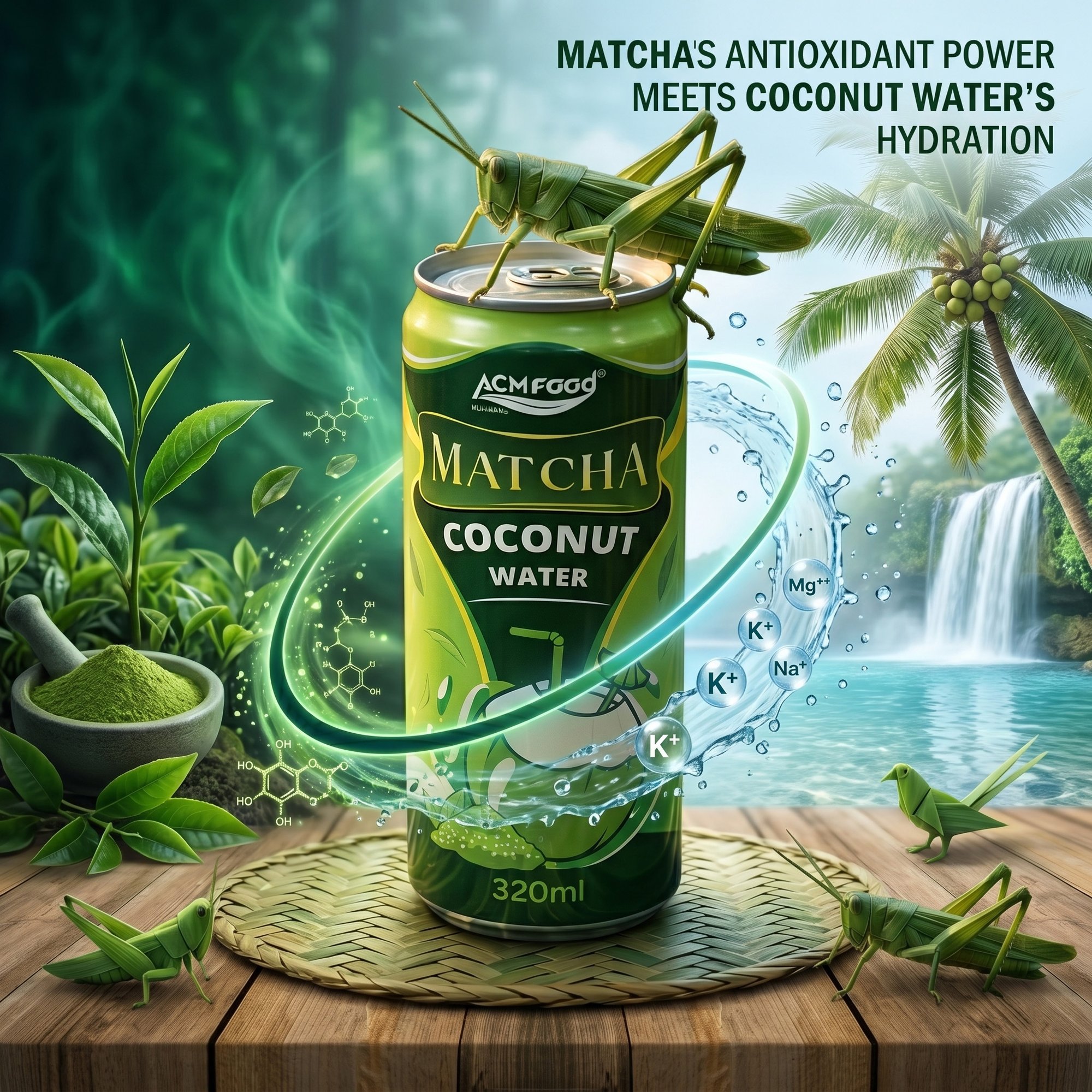
Clinical research shows matcha can boost energy expenditure by 8-10% over four hours. Coconut water’s electrolyte composition mirrors human plasma, making it ideal for post-exercise recovery. This dual-action proposition appeals to fitness enthusiasts and health-conscious professionals alike.
Manufacturers recognize this synergy as a platform for premiumization. By combining two superfoods, brands can command higher price points while delivering measurable functional benefits. The coconut water with matcha flavor positions itself at the intersection of hydration and antioxidant defense.
Consumer Demand for Multi-Functional Beverages
Market surveys indicate 67% of US consumers prefer beverages that offer more than one health benefit. The fusion trend responds directly to this demand. Products that combine hydration with antioxidant, energy, or cognitive support see 40% faster shelf turnover.
Retailers are expanding shelf space for functional fusion drinks. In Europe, the segment grew 28% year-over-year in 2024. Asia-Pacific leads with 35% growth, driven by innovations like matcha-coconut water blends that resonate with local taste preferences.
OEM Flexibility Enables Rapid Market Entry
For brands eyeing the functional fusion segment, OEM partnerships offer a strategic shortcut. ACM Food and Beverage provides end-to-end manufacturing solutions, from custom formulations to packaging design. This agility allows clients to test and scale fusion products with minimal capital risk.
Low MOQ options enable startups to validate demand before committing to large production runs. Private label services further empower distributors to build proprietary brands without investing in factories. The OEM model reduces time-to-market by up to 60% compared to building in-house capacity.
Export markets in the US, EU, and Middle East show strong appetite for fusion beverages. ACM’s facilities are certified for international standards, including FDA and EU organic compliance. This certification simplifies regulatory approval for cross-border distribution.
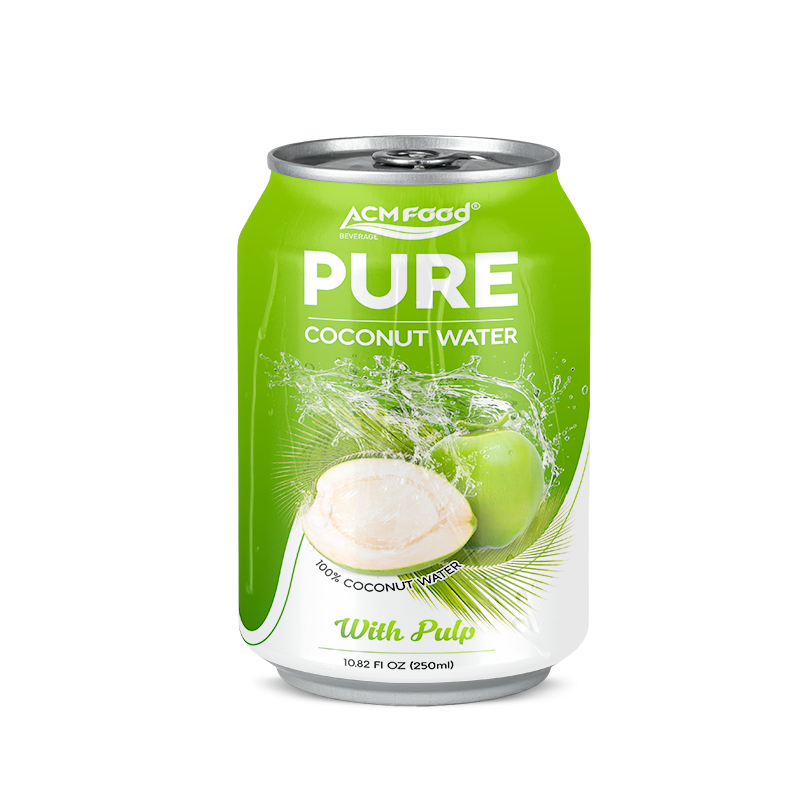
Fresh coconut water from ACM serves as the base for numerous fusion innovations. The company’s expertise in aseptic processing ensures product stability without preservatives.
Market Growth and Consumer Behavior Insights
The functional fusion beverage market is projected to reach $85 billion by 2030, growing at a CAGR of 9.2%. Coconut water-based fusions represent the fastest sub-segment, with matcha variants leading flavor preferences. Millennials and Gen Z drive 70% of category purchases.
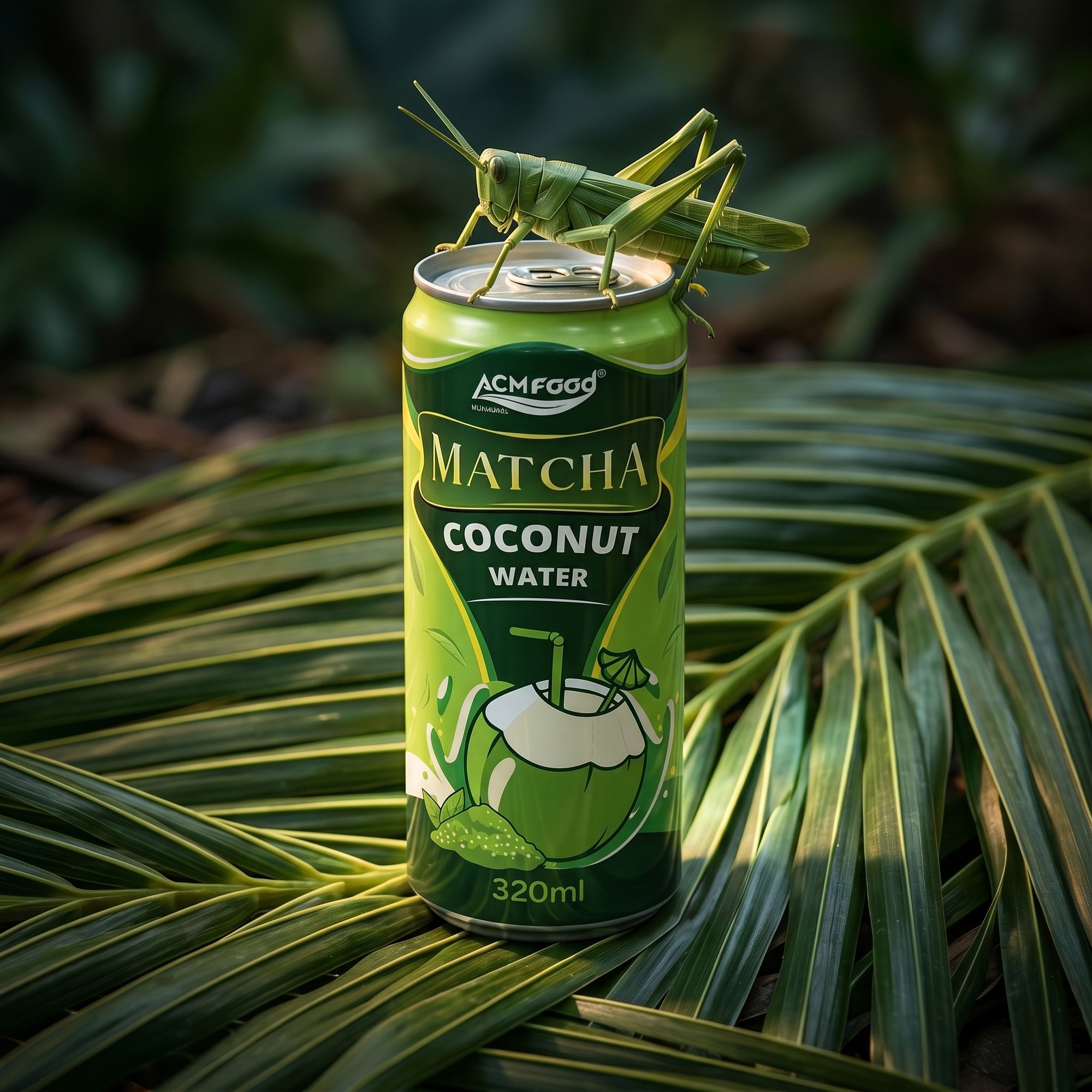
Sustainability concerns influence buying decisions. Aluminum cans, like the 320ml format used for this product, offer infinite recyclability and lightweight logistics. Consumers increasingly associate canned beverages with environmental responsibility.
Clean label trends further boost the category. Products with recognizable ingredients and no artificial additives command 25% price premiums. The matcha-coconut water fusion aligns perfectly with this demand, using only two natural ingredients plus minimal processing.
Distribution Channel Evolution
Online sales now account for 35% of functional beverage purchases. Direct-to-consumer models allow brands to educate shoppers about fusion benefits through content marketing. Retail partnerships with gyms, wellness centers, and corporate cafeterias expand reach.
Subscription models are gaining traction for daily hydration products. Consumers appreciate the convenience of automatic replenishment for functional beverages they consume regularly.
Strategic Business Opportunities for B2B Partners
Distributors can differentiate their portfolios by offering fusion beverages that address specific health concerns. For example, targeting post-workout recovery with matcha-coconut water or morning energy with added green tea extract.
Private label programs allow retailers to build exclusive brand equity in the functional segment. ACM’s R&D team can develop custom formulations for regional taste preferences, whether for the US market or emerging economies in Africa and Southeast Asia.
For distributors looking to differentiate their portfolio, evaluating a manufacturing partner’s agility in low-MOQ production has become a strategic imperative.
Exporters should prioritize markets with high health awareness and disposable income. The US functional beverage market alone exceeds $50 billion, with fusion products capturing 18% of new launches. ACM’s export-ready certifications eliminate barriers to entry.
Expert Perspectives on Fusion Beverage Trends
Industry analysts emphasize that fusion beverages must deliver on taste to succeed long-term. “The functional benefit is a bonus, not the primary driver,” says Dr. Sarah Chen, beverage innovation consultant. “Matcha’s earthy notes pair naturally with coconut water’s sweetness, creating a flavor profile that consumers enjoy daily.”
Supply chain experts highlight the importance of sourcing high-quality matcha. Japanese ceremonial-grade matcha commands premium prices, but culinary-grade blends offer cost-effective alternatives for mass market products. ACM sources matcha from trusted Japanese growers to ensure consistent quality.
Regulatory specialists note that health claims require substantiation. Products making specific functional claims must comply with local regulations. ACM’s documentation supports clients in navigating FDA, EFSA, and CFDA requirements.
Milk drink categories are also experimenting with fusion concepts, but coconut water remains the preferred base for hydration-focused innovations.
Future Outlook: 2026-2030 Projections
The next five years will see fusion beverages become mainstream. Advances in encapsulation technology will enable shelf-stable probiotics and vitamins in coconut water-based drinks. Personalized nutrition will drive demand for custom formulations tailored to individual health profiles.
Sustainability will become a non-negotiable attribute. Brands that adopt regenerative sourcing for coconut water and matcha will gain consumer trust. Carbon-neutral certification and plastic-negative packaging will differentiate market leaders.
Artificial intelligence will optimize flavor pairing and supply chain efficiency. Predictive analytics will help manufacturers anticipate demand spikes for seasonal fusion variants. ACM is investing in AI-driven production planning to reduce waste and improve responsiveness.
The functional fusion segment offers a clear path to growth for beverage companies willing to innovate. Early movers who partner with agile OEM manufacturers will capture disproportionate market share.
Frequently Asked Questions
What makes matcha and coconut water a good functional combination?
Matcha provides antioxidants and sustained energy without jitters. Coconut water delivers electrolytes for rapid hydration. Together they create a synergistic beverage that supports both physical performance and cellular health.
How large is the functional fusion beverage market?
The global market exceeded $150 billion in 2024 and is projected to reach $85 billion for the fusion sub-segment by 2030. Coconut water-based fusions are the fastest-growing category within this space.
What are the key considerations for launching a private label fusion beverage?
Brands must prioritize taste, clean label ingredients, and functional efficacy. Partnering with an OEM like ACM Food and Beverage provides access to custom formulation, scalable production, and international certification support.
Which export markets offer the best opportunities for matcha-coconut water products?
The United States, European Union, and Middle East show strong demand. Asia-Pacific also offers growth potential due to cultural familiarity with matcha and coconut water. ACM’s export-ready facilities simplify market entry.
How does packaging format influence consumer perception of functional beverages?
Aluminum cans convey premium quality and sustainability. The 320ml can size is ideal for on-the-go consumption. Consumers associate canned beverages with freshness and recyclability, enhancing brand image.
Coconut Water with Matcha Flavor RTD 320ml Cans/10.8 fl oz Cans demonstrates how thoughtful packaging reinforces product positioning.
Turning this into a product
For the formats, ingredients and processing routes the factory actually runs, see beverage product capabilities. What the factory takes on is described in our OEM manufacturing programme; for launching under your own label, see private label beverages. To discuss a specification, request a quote.
Request a quote