Français
 Español
 العربية
 한국어
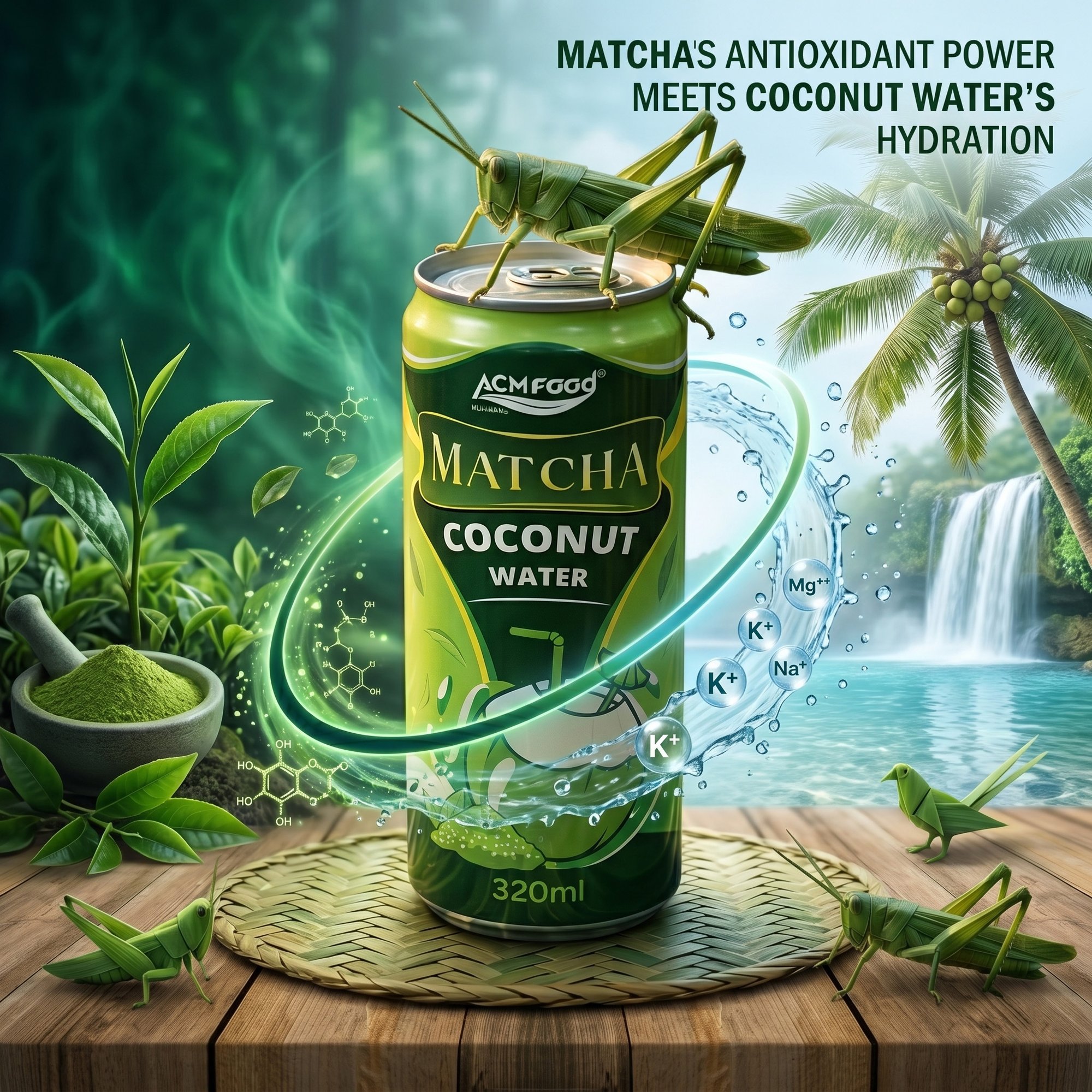
한국어Matcha coconut water is a fusion drink that combines powdered green tea (matcha) with coconut water. It pairs coconut water’s light taste and natural electrolytes with matcha’s caffeine, catechins and earthy flavour, which makes it a good example of the “functional fusion” trend: drinks that combine two familiar ingredients to offer more than one reason to buy.
This article explains what each ingredient brings, why fusion drinks are growing, and what brands and importers should consider when developing or sourcing matcha coconut water.
What does each ingredient contribute?
| Ingredient | What it brings |
|---|---|
| Matcha | Green tea catechins such as EGCG, a moderate amount of caffeine, vivid green colour and an earthy, umami taste |
| Coconut water | Light natural sweetness, hydration and naturally occurring electrolytes such as potassium and magnesium |
The coconut water softens matcha’s bitterness, so the drink needs less added sugar than many sweetened teas. Any functional wording on the label, such as “energy” or “antioxidant”, must follow the rules of the target market.
Why are functional fusion drinks growing?
- More than one benefit: shoppers like drinks that combine refreshment with a functional angle, such as natural caffeine plus hydration.
- Familiar ingredients: both matcha and coconut water are well known, so the combination needs little explanation.
- Premium positioning: two recognised ingredients justify a higher price than plain coconut water or sweetened tea.
- Coffee alternatives: matcha offers a gentler caffeine source for people cutting down on coffee.
The trend is strongest in health-focused retail in North America and Europe and in Asia-Pacific, where both ingredients are familiar.
What are the technical challenges?
- Colour stability: matcha’s green can turn olive or brown with heat and light; cans or opaque packs and careful processing help.
- Sedimentation: matcha is a fine powder that settles; stabilisation or “shake well” labelling is needed.
- Caffeine declaration: caffeine content must be measured and labelled according to market rules.
- Flavour balance: the ratio of matcha to coconut water sets bitterness and sweetness.
How can brands launch matcha coconut water?
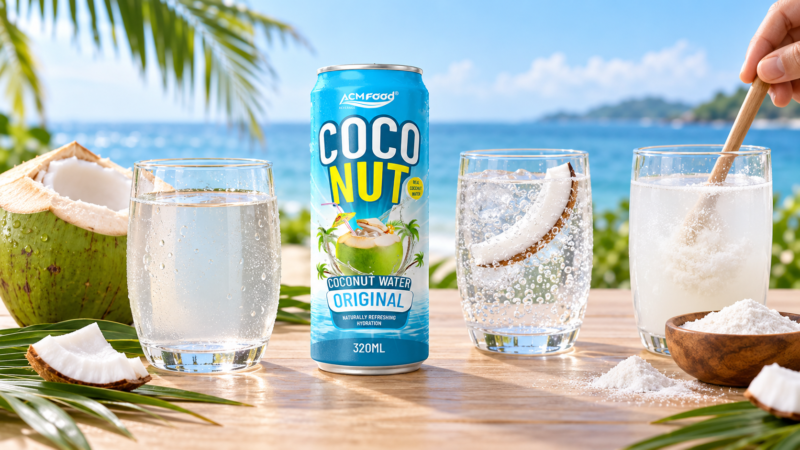
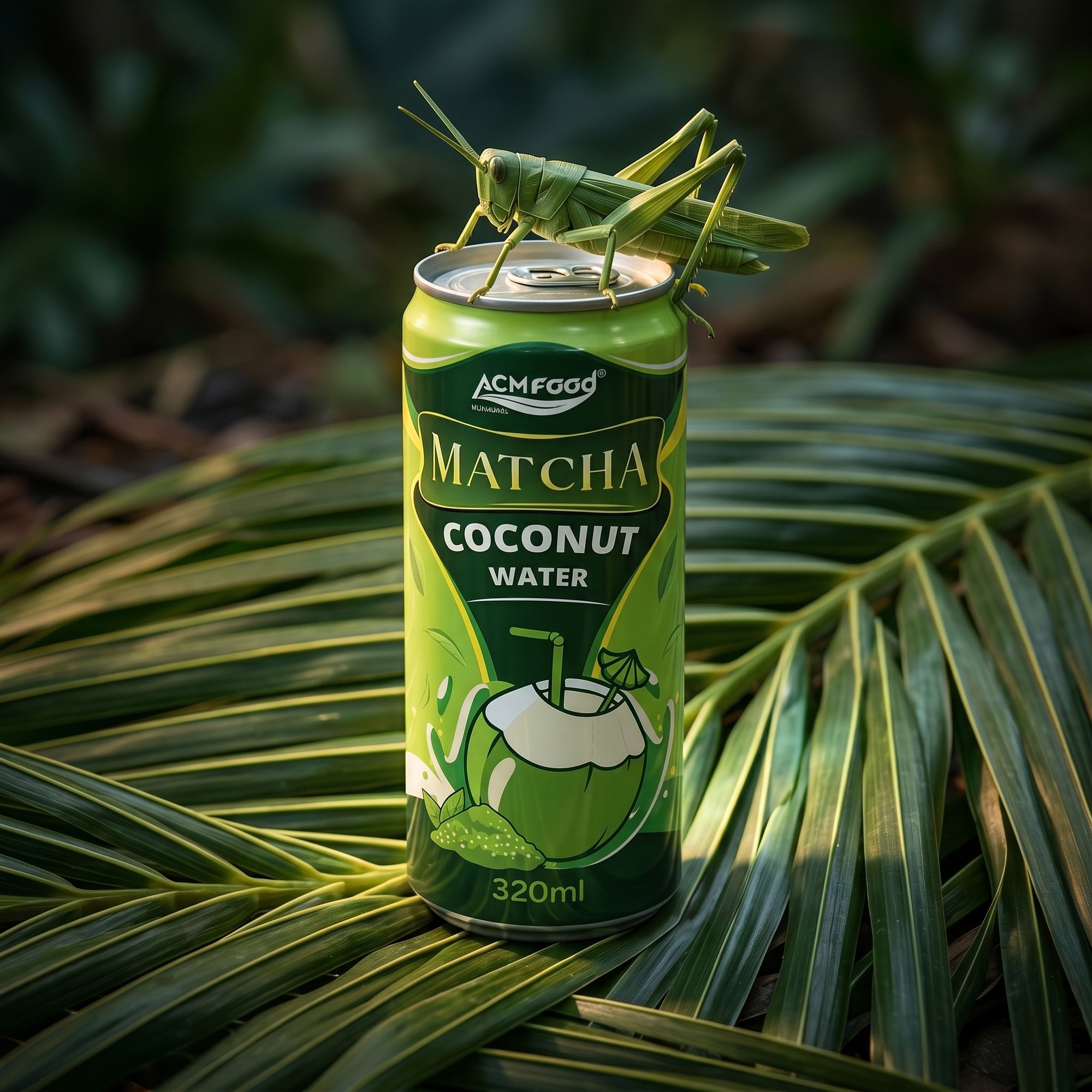
OEM manufacturing lets brands launch without a factory. A ready example is ACMFOOD’s coconut water with matcha flavor RTD in 320 ml cans. Brands can adjust the matcha level, sweetness and pack, or build a range with other coconut or milk-based drinks.
Frequently asked questions
Does matcha coconut water contain caffeine?
Yes, from the matcha. The amount depends on the recipe and should be stated on the label.
Is matcha coconut water a sports drink?
Not exactly. Coconut water provides some electrolytes, but it is lower in sodium than drinks designed for long, intense exercise.
What does it taste like?
Lightly sweet and tropical from the coconut water, with matcha’s grassy, slightly bitter green tea notes.
Conclusion
Matcha coconut water shows how fusion drinks create new value from familiar ingredients: gentle caffeine and catechins from matcha, hydration and natural sweetness from coconut water. Success depends on colour and sediment control, correct labelling and a manufacturer able to fine-tune the balance.
See beverage product capabilities, OEM beverage manufacturing and private label beverages. To brief a concept, request a quote.
Request a quote