


 Français
 Español
 العربية
 한국어
한국어You pick up two cartons of coconut water at the store. One says organic coconut water and costs noticeably more. The other looks similar but comes at a lower price.
So what are you really paying for?
For many consumers, the difference between organic and regular coconut water feels unclear. Labels like USDA Organic, pure coconut water no sugar, and non-GMO sound healthy, but not everyone understands what they actually mean.
At the same time, importers and beverage buyers are seeing rising demand for clean-label drinks across North America, Europe, the Middle East, and Southeast Asia. Consumers are reading ingredient lists more carefully than ever.
This guide breaks down the real differences between organic and regular coconut water — from farming and processing to nutrition, taste, certifications, and pricing — so you can make a smarter buying decision.
What Is Organic Coconut Water?
Organic coconut water comes from coconuts grown without synthetic pesticides, chemical fertilizers, or genetically modified ingredients.
To qualify as organic in major export markets, farms and factories must follow strict certification standards. These often include:
- USDA Organic
- EU Organic
- Non-GMO requirements
- Traceability systems
- Controlled processing standards
Most premium organic coconut water products also focus on clean-label formulations.
That usually means:
- No added sugar
- No artificial flavors
- Minimal processing
In many cases, the ingredient list contains only one line:
“100% Coconut Water”
This simplicity is one reason why organic beverages continue gaining popularity among health-conscious consumers.
Organic Coconut Water vs Regular Coconut Water
What Is the Actual Difference?
The biggest difference is not always nutrition — it is how the coconuts are grown and processed.
Here is a direct comparison:
| Feature | Organic Coconut Water | Regular Coconut Water |
| Farming Method | Organic-certified farming | Conventional farming |
| Synthetic Pesticides | Not allowed | May be used |
| Added Sugar | Usually no | Sometimes added |
| Preservatives | Often preservative-free | Depends on formula |
| Certification | USDA Organic, EU Organic | Usually none |
| Processing Standards | Strict traceability | Varies by supplier |
| Price | Higher | Lower |
| Market Position | Premium wellness beverage | Mass market beverage |
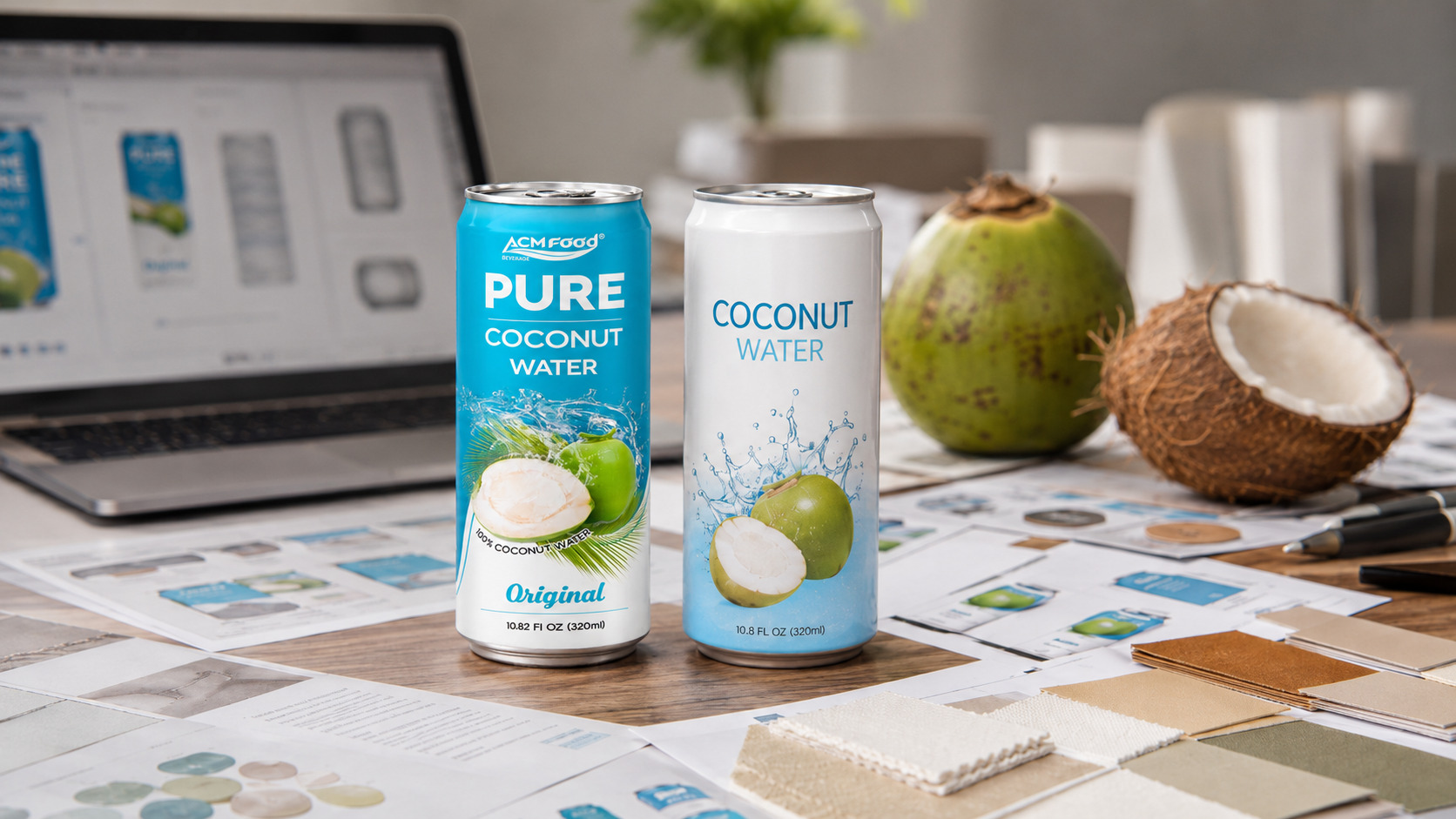
For consumers, the most noticeable differences are often:
- Ingredient transparency
- Flavor quality
- Brand positioning
- Perceived cleanliness
For importers, the differences extend to:
- Export documentation
- Certification value
- Retail positioning
- Consumer trust
Is Organic Coconut Water Healthier?
Organic coconut water may support a cleaner ingredient profile, but both organic and regular coconut water can provide natural hydration.
Pure coconut water naturally contains:
- Potassium
- Magnesium
- Sodium
- Calcium
According to USDA FoodData Central, one serving of coconut water can provide around 600mg of potassium per 240–250ml serving.
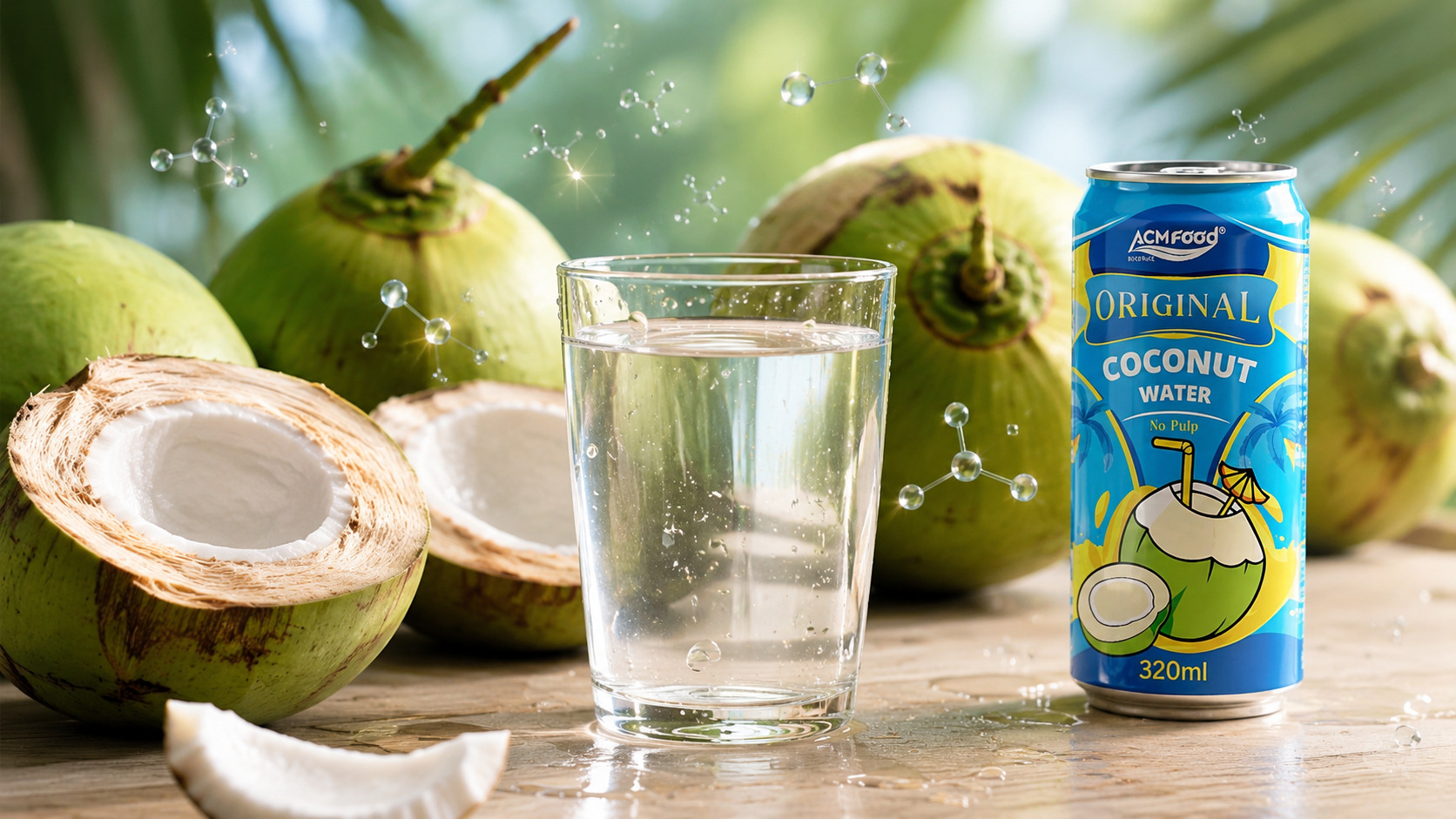
Potassium helps support:
- Muscle function
- Fluid balance
- Electrolyte replenishment
That is why coconut water is often consumed:
- After exercise
- During hot weather
- As an alternative to sugary soft drinks
However, not every coconut water product is equal.
Some lower-quality products may include:
- Added sugar
- Artificial flavoring
- Preservatives
- Concentrates
That is why many consumers now specifically search for:
- pure coconut water no sugar
- preservative-free coconut water
- non-GMO coconut water
The cleaner the ingredient list, the easier it becomes to understand what you are drinking.
Why Is Organic Coconut Water More Expensive?
1. Organic Farming Costs More
Organic coconut farming requires more careful crop management and lower chemical intervention.
Farmers often face:
- Lower production yields
- Higher labor costs
- More expensive certification systems
Without synthetic fertilizers and pesticides, maintaining crop consistency becomes more demanding.
2. Certification Is Expensive
Organic certification involves:
- Farm inspections
- Processing audits
- Traceability systems
- Annual renewals
For OEM beverage manufacturers, maintaining export-ready compliance also requires documentation and quality control systems.
That cost becomes part of the final product price.
3. Smaller Production Scale
Regular coconut water is produced at massive global scale.
Organic coconut water often serves:
- Premium supermarkets
- Health food chains
- Wellness cafés
- Functional beverage retailers
Lower production volume usually means:
- Higher packaging costs
- Higher sourcing costs
- Higher logistics costs per unit
4. Packaging Expectations Are Higher
Consumers who buy organic beverages often expect premium packaging.
Examples include:
- BPA-free aluminum cans
- Glass bottles
- Sustainable cartons
- Modern clean-label designs
These packaging choices increase manufacturing costs but also improve shelf appeal in premium retail channels.
Does Organic Coconut Water Taste Better?
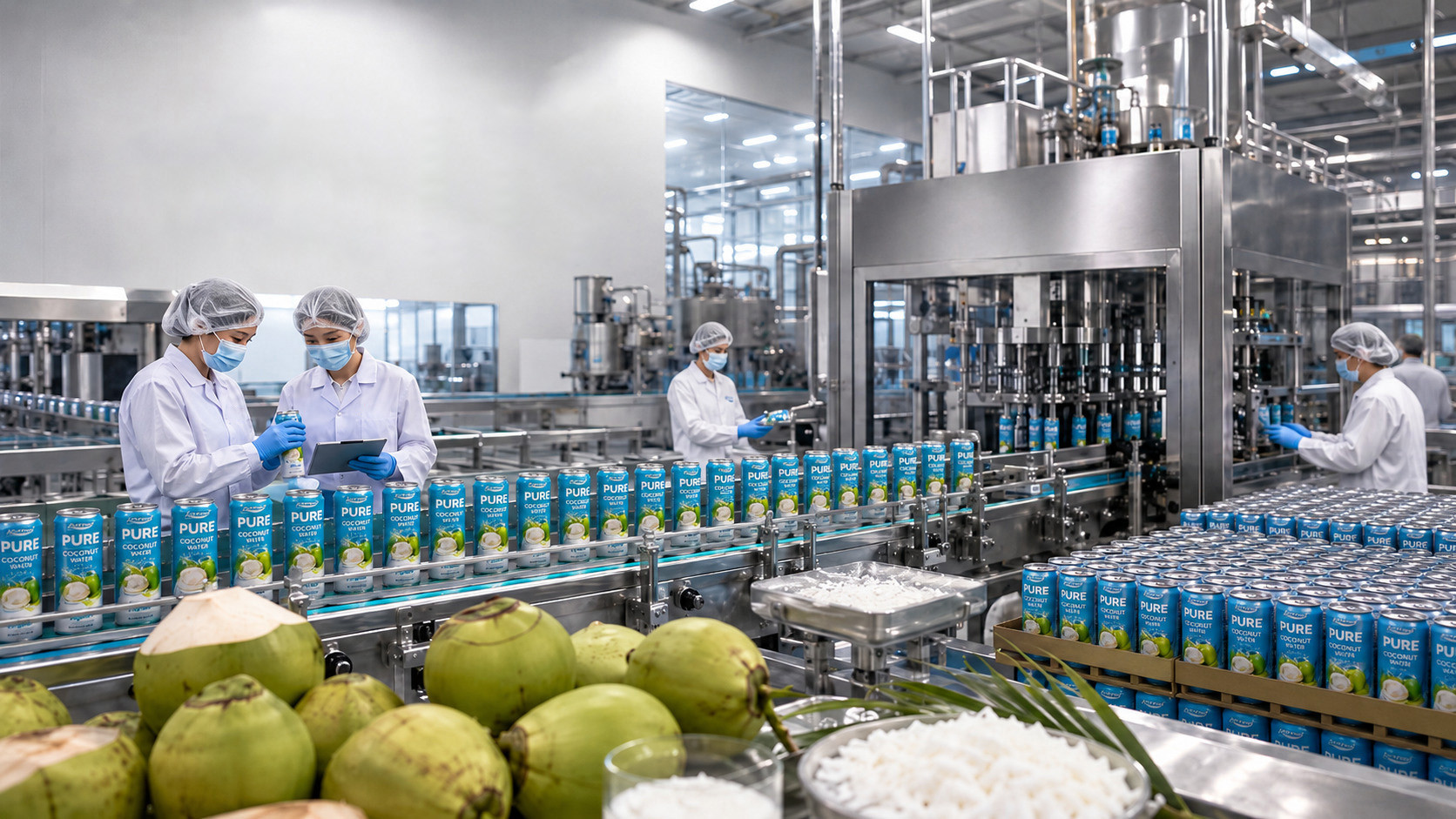
In many cases, yes — but processing matters as much as certification.
High-quality coconut water should taste:
- Light
- Fresh
- Naturally sweet
- Clean without artificial aftertaste
Poor-quality coconut water may taste:
- Cooked
- Metallic
- Overly sweet
- Flat or diluted
The production method makes a major difference.
Common Coconut Water Processing Methods
| Method | Result |
| NFC (Not From Concentrate) | Fresher natural flavor |
| Cold-Pressed | Minimal flavor damage |
| UHT Processing | Longer shelf life |
| From Concentrate | Lower production cost |
Many premium retailers now prefer:
- NFC coconut water
- preservative-free coconut water
- pure coconut water no sugar
Consumers increasingly associate these terms with higher authenticity and better ingredient quality.
How to Choose the Best Coconut Water
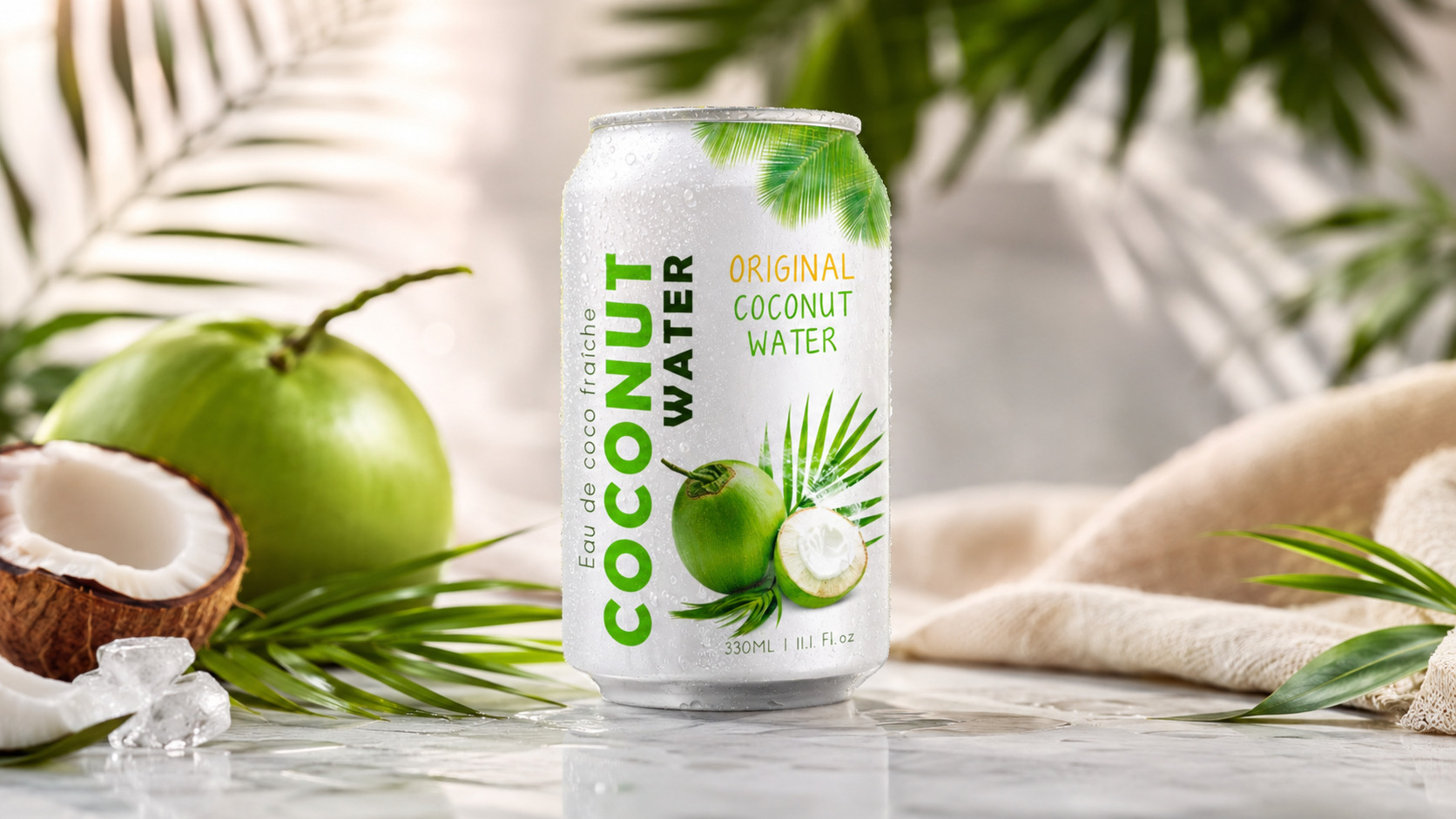
Read the Ingredient List First
The ingredient list tells you more than the front label.
Look for:
- 100% coconut water
- No added sugar
- Non-GMO claims
- Organic certifications
Avoid products with:
- Long ingredient lists
- Artificial sweeteners
- Added flavors
- Unclear sourcing
Check the Certifications
Reliable products often carry certifications such as:
- USDA Organic
- HACCP
- ISO 22000
- HALAL
- US FDA registration
For importers, these certifications improve:
- retail acceptance
- export compliance
- distributor confidence
Understand the Packaging
Different markets prefer different packaging styles.
Examples:
- GCC markets often prefer slim cans
- Europe leans toward eco-friendly cartons
- Premium cafés may prefer glass bottles
Good packaging protects:
- flavor stability
- shelf life
- brand image
Why Organic Coconut Water Is Growing Globally
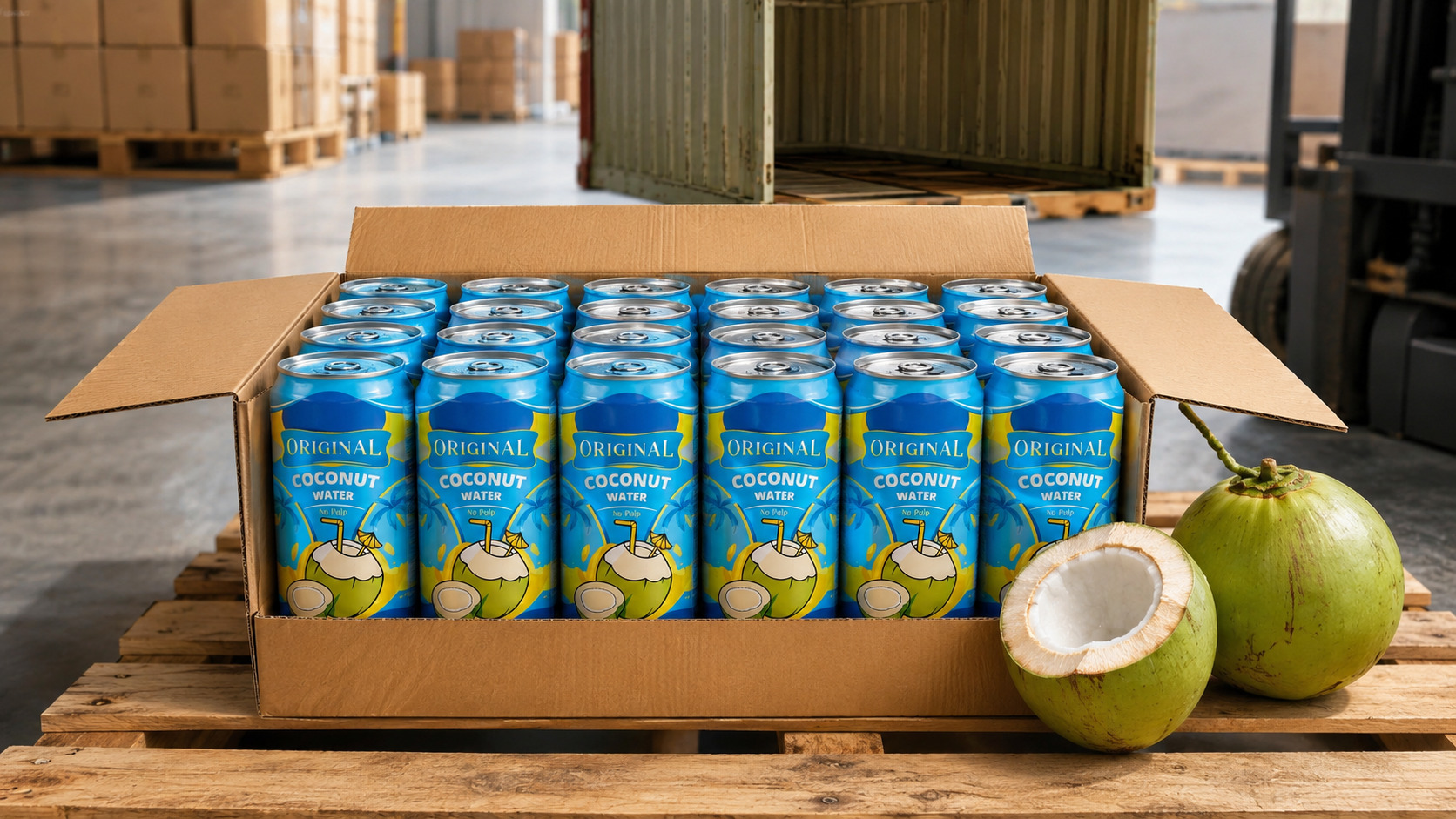
Consumer behavior is changing quickly.
People increasingly want beverages that are:
- cleaner
- simpler
- plant-based
- less processed
According to beverage market research from Grand View Research and Statista, the global coconut water market continues to expand due to wellness trends and natural hydration demand.
Growth is especially strong in:
- United States
- Canada
- Germany
- UAE
- Saudi Arabia
- South Korea
This creates major opportunities for:
- private label coconut water
- OEM beverage manufacturing
- export-focused beverage brands
What Importers Should Look for in an OEM Supplier
Consistent Raw Material Supply
Vietnam has become an important coconut sourcing region due to:
- tropical climate
- stable coconut farming
- growing export infrastructure
Reliable sourcing helps maintain:
- flavor consistency
- stable production quality
- year-round supply capability
Export Documentation & Certifications
A professional OEM supplier should support:
- HACCP
- ISO 22000
- HALAL
- US FDA
- export documentation
- private label support
This is especially important for supermarket and retail distribution.
Flexible OEM & Private Label Services
Strong beverage manufacturers should offer:
- custom branding
- packaging development
- formula customization
- multilingual labeling
- export packaging solutions
This flexibility helps distributors build stronger retail brands in competitive markets.
FAQ Section
Is organic coconut water healthier than regular coconut water?
Organic coconut water may reduce exposure to synthetic agricultural chemicals and often contains cleaner ingredients. However, both organic and regular coconut water can support hydration if they contain no added sugar or artificial additives.
Why is organic coconut water more expensive?
Organic coconut water costs more because of certification fees, lower farming yields, stricter processing standards, and premium packaging requirements. Smaller production scale also increases manufacturing costs.
How do you choose the best coconut water?
Look for products labeled:
- 100% coconut water
- no added sugar
- preservative-free
- non-GMO
- organic-certified if preferred
A short ingredient list usually indicates a cleaner product.
Is pure coconut water no sugar good for hydration?
Yes. Pure coconut water naturally contains electrolytes like potassium and magnesium, making it a popular option for light hydration and post-workout refreshment.
Organic Coconut Water Is More Than a Marketing Trend
Consumers today care about transparency. They want beverages that feel natural, trustworthy, and minimally processed.
That is why organic coconut water continues gaining attention across global markets.
For importers and distributors, the opportunity goes beyond selling a beverage. It is about building a clean-label brand that connects with modern wellness-focused consumers.
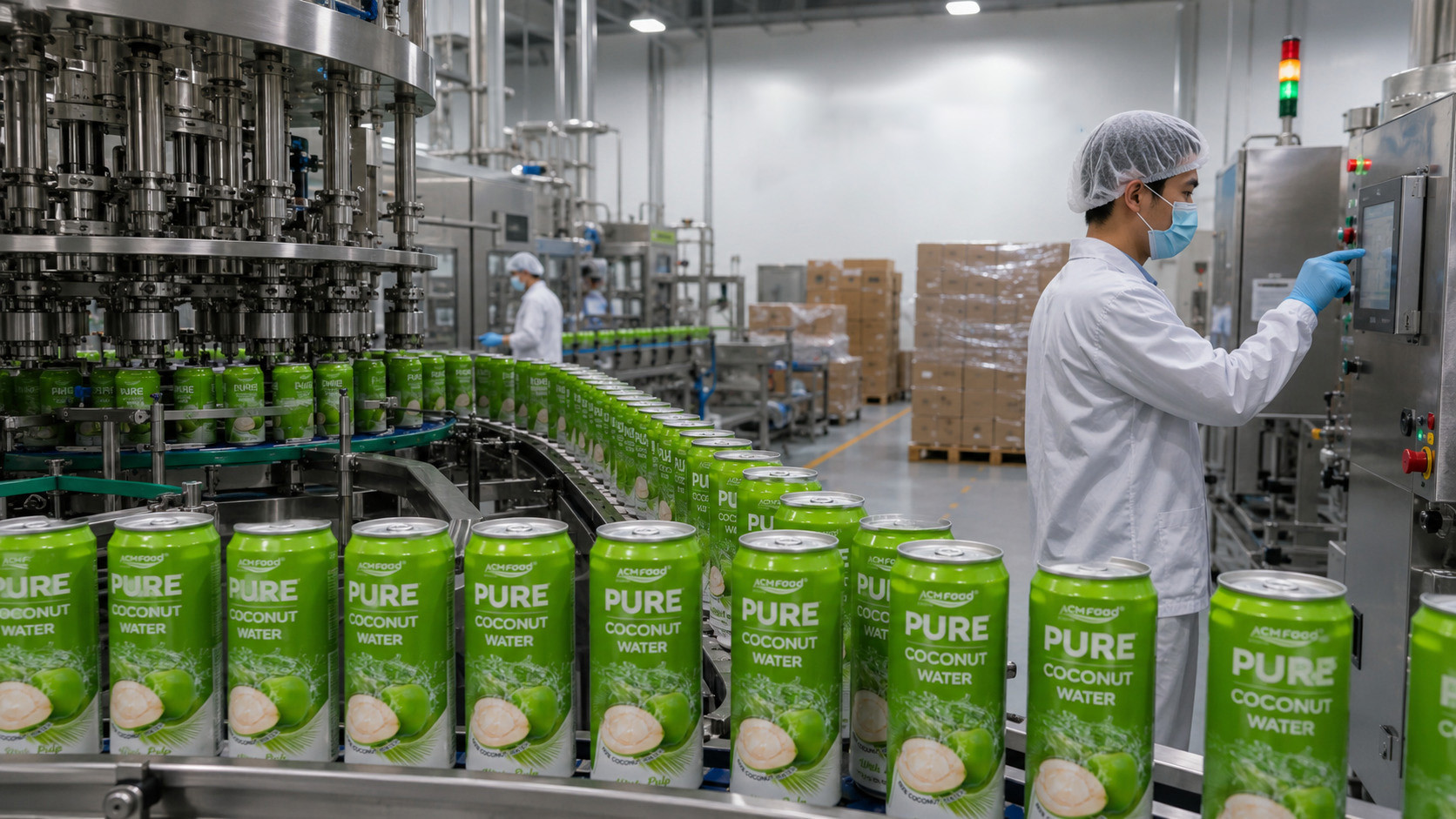
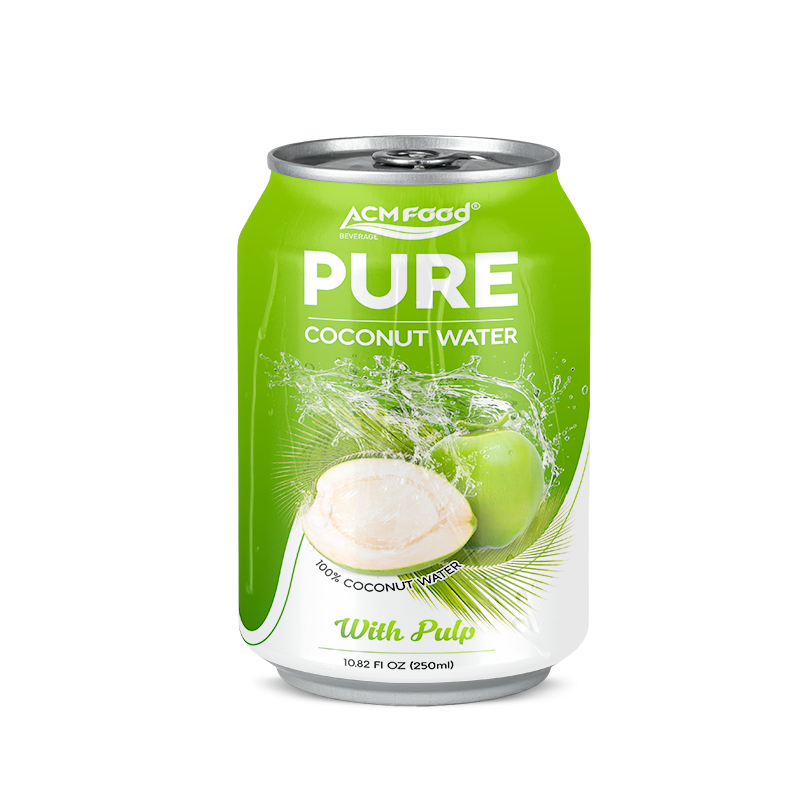
At ACMFOOD – Coconut Water Manufacturer from Vietnam, we support global partners with OEM and private label coconut water manufacturing backed by:
- HACCP
- ISO 22000
- HALAL
- US FDA compliance
We offer:
- pure coconut water no sugar
- organic coconut water solutions
- export-ready packaging
- OEM/private label development
Explore:
- Coconut Water Products
- OEM & Private Label Services
- Pure Coconut Water Solutions
Whether you are sourcing for retail shelves, wellness stores, or launching your own beverage brand, choosing the right manufacturing partner matters as much as choosing the right ingredients.
Turning this into a product
For the formats, ingredients and processing routes the factory actually runs, see beverage product capabilities. For how a specification becomes a shipped container, see the OEM route; for launching under your own label, see private label beverages. Order minimums are set per SKU — see minimum order quantity. To discuss a specification, request a quote.
Request a quote