
Introduction
Tamarind juice OEM has become an increasingly attractive solution for beverage brands seeking to launch distinctive fruit-based products without investing in their own manufacturing facilities. As consumers continue to explore authentic tropical flavors and naturally inspired beverages, tamarind juice offers a unique combination of refreshing taste, versatility, and broad international appeal.
OEM beverage manufacturing enables companies to focus on brand development, product positioning, and distribution while experienced manufacturers manage formulation, production, quality control, and packaging. This approach significantly reduces operational complexity and accelerates product launches for businesses of every size.
Whether you are building a new beverage brand, expanding an existing product portfolio, or entering international markets, understanding the OEM process for tamarind juice can help you make informed business decisions. This guide explains the production process, product customization options, market opportunities, and important factors to consider when selecting an OEM partner.
Quick summary

Tamarind Juice OEM is a private-label manufacturing solution that allows businesses to develop customized tamarind beverages under their own brand without owning a production facility. A qualified OEM manufacturer provides recipe development, ingredient sourcing, production, packaging, quality management, and export support, enabling faster market entry with lower investment and operational risk.
Key facts
| Category | Information |
|---|---|
| Business model | OEM, private label, contract manufacturing |
| Product type | Tamarind juice, juice drink, fruit beverage, concentrate-based beverage |
| Packaging | PET bottles, glass bottles, aluminum cans, aseptic cartons, pouch packaging |
| Certifications | Available depending on manufacturer and target market, commonly including food safety management systems and export compliance requirements |
| Target customers | Brand owners, beverage startups, supermarkets, distributors, wholesalers, importers, food service companies |
| Export markets | North America, Europe, Middle East, Asia-Pacific, Africa, and other international markets subject to local regulations |
| Customization | Recipe, sweetness, fruit content, packaging, branding, labeling, and product positioning |
What is Tamarind Juice?
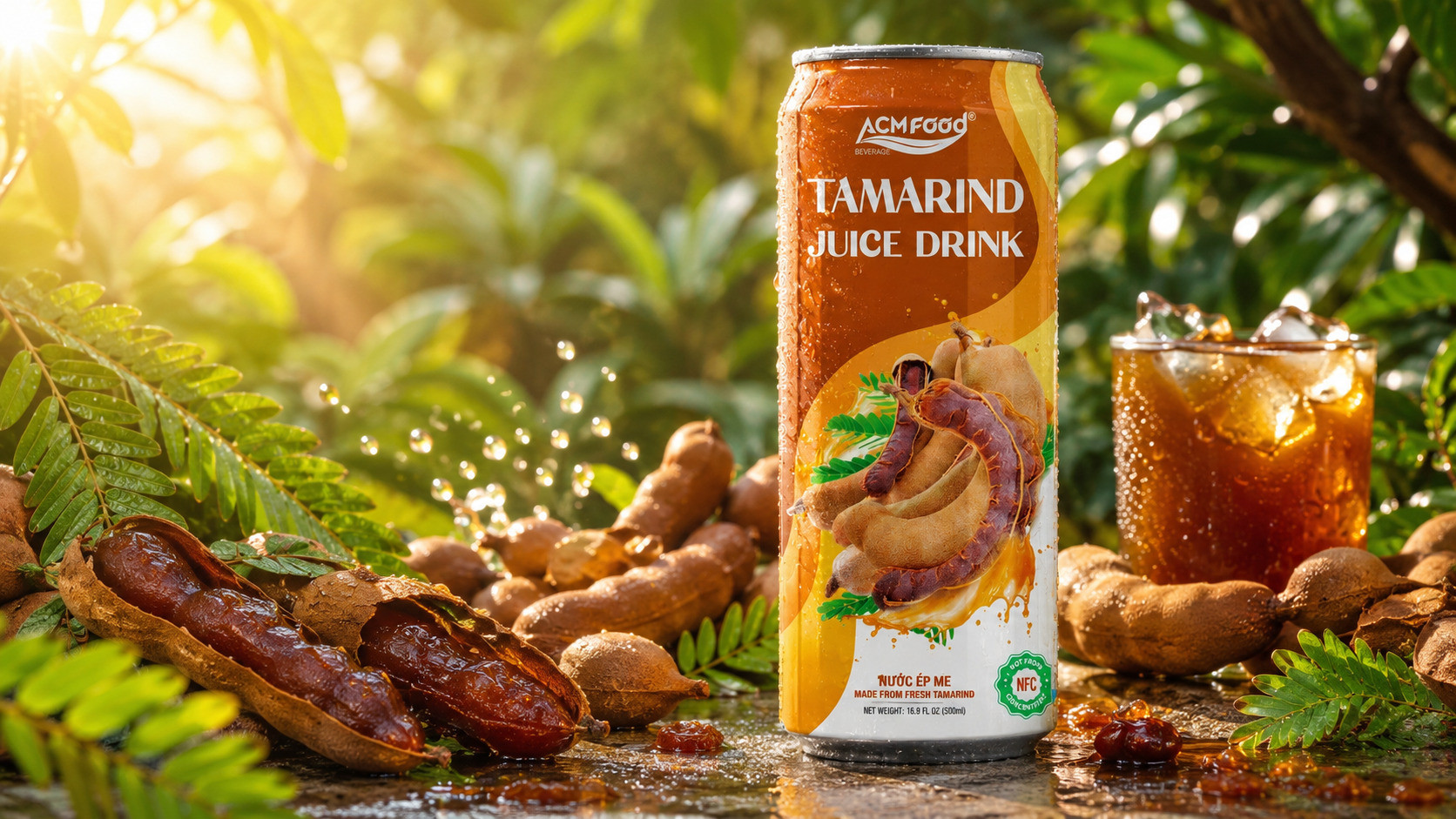
Tamarind juice is a fruit beverage made from the pulp of ripe tamarind pods, blended with water and other ingredients to create a refreshing drink with a distinctive sweet-and-tangy flavor. Depending on market preferences, manufacturers may produce ready-to-drink juice, juice beverages, concentrates, or premium fruit blends.
Tamarind has been widely used in traditional cuisines throughout Asia, Africa, Latin America, and the Middle East for centuries. Its naturally complex flavor profile makes it suitable for refreshing beverages, functional drink concepts, culinary applications, and innovative fruit blends targeting consumers seeking new taste experiences.
Modern beverage manufacturers can adjust sweetness, acidity, fruit concentration, and texture to satisfy different regional preferences. Some brands emphasize authentic tropical flavor, while others combine tamarind with ingredients such as mango, pineapple, lemon, ginger, or honey to create differentiated beverage portfolios.
Because tamarind naturally delivers a balance of sweetness and acidity, it appeals to consumers looking for alternatives to conventional fruit juices. This versatility allows beverage brands to position tamarind juice across premium retail, food service, hospitality, and international export channels.
How does the OEM manufacturing process work?

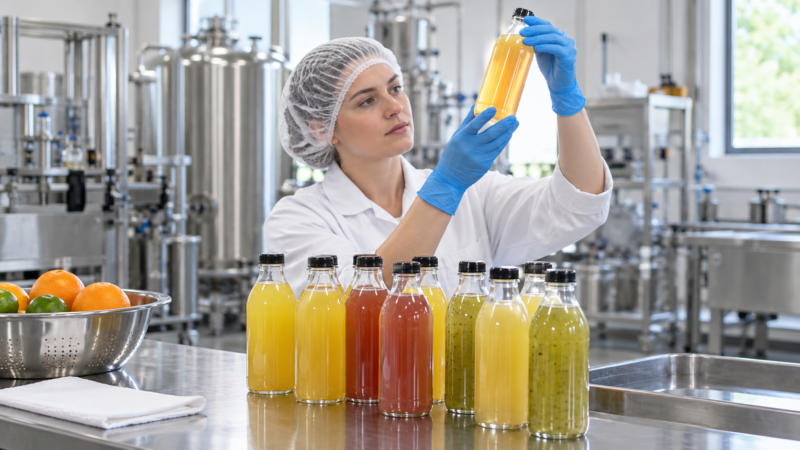
The OEM manufacturing process transforms a product concept into a finished beverage ready for commercial distribution. An experienced manufacturer manages every production stage while ensuring product consistency, food safety, and regulatory compliance.
Although each manufacturer follows its own procedures, a professional tamarind juice OEM project typically includes several integrated stages that reduce development time and improve production efficiency.
1. Product consultation and market analysis
The project begins by understanding the target market, customer profile, product positioning, pricing strategy, and distribution channels. These factors influence recipe development, packaging selection, labeling requirements, and manufacturing specifications.
For example, a premium supermarket brand may require higher fruit content and elegant glass packaging, while a convenience retail brand may prioritize lightweight PET bottles and competitive pricing.
2. Recipe development
Food technologists develop formulations based on the desired taste profile, sweetness level, fruit concentration, nutritional objectives, and local consumer preferences. Multiple sample versions are usually prepared before final approval.
During this stage, manufacturers also evaluate ingredient compatibility, shelf stability, processing methods, and production feasibility to ensure consistent quality during large-scale manufacturing.
3. Ingredient sourcing
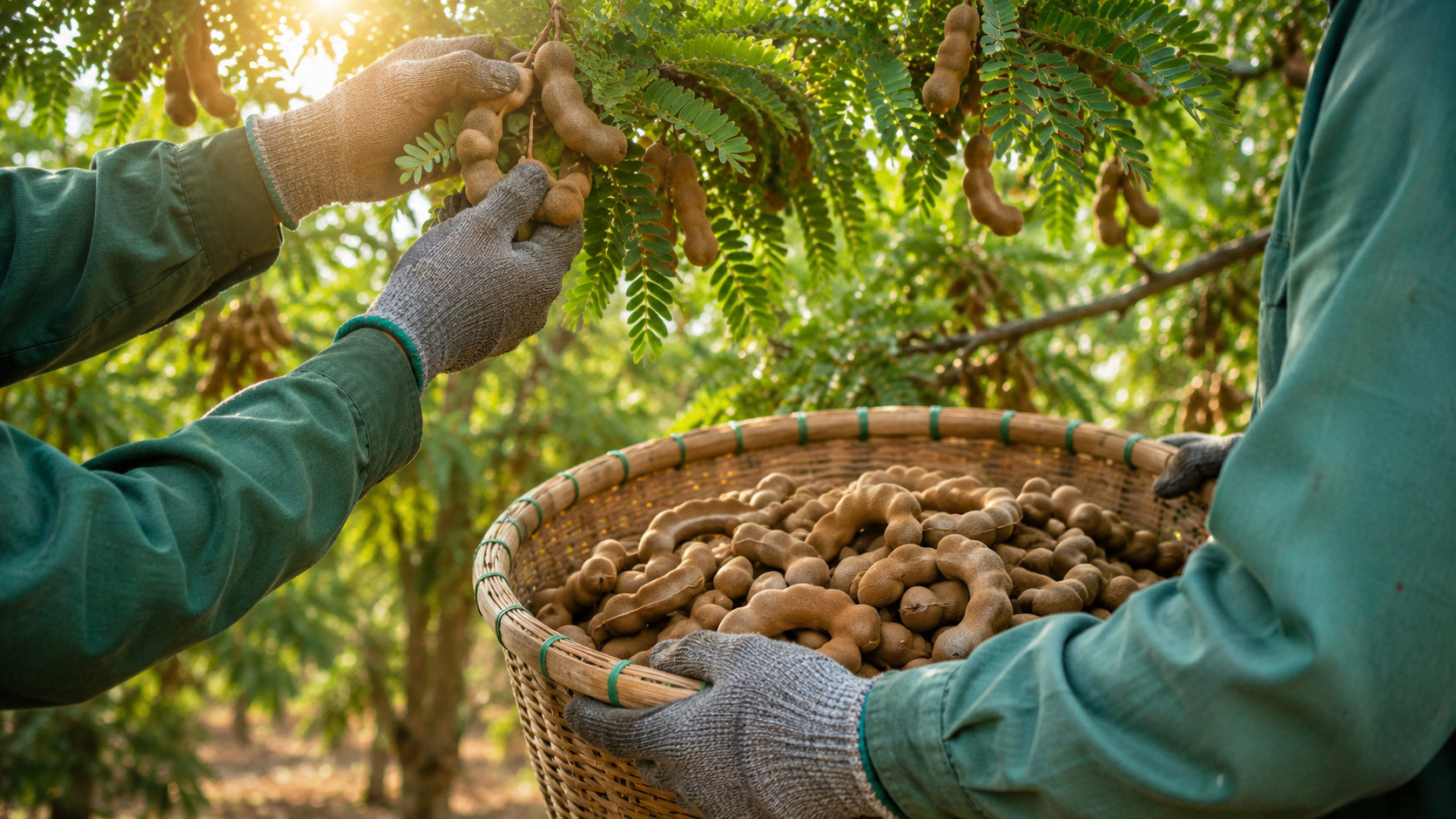
High-quality raw materials play a critical role in producing consistent tamarind beverages. Manufacturers source tamarind pulp and supporting ingredients through qualified suppliers while maintaining strict quality inspection procedures.
Reliable sourcing also helps minimize supply disruptions, maintain flavor consistency, and support long-term production planning for growing beverage brands.
4. Beverage production
Production generally involves raw material preparation, ingredient mixing, filtration, homogenization when required, pasteurization or sterilization, filling, sealing, cooling, and final inspection. Automated production lines help maintain hygiene and reduce contamination risks throughout the manufacturing process.
Manufacturers continuously monitor critical production parameters to ensure every production batch meets established quality standards before packaging.
5. Packaging and labeling
Packaging is customized according to the target market, transportation requirements, retail channels, and brand identity. OEM partners often provide complete private-label services, including bottle selection, label printing, carton design, and pallet configuration.
Labels are prepared to meet destination market regulations regarding nutrition information, ingredient declarations, allergen statements, barcode requirements, and language specifications.
6. Quality inspection and export preparation
Before shipment, finished products undergo quality inspections covering appearance, packaging integrity, production documentation, and food safety verification. Export orders are then prepared according to destination country requirements, helping simplify international logistics.
Why is demand growing in 2026?
Demand for Tamarind Juice OEM is expected to continue growing in 2026 because beverage companies are increasingly looking for distinctive fruit products that combine authentic flavor, flexible branding opportunities, and efficient manufacturing solutions.
Consumers are showing greater interest in tropical fruits and internationally inspired beverages. Rather than choosing only traditional orange or apple juice, many shoppers are exploring unique flavors that offer new drinking experiences while maintaining familiar fruit-based ingredients.
Private-label beverages also continue to expand across supermarkets, convenience stores, specialty retailers, hospitality businesses, and online marketplaces. OEM manufacturing enables these businesses to introduce exclusive products without building expensive production facilities.
Another important driver is the growing number of startup beverage brands. Instead of investing substantial capital in equipment, production staff, quality systems, and regulatory compliance, entrepreneurs can collaborate with experienced OEM manufacturers that already possess established manufacturing capabilities.
Global beverage portfolios are also becoming more diversified. Importers increasingly seek differentiated tropical beverages capable of attracting consumer attention in competitive retail environments. Tamarind juice fits this trend because its distinctive sweet-and-sour profile stands apart from conventional fruit juices.
Packaging innovation further supports market growth. Manufacturers now offer tamarind juice in multiple formats, including convenient single-serve bottles, family-size containers, aluminum cans, aseptic cartons, and sustainable packaging options suitable for various distribution channels.
Digital commerce has also accelerated product diversification. Online retailers can introduce niche beverage categories more easily than traditional retail stores, allowing specialty fruit juices such as tamarind beverages to reach broader consumer audiences across international markets.
For businesses planning long-term expansion, OEM manufacturing provides flexibility to test new formulations, launch seasonal products, develop premium collections, or enter multiple export markets while maintaining controlled investment and scalable production capacity.
What are the global market trends for Tamarind Juice OEM?
The global market for Tamarind Juice OEM is evolving as consumers seek authentic tropical flavors, cleaner ingredient lists, and innovative beverage experiences. Beverage brands are expanding beyond traditional fruit juices by introducing products inspired by regional cuisines and locally sourced fruits, making tamarind an increasingly attractive ingredient for both established companies and emerging brands.
OEM manufacturers play an essential role in this trend by providing flexible production capabilities, private label services, and customized formulations that help businesses respond quickly to changing consumer preferences without making large capital investments.
Growing demand for tropical fruit beverages
Tropical fruit beverages continue to gain popularity in many international markets because consumers are looking for new flavors that differ from conventional orange, apple, or grape juices. Tamarind offers a naturally balanced sweet-and-tart taste that appeals to adventurous consumers while remaining familiar in many regions across Asia, Africa, Latin America, and the Middle East.
Retailers are also expanding their international beverage selections, creating more opportunities for specialty fruit juices that showcase authentic regional ingredients and unique flavor profiles.
Private label expansion
Private label beverages have become an important growth segment for supermarkets, wholesalers, food service providers, and online retailers. Instead of manufacturing products internally, many companies collaborate with experienced OEM partners to develop exclusive beverage lines under their own brands.
This business model allows retailers to differentiate themselves while maintaining greater flexibility in pricing, packaging, and product positioning.
Customization as a competitive advantage
Modern consumers expect products that match local tastes and lifestyle preferences. As a result, beverage brands increasingly request customized sweetness levels, fruit concentrations, ingredient combinations, and packaging formats rather than standardized products.
OEM manufacturers capable of offering formulation flexibility are better positioned to support long-term brand development across multiple international markets.
Sustainability and responsible packaging
Environmental considerations continue to influence purchasing decisions in many regions. Beverage companies are exploring packaging solutions that improve transportation efficiency, reduce material consumption, and align with evolving sustainability initiatives.
Although packaging preferences vary by market, manufacturers increasingly provide multiple packaging formats so customers can select options that best fit their distribution strategies and target audiences.
What business opportunities does Tamarind Juice OEM create?

Tamarind Juice OEM creates opportunities for businesses of different sizes by lowering production barriers and enabling faster product launches. Instead of investing heavily in manufacturing infrastructure, companies can focus on building strong brands, expanding distribution networks, and understanding customer needs.
This flexible approach benefits startups as well as established food and beverage companies looking to diversify their product portfolios.
Launching a new beverage brand
Entrepreneurs can introduce tamarind juice under their own trademark while relying on an experienced manufacturing partner to handle production, quality management, and packaging. This significantly shortens the time required to enter the market.
By reducing operational complexity, businesses can dedicate more resources to marketing, product positioning, and customer acquisition.
Expanding existing product portfolios
Companies that already sell beverages often introduce tamarind juice as a complementary product alongside mango, pineapple, coconut, passion fruit, or mixed fruit beverages. Offering a broader portfolio helps brands serve different consumer preferences while strengthening shelf presence.
A diversified product range can also improve relationships with distributors and retailers seeking complete beverage solutions from a single supplier.
Serving international distributors
Importers and wholesalers frequently seek differentiated products capable of standing out in competitive retail environments. Tamarind juice provides a distinctive flavor profile that can appeal to multicultural consumer groups and specialty food markets.
OEM manufacturers experienced in export documentation, packaging compliance, and international logistics can simplify cross-border trade for their customers.
Food service and hospitality
Hotels, restaurants, cafés, catering companies, and beverage chains increasingly incorporate tropical fruit beverages into their menus. Tamarind juice can be served as a ready-to-drink beverage or used as a base for signature drinks, mocktails, and culinary recipes.
Private label packaging also enables hospitality businesses to strengthen brand recognition through customized beverage offerings.
What product variations are available?
One of the greatest advantages of Tamarind Juice OEM is the ability to develop products that match different market segments and consumer preferences. Manufacturers can customize ingredients, flavor intensity, sweetness, packaging, and branding according to each customer’s commercial objectives.
The following product variations are commonly available through OEM beverage manufacturers.
- 100% tamarind juice where technically feasible and aligned with local regulations.
- Tamarind juice drinks with adjusted fruit content.
- Tamarind nectar formulations.
- Tamarind concentrate products.
- Sparkling tamarind beverages.
- Tamarind blended with mango, pineapple, lemon, passion fruit, or ginger.
- Reduced-sugar formulations.
- No-added-color product concepts where appropriate.
- Premium export-oriented beverage collections.
- Food service bulk packaging options.
Recipe development normally begins with customer requirements. Manufacturers prepare product samples that allow clients to evaluate taste, aroma, sweetness, appearance, and overall sensory characteristics before commercial production begins.
This collaborative development process helps ensure the finished beverage aligns with market expectations while remaining suitable for large-scale manufacturing.
What packaging options are available for Tamarind Juice OEM?
Packaging is one of the most important decisions in beverage development because it influences product presentation, transportation efficiency, consumer convenience, and retail positioning. OEM manufacturers generally provide multiple packaging solutions to accommodate different markets and distribution channels.
| Packaging type | Typical application | Main advantages |
|---|---|---|
| PET bottle | Retail beverages | Lightweight, durable, cost-effective |
| Glass bottle | Premium beverage brands | Premium appearance and excellent product presentation |
| Aluminum can | Convenience stores and ready-to-drink products | Portable, recyclable, rapid cooling |
| Aseptic carton | Long-distribution retail channels | Efficient storage and transportation |
| Stand-up pouch | Specialty products and children’s beverages | Lightweight and convenient |
In addition to selecting the packaging material, businesses can usually customize bottle shapes, cap designs, label layouts, carton printing, pallet configuration, and retail packaging according to their branding strategies.
Packaging decisions should also consider transportation conditions, warehouse storage, retail display requirements, and consumer purchasing behavior in each target market.
How is quality controlled during Tamarind Juice OEM manufacturing?
Quality control is integrated throughout the entire OEM manufacturing process rather than being performed only after production is complete. Professional manufacturers implement systematic inspection procedures from raw material sourcing through finished product shipment to help maintain product consistency and food safety.
Although individual quality systems vary between manufacturers, comprehensive quality management generally includes multiple inspection stages designed to reduce production risks and improve traceability.
Raw material inspection
Incoming tamarind pulp, fruit ingredients, sweeteners, packaging materials, and other production inputs are inspected according to established quality specifications before entering the manufacturing process.
Only materials that satisfy internal quality requirements proceed to production, helping improve batch consistency.
Production monitoring
Automated processing equipment allows manufacturers to monitor critical production parameters throughout mixing, heat treatment, filling, and packaging operations. Continuous monitoring supports stable manufacturing conditions and helps minimize deviations.
Documented production records also improve traceability for every manufacturing batch.
Packaging inspection
Filled products are examined for sealing performance, labeling accuracy, package integrity, appearance, and coding information before being released for shipment.
These inspections help reduce the likelihood of packaging defects reaching distributors or retailers.
Finished product verification
Before export or domestic distribution, finished beverages undergo final quality verification to confirm they meet internal product specifications and customer requirements.
Manufacturers also maintain production documentation that supports customer audits, regulatory reviews, and ongoing quality improvement initiatives.
A reliable OEM partner views quality management as a continuous process involving supplier evaluation, production control, employee training, equipment maintenance, and customer feedback. This systematic approach contributes to consistent product quality and long-term business relationships across domestic and international markets.
How to choose an OEM manufacturer?
Choosing the right Tamarind Juice OEM manufacturer is one of the most important decisions for a beverage brand. A reliable partner should provide more than production capacity—they should also offer technical expertise, quality management, product development support, and export experience that align with your long-term business goals.
Instead of comparing suppliers based solely on price, businesses should evaluate their overall capabilities, communication, production flexibility, and ability to maintain consistent product quality over time.
| Evaluation criteria | Why it matters | Questions to ask |
|---|---|---|
| Manufacturing experience | Experienced manufacturers typically have more stable production systems and product knowledge. | How many years have you produced fruit beverages? |
| Product development | Customization helps create unique products for different markets. | Can you develop custom recipes based on our requirements? |
| Quality management | Consistent quality builds long-term customer confidence. | What quality control procedures do you implement? |
| Production capacity | Capacity should support future business growth. | Can production scale as demand increases? |
| Packaging options | Packaging influences branding and distribution efficiency. | Which bottle, can, carton, or pouch options are available? |
| Export capability | International experience simplifies overseas business. | Which export markets do you currently serve? |
| Communication | Efficient communication reduces project delays. | How are product development and production updates managed? |
| Supply chain stability | Reliable sourcing helps ensure consistent production. | How do you manage raw material availability? |
| Innovation | Continuous innovation supports long-term competitiveness. | Do you regularly develop new beverage concepts? |
Visiting the manufacturing facility whenever possible provides valuable insight into production organization, cleanliness, equipment maintenance, and operational management. It also allows both parties to establish stronger business relationships before commercial production begins.
Businesses should also request product samples, discuss customization capabilities, review production timelines, and clarify packaging specifications before signing a manufacturing agreement.
OEM vs building your own factory
OEM manufacturing offers significant advantages for companies that want to enter the beverage market quickly while minimizing capital investment. Building an independent factory provides complete operational control but requires substantially greater financial resources, regulatory compliance, and ongoing management.
| Factor | OEM manufacturing | Building your own factory |
|---|---|---|
| Initial investment | Low | Very high |
| Time to market | Fast | Long development period |
| Production expertise | Provided by manufacturer | Must be developed internally |
| Equipment investment | Not required | Required |
| Quality management system | Existing manufacturing system | Must be established from scratch |
| Production flexibility | High for product launches | Limited by available equipment |
| Operational complexity | Lower | Significantly higher |
| Business focus | Brand building, sales, and marketing | Production and factory management |
| Scalability | Often easier through existing production capacity | Requires additional factory expansion |
For startups and growing beverage brands, OEM manufacturing often provides the most practical path because it allows businesses to validate market demand before making major investments in manufacturing infrastructure.
Larger companies with stable, high-volume production requirements may eventually consider building their own facilities, but many continue partnering with OEM manufacturers to expand product portfolios or enter new markets more efficiently.
What export opportunities exist for Tamarind Juice OEM?
Tamarind juice has strong export potential because it combines international consumer interest in tropical flavors with the flexibility of OEM manufacturing. As global food retail becomes increasingly diverse, importers are actively searching for differentiated beverages that appeal to multicultural and health-conscious consumers.
Although demand varies by country, tamarind beverages are already familiar in many parts of Asia, the Middle East, Africa, and Latin America, while awareness continues to grow in North America and Europe through international grocery chains and specialty food retailers.
Private label retail
Supermarkets increasingly introduce exclusive beverage collections under their own brands. Tamarind juice provides retailers with an opportunity to diversify their tropical beverage offerings while strengthening customer loyalty through unique private-label products.
Ethnic food distribution
Importers serving multicultural communities often seek authentic beverages that reflect traditional regional flavors. Tamarind juice naturally fits these distribution channels because of its long history in many international cuisines.
Food service expansion
Restaurants, cafés, hotels, and catering businesses continue introducing globally inspired beverages to enhance customer experiences. Tamarind juice can be offered as a refreshing ready-to-drink product or incorporated into signature beverage menus.
Online retail growth
E-commerce platforms have made specialty beverages more accessible than ever. Smaller brands can reach niche customer segments without relying exclusively on traditional retail distribution, making OEM production particularly attractive for digital-first beverage companies.
Manufacturers with export experience can also assist customers in preparing packaging, labeling, documentation, and logistics according to destination market requirements, helping reduce administrative complexity during international expansion.
Future outlook
The future outlook for Tamarind Juice OEM remains positive as beverage companies continue investing in product innovation, premium branding, and international market expansion. Consumers are increasingly interested in beverages that combine authentic fruit flavors with attractive packaging and high production standards.
Rather than competing solely on price, successful beverage brands are focusing on product differentiation through recipe development, premium positioning, sustainable packaging strategies, and localized flavor profiles tailored to individual markets.
OEM manufacturers are expected to play an increasingly strategic role by offering comprehensive services that extend beyond production. These services may include market research support, formulation development, packaging consultation, regulatory guidance, and supply chain coordination.
Advances in manufacturing automation will continue improving production efficiency, batch consistency, and quality monitoring while allowing manufacturers to respond more rapidly to changing customer requirements.
Packaging innovation is also likely to remain a major competitive factor. Businesses will continue exploring lightweight materials, improved transportation efficiency, and packaging formats that enhance convenience while supporting evolving sustainability objectives.
Digital technologies are transforming how beverage brands interact with consumers. Online sales channels, data-driven marketing, and direct-to-consumer business models create additional opportunities for niche tropical beverages such as tamarind juice to reach global audiences.
Looking ahead, companies that combine reliable OEM manufacturing with strong branding, consistent quality, market-specific customization, and effective distribution strategies will be well positioned to capitalize on the growing international demand for tropical fruit beverages.
For both startups and established beverage companies, Tamarind Juice OEM represents a scalable and flexible business model that supports innovation while reducing manufacturing complexity. As global consumer preferences continue to evolve, strategic partnerships with experienced OEM manufacturers are expected to remain an important driver of long-term growth.
Frequently asked questions
What is Tamarind Juice OEM?
Tamarind Juice OEM is a contract manufacturing service that allows businesses to produce tamarind juice products under their own brand without owning a beverage factory. The OEM manufacturer manages product development, ingredient sourcing, production, packaging, and quality management based on the client’s specifications.
This business model enables startups, distributors, retailers, and established beverage companies to launch products more quickly while significantly reducing the investment required for manufacturing facilities, production equipment, and technical personnel.
Depending on the manufacturer, OEM services may also include recipe customization, packaging design support, regulatory documentation, export assistance, and private label branding. This comprehensive approach allows brand owners to concentrate on marketing, sales, and business expansion.
Can I customize the recipe?
Yes. Recipe customization is one of the primary advantages of OEM beverage manufacturing. Most experienced manufacturers can adjust sweetness, acidity, fruit concentration, flavor intensity, aroma, and other formulation characteristics to match your target market.
Many businesses also develop signature recipes by blending tamarind with tropical fruits such as mango, pineapple, passion fruit, lemon, or ginger. These customized formulations help brands differentiate themselves in competitive retail environments.
Before commercial production begins, manufacturers typically prepare product samples for evaluation. This sampling process allows customers to review taste, appearance, texture, and overall product quality before approving the final formulation.
How much does OEM manufacturing cost?
The cost of Tamarind Juice OEM manufacturing depends on multiple factors rather than a fixed price. Product formulation, fruit content, packaging type, order volume, ingredient selection, labeling requirements, and destination market all influence the final manufacturing cost.
Premium glass bottles, specialized packaging, customized ingredients, and smaller production runs generally result in higher unit costs than standard large-volume production.
Instead of requesting only a unit price, businesses should ask manufacturers for a complete quotation that includes production, packaging, labeling, carton packaging, palletization, and any additional export-related services. A transparent quotation makes it easier to compare suppliers accurately.
Which certifications are required?
The certifications required depend on the destination market and customer requirements. Different countries have their own food safety regulations, labeling standards, and import requirements that manufacturers must follow.
Professional OEM manufacturers often implement internationally recognized food safety management systems and maintain documentation to support customer audits and export compliance. The exact certifications available should always be confirmed directly with the manufacturer.
Before selecting an OEM partner, businesses should discuss the regulatory requirements for their target markets to ensure products are manufactured and documented according to applicable standards.
Is OEM suitable for startups?
Yes. OEM manufacturing is often an ideal solution for startups because it minimizes the financial risks associated with establishing a beverage production facility. Entrepreneurs can launch products without investing in expensive machinery, factory construction, or production teams.
This approach allows new businesses to validate consumer demand before making larger investments. If a product performs well, production volumes can usually be increased without major operational changes.
In addition to lowering initial investment, OEM manufacturing enables startups to benefit from experienced food technologists, established production systems, and professional quality management from the beginning of their business journey.
Key takeaways
- Tamarind Juice OEM enables businesses to launch branded beverages without building their own manufacturing facilities.
- Professional OEM manufacturers typically provide integrated services including formulation development, ingredient sourcing, production, packaging, quality control, and export support.
- Tamarind’s distinctive sweet-and-tangy flavor creates opportunities for product differentiation in both domestic and international beverage markets.
- Recipe customization allows brands to adapt sweetness, fruit content, packaging, and product positioning to meet local consumer preferences.
- Choosing an experienced OEM partner should involve evaluating manufacturing capability, quality management, customization flexibility, communication, production capacity, and export experience rather than focusing solely on price.
- OEM manufacturing reduces capital investment, shortens time to market, and allows businesses to focus on branding, marketing, sales, and distribution.
- Growing consumer interest in tropical fruit beverages, private-label products, and premium beverage experiences is expected to support continued demand for Tamarind Juice OEM solutions in the coming years.
How long does production take?
The production timeline for Tamarind Juice OEM depends on several factors, including recipe development, sample approval, raw material availability, packaging customization, production scheduling, and order volume. The complete process usually involves product development before commercial manufacturing begins.
For repeat orders using an approved formulation and existing packaging, production is generally more efficient because the recipe, packaging specifications, and production procedures have already been validated.
Businesses should discuss project timelines with their OEM manufacturer early in the planning stage, particularly if products are intended for seasonal promotions, product launches, or export shipments with fixed delivery schedules.
What packaging options are available?
OEM manufacturers typically offer a wide range of packaging solutions to meet different market requirements. Common options include PET bottles, glass bottles, aluminum cans, aseptic cartons, and stand-up pouches, each suited to different retail channels and customer preferences.
In addition to selecting the packaging format, businesses can usually customize bottle shapes, closure types, label designs, shrink sleeves, carton printing, and pallet configurations to strengthen their brand identity.
The most appropriate packaging depends on factors such as product positioning, transportation requirements, target customers, storage conditions, and distribution channels.
What is the MOQ?
The minimum order quantity (MOQ) varies among OEM manufacturers and depends on the selected packaging, production line configuration, ingredient sourcing, and level of customization required. There is no universal MOQ that applies to every manufacturer.
Products requiring custom bottles, printed packaging materials, or specialized formulations may have different minimum production requirements than products using standard packaging.
Businesses should discuss expected sales volumes and long-term growth plans with potential manufacturing partners. This helps identify production solutions that balance operational efficiency with commercial flexibility.
How do I choose an OEM manufacturer?
Selecting an OEM manufacturer should involve evaluating technical expertise, manufacturing experience, quality management systems, production capacity, product development capabilities, communication efficiency, and export experience.
Requesting product samples, visiting production facilities when possible, reviewing manufacturing procedures, and discussing customization options can provide valuable insight into a manufacturer’s capabilities.
Rather than selecting the lowest-priced supplier, businesses should focus on building long-term partnerships with manufacturers capable of delivering consistent product quality, reliable production schedules, and responsive technical support.
What trends will shape the Tamarind Juice market in 2026?
Several trends are expected to influence the Tamarind Juice market in 2026, including continued consumer interest in tropical fruit beverages, expansion of private-label products, premium product positioning, packaging innovation, and greater demand for customized beverage solutions.
Digital commerce is also expected to create new opportunities for niche beverage brands by making specialty fruit drinks more accessible to consumers worldwide. At the same time, beverage companies are likely to continue investing in differentiated flavor profiles and attractive packaging to strengthen brand competitiveness.
OEM manufacturers that combine advanced production capabilities with flexible product development and international market experience will be well positioned to support businesses responding to these evolving market trends.
Conclusion
Tamarind Juice OEM provides an efficient and scalable pathway for businesses seeking to enter or expand within the global beverage industry. By partnering with an experienced OEM manufacturer, companies can transform product concepts into market-ready beverages while avoiding the significant investment required to establish and operate their own production facilities.
Beyond manufacturing, a reliable OEM partner contributes technical expertise in formulation development, quality management, packaging selection, and export preparation. This collaborative approach enables businesses to focus on brand building, marketing, distribution, and long-term customer relationships.
As international demand for tropical fruit beverages continues to grow, tamarind juice offers a distinctive opportunity to diversify product portfolios and meet changing consumer preferences. Its unique flavor profile, broad customization potential, and suitability for multiple packaging formats make it an attractive choice across retail, food service, and private-label markets.
Whether you are launching your first beverage brand or expanding an established product range, selecting the right OEM manufacturing partner is a strategic decision that can influence product quality, operational efficiency, and long-term business success. Careful evaluation of manufacturing capabilities, quality standards, and customization services will help build a strong foundation for sustainable growth.