


 Français
 Español
 العربية
 한국어
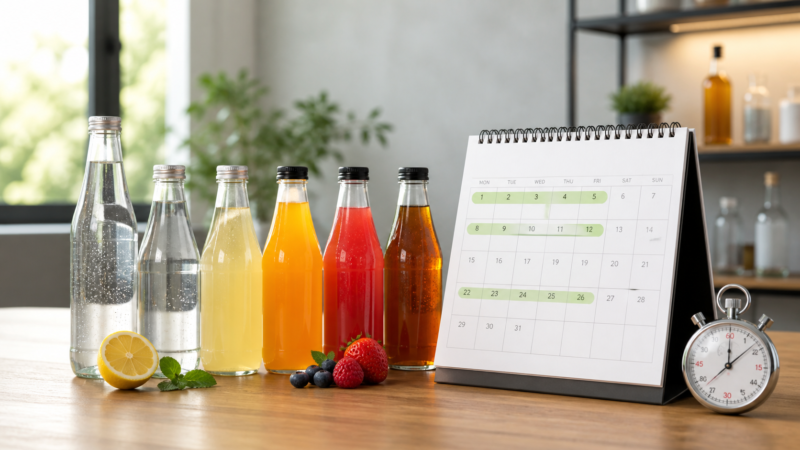
한국어Fruit juice shelf-life testing is the structured process of evaluating how a juice formulation, package and process hold up over time so a private label brand can set a realistic “best before” period and maintain consistent quality. A robust program looks at microbiological safety, physical stability, chemical changes and sensory acceptance under intended storage and distribution conditions.
This guide explains how to plan fruit juice shelf life testing for private label products—from scoping and test design to acceptance criteria, packaging influences and decision points for launch. It focuses on practical steps brands and product developers can take to reduce risk without overextending timelines or budgets.
What is fruit juice shelf-life testing?
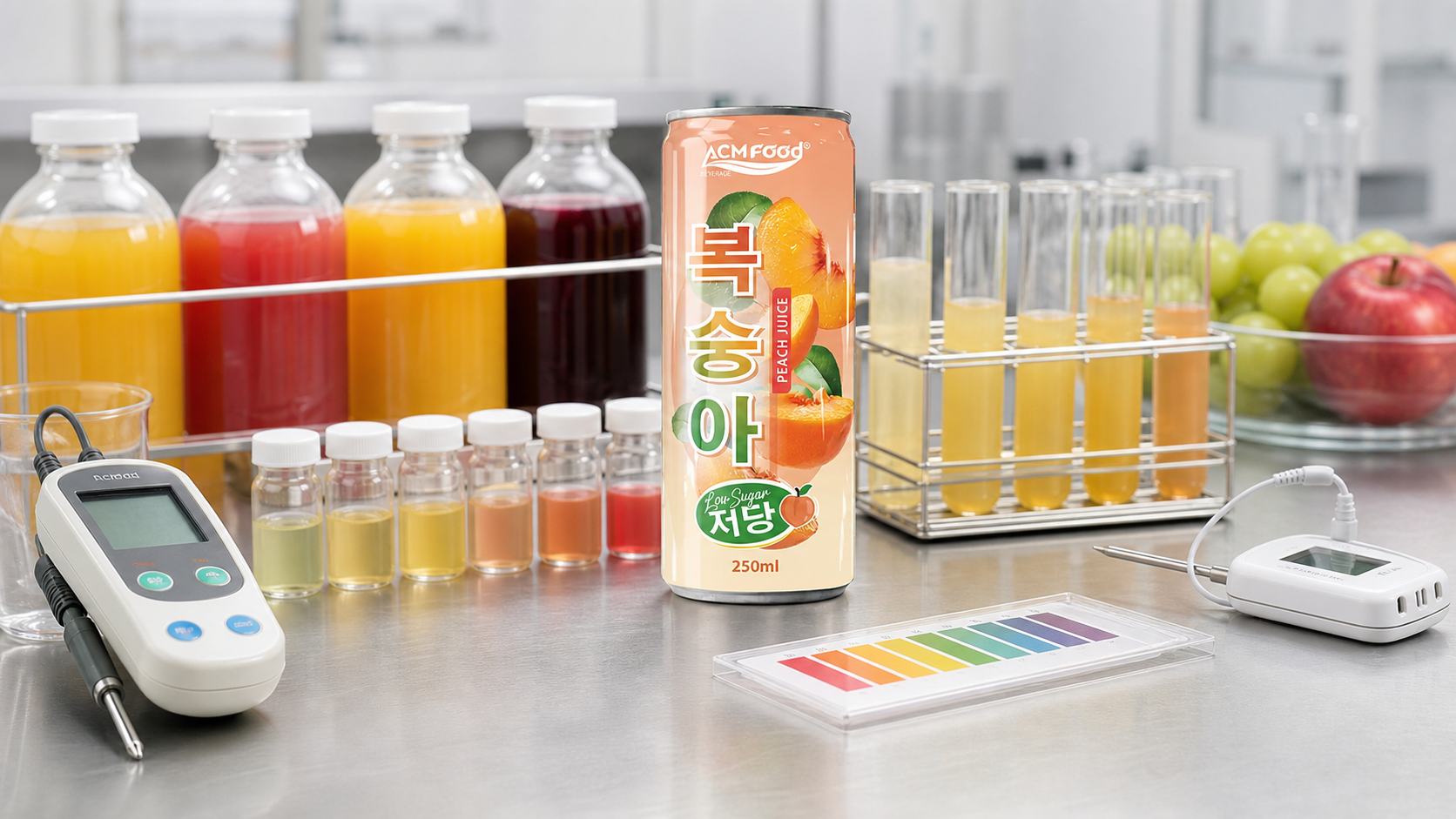
Fruit juice shelf-life testing is a set of controlled studies that estimate how long a juice remains safe and acceptable in taste, color, aroma and appearance when stored as intended. It typically combines real-time storage with supporting accelerated or distribution-simulation tests, and it may include an “opened shelf life” assessment to guide consumer handling after first opening.
Which factors drive juice shelf life?
Several formulation, process and packaging variables influence how long a private label juice can remain marketable. These drivers interact, so shelf life is rarely determined by a single factor.
- Intrinsic properties: pH, titratable acidity, °Brix, organic acids, polyphenols, pulp level and dissolved oxygen at fill.
- Process: hot-fill or tunnel pasteurization, aseptic processing, or high-pressure processing (HPP); heat exposure profile; oxygen pick-up control.
- Packaging: barrier to oxygen and light, closure integrity, headspace management, liner materials, and fill temperature compatibility.
- Distribution & storage: temperature variation, light exposure, vibration, stacking orientation and warehouse turnover.
- Product style: clarified vs cloudy juice; NFC vs from concentrate; presence of fibers or botanicals that may sediment.
Positioning also matters: specifications and consumer expectations differ for 100% juice vs nectar vs drink, which can shift both the test plan and acceptance criteria.
How to design a shelf-life study for private label juice
Start with the claim you need to support and design backwards to the tests required. The best plans combine technical rigor with practical timelines.
- Define the goal: intended shelf-life claim, storage temperature, and key markets. Align on whether the label will use a best-before date and any opened-shelf-life guidance.
- Risk assessment: map hazards (microbial growth, haze/sediment, color fade, flavor changes, package deformation, cap leaks) and rank severity/likelihood.
- Sample plan: choose representative pilot or commercial batches; include retention samples. Record lot, date, process parameters, fill temperature and torque.
- Storage conditions: real-time at intended temperature, plus supporting elevated-temperature or light-exposure studies if relevant.
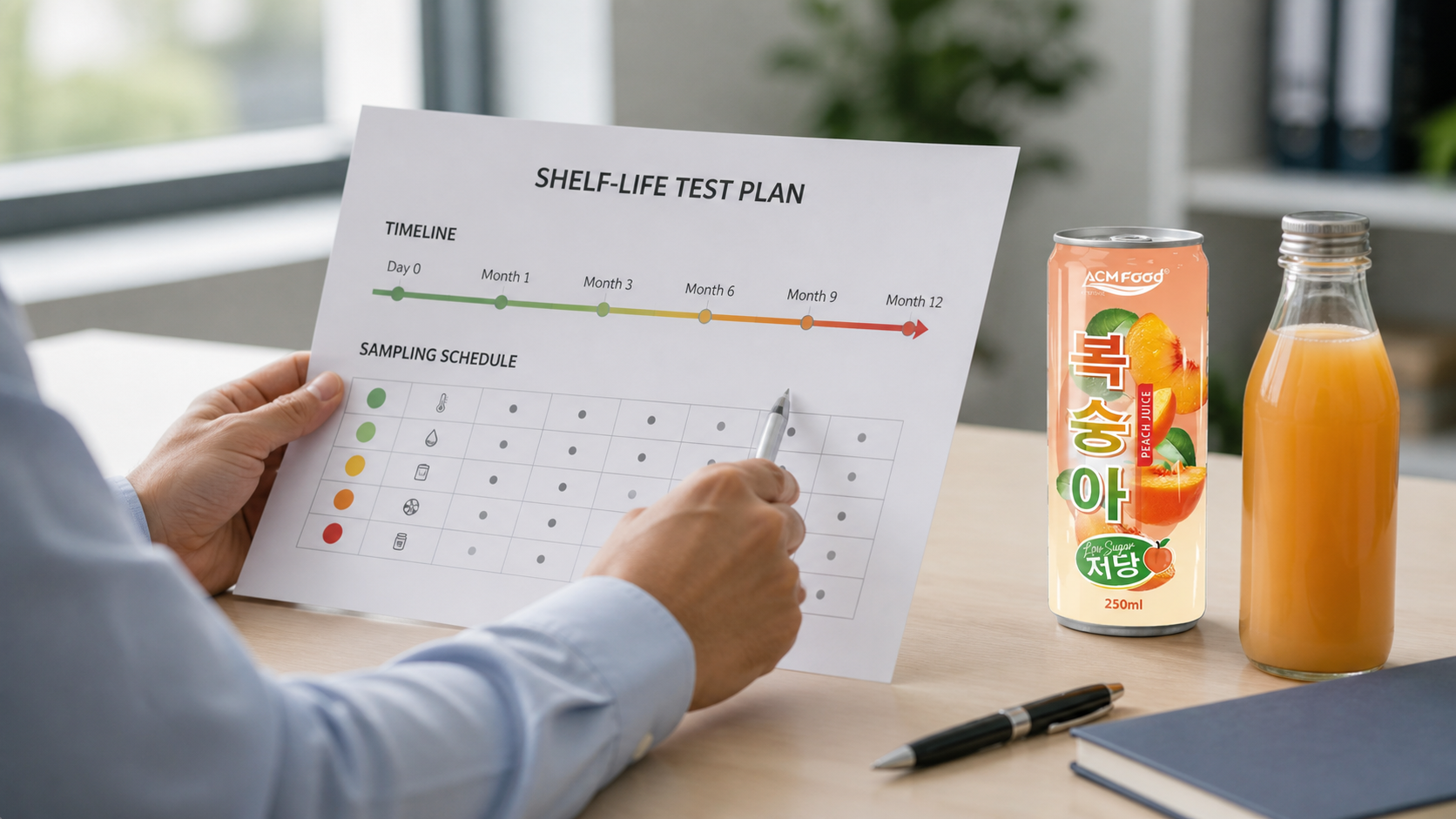
- Timepoints: schedule objective checks (e.g., monthly or quarterly) that match your target claim and launch timing; add early checks for high-risk attributes.
- Test methods: standardize microbiology, physicochemical, sensory and packaging integrity methods (and who performs them).
- Acceptance criteria: define pass/fail or acceptable drift by attribute; include action limits and investigative steps.
- Documentation: secure data capture, trend charts, deviations, and change control if formulation or components evolve.
- Review & decision: cross-functional review with quality, R&D, packaging and commercial to finalize the claim.
If your formulation strategy is still open—such as choosing blends, sweetening approach, or functional adds—coordinate with upstream work on fruit juice blends for private label and no added sugar vs reduced sugar juice because these choices can materially change stability.
What tests are included in juice stability testing?
Most shelf-life programs cover four pillars: microbiology, physicochemical stability, sensory quality and packaging performance. Depending on risk, teams add distribution simulation, light exposure and opened-shelf-life studies.
Microbiological testing
- Indicators appropriate to the process (e.g., pasteurized vs aseptic) and product pH.
- Routine checks for spoilage organisms relevant to fruit matrices.
- Validation of process-hold points (e.g., fill temperature, cap sterilization) and environmental hygiene for aseptic lines.
- Trend negative findings over timepoints; investigate any growth or gas formation.
Physicochemical stability
- pH and titratable acidity: track for drift that can influence flavor and microbial robustness.
- °Brix and density: monitor solids content to infer concentration stability; check for dilution or evaporation artefacts.
- Dissolved oxygen: measure at fill and over time; elevated oxygen is often linked to color loss and flavor changes.
- Color metrics: instrumental color measurement and photographic capture under controlled light; assess browning or fading.
- Cloud stability & sediment: quantify serum separation, ring formation, or settled pulp; gentle inversion test consistency.
- Ascorbic content and related markers: some juices naturally contain vitamin C; its level can change over time depending on oxygen and light.
- Thermal abuse checks: assess if occasional temperature excursions cause visible or sensory changes.
Sensory & consumer acceptance
- Descriptive evaluation of aroma, taste, mouthfeel, astringency and aftertaste using trained panelists.
- Simple acceptability scales tied to action limits for launch decisions.
- Photograph appearance in standardized glassware for visual records.
Packaging & closure performance
- Seal integrity, vacuum or pressure retention, and torque measurements over time.
- Headspace consistency and liner condition after storage and transport simulation.
- Light and oxygen barrier fitness for the intended claim and distribution chain.
Distribution simulation
- Vibration and stacking to assess closure leak risk and sediment behavior.
- Orientation testing (upright vs horizontal) to probe cap and liner compatibility.
- Ambient vs warm-warehouse holds to mimic peak-season storage.
Opened shelf life
- Short-term storage after opening under household-like conditions.
- Microbiological checks and sensory monitoring to inform on-pack guidance.
Real-time vs accelerated testing: what is the difference?
Real-time testing stores product under intended conditions for the full claim period and is the most representative of market reality. Accelerated testing uses elevated stress (e.g., higher temperature or light) to highlight risks faster, supporting decisions while real-time data accrue; it is directional and should be confirmed by real-time results.
| Aspect | Real-time testing | Accelerated testing |
|---|---|---|
| Objective | Substantiate the final shelf-life claim under intended storage | Screen risk and compare options quickly |
| Conditions | Label-intended temperature, light and orientation | Elevated stress (temperature and/or light) per protocol |
| Duration | Matches the proposed claim with defined timepoints | Shorter holds to reveal relative vulnerabilities |
| Strength | Most representative evidence for commercial claims | Faster learning; useful for screening and formulation choices |
| Limitations | Longer timelines; needs disciplined sample control | May not perfectly predict real-world behavior |
| Typical use | Final claim support and ongoing quality monitoring | Compare ingredients, processes, packages; set priorities |
How processing methods influence stability
Processing defines the initial microbial and chemical starting point of your product and therefore shapes the test plan.
- Hot-fill or tunnel-pasteurized juices: heat helps control microbial risks; manage oxygen pick-up and heat exposure to protect flavor and color.
- Aseptic processing: product and package are sterilized separately; it demands strict hygienic control and validation but offers flexibility in packaging formats and distribution.
- HPP for select juices: high-pressure treatment can help retain fresh-like notes in some formulations; distribution and cold-chain expectations shape the shelf-life study.
- Clarified vs cloudy: clarified juices often have fewer clouding particles and may show less sediment; cloudy juices can be more sensitive to phase separation and require targeted cloud-stability checks.
- NFC vs from concentrate: solids profile and minor components differ, which can affect color stability, flavor trajectory and haze behavior.
Upstream choices—like whether to include botanicals or functional ingredients—should be coordinated with your shelf-life strategy. If you are exploring added benefits, see ideas in functional fruit juice development to anticipate stability implications early.
Packaging choices that impact shelf life
Package and closure selection can be as decisive as formulation. Barrier, light protection, headspace control and closure fit all influence performance across the claim period.
| Format | Key shelf-life considerations | Positioning & notes |
|---|---|---|
| Glass bottle | Excellent oxygen barrier; heavier; check cap/liner compatibility and thermal resistance | Premium feel; good for hot-fill or pasteurized lines |
| PET bottle | Variable oxygen barrier; consider multi-layer or scavengers; manage light exposure | Lightweight; widely used for ambient juices |
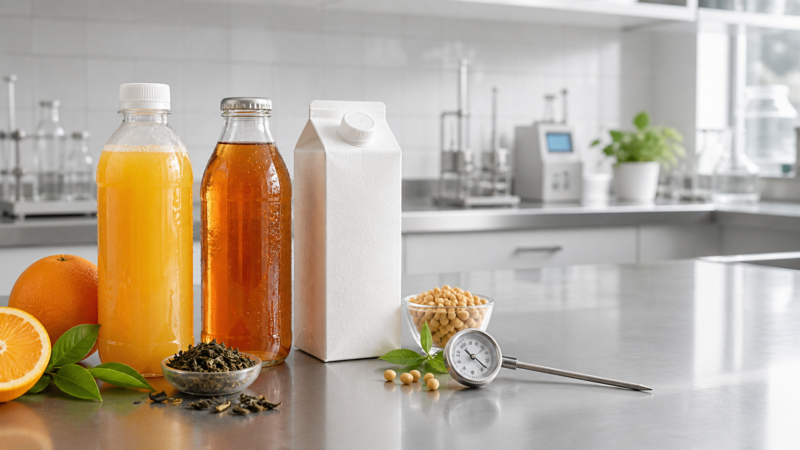
| Aseptic carton | Strong light and oxygen protection; requires aseptic processing | Family or on-the-go sizes; ambient distribution |
| HDPE bottle | Good for refrigerated channels; check light sensitivity and closure torque | Common in chilled distribution |
| Pouch | Flexible films vary in barrier; seal integrity is critical | Children’s formats; consider spout durability |
Regardless of format, document the closure system (cap, liner, torque), headspace specification, label application method and palletization pattern so packaging performance can be replicated in tests and at scale.
Setting specifications and acceptance criteria
Clear criteria make decisions objective and auditable. Calibrate criteria to the product’s positioning and consumer expectations.
- Microbiology: process-appropriate absence/presence tests; define corrective actions if any growth or gas is observed.
- Physicochemical: acceptable drift windows for pH and °Brix; action limits for dissolved oxygen and cloud separation; defined color ranges or delta thresholds using instrumental methods.
- Sensory: anchor scales (e.g., 9-point acceptability) with descriptors; define the minimum acceptable score by attribute and overall.
- Package integrity: torque windows, seal tests, leak criteria and vacuum/pressure targets.
- Label guidance: opened-shelf-life guidance aligned with test outcomes and the intended storage instructions.
Ensure criteria are agreed by quality, R&D and commercial teams so that the final claim reflects technical evidence and brand promise.
Integrating shelf-life testing with product development
Testing should run alongside formulation and pilot trials—not after them. Plan the learning sequence so each round informs the next decision without stalling the project.
- Lock draft specifications early: target pH, °Brix, color space, cloud index, sensory intent.
- Build timepoints that match high-risk zones (e.g., early oxidation or haze formation) rather than distributing checks evenly by habit.
- Use accelerated work to compare ingredient options while real-time data accrue.
- Document any formulation or packaging change; restart or bridge studies when changes are material.
If you are still shaping your formula, align your shelf-life plan with juice samples and formula approval workflows so pilot runs produce data you can carry into claim substantiation.
Budget and timeline considerations
A disciplined plan controls costs while building enough evidence to defend your claim. Major cost drivers include the number of variants, timepoints, external lab analyses, packaging prototypes and distribution simulations. Consider a phased approach: screen options with a concise accelerated set, then advance finalists into full real-time programs.
- Variant control: limit parallel SKUs in early phases; converge on finalists quickly using accelerated comparisons.
- Method selection: combine in-house checks (e.g., pH, color) with third-party confirmation for microbiology as needed.
- Sample economy: pre-plan bottle counts per timepoint with a buffer for repeats.
- Decision gates: tie go/no-go to specific criteria (e.g., color trend, cloud stability) to avoid drifting timelines.
When you compare proposals, align scope and sampling plans using a common template. See how to compare juice supplier quotations so test coverage and timepoints are directly comparable across vendors.
Common pitfalls and how to avoid them
- Unclear acceptance criteria: leads to subjective debates late in the project; pre-define windows and action limits.
- Ignoring oxygen control: high dissolved oxygen at fill can drive color and flavor drift; monitor and trend.
- Underestimating packaging: barrier and closure fit often determine success; test the exact intended combination.
- Skipping opened-shelf-life checks: consumers expect guidance; a short, targeted study adds clarity.
- Changing components mid-study: even small changes (e.g., liner or label adhesive) can affect outcomes; document and assess impact.
Regulatory and labeling context
Terminology, date-marking and evidence expectations vary by market. Align with the regulations of the countries where you plan to sell. Distinguish commercial product positioning decisions from regulatory requirements: your technical file should show how real-time data support the label claim, while noting any accelerated work used for screening and risk assessment.
Implications for private label innovation
Stability is tightly linked to formulation strategy. For example, blends can balance color and flavor trajectories, and sweetening choices influence flavor stability. Explore creative but feasible options early, including fruit juice blends for private label and the trade-offs in no added sugar vs reduced sugar juice. If you plan to incorporate botanicals or other components, coordinate with your team on functional fruit juice development so shelf-life tests capture the right risks.
From pilot to launch: aligning teams
Shelf-life testing works best when quality, R&D, packaging, operations and commercial functions share a single timeline and decision framework. Use a joint plan that identifies who approves methods, when packaging is frozen, what evidence is required for claims and how post-launch monitoring will continue.
For a practical view of how samples move through development and approval, see juice samples and formula approval, then align its gates with your shelf-life timepoints.
FAQs: fruit juice shelf life testing
Do we need both accelerated and real-time testing?
Yes—use accelerated work to compare options and spotlight risks quickly, while real-time data substantiate the final on-pack claim. Accelerated findings are directional and should be confirmed by real-time performance.
How long does a shelf-life study take?
Timelines depend on your target claim, the number of variants, and the depth of testing. Many teams run accelerated screening in parallel with real-time studies so commercial decisions are not delayed while confirmatory data accrue.
Can we extend shelf life without preservatives?
Possibly. Stability is influenced by process control, oxygen management, pH, package barrier and light protection. Re-optimizing these elements can improve performance, though every change must be verified with testing.
When is opened-shelf-life guidance needed?
If consumers are likely to reseal and store the product, an opened-shelf-life study helps set practical guidance that aligns with your formulation, process and distribution model.
What if we change packaging or an ingredient?
Assess the impact and capture bridging data. Material changes—like barrier, closure, acidulants or flavor systems—may warrant repeating parts of your program before updating any shelf-life claim.
Conclusion
A well-constructed fruit juice shelf life testing program brings together formulation science, process control, packaging engineering and disciplined evaluation to support a defendable on-pack claim. Focus on the right tests at the right timepoints, confirm accelerated insights with real-time data, and treat packaging as a core stability lever. As you finalize your plan, align with juice samples and formula approval workflows and apply a consistent approach when you compare juice supplier quotations. With a clear strategy, private label brands can manage risk, control timelines and launch confidently.
Turning this into a product
For the formats, ingredients and processing routes the factory actually runs, see beverage product capabilities. The production side is covered under OEM beverage manufacturing services; for launching under your own label, see private label beverages. Format, closure and pack-size trade-offs are compared on packaging options. To discuss a specification, request a quote.
Request a quote