


 Français
 Español
 العربية
 한국어
한국어100% juice, nectar and juice drink are three distinct product types defined by their juice content and formulation rules, which vary by market. Understanding these differences helps you compare fruit juice suppliers, align pricing with positioning, and brief your manufacturer clearly.
This guide explains what each term typically means, how they fit brand strategy and cost targets, and the key specifications buyers should lock in before requesting quotations. Where regulations differ, treat the definitions below as general guidance and confirm requirements in your target country.
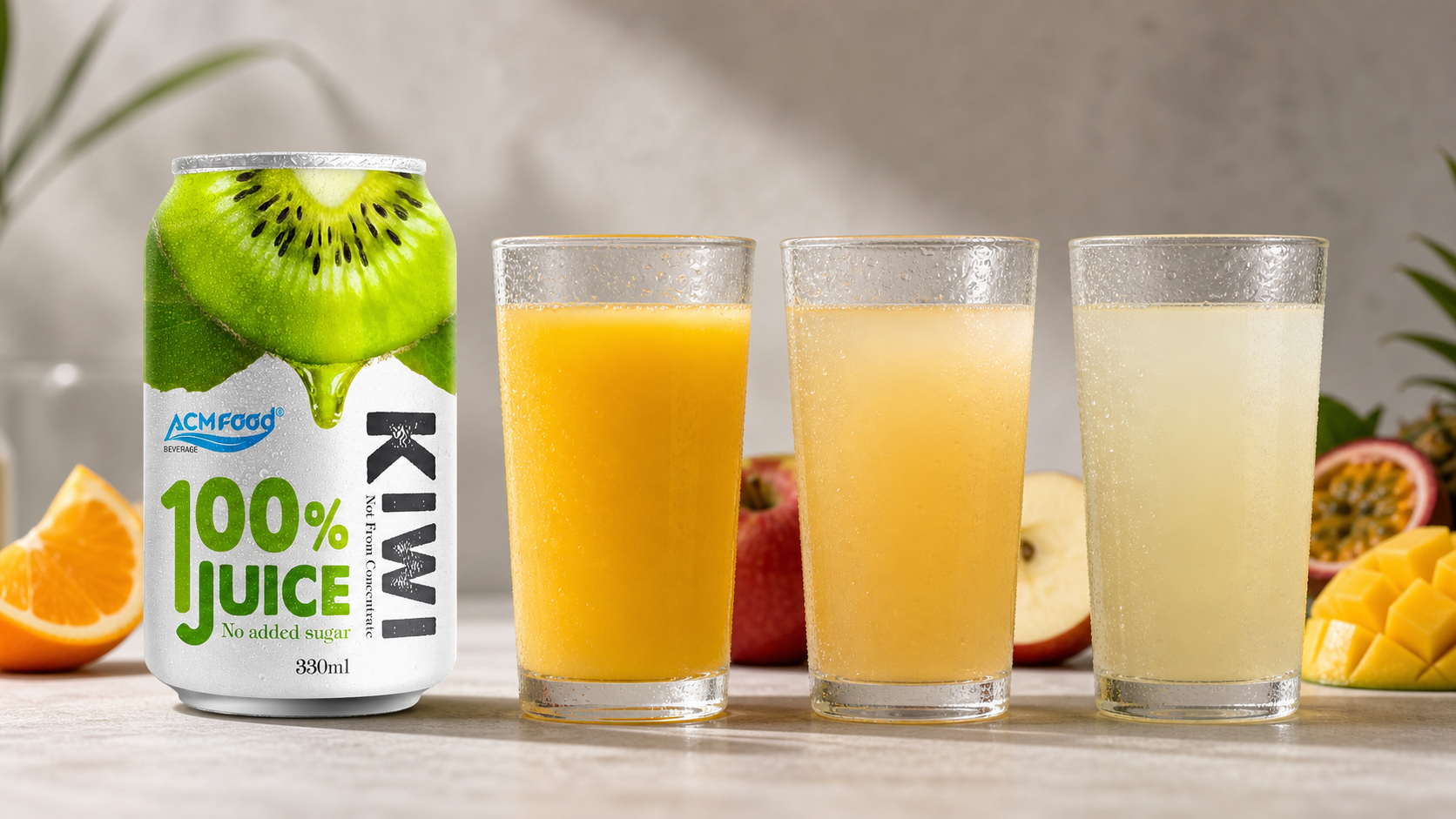
What do “100% juice”, “nectar” and “juice drink” mean?
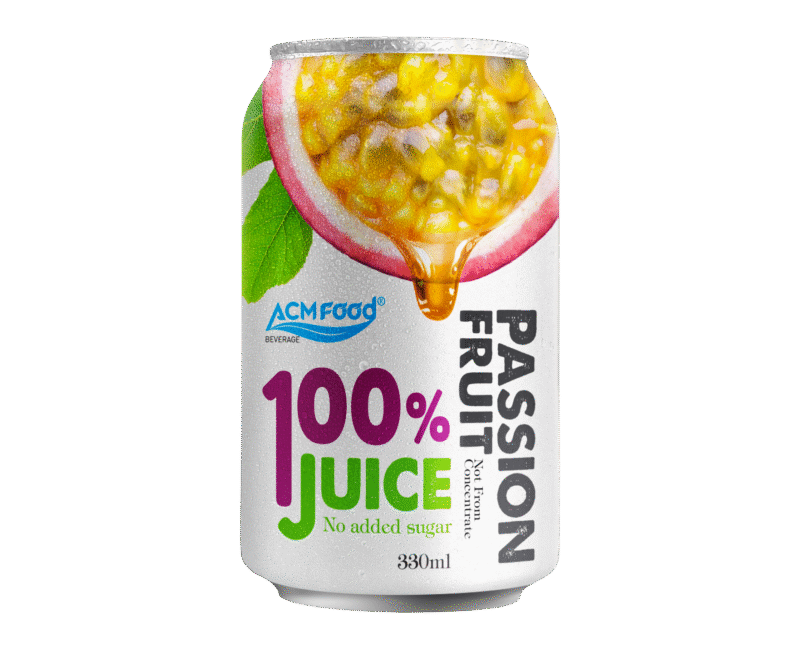
In broad terms, 100% juice contains only fruit juice (from concentrate or not-from-concentrate) without added sugars; nectar blends juice with water and often sweeteners to make certain fruits drinkable; juice drink includes a lower juice percentage with water, sweeteners and flavor aids. Always verify local labeling rules.
Across markets, terminology and enforcement can differ. Some countries allow added flavors in 100% juice while others restrict them; some define minimum juice content for nectar and juice drink categories; some set rules for vitamin addition or claims. Treat the following as directional and confirm with your regulatory counsel or compliance team.
| Attribute | 100% juice | Nectar | Juice drink |
|---|---|---|---|
| Juice content basis | All juice (NFC or from concentrate), water only to reconstitute | Juice plus water; designed for thick/tart fruits | Lower juice percentage with water and flavor system |
| Sweetening approach | No added sugar in many markets | Often sweetened within local limits | Commonly sweetened; may use alternative sweeteners |
| Flavor intensity | Closest to natural fruit character | Balanced, smoother, less intense than 100% juice | Light, easy-drinking, highly adjustable |
| Positioning & notes | Purity and fruit-first storytelling | Traditional for mango, guava, apricot, etc. | Value, hydration, flavor variety |
| Labeling sensitivity | Highest: claims and ingredients scrutinized | Moderate: minimum juice rules may apply | High: must not mislead on juice content |
| Relative ingredient cost | Highest (more juice solids) | Mid (dilution reduces juice usage) | Lowest (least juice solids) |
| Sugar reduction levers | Limited without affecting taste | Blend and sweetener choices provide options | Widest set of formulation levers |
| Typical consumer expectation | Authentic, not overly sweet | Smooth, drinkable, fruity | Refreshing, approachable flavors |
| Flexibility for blends | Fruit-to-fruit blending only | Fruit blends with sweetness control | Fruit plus flavors and functional twists |
| Shelf-life approach | Thermal or HPP based on channel | Thermal stabilization typical | Thermal or alternative; highly scalable |
Which option fits your brand positioning and price point?
There is no universal “best” format. Choose 100% juice when fruit integrity anchors your story, nectar when the hero fruit is naturally thick or tart, and juice drink when you prioritize affordability, refreshment and flavor range.
Consider how each format supports your core promise:
- 100% juice: Focus on origin narratives, varietals, and simple ingredient lines. Works for premium retail and specialty channels where shoppers trade up for authenticity.
- Nectar: Ideal for mango, guava or apricot where full-strength purée can be heavy. Balances mouthfeel and drinkability while keeping a strong fruit presence.
- Juice drink: Offers broad flavor innovation (fruit-plus-herb, sparkling-ready) and sharper price tiers for mass retail, convenience and foodservice.
Price architecture often mirrors juice content: more juice generally means higher ingredient cost. If your P&L relies on aggressive promotional pricing, juice drink or a carefully engineered nectar may be the sustainable choice. If your strategy relies on a clean label with simple ingredients, 100% juice typically aligns better.
How should you compare fruit juice suppliers for each product type?
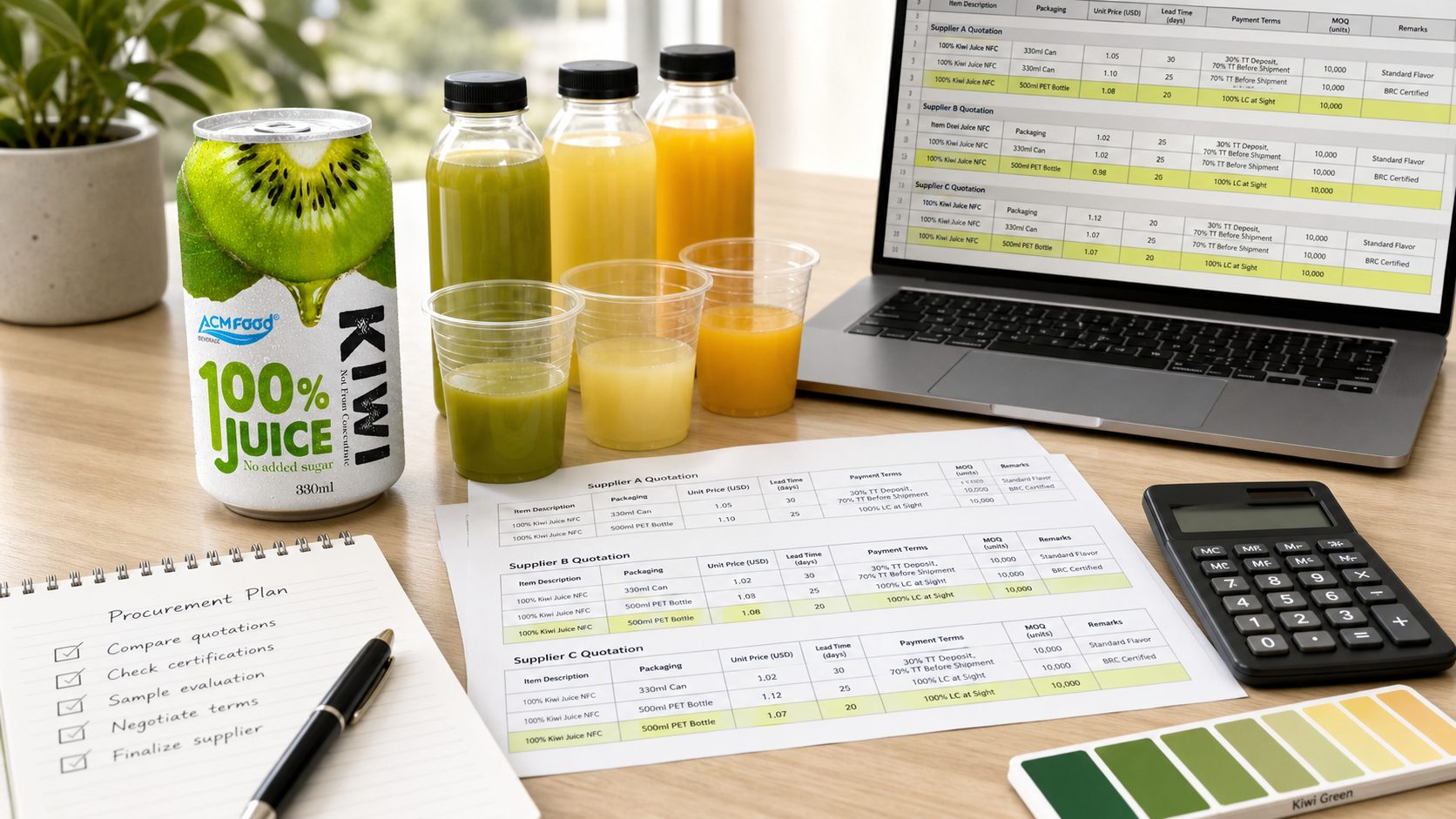
Start by mapping your intended format (100% juice, nectar, or juice drink) to the supplier’s raw material sources, formulation capability and finished-goods processes. Then compare fruit juice suppliers against consistent, documented criteria.
- Raw material strategy: NFC vs concentrate, varietals, harvest windows, and multi-origin risk mitigation.
- Formulation scope: Ability to hit target Brix/acid balance, color, and sensory profile; experience with high-purée fruits for nectars; flavor system integration for juice drinks.
- Stabilization: Hot-fill, tunnel pasteurization, aseptic, chilled/HPP—aligned to your route-to-market.
- Packaging formats: PET, glass, cans, cartons; closure types; size range; secondary packaging for e‑commerce.
- Quality management: Documented specifications, CoA parameters, traceability and change-control practices.
- Commercial fit: Forecast-based production, batch flexibility, and transparency on surcharges (ingredients, energy, freight).
For a structured request, see this fruit juice RFQ checklist and align internal stakeholders before you ask for prices.
Key specs to define in your RFQ
Clear specifications reduce quotation variance and speed up sampling. Define the following, even if you allow a tolerance band:
- Product type: 100% juice, nectar or juice drink; single fruit vs blend; from concentrate or NFC.
- Target sensory: Color, aroma, body, and flavor benchmarks (e.g., your current SKU or a market comparator).
- Analytical targets: Brix and titratable acidity ranges, pH window, viscosity expectations for nectars, and microbiological standards appropriate to the process.
- Sweetening approach: No added sugar (where permitted), cane sugar, or alternative sweeteners as allowed in the market.
- Additions: Natural flavors, vitamins/minerals (if permitted), clouding agents, anti-foam—only if they meet your labeling strategy.
- Process: Hot-fill, aseptic, or chilled; intended shelf-life and storage conditions.
- Packaging: Material, size, closure, label type, case pack; palletization and shipping method.
- Regulatory market: Country/countries for compliance review and label text development.
- Volume plan: First order quantity and rolling forecast to help suppliers size batches and plan materials.
When budgets are tight, align procurement and marketing using these private label juice cost factors to avoid late-stage reworks.
Cost drivers: from juice content to packaging
For similar packaging and route-to-market, 100% juice usually costs more than nectar, which usually costs more than juice drink, primarily due to juice solids per liter. But total landed cost is shaped by multiple levers you can optimize.
- Fruit solids: The biggest driver; higher fruit load increases cost and exposure to seasonal price swings.
- From-concentrate vs NFC: Concentrate can improve freight economics and price stability; NFC supports certain premium narratives.
- Sweetener choice: Cane sugar versus permitted alternatives affects cost and positioning.
- Processing: Aseptic lines, hot-fill tunnels, or chilled/HPP have different capex footprints and throughput realities that flow into pricing.
- Packaging: Bottle vs can vs carton, glass vs PET, closures, label type, and case configuration can reshape BOM and freight.
- Batch size & changeovers: Larger, fewer runs reduce per-unit costs; frequent flavor swaps drive downtime and waste.
- Logistics: Incoterms, pallet heights, temperature control, and destination mix add variability.
If you are mapping first orders, review private label juice MOQ basics to understand how batch-size and packaging constraints influence unit economics.
Labeling & compliance considerations across markets
Because definitions and claims differ internationally, bake compliance into your development plan from day one. Many disputes arise from label wording and pictorial emphasis rather than formulation alone.
- Category naming: Some jurisdictions reserve “100% juice” for products without added sugar; others specify minimum juice content for nectar and juice drink—confirm exact phrases allowed.
- Ingredient list: State juices by proportion order as required; disclose flavors and permitted additives precisely.
- Front-of-pack cues: Images of fruit and the prominence of words like “juice” vs “drink” must not mislead relative to actual juice content.
- Nutrition panel: Format, rounding and reference values vary by market. Obtain finalized lab results for your specific formula and serving size.
- Claims and fortification: Nutrient addition and any on-pack statements depend on tested levels, serving size and local rules—plan verification testing and legal review.
Risks to manage in development and scale-up
Anticipating technical and commercial risks protects launch timelines and margin. Build time for trials and retainers into your plan.
- Sensory drift: Fruit variability across seasons may alter color or acidity. Align on acceptable ranges and corrective blending rules.
- Stability & cloud: Pulp settling and color fade can occur, especially in drinks with lower juice. Choose stabilizers only if they fit your label policy.
- Sweetness perception: Acidity and aroma impact perceived sweetness; do pilot tastings in your target market to avoid over-sweetening.
- Supply continuity: Single-origin dependence increases risk; multi-origin or concentrate buffers may help.
- Cost shocks: Hedge juice exposure with rolling forecasts and agreed adjustment mechanisms where appropriate.
- Change control: Lock label text and specs before scale-up to prevent slowdowns in regulatory review and printing.
For brand benchmarking and positioning cues, see this overview of best juice brands globally and note how they balance purity, flavor variety and price tiers.
FAQ
Is 100% juice always better than nectar or juice drink?
No. 100% juice is the right choice when you want a fruit-first, minimal-ingredient story. Nectar suits fruits that are naturally thick or tart. Juice drink supports value pricing and wider flavor exploration. Your channel, margin and positioning determine the “best” fit.
Which format is typically most affordable to produce?
Juice drink generally enables the lowest ingredient cost because it uses less fruit solids and more formulation levers. Nectar often sits in the middle, and 100% juice tends to be the most expensive. Actual pricing depends on fruit choice, processing, packaging and batch size.
Can I reduce sugar without compromising taste?
Options exist, but they are format- and market-dependent. In many places, 100% juice cannot include added sugar, so sweetness is driven by fruit selection and blending. Nectars and juice drinks allow more levers, including permitted alternative sweeteners where regulations allow.
Do the definitions change by country?
Yes. Minimum juice content, sweetener rules, flavor use and naming conventions vary. Always confirm requirements in your destination market and align label text with local counsel.
How do I get apples-to-apples quotations?
Issue a clear brief with tight specs and acceptance ranges, request standard pack sizes and Incoterms, and provide a volume plan. This reduces variance. For a template-driven approach, review how to prepare a fruit juice RFQ checklist.
Summary & next steps. 100% juice, nectar and juice drink each serve distinct brand jobs, cost structures and regulatory realities. Define your positioning, channel and cost targets first; then build specs that fit. As you compare fruit juice suppliers, standardize your brief, align on analytical and sensory ranges, and plan line trials early. For vendor selection frameworks, see how to choose a fruit juice manufacturer, then align procurement and marketing using the private label juice cost factors and your private label juice MOQ basics. That alignment saves time, de-risks scale-up and protects your margin.
Turning this into a product
For the formats, ingredients and processing routes the factory actually runs, see beverage product capabilities. For how a specification becomes a shipped container, see the OEM route; for launching under your own label, see private label beverages. To discuss a specification, request a quote.
Sources
The distinction between juice, nectar and juice drink, and the minimum Brix values behind it, come from the Codex general standard for fruit juices and nectars (CXS 247-2005). Individual markets set their own labelling rules on top of it.
- Codex Alimentarius (FAO/WHO) — Standards, including CXS 247-2005 General Standard for Fruit Juices and Nectars
- U.S. Food and Drug Administration — Guidance for Industry: Food Labeling Guide
- Food Standards Australia New Zealand — Australia New Zealand Food Standards Code